12,800 Years Ago Humans Were Deleted
Exploring the Younger Dryas Impact Hypothesis
The transcript begins with a provocative question: what if human civilization has been destroyed and rebuilt multiple times throughout history? It introduces the Younger Dryas, a period that began approximately 12,800 years ago, marked by a catastrophic event believed to have erased a potentially advanced civilization from history. In 2007, scientists discovered a thin black layer of sediment, known as the Younger Dryas boundary layer, found across various locations in North America, Europe, and the Middle East. This layer contains unique geological evidence, including shocked quartz, melted glass, microscopic diamonds, and soot, which are typically associated with cosmic impacts.
The transcript elaborates that this event was not a singular impact but rather a series of multiple impacts from fragments of a comet, leading to a planetary bombardment that lasted for days or weeks. The intense heat generated from these impacts melted vast ice sheets covering North America, resulting in catastrophic flooding and the extinction of approximately 75% of large mammals, including mammoths and saber-toothed cats. This period of sudden extreme cold, known as the Younger Dryas, occurred as Earth was warming after the last ice age, causing significant disruptions in climate and ecosystems.
Most archaeologists assert that human civilization began after this event, around 10,000 BC, with the advent of agriculture and the rise of cities. However, the transcript poses the question of whether this period marked a restart of civilization rather than its true beginning. The speaker, identified as an ancientologist, aims to explore the evidence supporting the Younger Dryas impact hypothesis and investigate the possibility of an advanced culture that existed before this cataclysm.
The evidence for the Younger Dryas impact hypothesis is compelling. The boundary layer is most clearly visible at Murray Springs in Arizona, where it is characterized by specific markers indicative of massive cosmic collisions. These markers include shocked quartz, melted spherules, nano diamonds, and platinum, which is rare on Earth but common in asteroids. Above this layer, abundant animal bones and human artifacts can be found, while below it, there is a stark absence of evidence, suggesting a significant extinction event occurred.
The hypothesis posits that Earth passed through a debris field from a fragmenting comet, leading to numerous impacts across the planet. The transcript details how fragments of this comet, some hundreds of meters across, exploded in air bursts or struck the North American ice cap, resulting in catastrophic consequences. The sudden release of millions of cubic kilometers of water from melting ice led to massive floods, which disrupted the Gulf Stream and caused global temperatures to plummet.
In addition to the immediate impacts, the aftermath of the Younger Dryas was marked by prolonged climate chaos lasting 1,200 years. This period saw dramatic temperature fluctuations, the re-advancement of glaciers, and erratic rainfall patterns, which severely affected both megafauna and human populations. The transcript highlights that human populations experienced a significant bottleneck, with archaeological evidence indicating that many sites were abandoned, and the Clovis culture, which had thrived for over a millennium, disappeared from the record.
Furthermore, the transcript discusses the implications of these findings for the existence of a potential lost civilization. It raises the question of whether an advanced culture existed prior to the Younger Dryas and was completely obliterated by the impacts. The evidence is circumstantial but intriguing, with references to ancient maps that suggest sophisticated navigation and knowledge of geography that could indicate a pre-existing civilization.
Ultimately, the Younger Dryas impact hypothesis suggests that humanity experienced a reset, leading to a loss of accumulated knowledge and progress. The survivors faced a drastically altered world, leading to a shift in societal structures and the eventual emergence of agriculture around 10,000 BC. The transcript concludes by questioning whether the rapid development of civilizations in the millennia following the Younger Dryas was a result of newly acquired knowledge or a rediscovery of lost skills from a previous advanced society.
The speaker presents a compelling argument centered around the Younger Dryas Impact Hypothesis (YDIH), suggesting that a cosmic catastrophe occurred approximately 12,800 years ago, which reset human civilization. The central thesis posits that this event, characterized by multiple impacts from comet fragments, led to significant extinction rates and the near-total erasure of prior advanced cultures. The speaker strongly advocates for this hypothesis, indicating that it explains not only the mass extinction of megafauna but also the abrupt halt of human development during that period.
The overarching conclusion reached by the speaker is that the YDIH suggests we may not be the first advanced civilization on Earth; rather, we might be part of a recurring cycle of rise, catastrophe, and rebuilding. The speaker implies that the geological and archaeological records indicate a reset, where any knowledge or progress made by earlier civilizations was largely lost due to the catastrophic events associated with the Younger Dryas.
- [19:31] "We might be the second or the third or the latest in a cycle of rise, catastrophe, and rebuilding that has repeated multiple times."
- [12:45] "Any memory of what came before would have become legend, myth, or been lost entirely."
- [02:22] "This event has a name, the Younger Dryas, a 1,200-year period of sudden extreme cold that hit right when Earth was warming up after the ice age."
To support the YDIH, the speaker presents a variety of compelling evidence and arguments. Key physical evidence includes:
- Shocked Quartz: Formed under extreme pressure, indicating a high-energy impact event.
- Melted Glass (Spherules): Tiny glass beads created when materials are heated above 2,200°C, found in the Younger Dryas boundary layer.
- Nano Diamonds: These are formed under conditions of enormous heat and pressure, further indicating a cosmic impact.
- Platinum Anomalies: Platinum is rare on Earth but common in asteroids and comets, suggesting extraterrestrial origins.
- Soot and Burn Layers: Evidence of widespread wildfires due to the impact's heat and subsequent climate changes.
The speaker interprets these findings as indicators of a dramatic and catastrophic event that resulted in widespread destruction and extinction. They point out that the presence of these impact proxies in the geological record aligns with a clear boundary layer, marking a significant extinction event. The speaker emphasizes that the evidence is not merely incidental but collectively supports the theory that the Earth was bombarded by multiple fragments of a comet, leading to drastic climate shifts and mass extinction.
- [03:02] "It’s a dark band in the earth about the width of a human hand... This layer contains specific markers called impact proxies, things you only find after massive cosmic collisions."
- [04:04] "Earth passed through a debris field from a fragmenting comet... Not one impact, hundreds, maybe thousands across the entire planet."
- [06:00] "The impacts also threw superheated ejecta into the upper atmosphere... setting continental scale wildfires."
The speaker acknowledges various counter-arguments and criticisms regarding the YDIH, highlighting the ongoing debate within the scientific community. Some of the specific objections discussed include:
- Alternative Explanations: Critics argue that the evidence for a cosmic impact could be attributed to other geological processes or events that do not require the hypothesis of multiple impacts.
- Timing and Correlation: Some researchers are skeptical about the direct correlation between the cosmic impacts and the extinction events, suggesting that natural climate change could explain the observed patterns.
- Survivor Populations: Skeptics point out that despite the impacts, some megafauna and human populations survived, questioning the extent of the catastrophe.
In response to these challenges, the speaker emphasizes the overwhelming nature of the evidence collected by over 60 scientists across multiple disciplines, arguing that the concentration of impact proxies and the timing of extinction events provide a compelling case for the YDIH. They also acknowledge gaps in current knowledge, particularly regarding the exact mechanisms by which the impacts affected climate and ecosystems. The speaker suggests that while some uncertainties persist, the supporting evidence for a cosmic catastrophe remains strong and warrants further investigation.
- [10:08] "The younger dryas period itself lasted 1,200 years... more than a millennium of climate chaos."
- [16:43] "Are these myths just descriptions of local floods as mainstream archaeology claims? Or are they cultural memories of an actual global event?"
- [19:15] "Not because nothing came before, but because everything before was destroyed."
The speaker discusses significant climatic changes that occurred approximately 12,800 to 11,600 years ago, a period marked by the Younger Dryas, which is characterized as a rapid return to extreme cold following a general warming trend after the last Ice Age. This climatic event is linked directly to multiple cosmic impacts that devastated the environment.
Initially, the speaker notes that the impacts caused dramatic temperature plunges, with some regions experiencing drops as severe as 15°C within a decade. This sudden shift caused glaciers that had been retreating to start advancing, resulting in significant environmental instability. The ice sheets began to regrow, and the Arctic ice cap expanded southward.
The catastrophic effects of these impacts led to the extinction of numerous megafauna species, particularly in North America. The speaker states that around 75% of large mammal species disappeared in a remarkably short timeframe. Species such as mammoths, saber-toothed cats, and giant ground sloths vanished, not gradually, but within decades due to the combined pressures of climate change and habitat destruction.
The speaker emphasizes that these climatic conditions were not merely a product of natural transitions but were exacerbated by the impacts from space. The resultant flooding, wildfires, and the collapse of food chains contributed to a devastating environmental crisis, which is encapsulated in the statement that the extinction event was driven by a combination of flooding, fires, and climate shifts occurring simultaneously.
- [10:21] 'In some regions, 15° C within a decade.'
- [06:00] 'The impacts also threw superheated ejecta into the upper atmosphere.'
- [06:24] 'It wasn’t just the impacts. It was the flooding, the fires, the sudden climate shift, and the collapse of food chains all happening at once.'
The speaker refers to a collective of over 60 scientists from various disciplines who have contributed to developing the Younger Dryas impact hypothesis. This scientific consortium provides credibility to the claims presented about the catastrophic events that transpired during this period. The speaker also mentions specific geological findings, such as shocked quartz, melted glass, and nano diamonds, as evidence found in the geological record that supports the hypothesis of multiple cosmic impacts.
While the transcript does not specify individual names of researchers or their publications, it implies that the scientific community broadly recognizes the Younger Dryas impact hypothesis, contrasting it with more mainstream views that may dismiss the idea of a significant civilization existing prior to these events. The speaker positions their arguments as a challenge to traditional archaeological narratives, which typically assert that human civilization began around 10,000 BC.
Additionally, the speaker references Randall Carlson, a geologist who studies the Younger Dryas, as an expert supporting the idea that massive floods shaped North America's geological features. This mention serves both to bolster the argument for a catastrophic event and to imply that traditional geological interpretations may be inadequate in explaining the evidence observed in the landscape.
- [02:19] 'Today we’re exploring the younger dryus impact hypothesis...'
- [04:02] 'The younger dryus impact hypothesis developed by over 60 scientists across multiple disciplines.'
- [15:17] 'Randall Carlson, a geologist who studies the younger dus...'
[00:00] What if human civilization has been[00:02] destroyed and rebuilt before?[00:05] What if 12,800 years ago, something from[00:09] [music] space hit Earth so hard it[00:11] erased an entire advanced civilization[00:13] from history?[00:15] In 2007, scientists found [music][00:18] something disturbing in the geological[00:20] record. A thin black layer of sediment[00:23] dating to exactly [music] 12,800 years[00:26] ago. Found at sites across North[00:29] America, Europe, and the Middle East,[00:32] this layer contains shocked quartz,[00:34] melted glass, microscopic diamonds, and[00:38] massive amounts of soot. The kind of[00:40] evidence you only see after one thing,[00:43] the cosmic [music] impact. But here's[00:46] what makes it terrifying.[00:48] This wasn't just an impact. It was[00:50] multiple impacts.[00:52] Fragments of a comet hitting Earth in a[00:54] planetary bombardment that lasted for[00:56] days, maybe weeks. The heat was so[01:00] intense, it instantly melted a mile of[01:02] ice covering North America. The[01:04] resulting floods were biblical. The[01:06] extinction was catastrophic.[01:09] 75% of North America's large mammals[01:11] vanished. Mammoths, saber-tooththed[01:14] cats, giant sloths, all gone. and human[01:18] populations, they crashed, too. This[01:21] event has a name, the Younger, Dryus, a[01:25] 1,200year period of sudden extreme cold[01:28] that hit right when Earth was warming up[01:30] after the ice age. Temperatures plunged,[01:34] ice sheets that were melting started[01:36] growing again. Sea levels rose and fell[01:39] erratically, and civilizations, if any,[01:41] existed, were wiped from the planet.[01:44] Most archaeologists say human[01:46] civilization began after this event[01:49] around 10,000 BC when agriculture[01:52] started when the first cities appeared[01:55] when writing developed. But what if[01:58] that's not the beginning? What if that's[02:01] the [music] restart? What if there was[02:03] something before, something advanced[02:05] that got completely erased when the sky[02:08] fell? I'm the ancientologist and I spend[02:11] my time uncovering the parts of history[02:13] they don't teach in school.[02:16] Today we're exploring the younger dus[02:19] impact hypothesis, examining the[02:21] evidence that a cosmic catastrophe reset[02:23] human civilization and investigating[02:26] whether an advanced culture existed[02:27] before and was completely destroyed. Hit[02:30] subscribe because what you're about to[02:33] discover suggests we're not the first[02:37] one. the impact when the sky fell. Let's[02:42] start with what actually happened 12,800[02:45] years ago because the evidence is[02:47] overwhelming that something catastrophic[02:50] occurred. Scientists call it the younger[02:53] dus boundary layer. You can see it most[02:56] clearly at Murray Springs in Arizona.[02:59] It's a dark band in the earth about the[03:02] width of a human hand. It runs through[03:04] dozens of sites across North America and[03:07] has been found in Europe, the Middle[03:09] East, and as far south as Antarctica.[03:13] This layer contains specific markers[03:16] called impact proxies, things you only[03:19] find after massive cosmic collisions.[03:21] Shocked quartz created when rock is[03:24] compressed at extreme pressure. Melted[03:27] spherules, tiny glass beads formed when[03:30] materials are heated above 2,200° C.[03:34] Nano diamonds created only under[03:36] conditions of enormous heat and[03:38] pressure. And platinum, rare on Earth,[03:41] but common in asteroids and comets.[03:45] Above this layer, you find abundant[03:47] animal bones and human artifacts. Below[03:50] it, almost nothing. The layer marks an[03:54] extinction event. The younger drius[03:56] impact hypothesis developed by over 60[03:59] scientists across multiple disciplines[04:02] proposes that Earth passed through a[04:04] debris field from a fragmenting comet.[04:07] Not one impact, hundreds, maybe[04:10] thousands across the entire planet. The[04:13] culprit was likely a comet over 100 km[04:16] in diameter that entered the inner solar[04:19] system around 20,000 years ago. As it[04:22] orbited the sun, it broke apart,[04:25] creating a debris stream we now call the[04:28] torid meteor stream.[04:31] Earth still passes through this stream[04:33] twice a year in June and late October.[04:37] 12,800 years ago, Earth passed through[04:41] an unusually dense part of this stream.[04:43] Multiple fragments, some hundreds of[04:46] meters across, hit the atmosphere. Most[04:49] exploded in air bursts before reaching[04:51] the [music] ground, like the 1908[04:53] Tungaska event in Siberia that flattened[04:56] 2,000 square miles of forest. But some[04:59] fragments were larger, big enough to[05:01] punch through the atmosphere and strike[05:04] the North American ice cap, a 2m thick[05:07] sheet of ice covering Canada and the[05:09] northern United States. When superheated[05:13] fragments hit ice that thick, the[05:15] results are catastrophic.[05:17] The ice doesn't just melt, it liquidizes[05:21] instantly.[05:22] Millions of cubic kilm of water released[05:25] in hours. Imagine tsunamis of melt water[05:28] over 1,000 ft deep rushing across the[05:30] continent, moving at 200 to 300 million[05:34] cubic feet per second. More water than[05:37] every river on Earth flowing today all[05:40] at once. This sudden injection of fresh[05:43] water into the North Atlantic shut down[05:45] the Gulfream. Earth's climate regulation[05:48] system.[05:50] Temperatures plunged globally. The[05:52] world, which had been warming for 2,000[05:55] years, suddenly became as cold as the[05:58] peak ice age.[06:00] In some places, this happened literally[06:02] overnight.[06:04] The impacts also threw superheated[06:06] ejecta into the upper atmosphere.[06:09] This material fell back to Earth, still[06:11] burning, setting continental [music][06:13] scale wildfires.[06:15] The amount of soot in the boundary layer[06:18] suggests forests across entire[06:20] continents burned simultaneously.[06:22] This is why the extinction was so[06:24] complete. It wasn't just the impacts. It[06:27] was the flooding, the fires, the sudden[06:30] climate shift, and the collapse of food[06:32] [music] chains all happening at once.[06:36] Two, the extinction.[06:39] What died?[06:42] The younger dus extinction was[06:44] devastating. In North America, 75%[06:48] [music] of large mammal species[06:49] vanished. Not gradually over thousands[06:51] of years. Within decades, gone were[06:55] mammoths [music] and mastadons that had[06:57] survived multiple ice ages.[07:00] saber-tooththed cats, American lions,[07:03] dire wolves, giant ground sloths,[07:06] American camels, horses, and giant[07:09] beavers the size of bears. Over 35 jera[07:13] of megapana completely disappeared. In[07:16] Europe and Asia, similar extinctions[07:18] occurred, though not quite as severe.[07:21] Woolly rhinos disappeared. Cave bears,[07:24] giant elk. The pattern was global, but[07:28] worst in North America, right at the[07:30] impact zone. But it wasn't just animals.[07:34] Human populations crashed.[07:37] Archaeological sites that had been[07:38] continuously occupied for centuries were[07:41] suddenly abandoned.[07:43] Stone quaries that had been mined for[07:45] generations went unused. Campsites were[07:48] left empty. The Clovis culture of North[07:51] America vanished entirely from the[07:54] archaeological record.[07:56] These were the people who had dominated[07:58] the continent for over a thousand years,[08:01] leaving behind distinctive spear points[08:03] found from Alaska to Central America.[08:06] After 12,800 years ago, no more Clovis[08:10] points appear.[08:12] Some archaeologists argue the Clovis[08:14] people simply evolved into other[08:16] cultures, but the timing is suspicious.[08:20] Their disappearance coincides exactly[08:22] with the impact evidence and the[08:24] megapana extinctions.[08:26] Even more disturbing is what happened to[08:29] population sizes. Genetic studies show a[08:32] significant bottleneck in North American[08:35] populations around this time. As if most[08:38] people died and only small groups[08:40] survived to repopulate the continent.[08:43] The site of Abu Hurera in Syria shows[08:46] direct evidence of destruction. Located[08:50] 150 mi from Gobeclete,[08:52] this settlement was obliterated 12,800[08:55] years ago. The remains show clear signs[08:58] of an air burst, melted glass, shocked[09:02] quartz, high temperature minerals. The[09:05] buildings were destroyed. Interestingly,[09:08] the site was reoccupied within about 5[09:11] years, suggesting survivors returned.[09:14] But here's what's crucial. If a[09:16] relatively small village like Abu[09:18] Herrera could be completely destroyed,[09:21] what would happen to a larger[09:22] civilization, to cities, to accumulated[09:26] knowledge, to any advanced culture that[09:29] existed before this event? Everything[09:31] would be gone. Buildings collapsed or[09:34] burned. Knowledge holders killed.[09:38] Survivors scattered and focused entirely[09:40] on staying alive. Within a generation or[09:43] two, memories of what came before would[09:46] fade. Within a few centuries, it would[09:50] become myth.[09:52] Three, the climate chaos.[09:55] 1,200 years of hell.[10:00] The immediate impacts were catastrophic.[10:02] But what came after might have been[10:04] worse. The younger dryest period itself[10:08] lasted 1,200 years. From 12,800[10:12] to 11,600 years ago,[10:16] more than a millennium of climate chaos,[10:18] temperatures dropped dramatically.[10:21] In some regions, 15° Cer within a[10:25] decade. Glaciers that had been[10:27] retreating started advancing again. Ice[10:30] sheets regrrew. The Arctic ice cap[10:33] expanded southward. But it wasn't a[10:36] simple freeze. It was instability.[10:39] The climate system was broken. You had[10:42] rapid swings between extreme cold and[10:44] brief warm [music] periods. Monsoons[10:47] failed. Rainfall patterns shifted.[10:50] Rivers changed course or dried up[10:52] entirely. The megapaa that survived the[10:55] initial impacts couldn't adapt to such[10:57] rapid changes. Their food sources[11:00] disappeared.[11:01] Migration routes were blocked by[11:03] advancing ice or rising seas. They[11:06] starved or were hunted to extinction by[11:08] desperate humans. Human populations that[11:11] survived did so by becoming incredibly[11:14] adaptive. They couldn't rely on any[11:17] single food source because climate[11:19] shifts would destroy it within years.[11:22] They had to remain mobile, moving[11:24] constantly to find resources.[11:26] Any attempt at agriculture would have[11:28] been nearly impossible. You can't plant[11:31] crops if the climate changes drastically[11:33] every few years. You can't build[11:35] permanent settlements if flooding or[11:37] drought could strike at any time. This[11:40] explains why agriculture seems to appear[11:43] suddenly around 10,000 BC, not because[11:46] humans suddenly got smarter. Because the[11:49] climate finally stabilized enough to[11:51] make farming viable.[11:54] The younger dus ended as abruptly as it[11:56] began. Around 11,600 years ago,[12:00] temperatures shot back up. Within[12:03] decades, Earth was warmer than it had[12:05] been before the impacts. The ice sheets[12:08] collapsed rapidly, causing another pulse[12:10] of sea level rise called meltwater pulse[12:13] 1b. This final [music] flood may have[12:16] drowned any remaining coastal[12:17] settlements.[12:19] Any survivors of the initial catastrophe[12:22] who had rebuilt along new coastlines[12:24] would have been forced to relocate again[12:26] as waters rose another 10 to 20 m. By[12:30] the time stability returned, humanity[12:33] [music] had been through over a thousand[12:35] years of climate hell. Multiple[12:38] generations had lived and died knowing[12:41] nothing but chaos.[12:43] Any memory of what came before would[12:45] have become legend, myth, or been lost[12:48] entirely.[12:50] Four, the lost civilization.[12:54] What if?[12:57] Now, let's ask the controversial[12:59] question.[13:00] What if an advanced civilization existed[13:02] before the younger Dus and was[13:04] completely destroyed?[13:06] When we say advanced, we're not talking[13:08] about a civilization identical to ours.[13:12] Not skyscrapers [music][13:13] and computers, but a culture that had[13:16] achieved certain things. Sophisticated[13:19] navigation, advanced astronomy,[13:21] monumental architecture, [music] long-d[13:23] distanceance trade, and complex social[13:25] organization. The evidence is[13:27] circumstantial but intriguing.[13:31] Ancient maps called portalanos suddenly[13:33] appeared in Europe after the Crusades.[13:36] These maps show remarkable accuracy in[13:39] relative longitudes, something European[13:41] civilization didn't achieve until the[13:43] mid700s with Harrison's chronometer.[13:47] More strangely, some portalanos show[13:50] Antarctica with ice-free coastlines,[13:53] matching what the continent looked like[13:55] before it was covered by ice sheets.[13:58] Other maps show Indonesia as a [music][14:01] single land mass, which was true during[14:03] the ice age when sea levels were lower.[14:07] These maps are supposedly based on[14:09] ancient [music] source maps that the[14:11] cgraphers copied, but which no longer[14:13] exist.[14:15] Where did these source maps come from?[14:17] The Portalano makers themselves didn't[14:20] know. They just copied them. Could they[14:23] have originated with a pre younger dry[14:25] civilization that had mapped the world[14:27] during the ice age? There's also[14:30] Gobeclete in Turkey built around 9,500[14:35] BC. [music][14:36] This is a massive complex of carved[14:38] megaliths arranged [music] in circles,[14:41] some stones weighing 20 tons. The[14:44] sophisticated carving, astronomical[14:46] alignments, and sheer organizational[14:48] effort required [music] suggest the[14:50] builders weren't simple hunter gatherers[14:52] who just invented agriculture. They were[14:55] people who already knew how to work[14:57] stone on a monumental scale, who[15:00] understood astronomy well enough to[15:01] encode it in their structures, who could[15:04] organize labor for projects that took[15:07] decades. Where did this knowledge come[15:09] from? Did they inherit it from an[15:12] earlier civilization?[15:14] Randall Carlson, a geologist who studies[15:17] the younger dus, points out that massive[15:20] floods carve geological features across[15:22] North America that conventional [music][15:24] geology can't explain. The channeled[15:28] scab lands in Washington state show[15:30] evidence [music] of catastrophic floods[15:32] that move billions of cubic feet of[15:34] water per second. These features match[15:38] exactly what you'd expect from the rapid[15:40] melting of continental ice sheets.[15:42] They're evidence of the cataclysm, but[15:45] they also suggest that any structures,[15:47] [music] cities, or settlements in the[15:50] path of these floods would have been[15:52] completely obliterated,[15:54] scoured down to bedrock. If a[15:56] civilization existed in North America[15:59] before 12,800 years ago, we wouldn't[16:02] find traces of it. The floods would have[16:05] erased everything.[16:06] We'd only find evidence in places the[16:08] floods didn't reach or buried under[16:11] hundreds of feet of sediment. The[16:13] worldwide flood myths add another layer.[16:16] Nearly every culture has a story of a[16:19] [music] great flood that destroyed the[16:20] world. Noah's arc, the epic of[16:24] Gilgamesh, the Hindu story of Manu,[16:28] Greek myths of Ducallion, the younger[16:30] Dus actually happened. The floods were[16:34] real. The catastrophe was global.[16:38] Are these myths just descriptions of[16:40] local floods as mainstream archaeology[16:43] claims? Or are [music] they cultural[16:45] memories of an actual global event? An[16:48] event so traumatic it became embedded in[16:51] human storytelling [music] across every[16:52] continent.[16:54] Five. The reset. Starting over.[17:00] Whether an advanced civilization existed[17:02] before or not, one thing is certain. The[17:05] younger Dus reset humanity. Whatever[17:08] progress had been made, whatever[17:10] knowledge accumulated was largely lost.[17:13] The survivors faced a world[17:15] fundamentally altered. The megapaa they[17:18] hunted were extinct [music] or dying.[17:21] The climate was unstable. Their[17:23] population numbers were devastated.[17:26] Simply surviving dayto-day consumed all[17:29] their energy. For over a thousand years,[17:33] humans lived in survival mode. Small[17:36] mobile groups, no permanent settlements,[17:40] no time or resources for monumental[17:42] construction or advancing knowledge,[17:45] just staying alive.[17:47] Then around 11,600 years ago, the[17:51] climate stabilized. Within a few[17:53] centuries, agriculture appeared[17:55] independently in multiple regions. The[17:58] fertile crescent, China, Meso America,[18:02] the Andes. Almost simultaneously, humans[18:06] transitioned from hunter gatherers to[18:08] farmers. Was this coincidence or were[18:11] people finally able to apply knowledge[18:13] that had been passed down through the[18:15] dark millennium? knowledge of[18:17] domestication, cultivation and[18:20] settlement that predated the younger dry[18:23] us. By 9,500 BC, Gobecepe was under[18:28] construction.[18:30] By 7,000 BC, Slo Hoyuk in Turkey was a[18:34] city of thousands. By 3,500 BC, Sumer[18:39] had writing. By 3000 BC, Egypt was[18:43] building pyramids. This progression[18:45] seems remarkably fast. From scattered[18:48] survivors to complex civilizations in[18:51] just 8,000 years. Either humans evolved[18:54] their capabilities incredibly quickly or[18:57] they were rebuilding, relearning,[19:00] recovering knowledge that had been lost.[19:03] The younger dus impact hypothesis[19:05] doesn't just explain the extinction of[19:07] the megapana. It doesn't just explain[19:10] the sudden climate shift. It explains[19:13] why human history seems to begin so[19:15] recently. Why all our cities, our[19:18] writing, our monuments date to after[19:21] 10,000 BC. Not because nothing came[19:24] before, but because everything before[19:27] was destroyed.[19:29] We are not necessarily the first[19:31] advanced civilization on Earth. We might[19:33] be the second or the third or the latest[19:37] in a cycle of rise, catastrophe, and[19:40] rebuilding that has repeated multiple[19:42] times. The geological record shows Earth[19:46] has been hit by cosmic impacts many[19:48] times. The dinosaurs were wiped out 66[19:52] million years ago, but there have been[19:54] dozens of smaller impacts since. Any one[19:57] of them could have destroyed a[19:59] developing civilization.[20:01] If another cosmic impact occurred today,[20:04] what would survive?[20:06] Our cities would collapse. Our[20:08] electrical grids would fail. Knowledge[20:11] stored digitally would be lost. Within a[20:14] few generations, survivors might forget[20:16] how to make concrete, steel, or[20:18] computers. Within a few centuries, we'd[20:22] be myths. What do you think? Did the[20:25] younger dus destroy an advanced[20:27] civilization? or did it simply reset[20:29] hunter gatherer populations?[20:32] Drop your theory in the comments.
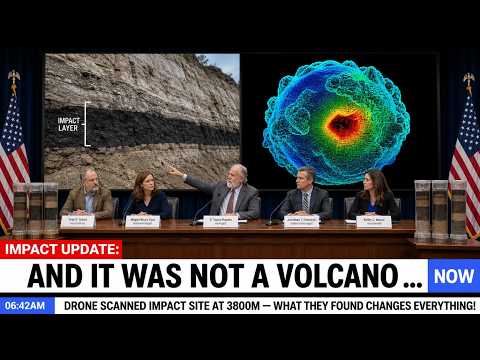
26 Scientists Re-analyzed the Younger Dryas Layer — What They Found Beneath It Ends the Debate
Introduction
Researchers have been uncovering a significant geological feature known as the "black mat," which has been found at a consistent depth across four continents. This layer marks a dramatic transition in Earth's history, where above it, the remains of Ice Age megafauna such as mammoths and giant ground sloths cease to exist, while below it, evidence of a thriving human culture is present. The mystery surrounding this black line has intrigued scientists for nearly two decades, prompting extensive investigations into its implications for the end of the last Ice Age.
The Context of the Younger Dryas
To understand the significance of the black mat, one must consider the climatic conditions around 14,000 years ago. During this period, the Earth was warming, with massive ice sheets retreating and ecosystems flourishing. However, approximately 12,800 years ago, a sudden and drastic climate reversal occurred, known as the Younger Dryas, which lasted for about 1,200 years. This period saw a sharp drop in temperatures, leading to the re-advancement of glaciers and a significant disruption of the warming trend. The abruptness of this climatic shift raises critical questions about its causes, particularly since it coincided with the extinction of many large animal species in North America and the disappearance of the Clovis culture, a prominent human society of the time.
The Clovis Culture and Its Disappearance
The Clovis people, known for their distinctive stone spear points, were skilled hunters who relied heavily on the megafauna of the Ice Age. Their disappearance coincided with the onset of the Younger Dryas, leading to speculation about the interconnectedness of these events. The loss of large animals would have had catastrophic effects on the Clovis way of life, as their hunting practices were closely tied to the existence of these species. This raises the possibility that the climatic changes and the extinction of these animals were not merely coincidental but rather part of a larger, catastrophic event.
The Black Mat and Its Significance
Archaeologists have consistently encountered the black mat during excavations at various Ice Age sites, such as Murray Springs in Arizona. This layer is characterized by its dark, organic-rich sediment and serves as a boundary between the Ice Age ecosystem and a post-Ice Age landscape devoid of large mammals and Clovis tools. The presence of this distinct layer suggests a significant ecological shift, prompting researchers to investigate its origins further.
The Younger Dryas Impact Hypothesis
In 2007, a group of researchers proposed a bold hypothesis suggesting that the Younger Dryas was triggered by a cosmic event, such as a comet or asteroid impact. They argued that this event could have caused widespread wildfires, destabilized the ice sheets, and released debris into the atmosphere, leading to a rapid cooling of the climate. This hypothesis, known as the Younger Dryas impact hypothesis, has sparked considerable debate within the scientific community.
Evidence Supporting the Impact Hypothesis
The evidence for the impact hypothesis is multifaceted, involving various materials found in the boundary layer. One significant piece of evidence is the presence of tiny magnetic and carbon-rich spherules, which form under extreme heat and are typically associated with cosmic impacts. The concentration of these spherules at the boundary layer, along with a notable decrease above and below it, lends weight to the hypothesis.
Additionally, researchers have reported finding nanodiamonds within the boundary layer, including a rare hexagonal form associated with high-pressure environments typical of cosmic impacts. The presence of melt glass, formed at temperatures exceeding those of typical wildfires, further supports the idea of a cosmic event. The discovery of platinum spikes in ice cores, particularly in Greenland, has also been a critical piece of evidence, as platinum is more common in cosmic materials than in Earth's crust.
Global Evidence of Catastrophe
Evidence of the impact hypothesis extends beyond North America. For instance, researchers at the ancient site of Abu Hureyra in Syria found similar melt glass, suggesting that the cosmic event may have had hemispheric effects, impacting multiple regions simultaneously. Furthermore, studies have indicated a significant increase in charcoal and soot levels around the time of the Younger Dryas, indicating widespread biomass burning, which could have contributed to a "nuclear winter" effect, dimming sunlight and cooling the planet.
Scientific Resistance and Alternative Theories
Despite the compelling evidence for the impact hypothesis, it has faced significant skepticism within the scientific community. The leading alternative explanation for the Younger Dryas involves the sudden release of freshwater from melting ice sheets into the North Atlantic, disrupting oceanic circulation and leading to rapid cooling. This theory has been the dominant narrative for many years, and various competing hypotheses have emerged to explain the extinctions of megafauna, including overhunting by humans, climate change, and even disease.
Conclusion: A Complex Interplay of Events
The debate surrounding the Younger Dryas impact hypothesis continues, with no consensus reached among scientists. However, the accumulating evidence suggests that a cosmic event may have played a crucial role in triggering the climatic and ecological upheavals of the time. The black mat serves as a poignant reminder of the interconnectedness of these events, suggesting that the abrupt end of the Ice Age, the extinction of megafauna, and the collapse of human cultures may all be linked to a singular, catastrophic event. As research progresses, the understanding of this pivotal moment in Earth's history may continue to evolve, shedding light on the complex interplay of natural forces that have shaped our planet.
The speaker presents a compelling case for the Younger Dryas Impact Hypothesis (YDIH), suggesting that a cosmic event, such as a comet or asteroid impact, triggered a series of abrupt climatic changes and biological extinctions approximately 12,800 years ago. This hypothesis seeks to explain the simultaneous occurrence of three significant events: a sudden cold reversal known as the Younger Dryas, the extinction of many megafauna species, and the disappearance of the Clovis culture, a prominent human civilization of that era. The speaker appears to be a proponent of the YDIH, emphasizing a growing consensus among researchers that increasingly supports this theory.
In their conclusion, the speaker infers that these three phenomena, once considered separate puzzles, may be interconnected as a result of a singular catastrophic event. This reframing of the narrative challenges traditional views of gradual climatic transitions and suggests that the climate shifts we observe today are part of a larger, more violent historical context. The speaker indicates that the evidence for YDIH has not only persisted but has strengthened over time, leading to a shift in the scientific community's perspective.
-
- [20:34] "For a growing number of researchers, the question is no longer whether something cosmic happened at the dawn of the Younger Dryas. It's how big it was and how much of the catastrophe it caused."
To support the Younger Dryas Impact Hypothesis (YDIH), the speaker presents an array of compelling physical evidence and logical arguments that point toward a cosmic impact as a significant factor in the abrupt climate changes and extinctions of the period. Key pieces of evidence include:
- Platinum Anomalies: The speaker notes a sharp spike in platinum found in ice cores, specifically within the Greenland ice core known as GISP2, which correlates with the onset of the Younger Dryas. This platinum is common in cosmic materials but rare in the Earth's crust, suggesting an extraterrestrial origin.
- Microspherules: Researchers have identified tiny magnetic and carbon-rich spherules in the boundary sediment, which are indicative of extreme heating and rapid cooling, typically associated with cosmic impacts.
- Nanodiamonds: The presence of nanoscale diamonds, including a rare hexagonal form associated with high-pressure conditions from impacts, further supports the hypothesis.
- Melt Glass: Fragments of glass found at various sites exhibit properties formed at extremely high temperatures, far exceeding those of typical terrestrial processes like wildfires or volcanic activity.
- Burn Layers: Evidence of widespread biomass burning, indicated by peaks in charcoal and soot deposits across multiple continents, suggests that massive wildfires occurred concurrently, likely as a result of a cosmic event.
The speaker interprets these findings as collectively reinforcing the notion of a cosmic event triggering the Younger Dryas, emphasizing that the synchronicity of these markers across different global sites makes it challenging to attribute their formation to ordinary geological processes.
-
- [10:54] "A sharp anomaly, a sudden spike in platinum was locked into the ice almost precisely at the onset of the Younger Dryas."
Throughout the discussion of the Younger Dryas Impact Hypothesis (YDIH), the speaker acknowledges several counter-arguments and criticisms that challenge the validity of this hypothesis. Some of the main objections include:
- Alternative Explanations for Extinctions: Critics argue that human activity, particularly through hunting, could have led to the extinction of megafauna. This is known as the overkill hypothesis. Others suggest that climate change, possibly induced by natural fluctuations, may have destroyed habitats and food supplies, contributing to the extinctions.
- Lack of a Crater: Skeptics question the absence of a large impact crater to corroborate the idea of a cosmic event, arguing that without direct physical evidence of such an impact, the hypothesis remains speculative.
- Reproducibility Issues: Some researchers have attempted to replicate the findings of microspherules and nanodiamonds but reported inconsistencies, raising concerns about the reliability of the evidence.
- Dating Challenges: The dating of the boundary layer has faced scrutiny, with critics questioning the methods used and the timelines established for correlating events.
In response to these challenges, the speaker emphasizes that the absence of a crater could be explained by the nature of an airburst or impacts on thick ice sheets, which may have concealed any resultant scars. They also highlight that the collection of evidence continues to grow, maintaining that the accumulation of findings from various sites supports the impact hypothesis. The speaker acknowledges that while these criticisms are valid, they also underscore the ongoing debate and the complexity of understanding the events of that era.
-
- [15:06] "The honest reality is that the megafauna extinction is one of the great unsolved arguments in science..."
Approximately 12,000 to 13,000 years ago, the climate underwent dramatic shifts that are underscored by the speaker’s detailed observations. The transcript reveals a transition from a warming trend to an abrupt cold snap characterized by the Younger Dryas, a period when temperatures dropped sharply in the northern hemisphere. According to the speaker, this sudden reversal in climate occurred roughly 12,800 years ago and lasted for about 1,200 years. The reversal was not a gradual process; instead, it was described as "almost overnight in geological terms", indicating a significant and rapid change that interrupted the warming trend that had been developing for thousands of years.
This climatic upheaval coincided with the extinction of many large mammals, commonly referred to as megafauna, including woolly mammoths, mastodons, and giant ground sloths. The speaker notes that this extinction event felt geologically like the "blink of an eye", marking significant losses in biodiversity. Not only did these large animals vanish, but a specific human culture, the Clovis people, also disappeared during this time. The Clovis culture, known for their distinctive stone spear points, was fundamentally tied to these large animals, suggesting that their extinction had profound implications for human populations who relied on them.
The speaker proposes a connection between these climatic events and a potential extraterrestrial impact through the Younger Dryas impact hypothesis. This hypothesis suggests that a cosmic event, possibly a comet or asteroid, triggered the cold snap and subsequent ecological changes. The idea that an external force could have caused such a significant alteration in climate and biodiversity is a central theme in the speaker’s argument, positioning the Younger Dryas as a crucial moment in Earth's history that reshaped both the environment and the species inhabiting it.
- [01:51] "Almost overnight in geological terms, the planet snapped back into bitter cold."
- [03:06] "The people vanished, too. Not the human race, but a specific, widespread culture."
- [12:26] "This chilling chain of cause and effect... explains how a brief, violent event could leave a scar in the climate that lasted more than a thousand years."
The credibility of the speaker’s claims regarding the Younger Dryas is bolstered by references to various experts and research findings throughout the transcript. One prominent figure mentioned is C. Vance Haynes, a geoscientist who spent years studying the black mat at Ice Age sites. Haynes’ work lends credibility to the observations of a distinct layer in the sediment that coincides with the onset of the Younger Dryas, which has been a focal point in the debate surrounding the impact hypothesis.
The speaker also references a 2007 research paper that introduced the idea of the Younger Dryas being triggered by an extraterrestrial impact. This paper catalyzed significant dialogue and debate within the scientific community, suggesting that a cluster of cosmic fragments may have caused widespread ecological and climatic changes. Although specific authors of this paper are not named, the significance of this publication is clear as it represents a pivotal moment in the discourse surrounding the Younger Dryas.
Additionally, the transcript discusses findings related to nanodiamonds, melt glass, and a spike in platinum discovered at various sites, which serve as key evidence for the impact hypothesis. The mention of studies examining ice cores, particularly the Greenland ice core known as GISP2, highlights the multidisciplinary approach taken by researchers to gather evidence across different scientific domains, including geology and archaeology.
In contrast, the speaker also addresses mainstream views, such as the meltwater hypothesis, which attributes the climate changes to the influx of freshwater into the North Atlantic as the ice sheets melted. This competing explanation illustrates the tension between the impact hypothesis proponents and those favoring natural climatic mechanisms, thereby enriching the narrative of scientific debate on this historical climate event.
- [05:04] "C. Vance Haynes spent years documenting this layer at site after site."
- [06:17] "Their claim was bold. They argued that the Younger Dryas was triggered by a cosmic event."
- [14:16] "The mainstream model proposes that at some point, a vast surge of that cold fresh water suddenly drained into the North Atlantic."
[00:00] Beneath a thin black line of sediment,[00:02] buried at almost the exact same depth on[00:05] four different continents, researchers[00:07] keep finding something that should not[00:09] be there. Above the line, the bones of[00:12] mammoths and giant ground sloths simply[00:15] stop. Below it, an entire human culture[00:19] was thriving across North America. For[00:21] nearly two decades, scientists have[00:24] argued about what that black line[00:25] actually is. [music] Then teams of them[00:28] went back, pulled the layer apart grain[00:30] by grain, and studied what was trapped[00:32] inside. And what they found sealed[00:35] beneath it may finally explain how the[00:37] last ice age really ended. Now, before[00:40] we go digging into that layer, a quick[00:43] heads-up. If lost chapters of Earth's[00:45] history are the kind of thing that keep[00:47] you up at night, the kind of story where[00:49] the textbook version starts falling[00:52] apart the closer you look, then take a[00:54] second and subscribe. This channel lives[00:57] right in that gap, the space between[00:59] what we were taught in school and what[01:01] the ground keeps quietly telling us.[01:04] Okay, let's get into it.[01:06] To understand why a single dark stripe[01:08] of dirt has scientists so worked up,[01:11] you'll have to go back to a very strange[01:13] moment in the planet's history. Picture[01:16] the world around 14,000 years ago. The[01:18] great ice sheets that had buried much of[01:20] North America and northern Europe were[01:23] finally retreating. Glaciers the size of[01:25] countries were melting back. Forests[01:28] were creeping north. Herds of enormous[01:30] roamed open grasslands. Woolly mammoths,[01:33] mastodons, giant ground sloths the size[01:36] of cars, dire wolves, American camels,[01:40] and horses. [music][01:42] For thousands of years, the trend was[01:43] clear. The Earth was warming up. The ice[01:46] age was ending. Life was spreading into[01:48] newly thawed land. And then, roughly[01:51] 12,800 years ago, all of that reversed.[01:55] Almost overnight in geological terms,[01:57] the planet snapped back into bitter[01:59] cold. Temperatures in parts of the[02:01] northern hemisphere dropped sharply. The[02:03] ice that had been retreating started[02:05] advancing again. This cold snap lasted[02:08] somewhere around 1,200 years, and[02:10] scientists gave it a name borrowed from[02:12] a small Arctic wildflower whose pollen[02:15] shows up in the cold sediment from that[02:17] time. The flower is called Dryas. The[02:20] cold period became the Younger Dryas.[02:24] Here's what makes it so unsettling. The[02:26] warming had been gradual and steady for[02:28] thousands of years. The reversal was[02:30] abrupt. Something interrupted the[02:32] recovery of the entire planet, and it[02:34] happened fast. So, the obvious question,[02:37] the one that has haunted geologists for[02:39] generations, is simple. What flipped the[02:42] switch?[02:44] Now, layer a second mystery on top of[02:46] the first. Right around that same window[02:49] of time, North America lost most of its[02:51] largest animals. The mammoths, the[02:54] mastodons, the giant sloths, the[02:57] saber-tooth cats, dozens of huge species[03:01] vanished from the fossil record in what[03:03] feels, geologically, like the blink of[03:06] an eye.[03:08] And it was not only the animals. The[03:10] people vanished, too. Not the human[03:12] race, but a specific, widespread[03:14] culture.[03:16] They are called the Clovis people,[03:18] named after a town in New Mexico[03:21] where their tools were first identified.[03:24] The Clovis culture is famous for one[03:26] signature object, a beautifully made[03:29] stone spear point with a distinctive[03:31] groove, or flute,[03:34] carved up the middle.[03:35] For centuries, these were the dominant[03:38] toolmakers across North America. Their[03:40] points turn up from coast to coast. And[03:43] then, right around the onset of the[03:45] Younger Dryas, the classic Clovis[03:48] toolkit disappears from the record. The[03:50] culture either collapsed, scattered, or[03:53] transformed into something else. Think[03:55] about what that disappearance actually[03:57] means on a human level. These were[03:59] skilled, mobile hunters who had built[04:01] their entire way of life around the[04:03] great animals of the Ice Age. Their[04:06] spear points were engineered for big[04:08] game. So, when the mammoths and the[04:10] other giants collapsed, the Clovis[04:12] people did not just lose a few species[04:14] off a menu. They lost the foundation[04:17] their world was built on. A toolkit that[04:20] had worked unchanged in its essentials[04:23] for generation after generation suddenly[04:25] did not fit the landscape anymore.[04:28] Whatever happened at the boundary, it[04:29] did not only kill animals. It pulled the[04:32] floor out from under the people who[04:34] depended on them. So, now you have three[04:36] things happening at roughly the same[04:38] moment. A sudden global cold reversal, a[04:41] wave of extinctions, and the[04:43] disappearance of a continent-wide human[04:45] culture. Coincidence is always possible,[04:49] but three major events stacking up in[04:51] the same narrow window is the kind of[04:53] thing that makes scientists very[04:55] uncomfortable because it hints that one[04:57] cause might be sitting underneath all[04:59] three. And that brings us back to the[05:01] black line in the the dirt. For decades,[05:04] archaeologists digging at Ice Age sites[05:07] across the American Southwest kept[05:09] noticing the same odd feature. At sites[05:12] like Murray Springs in Arizona, they[05:15] were excavating downward through the[05:17] soil, and they would hit a dark, almost[05:20] charcoal-colored band of sediment. A[05:23] respected geoscientist named C. Vance[05:26] Haynes spent years documenting this[05:28] layer at site after site. He gave it an[05:31] unglamorous, but perfect name.[05:34] The black mat.[05:36] The black mat is rich in organic[05:38] material, which is part of why it is so[05:40] dark.[05:41] But the truly strange part is what[05:43] surrounds it. Dig below the the mat, and[05:46] you find mammoth bones, the bones of[05:48] other extinct giants, and Clovis spear[05:51] points. Dig into the black mat and above[05:53] it, and those things are simply gone.[05:56] The big animals do not reappear. The[05:58] Clovis tools do not reappear. It is as[06:00] if the black mat is a line drawn across[06:03] time itself with a teeming ice age world[06:06] on one side and a strangely emptied[06:08] landscape on the other. That alone would[06:10] be a fascinating mystery. But in 2007, a[06:13] group of researchers published a paper[06:15] that turned the black mat from a[06:17] curiosity into a battlefield. Their[06:20] claim was bold. They argued that the[06:23] Younger Dryas was triggered by a cosmic[06:26] event, [music] a comet or asteroid, or[06:29] more likely a cluster of fragments that[06:32] either struck the ice sheet or exploded[06:34] in a series of air bursts over the[06:36] northern hemisphere.[06:38] The energy released, they said, would[06:40] have ignited wildfires, destabilized the[06:43] ice, thrown debris into the atmosphere,[06:45] and helped tip the warming climate back[06:48] into deep cold. And the black mat, in[06:51] this telling, was partly the residue of[06:54] that of that catastrophe. This idea has[06:56] a name,[06:58] the Younger Dryas impact hypothesis.[07:01] And from the moment it appeared, it was[07:03] one of the most fiercely contested ideas[07:06] in Earth science.[07:08] But a bold claim is only as good as its[07:10] evidence. So, what exactly were these[07:13] researchers finding when they pulled the[07:15] boundary layer apart?[07:19] This is where the story moves from the[07:21] shovel to the microscope. Because the[07:23] case for an impact does not rest on the[07:26] dark color of the sediment. It rests on[07:28] a strange collection of microscopic[07:31] materials that the teams kept extracting[07:34] from the boundary, the thin slice of[07:36] Earth right at the Younger Dryas onset.[07:39] And these materials are the heart of the[07:40] entire debate. The first are tiny[07:43] spheres. When researchers process the[07:46] boundary sediment, they recovered tiny[07:48] magnetic and carbon-rich spherules,[07:51] microscopic beads of material that form[07:54] when something is heated to extreme[07:55] temperatures and then cools so fast it[07:58] freezes into a sphere. You get this kind[08:00] of thing from impacts and from very[08:02] high-energy events. [music] Finding a[08:04] scattering of them might mean nothing.[08:07] Finding a concentrated spike of them[08:09] precisely at the boundary and far fewer[08:11] above and below is harder to wave away.[08:14] Then there are the nanodiamonds.[08:16] Researchers reported finding diamonds at[08:18] the nanoscale within the boundary layer,[08:21] including a rare form with an unusual[08:23] hexagonal structure. That hexagonal[08:26] variety is interesting[08:27] >> [music][08:27] >> because on Earth it tends to be[08:29] associated with the kind of brutal shock[08:32] pressures [music] and temperatures you[08:34] get from cosmic impacts. Diamonds, of[08:37] course, normally take staggering[08:38] pressure and heat to form. Finding them[08:41] concentrated at one thin layer [music][08:43] dated to the same event is a sort of[08:45] clue that is very hard to explain with[08:47] ordinary geology. [music][08:49] And then there is the melt glass. At[08:51] several sites, the teams found tiny[08:53] fragments of glass that, by their[08:56] chemistry and structure, appear to have[08:58] formed at temperatures far higher than[09:00] any normal wildfire or volcanic process[09:04] at the surface could produce. We are[09:06] talking about heat extreme enough to[09:08] melt rock and sand into glass. The kind[09:11] of heat you associate with the touch of[09:13] something cosmic.[09:14] >> [music][09:14] >> Any one of these on its own can be[09:17] argued away. Spherules can form in other[09:19] ways. Nanodiamonds have other possible[09:22] origins. Sceptics were quick to point[09:25] all of this out, but the proponents kept[09:28] returning to the same point. It was not[09:30] one strange material. It was a whole[09:32] suite of them, all spiking together in[09:35] the same thin layer at sites scattered[09:38] across the world.[09:40] And then came the platinum. If the story[09:42] needed a single piece of evidence that[09:45] made even cautious scientists sit up,[09:48] this might be it. Platinum is rare in[09:50] Earth's crust, but it is relatively[09:52] common in certain kinds of cosmic[09:54] material like asteroids and comets. So,[09:57] if a large extraterrestrial[09:59] object vaporized in the atmosphere or[10:02] smashed into the ice, you would expect[10:05] it to leave behind a faint dusting of[10:06] platinum settling out across the[10:08] landscape. In a study examining the[10:11] Greenland ice core known as GISP2,[10:15] researchers found exactly that. A sharp[10:18] anomaly, a sudden spike in platinum was[10:21] locked into the ice almost precisely at[10:24] the onset of the Younger Dryas. Ice[10:27] cores are like tree rings for the[10:29] planet. Each layer is a year sealed and[10:33] undisturbed. [music][10:34] So, a platinum spike at that depth is a[10:37] timestamp. Something rich in platinum[10:39] entered the atmosphere right when the[10:41] cold reversal began. And the spike was[10:43] not just a Greenland curiosity. Later[10:46] work reported finding the same platinum[10:48] anomaly at the Younger Dryas boundary at[10:51] numerous sites across North America. The[10:54] same chemical fingerprint, the same[10:55] moment in time showing up again and[10:57] again across an entire continent. For[11:00] the people who built the impact[11:02] hypothesis,[11:03] the platinum was the closest thing yet[11:06] to a smoking gun.[11:08] Now, let's leave North America for a[11:10] moment because one of the most striking[11:13] pieces of the puzzle was found on the[11:15] other side of the world. In Syria, there[11:18] is an ancient site called Abu Hureyra,[11:21] one of the earliest known places where[11:23] humans began the slow shift toward[11:26] settled village life and farming.[11:29] Researchers studying the soil at Abu[11:32] Hureyra reported finding milk glass[11:35] there, too.[11:36] Fused material that, by their analysis,[11:39] formed at staggering temperatures.[11:42] Their interpretation was that a[11:45] low-altitude airburst, a cosmic object[11:49] exploding in the atmosphere above the[11:51] region,[11:52] blasted the ground with enough heat to[11:55] melt the very dirt of an ancient[11:57] settlement.[11:58] If that holds up, it means the same[12:00] event was not a single local strike. It[12:03] was hemispheric, fragments hitting or[12:06] exploding over multiple regions at once,[12:08] which is exactly what you would expect[12:10] if the culprit was not one solid rock,[12:13] but a fragmented swarm. There is one[12:16] more layer of evidence that ties[12:17] directly into the climate question, and[12:20] it is written in soot.[12:22] When researchers examined sediment and[12:24] ice from around the world at the Younger[12:26] Dryas onset, several teams reported a[12:29] sharp peak in the markers of burning,[12:31] charcoal, soot, and the fine carbon[12:34] residue left behind when vast amounts of[12:37] vegetation go up in flames. Some of[12:39] these studies described it as one of the[12:42] most intense episodes of biomass burning[12:45] in the entire record of that era, with[12:47] fire signatures appearing on multiple[12:50] continents at roughly the same time.[12:52] Picture wildfires raging across a[12:54] substantial fraction of the planet's[12:56] land surface within a single window.[12:59] That, the proponents argue, is the[13:01] missing link between a cosmic event and[13:03] a global freeze. Throw enough smoke,[13:06] soot, and pulverized debris into the[13:08] upper atmosphere, and you dim the sun.[13:11] Less sunlight reaches the ground, the[13:13] surface cools, and you get what is[13:15] sometimes called an impact winter. In[13:19] that scenario, the comet did not have to[13:21] cool the planet by brute force. It just[13:24] had to set the world on fire and let the[13:26] smoke do the rest. It is a chilling[13:29] chain of cause and effect and it[13:31] explains how a brief, violent event[13:34] could leave a scar in the climate that[13:36] lasted more than a thousand years. If[13:39] you are following along this far, here[13:41] is something worth holding on to.[13:43] This channel exists for stories like[13:45] this, the ones where the evidence keeps[13:48] outrunning the official explanation. If[13:51] that is your thing, subscribing[13:53] genuinely helps. Now, let us get to the[13:55] part of the story where the scientists[13:57] fight back.[13:58] Because for all of that, the Younger[14:00] Dryas impact hypothesis is not the[14:02] accepted, settled explanation in[14:05] mainstream science, not yet. And the[14:08] resistance to it has been [music][14:09] intense. The leading conventional[14:12] explanation for the Younger Dryas does[14:13] not involve a comet at all. It involves[14:16] water.[14:17] >> [music][14:17] >> As the great North American ice sheet[14:19] melted, it created an enormous lake of[14:22] glacial meltwater. The mainstream model[14:24] proposes that at some point, a vast[14:26] surge of that cold fresh water suddenly[14:29] drained into the North Atlantic.[14:31] Freshwater is lighter than salt water[14:33] and dumping that much of it into the[14:34] ocean could have disrupted the great[14:37] circulation system that carries warm[14:39] water north and keeps the northern[14:41] hemisphere mild. Shut down that[14:42] conveyor, the argument goes, and[14:45] northern temperatures plunge. No comet[14:47] required. This explanation has been the[14:50] textbook answer for a long time and a[14:52] lot of serious scientists still favor[14:54] it. So, when the impact hypothesis[14:56] arrived, claiming a cosmic catastrophe[14:58] instead, it ran straight into a wall of[15:01] skepticism. And the extinctions have[15:04] their own competing explanations, which[15:06] muddies the water even further. One[15:08] long-standing idea blames us. The[15:10] overkill hypothesis argues that human[15:13] hunters, spreading across the Americas,[15:15] simply hunted the slow-breeding giants[15:18] to extinction. Another camp points the[15:20] finger squarely at the climate, arguing[15:22] that the wild temperature swings at the[15:24] end of the ice age destroyed habitats[15:27] and food supplies faster than the big[15:29] animals could adapt. A few researchers[15:32] have even floated disease as a factor.[15:34] The honest reality is that the megafauna[15:37] extinction is one of the great unsolved[15:39] arguments in science, and plenty of[15:41] experts believe it was a messy[15:42] combination of pressures rather than a[15:44] single knockout blow. The impact[15:46] proponents do not necessarily deny that[15:48] humans and climate played a role. Their[15:51] claim is narrower and in a way more[15:53] disturbing. They argue that a cosmic[15:55] event was the trigger that pushed an[15:57] already stressed system over the edge[16:00] all at once on a single bad day. That[16:03] distinction matters because it is the[16:05] difference between a slow decline and a[16:07] sudden execution. The criticisms were[16:09] sharp and specific. Some researchers[16:12] tried to replicate the spherule and[16:14] nanodiamond findings and reported that[16:17] they could not always do so, which in[16:19] science is a serious problem. Others[16:22] argued that the microspherules could[16:24] form through ordinary processes like[16:26] wildfires or even modern contamination[16:29] rather than a cosmic impact. The dating[16:33] was challenged. Critics asked why, if a[16:35] continent-shattering impact really[16:37] happened, there was no obvious giant[16:39] crater to point to. And some accused the[16:42] proponents of seeing an impact in[16:44] evidence that could be explained more[16:46] simply.[16:47] The proponents had answers for each[16:49] objection. The lack of a crater, they[16:52] argued, fits an airburst or a strike[16:54] onto a kilometer-thick ice sheet, which[16:57] could have absorbed and hidden the scar[16:59] before melting away entirely. The[17:01] reproducibility problems, they said,[17:03] often came down to differences in how[17:05] teams collected and processed their[17:07] samples. And they pointed again and[17:10] again to the platinum, which is[17:12] genuinely difficult to explain with[17:13] wildfires or contamination. The argument[17:17] went back and forth for years, paper[17:18] after paper, in some of the most[17:20] respected journals in the world. And[17:22] that's exactly why scientists kept going[17:24] back to the layer, because the way you[17:26] settle a fight like this isn't with one[17:28] dramatic discovery, it's with patience.[17:31] Over the years, multidisciplinary[17:33] teams, sometimes more than two dozen[17:34] researchers, pulling their expertise[17:37] across geology, chemistry, and[17:38] archaeology, kept re-sampling the same[17:41] boundary at sites all over the planet.[17:45] Each time they were testing whether the[17:47] strange signal held up under fresh eyes[17:50] and tighter methods. And this is where[17:53] the argument that's hardest to dismiss[17:55] emerges. It isn't any single material,[17:58] it's the timing. When teams carefully[18:01] dated the boundary layer at widely[18:03] separated sites on different continents,[18:06] the impact proponents argued that the[18:08] layer keeps falling into the same narrow[18:10] window of time, right around 12,800[18:13] years ago. A statistical re-analysis of[18:17] the dates from multiple sites pointed[18:20] toward the boundary being essentially[18:22] synchronous across the northern[18:24] hemisphere and beyond. Think about what[18:26] that would mean. A wildfire is local, a[18:29] flood is regional, but a thin layer[18:31] carrying the same exotic materials[18:34] deposited at the same moment across[18:36] multiple continents at once is very hard[18:39] to explain with anything that happens on[18:41] the ground. That kind of synchronicity[18:43] points upward toward the sky. So, what[18:46] could deliver a blow across an entire[18:49] hemisphere in a single moment?[18:50] Increasingly, the proponents stopped[18:53] picturing a single giant iron meteorite[18:56] and started picturing something else, a[18:58] large comet that had broken apart,[19:00] leaving behind a stream of fragments and[19:03] debris. Earth crossing through that[19:05] stream wouldn't take one hit, it would[19:07] take a barrage, multiple air bursts and[19:10] impacts scattered across the globe, all[19:12] within a very short span. That single[19:15] picture ties the threads together. It[19:17] explains the melt glass in Syria and the[19:19] spherules in Arizona. It explains the[19:22] absence of one enormous crater and it[19:24] explains why the boundary shows up[19:26] everywhere at [music] once. So, has the[19:29] debate actually ended? Here's the honest[19:31] answer, the one a good documentary owes[19:33] you. In the strict sense, no single[19:35] experiment has forced every last[19:38] scientist to agree. There are still[19:40] respected researchers who favored the[19:42] meltwater explanation [music] and who[19:44] remain unconvinced. Science doesn't[19:46] usually end with a thunderclap, but[19:48] here's what has changed [music] and why[19:50] this story feels so different now than[19:52] it did when the idea first appeared. The[19:55] evidence has not faded under scrutiny.[19:57] It has [music] accumulated.[19:59] The platinum spike held up.[20:01] The melt glass kept turning up.[20:04] The synchronized dating across[20:05] continents kept tightening. [music] The[20:07] collection of impact markers sealed in[20:10] that thin black boundary has only grown[20:13] harder to dismiss with each round of[20:16] reanalysis.[20:17] An idea that was once treated as fringe[20:20] has been pushed slowly and stubbornly[20:23] toward the center[20:25] the center of the conversation. For a[20:28] growing number of researchers, the[20:30] question is no longer whether something[20:32] cosmic happened at the dawn of the[20:34] Younger Dryas. It's how big it was and[20:37] how much of the catastrophe it caused.[20:41] And that reframes everything we started[20:43] with, the sudden cold, the vanished[20:46] mammoths, the disappearance of the[20:48] Clovis people. For a long time, those[20:51] were three separate puzzles with three[20:54] separate maybe answers. The boundary[20:57] layer offers the unsettling possibility[20:59] that they were never separate at all,[21:02] that one event falling out of the sky[21:05] 12,800 years ago reset the climate,[21:09] emptied the landscape of its giants, and[21:11] shattered the people who hunted them. If[21:13] that's true, then the world you and I[21:16] live in, the warm, stable, mammoth-free[21:18] world of the last several thousand[21:20] years, didn't simply ease into being. It[21:23] was born in fire and shock in a single[21:26] terrible season, recorded forever in a[21:29] stripe of dark sediment thinner than[21:31] your hand. And there's one last reason[21:34] this story should matter to you sitting[21:36] here today. Just over a century ago, in[21:39] 1908, a cosmic object exploded in the[21:42] sky over a remote stretch of Siberia[21:46] near the Tunguska River. There was no[21:48] crater, but the air burst flattened[21:50] roughly 800 square miles of forest,[21:53] snapping millions of trees like[21:55] matchsticks. That was one fragment over[21:58] an empty wilderness, and we barely[22:00] understood what hit us. The boundary[22:03] layer beneath the black mat may be the[22:05] fossilized memory of something far[22:07] larger, a reminder that the sky is not[22:09] as safe and settled as it looks, and[22:12] that the Earth has been ambushed before.[22:14] [music] So, the next time you see a thin[22:16] dark line in a cliff face or a river[22:19] bank, remember that the planet keeps a[22:21] diary, and buried in one of its oldest[22:23] entries, 12,800 years deep, is the[22:27] record of the day the Ice Age didn't[22:30] just end. It was ended.[22:33] If this is the kind of buried history[22:36] you want more of, the layers of the past[22:39] we were never taught to look at,[22:41] subscribe and stick around. Next, I'll[22:44] take you to the Carolina Bays, thousands[22:46] of strange oval scars across the[22:48] American landscape that some researchers[22:51] believe are the missing fingerprints of[22:53] this very same event. That one is[22:55] waiting for you on screen right now.
Daniel Britt - Orbits and Ice Ages: The History of Climate
Introduction and Background
The lecture begins with a brief introduction by the speaker, who expresses a sense of disbelief at the accolades he receives, reflecting on his journey as a geologist and paleoclimatologist. He shares that his background is rooted in studying rocks, having spent three years working with ice cores from various regions, including Antarctica and Greenland. This experience provided him with a unique perspective on paleoclimatology, which is the study of past climates through geological records.
The speaker emphasizes the importance of observation in science, contrasting it with faith. He asserts that scientists are not merely believers but are constantly testing hypotheses against reality. This distinction is crucial as he prepares to discuss the current climate context, which he describes as unusual, influenced both by human activities and natural Earth systems.
Understanding Climate vs. Weather
The speaker clarifies the difference between climate and weather, stating that climate refers to long-term atmospheric patterns, while weather is short-term and complex. He notes that predicting weather accurately beyond a few days is challenging, whereas climate can be understood through geological records. He emphasizes that to grasp what constitutes a "normal" climate, one must look at geological history, which spans millions of years.
Geological Time and Climate History
The speaker highlights that geological time is measured in eons and millions of years, allowing scientists to reconstruct climate patterns over the last half billion years. He presents a timeline indicating that the Earth is currently in a relatively warm period within one of the coldest phases of its history. He explains that the average climate 50 million years ago was significantly warmer, with conditions allowing for warm-adapted vegetation and animals thriving in regions now considered inhospitable.
For instance, he paints a vivid picture of a time when crocodiles could be found in Hudson Bay, and there were no glaciers in Antarctica or Greenland. The speaker mentions that CO2 levels at that time were around 1,700 parts per million, compared to current levels of approximately 428.6 parts per million, which were about 260 parts per million before industrialization.
Sea Level and Geological Records
The speaker introduces the concept of sea level changes throughout geological history, explaining that higher sea levels were associated with warmer periods when continental glaciation was absent. He discusses a veil plot that illustrates sea level changes over time, emphasizing that current sea levels are relatively low compared to historical norms. He notes that during glacial maximum periods, sea levels were significantly lower due to the vast amounts of water locked in glaciers.
He further explains that the climate has been deteriorating over the last 50 million years, with the last 2.7 million years characterized by glaciations. He describes the cyclical nature of glacial periods, noting that the last 500,000 years have seen a pattern of cold periods interspersed with warmer interglacials, with the current interglacial being unusually long due to human intervention.
Causes of Climate Change
The speaker attributes the long-term climate deterioration to geological factors, particularly the movement of tectonic plates. He discusses how the collision of the Indian subcontinent with Asia created the Tibetan Plateau, which significantly increased rock weathering. This weathering process removed a substantial amount of CO2 from the atmosphere, leading to a cooler climate that became vulnerable to small changes in solar energy inputs.
He explains that the loss of CO2 has made the climate more sensitive to variations in solar energy, particularly at higher latitudes. The speaker illustrates this point by referencing the last glacial maximum, when New York City was covered by a mile of ice, and the implications of such drastic climate changes.
Orbital Variations and Climate Cycles
The speaker introduces Milankovitch cycles, which describe how variations in Earth's orbit affect solar energy distribution and climate. He explains that these cycles can lead to significant climate changes, including the onset of glacial periods. He emphasizes that the current orbital parameters result in warmer winters and cooler summers, which can influence the accumulation of snow and the development of glaciers.
He notes that the current interglacial period has lasted longer than expected, primarily due to human activities that have increased greenhouse gas concentrations in the atmosphere. The speaker highlights that while natural cycles have historically driven climate changes, human actions have altered this trajectory.
Human Impact on Climate
The speaker discusses the role of agriculture and deforestation in contributing to climate change. He explains how early agricultural practices, such as slash-and-burn techniques, released significant amounts of CO2 into the atmosphere. He highlights the importance of ice cores in understanding past atmospheric conditions, noting that these cores contain trapped gases that provide direct evidence of historical CO2 levels.
He emphasizes that human activities, including livestock domestication and land clearing, have inadvertently stabilized the climate by increasing greenhouse gas concentrations. However, he warns that there are limits to how much CO2 can be absorbed through natural processes, and the industrial revolution marked a significant turning point in greenhouse gas emissions.
Current Climate Trends and Projections
The speaker presents data indicating that CO2 levels have risen dramatically since the industrial revolution, with current emissions far exceeding natural sources. He discusses the implications of these changes, including rising global temperatures and the increasing frequency of extreme weather events. He notes that the last decade has seen record-breaking temperatures, highlighting the urgency of addressing climate change.
He also discusses the potential for future sea level rise, projecting that we could see significant increases in sea levels this century due to melting ice sheets and glaciers. The speaker emphasizes that while some regions may benefit from warmer temperatures, others will face severe challenges, particularly coastal areas vulnerable to flooding.
Geoengineering and Mitigation Strategies
In conclusion, the speaker emphasizes the need for geoengineering solutions to address climate change. He argues that while reducing greenhouse gas emissions is essential, it is also necessary to explore technologies that can actively remove CO2 from the atmosphere. He suggests that the scientific community must take responsibility for shaping the future climate and that there are viable alternatives to fossil fuels that can be developed.
The speaker encourages individuals to take action by reducing their carbon footprints, such as adopting renewable energy sources and supporting sustainable practices. He expresses optimism that with concerted efforts, it is possible to mitigate the impacts of climate change and preserve the current state of the planet.
Q&A Session
The lecture concludes with a question-and-answer session, where the speaker addresses various inquiries about geoengineering, individual actions to combat climate change, and the future of fossil fuel reserves. He emphasizes the importance of scientific observation over belief and encourages a proactive approach to environmental stewardship.
The speaker discusses the broader context of climate science and paleoclimatology rather than specifically addressing the Younger Dryas Impact Hypothesis (YDIH). Throughout the lecture, he emphasizes his role as an observational scientist, relying on geological records and ice core data to interpret Earth's climatic history. The central thesis appears to be that our current understanding of climate change must be grounded in empirical evidence rather than speculative models.
While the transcript does not explicitly mention the YDIH, it suggests that the speaker is more of a sceptic regarding simplistic interpretations of climate data and events. He implies that many claims surrounding climate phenomena can be misleading, especially those that do not take into account the long-term geological context. His overarching conclusion is that to understand climate change and its drivers, it is crucial to observe the reality reflected in geological records rather than relying solely on transient theories or models.
- [02:20] "Scientists don’t have faith in science. We’re always trying to test it to see if it’s wrong."
- [10:14] "What is normal for Earth is way warmer and we’ll talk about that."
- [03:01] "What you’re going to get from me is the context."
The speaker provides several pieces of evidence that bolster his claims regarding paleoclimatology and Earth's climatic history, although he does not specifically mention the YDIH or related physical evidence. Instead, his focus is on the geological records, particularly ice cores, which serve as vital indicators of past climates. He shares his personal experience working with ice cores from various regions, including Antarctica and Greenland, to emphasize the importance of empirical data in understanding climate history.
Specific evidence discussed includes:
- Ice Cores: The speaker notes that ice cores provide a record of past climates, allowing scientists to observe patterns in greenhouse gas concentrations and temperature changes over time.
- Oxygen Isotope Ratios: He mentions analyzing oxygen isotope ratios to infer historical temperature variations, explaining that larger numbers indicate colder periods while smaller numbers indicate warmer ones.
- Geological Time Scale: The speaker emphasizes the geological time scale, which includes centuries, millennia, and eons, illustrating the long-term changes in climate that have occurred over the last 500 million years.
These findings lead him to argue that our current climate situation is part of a natural cycle that has been influenced by human activity, particularly through the introduction of greenhouse gases.
- [01:10] "What this is is a record of past climate."
- [10:41] "We can answer the question, what is normal?"
- [04:30] "Climate is what happens over long periods of time. Climate is easy. Weather is hard."
The transcript does not provide specific counter-arguments or criticisms related to the YDIH or its associated claims. However, the speaker implicitly addresses common misconceptions and oversimplifications about climate science and its drivers. For instance, he critiques the tendency of some to conflate weather with climate, stating, "[04:10] I'm not going to talk about weather. Weather is hard." This reflects a broader skepticism towards quick interpretations of climate data that might overlook underlying complexities.
Moreover, the speaker emphasizes the importance of geological context in assessing climate change. He states, "[10:25] We are in one of these warm... times of some of the most excruciatingly cold times in the last 400 million years." This suggests that while addressing climate change, one must consider historical patterns rather than focusing solely on recent events or anomalies.
He also acknowledges the challenges of understanding climate affected by both natural processes and human actions, hinting at the complexities that arise from historical climatic shifts. However, without specific references to the YDIH or its criticisms, it is clear that the speaker's approach is grounded in a critical assessment of claims rather than providing direct counter-arguments.
- [03:03] "What I will tell you is not soundbite science."
- [10:35] "The climate has been deteriorating for the last 50 million years."
- [04:19] "I’m a rock guy. And the rocks will tell you what the climate was like in the past."
In the lecture, the speaker discusses significant climatic changes that occurred approximately 12,000 to 13,000 years ago, during a time when the Earth was transitioning out of the last glacial maximum. This period was characterized by abrupt temperature changes and significant environmental shifts that had profound impacts on the planet's ecosystems.
The speaker highlights that during this time, the Earth experienced a warming trend that led to a significant melting of the ice sheets covering large areas of North America and Europe. This warming is connected to a series of interglacial periods, which are warmer intervals between ice ages. The climatic shifts of this era coincided with the extinction of many megafauna species, such as mammoths and saber-toothed cats, which were unable to adapt to the rapidly changing environments. The abrupt temperature changes may have contributed to these extinctions by altering the habitats and food availability for these large animals.
However, the speaker does not directly link these climatic events to an extraterrestrial impact or specific mechanisms such as changes in ocean currents. Instead, the focus lies on the natural climatic variations driven by Earth's orbital parameters and the resulting greenhouse gas concentrations. These natural cycles, including Milankovitch cycles, explain the periodic warming and cooling trends that have shaped Earth's climate over millennia.
Overall, the speaker emphasizes that while human influence on climate is profound today, historical climatic shifts were largely driven by natural phenomena.
- [12:12] "For the last 50 thousand years, the pattern has been 100,000-year very cold periods broken by short, on average, 4,000-year interglacials."
- [22:06] "Our peak warming was about 8,000 years ago. Since then, solar output has been dropping, but the ice is still retreating."
- [10:35] "This is a tractable problem but it is a geoengineering problem that we need to actually take a little initiative and agency to solve."
The speaker's lecture contains references to various scientific concepts and phenomena related to climate science, particularly the understanding of past climate changes and their implications for the present. However, specific sources, experts, and authorities are not explicitly cited in the transcript as part of the arguments made. The speaker emphasizes a reliance on observational data rather than modeling, which suggests a viewpoint rooted in empirical research.
Throughout the lecture, the speaker refers to Milankovitch cycles, which are well-known in climate science for explaining how variations in Earth's orbit affect climate over long periods. While he does not mention specific scientists or papers, the general concept is widely accepted within the scientific community and serves as a foundation for understanding glacial and interglacial periods.
The speaker also discusses the significant role of ice cores in revealing the history of atmospheric CO2 levels and climate change. This method of research is well-documented and utilized by various scientists and institutions, including those involved in paleoclimatology and climate studies. The speaker's background as a geologist provides a credibility that aligns with mainstream scientific views, although he aims to challenge certain misconceptions prevalent in public discourse.
Overall, while the speaker provides a strong narrative on climate science, specific citations of studies or experts are notably absent, indicating a focus on general principles and observational conclusions rather than directly referencing external authorities.
- [02:11] "Scientists don’t have faith in science. We’re always trying to test it to see if it’s wrong."
- [05:05] "If you want to know what a normal climate is, you look at the geological record."
- [21:19] "We should be able to calculate where we’re going and where we’ve been."
[00:03] [Music][00:13] This lecture is being brought to you in[00:15] part by the generous gifts of these[00:20] sponsors. When I hear these[00:22] introductions, I um I wonder, did I do[00:24] all that?[00:27] I remember all of that, but uh not at[00:29] all at the same time.[00:31] Um what I'm going to talk to you about[00:34] are[00:35] uh a mix of planetary science and PL and[00:39] paleoclimatology. I'm a rock guy.[00:42] When I went back to study rocks at the[00:45] University of Washington initially[00:46] before going to Brown, I was poor as a[00:49] church mouse and I needed a job and a[00:53] guy was having trouble finding somebody[00:55] who would be willing to spend 20 hours a[00:58] week in a walk-in freezer cutting up ice[01:02] cores, which is what I did for three[01:04] years.[01:08] Um because these were ice cores from[01:10] Antarctica, from Greenland, from uh uh[01:15] ice caps in the Andes. And what this is[01:19] is a record of past climate. And I'll[01:22] show you a lot of this. Some of this[01:24] data I'm showing you I actually took as[01:26] an[01:27] undergraduate. And[01:30] um I look back upon that as one of the[01:33] most amazing jobs I ever stumbled into.[01:39] I wanted to do planets, but[01:42] paleoclimatology is actually the study[01:44] of how planets react to different[01:48] circumstances. And what I'm going to[01:49] show you is[01:51] reality. I'm not a modeler. I have[01:54] trouble thinking about inventing uh[01:58] inventing systems. What I have to rely[02:01] on is[02:04] observation and looking at what the[02:06] rocks tell you, looking at what the data[02:09] tells you. And there's a difference[02:11] between having faith[02:13] in in science and observing[02:17] science. Scientists don't have faith in[02:20] science. We're always trying to test it[02:24] to see if it's wrong. What we want to do[02:27] is we want to observe reality. And I'm[02:30] going to give you the context of our[02:33] current climate because we're actually[02:36] in an unusual place. And part of it is[02:39] our doing. Part of it is the doing of of[02:43] the Earth's[02:45] systems.[02:47] And what I will tell you is not[02:49] soundbite science. This will actually[02:52] take 50 minutes. You can't distill a lot[02:54] of this into a tweet. And I'm sorry, but[02:58] that's the way it is. And so what you're[03:01] going to get from me is the context. And[03:03] so you can go out and see the tweets and[03:07] realize that, oh, that person is[03:10] proclaiming to the world how stupid they[03:13] are. And I get a lot of that. And it[03:17] quite often I bite my tongue and say,[03:19] "Oh, very nice. But have you considered[03:21] uh and generally not?[03:26] So start[03:34] with you hear lots of things about[03:38] climate. Um all of this stuff that I'm[03:41] listing is[03:42] true. CO2 was a lot higher and a lot[03:45] lower in the past. The Earth was a lot[03:48] warmer and a lot a lot colder in the[03:51] past. Glaciers are melting. Sea level is[03:54] rising. But we're in an ice age. How can[03:57] we be in an ice age when the glaciers[03:59] are[03:59] melting? Sunspots cause warming.[04:02] Greenhouse gases cause warming. This is[04:05] all[04:07] true. What I'm not going to talk about[04:10] is weather. Weather is hard. Weather is[04:13] huge computational fluid dynamics.[04:16] I can't do that. I'm not that smart. I'm[04:19] a rock guy. And the rocks will tell you[04:22] what the climate was like in the past.[04:25] And climate is what happens over long[04:27] periods of time. Climate is[04:30] easy. Weather is hard. You can't predict[04:34] weather more than four days in advance.[04:36] But I will predict to you right[04:38] now that early April next year will be[04:42] warm and sunny in Florida.[04:46] Am I brilliant? No. It's just that it[04:49] happens that way every year. And you can[04:52] see that in the rocks and strata that[04:56] are laid down at these times. And you[04:58] can go way[05:00] back. So I'm a geologist. If you want to[05:03] know what a normal climate is, you look[05:05] at the geological record. And this is[05:07] not rocket science. You can actually[05:09] read this straight out of the rocks and[05:12] chemistry that were laid down.[05:16] The problem of course is that we all[05:18] live in human time. You know the[05:20] proverbial three score and 10 or[05:23] hopefully it's longer than that because[05:24] I'm past three score and 10 already.[05:29] Um geological time is written in[05:33] centuries, millennia,[05:36] eons, millions of[05:38] years, billions of years. And we[05:41] actually know the climate for the last[05:43] half billion years pretty well. And and[05:46] so we can answer the question, what is[05:49] normal?[05:50] And this is the last half billion[05:54] years. We are[05:57] here. We are in a relatively warm period[06:02] of one of the coldest periods in the[06:04] last half billion years. you happen to[06:07] be in an equitable period which is[06:10] actually unusually cold for most of[06:14] Earth history. Normal for Earth is way[06:19] warmer and we'll talk about[06:22] that. So 50 million years ago and that[06:25] was kind of average for the last half[06:28] billion you had warm adapted vegetation[06:31] and critters north of the Arct north and[06:33] south of the Arctic circles. So you can[06:36] imagine crocodiles and tur turtles in[06:39] Hudson's[06:40] Bay. No continental glaciation. So no[06:43] glaciers[06:45] on south on on Antarctica or[06:48] Greenland. Brown leaf evergreens north[06:51] of the Arctic[06:53] Circle. Um average temperatures at the[06:56] poles would be above freezing. You had[06:59] tropical conditions at 40 degrees lat[07:02] north north and south latitude. That's[07:04] the latitude of Ohio in New York.[07:06] Imagine coral growing off of Long[07:09] Island. Imagine no hard freezes in[07:12] temperate latitudes. Like people would[07:14] want to stay in Ohio rather than moving[07:17] to[07:19] Florida. Why? Well, you had CO2 at 1700[07:24] parts per million. And I'll talk about[07:27] CO2 levels a lot. Right now, the CO2 I[07:30] checked yesterday is[07:34] 428.6 parts per[07:38] million. Before industrialization, CO2[07:41] was about[07:42] um 260 parts per million. And we'll talk[07:47] more about this, but that'll give you[07:48] the[07:50] range. 50 million years ago, it was[07:52] 1,700 parts per million.[07:56] Um, and so you were much warmer, but[07:59] there was this[08:00] downside. Basically, all the dark[08:04] um[08:06] uh dark bluish green areas right here[08:09] are inland[08:11] seas. Without any continental[08:13] glaciation, sea level is much higher. So[08:17] places like[08:19] Florida were just a dream of[08:22] somebody. Um, they didn't exist. you had[08:26] this huge uh inland sea that stretched[08:29] all the way across North America, north[08:32] south, all the way across North America.[08:34] You can actually see those sediments as[08:36] you drive out of Denver on Interstate[08:38] 70. There's a park where you can go and[08:41] stop and go look at this. I recommend[08:43] it. It's[08:44] fascinating. Uh the Middle East was not[08:47] a problem because it was[08:49] underwater. So, you know, good points[08:52] and bad, you know, good things, bad[08:53] things.[08:55] Um, and you say, "Hold it. What's normal[08:57] sea[08:57] level?" Um, this is a great, this is[09:00] what's called a veil plot in[09:03] geology. It's the result of a huge legal[09:06] battle between what became Exxon Mobile[09:09] and the federal government because they[09:11] were supposed to publish the data that[09:13] they were getting from drilling on[09:15] federal land. And if you want to find[09:18] oil and gas, you need to know what sea[09:21] level is to huge precision.[09:24] and they care a whole lot about this.[09:28] And so this is[09:30] reality. This is our current sea level[09:32] is actually quite[09:34] low relative[09:36] to to history because if you don't have[09:39] continental glaciation, you have higher[09:41] sea levels. Now, sea level was lower[09:44] during gla uh uh glacial maximum times[09:48] because of course you took all that the[09:50] top 300 feet of water and you converted[09:52] into glaciers and you ground up the[09:54] northern US. We'll get to that. But the[09:58] point[09:59] is this is not normal sea level. I kind[10:03] of like this sea level. I think we[10:05] should keep it, but it is not[10:08] normal. the recent[10:11] climate and again you know we're at zero[10:14] here four million years[10:17] ago. So we're here and we again we are[10:21] in one of these warm a a slightly warmer[10:25] time of some of the most excruciatingly[10:29] cold times in the last 400 million[10:32] years. And so the climate has been[10:35] deteriorating for the last 50 million[10:38] years. Now how we know this? We look at[10:41] oxygen isotope ratios. This is what I[10:44] did standing in this freezer was I cut[10:48] up ice to look at their oxygen isotope[10:50] ratios. You me measure the ratio of[10:52] stable um oxygen 18 to oxygen 16. And if[10:56] you want to know the the the details of[10:59] how this worked, I can go through it in[11:01] excruciating[11:03] detail. Uh because I had, you know, what[11:06] else to think about when you're standing[11:07] in a freezer? But the way it works is[11:12] that bigger numbers are colder, smaller[11:15] numbers are warmer. So, uh from from[11:20] this point of view, this is warm up[11:22] here, this is cold down here. And we[11:25] know this again to excruciating detail[11:28] because things like oil and gas and[11:31] paleoclimatology care a lot about this[11:33] and they've nailed this[11:36] down. What[11:38] happened over the last 50 million years[11:41] is slow deterioration in the climate.[11:44] And over the last 2.7 million years,[11:47] this has climaxed to a whole series of[11:51] glaciations. Over the last million[11:53] years, the glaciations have greatly[11:55] increased in intensity. And this is this[11:58] warm cold thing again. So warmer up[12:01] here, colder down there. If you want to[12:03] know details, I can provide details. I[12:06] don't even want to know the details.[12:09] But anyway, and for the last 50 thou[12:12] 500,000 years, the pattern has been[12:17] 100,000year very cold periods broken by[12:21] short on average 4,000year[12:24] interglacials. We're in an interglacial[12:26] right now. This is our interglacial and[12:29] it's extraordinarily long. It's[12:32] extraordinarily long because we as[12:35] humans have intervened in the in the[12:37] climate and I will talk about how we do[12:41] that. What caused the climate to[12:44] deteriorate originally? Well, this is[12:46] one thing that you can blame China on[12:49] and India. What happened was the[12:52] continents drift.[12:54] They move around and the continent that[12:56] used to be India before it got stuck[12:59] onto Asia slammed into Asia starting[13:03] about 50 40 million years ago and about[13:07] half of that climate has actually been[13:09] shoved under Asia. So the Tibetan[13:12] plateau underneath that is actually half[13:16] of what used to be[13:18] India. this vastly increased rock[13:21] weathering because believe me in most of[13:23] earth history you cannot walk to the[13:25] stratosphere on earth you can you can[13:29] you can you know fly to Nepal and walk[13:31] up to on top of Everest and be at the[13:34] bottom of the stratosphere that's really[13:37] unusual that doesn't happen all the[13:40] time and what h the effect is that[13:44] you've you hugely raise this this this[13:47] chunk of ground and that vastly[13:50] increases rock weathering because you're[13:52] exposing the rocks to all sorts of[13:55] glacial and um and weathering[13:59] processes. And so the rock weathering[14:02] just went way through the roof. Hasn't[14:04] been that this bad for 400 million[14:07] years. And that sucked about 80% of of[14:11] the CO2 that used to be in the[14:13] Cretaceous atmosphere. the atmosphere 50[14:17] to 100 million years[14:19] ago, sucked 80% of that out of the[14:22] atmosphere. The way you weather rocks,[14:24] and again, I can go into excruciating[14:26] detail, is that basically you make[14:29] carbonic acid from the CO2 that helps[14:32] break down the rocks, but it gets[14:33] trapped in the the broken down[14:36] rocks, sent off and deposited in the uh[14:40] in the ocean.[14:42] What's happened with losing all this CO2[14:44] is you've made the climate vulnerable to[14:46] small changes in solar energy[14:50] inputs because one of the things that[14:52] you you never realize, especially living[14:54] in Florida, is that you actually have a[14:59] modest variation in solar energy input[15:02] and it's most pronounced in high[15:03] latitudes.[15:07] So these small orbital variations once[15:10] you take the CO2 out because what the[15:12] CO2 does is it basically homogenizes the[15:16] atmosphere and transports heat very[15:19] effectively to the poles. You take that[15:22] CO2 out, you get really cold polar[15:26] regions and really cold northern[15:28] regions. And so these small orbital[15:30] variations can have big effects. This is[15:33] the last glacial maximum 18,000 years[15:35] ago. You had a mile of ice on top of New[15:38] York City. You don't believe me? You can[15:41] go to Central Park and you can see the[15:43] grooves etched in the bedrock from the[15:46] glaciers dragging boulders across[15:50] the Central Park. This particular one in[15:54] the picture is um is right[15:59] um by the American Museum of Natural[16:01] History. So if you're at the American[16:04] Museum of Natural History, you go[16:06] through the gate, this particular rock[16:08] will be on your right as you go through[16:11] the gate. Don't believe me? Go and[16:14] look. Yeah, there were a lot of[16:17] interesting things like you had[16:19] continuous sea ice or you had winter sea[16:22] ice all the way down to Cape Hatteris.[16:25] So, you can imagine what happens to your[16:27] condos with continuous winter sea ice. I[16:30] mean, you know, the polar bears like it,[16:33] but can you imagine trying to, you know,[16:35] work it out with polar bears to go have[16:37] a winter vacation?[16:40] Anyway, this used to be the search for[16:42] the cause of ice ages used to be big[16:44] science back in the the 1910s and[16:49] 20s. There was abundant evidence they[16:51] occurred because as geologists, you can[16:53] see lots of glacial features. These are[16:55] pictures of glacial features. Um the[16:58] ones with all the kids, that's a that's[17:00] what's called a glacial[17:01] erratic. But why was the climate so[17:04] different to cause a mile of ice over[17:06] New York City?[17:08] Well, distribution of solar energy[17:10] varies with the Earth's orbit. You[17:13] actually right now you actually get 6%[17:16] less solar energy when at Apphelion,[17:19] which is when the Earth is farthest from[17:21] the Sun. And although I have hard time[17:25] convincing Florida[17:28] audiences, summers are actually colder[17:30] than than they would otherwise be[17:33] because the Earth is farthest from the[17:35] sun during during northern summer. And[17:39] so we actually celebrate Apphilion every[17:41] fourth of[17:42] July in America. I always found that[17:45] very quaint.[17:48] Anyway,[17:50] so at our current orbital parameters, we[17:54] actually have in the northern[17:56] hemisphere, we have warmer winters and[17:58] cooler summers than we could otherwise[18:00] have. This varies over time. The guy who[18:03] figured this out was a Serbian[18:05] mathematics professor named Meankovich.[18:09] And the whole idea is that these orbital[18:12] variations, the eccentricity of the[18:14] orbit, how out of round it is, the tilt,[18:17] how much the u the axis is tilted and[18:21] where you end up in this uh during the[18:24] season. So the procession of the seasons[18:27] actually has a major effect on climate.[18:29] And he found that what you you can[18:32] change the amount of solar input at high[18:35] northern latitudes. In this example,[18:37] it's 65 degrees north. You can vary as[18:40] much as 25% and that's more than enough[18:43] to bring on the[18:45] glaciers. The basic idea is[18:48] simple. Warm winters melt the snow that[18:51] falls near cold or warm summers melt the[18:53] snow that falls in your cold winters.[18:57] Cold summers allow snow to[19:00] accumulate and you have a warmer winter.[19:02] So warmer air holds more moisture and[19:06] you get more snow. This is one of the[19:09] things that amuses me is that people[19:10] say, "Well, you know, it's a lot more[19:12] snowy now. We can't have global[19:14] warming." Um, no. That's exactly a[19:18] symptom of global warming is snowier[19:21] winters in the Northeast US. I'm sorry.[19:24] You're just[19:27] again showing your[19:29] ignorance.[19:30] So, and our orbital variations have[19:33] dominated our rec recent climate. This[19:36] is the last 150,000 years.[19:40] So basically we had an[19:43] interglacial back about 120,000 years[19:46] ago and then we had a very uh very[19:51] steady[19:52] deterioration basically in response to[19:55] procession and tilt[19:57] cycles until the last glacial maximum[20:00] right down there where you had the mile[20:03] of ice over New York City and then it[20:05] warmed and that was 18,000 years ago and[20:08] then it warmed warmed up very fast to[20:10] the current[20:12] climate. Um, these things are always[20:15] with us.[20:17] What changed was the loss of CO2 and[20:21] basically 4 million years ago it didn't[20:24] make any difference[20:27] because there was enough CO2 that that[20:30] that all the um the orbital effects were[20:34] above the u the line that we're at right[20:37] now. The red line is where we are[20:39] roughly.[20:41] What happened is that the climate became[20:43] vulnerable to periodic ice[20:46] ages because of the loss of the[20:49] CO2. And you get these huge swings now[20:53] going[20:54] from relatively mild but still in an ice[20:57] age to extremely cold and and extensive[21:01] extensive ice uh formation. You also get[21:04] other things like enhanced monsoons, but[21:06] we'll talk about that later.[21:09] So the last million years is long[21:12] glacial periods, short spurts of[21:13] warming, all driven by orbital[21:16] variations. And this is entirely[21:19] predictable because we know these[21:20] orbital variations very precisely.[21:24] Probably the most boring planetary[21:26] scientists you'll ever find are people[21:29] that track[21:31] orbits to high to to 12 decimal places.[21:35] And this is this um and[21:40] um we know these things very very[21:43] precisely. So what does this mean for us[21:45] now? If we know this thing very[21:47] precisely, we should be able to[21:48] calculate where we're going and where[21:50] we've been. And people have done that.[21:52] And the thing is that you had[21:55] a relative peak about 10,000 years[21:58] ago that warmed up from the glacial[22:01] maximum, melted ice, and then the[22:05] climate started to[22:06] deteriorate and we should have dropped[22:09] back into a mild ice age by now, but we[22:14] didn't. Um there's a little de uh lag in[22:18] peak warm in effective peak warming[22:20] because you have to melt ice and ice[22:22] takes a long time to melt, but our peak[22:24] warming was about 8,000 years ago. Since[22:27] then, solar output has been dropping,[22:30] but the ice is still[22:32] retreating. And again, here's the other[22:34] the other part of this equation is[22:37] greenhouse gases.[22:40] What happened about 8,000 years ago is[22:42] our[22:43] ancestors invented[22:46] agriculture[22:48] and well they actually started more like[22:51] 12,000 years ago but eventually they ran[22:54] out of already open fields and so 8,000[22:58] years ago what they started doing was[23:00] clearing fields with slash and burn[23:03] agriculture and taking trees and burning[23:05] them is a great way to put CO2 into the[23:07] atmosphere.[23:09] And we can see this in the historic[23:14] data that you had what is the expected[23:18] trend from Melanovich and the the actual[23:22] measurements of carbon dioxide started[23:24] moving off that trend about 8,000 years[23:27] ago. How do we know? Well, this is[23:30] another thing that I learned standing in[23:32] the freezer is that Antarctic ice traps[23:36] gases from when it was[23:39] formed. And so these bubbles are direct[23:41] samples of the ancient atmosphere. And[23:43] we have an we have atmospheric samples[23:45] going back 800,000[23:48] years. So we it's not a guess, it's not[23:51] a model, it's not uh it's not a[23:54] prognostication.[23:56] This is actual data that we know to high[24:00] precision. And one of the things I got[24:03] to do, I was cutting up these ice cores.[24:05] Some sometimes they just shatter. So[24:08] what I'd do is I'd save the shattered[24:10] pieces and on Fridays we'd have happy[24:12] hour in the[24:14] lab. And this is, you know, this is[24:16] like, you know, 50 60 70,000 year[24:20] 100,000 year old ice. You ice that, you[24:22] know, before we were a species. 200,000[24:26] years. So nice clean ice and these[24:29] bubbles are under pressure. So you throw[24:31] it in your scotch and it fizzes. It's[24:34] really[24:36] cool. God bless the National Science[24:41] Foundation. Same thing with methane.[24:43] 5,000 years ago in uh our ancestors[24:46] invented rice[24:48] cultivation. They domesticated[24:50] livestock. Great source of methane is[24:52] rice because rice is a swamp grass.[24:55] Methane is a swamp swamp[24:58] gas. And of course, livestock. Anybody[25:02] that's been on a farm know that[25:03] livestock[25:04] fart. They make methane like[25:08] crazy. And they also deforest. I[25:12] mean goats and sheep are just one of the[25:15] most potent factors in[25:18] deforestation because any area where[25:23] goats and and sheep are grazing all the[25:26] little trees all all the seedlings get[25:28] eaten and after 100 or 150 years there's[25:32] no more[25:33] forest and again this is not human time[25:36] we're talking geologic time. So you ever[25:39] walk in the south downs of England, it's[25:41] beautiful wide open[25:43] spaces. But this would be an oak forest[25:45] and we would be able to see about 10 ft[25:48] if it weren't for the sheep. And you can[25:50] see actually see the sheep in[25:52] this. Yes, these are the these are the[25:55] uh[25:57] um actors in deforestation right down[26:01] there. Anyway, you're saying, "Well,[26:03] hold it. Agriculture is is recent,[26:06] right?" No.[26:08] Agriculture became widespread in ancient[26:11] times and really you had agriculture[26:14] moving into the far northern regions of[26:16] England and southern[26:19] Scandinavia 6,000 years[26:22] ago. It really began and spread very[26:26] widely. And of course, same story in[26:27] China, same story in India.[26:31] Um, basically humans, we have arrived as[26:35] a force in climate.[26:38] So forest clearing, rice cultivation,[26:41] domestication of[26:44] livestock basically stop the insulation[26:48] cycle from cooling the climate by[26:50] cranking up the greenhouse[26:54] gases. Now it's not like[26:59] um prehistoric humans got together and[27:01] said, "Wow, you know, we need to deal[27:03] with climate[27:04] change." This is inadvertent. It's[27:06] unplanned, but the effect was to[27:08] stabilize the climate by the injection[27:11] of greenhouse[27:12] gases. And if you actually look at the[27:14] ice cores, which actually this is this[27:18] is an ice core that I did, um you can[27:22] see that the that[27:24] the variation in climate was[27:27] huge going back 120,000 years. And it[27:32] really stabilized out with the advent of[27:34] agriculture.[27:36] But there's a[27:39] problem. Malenovich is moving on where[27:43] the insulation in high northern[27:45] latitudes the the amount of sunlight[27:48] keeps getting smaller and smaller and[27:50] smaller. And so what you need to do to[27:52] offset that is get more and more[27:54] greenhouse gases[27:55] in. But there's a limit to how many[27:58] trees you can cut down and how many[27:59] fields you can cultivate. And by[28:02] 1600, we'd actually been hitting the[28:05] limits of what could be done with muscle[28:07] power in early[28:09] agriculture. And you were getting[28:11] climate deterioration like the Little[28:13] Ice[28:16] Age. What you needed to do to keep the[28:19] the climate warm is to tap a new[28:22] reservoir of greenhouse[28:24] gases. Enter the industrial revolution.[28:27] Enter the advent of fossil fuels. And[28:30] remember, the whole[28:32] pre-industrial climate, our whole[28:34] pre-industrial atmosphere was about[28:37] 2,000 billion tons of[28:40] CO2. Right now, we're adding about 38[28:43] billion tons of CO2 every[28:46] year. So, in my[28:49] lifetime, I'm an old[28:52] guy. in your lifetime, we've actually[28:54] added a significant percentage of what[28:57] the original CO2 content[29:01] was.[29:04] And it's actually not very hard to see[29:07] this in the data.[29:10] uh we actually started uh humans[29:13] actually started affecting things back[29:15] over[29:16] here and you can see that[29:21] um modestly added and then of course[29:25] here's[29:26] industrialization and I actually did um[29:29] dome C and law[29:32] dome in the set of of[29:35] data and of course the result is rising[29:37] temperatures[29:41] Um, people say, "Well, CO2 is just part[29:44] of a natural cycle." Well, as I said, we[29:48] have exact CO2 data back 800,000 years.[29:52] That's the natural cycle. Does Does the[29:56] last hundred years look like it's part[29:59] of the natural cycle to[30:01] you? I think not.[30:04] We actually know the the the isotopic[30:08] ratios of the carbon in the[30:10] CO2. And of course you can tell big red[30:14] herring or you know just like a sore[30:17] thumb[30:18] um the fossil source carbon sticks out[30:23] because it turns out that fossil carbon[30:26] is[30:28] um is a[30:31] uh lighter isotope than um than[30:36] um atmospheric carbon. So your isotope[30:40] ratios change and drop like a[30:43] stone. What about volcanic sources?[30:46] People say, well, you know, maybe all[30:48] this came from volcanoes. All volcanic[30:50] sources contribute about 7/10 of a[30:53] gigaton per[30:55] year. Human output is 50 times higher[30:59] than all volcanic[31:01] sources. Well, maybe the temperatures[31:03] are not are are caused by increased[31:06] solar activity. Nah, we know solar[31:09] activity. We track track track it very[31:12] carefully. The the yellow is solar[31:16] activity. The red is the[31:19] temperature. Um and of course every year[31:22] gets keeps getting[31:24] hotter. Um I teach a climate class.[31:27] Every time I teach it, I get up and say[31:29] the last 10 years are the hottest years[31:31] in recorded[31:33] history. And I've taught that for 10[31:35] years. So, I keep having to get new[31:39] slides to show it. And of course, the[31:42] problem is that[31:44] 2024 actually broke the line of 1.5° C[31:50] above pre-industrial[31:53] uh[31:54] temperatures. And you can do a lot of[31:56] these. Average Arctic sea ice[31:59] extent. Um Greenland sheet ice sheet[32:03] mass loss.[32:05] um average temperatures with increases[32:08] of CO2, you'd expect the biggest effect[32:10] to be in the high northern latitudes.[32:14] Oh, what a what a shock. There they[32:17] are. Um the National Snow and Ice Data[32:21] Center had this archive of old black and[32:24] white pictures taken of glaciers of land[32:28] glaciers in Alaska. And what they did[32:30] was they went back in the 2000s and took[32:33] a pic went to the same place and took a[32:36] uh the picture of the same view. I like[32:39] this one because you can see the bathtub[32:43] ring left by the old old Mir glacier[32:46] right there.[32:48] Very cool.[32:51] The other thing I really come away with[32:53] from looking at this stuff is just how[32:55] cold and miserable Alaska was back[32:59] before global warming. So, you know, in[33:02] many ways you can say, "Oh,[33:05] man. Peterson, OPEC, Northwestern. God,[33:09] that looked[33:11] miserable." Perafrost is retreating[33:14] north. Climate zones are shifting north.[33:17] We've moved about half a plant hardiness[33:20] zone since[33:22] 1990. Tornado Alley when I was young was[33:26] in Oklahoma City. Now it's in[33:31] Birmingham. Um, so I was born in 1950.[33:35] When I first drew[33:37] breath, CO2 emissions were about five[33:40] gigatons times a[33:41] year. CO2 level was 310 parts per[33:45] million.[33:47] Um, now they're 38 gigatons a[33:50] year. CO2 level is[33:53] 428 in[33:55] change. And so CO2 will probably reach[33:59] double the pre-industrial level by the[34:01] end of this century. So something like[34:06] 560. What's that mean? Well, 560 P parts[34:10] per million[34:11] CO2 is like the world 10 million years[34:15] ago.[34:17] And as I keep saying, this is not rocket[34:20] science. I actually do rocket[34:23] science. Um, you can just read the[34:26] conditions out of the meioscene[34:28] sediments. And lots of places in Florida[34:30] have meioscene shorelines, but they're[34:33] all around here. So you can imagine that[34:36] the meioscene[34:38] shoreline is going to be in the spine of[34:40] Florida and everything else is[34:42] underwater.[34:44] So you'll see disappearing Arctic sea[34:46] ice.[34:49] Um, mountain glaciers go away. You get[34:52] unstable cving glaciers in Greenland,[34:55] which is not so bad because Greenland's[34:57] in a bowl and it's hard to get the ice[34:59] out rapidly. But your real problem is[35:02] the West Antarctic ice sheets and those[35:05] things can slide downhill really[35:07] fast. You'll get forests moving north.[35:10] So the forest line in Canada will go way[35:13] north and also in[35:15] Siberia. Um you'll get stronger[35:17] monsoons. So the irony is that during[35:21] these warmer times, it's actually wetter[35:24] in the deep deserts like in the[35:26] southwest and in in North Africa and uh[35:32] and uh uh Saudi Arabia. And already this[35:36] year, this last uh monsoon season was[35:39] extremely strong in North Africa. It's[35:43] happening already. And so you should[35:45] expect somewhere around two two meters[35:48] of sea level rise this[35:50] century. And as I say, this will[35:52] probably happen this century. And my[35:55] bottom line, because people talk about[35:56] things like, oh, extinctions and acid[36:00] oceans and and stuff like that, but from[36:02] a geologist point of view, the question[36:04] you have to ask yourself is, do you like[36:07] sea level where it is? Yes or no? And if[36:10] you don't care, we're done. I can't[36:13] convince you that this is a problem.[36:17] The sad news is that 40% of the[36:20] continental glaciation that was around[36:22] during the last glacial maximum never[36:25] melted. This is what is left over in[36:28] Greenland and Antarctica. And we could[36:30] eventually it will take geological time,[36:33] not human time, but eventually have 230[36:36] ft of sea level rise. Now, this will be[36:40] hard on Florida.[36:43] On the other hand, Pine Bluff, Arkansas[36:45] becomes a major[36:48] seapport. You know, some people gain,[36:50] some people[36:51] lose. Um sea levels been rising. I was[36:55] talking about this[36:57] um a few uh some years ago in a bar in[37:01] um um San Juan Islands in Friday Harbor.[37:07] And this guy said, "Well, I I don't[37:09] believe in global in global warming." I[37:12] said, "Well, you don't. It's not what[37:14] scientists say. You know, you you[37:16] observe global warming." Said, "Ah, I[37:19] don't I think you're I think you're[37:20] wrong." So, and then he said, "Do you[37:23] want to bet on sea level rise?" I said,[37:26] "Sure." And we talked about this and I[37:29] got him to give me three to one[37:30] odds on essentially no sea level[37:34] rise. And I and then I made a huge[37:37] mistake cuz I he said, 'Well, how much[37:40] do you want to bet? I said, 'Well,[37:43] $25,000 cuz my children will love[37:48] you. And it's already the sea level's[37:50] already risen way more than than what[37:52] we'd bet on. So, I that spooked him. I'm[37:57] not sure he believed what I was saying,[37:58] but he certainly didn't want to bet on[38:00] it. Anyway, um I think we're pretty well[38:04] locked into about a meter of sea level[38:07] rise. I think that it depends on the[38:10] physics[38:12] of glacial[38:15] um decay and cving on the west Antarctic[38:18] ice sheet whether we get 2[38:20] meters. Um I'm not very optimistic.[38:24] I think in 30 or 40 years this this will[38:28] be kind of a the West Antarctic ice[38:30] sheet cving report will be a big thing.[38:35] Um but what does 1 meter look like?[38:37] Well, one meter of sea level rise is the[38:40] little red areas. Uh this slide shows[38:43] that um they don't have really good[38:45] elevation data for a lot of South[38:47] Florida, but this would be very hard on[38:49] the[38:50] Keys and be very hard in places like[38:53] Crystal River,[38:56] um the Mississippi[38:58] Delta,[39:00] but Miami Beach is going to have a real[39:03] problem.[39:05] And you say, "Well, you know, why don't[39:07] you do what they do[39:09] in in Holland and just build seaw[39:12] walls?" Well, in Holland, they're not[39:14] building on porest[39:16] limestone. You can build all the seaw[39:18] walls you want for Miami Beach. And the[39:20] stuff will just percolate up through the[39:22] ground because it's[39:25] porous. And almost all of Florida is[39:28] porous.[39:30] And seaw walls are not going to make a[39:32] damn bit of difference.[39:34] So what they're doing in Miami Beach[39:36] right now to deal with[39:39] this 3.2 2. This 1 meter rise is they're[39:43] raising the level of the streets 3[39:46] feet which[39:50] um the problem of course is all the[39:53] foundations are still at that other[39:57] level and I'm sure that u that getting[40:00] mortgages is going to be increasingly[40:02] difficult in the back bay of Miami[40:04] Beach. Um, the other thing is if you've[40:07] got a sidewalk cafe and they raise your[40:09] street three feet, you end up with a[40:11] sidewalk swimming[40:13] pool. So anyway,[40:15] answers. Of course, global climate[40:18] varies. It's been varying constantly[40:20] over geological[40:21] time. Of course, human action is warming[40:25] the planet. If we were just following[40:27] the Mealankovich cycles, which had been[40:30] following for the last many million[40:33] years, we would be seeing glacial[40:35] advances. But we're not. We have changed[40:38] the greenhouse gas levels and that stop[40:43] the current Mankovich cycle in its[40:46] tracks. What we're doing is[40:48] geoengineering the[40:50] atmosphere. And we've been doing that[40:53] since uh humans started flash and burn[41:00] agriculture. It's not like[41:03] um this is exactly what we we we're[41:07] happening. And the the the whole thing[41:09] about geoengineering something is that[41:11] you need to take a little bit of[41:14] responsibility and action and[41:17] geoengineer the thing the way you want[41:19] it to turn out.[41:21] And I personally like sea level where it[41:23] is. And it's certainly possible to[41:27] geoengineer the atmosphere to preserve[41:29] the current sea[41:30] level. Um, so what can you do?[41:35] Well, again, this is not soundbite[41:38] science. It's also not rocket science.[41:41] You need to put fewer greenhouse gases[41:43] in the atmosphere.[41:46] Um, you don't necessarily have to get[41:48] all your energy or most of your energy[41:50] from fossil fuels. There are lots of[41:54] alternatives. And if you ever want to[41:56] invite me back, and if I haven't been[41:58] too depressing right now, I can tell you[42:01] how to do this because a lot of the[42:03] technology that's been developed,[42:05] particularly by the oil companies, is[42:08] applicable to get getting energy without[42:10] fossil fuels.[42:12] And so I will leave you with that. This[42:15] is this is a tractable problem but it is[42:18] a geoengineering problem that we need to[42:20] actually take a little u initiative and[42:23] agency to solve. Thank you very[42:33] much. So I'm sure we have some questions[42:35] here for Dan. So I'm ready to throw the[42:39] box. Here we go. You ready, sir? Can you[42:42] catch this?[42:46] Are we on? I can hear you.[42:50] Okay. The type of geoengineering you're[42:53] referring to, uh just a short comment on[42:58] how that will be done,[43:01] what elements that will take to do it,[43:04] how much cost, how much time, and so[43:05] forth as opposed to what we're doing[43:08] now.[43:10] Well, the fundamental problem is it[43:13] takes a while to get the CO2 out of the[43:15] atmosphere, but it does decay reasonably[43:17] fast. You're not talking geological[43:19] time. You're talking[43:21] um you know 50 100redyear time[43:24] frames. So part of this is slowing down[43:27] the inputs, but recognize that although[43:30] I like sea level where it is, I don't[43:32] want a mile of ice on New York City[43:35] either. So you need to burn some fossil[43:38] fuels. you need to keep some[43:40] uh enhanced level of CO2 in the[43:43] atmosphere in order to maintain what[43:46] would be an equitable climate. And the[43:49] the climate that we actually should be[43:51] shooting for was something that was a[43:53] CO2 level that we blew through back[43:55] about[43:59] 1985. So[44:03] back Oh, okay. Jose, I got you. you got[44:07] to swim first. And of course, I should[44:09] say speaking of agency, you know, this[44:11] all mostly happened during my lifetime.[44:14] So, I am certainly as responsible as[44:17] anybody for this. And I apologize to my[44:19] students at UCF whenever I start this[44:22] class that yes, it was my generation[44:24] that did this. I'm sorry. So, I guess I[44:27] was curious if there was a major[44:29] volcanic[44:31] um activity, something that would maybe[44:33] potentially affect the atmosphere for a[44:35] few years, what would you think that[44:38] that might do to the CO2 in the[44:40] atmosphere? Well, even the even the um[44:43] the really large volcanoes like I showed[44:46] a picture of Pinatubo, which is the[44:48] largest volcanic eruption for the last[44:51] 50 or 60 years, is still a trivial[44:54] amount of CO2.[44:57] Um, California easily[45:00] burns more fossil fuels and puts puts in[45:04] more CO2 than than the largest uh[45:07] volcanoes. So, um, the nice thing about[45:10] volcanoes is they throw dust in the[45:12] stratosphere, so they actually cool[45:14] things down for a few years, but the[45:16] dust falls out pretty fast. You know,[45:18] the the last really big one was Tambbora[45:22] in[45:23] 1816, and that[45:26] created[45:27] the the[45:29] the summer without um the year without a[45:33] summer. It also led uh Mary Shelley to[45:37] write Frankenstein. So, you got a lot[45:40] you can get a lot out of volcanic[45:41] eruptions.[45:46] Yeah. Thank you for your lecture. was[45:48] excellent. Uh, do most scientists[45:50] believe that the Paris Accord was a good[45:54] framework to control global warming?[45:58] Well, you're you're using the word[46:00] believe again. I I I don't like it. I[46:02] don't even believe in gravity. I observe[46:05] gravity. That said, um the Paris Accords[46:10] and almost all the discussion I hear[46:12] from[46:14] um political folks is missing the point[46:20] which is that we have agency to control[46:23] the atmospheric[46:25] chemistry and that we should aim for for[46:29] controlling the atmospheric chemistry[46:32] the way that pleases us.[46:35] Now, that's a really hard cell other[46:38] than saying, "Well, we should just go to[46:39] net zero." Um, and net zero is a is an[46:43] okay first step, but recognize that[46:45] again, you don't really want the ice[46:49] advances. Um, but that it'll of course[46:51] take a long time to scrub um CO2 out of[46:55] the atmosphere. And there are the irony[46:59] of this is that um being a geologist I[47:03] go to meetings like[47:06] um American Association of Petroleum[47:08] Geologists and hang out with these guys[47:10] because they have like the best exhibits[47:14] of any meeting I've ever been to. They[47:17] pass out all sorts of free stuff. a[47:20] Ramco gives you free um uh uh barista[47:26] coffee and so it's a great meeting and I[47:30] you know I've given talks there and[47:33] um and they have this side business[47:36] because they recognize that sooner or[47:38] later they're going to people are going[47:40] to want to scrub more CO2 out of the[47:42] atmosphere and so they're working on[47:44] side businesses to do that for vast[47:46] amounts of money of course. So um you[47:51] know that's part of the future[47:52] also. Another part of the future is a[47:55] much greener Saudi Arabia and and North[48:00] Africa ironically.[48:04] So,[48:06] okay, I got you.[48:11] Can you[48:14] catch what is the best thing someone can[48:17] do as an individual[48:19] to I guess help? Well,[48:25] um, burn less fossil fuel. What I did[48:31] six years ago was I took advantage of a[48:33] generous federal subsidy and I put solar[48:35] panels on my on my house and I haven't[48:39] paid for electricity[48:40] since.[48:42] Um Duke Energy pays me a trivial amount[48:46] but I I'm 2 and a half gigawatts or two[48:50] and a half megawws to the good every[48:52] year from my electrical generation. what[48:55] I really need to do is buy a u an[48:58] electric[48:59] car. And because, you know, a big chunk[49:02] of of fossil use is generating[49:07] electricity and short distance um[49:12] transportation because the average[49:13] commute is 30 miles and electric cars[49:17] have far bigger ranges than that. We[49:19] just don't have the charging[49:20] infrastructure that they've developed in[49:22] a lot of places. And once we get[49:26] that and rapid charging in easy places,[49:30] um it makes a whole lot more sense to to[49:33] drive an electric car because they're[49:35] three to five times more energy[49:38] efficient than an internal combustion[49:40] engine. Internal combustion engines are[49:42] just nightmares for energy efficiency.[49:46] It's way more efficient to even burn[49:49] natural gas and generate the electricity[49:52] and then put it in your car than it is[49:55] to put gasoline in your[49:59] car. Yeah. Something you alluded to[50:02] earlier, uh there are technologies being[50:05] developed to extract CO2 from the[50:07] atmosphere. Um, given what's available[50:10] now, do you see that as as something[50:13] that can in the next 50 to 100 years[50:16] extract enough CO2 to make any[50:17] difference?[50:23] Well, well, the reasonable cost, no. Um,[50:28] the problem is[50:30] that you're talking about billions of[50:33] tons of[50:34] CO2, 38 billion tons per year. Can you[50:39] imagine what a what a pile of just[50:42] converting it to carbon that would be[50:44] like 13 billion tons of carbon. Can you[50:47] imagine what a pile that would look[50:49] like? Um, it's hard, but there are[50:53] people that are working on this. Um, and[50:55] there's a number of technologies.[50:58] Um, there's a lot of scrubber[51:01] technologies. In fact, the a lot of this[51:04] was pioneered by the Navy because your[51:06] problem in nuclear submarines is that,[51:08] you know, you dive and you don't get to[51:11] refresh your air supply.[51:14] And sailors expel CO2 and methane all[51:18] the time. If you've ever been around[51:20] sailors, you know.[51:23] Um, and so they've actually developed[51:25] decent scrubbing technology, but they[51:27] don't, but scrubbing relatively low[51:31] levels of CO2 and methane out is kind of[51:34] hard. It's very energy intensive. And so[51:36] what they do in nuclear submarines is[51:39] they let the CO2 level rise to 5,000[51:42] parts per million.[51:45] And um I once talked to a vice admiral[51:48] who had of submarines and he said,[51:51] "Yeah, you know, everybody gets[51:54] a first two or three day of the cruise[51:57] headache from that level of CO2 and[52:00] everybody is kind of snippy for the[52:03] first week and then, you know, you get[52:04] used to it." And so what they do is they[52:07] cheat. You know, they allow the the[52:09] level to rise. If you're just going to[52:11] suck it out of the air, it's very energy[52:15] intensive and then you have to put it[52:17] someplace. Um, one of the ways you can[52:20] do it is recycle depleted oil and gas[52:23] formations and pump it[52:26] underground. So that's another thing[52:28] that you learn a lot about in the[52:30] American Association of Petroleum[52:32] Geologists.[52:34] You also learned all sorts of um[52:38] um obscure places that really want to[52:41] attract oil investment because there is[52:43] a lot of oil in the world. The problem[52:46] with oil is not scarcity. It's managing[52:48] abundance. That's why there's an OPEC.[52:55] Okay. Again,[52:59] thank you.[53:01] um the co the question of whether to buy[53:05] an electric vehicle. It's always this[53:08] discussion about how it costs more[53:11] energy to create this vehicle and that[53:15] we're creating using the energy to to to[53:20] um feed it electricity based on fossil[53:24] fuels. And so of is this a cycle that's[53:28] actually going to improve so it's in[53:31] efficient enough so that we're not[53:35] putting in as much as we're taking out?[53:38] Well, I think the short answer to that[53:41] is[53:44] no. That it is way more energyefficient[53:48] to just drive the the car. remember that[53:51] you have to have energy for the for the[53:53] steel. Uh the batteries require[53:57] um a bunch of uh a bunch of relatively[54:00] rare and um socially problematic[54:04] minerals.[54:06] um you know the the places that you get[54:09] minerals for these things are places[54:10] like Indonesia or the Congo where um you[54:16] know people are fighting civil wars over[54:18] access to these[54:19] minerals. That said, it's way more[54:22] energy efficient to to do this car. I've[54:25] seen uh people trying to make the point[54:28] that it uses more than it saves and the[54:31] numbers just don't back it up.[54:35] Um and u I don't have a slide about that[54:39] to show you but there is data to say to[54:42] say that you know my next car is going[54:44] to be electric but I want to make sure[54:47] that they actually solve more of the[54:49] battery problems before I buy one.[54:54] So we might have time for one more[54:56] question. Does anybody have another qu[54:58] Okay that's Oh we have two. So that's[55:00] it. I got you two guys. Okay. All right.[55:06] Um you just mentioned that we have[55:08] abundance of oil but I have read from a[55:10] few sources that the uh with the current[55:13] reserve of oil worldwide and obviously[55:16] there may be new discoveries but[55:18] supposedly from the current reserve will[55:21] have oil for another 50 60 years gas for[55:25] 60 70 years which that's not too far[55:28] from now. Is that is that is that a is[55:32] is that true or do what what do you have[55:35] to say about that?[55:37] Oil reserves are not a geologic[55:39] phenomenon. They're an economic[55:42] phenomenon. And so it has to do with[55:45] what ends up being a reserve requires a[55:48] certain input of exploration and and uh[55:52] uh analysis which the oil companies[55:55] don't do unless they think they can make[55:57] some money in a reasonable amount of[55:59] time so that it doesn't drag down the[56:01] quarterly report.[56:04] When I was getting my masters in[56:06] economics in natural resource economics,[56:09] people were saying the exact same time[56:12] and saying, "Oh, you know, we'll be out[56:13] in 50 years." There's a thing called the[56:15] Hubard Peak and we're almost[56:18] there. And of course, that was 50 years[56:23] ago. So, the short answer is no. Several[56:27] things change. First, you explore more[56:30] and you find more stuff.[56:32] Second, technology changes so that stuff[56:35] that was uneconomic becomes[56:38] economic.[56:39] Um, in the 80s, the big issue was how do[56:43] you extract oil from[56:45] shale? And literally they were open pit[56:48] mining shale and grinding it up. And now[56:52] they frack it and it works really well.[56:56] And some of this fracking technology can[56:58] be actually used to to to develop uh[57:02] geothermal power and and clean energy.[57:07] So there is lots and lots of oil. There[57:11] is so much oil it's just it's[57:13] jaw-dropping. And we[57:16] um we try to avoid thinking about things[57:19] like[57:21] um the whole[57:23] Siberian continent has not been touched[57:25] at all for shale oil and there's[57:29] probably more shale oil there than there[57:31] is in all the United States which is the[57:33] richest source of shale oil anyway. So[57:36] no, we're not going to run out and 100[57:39] years from now people will be saying the[57:42] same thing. you know, whoa, we're going[57:43] to run out in 50 years. It's one of the[57:46] it's one of the few constants in the in[57:48] the uh in the economics business that[57:50] people do this.[57:53] Back in geologic time, I think you said[57:56] CO2 was like 1,700 parts per million.[57:58] Yes. What was the rest of the Earth like[58:01] then? Hot. Well, thing is that there's a[58:06] limit to how hot you can get in the[58:08] tropics because when it you know what[58:11] happens when it gets hot in Florida is[58:13] that you get a a seab breeze flow and in[58:18] the afternoon you get towering[58:19] thunderstorms that cool you[58:21] off.[58:23] Um so where you mo mostly when you have[58:27] lots of CO2 places like Florida about[58:30] the same temperature what you do is[58:32] you're transporting heat to the poles[58:34] far more effectively. So essentially you[58:38] have temperate either cool temperate or[58:41] warm temperate climates in polar zones.[58:45] So you don't, you know, right now we[58:47] have a a polar climate zone and a tundra[58:51] climate zone and a uh tagga u boreal[58:56] forest climate zone. All of those[58:59] disappear because it's it would be just[59:02] too warm. And basically you get[59:04] temperate t you either get tropics or[59:07] temperate. And you see that all the[59:10] time. And it's easy to see in the[59:12] geological record because each one of[59:14] these climate zones produce a distinct[59:17] sedimentary[59:21] package. So it doesn't take a lot of[59:23] imagination, which that's what I like. I[59:27] just read the rocks.[59:31] Yeah. Thank you, Dr. Britt. It was[59:33] wonderful. Appreciate you.[59:36] [Applause]
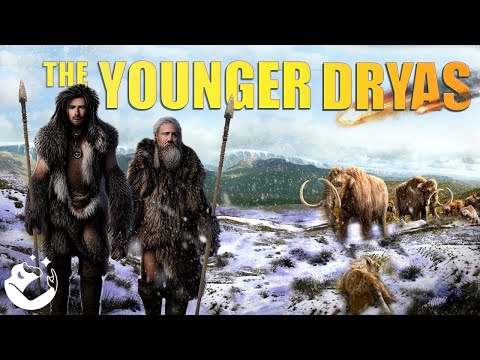
Unraveling the mystery of the Younger Dryas: Ice Age, Megafauna, and Human Civilization
Introduction to the Younger Dryas
In the context of Earth's climatic history, the Younger Dryas stands out as a significant period that has intrigued researchers for centuries. This event, which occurred approximately 12,900 years ago, coincided with the existence of mammoths and saber-toothed cats, marking a time when human civilization was on the cusp of transformation. However, a dramatic climatic shift occurred, characterized by plummeting temperatures and advancing ice sheets, which lasted for over a millennium before subsiding. This summary aims to explore the complexities of the Younger Dryas, including its causes, effects on human populations, and the various hypotheses that have emerged to explain this enigmatic climatic event.
Defining the Younger Dryas
The term "Younger Dryas" is derived from the alpine plant Dryas octopetala, which flourishes in cold tundra conditions. Its presence in sediment layers indicates a return to glacial climates. This period is classified as one of three colder phases known as "dras" that followed the last glacial maximum. The Younger Dryas was marked by a more abrupt cooling than its predecessors, effectively reversing the warming trend that had begun to take hold. While it was indeed a cold phase, it was not as severe as conditions experienced during the last glacial maximum.
Chronology and Geographic Variability
Analysis of Greenland ice cores provides precise estimates for the onset and conclusion of the Younger Dryas, which is believed to have started around 12,900 years ago and ended approximately 11,550 years ago. The duration of this period is estimated to be between 1,150 and 1,300 years. However, the onset of the Younger Dryas was not synchronous across the globe, with variations noted particularly in the North Atlantic region. For instance, cooling in northern Europe began as early as 12,900 years ago, while regions further north experienced significant cooling only between 12,600 and 12,750 years ago. Outside the North Atlantic, evidence from lake sediments in Japan and China suggests a delay in the onset of the Younger Dryas by several centuries.
Regional Impacts of the Younger Dryas
The effects of the Younger Dryas were not uniformly experienced across the globe. In northern Europe, the climatic changes were stark, with temperatures dropping significantly. For example, in Greenland, temperatures fell by 4 to 10°C (7 to 18°F), while the British Isles experienced even more extreme conditions, with annual temperatures plummeting to -5°C (23°F). In contrast, regions like the Middle East and parts of southern Europe experienced milder effects. The Middle East, for instance, saw drier conditions but was less severely impacted than northern Europe.
North America was also heavily affected, particularly in the northeastern United States, where temperatures dropped by about 7.5°C, leading to frigid winters and cool summers. This drastic change in climate caused significant ecological shifts, including the spread of tundra in the northern interior and the re-advancement of the Laurentide ice sheet. The Great Plains became much colder, while areas west of the Rockies experienced increased precipitation and glacier expansion.
Causes of the Younger Dryas
The cause of the Younger Dryas has been a topic of extensive debate among scientists. Various hypotheses have been proposed, but the prevailing theory suggests that changes in ocean currents, particularly the North Atlantic Meridional Overturning Circulation (AMOC), played a crucial role. The AMOC is a global system of ocean currents that transports warm, salty water to the North Atlantic and carries cold water southward. Disruption in this circulation, possibly due to an influx of cold freshwater from melting glaciers, could have led to the sustained cooling observed during the Younger Dryas.
Prior to the Younger Dryas, the Earth was transitioning from a glacial to an interglacial period, resulting in significant melting of glaciers and the formation of large meltwater lakes. One such lake, Lake Agassiz, was massive and may have contributed to the influx of freshwater into the Atlantic, disrupting the AMOC. This influx of freshwater, being less dense than saltwater, would have altered the delicate balance of ocean currents, leading to the cooling observed during this period.
Impact on Human Populations
The Younger Dryas had profound implications for human populations, particularly in Europe and North America. As temperatures dropped and conditions became harsher, the tree line receded, tundra expanded, and animal populations contracted. In northern Europe, evidence suggests a significant decline in human habitation, with burial practices ceasing entirely in some areas. The British Isles, which were connected to the mainland at the time, faced particularly severe conditions, leading to a decrease in human activity.
In North America, the onset of the Younger Dryas coincided with the decline of the Clovis culture and the extinction of several megafaunal species, including mammoths and saber-toothed cats. While some evidence indicates that these species experienced population declines prior to the Younger Dryas, the harsh climatic conditions likely exacerbated their extinction. Interestingly, studies suggest that human populations did not experience an immediate decline with the onset of the Younger Dryas, but rather a significant decline occurred in the centuries that followed.
Volcanism and Other Hypotheses
While the impact hypothesis has gained traction, other potential causes for the Younger Dryas have also been explored. Volcanic eruptions, for instance, can lead to temporary cooling due to the release of ash and gases into the atmosphere. Some studies have suggested that volcanic activity could have contributed to the cooling observed during the Younger Dryas, although the exact mechanisms remain unclear. The interplay between various climatic factors, including solar radiation and atmospheric circulation, may also have played a role in the abrupt climate changes of this period.
The Younger Dryas Impact Hypothesis
The Younger Dryas Impact Hypothesis posits that fragments of a large extraterrestrial object struck Earth around 12,900 years ago, causing widespread fires and a subsequent "impact winter." This hypothesis has gained popularity in popular culture, but it remains controversial within the scientific community. Proponents point to evidence such as black mats found in sediment layers, which are thought to indicate widespread fires following an impact. However, critics argue that these mats can also result from natural processes, such as volcanic eruptions.
Moreover, evidence supporting the impact hypothesis, such as the presence of nanodiamonds and platinum spikes in sediment layers, has been met with skepticism. Studies have shown that these markers can arise from various sources, including volcanic activity and wildfires, rather than a singular extraterrestrial impact. The lack of consistent, reproducible evidence has led many experts to reject the impact hypothesis as a primary cause of the Younger Dryas.
Conclusion: The Legacy of the Younger Dryas
The Younger Dryas represents a complex interplay of climatic, ecological, and human factors that shaped the world during a critical juncture in history. While it is often viewed as a catastrophic event, it is essential to recognize that human populations adapted and evolved in response to these changes. The period ultimately set the stage for significant developments in agriculture and societal organization, particularly in the Near East, leading to the Neolithic Revolution.
As research continues, our understanding of the Younger Dryas will undoubtedly evolve, shedding light on the intricate dynamics of climate change and its far-reaching impacts on both the environment and human civilization. The ongoing exploration of this period serves as a reminder of the complexities of Earth's climatic history and the resilience of life in the face of dramatic change.
The speaker presents a critical examination of the Younger Dryas Impact Hypothesis (YDIH), positing that it is not fully supported by the prevailing evidence. They identify themselves as a sceptic rather than a proponent of the hypothesis. The central thesis revolves around the assertion that the YDIH, which suggests that fragments of a large extraterrestrial object impacted Earth around 12,900 years ago, leading to widespread environmental and biological disruption, lacks the necessary rigorous scientific backing to be considered a definitive explanation for the climatic changes of the Younger Dryas period.
In their concluding remarks, the speaker emphasizes that while the impact hypothesis has garnered attention and some circumstantial support, it has not been proven conclusively. Instead, they advocate for a more nuanced understanding of the Younger Dryas as part of a larger pattern of climatic variations that have occurred over thousands of years. The speaker underscores the importance of considering multiple factors that may have contributed to the climatic shifts observed during this period, including oceanic and atmospheric dynamics.
-
- [22:20] "...we currently do not have enough evidence to sufficiently support a large impact 12,900 years ago and we certainly do not have enough evidence to suggest it directly caused the Younger Dryas."
- [14:28] "There is certainly some evidence supporting aspects of the hypothesis, though most experts reject the hypothesis based on a lack of repeatable testable evidence."
In the discussion surrounding the Younger Dryas Impact Hypothesis (YDIH), the speaker outlines several pieces of evidence and arguments that have been put forward both in support of and against the hypothesis. The speaker mentions multiple forms of physical evidence that proponents cite, including:
- Platinum Anomalies: Often regarded as potential markers of extraterrestrial impacts.
- Microspherules: These tiny glassy spheres are thought to form under extreme heat conditions such as those produced by a comet or asteroid impact.
- Nanodiamonds: Their presence in sediment layers has been used to suggest a violent event occurred, possibly linked to an impact.
- Burn Layers: These organic-rich black mats found in sediment across various continents potentially indicate widespread fires that might have been triggered by a cosmic impact.
The speaker interprets these findings with caution, suggesting that while they are interesting, they do not provide conclusive evidence for a catastrophic impact. For instance, they highlight that the presence of nanodiamonds and microspherules can also result from natural processes such as volcanic eruptions or wildfires, thus diminishing their reliability as evidence for an extraterrestrial impact specifically associated with the Younger Dryas.
-
- [15:27] "These mats are considered by proponents of the impact hypothesis as evidence of widespread fires that occurred after an impact."
- [17:15] "Nanodiamonds can be found in sediment due to wildfires, volcanism, or even occasional meteorite debris."
The speaker addresses several counter-arguments and criticisms regarding the Younger Dryas Impact Hypothesis (YDIH), highlighting the complexities and uncertainties that surround the theory. Key objections discussed include:
- Lack of Synchronous Deposition: The speaker points out that the supposed impact markers, such as black mats and nanodiamonds, do not show evidence of synchronous deposition across various sites, which is essential for establishing a direct link to a singular catastrophic event.
- Alternative Explanations for Evidence: They emphasize that many of the markers attributed to impacts, like nanodiamonds and platinum spikes, could plausibly result from volcanic activity or natural wildfires, rather than a cosmic impact.
- Population Trends: The speaker notes that while an initial population decline in certain megafauna species is cited as evidence of the impact, this decline may not be directly correlated with climatic changes attributed to the Younger Dryas.
In their response to these challenges, the speaker acknowledges that while the impact hypothesis is intriguing, the evidence is not compelling enough to warrant acceptance without further rigorous scientific investigation. They also highlight the need for a broader perspective that considers multiple climatic factors, which may include oceanic and atmospheric dynamics, rather than attributing the observed changes solely to an impact event.
-
- [16:04] "The authors concluded that the synchronous deposition of the Younger Dryas boundary is extremely unlikely."
- [23:09] "An impactor could not reproduce the observed chemical patterns found in the sediment... and appear to be more consistent with that of an eruption."
The speaker provides a comprehensive overview of climatic conditions approximately 12,000 to 13,000 years ago, specifically during the Younger Dryas period. This era is characterized by abrupt temperature changes that significantly impacted both the environment and the fauna of the time. The transcript details how, despite a warming trend following the last glacial maximum, temperatures plummeted by 4 to 10°C (7 to 18°F) in many regions, leading to a return to glacial conditions that persisted for over a millennium.
Evidence suggests that the cooling commenced around 12,900 years ago and lasted until approximately 11,550 years ago, making this period last between 1,150 and 1,300 years. The speaker highlights that the Younger Dryas was not uniform globally; regions such as northern Europe experienced significant cooling almost immediately, while other areas, like Japan and parts of East Asia, experienced a delayed onset of climatic changes by 200 to 600 years later.
Moreover, the environmental shifts during this era led to the expansion of tundra, a lowering of the tree line, and a contraction of animal populations, notably affecting megafauna such as mammoths and saber-toothed cats. The transcript states that the Younger Dryas is associated with significant species extinction, particularly megafauna in North America, which is linked to changing climatic conditions and possibly human hunting practices.
The speaker discusses various hypotheses regarding the cause of these abrupt climate changes, notably the potential role of ocean current alterations, particularly the weakening of the Atlantic Meridional Overturning Circulation (AMOC). There is also a mention of the Younger Dryas Impact Hypothesis, which suggests a possible extraterrestrial impact event, though the speaker notes that this theory is largely contested and lacks sufficient evidence to be regarded as definitive.
- [08:14] "The Younger Dryas was a strange period that temporarily put the world back into glacial conditions during a time when the Earth was steadily warming."
- [24:12] "For many, the onset of the Younger Dryas meant a return to frigid glacial conditions; this was certainly the case for those living in Europe and much of North America."
- [10:11] "The sustained cooling of the Northern Hemisphere and the warming of the Southern Hemisphere suggests that the event may have been caused by a change in the ocean's currents."
The speaker references a variety of sources, experts, and authorities to establish credibility and provide context to the discussion regarding the Younger Dryas. Among these references, several key figures and studies are highlighted:
- Greenland Ice Cores: These cores provide accurate estimates for the onset and conclusion of the Younger Dryas, marking its beginning around 12,900 years ago and ending around 11,550 years ago.
- Studies on Lake Sediments: Research from Japan and other Asian regions illustrates a delayed onset of the Younger Dryas in these areas, emphasizing the global variability of climatic impacts.
- Climatological Experts: The speaker refers to various researchers who have studied the Atlantic Meridional Overturning Circulation (AMOC) and its implications on climate change, but specific names are not provided in the transcript.
- 2020 Research Papers: The speaker mentions studies that have provided statistical consistency with the Younger Dryas being part of a larger climatic variation that has occurred over millennia.
- Graham Hancock and the Comet Research Group (CRG): Hancock's work is used as an example of popular theories about the Younger Dryas, particularly the impact hypothesis, which the speaker critiques for its lack of solid evidence and scientific rigor.
These references serve both to support the speaker's arguments regarding the Younger Dryas and to illustrate the contrast with mainstream views, particularly regarding the impact hypothesis. The speaker aims to debunk certain claims made by proponents of the impact hypothesis, emphasizing the complexity of climatic changes and the need for rigorous scientific validation.
- [21:49] "We currently do not have enough evidence to sufficiently support a large impact 12,900 years ago..."
- [14:30] "There is certainly some evidence supporting aspects of the hypothesis, though most experts reject the hypothesis based on a lack of repeatable, testable evidence."
- [36:41] "His popular books, appearances on podcasts, and new Netflix series have undoubtedly changed how the public thinks about human history and prehistory."
[00:02] [Music][00:06] in our Strange World of countless[00:08] climatic shifts there is a period in[00:10] Earth's history that continues to[00:12] Captivate[00:13] researchers 12,900 years ago a time when[00:17] mammoths and saber cats roam the lands[00:19] and Humanity was on the brink of a new[00:21] era something[00:23] changed just as life seemed to be[00:26] flourishing a remarkable event unfolded[00:29] transforming the world as we know it in[00:32] a period of decades temperatures[00:34] plummeted icy winds swept across[00:36] continents and vast sheets of ice once[00:39] again[00:40] Advanced this period lasted for over a[00:42] thousand years before subsiding as[00:45] quickly as it[00:46] arrived but what caused this sudden and[00:48] drastic change how did it affect human[00:51] populations and was it even that[00:53] remarkable after all today we will[00:56] thoroughly discuss the younger Trias[00:58] leaving no stone left Unturned learned[01:01] it is an extremely complicated topic and[01:03] as always my sources can be found in the[01:08] description the younger dras period has[01:10] been known of for a relatively long time[01:13] it was easily distinguishable in[01:15] paleobotanical and lithostat graphic[01:18] studies of Scandinavian sites the name[01:21] younger dras refers to the Wild Flower[01:24] dras octopetala a plant which thrives in[01:27] Alpine and Tundra conditions[01:30] its presence in sediment layers[01:32] indicates a typically colder glacial[01:35] climate the younger part of the name[01:37] refers to the fact that it was not the[01:39] only climatic fluctuation during this[01:41] period it is called the younger dest[01:44] because it is one of three colder[01:45] periods called stles which came after[01:47] the last glacial maximum the younger[01:50] dras was indeed more abrupt than the[01:52] older or oldest drias though not[01:55] unprecedented it essentially reversed[01:57] the warming of the earth back to glacial[02:00] conditions but keep in mind although it[02:03] was cold it was not colder than a few[02:05] thousand years before when the Earth was[02:07] in the last glacial[02:08] maximum analysis of Greenland ice cores[02:11] provides accurate estimates for the[02:13] beginning and the end of the younger[02:15] Trias it is estimated that the period[02:17] started around 12,900 years ago and[02:20] ended around[02:22] 11,550 years ago meaning that the period[02:26] lasted between 1150 and 1300 years[02:30] though the actual timing of the event[02:32] introduces us to our first[02:34] mystery the younger dras did not start[02:37] synchronously across the world and even[02:39] varied across the North Atlantic region[02:42] the region which was affected the most[02:44] evidence suggests that cooling occurred[02:46] as early as 12,900 to 13,100 calibrated[02:50] years ago along the latitude 56 to 54°[02:54] North in at least northern Europe[02:56] cooling further north between 60 to 58°[03:00] occurred significantly later between[03:02] 12,600 and[03:04] 12,750 years before present cooling did[03:07] not reach Northern regions of Europe for[03:09] hundreds of years when looking at[03:12] regions outside of the North Atlantic[03:14] the onset to the younger Trias becomes[03:16] even more[03:17] confusing analysis of Lake sediments[03:19] from Japan and other records from Asia[03:22] report a substantial delay in the start[03:23] of the onset of the younger[03:25] Trias the temperature in Japan only[03:28] appeared to decline around 12 ,300 years[03:31] ago this is of course around 5 to 600[03:34] years later than much of the northern[03:36] hemisphere data from Chinese sediments[03:39] also confirm that the younger drest of[03:41] East Asia lags behind the North Atlantic[03:43] cooling by at least 2 to 300[03:45] years in the Philippines analysis of[03:48] stalagmites found that the younger[03:50] driest conditions did not reach the[03:51] region for nearly 600 years after they[03:54] appeared in northern Europe and even[03:56] these conditions appear to have been[03:58] quite mild this is another interesting[04:01] fact about the younger dras it by no[04:03] means affected the world equally regions[04:06] in the northern hemisphere especially[04:08] around the Atlantic were affected the[04:11] most even though the younger dras did[04:13] not occur at the same time all over the[04:15] world in much of Europe the conditions[04:17] changed dramatically in only a few[04:19] decades in some areas the onset of the[04:22] far colder conditions may have happened[04:24] in less than a decade people living in[04:27] Europe would have certainly noticed the[04:28] colder and much drier conditions in[04:31] Greenland temperatures drop between 4 to[04:34] 10° C or 7 to 18°[04:37] F in the British Isles Beetle fossils[04:40] indicate that the annual temperature[04:42] dropped to -5° C or -23°[04:46] F though the winters would have been[04:48] cold multiple studies confirm that[04:51] localities in Europe experienced quite[04:53] short but warm[04:55] Summers an extensive study on the[04:57] vegetation of central Iberia found that[04:59] the effect effect of the younger Trias[05:00] were actually quite mitigated at least[05:02] early[05:03] on from 12.6 to 12,000 years ago the[05:07] conditions were dry and quite warm while[05:09] from 12 to 11.7 th000 years ago they[05:13] were wetter and cooler the Middle East[05:16] appears to have been affected much less[05:18] though drier and colder conditions did[05:20] occur even starting before the younger[05:21] Trias and Lasting after it concluded in[05:24] other[05:25] places North America in particular was[05:28] the other region most heavily affected[05:30] by The Frigid[05:31] conditions this is not surprising[05:34] considering its proximity to the[05:35] Atlantic which appears to have been a[05:37] large factor in the[05:39] cooling though there is evidence of[05:41] cooling that predates the younger Trias[05:43] by hundreds of years particularly in the[05:45] East which of course is in direct[05:47] proximity to the[05:49] Atlantic the rest of North America did[05:52] begin to cool around 12,900 years ago[05:55] though some areas were affected much[05:56] less than[05:57] others in the Northeast United States[06:00] temperatures dropped by around 7.5 de C[06:04] causing frigid Winters and cool Summers[06:06] with little[06:07] rainfall the change in conditions was[06:10] disastrous to forests causing the spread[06:12] of[06:13] tundra in the northern interior the[06:16] massive laurentide ice sheet which had[06:18] been decreasing in size for thousands of[06:20] years once again[06:21] Advanced the Great Plains in general[06:24] became much colder with Tundra like[06:26] conditions except for areas closer to[06:28] the Gulf of Mexico[06:30] the Rocky Mountains seem to have been[06:32] isolated from much of the cold west of[06:34] the Rockies conditions became 2 to 3°[06:37] cus colder and saw increased[06:39] precipitation and the expanse of[06:41] glaciers the Gulf of Mexico appears to[06:44] have been slightly colder while the[06:46] Caribbean experienced[06:47] warming when we move to the southern[06:49] hemisphere we see a much different[06:51] effect of the younger Trias many regions[06:54] appear to have been more or less[06:55] unaffected and many even experienc[06:58] slight warming Venezuela experienced[07:01] cooling though much of South America[07:02] seems to have gotten warmer glaciers in[07:05] both Peru and Bolivia[07:07] retreated Africa seems to have been[07:09] affected in a variety of complicated[07:12] ways North Africa which at the time had[07:15] a very Lush Sahara does not seem to have[07:17] been affected much Western tropical[07:21] Africa slightly warmed while the East[07:22] slightly[07:23] cooled various regions of Africa do[07:26] appear to have become more Aid during[07:28] this period though though significant[07:30] cooling appears to have been absent Asia[07:33] was also affected in a variety of[07:35] complex ways Oceania appears to have[07:38] hardly been affected by the climatic[07:40] event there is even evidence that[07:42] Australia became warmer and wetter[07:44] During the period since a younger Trias[07:47] was a return to glacial conditions for[07:49] much of the world glaciers expanded this[07:53] caused the sea level to lower at a rate[07:54] of about 2 to 4 cm per year until the[07:57] end of the period from the start to the[08:00] end of the period sea levels decreased[08:02] between 20 to 40 m this is a significant[08:05] amount though keep in mind the oceans[08:07] are currently rising at about the same[08:09] rate and it is hardly perceptible to[08:11] most overall the younger Trias was a[08:14] strange period that temporarily put the[08:16] world back into glacial conditions[08:18] during a time when the Earth was[08:19] steadily warming The Frigid and dry[08:23] conditions undoubtedly drastically[08:24] affected the human and animal[08:26] populations of the period but before we[08:29] talk about about how our populations[08:30] reacted we must first discuss the cause[08:33] of such a peculiar[08:35] event the cause of the younger dras has[08:37] been quite a Hot Topic especially in[08:40] recent years multiple hypotheses have[08:43] been proposed with various degrees of[08:45] success in explaining the phenomenon[08:47] that was the younger[08:48] dasas perhaps one of the most essential[08:51] things we must first understand about[08:52] the younger dras is that it lasted for[08:54] over a thousand[08:56] years any complete explanation of the[08:58] period must must have caused sustained[09:00] Cooling and not just a momentary[09:02] climatic[09:03] change and this brings us perhaps to the[09:06] most likely explanation of the[09:08] event the sustained cooling of the[09:10] Northern Hemisphere and the warming of[09:12] the Southern Hemisphere suggests that[09:13] the event may have been caused by a[09:15] change in the ocean's[09:17] currents more specifically the shutdown[09:20] or reduction of the North Atlantic[09:22] conveyor the Atlantic meridon oal[09:25] overturning circulation or amoc for[09:28] short is part of a Global circulation of[09:30] currents which brings warm salty water[09:32] to the North Atlantic and Carries cold[09:34] water Southward into deep[09:36] Waters two things to keep in mind about[09:39] this circulation is that it is based not[09:41] only on temperature but also the[09:42] solinity of the water this process is[09:45] well studied in the modern era though[09:47] many aspects about how it functions[09:49] remains[09:50] enigmatic one thing that researchers[09:52] have identified is that it is anything[09:54] but stable not only is there evidence[09:57] that it was heavily varied in prehistory[09:59] his but even in the modern era evidence[10:02] suggests that the amoc is weaker than it[10:05] was prior to the Industrial[10:07] Revolution many have hypothesized that[10:09] the younger Trias may have been directly[10:11] caused by the influx of cold fresh water[10:13] into the Atlantic[10:15] Ocean first we should talk about what[10:17] was happening prior to the younger[10:19] dras the world was gradually moving from[10:22] a glacial period into an interglacial[10:24] period this of course means that[10:26] glaciers were melting and the world was[10:28] warming[10:30] deglaciation caused the sea levels to[10:32] rise but also the formation of massive[10:34] meltwater Lakes all over the Northern[10:36] Hemisphere one of these lakes lake aasi[10:40] was absolutely massive the lake covered[10:43] as much as 440,000 square kilm or[10:46] 170,000 square miles it has long been[10:50] thought that this body of water may have[10:52] caused a sudden and perhaps sustained[10:54] influx of fresh cold water into the[10:56] Atlantic which would have undoubtedly[10:58] affected the Amo sea further research[11:01] has identified a pathway along the[11:03] McKenzie river that would have brought[11:04] the glacial melt all the way to the[11:06] Arctic and thus the[11:08] Atlantic you may say but the Arctic is[11:10] already cold why would this change[11:12] anything you must remember that this was[11:14] fresh water fresh water is much less[11:17] dense than Salt Water the influx of[11:20] massive quantities of this less dense[11:21] water into the Atlantic would have[11:23] disrupted the delicate mechanics of the[11:26] amoc water may have also flowed Eastward[11:28] straight into into the Atlantic though[11:30] this has yet to be proven though a[11:33] singular flood of fresh water into the[11:35] Arctic and Atlantic would have not[11:36] caused sustained cooling for over a[11:39] thousand[11:40] years it is estimated that the amoc[11:43] would have recovered in less than 100[11:45] years from such an event instead a large[11:48] sustained flow must have been present to[11:50] cause these conditions for most if not[11:53] all of the younger Trias period though[11:55] all this may sound hypothetical much of[11:58] our evidence suggests that the this was[11:59] the case changes in microscopic life[12:02] within the ocean suggest a significant[12:04] change in ocean[12:05] currents not only do we have evidence of[12:08] where the water entered the ocean but[12:10] modern studies on the amoc suggest that[12:12] cold fresh water would have certainly[12:14] been capable of causing prolonged[12:16] cooling other studies suggest that a[12:19] major ocean flushing event may have been[12:21] an important component in the reduction[12:23] of the[12:24] amoc right before the onset of the[12:26] younger dras several CO2 record show[12:29] sharp increase and a subsequent[12:31] decrease the saltier ocean of the time[12:34] may have accumulated geothermal heat and[12:36] built up potential[12:38] energy it may have been released rapidly[12:40] perhaps catastrophically affecting the[12:43] amoc evidence suggests that this event[12:46] occurred and it may have been caused by[12:48] an influx of melt water though this[12:50] remains[12:51] enigmatic evidence also suggests that[12:54] these events May have occurred at[12:55] multiple points in the[12:57] past even more compelling our evidence[13:00] suggests that the younger dras is merely[13:02] one of 25 similar events that occurred[13:04] over the past 120,000[13:06] years similar events almost appearing[13:09] identical in ice core graphs called[13:11] dascar osar events are thought to have[13:13] been triggered by meltwater and[13:15] variability of the carbon cycle a 2020[13:19] paper proved that the younger trius is[13:21] statistically consistent with the other[13:23] do[13:24] events with this evidence at hand the[13:27] younger dras does not appear unusual[13:29] whatsoever it may simply be a small part[13:32] in the larger climatic variation that[13:34] has regularly occurred on Earth since[13:36] the start of the Ice Age 2.5 million[13:38] years ago though it may sound like we[13:41] have the younger dras all figured out we[13:43] must not forget that we are talking[13:45] about climate climate is endlessly[13:47] complicated and many other factors must[13:49] be[13:50] considered various researchers have[13:52] suggested that a reduction of the amlc[13:55] would not be enough to cause such a[13:56] sudden and prolonged cold period[13:59] variations in solar radiation and[14:01] complicated atmospheric circulations[14:03] could have played just as much a part in[14:05] the[14:05] cooling these explanations are most[14:08] commonly cited in the scientific[14:09] Community as the cause of the younger[14:11] Trias however there is one that has[14:14] gained a lot of traffic in pop[14:16] culture of course I'm talking about the[14:18] elephant in the room the younger dras[14:20] impact hypothesis or yd for[14:24] short first I must preface the[14:26] discussion of this topic by saying that[14:28] it is neither an outlandish hypothesis[14:30] nor anything close to a proven fact[14:33] there is certainly some evidence[14:35] supporting aspects of the hypothesis[14:37] though most experts reject the[14:38] hypothesis based on a lack of repeatable[14:41] testable[14:42] evidence the younger dri impact[14:44] hypothesis posits that fragments of a[14:47] large extraterrestrial object air burst[14:49] and struck various areas of the world[14:51] around 12,900 years ago it hypothesizes[14:55] that the impact may have caused[14:57] widespread fires an impact winter the[15:00] younger dest period and the extinction[15:02] of various megaphon[15:04] species evidence comes in the form of[15:06] various hypothesize impact markers and[15:09] layers dated to the period and also[15:11] black mats widely distributed dating to[15:13] this[15:14] time approximately 2/3 of the sites[15:17] dating to the onset of the younger Trias[15:19] contain black mats these mats are a[15:22] black organic Rich layer found across[15:24] multiple continents they are considered[15:27] by proponents of the impact hypothesis[15:29] as evidence of widespread fires that[15:31] occurred after an[15:33] impact mats such as these have certainly[15:36] been found in some cases to represent[15:38] volcanic eruptions and extraterrestrial[15:41] impacts however were this to be the case[15:44] clear evidence of synchronous deposition[15:46] must be found or in other words it must[15:48] be clear that they were all deposited at[15:50] the same time a 2020 study found that[15:53] the c14 from the younger Trias boundary[15:55] are inconsistent with synchronous[15:57] deposition[15:59] the authors concluded that the[16:00] synchronous deposition of the younger[16:02] dras boundary is extremely[16:04] unlikely furthermore black mats are[16:07] known throughout many time periods and[16:09] appear to simply be characteristic of[16:11] wetland[16:12] environments evidence from both the[16:14] Southwest United States and Chile show[16:16] high levels of aridium and magnetic[16:18] sediments in various sites between 6,000[16:21] to 40,000 years[16:23] ago these supposed impact markers are[16:25] found in these mats regardless of age or[16:28] location[16:29] some of these layers do appear to be[16:31] evidence of wildfires but not[16:33] necessarily impacts a 2009 study[16:37] suggested that wildfires did occur[16:39] during the younger Trias boundary though[16:41] they were a natural consequence of the[16:42] rapid climate change of the period[16:45] another study found no evidence that[16:47] these hypothesized fires were impact[16:49] induced the existence of these layers at[16:51] the younger Trias boundary is only[16:53] natural considering the younger Trias[16:55] featured a dramatic change in[16:56] precipitation and moisture in general[17:00] considering these mats are not deposited[17:01] at the same time they cannot be[17:03] contributed to one event such as a comet[17:06] strike besides easily visible evidence[17:09] researchers have also looked into small[17:11] signatures and layers dating to the[17:12] younger Trias boundary Nano diamonds are[17:15] one of the most important forms of[17:17] evidence that have been used to support[17:18] the impact hypothesis since its[17:20] Inception in[17:22] 2007 though Nano diamonds can be found[17:24] in sediment due to wildfires vulcanism[17:27] or even occasional Med New York debris a[17:31] 2014 study about Nano diamonds based on[17:33] 49 sediment samples from a range of[17:36] dates did indeed find a spike during the[17:38] younger[17:39] Trias however it also found similar size[17:42] spike in the hallos scene around 3,000[17:44] years ago and in modern top soil of[17:47] course a massive climate changing[17:49] asteroid has not impacted us recently[17:51] and neither did it happen 3000 years[17:53] ago another analysis of a similar[17:56] younger Trias bound layer from Belgium[17:59] displayed carbon crystalline structures[18:01] such as Nano[18:02] diamonds but the authors came to the[18:04] conclusion that they did not show unique[18:06] evidence for an extraterrestrial[18:09] impact Platinum is another source of[18:11] evidence which is often used to support[18:13] impacts in general though other[18:15] explanations such as volcanism can[18:17] explain its[18:19] presence a 2019 study found evidence in[18:22] South Africa of a spike of platinum in[18:24] layers dating right before the younger[18:27] trius the site is is now one of around[18:29] 25 sites in Europe Asia and North[18:32] America which have reported Platinum the[18:35] authors of this paper suggest that the[18:37] impact hypothesis could be a possible[18:39] explanation though critics were quick to[18:41] point out that volcanic activity could[18:43] be responsible we will talk about this[18:45] later magnetic microspheres are another[18:48] main form of evidence used to support[18:50] the impact[18:51] hypothesis first of all there is no[18:53] consensus about the origin of these[18:55] microspheres or the significance of[18:57] their concentration[18:59] various Studies have found evidence of[19:01] spikes and younger Trias boundary layers[19:03] but have often been heavily criticized[19:05] for not being[19:06] reproducible an important 2016 study[19:09] conducted a blind test of two different[19:11] labs to identify magnetic microspheres[19:14] from layers before during and above the[19:16] younger Trias boundary both Labs found[19:19] very low or non-existent levels on[19:21] either side of the boundry one exception[19:24] from 11,500 years ago had a spike in[19:27] microspheres though keep in mind the[19:29] younger Trias ended around 50 years[19:31] before this date and regardless if an[19:34] impact was responsible we would find[19:36] this evidence at its onset not its[19:39] termination the study also found that[19:41] reproducing this data even among[19:43] themselves was problematic and noted[19:46] that the reported impact proxies are not[19:48] unique to the younger Trias[19:50] boundary perhaps an obvious explanation[19:53] for the appearance of impact markers in[19:55] various places around the world during[19:57] the younger Trias is that there were[20:00] impacts but the Earth is constantly[20:02] bombarded by asteroids of various sizes[20:04] and these signs are found in many layers[20:06] where there wasn't a climatic shift one[20:09] article pointed out that many of the[20:11] impact markers pointed out by the[20:13] original impact hypothesis study are not[20:15] even consistent with a single impactor[20:17] but rather from a diverse array of[20:19] microm[20:20] meteorites this is one of the problems[20:22] for much of the evidence of impact if[20:25] you are looking for impact markers in[20:27] the soil you may find them but[20:29] correlating an impact with a larger[20:31] scale climatic change is much harder to[20:33] do if there was a massive crater dating[20:36] directly to the start of the period a[20:38] strong case could be made there is a[20:40] crater in Greenland which was thought[20:42] that could have dated to this time but[20:43] it was later dated to around 58 million[20:46] years ago though in regards to the[20:48] impact hypothesis there may not even be[20:51] one massive crater if the object[20:53] fragmented across much of the world and[20:55] mainly impacted[20:56] glaciers this poses a logical problem[20:59] for the[21:00] hypothesis embedded in it is a mechanism[21:03] by which the evidence of the impact was[21:05] destroyed or not[21:06] preserved if the only evidence found of[21:08] an impact is spread faintly throughout[21:10] the world resembling microm meteorite[21:12] debris then where is the evidence that a[21:15] climatic changing impact even occurred[21:18] furthermore the best evidence put forth[21:20] to support an impact suggests an iron[21:22] meteorite instead of a comet such a[21:25] dense object of the size being proposed[21:27] would still leave a crate even if it[21:29] impacted the laurentide ice sheet and if[21:32] it air burst it would likely not even[21:34] distribute evidence as far as Africa or[21:36] Asia critics have stated that the Earth[21:39] certainly does not need an[21:40] extraterrestrial impact to have caused[21:42] the weakened amoc in the first place not[21:45] only is the evidence ins synchronous and[21:47] inconsistent but the younger dras[21:49] appears to be simply a part of a[21:51] repeating cycle of climatic changes and[21:53] only appears significant because it[21:54] happened to be the last major change[21:56] before the start of the holos scene[21:59] we currently do not have enough evidence[22:01] to sufficiently support a large impact[22:03] 12,900 years ago and we certainly do not[22:05] have enough evidence to suggest it[22:07] directly caused the younger[22:09] dras though I still advocate for not[22:11] immediate denial of this possibility[22:14] there certainly could be definitive[22:15] proof out there but our evidence as of[22:17] 2023 supports the conventional[22:20] explanation of a number of factors[22:22] including a weekend[22:23] amoc people often accuse mainstream[22:26] Academia for not being accepting of new[22:28] ideas or controversial ideas such as the[22:31] impact hypothesis but if this were true[22:34] why are there dozens of papers[22:36] advocating for this even papers that are[22:38] not necessarily for the impact[22:40] hypothesis advocate for its further[22:42] investigation even in the late[22:45] 2000s despite what some may tell you[22:47] science is not characterized by old[22:49] dogmatics suppressing new discoveries at[22:52] the end of the video I will further[22:54] address pseudoscientific claims that we[22:56] must first discuss another possible[22:58] cause of the cooling period volcanism[23:01] volcanic eruptions although quite hot[23:03] can actually cause the Earth to cool[23:05] quite[23:06] considerably a 2020 study found that an[23:09] impactor could not reproduce The[23:11] observed chemical patterns found in the[23:13] sediment from a San Texas and appear to[23:15] be more consistent with that of an[23:17] eruption the paper also importantly[23:20] mentions that other previously found[23:21] impact markers such as Wildfire products[23:24] and Nano diamonds could have certainly[23:25] originated in large scale volcanic[23:27] eruptions[23:29] a 2021 study on the lacer sea eruption[23:32] proved that it happened slightly before[23:34] the onset of the younger[23:35] Trias researchers believe that it[23:37] certainly could have caused Cooling in[23:39] the Northern Hemisphere and be[23:40] responsible for some but not all Impact[23:44] markers this eruption alongside other[23:46] factors such as a weakened amoc could[23:49] have been primarily responsible for the[23:51] cold period while further research would[23:53] need to be done to prove this we have[23:56] covered in significant detail what may[23:58] have caused the younger Trias but now we[24:00] must discuss how it actually affected[24:02] the human populations of the time for[24:05] many the onset of the younger dras meant[24:07] to return to frigid glacial[24:10] conditions this was certainly the case[24:12] for those living in Europe and much of[24:14] North[24:15] America northern Europe appears to have[24:17] been hit the hardest by climatic changes[24:20] the tree line lowered Tundra expanded[24:23] and animal populations[24:25] contracted the British aisles which were[24:27] connected to the mainland land at this[24:29] time were hit particularly hard[24:32] temperatures in January were between 10[24:34] to 30° C cooler than[24:37] today our evidence of human habitation[24:39] decreases and the practice of burial[24:42] seems to have stopped entirely at some[24:44] times the area which is now the British[24:46] Isles may have been mostly[24:49] uninhabited northern Europe was very[24:51] frigid during this time period and[24:53] Scandinavia was almost entirely covered[24:55] by glaciers as it more or less had been[24:57] for thousands of[24:59] years most of Europe would have been[25:01] generally drier due to the colder[25:03] conditions year round this also appears[25:06] to have been the case for areas of[25:07] Western Asia and North Africa as[25:10] mentioned earlier a study found that[25:12] localities throughout Europe would have[25:14] actually had quite warm Summers although[25:16] they would have been short populations[25:18] in Iberia do not necessarily seem to[25:21] have decreased though it appears that[25:22] the younger dras period did stagnate[25:25] growth a similar story may have played[25:27] out throughout much of Europe though[25:29] population studies currently provide no[25:31] clear answers a decline or stagnation is[25:34] almost certain I find it extremely[25:37] important to mention that a population[25:39] decrease associated with colder[25:41] conditions is in no way out of the[25:43] normal North America is the other region[25:45] which appears to have been affected the[25:47] most by the onset of the younger[25:49] Trias it is associated with the decline[25:52] of the Clovis culture and the extinction[25:54] of many megap final species such as[25:56] Mammoth saber-tooth cats dire wolves and[25:59] many more though evidence suggests that[26:02] many of these species experienced a[26:04] population crash a thousand years before[26:06] the onset of the younger[26:08] Trias the cause for this is unknown[26:11] though it now appears to not be as[26:12] directly correlated to climate as once[26:15] thought one study determined that paleo[26:18] Indian populations at the start of the[26:20] younger Trias did not experience an[26:21] initial population[26:23] decline another study found that their[26:25] populations did decline significantly in[26:28] the following centuries after the onset[26:30] to the younger Trias before swiftly[26:32] rebounding and[26:33] expanding right at about 12,900 years[26:36] ago Stone quaries appear to have been[26:38] abandoned while the number of projectile[26:40] points also declined in some areas by[26:42] around[26:44] 50% it is unknown how population numbers[26:47] were affected because Stone use is not[26:49] directly correlated especially[26:51] considering a clear cultural[26:52] reorganization that was occurring during[26:54] this[26:55] time depending on the region these[26:58] populations appear to not only have[27:00] rebounded but expanded in as little as[27:02] 200 years interestingly the Clovis tool[27:06] making tradition seems to have directly[27:08] evolved into the fome culture during[27:09] this period at least in some places the[27:13] fome culture appeared right at the start[27:15] of the younger dras 12,900 years ago[27:19] their sites appear simultaneously with[27:21] Globus sites indicating that both[27:23] Traditions were still practiced though[27:24] eventually through the younger Trias the[27:26] fome tradition came to prominence[27:29] despite the colder conditions the fome[27:32] culture was able to thrive experiencing[27:34] a population and Geographic[27:36] expansion the fome culture is[27:38] characterized by the creation of very[27:40] Sophisticated Stone technology and a[27:42] specialization towards bison[27:44] hunting this specialization appears to[27:47] have been a consequence of the[27:48] extinction of much of the North American[27:50] megaphon with most of the Giants faded[27:53] into Oblivion bison for whatever reason[27:56] survived and the fome culture took[27:57] advant of this after all these years we[28:01] still do not know why megaphon[28:03] populations experienced this crash some[28:06] evidence suggests that the human Hunters[28:08] were really that deadly while other[28:10] evidence suggest that climate played a[28:12] large role considering their population[28:15] began to collapse 1,000 years before the[28:17] younger trius an impact event could not[28:19] solely explain the decline regardless of[28:22] what caused the decline we know that it[28:24] happened in both North and South[28:27] America human populations from South[28:29] America also appear to have been more or[28:31] less unaffected by the climatic changes[28:33] while many species of megap were[28:36] lost as stated earlier the temperature[28:38] and precipitation hardly appears to have[28:40] changed during the younger dest in most[28:42] of South[28:43] America despite this the megap died out[28:46] just the same perhaps suggesting that[28:49] over hunting played a larger role than[28:51] climate at least in this area moving[28:54] across the Pacific archaeological[28:56] records from Japan show little change[28:59] from before and after the onset of the[29:01] younger[29:02] Trias population stayed relatively the[29:04] same and ceramic Pottery technology was[29:07] consistently[29:08] used though after the younger dras[29:11] period ended the quality of their[29:12] Pottery did increase[29:14] significantly North Asia in general[29:16] appears to have cooled but not[29:18] significantly and populations do not[29:21] seem to have been affected significantly[29:23] either the same can be said about[29:25] eastern and southern Asia in general we[29:28] do not have evidence that these areas[29:30] got colder or necessarily drier[29:33] Australia in fact even warmed up a bit[29:36] the populations living in these areas[29:37] show no Decline and would have likely[29:39] not noticed the[29:40] change the megaphon in these areas had[29:43] already gone extinct thousands of years[29:45] before especially in[29:47] Australia this being evidence often[29:49] cited by proponents of the over hunting[29:51] hypothesis that it was humans that made[29:54] the megaphonic go[29:55] extinct regardless it cannot be[29:57] overlooked looked that the younger dras[29:59] did not have nearly the same effect on[30:00] the Southern Hemisphere and Asia in[30:03] particular finally circling back to[30:06] Western Asia we find perhaps the most[30:08] important effect of the younger[30:10] Trias the less abundant times may have[30:12] directly caused the Neolithic[30:15] Revolution prior to the younger dras NFI[30:18] and people of these regions were[30:19] exploiting their environments so[30:21] effectively that they could live in[30:22] sedentary[30:24] Villages this is a big contrast from[30:26] almost every other population of the[30:28] time which has had to constantly move to[30:30] more abundant[30:32] areas they were able to do this by[30:34] exploiting many animals and plants of[30:36] their environment importantly[30:39] grasses the region began to become[30:41] colder and drier before the onset of the[30:43] younger Trias and sustained this trend[30:45] throughout the subsequent period the[30:48] drier conditions caused the spread of[30:50] grasslands and consequently led to a[30:52] shift in their diet the Reliance on[30:55] grasses and sedentary life is thought to[30:57] have been in a important step toward[30:58] full-scale[31:00] agriculture a discussion of the younger[31:02] dras would not be complete without[31:04] covering the events of its ending the[31:06] end of the younger Trias is very[31:08] significant because it also marks the[31:10] final end of the last glacial period[31:13] oxygen isotop suggest that the ending of[31:15] the younger Trias took between 40 to 50[31:17] years starting[31:19] 11,550 years ago some areas even display[31:23] evidence that significant warming[31:25] occurred much faster than this other[31:27] areas particularly in Asia show that the[31:30] end of the younger drus occurred later[31:33] with the end of the younger drus and[31:34] subsequently the last glacial period the[31:37] glaciers of course significantly[31:38] diminished in size all this freshwat[31:42] drained into the oceans causing the sea[31:44] levels to[31:45] rise this rise is known as meltwater[31:47] pulse 1B over a period of about 160[31:51] years the sea level Rose by around 7.5 M[31:55] or 24 ft that is about 4 .6 CM or 1.8 in[32:00] per year that is not a lot but still[32:03] significant over a long time span to put[32:06] this in perspective the sea level is[32:08] rising about 34 CM a year or .13 in[32:13] meaning that during these 160 years it[32:16] was Rising about 14 times faster than it[32:18] is today it is debatable if this amount[32:21] would even be perceptible to Coastal[32:23] inhabitants and certainly not to people[32:25] living in land this r and sea level[32:28] occurred during the last two centuries[32:30] of the younger Trias and if you remember[32:32] from earlier in the video during the[32:34] rest of the younger Trias the sea level[32:36] was actually decreasing by about 34 CM a[32:39] year nowhere before during or after the[32:43] younger Trias was there a global flood[32:45] or even evidence that the sea level Rose[32:47] particularly[32:49] quickly there were indeed massive[32:51] glacial floods in some very specific[32:53] areas such as the channeled scab lands[32:56] of Southeastern Washington[32:58] an interesting thing to note about the[33:00] scab lands is that at least 40[33:02] cataclysmic floods have occurred there[33:04] 39 of them not having anything to do[33:06] with the younger[33:07] dasas besides globally rising sea levels[33:11] many living around the world would have[33:12] hardly noticed the onset or the end of[33:15] the younger Trias as mentioned[33:17] previously human populations in most of[33:19] the Southern Hemisphere were hardly[33:21] affected and even animal populations[33:23] were affected in a number of ways not[33:25] necessarily correlated with the younger[33:26] Trias the southern hemisphere happens to[33:29] be where most people would have been[33:30] living 11,500 years ago coal shelters[33:35] may have moved but keep in mind the vast[33:37] majority of humans at this time belong[33:39] to extremely nomadic[33:41] groups it would have not been any[33:43] problem at all to move a camp from an[33:45] inch of sea level rise over the span of[33:47] an entire year therefore no the younger[33:50] Trias was not an apocalypse in any way[33:52] shape or form for our[33:54] species populations living in North[33:56] America and west e Europe certainly had[33:58] to adapt to the new colder conditions[34:00] and the extinction of the megap did[34:02] cause culture to change and an initial[34:04] population decline as we saw with the[34:06] Clovis fome[34:08] transition though even this fast change[34:10] in lifestyle for Paleo Indians[34:12] subsequently resulted in a population[34:14] expanse rather than a decline within the[34:17] period northern Europe certainly did[34:19] witness a population decline though not[34:23] apocalyptically with our knowledge that[34:25] the younger Trias was one of many[34:26] seemingly ident identical climatic[34:28] changes calling it a cataclysm should be[34:31] seen as[34:32] exaggerated the megap final collapse of[34:34] North America may be seen as a[34:36] catastrophe but again it cannot solely[34:38] be linked to the younger dras as their[34:40] populations appear to have already been[34:42] declining more importantly at the end of[34:45] the younger dras we see the first[34:46] emergence of agricultural and megalithic[34:49] Societies in the near and Middle[34:51] East this shift in lifestyle was gradual[34:54] but put us on a trend of progression[34:56] throughout the hall scene[34:58] despite the facts I have laid before you[35:00] pseudoscientific figures have become[35:02] obsessed with the idea that the younger[35:04] Tri was a literal Apocalypse of which[35:07] Humanity barely[35:08] survived I originally did not want to[35:11] focus on talking of pseudoscience in[35:13] this presentation but its prominence in[35:15] the public conscious has made it nothing[35:17] less than inevitable and I admittedly[35:19] like talking about it as it can give us[35:21] a good perspective of how science Works[35:24] in regards to the younger Trias not only[35:27] has a public been lied to by charlatans[35:29] but there are even researchers within[35:31] Academia who have been accused of[35:35] misconduct my research into this topic[35:38] or conspiracy if you will has led me[35:40] down a deeper and darker hole than I was[35:43] expecting to find in this area of[35:45] interest and so my first ever[35:48] investigation[35:50] begins Miss representing science has[35:53] long been a tactic to profit since the[35:55] Inception of the scientific method[35:58] stereotypical scam such as the sale of[36:00] snake oil has long been the recipient of[36:02] false scientific claims though so has[36:06] spectacle famous examples such as the[36:08] card offf giant or the piltown man have[36:10] attracted curious crowds of pain[36:13] guests the same can be said about many[36:15] modern books programs and of course[36:18] YouTube[36:19] channels alternative figures often[36:21] create outrageous claims and constantly[36:24] berate the mainstream in attempt to gain[36:26] views sell books or even[36:29] tours perhaps the most influential[36:31] figure in this Niche Corner would be[36:33] Graham[36:34] Hancock his popular books appearances on[36:37] podcasts and new Netflix series have[36:39] undoubtedly changed how the public[36:41] thinks about human history and[36:44] prehistory importantly for our purposes[36:46] today he has formed an obsession with[36:48] the younger Trias impact[36:51] hypothesis years before any evidence for[36:53] the impact hypothesis had been found[36:56] Hancock hypothesa that an ancient[36:58] Advanced civilization perhaps in[37:00] Antarctica was buried by seismic[37:03] activity perhaps realizing this was[37:05] far-fetched he latched on to the impact[37:07] hypothesis as soon as it was first[37:09] published in[37:11] 2007 as in his mind it could explain The[37:14] Disappearance of his Globe spanning[37:17] civilization his book America before[37:19] spends most of its time talking about[37:21] this hypothesized civilization and how a[37:23] comet conveniently obscured all evidence[37:26] of it in his new archaeology hitpiece[37:29] Graham tours the world looking for[37:31] evidence of this civilization while[37:34] conveniently ignoring carbon dating[37:36] throughout the show he constantly blames[37:39] archaeologists for being too dogmatic to[37:41] accept new[37:42] ideas even softly suggesting that they[37:45] conspire to keep such evidence[37:48] suppressed but what if I were to tell[37:50] you the real conspiracy lies within[37:52] Graham's[37:53] series enter Alan West a guest Graham[37:57] prominently featured in his show Allen[37:59] is a consultant and self-taught[38:01] geologist and is one of the main[38:03] researchers who came up with the impact[38:05] hypothesis and is also the founder of[38:07] the Comet research group the 2006 book[38:11] the cycle of cosmic catastrophes by West[38:13] and Richard Firestone was the first[38:15] mention of the hypothesis which was[38:17] later backed up the following year with[38:19] the first paper on the[38:21] ydh this paper Firestone at all 2007 is[38:25] plagued by contradictions logical[38:28] fallacies irreproducible evidence[38:30] secretiveness failed predictions[38:33] contaminated samples and[38:36] misrepresentations one of the claims[38:37] made by the group in 2007 that has never[38:40] been formally withdrawn is that[38:42] hexagonal Nano diamonds have been found[38:44] in significant quantities at the younger[38:46] Trias boundary in[38:47] Greenland in 2008 an episode of the true[38:51] science series Nova titled meab be's[38:53] sudden death ended up being removed from[38:56] streaming after producing ERS found[38:57] issues with the evidence reported to[38:59] them by the[39:00] crg an additional trip to Greenland the[39:03] following year by the crg failed to[39:05] confirm their story and was never[39:08] published after 15 years their claims[39:11] remain unsupported and their raw data[39:13] was never made available it is clear[39:16] that the comet research group has a[39:18] vested interest in proving evidence of[39:20] an impact and ignoring evidence that[39:22] does not support these[39:23] claims furthermore the comet research[39:26] group was also exposed in 2021 for[39:28] digitally altering photos which were[39:30] used as evidence for a paper claiming[39:32] that the village of tall elham was[39:34] destroyed by an extraterrestrial object[39:38] a paper which has been met with harsh[39:39] criticism from other researchers with[39:42] physicist Mark bosow considering the[39:44] paper unsalvageable and no amount of[39:47] Correction would be sufficient to make[39:48] it[39:49] publishable this Village is believed to[39:51] be the biblical city of Sodom which[39:54] according to the Bible was a city full[39:55] of Sinners that was destroyed by fire[39:57] and sulfur sent by God Alan West and[40:01] eight of the authors of this paper are[40:02] the founders of the[40:04] crg a group which tries to prove ancient[40:07] cities and civilizations were frequently[40:09] destroyed by[40:11] impacts their website directly says at[40:14] crg our mission is to find evidence[40:16] about Comet impacts and raise awareness[40:18] about them before your city is next[40:22] sounds like fearmongering to me though[40:25] the biblical inclination may only appear[40:27] as as an afterthought Alan West's crg is[40:30] directly linked to the rising Light[40:32] Group a tax exempt Christian Association[40:35] registered in Allen's name furthermore[40:38] another author on this paper received[40:40] his education from an unaccredited[40:42] Christian University located in a strip[40:44] mall which prominently displays his book[40:47] about the destruction of Sodom the point[40:50] here is not at all to demonize[40:51] Christianity but rather to point out[40:53] that Alan West and the crg may not only[40:55] have an underlying creation agenda but[40:58] also certainly confirmation bias in[41:00] regards to comets Landing anywhere and[41:02] everywhere that fits their[41:04] narrative this is extremely problematic[41:07] considering impact markers can be found[41:09] in many places without necessarily[41:11] denoting the severity of the impact or[41:13] what effect the impactor had regardless[41:16] of what may be suspected of their agenda[41:18] the crg has routinely engaged in[41:21] personal attacks on Skeptics[41:23] inappropriate data manipulation[41:25] withholding evidence and as mentioned[41:27] earlier image tampering this alleged[41:30] misconduct is known well as it can[41:32] easily be found in their Wikipedia page[41:34] or in dozens of Articles critiquing[41:36] their work so why then in Graham's 2023[41:40] series does he feature the head of the[41:41] crg in his[41:43] documentary a man who was convicted of[41:45] pretending to be a trained geophysicist[41:47] to get money from taxpayers and[41:49] attempted to escape[41:51] alcatra okay that may be the wrong Alan[41:53] West but the first conviction is[41:55] certainly attributed to the biggest[41:56] inspiration of Graham's bestselling book[41:59] in Netflix series while this may all[42:01] sound like ad haminin you are exactly[42:04] right it is AD haminin and this brings[42:06] me to another important aspect that I've[42:07] learned in my investigation critics are[42:10] also guilty in regards to their[42:11] treatment of the impact hypothesis Mark[42:14] bosow the man I mentioned who considered[42:17] the paper on tall El hamam unsalvageable[42:20] and no amount of Correction would be[42:21] sufficient to make it publishable is[42:24] himself guilty of unscientific AD[42:26] homonym attacks on Alan West and the[42:29] crg I bring this example up to prove the[42:31] point that scientists in the mainstream[42:33] are certainly capable of misconduct[42:36] themselves though do not let this[42:37] expunge the work of Alan West in the crg[42:41] there is certainly still a questionable[42:42] source with an untrustworthy[42:44] history so one must still question why[42:47] Graham Hancock chose to prominently[42:49] feature a man and organization which[42:51] Nova literally had to pull an episode[42:53] off the air for well of course the[42:55] answer is that Graham does not actually[42:57] care to report science he simply[43:00] cherry-picks data and ignores the ocean[43:02] of evidence against him while constantly[43:04] playing the victim card by claiming the[43:06] entire field of Archaeology is against[43:08] him his series is full of logical[43:10] fallacies misrepresentations Reliance on[43:13] faulty data confirmation bias straw[43:15] Manning and Flatout lies if Netflix had[43:19] any backbone they would have denied the[43:21] creation of such a show as Nova did[43:23] years ago 08 his son is the senior[43:26] manager of unscripted original set[43:29] Netflix and so the conspiracy[43:32] deepens if you find yourself a fan of[43:35] Graham's work the burden is on yourself[43:37] to look into the legitimate criticism[43:39] given to his hypothesis and demonizing[43:42] rhetoric for the sake of time I could[43:44] not thoroughly cover his misdeeds in[43:46] this video but I have included resources[43:48] in the description which factually[43:49] dissect him as Mar Twain may or may have[43:53] not have said it's easier to fool people[43:55] than to convince them that they have[43:56] been fooled I hope you are all critical[43:59] of everything that has been discussed[44:01] today and for anyone critical of the[44:03] voice that is currently talking my[44:05] sources are all in the document of my[44:07] script for you to[44:08] enjoy this video has been a very[44:10] enjoyable challenge for myself and I am[44:13] confident I represented the topic[44:15] accurately more evidence will[44:17] undoubtedly come out about the younger[44:19] Trias in general and I will be happy to[44:20] make more videos about it in the[44:23] future I want to take a moment to thank[44:25] Sebastian from The Tell and Rudolph[44:27] Wilkins for helping me with the research[44:29] for this[44:30] video this has been your host north2 and[44:33] I hope to see you on the next one ciao
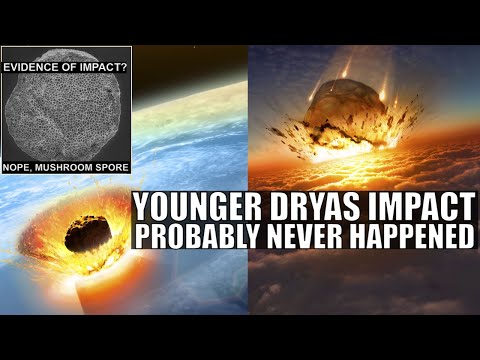
Study Completely Refutes Younger Dryas Impact Hypothesis
Approximately four years ago, a significant discovery was made in Greenland, where a large crater was identified by a NASA program dedicated to radar mapping glaciers. This crater, formed by an impact, was smaller than the one that led to the extinction of the dinosaurs but was still substantial enough to potentially affect the planet's climate and environment. This discovery reignited interest in the Younger Dryas Impact Hypothesis, a controversial theory supported by a minority of scientists that suggests a cosmic impact could explain the abrupt cooling period known as the Younger Dryas, which began around 12,900 years ago and lasted approximately 1,000 years. This period is significant as it preceded the end of the last glacial period and the onset of the current Holocene epoch.
The Younger Dryas is characterized by a sudden drop in temperatures, and while the prevailing explanation involves glacial dynamics altering water distribution and ocean currents, the impact hypothesis posits that an extraterrestrial event could have triggered this climatic shift. Proponents of this hypothesis argue that such an impact could have contributed to the extinction of megafauna, as the timing of the Younger Dryas coincides with the disappearance of many large animal species. Despite the allure of this dramatic explanation, the scientific community often favors more mundane explanations, which tend to be more accurate.
The discovery of the crater provided a glimmer of hope for supporters of the impact hypothesis, as it seemed to offer tangible evidence for their claims. They pointed to various types of geological and chemical evidence, such as microspherules—tiny glass particles believed to be produced during an impact—and deposits of extraterrestrial materials, which they argued were indicative of a cosmic event around 12,900 years ago. Additionally, they referenced a layer of sediment known as the "black mat," which they claimed was linked to this hypothesized impact.
However, skepticism surrounding the Younger Dryas Impact Hypothesis has persisted. A recent comprehensive study has systematically refuted many of the claims supporting this theory. The study highlighted that the crater in question, known as the Hiawatha Glacier crater, is likely around 50 million years old, far older than the proposed impact date of 12,900 years ago. This finding undermines the connection between the crater and the Younger Dryas, suggesting that the hypothesis lacks a crucial piece of evidence.
Moreover, the study examined various geological markers previously cited as evidence of an impact, such as magnetic grains and nanodiamonds. It found that many of these indicators were misidentified or misinterpreted, with some being linked to terrestrial processes rather than extraterrestrial events. For instance, the supposed microspherules attributed to an impact were shown to have origins in fungi, not from outer space. This misinterpretation of evidence has led to significant misconceptions regarding the impact hypothesis.
Additionally, the study scrutinized the dating techniques used in previous research, revealing that many lacked precision and were often based on flawed assumptions. For example, the demise of the Clovis culture, once thought to be linked to the impact, is now understood to be a result of cultural changes rather than a catastrophic event. Evidence suggests that the Clovis people did not disappear entirely after the proposed impact but rather underwent a transformation in their way of life.
Furthermore, the extinction of megafauna is now believed to have occurred over a more extended period, with many species disappearing long before the hypothesized impact. This timeline challenges the notion that the impact was a singular catastrophic event responsible for the extinction of these large animals.
The study also addressed the black mats, which were previously thought to be a direct result of the impact. However, subsequent research has shown no clear connection between these organic-rich layers and the Younger Dryas, with many examples occurring in different timeframes and contexts. The assumption that the Younger Dryas represented a unique climatic event has also been disproven, as similar climatic shifts have been documented throughout the Quaternary period.
Moreover, the hypothesis posited that the temperature changes associated with the Younger Dryas occurred simultaneously across the globe. However, archaeological records indicate that these changes were not synchronous and varied significantly by region, further undermining the impact hypothesis.
In contrast, recent research has proposed an alternative explanation for the extinction of megafauna, linking it to human activity and fire. A study focusing on a specific region in California found a strong correlation between the arrival of humans, increased fire activity, and the decline of large mammals. This research utilized precise radiocarbon dating of animal bones and charcoal records to establish a timeline, revealing that a significant decline in megafauna populations coincided with a rise in fire incidents, likely exacerbated by human practices.
This new perspective suggests that rather than a cosmic impact, environmental changes driven by human activity, including the use of fire, may have played a crucial role in the extinction of megafauna. The implications of this research are profound, as they highlight the potential for human-induced environmental changes to have far-reaching consequences, a theme that resonates in contemporary discussions about climate change and biodiversity loss.
In conclusion, the Younger Dryas Impact Hypothesis has faced significant scrutiny and is increasingly viewed as an inadequate explanation for the climatic and ecological changes of that period. The evidence supporting this hypothesis has been largely discredited, while new research points to human activity and environmental factors as more plausible explanations for the extinction of megafauna. As scientists continue to explore these complex interactions, it is essential to remain vigilant about the impacts of our actions on the planet, particularly in light of current environmental challenges.
The speaker presents a clear skepticism regarding the Younger Dryas Impact Hypothesis (YDIH), suggesting that it lacks substantial supporting evidence and is fundamentally flawed. Their primary claim is that the hypothesis, which posits a cosmic impact as a significant cause of the Younger Dryas cooling period approximately 12,900 years ago, has been discredited by recent studies. The speaker identifies themselves as a skeptic rather than a proponent or neutral observer, indicating a strong critical stance towards the hypothesis.
The overarching conclusion reached by the speaker is that the YDIH is unlikely to explain the climatic changes and extinctions during the Younger Dryas period. They emphasize that while the hypothesis has garnered attention in media and among certain scientists, it has not been substantiated by robust scientific evidence. The speaker refers to a comprehensive refutation of the hypothesis, asserting that many claims made by its proponents are based on misinterpretations or flawed data.
- [03:27] "It’s extremely unlikely to be an impact with the Younger Dryas just being something entirely different."
- [04:10] "This particular paper probably presents the most comprehensive analysis to date."
- [16:44] "Younger Dryas is probably not a result of an impact, at least that’s what a lot of studies are saying."
The speaker articulates several specific pieces of evidence and arguments that underpin their critical stance on the Younger Dryas Impact Hypothesis (YDIH). These include both physical evidence and logical arguments, which they meticulously analyze to demonstrate the lack of credibility of the hypothesis.
- Age of the Hiawatha Crater: The speaker notes that the crater purportedly linked to the impact is estimated to be around 50 million years old, significantly older than the timeframe proposed by the YDIH.
- Misinterpretation of Physical Evidence: They point out that many of the physical indicators traditionally used to support the YDIH, such as magnetic grains, spherules, and nanodiamonds, were found to be misidentified or misinterpreted. For instance, some microspherules attributed to impacts were shown to originate from terrestrial processes.
- Black Mat Layers: The organic-rich layers thought to be linked to the impact have been discredited, with studies indicating no clear connection to the Younger Dryas period.
- Clovis Culture Assumptions: The speaker critiques the assumption that the Clovis culture's disappearance correlated directly with the impact, stating that evidence suggests a cultural shift rather than a complete extinction.
The overall interpretation of these findings leads the speaker to conclude that the YDIH is not supported by the empirical evidence, which undermines the claims of its proponents.
- [04:24] "In theory it could explain the hypothesis if it did date to this particular age but turns out that most of the recent analysis suggests that this is actually something like 50 million years old."
- [05:12] "There was usually a tremendous amount of issues with anything from identification of what exactly we’re actually looking at to quality of measurements to interpretation of results."
- [11:16] "Without the crater, the only possible evidence they had was the record of fires..."
The speaker addresses several counter-arguments and criticisms regarding the Younger Dryas Impact Hypothesis (YDIH). They delve into specific objections raised by skeptics of the hypothesis and provide responses that illustrate the gaps in the current understanding of the period's climatic and ecological changes.
- Age of Evidence: The speaker highlights that many studies used to support the YDIH lack precise dating techniques, leading to significant uncertainty about the timeline of events. They state that samples often have age uncertainties of up to 1,000 years, making it difficult to establish a clear cause-and-effect relationship.
- Misinterpretation of Data: There is a strong emphasis on the misinterpretation of various physical evidence, such as microspherules and platinum anomalies. The speaker argues that these phenomena have terrestrial origins and do not necessarily indicate an extraterrestrial impact.
- Clovis Culture and Megafauna Extinction: The speaker counters the narrative that the Clovis culture and megafauna extinction were directly linked to an impact event, citing evidence that suggests these populations were declining for reasons unrelated to the hypothesized impact.
In summary, the speaker acknowledges that while some evidence, such as fire records, indicates changes in the environment, there is no strong correlation to a cosmic impact. Instead, they suggest that these changes may be attributed to human activities and natural climatic shifts, thus presenting a more nuanced understanding of the Younger Dryas period.
- [06:01] "Dating these samples was not really done very well or was done in a way where it wasn’t clear what the age was."
- [07:02] "A cultural change is a very likely explanation here because that’s just a human thing."
- [09:10] "If this was an impact that’s impossible to explain..."
In the transcript, the speaker discusses significant climatic events that occurred approximately 12,000 to 13,000 years ago, highlighting the Younger Dryas period, which is characterized by a cooling phase that lasted approximately 1,000 years. This period is marked by abrupt temperature changes that the speaker describes as potentially influencing planetary conditions.
The speaker suggests that the Younger Dryas might have been a time of considerable environmental upheaval, correlating with the extinction of various megafauna species. This extinction is noted as being linked to a broader set of climatic challenges, including a cooling phase that might have led to shifts in ecosystems and habitats that these large animals depended on.
Importantly, the speaker references the Younger Dryas Impact Hypothesis, which proposes that an extraterrestrial impact could be responsible for these abrupt climatic changes. However, the speaker expresses skepticism regarding this hypothesis, indicating that the prevailing view among a minority of scientists lacks robust support. They argue that the extinction of megafauna and the environmental shifts could be attributed to more terrestrial mechanisms rather than to an extraterrestrial impact.
The speaker cites evidence including changes in ocean currents and glacial movements as more plausible explanations for the climatic shifts rather than an impact event. They emphasize that the prevailing scientific consensus tends to favor explanations grounded in geological and environmental processes rather than spectacular cosmic events.
- [01:10] "...the most accepted and probably the easiest explanation involves a mountain of a glacier that basically changed the distribution of water and the currents on the planet."
- [01:44] "...the younger dryers also sort of correlates with the major disappearance of megafauna..."
- [02:05] "...the discovery of that crater that suddenly give scientists behind this hypothesis a lot of Hope..."
The speaker references several scientists and research efforts that lend credibility to the discussion surrounding the Younger Dryas Impact Hypothesis. Notably, a paper titled "Comprehensive Refutation of the Younger Dryas Impact Hypothesis" by Vance Holliday and others is highlighted as a significant contribution to the ongoing debate. This paper is characterized as providing a thorough analysis that challenges the validity of the impact hypothesis.
The speaker notes that this refutation is not the first of its kind but suggests that it stands out due to its comprehensive nature, addressing various claims made by proponents of the impact hypothesis. The speaker also mentions that the analysis within the paper debunks commonly cited evidence supporting the hypothesis, such as the dating of a crater, which is claimed to be much older than previously thought.
Additionally, the speaker suggests that many of the supposed supporting evidences, like magnetic grains and microspherules, have extensive issues that undermine their relevance to the impact hypothesis. They assert that the interpretations of these findings are often flawed and that many of the phenomena attributed to extraterrestrial impacts can instead be explained by terrestrial processes.
By providing these references, the speaker aims to debunk what they characterize as a sensationalized narrative surrounding the Younger Dryas and redirect attention to more established scientific understandings of the period.
- [03:54] "...comprehensive refutation of the younger driest impact hypothesis by Vance Holliday and quite a few other scientists."
- [04:12] "...everything that you usually use as a kind of proof of this hypothesis is always either somewhat misinterpreted or basically completely wrong."
- [04:41] "...proponents of this hypothesis would often use a lot of different types of magnetic grains spherules...as a proof of a potential impact..."
[00:00] approximately four years ago there was a[00:02] major discovery of an exciting Creator[00:04] in Greenland discovered by one of the[00:07] programs ran by NASA that was[00:09] essentially responsible for scanning[00:11] different glaciers through radar mapping[00:14] in order to discover what's underneath[00:16] and here the major Discovery was a[00:18] really large crater a crater formed by a[00:21] major impact that was smaller than the[00:23] one that killed the dinosaurs but still[00:26] large enough to potentially influence[00:27] the planet in some extreme way and[00:30] because of this this actually gave a lot[00:32] of excitement to this somewhat[00:34] controversial hypothesis or basically it[00:36] brought it back into view giving it[00:38] potential evidence the idea known as the[00:41] younger driest impact hypothesis an idea[00:43] that's actually supported by only a very[00:46] small minority of scientists but that in[00:48] the last few years tried to use a lot of[00:50] different types of evidence including[00:52] different types of deposits in order to[00:54] explain the unusual cooling period known[00:57] as the younger dryas a period that[00:59] started approximately 12.9 000 years ago[01:02] and lasted for approximately 1 000 years[01:05] which then led to the sudden end of[01:08] glaciation and the beginning of the[01:10] modern Holocene age but exactly what[01:13] happened here was always kind of[01:15] questions and although the most accepted[01:17] and probably the easiest explanation[01:18] involves a mountain of a glacier that[01:21] basically changed the distribution of[01:23] water and the currents on the planet the[01:25] explanation that always sort of captured[01:27] attention was the one involving[01:29] potential impact an impact that might[01:32] have occurred approximately 12.9 000[01:34] years ago and could have maybe changed[01:38] the conditions on the planet just enough[01:40] to cause the cooling and to possibly[01:42] even cause an Extinction event because[01:44] we know that the younger dryers also[01:47] sort of correlates with the major[01:48] disappearance of megafauna a lot of[01:51] different types of animals that used to[01:53] exist here that eventually perished for[01:55] some unknown reasons and though normally[01:57] in science the most boring explanation[01:59] is usually the correct one in the media[02:01] that's not really the case it's really[02:03] the most spectacular explanation[02:05] involving the asteroid impact that sort[02:07] of capture the attention and so it was[02:09] actually the discovery of that creator[02:11] that suddenly give scientists behind[02:13] this hypothesis a lot of Hope what if[02:15] this is exactly what they were looking[02:17] for for many years now the proof of that[02:20] collusion 12.9 000 years ago explaining[02:23] everything all at once although here[02:25] they had a lot of other evidence as well[02:27] for example tiny microsphere rules or[02:30] basically tiny pieces of glass that they[02:32] believed were produced during such an[02:34] impact deposits of plant afternoon that[02:36] he believed came from outer space and[02:38] just overall the layers that they refer[02:40] to as the black mat that according to[02:43] the small team of scientists was always[02:44] ready to have been approximately 12.9[02:47] 000 years old and so by itself this[02:49] hypothesis appeared to have a lot of[02:52] evidence and a lot of people actually[02:54] sort of for the lack of bad Awards[02:56] bought it now me being me and me being[02:59] kind of I guess boring I always kind of[03:01] question it from the beginning and I[03:03] always wondered okay but is it possible[03:05] that maybe this is actually not the[03:07] explanation here and I obviously made a[03:09] few videos about this trying to review[03:11] the idea but it wasn't really until[03:13] recently that I finally found a paper[03:15] that basically does everything for me it[03:17] literally refutes every single point[03:20] ever made in this hypothesis and they do[03:23] a pretty good job at finally putting[03:25] this to rest it's extremely unlikely to[03:27] be an impact with the younger dress just[03:30] being something entirely different and[03:32] so how wonderful person this is Anton[03:33] let's discuss a couple of papers that[03:36] were recently released with one[03:38] differently disproving the younger[03:39] driest impact hypothesis and the other[03:42] possibly presenting an additional[03:44] explanation to what might have happened[03:46] to a lot of megafauna around this time[03:49] as always you can find both in the[03:51] description below so here I think the[03:53] title pretty much explains everything[03:54] comprehensive refutation of the younger[03:57] drives impact hypothesis by Vance[03:59] holiday and quite a few other Sciences[04:01] now this is not the first refutation of[04:03] this idea but I think this particular[04:05] paper probably presents the most[04:07] comprehensive analysis to date and will[04:10] in a nutshell they kind of explain that[04:12] everything that you usually use as a[04:14] kind of a proof of this hypothesis is[04:17] always either somewhat misinterpreted or[04:19] basically completely wrong for example[04:22] let's take this Creator it's known as[04:24] the Hiawatha Glacier crater and in[04:26] theory it could explain the hypothesis[04:29] if it did date to this particular age[04:32] but turns out that most of the recent[04:34] analysis suggest that this is actually[04:35] something like 50 million years old not[04:38] 12 000 50 million so there is absolutely[04:42] no way that these are related so just[04:44] saying that there is still no creator[04:45] for the hypothesis even though a very[04:48] large crater would be expected so[04:50] basically trying to invoke some kind of[04:52] a cosmic event to explain all of this at[04:55] the moment just doesn't really make a[04:56] lot of sense no Creator no proof okay[04:59] let's just keep going proponents of this[05:01] hypothesis would often use a lot of[05:04] different types of magnetic grains[05:05] spherules Nano diamonds or even[05:08] plutonium as a proof of a potential[05:10] impact but what many of these studies[05:12] were re-examined there was usually a[05:14] tremendous amount of issues with[05:16] anything from identification of what[05:18] exactly we're actually looking at to[05:20] quality of measurements to[05:22] interpretation of results so basically[05:25] just by looking at something they would[05:26] assume it's maybe I don't know Square[05:28] rule produced by impact but in reality[05:31] it could be something entirely different[05:33] there was just no proof of any of this[05:35] in any of the studies as a matter of[05:37] fact many of these particular phenomena[05:39] were later associated with many[05:41] terrestrial processes that don't require[05:43] anything from outer space no impacts no[05:47] asteroids on top of this a lot of sites[05:49] that were originally used as an[05:52] indicator for this impact did not have a[05:54] very high Precision dating technique[05:56] used to determine the timeline in many[05:59] cases the quality of the data was just[06:01] not very good and some of the samples or[06:04] some of the layers appear to have way[06:06] too much uncertainty in terms of the age[06:08] up to a thousand years so basically[06:11] dating these samples was not really done[06:14] very well or was done in a way where it[06:16] wasn't clear what the age was likewise[06:19] one of the main propositions in the[06:21] hypothesis is the demise of one of the[06:23] human cultures known as the Clovis[06:26] culture that used to exist in North[06:28] America this was assumed to be the[06:30] result of the impact that's of course on[06:32] top of the demise of the megafauna but[06:34] the problem here is once again just[06:37] really no evidence too many incorrect[06:40] assumptions unusual conclusions[06:42] misleading information and quite a lot[06:45] of logical fallacies that just that just[06:47] don't make any scientific sense for[06:49] example when it comes to the Clovis[06:51] culture the hypothesis assumes that they[06:54] disappeared completely after the impact[06:56] but in reality all of the evidence[06:58] points at the opposite it points at some[07:00] kind of a cultural change in the humans[07:02] that used to live here involving[07:04] technological change and just a general[07:06] change in the way that people live their[07:08] lives a cultural change is a very likely[07:11] explanation here because that's just a[07:13] human thing so basically it was a[07:15] transition for the Clovis into something[07:17] different when it comes to the nagaphone[07:19] extinction the Assumption before was[07:21] that it happened right after the impact[07:23] but in reality the evidence suggests the[07:26] opposite a lot of the megaphone[07:28] disappeared way before the impact[07:30] thousands of years before some others[07:33] survived for many many years after for[07:36] example mammoths so it just doesn't[07:38] really make sense once again on top of[07:40] this a lot of the vocations used to try[07:42] to prove the hypothesis only usually[07:44] provide a kind of a age estimate never[07:47] really a precise age that would help us[07:49] with statistical errors and would help[07:52] us determine the exact point of impact[07:54] or the exact time of impact so far none[07:57] of this was done in any of the studies[07:58] then there was the question of the black[08:01] mats the organic Rich soils that were[08:04] believed to be a result of the impact[08:06] but many studies after that basically[08:09] refuted this saying that there is really[08:11] no connection whatsoever none of them[08:14] seem to be linked to the younger dry[08:16] spirit and only a few examples and maybe[08:19] some locations seem to have happened in[08:21] maybe the same Millennium but none of[08:24] this was probably the result of a[08:26] collision then one of the biggest[08:27] assumptions scientists behind the[08:29] hypothesis always state is that somehow[08:32] younger dries represented an extremely[08:34] unique period that that didn't actually[08:36] happen during the quaternary for[08:38] approximately 3 million years that turns[08:41] out to be false as well apparently quite[08:43] a few of these similar events happened[08:45] hundreds of times during the entire[08:48] quaternary so this is not even something[08:50] that's unique in any way scientists[08:53] behind the speaker provide evidence for[08:55] similar events that happen many times[08:56] before the other assumption is often[08:59] repeated is that somehow this was an[09:01] event that happened everywhere on the[09:03] planet all at once basically the[09:05] temperature changed instantly everywhere[09:07] in reality though this also goes against[09:10] a lot of the record we have so far from[09:12] various archaeological digs it was not[09:15] instant it was not synchronous and it[09:17] happened at different times in different[09:19] regions if this was an impact that's[09:21] impossible to explain once again more[09:24] evidence in that paper I mentioned[09:25] scientists behind this recent study also[09:27] discovered a lot of badly misinterpreted[09:30] high score records that many proponents[09:33] of the hypothesis used before to try to[09:35] prove their point for example they try[09:37] to prove that in the ice course there[09:40] are signs of huge amounts of fire around[09:42] the planet in reality the data is[09:45] basically pointing at the opposite low[09:48] incidence of fire or at least in the[09:50] data that they were trying to present[09:51] we'll actually discuss the fires in a[09:53] few seconds so once again they just[09:55] showed that the daily interpretation in[09:57] this case was not very good on top of[10:00] this microsphere rules that sometimes[10:02] are believed to be a product of an[10:04] impact in reality have quite a lot of[10:07] different Origins and in this paper they[10:09] even show that some microsphere rules[10:11] used for younger dryas impact hypothesis[10:13] in reality are produced by fungi or tiny[10:17] mushrooms right here on planet Earth[10:19] here's one of the examples from one of[10:21] the older papers and it's basically a[10:25] fungal sclerodium in other words what[10:27] they thought was an impacts variable is[10:30] just a tiny tiny mushroom and so there's[10:33] basically a pattern of similar[10:34] misinterpreting patients and misanalysis[10:37] of so many different things and so the[10:40] scientists behind this hypothesis have[10:42] always been doing this they basically[10:44] see something think it's related to the[10:46] impact try to prove it it turns out to[10:49] be like a doc or something and[10:51] unfortunately the counter evidence[10:53] always gets buried by the amount of[10:54] excitement these types of discoveries[10:56] make and so yeah most of these are not[10:59] the result of an impact they're just a[11:01] result of life on Earth doing earth-life[11:04] things they also use platinum anomalies[11:06] as a proof that all of this is[11:08] extraterrestrial but in reality there[11:11] are quite a lot of terrestrial sources[11:12] that produce exactly the same[11:14] observations but most importantly there[11:16] is never really a crater it has never[11:19] been found and without the Creator the[11:21] only possible evidence they had was the[11:23] record of fires specifically the layers[11:26] of charcoal that was believed to be the[11:29] result of some kind of major fire[11:31] started by the impact that happened 12.9[11:34] 000 years ago and in this case the[11:36] evidence is strong there might have been[11:39] fires around certain times during this[11:41] period not necessarily 12.9 000 years[11:44] ago but definitely sometimes during the[11:47] younger dries multiple peaks of charcoal[11:49] abundance are quite clear in a lot of[11:51] different samples and actually did occur[11:54] during periods even before the younger[11:56] dryas in separate locations here's the[11:59] thing though there seems to be no[12:01] correlation with impacts in this case[12:03] but there is a correlation with[12:05] something else the arrival of these[12:08] little guys to certain locations which[12:10] actually takes us to this recent paper[12:12] that was released just a couple of days[12:13] ago that potentially explains what may[12:16] have happened to the large mammals[12:18] living in North America at least in one[12:21] region here's their paper three younger[12:23] driest megafono extra patient at Rancho[12:27] La Brea linked to fire driven State[12:29] shift okay let me dissect this for you[12:31] basically they're talking about a[12:33] certain area in California where they[12:35] see to be a direct connection between[12:37] human activity Fire And The[12:40] Disappearance of large mammals or[12:42] megafauna around the same period of time[12:45] with the overall correlation being very[12:48] strong and essentially showing us that[12:51] approximately 15 000 years ago it might[12:53] have looked like this 14 000 years ago[12:56] things were maybe changing a little bit[12:57] but thirteen thousand years ago things[13:00] really took a turn for the worse and it[13:03] might have been because of fires which[13:05] were most likely caused by our ancestors[13:08] who basically learned how to produce[13:10] fire and who might have either[13:12] accidentally or on purpose started to[13:15] burn ground with this graph showing us a[13:18] very strong correlation the arrival of[13:20] the Clovis culture the tremendous[13:22] increase in fires in this particular[13:25] location and the slow but very dramatic[13:28] shift of a lot of different megafauna in[13:30] the area along with the decrease in the[13:32] forest cover and just the overall[13:34] changes in the environment in this area[13:37] unlike a lot of previous papers the[13:39] actual dating here is extremely precise[13:42] here the radiocarbon dating use[13:45] approximately 170 Bones from seven[13:47] different types of animals to try to[13:49] establish a precise timeline for when[13:52] they started to disappear and by then[13:54] comparing this to the data from charcoal[13:57] records They produced a very detailed[13:59] chronobiology showing a direct[14:01] relationship between climate vegetation[14:04] fire humans and megafauna that used to[14:08] be very common in the region in essence[14:11] showing that the population of these[14:12] large animals was relatively steady for[14:15] over a thousand years between 15 000 and[14:18] 13.2 000 years ago however there was a[14:22] sudden decline in population between 13[14:25] 000 and 12 900 years ago which based on[14:28] a charcoal studies scientists determined[14:31] was probably due to fires although in[14:33] this case the fires were probably a lot[14:35] more common because of the previous[14:37] change in climate where things became[14:40] warmer and much drier and so between 13[14:43] 500 and about 13 200 years ago the risk[14:48] of fires dramatically increased and[14:50] because our ancestors were using fire[14:52] and potentially didn't extinguish it at[14:54] all times it could have led to dramatic[14:56] fires in the region at least once in a[14:59] while and so their data indicates that[15:01] there was a dramatic increase in forest[15:02] fires about 13.5[15:05] 000 years ago way before younger Drive[15:07] started I know the humans arrived here[15:10] probably much earlier maybe even 3000[15:12] years earlier the animals were doing[15:14] fine even though the humans were[15:16] actually hunting them so it's unlikely[15:18] that it's the hunting that caused the[15:20] extinction but as we've learned from the[15:22] fires in the last couple of years it's[15:24] quite likely were the fires this can be[15:27] very quick and very devastating for the[15:30] entire fauna within any area and so the[15:33] conclusion from this study is that fire[15:35] is a a way that humans can technically[15:37] have a large impact over an extremely[15:40] large area with the overall climatic[15:42] changes observed in certain regions in[15:45] California sort of presenting an[15:47] explanation that no longer requires any[15:49] impact or any kind of an explanation[15:51] that's too extraordinary and more[15:53] importantly presenting us with something[15:55] that technically is happening right now[15:57] because of the overall drying of the[15:59] forests around the planet and because of[16:01] the overall increase in temperatures[16:03] unfortunately the chances for the forest[16:05] fires have dramatically increased in a[16:07] lot of different locations on the planet[16:09] once again for example at home back in[16:11] Canada one of the cities where I used to[16:13] live for several years Yellow Knife is[16:16] basically now struggling with survival[16:18] when it comes to forest fires a lot of[16:20] forests have been burned a lot of land[16:22] disappeared a lot of animals have been[16:24] killed so far and there is really no[16:26] sign of stopping just yet and as you[16:28] might have learned in the last few[16:30] months from a lot of different news[16:31] sources forest fires have been pretty[16:33] much happening everywhere I'm secretly[16:36] hoping that this is just a one-off but[16:38] yeah it's not looking very good huh[16:41] anyway on that note younger dryers is[16:44] probably not a result of an impact at[16:47] least that's what a lot of studies are[16:48] saying and also forest fires are maybe a[16:52] sign of something bad to come let's[16:54] maybe be careful and let's uh yeah avoid[16:57] another Extinction event anyway on a[17:00] much happier note we know that humans[17:02] survived and thrived afterwards so good[17:06] news I guess which also means that we[17:08] might adapt to a lot of this and might[17:10] actually make a world that's a little[17:11] bit better than it currently is or at[17:14] least I hope so[17:15] anyway on that more positive note thank[17:18] you for watching check out both papers[17:19] in the description below maybe some[17:21] position on patreon by Julian Shadow[17:23] membership or by buying a wonderful[17:24] person t-shirt in the description below[17:26] stay wonderful I'll see you tomorrow and[17:28] as always bye[17:38] [Music][17:47] [Music][18:14] thank you[18:26] foreign
What Caused The Younger Dryas Cooling, Megafauna Extinctions, & Clovis Disappearance? GEO GIRL
The video begins with a discussion on the extinction of large mammals such as the woolly mammoth, woolly rhinos, and giant ground sloths at the end of the Pleistocene epoch, specifically during the Younger Dryas cooling event. This period, which lasted from approximately 12,900 to 11,700 years ago, followed a warming phase known as the Bølling-Allerød warming, which occurred after the last glacial maximum. The Younger Dryas is characterized by a rapid drop in temperatures, and the video aims to explore the causes of this cooling event, particularly focusing on the Younger Dryas impact hypothesis, which suggests that an extraterrestrial impact may have triggered this climatic shift.
The video outlines the context of the Younger Dryas within the broader Pleistocene epoch, which spanned from about 2.6 million years ago until the end of the Younger Dryas. This epoch was marked by glacial cycles, with periods of glacial maxima (cooling) and interglacial periods (warming). The last glacial maximum was the final significant cooling phase before the onset of the current interglacial period. The video emphasizes the importance of understanding these cycles, as they are driven by astronomical changes in Earth's orbit, wobble, and tilt, which create predictable patterns of climate fluctuation.
As the video transitions into discussing the potential causes of the Younger Dryas cooling, it highlights several hypotheses, including the possibility of a meteor impact, volcanic activity, and other factors. The Younger Dryas impact hypothesis has garnered considerable public interest, as it posits that a significant impact event could have led to a rapid cooling of the climate. The video explains how impacts can cause climate changes, referencing the Cretaceous-Paleogene (K-Pg) extinction event, where a meteor impact led to an "impact winter," characterized by dust and debris blocking sunlight, thus causing global cooling and disrupting photosynthesis.
The video presents evidence supporting the Younger Dryas impact hypothesis, noting an increase in iridium levels found in rock layers dating to the onset of the Younger Dryas. Iridium is more prevalent in extraterrestrial objects than on Earth, and spikes in its concentration can suggest an impact event. Additionally, the presence of nanodiamonds, microspherules, and melt glass in the geological record indicates high-energy events consistent with impacts. The video also discusses the occurrence of black mats, which may signify wildfires resulting from the aftermath of an impact.
However, the video critically evaluates the Younger Dryas impact hypothesis, noting that while it provides a convenient explanation for the cooling, the evidence is not as robust as that for the K-Pg impact. The K-Pg event is supported by a comprehensive array of geological proxies that align temporally and spatially, including a well-documented impact crater. In contrast, the evidence for the Younger Dryas impact is less consistent, with many proxies showing contradictory ages, and some dating to after the extinctions of megafauna.
The video also addresses the disappearance of the Clovis culture, which was thought to coincide with the Younger Dryas impact. Recent research suggests that the Clovis people did not experience a sudden, global extinction but rather localized terminations of their culture. This indicates that their disappearance may have been due to migration or cultural transition rather than a direct consequence of an impact event.
Regarding the extinction of megafauna, the video highlights the spatial and temporal variability of these extinctions, which do not align with the rapid, global effects typically associated with a single impact event. Instead, it suggests that a combination of factors, including human overhunting and climate change during the Younger Dryas, likely contributed to these extinctions. The timing of megafauna extinctions in the Americas coincides with the arrival of humans, further supporting the idea that human activity played a significant role.
The video concludes by discussing the implications of ocean circulation changes, particularly the Atlantic Meridional Overturning Circulation (AMOC), which may have been disrupted by an influx of freshwater from melting glaciers. This disruption could have led to rapid cooling in certain regions, similar to the Younger Dryas event. The video warns that a potential collapse of the AMOC in the future, due to modern climate change, could exacerbate global warming rather than mitigate it, highlighting the complex interplay of climate systems.
In summary, while the Younger Dryas impact hypothesis presents an intriguing possibility for explaining the rapid climate changes of the period, the video emphasizes the need for further research and data collection. It suggests that multiple factors, including volcanic activity and ocean circulation changes, likely contributed to the Younger Dryas cooling and the subsequent extinction of megafauna, rather than attributing these events solely to a singular impact event.
The speaker's central thesis regarding the Younger Dryas Impact Hypothesis (YDIH) leans towards skepticism. The speaker thoroughly examines the hypothesis that suggests a significant extraterrestrial impact could have triggered the abrupt cooling events during the Younger Dryas, a period lasting from approximately 12,900 to 11,700 years ago. While acknowledging that the YDIH has gained considerable public interest due to its dramatic implications, the speaker ultimately concludes that the evidence supporting this hypothesis is not robust enough to validate it as the primary cause of the climate change observed during this time.
The overarching conclusion reached is that, although an impact may have occurred, it likely did not have the magnitude necessary to account for the extensive climatic and ecological changes attributed to the Younger Dryas. Instead, the speaker suggests that other factors, such as massive volcanism and significant alterations in ocean circulation, likely played more critical roles in causing the rapid cooling and subsequent events, including mass extinctions.
- [14:36] "if we didn’t have any idea what caused the anger dras cooling the anger dras impact hypothesis would probably gain more traction..."
- [12:53] "...not necessarily a singular impact event which would have caused global mass extinctions of the megap at the same time..."
- [21:30] "...there were a lot of other factors that also probably at the same time contributed to causing these things."
In the video, the speaker presents several pieces of evidence and arguments to support their skeptical position on the Younger Dryas Impact Hypothesis (YDIH). Among the physical evidence mentioned are:
- Iridium spikes: The speaker notes that iridium is more commonly found in extraterrestrial objects than on Earth. Although spikes in iridium levels have been detected around the Younger Dryas boundary, the consistency of these spikes across different regions remains questionable.
- Nano diamonds: These tiny diamonds are formed during high-energy events like impacts. Their presence in rock layers associated with the Younger Dryas adds some credibility to the impact hypothesis.
- Microspherules and melt glass: These materials are also indicative of high-temperature and pressure conditions, often associated with impacts.
- Black mats: Dark organic-rich layers that suggest potential wildfires following an impact event.
However, the speaker interprets these findings with caution, indicating that while these proxies hint at an impact, many have contradictory ages and do not align well enough to suggest a singular, catastrophic event. The speaker asserts that the absence of a crater, which would typically accompany a significant impact, further weakens the YDIH's validity.
- [05:19] "Iridium is more common in extraterrestrial objects than on Earth...spikes of it...hints at some sort of extraterrestrial Source rather than Earth Source."
- [09:06] "...a lot of them have contradictory ages and the dates just don’t align with one another..."
- [10:16] "...local scale in terms of impact proxies are just indicators of smaller impacts that didn’t necessarily cause or contribute to the extinctions..."
The speaker addresses several counter-arguments and criticisms concerning the Younger Dryas Impact Hypothesis (YDIH). One major point of contention is the lack of consistent evidence that corroborates the idea of a singular, large-scale impact event. The speaker highlights that:
- The disappearance of the Clovis culture has been attributed to the YDIH, but more recent research suggests that this culture did not abruptly vanish globally; rather, it transitioned locally to other cultural forms. This indicates that factors other than an impact may have contributed to their decline.
- The extinction of megafauna does not align neatly with the timing expected from a single impact event. The speaker points out that these extinctions were drawn out and varied by region, making it difficult to correlate them with a singular catastrophic event.
- The absence of a large impact crater from the period is another significant challenge to the YDIH. The speaker notes that while craters can be eroded over time, a crater from just 12,000 years ago should still be identifiable.
In response to these challenges, the speaker acknowledges that while some impact proxies exist, they cannot definitively confirm that an impact of sufficient magnitude occurred. The speaker suggests that other more plausible explanations, such as massive volcanism and changes in ocean circulation, should be considered as primary contributors to the climatic changes observed during the Younger Dryas.
- [10:39] "...there was not necessarily a global abrupt disappearance of this culture rather only local assemblages show their termination..."
- [12:00] "...an impact doesn’t really match what would typically cause that kind of extinction event..."
- [13:29] "...there’s also a lack of impact proxies that rule out a terrestrial cause for the younger dras climate change..."
The speaker discusses a significant climatic event that occurred approximately 12,900 to 11,700 years ago, known as the Younger Dryas. This period is characterized by a rapid cooling following a phase of warming referred to as the Bolling-Allerod warming. The abrupt temperature changes during the Younger Dryas led to substantial environmental shifts, including the extinction of many megafauna species like the woolly mammoth, giant ground sloths, and dire wolves.
During this time, the speaker notes a rapid drop in temperatures, which is intriguing given that it followed a warming trend. He questions why the climate did not continue to warm as expected but instead experienced this sudden drop. The cause of the Younger Dryas cooling is explored in detail, with the speaker mentioning several hypotheses, including the possibility of an extraterrestrial impact or volcanic activity. However, the speaker emphasizes that the climatic changes observed during the Younger Dryas were not likely due to astronomical factors, as they were during the Ice Age cycles.
Furthermore, the speaker presents the Younger Dryas Impact Hypothesis, which suggests that a significant impact event caused the sudden cooling. This hypothesis is supported by evidence of iridium spikes in the geological record, which is more common in extraterrestrial materials. However, the speaker also discusses the limitations of this hypothesis, indicating that while there are indicators of an impact, the evidence is less consistent compared to other historical impact events, such as the Cretaceous-Paleogene event.
- [03:09] "What caused this Younger Dryas cooling? Why didn’t we just continue to warm in the interglacial cycle?"
- [04:58] "We do see an increased amount of iridium... around 12.9 thousand years ago when the Younger Dryas began."
- [12:42] "It’s more likely that human over-hunting as well as a mixture of that and the climate change... contributed to these megafauna extinctions."
The speaker does not explicitly cite specific sources, experts, or authorities in the transcript; however, he references scientific concepts and events that are widely recognized in the field of paleoclimatology and archaeology. For instance, the speaker discusses the Younger Dryas Impact Hypothesis, which is a scientific discussion point but does not attribute it to a specific researcher or study. Instead, he engages with the idea in a broader context of scientific debate.
Throughout the transcript, there is a clear intention to evaluate mainstream scientific views critically. The speaker contrasts the impact hypothesis with alternative explanations for the climate changes and extinctions observed during the Younger Dryas. He mentions the Clovis culture and its disappearance, suggesting that the evidence for this event may not support a singular catastrophic cause, instead proposing a more nuanced view that includes human activity and gradual environmental changes.
Moreover, the speaker highlights the importance of corroborative evidence when assessing historical events, particularly the need for multiple lines of evidence to confirm significant geological events like mass extinctions. This is illustrated by comparing the evidence for the Cretaceous-Paleogene impact with the evidence for the Younger Dryas impact, suggesting that the latter lacks the same level of global corroborative indicators.
- [08:49] "We don’t really have all these things, all these proxies that line up with one another for the Younger Dryas impact."
- [12:21] "The major problem with correlating the megafauna extinction with an impact is the spatial and temporal variation of these extinctions."
- [14:22] "If we didn’t have any idea what caused the Younger Dryas cooling, the impact hypothesis would probably gain more traction."
[00:00] I recently made a video about how the meapa like woolly mammoth and woolly rhinos and giant ground[00:07] SAU went extinct at the end of the plene during this time that we call the younger dest cooling[00:14] event and how this rapid younger dest climate change contributed to those mass extinctions but[00:21] what caused this rapid cooling event we have some ideas whether it was a meteor impact or vulcanism[00:29] or some other things we'll talk about later in the video but obviously an extraterrestrial impact[00:34] is the hypothesis that gains the most public attention however there's a lot of competing[00:40] information out there about what we call the younger dras impact hypothesis so in this video[00:47] I'm going to talk about was there an impact or not what is our evidence for both of these cases and[00:53] what was the cause of the cooling if there wasn't before we jump into that though let me give some[00:58] background information so we're on the same page with when this event occurred in time and what[01:04] period this marks all of that so essentially this younger drus was a period of rapid cooling[01:10] that went from around 12,900 to 11,700 600ish years ago it followed directly after a period of[01:20] warming called the bowling alloid warming which happened as things started warming up after the[01:26] last glacial maximum or lgm M so what's the last glacial maximum what does this mean well just to[01:33] give a little bit more background the pine Epoch which went from about 2.6 million years ago till[01:41] the end of the younger dras 11,700 years ago this Epoch is marked by interglacial cycles of the Ice[01:50] Age so essentially up and down fluctuations of temperature throughout the Ice Age which were also[01:58] associated with expand and Retreat of glaciers depending on whether it was a cool cycle or[02:04] warm cycle we call these glacial Cycles the ones where they expand in the cooling periods glacial[02:12] Cycles or glacial Maxima and then the warming spikes are called interglacial Cycles between[02:19] glacial cycles and they are marked by glacial Retreat and essentially leading up to where we[02:25] are today the last glacial maximum is called the last glacial maximum uh and so this was the last[02:33] cooling major cooling of the Ice Age that we had and then we started coming out of it in you know[02:38] this expanded view over here and as we came out of it into our current interglacial period we[02:44] had warming from coming out of the cooling time uh but then we dropped right back into cooling which[02:51] we called the younger dras and then we came back to our interglacial warming so what caused this[02:56] younger dras cooling why didn't we just continue to warm in the interglacial cycle why did we go[03:04] from starting to warm and then drop back down to Cooling and then warm again I should also mention[03:09] that these cycles that we're seeing throughout the P toen Ice Age are caused by astronomical[03:15] changes in Earth's orbit wobble and tilt that happen on a periodic basis so that's why the[03:21] Cycles are very predictable and periodicity and timing so these astronomical changes are what led[03:28] us into the major you know cooling Maxima warming interglacials back and forth back and forth but[03:36] then as we came out of our last glacial maximum into the current interglacial you know the little[03:42] tiny rapid cooling Spike that is the younger drus is not an interglacial it's just a little bit of[03:48] a dip as we warmed in our major interglacial and so that is not caused by astronomical factors but[03:54] rather something else which we'll explore for the rest of the video like I mentioned there[03:59] are multiple hypotheses for this cooling event or rapid cooling period but one that catches public[04:06] interest and that is the yd or the younger Dres impact hypothesis proposing that an impact caused[04:13] this sudden cooling how does an impact such as an asteroid Comet meteor whatever caused cooling well[04:21] as I've talked about for example with the kpg or Cretaceous pale Gene mass extinction the one that[04:27] took out the non-avian dinosaurs impact s cause a multitude of climate changes one being what[04:34] we call impact winter because it throws a bunch of dust and debris and Ash into the atmosphere[04:40] which leads to the blocking of sunlight and this causes one major Cooling and two the blocking of[04:46] sunlight stops photosynthesis for a bit which can be really detrimental to life which is one[04:51] of the reasons that the kpg extinction was so massive so what is our evidence for the yd or[04:58] the impact at the younger dras boundary well we do see an increased amount of idium or kind of[05:05] idium spike in the Rock record of some sections that Mark the younger dras boundary around 12.9[05:13] th000 years ago when the younger dras began and why do we care about aridium well idium[05:19] is more common in extraterrestrial objects than on Earth so when we see spikes of it for example[05:24] we see this globally throughout Earth uh at the kpg boundary um when we see those things[05:31] we know that or at least it hints at some sort of extraterrestrial Source rather than Earth Source[05:38] we do see some spice of aridium in the anger dras sections or some of the layers of rock[05:44] around the world that are dated to the younger dras however it's not that consistent around the[05:51] world likewise we see Nano diamonds which are tiny diamonds that form during high energy events like[05:59] impacts we also see microspherules and melt glass which are things that also form at high[06:05] temperature and pressure consistent with an impact and we also see black mates which are black very[06:12] dark organic Rich layers in the Rock record which potentially indicate wildfires associated with the[06:20] immediate aftermath of impact at least in local to Regional areas around which the impact would have[06:26] taken place other than this evidence the younger Dr impact hypothesis is relatively convenient as[06:31] it explains three things that went on during this time one like we talked about the younger[06:37] dras cooling so the climate change itself to The Disappearance of the Clovis culture or Clovis[06:43] people which are marked by specific tool making skills and stuff in the Rock record and we see at[06:51] this time their Disappearance in some sections but I'll talk about some caveats associated with that[06:56] later in the video and then three the extinct s of megap uh most of the megap like woolly mammoth the[07:06] direwolves giant ground sloths mastadons giant armadillos or glyptodon and giant short face[07:13] Bears we see all of these types of megap going extinct by the end of the younger gas but kind[07:19] of throughout that whole time frame however confirming major events in Earth history like[07:25] impacts that caused global climate change and mass extinctions requires major and Global separate[07:32] lines of evidence that corroborate each other in other words we need to see proxies or chemical[07:38] and physical indicators in rocks that are located around the globe that all indicate the same event[07:45] at the same time this is exactly what we see with the kpg impact or the Cretaceous paleogene impact[07:52] that happens 66 million years ago we have a crater we have data surround rounding this crater that[08:01] shows one things like an aridium layer that thins as you get further away from the crater the source[08:09] of the idium you also see um sink holes and other things associated with impact and shocked quartz[08:16] and and all of these other impact indicators that I won't get into now but we see these[08:22] things around the impact site that indicates that this impact took place at this time and then we[08:30] also see for millions of years after the impact the indicators in the Rock record that show how[08:36] climate changed as a result of this massive impact and obviously with the mass extinctions which is[08:42] another indicator so we have all these proxies for things like the kpg impact however we don't[08:49] really have all these things all these proxies that line up with one another for the younger[08:54] dras impact we have a lot of those proxies or indicators in the Rock record like talked about[08:59] earlier we have aridium we have Nano diamonds we have microsphere rals or melt glass or whatever um[09:06] but a lot of them have contradictory ages and the dates just don't align with one another and for a[09:13] single impact event you kind of need them to align some are even dated to after the megap extinctions[09:21] and so this wouldn't really make sense because if it was the cause for or a cause for these[09:26] extinctions the impact proxies should show up in the Rock record before the extinctions and also[09:32] these proxies like Nano diamonds microspherules and black mats can also form by some high pressure[09:39] high temperature terrestrial processes and don't necessarily necessitate an impact and those that[09:47] do indicate an impact cannot confirm that the impact was large enough to cause this kind of[09:52] change many people have pointed out that there are impacts extraterrestrial impacts to Earth all the[09:59] time on a relatively small scale and very rarely are they large enough to cause global mass[10:04] extinction events and global climate change like at the kpg boundary so maybe what we're seeing[10:10] on a local scale in terms of impact proxies are just indicators of smaller impacts that didn't[10:16] necessarily cause or contribute to the extinctions and the climate change Etc but what about The[10:21] Disappearance of the Clovis people originally it was thought that the Clovis people or Clovis[10:26] culture of people disappeared at this time and the question was whether an impact caused this[10:33] or other factors more recent research however shows that there was not necessarily a global[10:39] abrupt disappearance of this culture rather only local assemblages show their termination and these[10:47] terminations and specific units of the rock record suggest that they either just moved as they were[10:52] hunter gatherer communities that moved a lot and in some cases there's a direct transition from[10:58] the Clovis culture to to the fome culture which suggest more so a cultural transition rather than[11:04] Extinction or disappearance moreover many of these assemblages or Rock sections that show[11:11] these disappearances have ages that contradict the yd that is the rock record shows that in many[11:19] of the sections or regions the Clovis people lasted much longer after the proposed impact[11:26] than they likely would have had the impact been a Cause for their disappearance but what about the[11:31] extinction of the megap a major problem one major problem with correlating the megap extinction with[11:38] an impact is the spatial and temporal variation of these extinctions impacts tend to cause very[11:46] rapid and temporally specific events whereas these extinctions were relatively drawn out[11:52] locally isolated and species specific thus an impact doesn't really match what would typically[12:00] cause that kind of Extinction event maybe multiple globally distributed impacts that were spatially[12:07] and temporally protracted like the extinctions might have contributed or caused these types of[12:12] extinctions but the yd proposes one major impactor at the younger dest boundary 12.9 th000 years ago[12:21] and for context this map on the bottom left here shows the timing of large animal extinctions[12:27] on different continents and we can see that this younger dest timing of 10 to 12,000 years ago most[12:35] of the megap going extinct were in the Americas which also correlates with the timing of human[12:42] arrival to the Americas and so it's more likely that human over hunting as well as a mixture of[12:48] that and the climate change that was going on during the younger dras both contributed to[12:53] these megap extinctions not necessarily a singular impact event which would have caused Global mass[13:00] extinctions of the megap at the same time it's also expected that an impact large enough to[13:05] cause mass extinctions and global climate change would leave a crater but none have been found I[13:12] think there was a crater found not long ago in Greenland that people thought originally might[13:16] have represented the younger dras impact however it was then later dated to I think over 50 million[13:21] years old so way before 12,000 years ago and yes it's true that impact crators and other GE ogic[13:29] features can be relatively easily erased over geologic time but there's also a lack of impact[13:36] proxies that rule out a terrestrial cause for the younger dras climate change so that's one[13:42] thing that um should be noted yes craters can be erased however young craters like 12,000 year ago[13:50] craters probably shouldn't be erased by now if we have the kpg crater from 66 million years ago[13:58] why don't we have this 12,000-year old crater um there have been people that said oh maybe it hit[14:03] ice and that didn't deeply impact Earth enough to save the crater impact site um there are a[14:10] lot of hypothesis about this but even without a crater like we just don't have enough other proxy[14:16] data to really show that there was an impact of a magnitude that could cause these things that said[14:22] if we didn't have any idea what caused the anger dras cooling the anger dras impact hypothesis[14:28] would probably gain more traction and warrant more attention because we kind of need it uh or need to[14:36] invoke some extraterrestrial thing to explain this climate change this rapid shift in climate Trend[14:44] during the younger trius but the problem here is we don't need it we see other things that probably[14:52] are more likely the causes of the younger driest cooling For example massive vulcanism and most[14:59] significantly probably major and rapid changes to Ocean circulation what changed in the ocean[15:05] circulation well nearly a full shutdown of the ocean conveyor belt or the major ocean circulation[15:12] belt essentially there's this thing called the Atlantic meridianal overturning circulation which[15:18] we shorthand call the amoc and this part of the global ocean conveyor belt brings warm water from[15:25] the equator North and vice versa brings cold water from the Arctic South and this entire conveyor[15:33] belt is driven mainly by salinity and temperature so essentially warmer fresher water at the surface[15:39] shown by this red belt here at the surface loses warmth through evaporation as it goes north and[15:47] at the same time it loses freshness as it becomes more saline due to the evaporation and the cooling[15:54] and then it sinks down into the deeper waters as it gets really cold saine and dense and then[16:01] this denser cold saine water moves South becomes warmer until eventually it comes back up through[16:10] a process called upwelling and this whole Global conveyor belt is driven by mainly temperature and[16:16] salinity because these things control the water's density so essentially warmer fresher water is at[16:23] the surface sorry my cat wanted to be in the video I guess um and uh deeper colder saline water stays[16:32] in the Deep the blue belt here um because colder more saline water is denser you want to be held[16:39] during the video I see I see okay so as the warm water from the equator moves North it loses heat[16:51] through evaporation it loses freshness through evaporation becomes colder more saline until it[16:56] gets to the north it sinks into the cold saline dense deep water current and this overturning[17:04] happens that drives the conveyor belt forward but it's thought that at this time just before[17:10] the younger dras an influx of fresh water into the northern Atlantic from melting ice weakened[17:18] the amoc and this caused rapid cooling in certain regions which was intensified by positive feedback[17:24] mechanisms so what caused this huge influx of fresh water to the north Atlantic well there was[17:30] this massive lake agazi or well at the time what was a glacial ice sheet over kind of nearly all of[17:40] Canada um or at least kind of Eastern Northeastern Canada regions that began to melt just before[17:49] the younger dras why well let's recall the rapid warming that happened just before the younger dras[17:57] this beginning of the interglacial that we're now in after the Lash glacial maximum marked this rise[18:05] in temperature that led to massive melting of this Glacier and remember glaciers ice they're fresh[18:12] water and all of this starts to melt and leads to all this fresh water going into the Atlantic Ocean[18:19] and remember temperature and salinity differences Drive the ocean conveyor belt and when this region[18:25] where the amoc turns over that current got flooded by all this fresh water it weakened those salinity[18:32] differences enough to essentially shut down the amoc to the point that a rapid cooling occurred[18:39] because that warm equatorial water wasn't being brought to the north but wait there have been a[18:45] lot of reports recently suggesting that the amoc could collapse in our near future due to Modern[18:53] warming and the influx of fresh water into the North Atlantic and Arctic so does this mean that[18:59] if the amoc collapses in our near future it would cause cooling like the younger dras and wouldn't[19:06] this help our current global warming scenario well not necessarily combined with greenhouse warming[19:13] which was not necessarily a factor when it came to the younger dras this event could worsen warming[19:20] and melting in certain regions of the globe which in our current climate scenario is probably going[19:28] to take take over climate feedbacks more so than a slight Northern Hemisphere cooling that would[19:34] result from this amoc collapse so in other words what's more than likely is an amoc collapse would[19:42] lead to heat not getting transferred North as strongly and therefore staying more south and[19:50] globally this would mean a lot more melting in the southern hemisphere which would again cause more[19:56] rapid melting globally because that leads to an albo positive feedback mechanism in which less ice[20:03] leads to more solar radiation absorption by Earth surfaces that said the amoc collapse could also[20:10] lead to slightly cooler conditions and weirder or different weather patterns in the northern[20:18] hemisphere especially in Europe and the regions that are directly affected by the lack of transfer[20:24] of warm equatorial Waters up to the north um so this could mean cooler conditions in those regions[20:31] but that said we call it climate change for a reason we're not just trying to fight warming[20:37] rapid warming and rapid cooling can be detrimental as we see with the younger dras having caused mass[20:43] extinctions in any case I also want to point out that the amoc doesn't just transfer heat it also[20:49] transfers carbon and other nutrients therefore a collapse of this part of the ocean circulation[20:55] belt would also greatly affect life and ecosystem systems probably not in the best of ways if it's[21:01] preventing transfer and mixing of nutrients in any case back to the topic at hand in terms of this[21:06] video to summarize the younger dryest Cooling and what caused it more data should probably[21:12] be collected before we completely rule out the impact hypothesis that said even if there was[21:18] an impact that contributed to the climate change and potentially the mass extinctions there were a[21:24] lot of other factors that also probably at the same time contributed to causing these things[21:30] if you want to hear more about how human over hunting and other human activities affected the[21:34] megap and led to some of their extinctions or at least restriction I talk more about that in[21:39] the recent video I made about the megap and their Extinction so I will link that somewhere on the[21:44] screen for you and with that thank you so much for watching and I'll see you guys next time bye
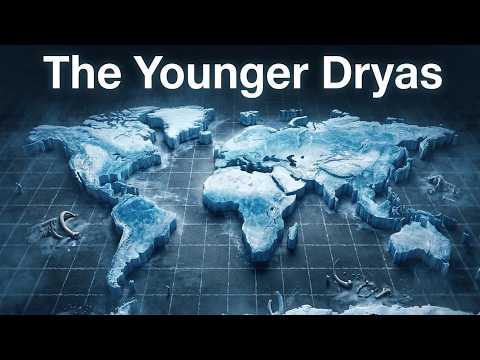
The Day Human History Reset: What Really Happened 12,800 Years Ago?
Introduction to the Younger Dryas
The Younger Dryas is a significant climatic event that occurred approximately 12,800 years ago, marking a sudden return to glacial conditions after a period of warming at the end of the last Ice Age. This event is characterized by a dramatic drop in temperatures, particularly in Greenland, where temperatures plummeted by as much as 10°C within a few years. This abrupt climate shift resulted in the extinction of numerous species, including the megafauna of North America, such as mammoths and saber-toothed cats, and the disappearance of the Clovis culture, the first major human civilization in the Americas.
Evidence of Extinction and Climate Change
Fossil evidence from Siberia reveals mammoths preserved in permafrost, some with undigested food still in their stomachs, indicating they died suddenly. The Younger Dryas lasted for about 1,200 years, during which ecosystems were severely disrupted. The cold period ended as abruptly as it began, with temperatures rising again in Greenland, possibly within a span of 40 to 50 years. This phenomenon is named after the Arctic wildflower Dryas octopetala, whose pollen is prevalent in sediment layers from this period.
Debates Surrounding the Cause
Scientists and researchers have debated the cause of the Younger Dryas for nearly two decades, with theories ranging from gradual climate change and melting ice to a catastrophic comet impact. Graham Hancock, a prominent figure in this debate, argues that the Younger Dryas represents a global disaster that involved significant sea level rise and cataclysmic events that led to the extinction of megafauna. He challenges the mainstream explanation, which attributes the climate shift to melting ice disrupting ocean currents.
Mainstream Scientific Explanation
The accepted scientific view suggests that the melting of the Laurentide Ice Sheet released cold, fresh water into the North Atlantic, disrupting the Atlantic Meridional Overturning Circulation (AMOC), which is crucial for regulating global temperatures. The influx of fresh water is believed to have jammed the oceanic conveyor belt, causing a return to colder conditions in the Northern Hemisphere.
The Younger Dryas Impact Hypothesis
In 2007, a groundbreaking hypothesis emerged, proposing that the Younger Dryas was triggered by a cosmic impact. Researchers discovered a distinct layer of soil, referred to as the "black mat," at archaeological sites like Murray Springs in Arizona. This layer contained nanodiamonds, melt glass, and other impact proxies indicative of a catastrophic event. The hypothesis suggests that multiple airbursts from a fragmenting comet could have occurred simultaneously across the Northern Hemisphere, leading to widespread destruction and climate change.
Physical Evidence and Global Impact
Evidence supporting the Younger Dryas Impact Hypothesis includes the presence of platinum anomalies at various archaeological sites, which are not typically found in Earth's crust and are associated with extraterrestrial materials. The hypothesis posits that the Earth passed through a dense debris field from the Taurid meteor stream, resulting in numerous airbursts that triggered wildfires and rapid ice melting, contributing to the climate shift.
Counterarguments and Ongoing Debate
Despite the compelling evidence, the Younger Dryas Impact Hypothesis faces significant skepticism. Critics point out the absence of a confirmed impact crater and the failure of some studies to replicate the findings of nanodiamonds and microspherules. Additionally, a recent study indicated that a notable platinum spike found in Greenland ice cores occurred after the onset of the Younger Dryas, suggesting volcanic activity rather than a cosmic impact as the cause. This ongoing debate highlights the complexities of understanding the Younger Dryas and its implications for human history.
Historical Implications
The Younger Dryas raises profound questions about the fate of human populations during this period. The disappearance of the Clovis culture and the extinction of large mammals suggest a significant disruption in ecosystems and human societies. Interestingly, the onset of the Younger Dryas coincides with the construction of Göbekli Tepe in Turkey, an archaeological site that predates known agricultural societies and showcases advanced stonework and social organization.
Connections to Mythology and Future Risks
Hancock draws parallels between the Younger Dryas and the myth of Atlantis, suggesting that historical accounts of advanced civilizations being destroyed by cataclysmic events may have roots in real occurrences. The ongoing threat of asteroid impacts remains relevant today, as Earth continues to pass through the Taurid meteor stream, raising concerns about potential future impacts. The B612 Foundation has warned that it is certain Earth will be struck by a significant asteroid, emphasizing the importance of understanding past events like the Younger Dryas to prepare for future risks.
Conclusion
The Younger Dryas is a pivotal event in Earth's climatic history, characterized by abrupt changes that led to mass extinctions and societal transformations. While the exact causes remain debated, the evidence of significant environmental upheaval and its implications for human history are undeniable. The lessons learned from the Younger Dryas serve as a reminder of the fragility of civilizations and the potential for sudden, catastrophic events to reshape the world.
The speaker presents a compelling argument regarding the Younger Dryas Impact Hypothesis (YDIH), positioning themselves as a proponent of this theory. The central thesis revolves around the idea that a cosmic event, specifically a series of airbursts from a fragmented comet, may have triggered significant climatic changes approximately 12,800 years ago. This event is posited to have caused a dramatic drop in temperatures, leading to the extinction of numerous species and the disappearance of early human cultures, such as the Clovis culture.
Throughout the discussion, the speaker emphasizes that the Younger Dryas represents not just a geological event but a critical juncture in human history, suggesting that a fast-acting catastrophe could have erased civilizations and species that we currently have no record of. They conclude that the YDIH is not merely a fringe theory but rather a credible hypothesis supported by a considerable body of research, with implications for understanding both past and future events on Earth.
- [16:57] "...the younger dry impact hypothesis... has many opponents and there are many who disagree with it."
- [25:24] "The younger dryers happened. It was real. And whatever caused it, it remade the world."
To substantiate the Younger Dryas Impact Hypothesis, the speaker identifies various forms of physical evidence that have been documented, which include:
- Nanodiamonds: Found in the soil layer known as the black mat, these microscopic diamonds form under extreme pressure and heat, suggesting a high-energy event.
- Burn Layers: Evidence of significant burning across multiple continents, indicating widespread wildfires that may have been triggered by the heat from airbursts.
- Platinum Anomalies: Concentrations of platinum have been detected at archaeological sites, which are not typical of Earth’s crust, thus hinting at extraterrestrial sources.
- Magnetic Microspherules: Tiny spheres of melted iron found within the same sediment layers, further indicating a high-temperature event.
- Melt Glass: This material, which forms at temperatures exceeding 2,200°C, has been observed in geological layers corresponding to the Younger Dryas.
The speaker interprets these findings as impact proxies, which collectively suggest that a cosmic event led to the rapid climate shifts observed during the Younger Dryas and caused widespread extinction and cultural shifts.
- [06:27] "Nano diamonds only formed under extreme pressure and heat."
- [11:09] "Platinum at those concentrations doesn’t come from Earth’s crust in any normal geological process."
In addressing the Younger Dryas Impact Hypothesis, the speaker also acknowledges various counter-arguments and criticisms raised by the scientific community. Notable objections include:
- No Impact Crater: Critics point out the lack of a confirmed impact crater, arguing that for an event of the scale proposed by the YDIH, a crater should exist. Supporters counter that airbursts, like the Tunguska event, do not leave craters.
- Replication Failures: Early attempts to replicate findings of nanodiamonds and microspherules at the same sites did not succeed, which raises questions about the reliability of the initial results.
- Platinum Spike Analysis: Recent studies have suggested that a significant platinum spike found in Greenland ice cores, which was initially attributed to a cosmic impact, may actually be linked to volcanic eruptions rather than extraterrestrial events, as this spike occurred significantly after the onset of the Younger Dryas.
The speaker reflects on these criticisms and recognizes that while they present valid points, there remain unexplained impact proxies such as the nanodiamonds and melt glass, highlighting that the scientific dialogue surrounding the YDIH is ongoing and complex.
- [14:12] "The impact hypothesis has no confirmed impact crater anywhere."
- [15:12] "Their best explanation for the chemistry is Icelandic volcanic eruptions, not space rocks."
Approximately 12,000 to 13,000 years ago, a significant climatic event referred to as the Younger Dryas occurred, marking a period of abrupt temperature changes that had profound impacts on the environment and megafauna. According to the speaker, around 12,870 years ago, temperatures in Greenland dropped by up to 10°C in a remarkably short span of years. This rapid cooling resulted in Europe experiencing near glacial conditions, drastically altering the ecosystems that had begun to recover from the last ice age.
During this period, the speaker notes that 35 species of megafauna, including mammoths and saber-toothed cats, vanished from North America in a matter of centuries. This extinction event coincided with the disappearance of the Clovis culture, which was one of the earliest human civilizations in the Americas. The implication is that something catastrophic happened that disrupted both the climate and the ecological balance.
The speaker presents two competing hypotheses regarding the cause of these events: one suggests that the changes were due to melting ice and subsequent shifts in ocean currents, specifically citing the meltwater pulse hypothesis, while the other proposes an extraterrestrial impact, possibly from a comet. The discussion emphasizes the ongoing debate among scientists regarding the true cause of the Younger Dryas, which remains a critical point of inquiry in understanding this transformative period in Earth's climatic history.
- [02:07] "In Greenland, temperatures dropped up to 10°C. In years, not centuries, not millennia, years."
- [01:10] "Whatever killed them killed them fast."
- [01:16] "...the disappearance of the Clovis culture, the first great human civilization of the Americas, disappeared from the archaeological record."
The speaker references several sources and experts to add credibility to the claims regarding the Younger Dryas and its potential causes. Notably, he cites the work of Graham Hancock, who discusses the implications of the Younger Dryas impact hypothesis (YDIH) and its significance in the broader scientific debate. Hancock’s perspective is particularly relevant as he argues that the mainstream explanation of melting ice and gradual climate change does not fully account for the sudden and severe environmental shifts that occurred.
In addition to Hancock, the speaker mentions that a group of over 60 scientists published a paper in 2007 in the Proceedings of the National Academy of Sciences, proposing that the materials found in the geological record, such as nano diamonds and magnetic microspherules, indicate a cosmic collision rather than a singular impact event. This collective work is presented as evidence supporting the YDIH, which suggests multiple air bursts from a fragmenting comet.
The speaker also contrasts mainstream scientific views with those of independent researchers. He indicates that the mainstream community has published papers critiquing the YDIH, such as a 2011 paper titled A Requiem for the Younger Dryas Impact Hypothesis, suggesting that the debate is ongoing and contentious. He references the work of Durham University researchers who re-examined the platinum spike data, leading to findings that challenge the extraterrestrial impact narrative by suggesting volcanic activity as a potential cause.
- [07:05] "...these impact proxies were the fingerprint of a cosmic collision."
- [15:08] "...the platinum spike occurs not at the onset of the Younger Dryas, but 45 years after it began."
- [01:21] "...the story of the Younger Dryas and it might be the most important and most dangerous chapter in the history of our species."
[00:00] In the perafrost of Siberia, they found[00:03] mammoths so well preserved that the[00:05] flesh was still red. Carnivores tried to[00:08] eat the carcasses after they were[00:10] excavated. The animals weren't just old.[00:13] They were frozen mid-motion, some with[00:16] undigested food still in their stomachs.[00:19] Buttercups, grass. The meal they were[00:22] eating when they died. Whatever killed[00:24] them killed them fast.[00:28] 12,800 years ago, the Earth was warming[00:31] out of the last ice age. Then something[00:34] changed. Temperatures in Greenland[00:36] plummeted up to 10° C. 35 species of[00:40] megapora vanished from North America[00:42] within centuries. Mammoths,[00:45] saber-tooththed cats, giant ground[00:47] sloths gone. The Clovis culture, the[00:51] first great human civilization of the[00:53] Americas, disappeared from the[00:55] archaeological record. All of this[00:58] happened at the same time. What[01:00] happened? That's the question[01:02] scientists, archaeologists, and a[01:05] growing number of independent[01:06] researchers have been fighting about for[01:08] almost two decades.[01:10] And the answer, depending on who you[01:13] ask, is either melting ice, bad luck,[01:16] and gradual climate change, or a comet.[01:21] This is the story of the younger dryass[01:24] and it might be the most important and[01:26] most dangerous chapter in the history of[01:27] our species.[01:34] Around 14,000 years ago, the last ice[01:37] age was ending. Slowly, steadily, the[01:41] enormous ice sheets that had covered[01:42] much of North America and Europe for[01:44] tens of thousands of years were[01:46] retreating.[01:47] Temperatures were climbing. Ecosystems[01:50] were recovering. Megapora were thriving.[01:53] For the humans alive at the time, our[01:55] direct ancestors, it must have felt like[01:58] the world was finally getting better.[02:01] And then around 12,870[02:04] years ago, something went very wrong.[02:07] In Greenland, temperatures dropped up to[02:10] 10° C. In years, not centuries, not[02:15] millennia, years. Europe returned to[02:18] near glacial conditions. Forests that[02:21] had begun to grow were replaced by[02:22] tundra. Rainfall patterns across the[02:25] entire planet shifted. This cold period[02:28] lasted for roughly 1,200 years from[02:31] about 12,870[02:33] to 11,700 years ago. And then just as[02:38] suddenly as it began, it ended.[02:41] Temperatures shot back up in Greenland.[02:45] The warming that ended the younger drius[02:47] may have taken as little as 40 to 50[02:49] years.[02:51] Climate scientists have a name for this.[02:54] They call it the younger drius, named[02:56] after a small arctic wildflower, Dryus[02:59] octopetila, whose pollen explodes in the[03:01] sediment record of this period. A flower[03:04] that flourishes in cold. It's one of the[03:07] most studied climate events in Earth's[03:09] history. And despite decades of[03:11] research, its cause is still genuinely[03:14] debated. Here is Graham Hancock[03:17] explaining to Lex Friedman why it[03:20] matters so much and why he thinks the[03:22] mainstream explanation doesn't fully[03:24] account for what happened. The younger[03:26] dry really ticks all the boxes as a as[03:30] as a worldwide disaster which definitely[03:32] involved sea level rise both at the[03:34] beginning and at the end of the younger[03:37] dry. It definitely involved the[03:39] swallowing up of lands that previously[03:41] had been above water. We know there was[03:43] a nasty epoch, the younger dry, when[03:46] flooding did occur and when the earth[03:48] was subjected to events cataclysmic[03:51] enough to extinguish entirely the[03:54] megapona of the ice age. There it is,[03:57] the conventional explanation. Melting[03:59] ice disrupted ocean currents. And the[04:02] question Hancock keeps pushing on. What[04:05] caused the meltwater pulse in the first[04:07] place?[04:09] That's where this gets interesting.[04:15] The mainstream scientific view goes like[04:17] this. At the end of the last ice age,[04:20] the enormous North American ice sheets,[04:23] the Laurentide ice sheet, a slab of ice[04:25] in some places more than 2 mi thick,[04:28] were melting. The melt water flowing[04:30] into the North Atlantic was cold and[04:32] fresh. And that matters because the[04:35] engine that moves heat around the[04:36] planet, a global system of ocean[04:39] currents, sometimes called the Atlantic[04:41] meridian overturning circulation or AMO,[04:44] runs on differences in temperature and[04:46] salinity. Cold, salty water is dense. It[04:50] sinks. That sinking drives the current[04:53] that pulls warm surface water north from[04:56] the tropics. The Gulf Stream is the most[04:59] famous part of this system. It's[05:01] essentially the planet's central[05:03] heating. When enough cold, fresh water[05:06] flooded him from the melting ice, it[05:08] essentially jammed the conveyor belt.[05:10] The Gulf Stream slowed or stopped[05:13] entirely. Heat stopped flowing north and[05:16] the northern hemisphere plunged back[05:18] into cold. This is known as the[05:21] meltwater pulse hypothesis.[05:24] And for most of the 20th century, it was[05:26] the accepted explanation.[05:29] But here's the problem. That explanation[05:32] requires something to have triggered the[05:34] meltwater pulse. A sudden massive[05:37] release of fresh water into the ocean.[05:39] And what caused that? In 2007, a group[05:43] of scientists proposed an answer that[05:45] nobody expected.[05:48] At a place called Murray Springs in[05:50] Arizona, a well doumented Clovis era[05:53] site where mammoth bones and stone tools[05:55] have been excavated, geologists noticed[05:58] something strange in the soil. A dark[06:01] layer about the width of a human hand[06:04] running through the earth in a perfectly[06:05] distinct line. Below it, mammoth bones,[06:10] clovis tools, evidence of human life.[06:13] Above it, nothing. No mammoths, no[06:17] clover tools, a silence in the record.[06:21] They called it the black mat. And when[06:23] they analyzed it, they found something[06:25] that shouldn't have been there. Nano[06:27] diamonds only formed under extreme[06:30] pressure and heat. Melt glass silica[06:33] fused at temperatures exceeding 2,200°[06:36] C. Magnetic microspherials, tiny spheres[06:40] of melted iron. carbon sperials,[06:43] evidence of massive continentwide[06:46] burning platinum at concentrations far[06:49] above normal background levels found at[06:52] the same layer across four continents.[06:55] In 2007, a team of more than 60[06:58] scientists published a paper in the[07:00] proceedings of the National Academy of[07:02] Sciences proposing that these materials,[07:05] these impact proxies, were the[07:08] fingerprint of a cosmic collision. Not a[07:11] single large impact like the asteroid[07:13] that killed the dinosaurs.[07:16] Something different. Multiple air[07:18] bursts, fragments of a large fragmenting[07:21] comet detonating across the northern[07:24] hemisphere simultaneously.[07:26] Um the the young impact hypothesis, YDIH[07:30] for short, uh is uh is not a lunatic[07:34] fringe theory as its opponents often[07:37] attempt to write it off. Um it's the[07:40] work of more than 60 major scientists.[07:43] You can see it most clearly at uh Murray[07:47] Springs in Arizona, for example. You[07:49] nano diamonds in it. There is shocked[07:52] quartz in it. There is quartz that's[07:54] been melted at temperatures in excess of[07:56] 2,200° centigrade. Um there are carbon[08:00] microspherules.[08:01] All of these are proxies for some kind[08:04] of cosmic impact. And here's the[08:06] proposed culprit, the Torid meteor[08:09] stream. The Earth passes through it[08:11] twice a year, once in June, once in late[08:14] October. It's approximately 30 million[08:17] km wide. Scientists believe it's the[08:20] debris field of a single large comet[08:22] that entered the solar system around[08:24] 20,000 years ago, gradually broke apart,[08:28] and scattered its fragments across a[08:30] huge swath of the solar system. The[08:32] theory holds that 12,800 years ago, the[08:36] Earth passed through an unusually dense[08:38] part of that debris stream. Not one[08:40] impact, hundreds of air bursts,[08:43] fragments raining down across North[08:45] America, into the North Atlantic,[08:48] possibly as far east as Syria, where a[08:51] Paleolithic village called Abu Herrera[08:53] shows evidence of an air burst at[08:55] exactly this date in its soil layer. The[08:58] heat from those impacts and air bursts[09:01] and the wildfires they triggered across[09:03] millions of square miles melted enough[09:05] ice fast enough to send a catastrophic[09:08] pulse of fresh water into the ocean and[09:11] stop the Gulf Stream. And that's what[09:13] started the younger dry.[09:16] To understand the scale of a single air[09:18] burst, consider Tangaska.[09:21] In 1908, a cometry fragment probably[09:24] between 50 and 100 meters across[09:27] exploded in the atmosphere above[09:29] Siberia. No crater, no surviving rock,[09:33] just an air burst. It flattened 2,000 km[09:37] of forest. The shock wave circled the[09:40] earth twice. Luckily, it hit an[09:42] uninhabited region. Now imagine not one[09:46] tongusa, hundreds across North America[09:50] on the same day. Here's how Hancock[09:52] walked Joe Rogan through the scale of[09:54] what they're proposing. So the the[09:56] Randall Carlson Graham Hancock theory,[09:58] which is not the really their theory.[10:00] It's a an actual scientific theory[10:02] called the younger dus impact theory[10:05] that says that there's a certain period[10:07] of time somewhere around between uh[10:10] 12,800 years ago and then Graham thinks[10:14] it's probably happened multiple times[10:16] since then maybe not as big or maybe but[10:19] but similar impacts where we pass[10:22] through this comet cloud and the United[10:25] States uh which was covered in you know[10:28] half a mile of ice or as much as a mile[10:31] high of ice, half the half the country.[10:34] All that was wiped out almost[10:36] instantaneously.[10:37] And that these things hit all over the[10:40] world, probably reset civilization, and[10:43] probably caused the mass extinction of[10:45] in North America, it was like 65% of the[10:47] megapona died very quickly.[10:51] >> Let's talk about the physical evidence[10:54] because this is where the debate gets[10:56] very specific and very heated. The black[10:59] mat has now been identified at dozens of[11:02] sites across North America and at sites[11:04] in Europe, the Middle East, and South[11:07] America. Platinum anomalies,[11:09] concentrations of the element far above[11:12] normal background levels, have been[11:14] documented at 11 archaeological sites[11:17] across the United States, in Canada,[11:20] South Africa, Chile, and Syria. Here's[11:24] why platinum matters. Platinum at those[11:27] concentrations doesn't come from Earth's[11:29] crust in any normal geological process.[11:32] It's associated with extraterrestrial[11:35] material. The same signature we see in[11:37] the Aridium layer that proved an[11:39] asteroid killed the dinosaurs 66 million[11:42] years ago. And as one gold miner in[11:45] Alaska discovered while excavating his[11:47] boneyard operation, the physical[11:49] evidence on the ground is striking.[11:51] >> We were digging one day and we found[11:53] burnt bedrock. And you've probably seen[11:55] a picture of that.[11:56] >> Yeah.[11:57] >> But the uh m bedrock is actually burned.[12:00] >> I mean, you can tell it's burned. It's[12:02] rub it. It's got charcoal. I mean, it's[12:03] like and then the gravels right above it[12:06] are burned. To go along with that[12:08] theory, we had sea levels that rose 3 to[12:12] 400 ft in a relatively short period of[12:14] time. And Bingia, which was that land[12:17] bridge that came across, suddenly it was[12:19] no longer a land bridge. It was[12:21] underwater. Worldwide, sea levels rose 3[12:24] to 400 feet around the globe.[12:26] >> Yeah. Quickly.[12:28] >> Real quick. And might have been quicker[12:30] than the megapona could adapt to. They[12:33] had to have the right ecosystem to live[12:35] in and it changed too quick and they[12:38] couldn't adopt. That's my theory.[12:39] >> Adapt.[12:40] >> Adapt. Yeah.[12:41] >> Yeah. That that's probably part of it[12:44] too, right? Because some of the things[12:45] probably survived. They think a lot of[12:47] things died on the impacts or during the[12:49] floods and during if you found charcoal.[12:53] I mean they found um this stuff that[12:56] they call nuclear glass. It's called[12:58] trinitite I believe is the way they the[13:01] way they pronounce it. But it's the same[13:02] sort of uh material they found during[13:04] the Trinity explosion.[13:05] >> Trinitite. That's the glass created at[13:08] the site of the first nuclear bomb test[13:10] in New Mexico in 1945 when the explosion[13:14] was so intense it fused the desert sand[13:17] into glass. They're finding the same[13:19] material in soil layers from 12,800[13:23] years ago.[13:25] Now to be fair, this is one mining[13:28] operation and its claims have not been[13:31] peer-reviewed, but the broader pattern[13:33] of impact proxies across sites has been[13:36] published in respected scientific[13:38] journals. And the debate over what those[13:41] proxies mean is very much alive.[13:44] Because here's the counterargument, and[13:47] it's a serious one.[13:51] The mainstream scientific community has[13:54] pushed back hard against the younger[13:56] dryass impact hypothesis.[13:58] Papers with titles like a reququum for[14:01] the younger dry impact hypothesis have[14:04] been published. Critics point to several[14:07] problems.[14:08] One, no crater. The impact hypothesis[14:12] has no confirmed impact crater anywhere.[14:16] Supporters argue air bursts leave no[14:18] craters as Tonguska demonstrated, but[14:21] critics say the absence of a crater for[14:23] an event of this alleged scale is a[14:25] serious problem.[14:27] Two, the replications failed. Early[14:30] attempts by other labs to reproduce the[14:33] nanodiamond and microsphereral findings[14:35] at the same sites couldn't do it.[14:37] Supporters say those labs had[14:39] contaminated samples or insufficient[14:41] methodology.[14:43] Three, the platinum spike. This is the[14:47] most recent and most significant[14:48] development, and it directly affects[14:51] claims made in those podcast clips.[14:54] In 2013, researchers from Harvard[14:58] documented a pronounced platinum spike[15:00] in Greenland ice cores, precisely dated[15:03] to 12,900 years ago. This was widely[15:06] cited as strong evidence for a cosmic[15:08] impact, including by Hancock.[15:12] But in 2025, a new study led by[15:15] researchers at Durham University[15:17] re-examined the platinum spike with[15:20] updated dating methods.[15:23] Their conclusion was striking. The[15:25] platinum spike occurs not at the onset[15:27] of the younger Dryus, but 45 years after[15:30] it began, and it lasted 14 years, not an[15:34] instantaneous event you'd expect from a[15:36] comet. Their best explanation for the[15:38] chemistry is Icelandic volcanic[15:41] eruptions, not space rocks.[15:44] That is not nothing. That's a[15:46] significant piece of evidence going the[15:48] other way. And yet, the other impact[15:51] proxies remain unexplained. The[15:54] nanodiamonds, the melt glass at 2,200°,[15:58] the burn layer across four continents,[16:00] volcanic eruptions don't produce nano[16:03] diamonds. So, where does that leave us?[16:06] This is a theory. The younger drius[16:08] impact, it's a hypothesis actually. It's[16:09] not even a theory. A theory is I think[16:11] considered a higher level than a[16:12] hypothesis. That's why it's the younger[16:14] dry impact hypothesis. And of course, it[16:16] has many opponents and there are many[16:18] who disagree with it. Uh and there there[16:21] have been a series of of peer-reviewed[16:24] papers that have been published[16:26] supposedly debunking the younger dry[16:29] impact hypothesis. One, I think was in[16:31] 2011. and it was called a a reququiam[16:34] for the younger drius impact hypothesis[16:36] and there's one just been published a[16:38] few months ago or a year ago. So it's[16:40] it's a hypothesis that has its[16:41] opponents. What everybody's agreed on is[16:44] the younger drius was bad. Um but there[16:46] is dispute about what caused it. I[16:48] personally have found the younger drius[16:51] impact hypothesis to be the most[16:52] persuasive uh which most effectively[16:55] explains all the evidence.[16:57] >> That's the honest answer and it's worth[16:59] holding on to. The event happened.[17:02] The question is what caused it.[17:09] Now we arrive at the part that stops[17:11] people cold. Because the younger dryest[17:14] doesn't just raise a geological[17:16] question. It raises a historical one. If[17:19] a catastrophic event, whatever its[17:22] cause, struck the Earth 12,800 years ago[17:26] and caused 1,200 years of near glacial[17:29] conditions. What happened to the humans[17:31] who were alive when it hit?[17:34] We know the Clovis culture vanished from[17:36] the record. We know 35 species of large[17:39] mammals went extinct. We know sea levels[17:43] rose dramatically when the younger[17:44] dryest ended submerging coastlines that[17:47] had been inhabited for thousands of[17:49] years. But here is the thing that[17:51] researchers like Hancock find most[17:53] compelling. Just as the younger dus ends[17:56] precisely at 11,600 years ago,[18:00] construction begins at Gobiclye in what[18:03] is now Turkey. Goletteepe is at least[18:06] 11,600 years old. It consists of[18:10] massive, precisely carved stone pillars[18:13] arranged in circles, some up to 5.5 m[18:16] tall, weighing up to 10 tons, decorated[18:19] with sophisticated animal reliefs. It[18:22] predates Stonehenge by 6,000 years. It[18:26] predates the invention of writing by[18:28] 6,000 years. It predates the first[18:31] cities of Mesopotamia.[18:33] And it was built by people who according[18:36] to conventional archaeology had not yet[18:38] invented agriculture.[18:40] >> Why don't you mention about that[18:42] particular date 11,600?[18:44] >> It's incredibly important. It's an[18:45] incredibly important day because the[18:47] younger dry begins 12,800 years ago with[18:50] a cataclysm with a puzzling mysterious[18:53] rise in sea level at the same point.[18:55] Thousand years of freezing temperatures,[18:58] mass extinctions of animal species all[19:00] over the world. And then 11,600 years[19:02] ago, global temperature shoots up. The[19:05] last of the ice caps collapse into the[19:07] sea. Sea level rises enormously. That is[19:10] the date that work starts at Gobeclete.[19:12] And that it's a point I've made many[19:15] times, but it's really worth making[19:16] because archaeologists roll their eyes[19:18] every time you say the word Atlantis.[19:21] But that is precisely the date that[19:23] Plato, which is the earliest surviving[19:25] reference to Atlantis, that's precisely[19:27] the date he gives for the destruction of[19:29] Atlantis 11,600 years before our time.[19:33] He puts it this way that his ancestor[19:35] Solon visited Egypt. And we know about[19:38] that visit. It's historically recorded.[19:40] That visit to Egypt was in 600 BC. And[19:43] there Solon claimed to have been told by[19:45] Egyptian priests about this great[19:47] advanced civilization that once existed[19:50] but that angered the gods and was[19:52] destroyed in an enormous flood. And[19:55] Solon asked those Egyptian priests,[19:57] "When did this happen?" And they said,[19:59] "Oh, 9,000 years ago." Well, do the[20:03] math. That's in 600 BC. That's 9,000[20:06] years before 600 BC. We call that 9,600[20:09] BC. That's 11,600 years ago. That's[20:13] exactly the date of the end of of the[20:14] younger Dryus. And it's exactly the date[20:17] of what is called meltwater pulse 1b.[20:21] One of the biggest single rises[20:22] overnight in sea level that ever[20:24] occurred. So if Plato made it up, it's[20:27] really weird that he picked a date that[20:30] is precisely a date that coincides with[20:33] the latest geological evidence on[20:35] cataclysmic sea level rise at the end of[20:37] the ice age.[20:38] Now to be clear, this is where we move[20:42] from science into speculation.[20:44] Hanok himself acknowledges that the[20:47] Atlantis connection is his[20:48] interpretation.[20:50] Most archaeologists reject it. But the[20:53] Gobicly Teppy puzzle is real. Whoever[20:55] built it had sophisticated[20:56] organizational capacity, advanced[20:59] stonework skills, and a reason to bury[21:01] the entire complex deliberately. Gobicly[21:05] was intentionally filled in and buried[21:07] around 8,000 years ago, which is itself[21:10] a mystery before it was rediscovered in[21:12] the 1990s.[21:14] The question Hancock is really asking is[21:17] not was Atlantis real. It's could there[21:20] have been complex human societies before[21:22] the younger Dryus that we don't know[21:25] about? Because the event that destroyed[21:27] them also destroyed the evidence.[21:31] Here[21:36] is the question that should make this[21:37] feel personal.[21:39] Earth is hit by space rocks constantly.[21:42] Every day, the planet receives more than[21:45] 100 tons of meteoric dust. Objects the[21:48] size of a car enter the atmosphere and[21:50] burn up roughly once a year. An object[21:53] the size of the Chelabinsk meteor which[21:56] shattered windows across a Russian city[21:59] in 2013 strikes somewhere on Earth[22:02] approximately once or twice a century.[22:05] A Tangaska scale event capable of[22:08] leveling a major city happens on average[22:10] every 200 to 300 years. And the torid[22:14] meteor stream, the one scientists[22:16] believe may be responsible for the[22:18] younger dus impacts, if that hypothesis[22:20] is correct, still exists. The earth[22:23] still passes through it twice a year in[22:26] June and in late October. The question[22:30] is not whether Earth will be hit by a[22:32] significant object again. The question[22:34] is when. And here's where the story of[22:37] the younger Dryass connects directly to[22:39] us right now. The B612 Foundation, a[22:45] nonprofit dedicated to planetary[22:47] defense, said it plainly in 2018. It's[22:50] 100% certain we'll be hit by a[22:53] devastating asteroid. We're just not[22:55] 100% certain when the younger Dus is not[22:59] a story that's only about the past. It's[23:02] a warning.[23:08] There's something deeply unsettling[23:10] about the younger dry ass. Not just what[23:12] it was. A sudden violent interruption of[23:15] a warming planet. A one 200year cold[23:18] snap that may have erased species,[23:20] cultures, and civilizations we don't[23:23] even know existed. But what it[23:25] represents,[23:27] the idea that history isn't always a[23:29] story of slow, steady progress. that[23:32] sometimes the world simply resets. That[23:37] a civilization can be sophisticated,[23:39] curious, perhaps even advanced, and[23:42] still be completely erased by the sky.[23:45] The mammoth's frozen midmeal. The clover[23:48] culture that vanished from the record in[23:50] a single soil layer. The flood myths[23:52] from every culture on Earth that[23:54] converge on the same catastrophic[23:56] moment. The date that Plato gives for[23:59] the end of Atlantis, whether he invented[24:01] it or remembered it, that lines up with[24:04] the end of the younger dry ass with[24:06] eerie precision. We should never dismiss[24:09] myths. We should we should always listen[24:11] to them. They're the memory they're the[24:13] memory bank of our species. And they may[24:15] be expressed in symbolic language. There[24:17] may be wonderful stories built around[24:18] them, but at the core is factual[24:20] information. And what better way to[24:24] ensure that factual information is[24:26] passed down to the future than to record[24:29] it in a fantastic story. Yeah. That[24:31] people will pass on. People love telling[24:33] stories and they don't even need to[24:34] understand what the heart of the story[24:36] is. As long as it's a great story,[24:37] they're going to keep on passing it down[24:39] to the future. We don't know exactly[24:41] what happened 12,800 years ago. The[24:45] science is genuinely unsettled. The[24:48] platinum spike may be volcanic. The nano[24:51] diamonds are still unexplained. The[24:53] black mat exists. The megaporna[24:55] vanished. The clover culture[24:57] disappeared. And then within a century[25:00] of the younger dus ending, someone in[25:03] Turkey started carving enormous stone[25:05] pillars into the shape of animals we can[25:07] still recognize as if recording[25:10] something, as if making sure it wouldn't[25:12] be forgotten. Maybe the younger dus[25:15] impact hypothesis is correct. Maybe it's[25:18] climate, melt water, and bad luck. Maybe[25:22] it's both. But the younger dryers[25:24] happened. It was real. And whatever[25:26] caused it, it remade the world.[25:30] And the tarid meteor stream is still up[25:32] there. We passed through it every year[25:35] in June and in late October.

This Popular Ancient Theory is Unraveling
The conclusion of the last ice age was marked by a dramatic and violent climate shift approximately 12,800 years ago, leading to the extinction of numerous species that had previously thrived for hundreds of thousands of years. This abrupt change, known as the Younger Dryas, has been the subject of extensive scientific debate, particularly regarding its causes. A controversial theory suggests that a comet impact may have triggered this catastrophic event, although recent studies supporting this hypothesis faced significant setbacks.
Initially, the end of the ice age was envisioned as a gradual warming process, with glaciers retreating and ecosystems evolving. However, evidence indicates that around 12,800 years ago, temperatures plummeted sharply, causing ecosystems to shift dramatically and leading to the extinction of many species. This period of cooling, lasting approximately 1,200 years, saw temperatures in the northern hemisphere drop by as much as 10°C within a decade. The rapid onset of this cold period and its extensive impact on both flora and fauna has puzzled scientists for over a century.
One mainstream explanation for this climatic reversal involves the melting of the Laurentide ice sheet, which released vast amounts of freshwater into the North Atlantic. This influx disrupted oceanic circulation patterns, effectively stalling the Atlantic Meridional Overturning Circulation, which is crucial for transporting warm water northward. As a result, the northern hemisphere experienced a significant loss of warmth, leading to the conditions observed during the Younger Dryas. Ocean sediment cores and climate models have provided supporting evidence for this theory, which remains the prevailing explanation among climate scientists.
However, the meltwater hypothesis does not fully account for the simultaneous extinction of North America's megafauna and the disappearance of the Clovis culture, which was prominent at the time. This gap in understanding has allowed alternative explanations to emerge, notably the comet impact theory proposed by Richard Firestone and his team in 2007. They suggested that Earth passed through a debris field from a disintegrating comet, resulting in air bursts and surface impacts that destabilized the ice sheet and triggered the catastrophic meltwater pulse.
The evidence for this theory includes a distinct layer of material found at various archaeological sites, containing unusual elements such as platinum, iridium, and nanodiamonds, which are typically associated with cosmic impacts. Despite generating significant interest and debate, the comet impact hypothesis has faced substantial criticism. Critics argue that many of the materials cited have plausible terrestrial origins, and independent studies have failed to replicate the original findings.
In 2025, two significant papers appeared supporting the impact hypothesis, but both were later retracted due to methodological issues and inaccuracies in data interpretation. The retractions highlighted concerns about the reliability of the evidence presented, including misidentified materials and incorrect dating methods. Despite these setbacks, the broader body of literature supporting the impact hypothesis remains, with ongoing research continuing to explore the potential links between cosmic events and the Younger Dryas.
While the meltwater explanation is still widely accepted, it does not entirely resolve the complexities surrounding the rapid climatic changes and the associated extinctions. The speed of temperature drops and the subsequent recovery at the end of the Younger Dryas raise questions that neither hypothesis fully addresses. Furthermore, the impact hypothesis points to a specific debris field in our solar system, suggesting that similar events could occur in the future, as evidenced by recent meteor events.
In conclusion, the debate surrounding the causes of the Younger Dryas remains unresolved. The retraction of recent supporting studies for the comet impact theory does not eliminate the possibility of a cosmic event playing a role in this significant climatic shift. The scientific community continues to investigate these phenomena, seeking to understand what ultimately led to the end of the Pleistocene world.
The speaker's central thesis regarding the Younger Dryas Impact Hypothesis (YDIH) revolves around the profound and abrupt climatic changes that occurred approximately 12,800 years ago. He presents the YDIH as a plausible explanation for the significant disruptions during the Younger Dryas period, which saw dramatic temperature drops and widespread extinctions. The speaker, who possesses a degree in ancient history, adopts a neutral stance while critically examining the hypothesis. He acknowledges that while the YDIH has gained traction and attracted serious scientific debate, it remains a minority position within the broader scientific community.
His primary claim is that although the mainstream explanation for the climatic reversal—a massive influx of freshwater from melting ice sheets—remains the prevailing view, it fails to adequately account for the rapid onset of climate change and the simultaneous megafaunal extinctions. He concludes that while the evidence supporting the YDIH has encountered setbacks, particularly with the retraction of two recent papers, the underlying question of what triggered the dramatic end of the Pleistocene epoch remains unresolved. The speaker emphasizes that this inquiry is essential, positing that something catastrophic must have occurred to cause such widespread ecological devastation.
- [10:00] "Retraction doesn’t necessarily mean the researchers committed fraud. It means the journal has determined that the conclusions can no longer be relied on..."
- [14:57] "Something ended the Pleistocene world, and we still don’t truly know what it was."
The speaker presents several pieces of evidence and arguments that support the Younger Dryas Impact Hypothesis (YDIH). Key points of evidence include:
- Platinum and Iridium Spikes: The presence of these elements at various archaeological sites is suggested as indicative of a cosmic impact event.
- Nanodiamonds: These tiny diamonds are theorized to form under extreme conditions, such as those produced by impacts or large fires. The speaker notes that their appearance in the Younger Dryas boundary layer indicates possible catastrophic events.
- Carbon Spherules: These are proposed to be remnants of intense fires associated with the impacts.
- Shocked Quartz: This is highlighted as a reliable indicator of cosmic impacts due to its unique fracturing pattern when subjected to high-pressure events.
- Marine Sediment Cores: The analysis of cores from Baffin Bay demonstrated consistent peaks of tiny melted droplets and platinum group particles that matched the chemical signatures of materials found in comets.
The speaker interprets these findings as compelling indicators that support the notion that Earth may have experienced an impact event that triggered massive climatic shifts. He acknowledges that this evidence has generated significant debate within the scientific community and that the YDIH is seen as an intriguing possibility for explaining the simultaneous climate changes and extinctions during the Younger Dryas period.
- [06:05] "The cosmic event and the climate event were the same event."
- [09:18] "Kennett's team found shocked quartz at three sites chosen for their archaeological significance..."
The speaker addresses several counter-arguments and criticisms directed at the Younger Dryas Impact Hypothesis (YDIH). Notable objections include:
- Ordinary Explanations for Evidence: Critics argue that the materials such as nanodiamonds and platinum spikes can have non-cosmic origins. For instance, nanodiamonds can form during wildfires, and carbon spherules may simply be fungal spores.
- Lack of Crater Evidence: A significant criticism is the absence of a clear impact crater to support the hypothesis. The speaker notes that proponents argue air bursts over ice sheets might not leave conventional impact scars.
- Inconsistent Findings: Some independent studies have failed to replicate the original findings regarding the cosmic impact evidence, leading to skepticism about the robustness of the YDIH.
- Retractions of Key Papers: The retraction of two significant studies published in PLOS One in early 2025 raised questions about the validity of the evidence supporting the YDIH, particularly regarding the misidentification of materials presented as evidence.
The speaker responds to these critiques by acknowledging the validity of some concerns while highlighting that the broader body of literature still contains supporting evidence for the YDIH. He emphasizes that despite the recent setbacks, the hypothesis still has credible advocates within the scientific community. Moreover, he notes that the rapid climate changes and extinctions during the Younger Dryas period remain inadequately explained, suggesting that the pursuit of understanding this phenomenon is far from over.
- [07:22] "If something large enough to trigger destruction across an entire continent hit the Earth 12,800 years ago, where did it land?"
- [10:45] "The material presented as cosmic impact indicators... was identified as marine foraminifera."
The speaker discusses significant climatic events occurring approximately 12,800 years ago, marking a critical transition during the end of the ice age. This period, known as the Younger Dryas, is characterized by an abrupt and dramatic change in climate that took place in a remarkably short timeframe. According to the speaker, the climate experienced a sudden reversal from a warming trend back towards conditions reminiscent of the ice age, with temperatures plummeting by approximately 10° C. This sharp drop in temperature is believed to have occurred within a decade, a phenomenon supported by ice core records from Greenland.
The consequences of this abrupt climatic shift were profound. The speaker notes that the Younger Dryas lasted for around 1,200 years, during which entire ecosystems were disrupted. This period witnessed the re-advancement of glaciers across regions such as the Alps and Rockies, and a collapse of growing seasons across Europe and North America.
Furthermore, the speaker highlights a wave of extinctions that occurred during this time, with 35 types of large mammals disappearing from North America alone, including iconic species such as mammoths, mastodons, and saber-toothed cats. These extinctions are particularly alarming given that these species had previously survived multiple ice ages, suggesting that the conditions during the Younger Dryas were exceptionally lethal.
While the mainstream explanation attributes these climatic changes to the melting of the Laurentide ice sheet and subsequent alterations in ocean currents, the speaker introduces an alternative theory linking these events to a possible extraterrestrial impact, specifically the notion of Earth passing through a debris field of a disintegrating comet. This theory posits that such an impact could have triggered the catastrophic meltwater pulse that disrupted ocean circulation, further exacerbating the climatic crisis of the time.
- [01:44] "For around 1,600 years the planet had been warming steadily out of the last ice age. Glaciers were retreating, forests were pushing into territory that had been frozen tundra for tens of thousands of years."
- [04:31] "Without that heat transport the northern hemisphere loses its main source of warmth. And that’s why we got temperatures crashing."
- [05:12] "This time they didn’t. And the human record shows similar gaps."
In the transcript, several scientists, research papers, and theories are mentioned that lend credibility to the speaker's discussion regarding the climatic events of the Younger Dryas. Notably, the speaker references a paper published in 2007 by a team of researchers led by Richard Firestone, which proposed the idea of Earth passing through a debris field of a disintegrating comet. This paper was significant as it introduced the hypothesis that such an impact triggered the climatic and ecological disruptions observed during the Younger Dryas.
Additionally, the speaker mentions two papers published in 2025 in the journal PLOS One, one led by James Kennett focusing on shocked quartz, and another by Andrew Moore examining marine sediment cores. These studies were highlighted as potentially pivotal evidence supporting the impact hypothesis, suggesting that they provided the strongest evidence yet linking extraterrestrial events to terrestrial consequences during the Younger Dryas.
The speaker also notes that the impact hypothesis has generated substantial debate within the scientific community, with various researchers supporting it, including James Kennett, Martin Sweatman, and James Powell. Their continued research and defense of the hypothesis illustrate its persistence despite criticism. However, the speaker points out that this hypothesis remains a minority position, indicating that it has not yet achieved mainstream acceptance.
This ongoing debate showcases the complexity of the topic, as the speaker contrasts the impact hypothesis with the more widely accepted explanation involving freshwater pulses from melting ice sheets, underscoring the scientific community's struggle to reach a consensus on these significant events.
- [05:27] "In 2007 a team of researchers led by the nuclear chemist Richard Firestone published a paper in the Proceedings of the National Academy of Sciences that proposed something remarkable."
- [09:02] "The first, led by James Kennett, focused on shocked quartz. This is widely regarded as the gold standard for confirming a cosmic impact."
- [12:17] "The hypothesis also retains genuine support from credentialed researchers."
[00:00] The end of the ice age was violent.[00:02] 12,800 years ago the climate flipped[00:05] overnight. Animals that had survived[00:07] hundreds of thousands of years vanished[00:09] and no one is sure why. But now a[00:11] controversial idea has emerged. A theory[00:14] that suggests something shocking hit our[00:16] planet, a devastating catastrophe[00:19] supported by solid scientific data. Yet[00:21] while this idea has just had a setback,[00:24] the question has never really gone away.[00:26] So what if we're missing something big?[00:28] What if something devastating erased our[00:31] past? Hi guys, welcome back. If you're[00:33] new here, my name is Michael. I have a[00:35] degree in ancient history and on this[00:37] channel we discuss the unexplainable[00:39] mysteries of our past. Let's get into[00:42] it.[00:44] You probably picture the end of the last[00:46] ice age as a slow warming, glaciers[00:49] retreating, forests spreading, human[00:51] societies gradually becoming more[00:53] complex. But not exactly, because around[00:56] 12,800 years ago something terrifying[01:00] happened. The warming suddenly stopped,[01:02] temperatures crashed back towards ice[01:04] age conditions, ecosystems shifted, and[01:07] entire species disappeared. However, no[01:10] one is really sure why this catastrophe[01:12] happened. For more than a century[01:14] scientists have argued about what could[01:16] possibly cause a climate reversal that[01:19] abrupt. [music] Yet one explanation has[01:22] always been powerful, always[01:24] controversial. For years most[01:26] researchers dismissed it, but in 2025 a[01:29] wave of new studies claimed to find[01:32] fresh evidence to support [music] the[01:34] idea of a comet impact. However, within[01:37] months two of them were retracted and[01:39] now the debate is more heated than ever.[01:42] So why was the Younger Dryas quite so[01:44] devastating and what actually triggered[01:47] it? This is the Younger Dryas. For[01:49] around 1,600 years the planet had been[01:52] warming steadily out of the last ice[01:54] age. Glaciers were retreating, forests[01:57] were pushing into territory that had[01:58] been frozen tundra for tens of thousands[02:01] of years. Humans were spreading further[02:03] across both hemispheres. But then[02:06] temperatures across the northern[02:07] hemisphere dropped by somewhere in the[02:09] region of 10° C. Ice core records from[02:12] Greenland suggest the sharpest part of[02:14] that transition may have taken less than[02:17] a decade, staggeringly fast. And that's[02:19] cold held for around 1,200 years. The[02:23] effects were not subtle. Glaciers[02:25] re-advanced across the Alps and the[02:27] Rockies. Tundra vegetation returned to[02:29] regions that had only recently begun to[02:32] warm. Growing seasons collapsed across[02:34] Europe and North America. And in the[02:36] fossil record something else appears[02:38] accelerated around this time. A wave of[02:40] extinctions unlike anything seen for[02:43] tens of thousands of years. 35 types of[02:46] large mammals vanished from North[02:48] America alone during this period.[02:50] Mammoths, mastodons, giant ground[02:52] sloths, saber-tooth cats, animals that[02:55] had already survived multiple previous[02:57] ice ages. That's really, really[02:59] important because they had endured worse[03:02] before, but this time they didn't. And[03:04] the human record shows similar gaps. The[03:07] Clovis techno-complex, the dominant[03:09] tool-making culture across North America[03:11] at the time, effectively disappeared. On[03:14] the Channel Islands off California, the[03:16] skeleton known as Arlington Man dates to[03:18] just before the boundary. There's a gap[03:20] of 600 to 800 years before the next[03:23] clear evidence of human occupation. So[03:26] something clearly happened and it was[03:28] bad. But the question is what? Of[03:31] course, there is a mainstream[03:32] explanation for the Younger Dryas. As[03:34] the last ice age ended, the enormous[03:36] Laurentide ice sheet covering most of[03:38] Canada was melting. The meltwater pooled[03:41] behind ice dams into vast lakes and the[03:44] largest was Lake Agassiz. At its peak,[03:46] bigger than all five modern Great Lakes[03:49] combined. For thousands of years that[03:51] water drained south through the[03:53] Mississippi into the Gulf of Mexico. But[03:55] then an ice dam failed. The drainage[03:58] re-routed, most likely northwest through[04:00] the Mackenzie River Valley into the[04:02] Arctic. An enormous pulse of cold fresh[04:05] water flooded into the North Atlantic.[04:07] And that's had incredible consequences.[04:09] An easy way of looking at it is that the[04:11] Atlantic normally works like a conveyor[04:13] belt. Warm water flows north from the[04:15] tropics, gives up its heat to the[04:17] atmosphere, cools, becomes dense, and[04:19] sinks. That's what drives the system.[04:22] But fresh water is lighter than salt[04:24] water. It sits on the surface like a[04:26] lid, which means the water can't sink[04:28] and the whole conveyor stalls. Without[04:31] that heat transport the northern[04:32] hemisphere loses its main source of[04:34] warmth. And that's why we got[04:36] temperatures crashing. And the evidence[04:38] backs this up. Ocean sediment cores show[04:40] the freshwater signal the theory[04:42] predicts. Climate models reproduce the[04:44] cooling pattern when you feed them[04:46] realistic meltwater volumes. [music][04:47] Most climate scientists still accept it[04:50] as the best explanation we have. But it[04:52] does have gaps. These animals had[04:54] already survived previous meltwater[04:56] pulses and multiple rapid coolings[04:58] across hundreds of thousands of years.[05:01] So the meltwater story explains the[05:03] climate, but it doesn't fully explain[05:05] why this particular event coincided with[05:08] the near total collapse of North[05:10] America's megafauna and the[05:12] disappearance of the Clovis people at[05:14] around the same time. And that's where[05:16] things get complicated because these[05:18] gaps are weird and they allow other[05:21] explanations to come into play. So what[05:24] is the alternative explanation? Well, in[05:27] 2007 a team of researchers led by the[05:30] nuclear chemist Richard Firestone[05:32] published a paper in the Proceedings of[05:34] the National Academy of Sciences that[05:36] proposed something remarkable. They[05:38] argued that Earth had passed through the[05:40] debris field of a disintegrating comet[05:43] producing widespread air bursts and[05:45] surface impacts across North America.[05:47] Now this wasn't proposed as an[05:49] alternative to the meltwater[05:51] explanation. It was proposed as the[05:53] thing that caused it. The theory is that[05:55] the impacts destabilized the Laurentide[05:58] ice sheet producing exactly the kind of[06:00] catastrophic meltwater pulse that shut[06:03] down ocean circulation. In other words,[06:05] the cosmic event and the climate event[06:08] were the same event. The evidence they[06:10] pointed to was a thin dark layer, the[06:12] Younger Dryas boundary or YDB, found at[06:15] dozens of sites across multiple[06:17] continents. Right at this layer, sitting[06:20] directly above the last Clovis artifacts[06:22] and butchered animal bones, researchers[06:24] reported the same unusual materials[06:27] appearing again and again. Platinum and[06:29] iridium spikes, tiny melted droplets of[06:32] iron and glass, nanodiamonds, and carbon[06:35] spherules from what appeared to be[06:37] massive fires. The researchers behind[06:39] the hypothesis argued that this[06:41] combination had only ever turned up[06:43] together at confirmed impact [music][06:45] sites like the crater left by the[06:47] asteroid that killed the dinosaurs, for[06:49] example. Thus the hypothesis attracted[06:51] serious researchers and generated[06:53] genuine debate in peer-review journals.[06:56] But there was a lot of pushback, too.[06:58] Critics pointed out that most of these[07:00] materials have perfectly ordinary[07:02] explanations. Nanodiamonds can form in[07:04] wildfires or be misidentified fragments[07:07] of graphene. Carbon spherules often turn[07:09] out to be fungal spores. Platinum spikes[07:12] show up around volcanic events, too. And[07:14] several independent teams went back to[07:16] the key sites, ran the same tests, and[07:18] couldn't find the peaks the original[07:20] researchers had reported. And then[07:22] there's the question that nobody has[07:23] answered cleanly. If something large[07:25] enough to trigger destruction across an[07:27] entire continent hit the Earth 12,800[07:31] years ago, where did it [music] land?[07:33] There is no evidence of a crater. Yet[07:35] the researchers behind the hypothesis[07:37] say that's not surprising. Air bursts[07:40] over ice sheets don't leave the kind of[07:42] impact scars you'd find in rock, which[07:44] is a reasonable point. [music] But[07:46] critics say it's also a very convenient[07:48] one. However, in August and September of[07:51] 2025 two papers appeared in the journal[07:54] PLOS One that looks like a turning[07:56] point. The first, led by James Kennett,[07:59] focused on shocked quartz. This is[08:01] widely regarded as the gold standard for[08:03] confirming a cosmic impact. When quartz[08:06] is hit by the kind of pressure and[08:08] impact or air burst generates, it[08:10] fractures in a very specific way and[08:12] those fractures fill with glass where[08:14] the rock briefly melted and then[08:16] solidified again. Kennett's team found[08:18] it at three sites chosen for their[08:20] archaeological significance. Blackwater[08:22] Draw in New Mexico, the site where the[08:24] Clovis culture was first defined, Murray[08:26] Springs in Arizona, a mammoth kill site[08:29] with Clovis points still embedded in[08:30] bones, and mammoth footprints preserved[08:33] in the sediment [music] directly below[08:34] the black mat, and Arlington Canyon on[08:36] Santa Rosa Island, the site containing[08:38] Arlington Man, the Clovis age skeleton,[08:41] above which human occupation disappears[08:43] for centuries. They used 10 separate[08:46] analytical techniques, compared the[08:47] grains to material from 27 known impact[08:50] craters and 11 laboratory shock[08:52] experiments, and ran computational[08:54] modeling of a 100-m comet fragment[08:57] producing a low-altitude air burst. And[09:00] the features matched. The second paper,[09:02] led by Andrew Moore, took a different[09:04] approach entirely. Previous evidence had[09:06] come from terrestrial sites where[09:08] critics could argue contaminations. Yet[09:11] Moore's team examined four marine[09:13] sediment cores from Baffin Bay, pulled[09:15] from depths of 500 to 2,400 m. At those[09:19] depths modern contamination is[09:21] effectively impossible. And all four[09:23] cores showed the same peaks at the same[09:26] layer. Tiny melted droplets, melt glass,[09:29] and platinum group particles. But the[09:31] detail that caught attention was the[09:32] chemical signature of the metallic dust.[09:35] When the team compared it to material[09:36] collected directly from a comet, the[09:38] overlap was striking. The authors[09:40] estimated that surrounds 8.8 million[09:43] tons of cometary dust had been deposited[09:46] across the planet during the event. So[09:48] for a few months the impact hypothesis[09:51] had what looks like its strongest[09:53] evidence yet. But in early February this[09:56] year PLOS 1 retracted both papers. So,[10:00] what does that actually mean? Well,[10:02] retraction doesn't necessarily mean the[10:04] researchers committed fraud. It means[10:06] the journal has determined that the[10:07] conclusions can no longer be relied on,[10:10] that the methods and data as presented[10:12] don't adequately support what the paper[10:14] claims. The articles are still online,[10:17] but they carry a permanent retracted[10:19] watermark. But, there are some clear[10:22] issues. In the Baffin Bay paper,[10:24] citations were found to be incorrect,[10:26] not supporting the statements attached[10:28] to them, and the radiocarbon dating had[10:30] used the wrong calibration method for[10:32] Baffin Bay's high latitude. When experts[10:35] recalibrated the dates properly, the[10:37] ages came out quite a bit younger,[10:39] potentially placing the supposed impact[10:41] layer outside the Younger Dryas window[10:43] entirely. The authors also acknowledged[10:45] using ChatGPT for language refinement,[10:48] raising concerns about undisclosed AI[10:50] involvement. But, the most damaging[10:53] finding was simpler than any of that.[10:55] The material presented as cosmic impact[10:57] indicators, [music][10:58] the spherule fragments that the paper[11:00] had built much of its case around, was[11:02] identified as marine foraminifera.[11:05] They're tiny shell-bearing organisms[11:07] that live [music] throughout the world's[11:08] oceans, not from space. The shocked[11:11] quartz paper had different problems. The[11:13] age model used published radiocarbon[11:16] dates, but omitted available samples,[11:18] and the included dates spanned centuries[11:20] either side of the proposed Younger[11:22] Dryas onset. Without complete core[11:24] sections, there was no way to establish[11:26] background rates or rule out similar[11:28] features appearing at other depths. So,[11:31] after these retractions, where does the[11:33] debate stand now? The retractions remove[11:36] two of the most prominent recent pieces[11:38] of evidence for the impact hypothesis,[11:40] but they didn't kill it. The broader[11:42] body of Younger Dryas impact hypothesis[11:44] literature still exists, dozens of[11:47] peer-reviewed papers stretching back to[11:48] 2007 and continuing through 2024 and[11:52] 2025 reports various proxies at sites[11:55] across multiple continents. The platinum[11:57] anomaly at the Younger Dryas boundary[11:59] has been reported by several independent[12:01] research groups, including in Greenland[12:04] ice cores. Nanodiamonds have been[12:06] independently confirmed in Belgium and[12:08] Oklahoma by teams with no direct[12:10] connection to the original 2007 authors.[12:13] That evidence did not disappear in[12:15] February. The hypothesis also retains[12:17] genuine support from credentialed[12:19] researchers. James Kennett at UC Santa[12:22] Barbara, Martin Sweatman at the[12:23] University of Edinburgh, and James[12:25] Powell, who has argued the idea was[12:27] prematurely rejected the way continental[12:29] drift once was, all continue to publish[12:32] and defend the core claims. But, most of[12:34] the supporting evidence still comes from[12:36] a small, closely connected group of[12:38] researchers. Several of the lead authors[12:41] co-founded the Comets Research Group, a[12:43] nonprofit that also funds much of the[12:45] work. And when outside teams have tried[12:47] to replicate the findings independently,[12:49] [music] the results have repeatedly[12:51] fallen short. Critics say that's a[12:53] problem. The researchers behind the[12:55] hypothesis say the critics are doing it[12:57] wrong. The impact hypothesis is still a[13:00] minority position. It has generated[13:02] nearly two decades of papers, rebuttals,[13:05] and counter-rebuttals. But, what it[13:07] hasn't yet produced is the kind of[13:08] clean, independently reproducible[13:11] evidence that shifts a scientific[13:12] consensus. [music][13:13] So, where does all that leave us? Well,[13:16] the meltwater explanation is still the[13:18] mainstream answer, but [music] even its[13:20] strongest supporters acknowledge it[13:22] doesn't fully close the case. The speed[13:24] of the onset is genuinely hard to[13:26] account for. Ice cores show temperatures[13:28] dropping as much as 10° in what may have[13:31] been a matter of years. A freshwater[13:33] pulse, even a large one, isn't supposed[13:36] to produce that kind of transition, and[13:38] the recovery at the end of the Younger[13:40] Dryas was just as sudden. The planet[13:42] warmed back up almost as fast as it had[13:44] cooled. That's difficult to explain with[13:47] gradual freshwater forcing alone. The[13:49] megafaunal extinctions are a very[13:51] uncomfortable fit, too. These animals[13:53] had survived previous glacial cycles,[13:55] previous coolings, previous disruptions[13:58] to ocean circulation. Something about[14:00] this particular moment was different.[14:02] Climate stress combined with human[14:04] hunting is the standard answer, but it[14:06] doesn't quite hold up, and the question[14:08] hasn't gone away. And further still, the[14:10] impact hypothesis doesn't point to some[14:13] random comet arriving from nowhere. It[14:15] points to a specific, documented feature[14:17] of our solar system, a debris field[14:19] called the Taurid complex, which[14:21] includes Comet Encke and the remnants of[14:23] a much larger object that broke roughly[14:26] 20 to 30,000 years ago. Earth passes[14:29] through that debris field twice every[14:31] year. In 2013, a fragment roughly 20 m[14:34] across entered the atmosphere above[14:37] Chelyabinsk in Russia and exploded with[14:39] the force of 500 kilotons. It injured[14:42] over 1,500 people. The point being, this[14:45] kind of event isn't ancient mythology.[14:48] It's happened within living memory. So,[14:50] the 2025 papers didn't hold up, but the[14:53] question they were trying to answer is[14:55] still very much there. Something ended[14:57] the Pleistocene world, and we still[14:59] don't truly know what it was. Thanks so[15:02] much for watching, guys. If you enjoyed[15:04] this video, please consider leaving a[15:06] like, a comment, or subscribing to my[15:08] channel down below. I'll see you next[15:10] time.

Massive Crater Discovered Under Greenland Ice
In a remote region of northwest Greenland, an international team of scientists has uncovered a significant geological feature: an impact crater buried beneath a kilometer of ice. This crater measures approximately 300 meters deep and spans 31 kilometers in width, making it larger than major cities such as Washington, D.C., and Paris. It is believed to be one of the youngest large impact craters on Earth, hidden for thousands, if not hundreds of thousands, of years by the advancing Greenland Ice Sheet.
The discovery of the Hiawatha crater was made possible through a combination of geological mapping and innovative radar technology. Scientists at the Natural History Museum in Copenhagen were initially intrigued by a large iron meteorite found in Greenland decades earlier. This led to the examination of a new bedrock topography map, which was largely derived from ice-penetrating radar data collected by NASA’s P-3 aircraft over the past two decades. The map revealed a semicircular edge of the ice sheet, particularly around the Hiawatha Glacier, where a circular depression in the bedrock was noted.
In May 2016, the research team deployed the German aircraft Polar 6 equipped with advanced ice-penetrating radar to survey the Hiawatha Glacier. The radar waves successfully penetrated the ice, allowing scientists to analyze the thickness and internal structure of the ice sheet. This analysis confirmed the presence of a bowl-shaped depression with central peaks beneath the glacier, indicating the existence of an impact crater.
Upon further investigation, the team discovered sediments deposited by a river flowing from the glacier, which contained quartz grains exhibiting signs of physical shock consistent with a massive impact event. Models suggest that the asteroid responsible for the crater was over a kilometer wide. The Hiawatha crater ranks among the 25 largest known impact craters on Earth and is notably the first of its kind discovered beneath any of the planet's ice sheets.
Despite being covered by ice, the crater retains its distinct impact features and appears to be eroding rapidly. Geological data indicates that the crater is relatively young, possibly formed less than 3 million years ago, with estimates suggesting it may have occurred as recently as during the last ice age, between 12,000 and 115,000 years ago. If the impact took place while Greenland was already ice-covered, it would have resulted in the instantaneous vaporization of billions of tons of ice and altered the flow of ice and water into the ocean.
The implications of such an impact are profound, as it would have significantly affected life on Earth at the time. Although the likelihood of a similar impact occurring in the near future is low, understanding the history of such events is crucial for assessing current risks. This initial study of the Hiawatha impact crater has opened the door to further research, with many secrets still waiting to be uncovered.
The speaker's central thesis focuses on the discovery of the Hiawatha impact crater in northwest Greenland, which may provide insights into the Younger Dryas Impact Hypothesis (YDIH). While the transcript does not explicitly state the speaker's stance as a proponent, skeptic, or neutral regarding the YDIH, it implies that the findings associated with the Hiawatha crater hold significant implications for understanding past impacts and their effects on Earth’s climate and life. The speaker articulates that this crater is likely one of the youngest large impact craters, suggesting a relatively recent event that could relate to significant geological and biological changes on the planet.
Furthermore, the assertion that the impact could have occurred as recently as 12,000 to 115,000 years ago places it within a crucial timeframe for evaluating the YDIH. The speaker concludes that while an impact of this magnitude is not expected to recur in the near future, the evidence of its recent occurrence is vital for assessing current risks and understanding the historical context of such events.
-
- [00:29] "...it's probably one of the youngest large impact craters on Earth."
- [03:03] "...evidence that it might have happened not so long ago, in Earth’s history is essential to assessing the risk today."
To support the speaker's position regarding the impact crater and its implications for the Younger Dryas Impact Hypothesis, several key pieces of evidence are presented in the transcript. The primary evidence includes:
- The Size and Structure of the Crater: The Hiawatha crater is described as being 300 meters deep and 31 kilometers wide, categorizing it as one of the 25 largest known impact craters on Earth.
- Geological Features: The crater retains its distinct bowl shape and central peaks, which are characteristic of impact craters, indicating that it is indeed an impact site.
- Ice-Penetrating Radar Data: The use of advanced ice-penetrating radar collected by NASA’s P-3 aircraft allowed scientists to confirm the crater's features beneath the Greenland Ice Sheet.
- Mineral Evidence: Sediments collected from a river draining the glacier contained grains of quartz that exhibited signs of being physically shocked, which is indicative of a massive impact event.
- Age of the Ice: The oldest ice in the crater was determined to be relatively young, suggesting that the impact occurred at a time when ice already covered Greenland.
These findings collectively support the notion that the impact event had significant implications for the climate and geological processes of the region, potentially linking it to the broader discussions surrounding the YDIH.
-
- [02:36] "...grains of the mineral quartz that showed signs of being physically shocked in a massive impact."
- [02:49] "...the first found under any of our planet’s ice sheets."
The transcript does not explicitly address counter-arguments, criticisms, or uncertainties regarding the Younger Dryas Impact Hypothesis (YDIH). However, it does convey a sense of cautious optimism about the findings while acknowledging the need for further investigation. The speaker notes that the Hiawatha crater still holds many secrets waiting to be discovered, which implies that there are gaps in current knowledge regarding the exact timing and impact of the event.
While the speaker mentions that the impact could have occurred less than 3 million years ago, with a possibility of it happening during the last ice age, they also recognize the uncertainty surrounding the precise timeline. Additionally, the speaker emphasizes that although an event of this size is unlikely to recur soon, the implications of a recent impact are crucial for understanding risks associated with similar events in the future.
This acknowledgment of unknowns points to the broader scientific discourse surrounding the YDIH, wherein some researchers remain skeptical about the evidence for multiple impact events occurring around the time of the Younger Dryas, indicating that the discussion is ongoing and multifaceted.
-
- [03:19] "...It was likely less than 3 million years ago."
- [03:50] "...an impact of this size is unlikely to happen again soon..."
The transcript does not explicitly discuss the climate approximately 12,000 to 13,000 years ago in detail, nor does it mention abrupt temperature changes, megafauna extinction, or specific environmental shifts during this period. However, it does provide some context regarding a significant impact event that could have occurred during the last ice age, which is defined as being between 12,000 to 115,000 years ago. The speaker notes that the Hiawatha impact crater could have formed during this time when Greenland was already covered in ice, suggesting a potentially dramatic geological event that may have had implications for the climate.
Furthermore, the transcript states that this impact would have resulted in the vaporization of billions of tons of ice and re-routed the flow of ice and water into the ocean. This indicates a possible link between extraterrestrial impacts and significant alterations to the climate and environment of the time, although the transcript does not provide specific mechanisms or scientific consensus regarding these climatic changes or their consequences on megafauna extinction.
In essence, while the speaker hints at the potential for the impact event to have affected Earth’s climate, the transcript lacks direct connections between these climatic events and broader environmental shifts or the extinction of megafauna. The focus remains primarily on the geological implications of the Hiawatha crater rather than a thorough exploration of the climatic conditions of the era.
-
- [03:24] "But it might have been as recently as during the last ice age, 12 to 115 thousand years ago."
- [03:41] "...would have instantly vaporized billions of tons of ice and re-routed the flow of ice and water into the ocean."
The transcript provides limited information regarding specific sources, experts, or authorities that lend credibility to the claims made about the Hiawatha impact crater. The main body of evidence is primarily attributed to the Natural History Museum in Copenhagen, where scientists are actively engaged in research related to the impact crater. The transcript mentions that the scientists there are involved in interpreting a new map of the bedrock topography beneath the Greenland ice sheet, which is based on ice-penetrating radar data collected by NASA’s P-3 aircraft over two decades.
Additionally, the transcript references a specific research aircraft, the German research plane Polar 6, which was utilized to gather further data on the Hiawatha Glacier. This suggests a collaborative effort involving international scientific teams, although individual scientists or specific research papers are not cited.
While the information presented supports the claims regarding the Hiawatha impact crater, the transcript lacks direct references to published studies or authoritative voices that might provide additional credibility or challenge mainstream views. Instead, it primarily outlines the findings of the research team without delving into contrasting perspectives or potential debunking of existing theories.
-
- [01:55] "...a connection made by scientists at the Natural History Museum in Copenhagen."
- [01:41] "In May of 2016, the team sent the German research plane Polar 6 to fly over Hiawatha Glacier with a powerful new ice-penetrating radar."
[00:00] In a remote area of northwest Greenland, [music rises][00:04] an international team of scientists has[00:08] made a stunning discovery, buried beneath a kilometer[00:12] of ice. It’s an impact crater …[00:17] 300 meters deep … 31 km wide[00:21] … much bigger than Washington, D.C.,[00:25] even bigger than Paris, and it’s probably[00:29] one of the youngest large impact craters on Earth.[00:34] The relentless spread of the Greenland Ice Sheet has covered the crater, obscuring[00:38] obscuring it from view for thousands if not hundreds of thousands of years.[00:42] Even so, scientists say it was essentially hiding in plain sight.[00:46] So what finally revealed its presence?[00:51] It all started with a rock … a map …[00:55] and a connection made by scientists at the Natural History Museum in Copenhagen.[00:59] Each day, scientists there pass by a large[01:03] iron meteorite found in Greenland decades ago.[01:08] One day, they got a new map of the bedrock topography beneath the ice sheet,[01:12] mostly based on ice-penetrating radar data collected[01:16] onboard NASA’s P-3 aircraft over two decades. [Sound of aircraft engine][01:20] This map gets more refined all the time, yet there are still areas open[01:24] to interpretation, including the conspicuously semicircular[01:29] edge of the ice sheet, drained by the Hiawatha Glacier.[01:33] There, the data showed a circular depression in the bedrock,[01:37] near the region where that courtyard meteorite had been found.[01:41] In May of 2016, the team sent the German research plane[01:45] Polar 6 to fly over Hiawatha Glacier with a powerful new[01:50] ice-penetrating radar.[01:54] Radar waves can travel through the ice, measuring its thickness[01:58] and internal structure. Studying data from this airborne survey,[02:03] the scientists confirmed the telltale bowl shape and central peaks[02:07] beneath Hiawatha Glacier. They also found that the oldest ice[02:11] in this crater was actually fairly young, by Greenland standards,[02:15] and had experienced a great disturbance in its flow toward the end[02:19] of the last ice age. [Sound of hammer on rock][02:24] The team then visited the area on foot, and in sediments deposited by a river[02:28] draining out of the glacier, they found grains of the mineral quartz that showed signs[02:32] of being physically shocked in a massive impact.[02:36] Models suggest, the asteroid was more than a kilometer wide.[02:41] The Hiawatha crater is one of the 25 largest known[02:45] impact craters on Earth, and the first found under any of[02:49] our planet’s ice sheets.Crucially, the Hiawatha impact[02:54] crater still looks like an impact crater, even though it’s covered by ice[02:58] and seems to be rapidly eroding. The data as a whole[03:02] suggests it’s quite young – geologically speaking[03:07] But we don’t know exactly when an asteroid sped[03:11] toward Earth, through the atmosphere, and into the[03:15] planet’s crust in Northwest Greenland. [Sound of impact][03:19] It was likely less than 3 million years ago.[03:24] But it might have been as recently as during the last ice age,[03:28] 12 to 115 thousand years ago.[03:33] The impact could have also occurred when ice already covered Greenland[03:37] and it would have instantly vaporized billions of tons of ice and re-routed[03:41] the flow of ice and water into the ocean.[03:45] Whenever the impact happened, life on Earth at the time would have been profoundly affected.[03:50] An impact of this size is unlikely[03:54] to happen again soon, but evidence that it might have happened[03:58] not so long ago, in Earth’s history is essential to assessing the risk today.[04:03] This is the first study of the Hiawatha[04:07] impact crater, but it still holds many secrets waiting to be discovered.[04:11] [04:15] [04:19] [04:23] [04:27] [music fades]
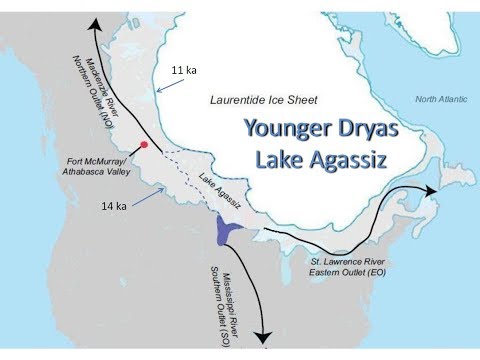
Younger Dryas - Lake Agassiz
The Younger Dryas was a significant cold period that commenced approximately 12,900 years ago, lasting for about 1,200 years in the Northern Hemisphere. This climatic event has been linked to the overflow of water from Lake Agassiz, a vast glacial lake formed from meltwater at the conclusion of the last glacial period. Lake Agassiz was notably larger than all the Great Lakes combined, with modern Lake Winnipeg being a remnant of this ancient lake. A pivotal study published in 2018 by David Leydet and co-authors, including Prof. Andrew Breckenridge from the University of Wisconsin Superior, posits that the onset of the Younger Dryas was triggered by a shift in the overflow of Lake Agassiz from a southern route towards the Gulf of Mexico to an easterly direction towards the North Atlantic.
Prof. Breckenridge's research focuses on the drainage of Lake Agassiz through the analysis of varved sediments, which are annual layers deposited in glacial lakes. By examining these varves alongside glacial landforms, he aims to understand how ice sheets responded to climate changes on an annual basis. Varves are formed by seasonal variations in sediment deposition, and core samples are collected using specialized cylindrical drill bits. The research highlights the historical drainage patterns of Lake Agassiz, indicating that the main channel to the eastern Great Lakes and North Atlantic opened between 13,000 and 12,700 years ago, coinciding with a decrease in runoff to the Gulf of Mexico.
As the drainage shifted, the authors suggest that the eastward flow of water could have disrupted the thermohaline circulation in the North Atlantic, preventing warm tropical waters from reaching the northern hemisphere, thereby instigating the abrupt climate changes characteristic of the Younger Dryas. The narrative surrounding the Younger Dryas includes not only the climatic implications but also geological anomalies such as a significant platinum layer identified at the onset of this period. This platinum anomaly, proposed to originate from an extraterrestrial source, has drawn comparisons to the iridium layer associated with the extinction of the dinosaurs.
Moreover, the Younger Dryas is linked to the extinction of large mammals in North and South America, particularly those exceeding 44 kg (approximately 100 pounds). The Glacier Ice Impact Hypothesis, introduced in 2017, suggests that an extraterrestrial impact on the Laurentide Ice Sheet could have led to secondary impacts that created geological features like the Carolina Bays and Nebraska Rainwater Basins. The energy released from these impacts was substantial, equivalent to 13 kilotons to over 3 megatons of TNT.
The Carolina Bays are characterized by their elliptical shapes and raised rims, which align with the hypothesis that they were formed by oblique impacts on a viscous surface. The alignment and geomorphology of these features support the idea that they originated from impacts related to the Younger Dryas event. The research by Leydet et al. indicates that the drainage of Lake Agassiz began to shift eastward at the onset of the Younger Dryas, although it does not clarify the underlying reasons for this change. A broader perspective suggests that an extraterrestrial impact could have fragmented the ice near the Great Lakes, facilitating the drainage of Lake Agassiz and contributing to the climatic shifts observed during this period.
In summary, the revised narrative of the Younger Dryas posits that an extraterrestrial impact on the Laurentide Ice Sheet opened an eastern outlet for Lake Agassiz, leading to the dispersal of platinum-rich materials and the creation of significant geological features. The resulting climatic changes, including a global winter triggered by ice crystals ejected into the atmosphere, maintained a cold period for 1,200 years, profoundly affecting the environment and biodiversity of the time. This multifaceted understanding of the Younger Dryas integrates various scientific disciplines, providing a comprehensive view of this pivotal climatic event.
The speaker presents a nuanced perspective on the Younger Dryas Impact Hypothesis (YDIH). They seem to lean towards a proponent stance, asserting that an extraterrestrial impact on the Laurentide Ice Sheet likely initiated significant changes that contributed to the Younger Dryas—a cold climatic event that commenced approximately 12,900 years ago and persisted for around 1,200 years. The primary claim revolves around the idea that this impact not only opened up a crucial eastern outlet for the drainage of Lake Agassiz but also resulted in the dispersal of platinum-rich materials across North America, contributing to the well-documented platinum anomaly associated with this period.
Moreover, the speaker suggests that secondary impacts from ice boulders ejected during the initial extraterrestrial event could have caused a megafaunal extinction and played a part in shaping specific geological formations, such as the Carolina Bays and Nebraska Rainwater Basins. Their overarching conclusion emphasizes that these interconnected events—ranging from the opening of drainage routes to the climatic repercussions—provide a cohesive narrative that could validate the YDIH, as they state, The revised Younger Dryas story goes something like this...
- [07:33] "The revised Younger Dryas story goes something like this: An extraterrestrial impact on the Laurentide Ice Sheet by the Great Lakes opened an eastern outlet for Lake Agassiz and dispersed platinum-rich material widely."
- [03:31] "The basic idea is that the water from Lake Agassiz overflowing via the St. Lawrence River would have disrupted the thermohaline circulation in the North Atlantic ocean and prevented the warm tropical water from reaching the northern hemisphere thereby causing the abrupt Younger Dryas climate event 12,900 years ago."
To substantiate their position regarding the Younger Dryas Impact Hypothesis, the speaker outlines several key pieces of evidence and logical arguments:
- Platinum Anomaly: The speaker references a significant platinum anomaly detected at the onset of the Younger Dryas, which some researchers propose could originate from an extraterrestrial source, such as an iron meteorite. This association is noteworthy as it parallels the iridium-rich layer linked with the extinction of the dinosaurs.
- Geological Features: The presence of a black mat is highlighted, which serves as a boundary layer in geological strata. Fossils of megafauna and Clovis artifacts found beneath this layer but not above indicate a potential extinction event coinciding with the Younger Dryas.
- Impact Hypothesis: The speaker discusses the Glacier Ice Impact Hypothesis, which suggests that an extraterrestrial impact on the Laurentide Ice Sheet resulted in the ejection of ice boulders. These boulders are theorized to have created the Carolina Bays and Nebraska Rainwater Basins, demonstrating the far-reaching consequences of such an impact.
- Climate Change Mechanism: The argument extends to the disruption of the thermohaline circulation due to the influx of fresh water from Lake Agassiz into the Atlantic, leading to a significant climatic shift.
Through these findings, the speaker interprets that the interrelation of these phenomena supports the YDIH, as they assert that all pieces of the puzzle seem to fit.
- [04:24] "A large platinum anomaly at the onset of the Younger Dryas was reported in 2013."
- [05:33] "The onset of the Younger Dryas is also associated with the extinction in North and South America of animals larger than approximately 44 kg or about 100 pounds."
The speaker addresses various counter-arguments and uncertainties related to the Younger Dryas Impact Hypothesis, acknowledging some criticisms while providing responses that aim to reinforce their position. Notably, the speaker mentions the extraterrestrial impact on the Laurentide Ice Sheet as a potential explanation for the onset of the Younger Dryas, suggesting that this impact could open the necessary drainage routes for Lake Agassiz, thereby contributing to significant climatic changes.
However, the speaker recognizes that the existing literature does not definitively explain why Lake Agassiz began draining eastward at the onset of the Younger Dryas. They point out that while the paper by Leydet et al. mentions the drainage, it leaves the reason for this occurring somewhat open-ended. The speaker suggests that this gap in understanding may be filled by considering the impact hypothesis, which could account for both the flow changes and the resulting climatic effects.
Further reinforcing their perspective, the speaker counters potential criticisms by tying together various geological and climatic events, arguing that they collectively support a narrative for the YDIH. They conclude by suggesting that the evidence, when viewed holistically, provides a coherent story that addresses some of the skepticism surrounding the hypothesis, stating that all the pieces of the puzzle seem to fit.
- [07:09] "The paper by Leydet, et al. tells us that Lake Agassiz started draining eastward at the onset of the Younger Dryas, but it does not tell us why."
- [07:56] "All the pieces of the puzzle seem to fit."
Approximately 12,000 to 13,000 years ago, the Earth experienced significant climatic shifts, primarily characterized by the Younger Dryas, a cold period that lasted for about 1,200 years in the Northern Hemisphere. The speaker elaborates that this period was not merely a gradual cooling but involved abrupt temperature changes, which were linked to various environmental factors.
One of the key claims made is that the overflow of water from glacial Lake Agassiz disrupted the thermohaline circulation in the North Atlantic Ocean. This disruption prevented warm tropical waters from reaching the northern hemisphere, thereby triggering the abrupt climatic event known as the Younger Dryas. The speaker states that the eastern channel from Lake Agassiz opened, allowing water to flow through the St. Lawrence River into the Atlantic Ocean, which directly contributed to this drastic climate alteration.
Furthermore, the speaker highlights that this climatic event coincided with the extinction of megafauna in North and South America, specifically animals larger than approximately 44 kg (100 pounds). This extinction event is suggested to have been a consequence of the drastic environmental changes that occurred during the Younger Dryas.
Moreover, the speaker presents the Glacier Ice Impact Hypothesis, which posits that an extraterrestrial impact on the Laurentide Ice Sheet could have initiated these changes. The subsequent secondary impacts of ice boulders, ejected by this impact, may have caused further extinctions and created notable geological features like the Carolina Bays and Nebraska Rainwater Basins. Thus, while the speaker acknowledges the role of natural mechanisms like ocean current changes, there is a discernible link made between these climatic events and an extraterrestrial impact.
-
- [03:37] "The abrupt Younger Dryas climate event 12,900 years ago."
- [05:28] "The onset of the Younger Dryas is also associated with the extinction in North and South America of animals larger than approximately 44 kg or about 100 pounds."
- [08:06] "Water from Lake Agassiz flowing through the St. Lawrence River to the Atlantic Ocean... maintained a cold period for 1200 years."
The speaker references several key experts and research studies to bolster the credibility of the claims regarding the Younger Dryas and its climatic impacts. Notably, a significant paper published in 2018 by David Leydet and nine co-authors is cited, which proposes that the change in glacial Lake Agassiz overflow contributed to the onset of the Younger Dryas cold period. This paper is pivotal as it lays the groundwork for understanding the hydrological shifts during this time.
Among the co-authors is Prof. Andrew Breckenridge from the University of Wisconsin Superior, who is mentioned for his informative insights on radiocarbon dating and his studies on varved sediments to understand how ice sheets responded to climate change over annual timescales. His expertise underlines the analytical methods used to study these ancient environmental conditions.
Additionally, the speaker references Christopher Moore from the University of South Carolina, who conducted studies on the platinum anomaly associated with the Younger Dryas. This anomaly is believed to have extraterrestrial origins, further enhancing the discussion around potential impact events during this period. The mention of the platinum anomaly is critical as it draws parallels to the iridium-rich layer linked to the extinction of the dinosaurs, suggesting a broader pattern of impact-related climatic shifts.
Lastly, the speaker discusses the Glacier Ice Impact Hypothesis, which was published in 2017. This hypothesis posits that an extraterrestrial impact on the Laurentide Ice Sheet could have opened an eastern outlet for Lake Agassiz, leading to significant environmental changes. The integration of these various research findings and expert opinions creates a comprehensive narrative that connects multiple facets of climatic and geological phenomena during the Younger Dryas.
-
- [00:34] "A paper published in 2018 by David Leydet and nine co-authors... proposes that the onset of the Younger Dryas cold period was caused by a change in glacial Lake Agassiz overflow."
- [01:52] "One of the co-authors is Prof. Andrew Breckenridge from the University of Wisconsin Superior."
- [04:59] "Some scientists have compared the platinum anomaly to the iridium-rich layer associated with the extinction of the dinosaurs."
[00:00] The Younger Dryas was a cold period that started about 12,900 years ago and lasted for 1,200[00:07] years in the Northern Hemisphere. Some scientists have proposed that the overflow water from[00:12] Lake Agassiz disrupted the circulation of the Atlantic Ocean and caused the Younger[00:18] Dryas event.[00:19] Lake Agassiz was a very large glacial lake in central North America. It formed from glacial[00:25] meltwater at the end of the last glacial period and it had an area larger than all of the[00:29] Great Lakes combined. The modern Lake Winnipeg is a remnant of Lake Agassiz.[00:34] A paper published in 2018 by David Leydet and nine co-authors, proposes that the onset[00:41] of the Younger Dryas cold period was caused by a change in glacial Lake Agassiz overflow[00:46] from its southern routing to the Gulf of Mexico to an easterly route toward the North Atlantic.[00:52] One of the co-authors is Prof. Andrew Breckenridge from the University of Wisconsin Superior.[00:59] Prof. Breckenridge made some very informative comments about radiocarbon dates for a recent[01:04] video.[01:05] Prof. Breckenridge is interested in understanding the nature of the drainage of Lake Agassiz[01:10] by studying varved sediments, which are the annually deposited layers in the sediments[01:15] of glacial lakes. By integrating the study of glacial varves with glacial landforms he[01:20] can determine how ice sheets responded to climate change on annual time scales.[01:26] A varve is simply an annual layer of sediment usually in a lake or marine environment. Seasonal[01:33] or annual variations in deposition produce varves with contrasting layers. Core samples[01:38] are obtained using special cylindrical drill bits.[01:42] This image shows the heads of eastern outlet channels at the edge of Lake Agassiz as blue[01:47] triangles, and the runoff paths are indicated by blue arrows. The red dot marked KM is the[01:53] location where Beryllium-10 samples were taken near eastern glacial Lake Agassiz outlet channels.[01:59] Moraines are shown as black dashed lines.[02:02] The main channel to the eastern Great Lakes and North Atlantic opened from about 13,000[02:07] to 12,700 years ago. This channel opening was concurrent with decreased runoff to the[02:14] Gulf of Mexico and increased runoff through the lower Great Lakes to the Gulf of St. Lawrence[02:19] and North Atlantic.[02:20] A satellite image shows the flow of Lake Agassiz via the Mississippi River toward the Gulf[02:26] of Mexico. The pale green areas along the Mississippi valley indicate the enormous width[02:32] of the channels carved by the flow of water.[02:35] This image shows the records of glacial Lake Agassiz basin routing. The yellow shading[02:40] labeled "E" denotes a period starting from 13,000 to 12,700 years ago when Lake[02:47] Agassiz drained eastward through the Great Lakes and the St. Lawrence River toward the[02:51] Atlantic Ocean. The blue shading labeled "N" marks the time around 12,200 years ago when[02:58] Lake Agassiz started draining in a northwest direction via the Mackenzie River toward the[03:03] Arctic Ocean. These changes in flow were due in part to isostatic rebound that raised the[03:10] land after the huge weight of the ice sheets was removed. The authors conclude that the[03:15] eastward flow of water could have caused the Younger Dryas climate change event.[03:21] The basic idea is that the water from Lake Agassiz overflowing via the St. Lawrence River[03:26] would have disrupted the thermohaline circulation in the North Atlantic ocean and prevented[03:31] the warm tropical water from reaching the northern hemisphere thereby causing the abrupt[03:37] Younger Dryas climate event 12,900 years ago.[03:41] The Younger Dryas story can be summarized as follows: The main eastern channel from[03:47] Lake Agassiz through the eastern Great Lakes and North Atlantic opened from about 13,000[03:51] to 12,700 years ago. The water flowing on the St. Lawrence River to the North Atlantic[03:58] caused the abrupt climate change event. The isostatic rebound raised the land and caused[04:03] Lake Agassiz to start draining in a northwest direction via the Mackenzie River toward the[04:08] Arctic Ocean around 12,200 years ago. The draining of Lake Agassiz maintained a cold[04:14] period for 1200 years.[04:17] But wait !!! The onset of the Younger Dryas is associated with more than just cold weather.[04:24] A large platinum anomaly at the onset of the Younger Dryas was reported in 2013. The authors[04:31] stated that the platinum could have come from an extraterrestrial source such as the impact[04:36] of an iron meteorite with low iridium content, and that such a projectile would be unlikely[04:41] to have resulted in an airburst.[04:43] Additional studies by Christopher Moore from the University of South Carolina found that[04:48] the platinum anomaly is widely distributed throughout North America at the Younger Dryas[04:54] Boundary. Some scientists have compared the platinum anomaly to the iridium-rich layer[04:59] associated with the extinction of the dinosaurs.[05:03] Another geological feature associated with the onset of the Younger Dryas is a black[05:08] mat. Fossils of megafauna and Clovis artifacts are found below the black mat layer, but not[05:14] above. The organic-rich layer contains evidence of wet conditions such as diatomites and algal[05:21] mats.[05:22] The onset of the Younger Dryas is also associated with the extinction in North and South America[05:28] of animals larger than approximately 44 kg or about 100 pounds.[05:33] The Glacier Ice Impact Hypothesis, published in 2017, proposed that an extraterrestrial[05:40] impact on the Laurentide Ice Sheet ejected pieces of ice in ballistic trajectories and[05:45] that the secondary impacts of the ice boulders created the Carolina Bays and the Nebraska[05:49] Rainwater Basins.[05:52] The complete coverage of the Atlantic Coastal Plain by Carolina Bays indicates that the[05:57] saturation bombardment by the ice boulders that made the bays would have caused an extinction[06:02] event all the way from the Rocky Mountains to the East Coast of the United States. The[06:07] energy of each impact was equivalent to 13 kilotons to more than 3 megatons of TNT.[06:14] The Carolina Bays and Nebraska Rainwater basins are perfect ellipses with raised rims whose[06:20] major axes converge by the Great Lakes. Their radial alignment and elliptical geomorphology[06:26] with raised rims indicate that these structures originated as conical cavities inclined at[06:31] approximately 35 degrees.[06:34] Oblique impacts on a viscous surface create inclined conical cavities with raised rims[06:40] that are elliptical when viewed from above. This corresponds to the geomorphology of the[06:45] Carolina Bays. The impact origin of the Carolina Bays from secondary impacts of glacier ice[06:51] is logical since ellipses are conic sections and inclined conical cavities are ellipses[06:56] when viewed from above.[06:58] The paper by Laydet, et al. tells us that Lake Agassiz started draining eastward at[07:03] the onset of the Younger Dryas, but it does not tell us why. Taking a broader perspective,[07:09] we need to consider that an extraterrestrial impact on the Laurentide Ice Sheet at the[07:13] onset of the Younger Dryas would have fragmented the ice by the Great Lakes and opened up the[07:18] eastern outlet for the drainage of Lake Agassiz. The impact would also have ejected ice boulders[07:24] that created the Carolina Bays, caused a megafaunal extinction, and dispersed platinum-rich material[07:30] to create the platinum anomaly.[07:33] The revised Younger Dryas story goes something like this: An extraterrestrial impact on the[07:38] Laurentide Ice Sheet by the Great Lakes opened an eastern outlet for Lake Agassiz and dispersed[07:44] platinum-rich material widely. The secondary impacts of glacier ice ejected by the extraterrestrial[07:50] impact killed fauna and created the Carolina Bays and Nebraska Rainwater Basins. Water[07:56] ejected above the atmosphere by the extraterrestrial impact turned into a cloud of ice crystals[08:01] that blocked the light of the sun and triggered a global winter. The water from Lake Agassiz[08:06] flowing through the St. Lawrence River to the Atlantic Ocean, and later through the[08:10] Mackenzie River to the Arctic Ocean maintained a cold period for 1200 years. All the pieces[08:17] of the puzzle seem to fit.

The Younger Dryas Impact Hypothesis - Kennett, West, Mayewski, Kurbatov
Introduction to the Extinction of Great Mammals
Before the last Ice Age, North America was home to a diverse range of large mammals, including woolly mammoths, saber-toothed cats, and other extraordinary creatures. These animals thrived for over 100,000 years, yet they suddenly vanished around 13,000 years ago. The reasons behind this rapid extinction remain a mystery, with various theories suggesting human involvement, environmental changes, or even cosmic events. The urgency to understand these extinctions is heightened by the current climate crisis, prompting scientists to investigate how our planet responds to such catastrophic events.
The Magnitude of Extinction
The extinction of these great mammals was not just a loss of individual species but represented a significant reduction in biodiversity. Archaeologist Garry Haines notes that there were between 15 and 35 types of large mammals that went extinct, including giant sloths and various species of mammoths and saber-toothed cats. These animals were not only diverse but also uniquely adapted to their environments, making their sudden disappearance even more perplexing.
Investigating the Causes
James Kenneth, a geologist, has dedicated much of his career to understanding what led to the extinction of these animals. He emphasizes the importance of examining the geological record to uncover clues about the climate and environmental conditions at the time. The extinction event is believed to have occurred rapidly, leading to significant changes in the ecosystem that these large mammals depended upon.
The Role of Humans
One prevailing theory suggests that early humans, particularly the Clovis people, played a role in the extinction of these large mammals. The Clovis people arrived in North America just before the extinction event and are known for their advanced hunting tools. However, the idea that primitive humans could have caused such widespread extinction is debated among scientists. Some argue that while humans may have contributed to the decline of certain species, other factors were likely at play.
Cosmic Catastrophe Theory
Recent research has introduced a controversial new theory suggesting that a comet impact may have triggered the extinction event. Allen West, a former geophysicist, has been investigating evidence of a cosmic impact around 12,900 years ago. His team discovered elevated levels of iridium, a rare element often associated with asteroid impacts, in geological layers corresponding to the extinction period. This finding parallels the earlier discovery of iridium linked to the extinction of the dinosaurs, leading to speculation that a similar cosmic event may have occurred during the Ice Age.
Evidence of a Catastrophic Impact
West's research focuses on a specific geological layer known as the "black mat," which marks the boundary between the time when large mammals thrived and when they disappeared. This layer contains remnants of decayed plants and algae, providing a snapshot of the environmental conditions at the time. The presence of iridium in this layer suggests that a cosmic event could have caused widespread destruction, leading to the extinction of large mammals.
Climate Change as a Factor
In addition to the impact theory, climate change is another critical factor that may have contributed to the extinction of these animals. Research indicates that the Earth's climate underwent rapid and extreme changes around the time of extinction, with temperatures dropping significantly. Such drastic shifts could have disrupted ecosystems and food sources, making survival increasingly difficult for large mammals.
Human Overkill vs. Environmental Change
The debate continues over whether human hunting or environmental changes were the primary drivers of extinction. While some scientists argue that human overkill was a decisive factor, others believe that the rapid climate changes played a more significant role. The extinction of large mammals coincided with the arrival of humans in North America, but the extent of human impact remains uncertain.
Investigating Ice Core Samples
To further investigate these theories, researchers are analyzing ice core samples from Greenland, which contain a record of environmental conditions over thousands of years. Paul Majewski, a glacier expert, is leading efforts to extract and analyze these samples for evidence of cosmic impacts or significant climate changes. The ice cores serve as a "frozen library" that can provide insights into the Earth's history and the conditions that may have contributed to the extinction of large mammals.
Finding the Right Layer
Majewski and his team are searching for a specific layer of ice that corresponds to the time of the extinction event. By examining the layers of ice, they hope to identify any spikes in iridium or other indicators of a cosmic impact. The challenge lies in pinpointing the exact layer among thousands of years of accumulated ice, but advancements in technology are aiding their efforts.
Results from Ice Core Analysis
Initial results from the ice core analysis have shown promising signs, including a spike in iridium levels that aligns with the extinction timeline. However, the levels are not as high as those found in the layers associated with the dinosaur extinction, leading to further investigation. The presence of nano-diamonds in the samples has also been noted, which could indicate a cosmic event, but the evidence remains inconclusive.
Challenges and Skepticism
Despite the intriguing findings, skepticism persists among scientists regarding the cosmic impact theory. Critics argue that the evidence is not strong enough to support the claim that a comet caused the extinction of large mammals. Mark Boslough, a physicist, emphasizes the need for extraordinary evidence to support such a significant claim, suggesting that simpler explanations may be more plausible.
Conclusion: A Complex Puzzle
The extinction of North America's great mammals remains one of the most significant and complex puzzles in Earth's history. While the cosmic impact theory presents a compelling narrative, it is essential to consider the interplay of various factors, including human activity and climate change. As research continues and new evidence emerges, our understanding of this extinction event may evolve, shedding light on the intricate dynamics of life on Earth and the consequences of environmental changes.
Ultimately, the loss of these magnificent creatures not only altered the landscape of North America but also had profound implications for human cultural development over the past 13,000 years. Understanding the causes of their extinction is crucial not only for historical knowledge but also for addressing contemporary environmental challenges.
The speaker's central thesis regarding the Younger Dryas Impact Hypothesis (YDIH) posits that a cosmic event, specifically a comet impact, may have played a significant role in the extinction of large mammals in North America around 12,900 years ago. The speaker appears to be a proponent of this theory, advocating for the idea that such an impact could have caused catastrophic environmental changes leading to the rapid decline of these species. The overarching conclusion reached is that while traditional explanations have focused on factors such as human overhunting or gradual climate change, the hypothesis of a sudden cosmic impact provides a compelling alternative that warrants further investigation.
-
- [10:35] "There would have been hell on earth, been a very, very bad day."
- [18:32] "When you're making an extraordinarily improbable claim, you need extraordinary evidence and I haven't seen the extraordinary evidence."
- [50:29] "Clearly, this new evidence for a massive impact is changing our understanding of the disappearance of the Ice Age animals of North America."
To support the YDIH, the speaker presents several pieces of evidence and logical arguments. Key physical evidence includes:
- Iridium Levels: Elevated levels of iridium found at the black mat layer, which is associated with the extinction event, suggest a cosmic origin, as iridium is rare on Earth but abundant in meteorites.
- Nano Diamonds: The discovery of nano diamonds within the geological layers indicates that an impact event may have occurred, as these diamonds typically form under extreme pressures associated with high-energy impacts.
- Carbon Spherules: Particles that are believed to have formed during a fiery event, providing additional evidence of a sudden environmental upheaval.
The speaker interprets these findings as corroborative indicators of a significant cosmic event that could explain the abrupt extinction of large mammals. The connection drawn between these physical anomalies and the timing of extinctions suggests a correlation that supports the YDIH.
-
- [07:49] "In a tantalizing early discovery, the team found traces of iridium, one of the rarest elements in the Earth's crust."
- [32:20] "Inside the carbon structures, the impact team has found something that was as thrilling to a scientist as it would be to a young bride: diamonds, nano-scale diamonds to be exact."
- [10:48] "Surely such a bad day would leave behind obvious evidence..."
The speaker addresses several counter-arguments and criticisms regarding the YDIH. One significant objection raised is the lack of a clear impact crater associated with the alleged cosmic event. Critics argue that if such a large impact occurred, evidence like a crater should be readily observable. The speaker acknowledges this gap, stating, "[11:53] No crater has been found, and that means the impact team needs to find other compelling proof." This highlights the challenge of establishing the YDIH as definitive without physical evidence of an impact site.
Additionally, the speaker mentions skepticism from physicists like Mark Boslough, who question the probability of such an event happening recently in geological terms. Boslough emphasizes the importance of evaluating the statistical probabilities surrounding the YDIH, suggesting that simpler explanations for the extinctions may be more plausible. He notes that there are many species, such as deer and elk, that survived during this period, raising the question of why only certain large mammals became extinct. This point underlines the complexity of extinction events and the need for a multifaceted approach to understanding them.
-
- [18:21] "It's not impossible that you could get an event like that that recently; it's just extraordinarily improbable."
- [26:02] "The data just doesn't support this; it's inconceivable to me that the idea that primitive humans killed off these powerful animals is absurd."
- [35:25] "When the dinosaur killing asteroid theory was proposed, no one could find a crater either..."
According to the speaker, the climate approximately 12,000 to 13,000 years ago experienced dramatic and rapid shifts that bear resemblance to current environmental crises. The speaker notes that the Earth's climate was not unlike what we experience today but then underwent a sudden and radical change, which he describes as being mysteriously thrown back into an Ice Age. This abrupt climatic shift is posited to have contributed to the extinction of many megafauna species, including the well-known woolly mammoths and saber-toothed cats.
The speaker indicates that this extinction event occurred in a geological instant, highlighting the incredible diversity of animal life that existed and then rapidly disappeared. For example, he mentions that there were between 15 and 35 types of large mammals that vanished, including giant sloths that could reach heights comparable to giraffes. The claim of a quick disappearance ties into a broader narrative of environmental shifts that could have been exacerbated by climate changes.
Furthermore, there is a suggestion that these climatic events may have been linked to an extraterrestrial impact. The speaker references a controversial new theory proposing that a comet struck the Earth around 12,900 years ago, leading to widespread devastation of the environment. This cosmic event is theorized to have resulted in catastrophic consequences such as wildfires, destruction of vegetation, and ultimately, a collapse in food resources for large animals, which may have led them to extinction. The speaker relates these events to a need for understanding how our planet responds to such crises, underlining the importance of these historical events in the context of current climate change challenges.
- [01:33] "Thirteen thousand years ago the Earth's climate was not unlike ours today but then suddenly it changed radically."
- [10:29] "The larger the animal, the more devastating the effects of this would have been; there would have been hell on earth."
- [28:55] "There are periods in geologic history where things really go haywire and this was one of those times."
The transcript cites various sources, experts, and authorities to lend credibility to the discussion surrounding the extinction of megafauna and the potential causes behind it. Key figures mentioned include:
- Garry Haines - An archaeologist from the University of Nevada-Reno who studies the remains of extinct animals and their modern relatives to understand the causes of extinction.
- James Kenneth - A geologist who has investigated the factors contributing to the extinction event and has a long-standing passion for this subject, having written about it in his first scientific textbook at age 11.
- Allen West - A former geophysicist turned researcher, who is actively involved in digging for evidence related to the extinction and has made significant discoveries regarding iridium layers.
- Paul Majewski - A glacier expert from the University of Maine who is exploring Greenland’s ice sheets for evidence of cosmic impacts.
- Mark Boslough - A physicist who analyzes impacts of comets and asteroids, providing a skeptical view of the extraterrestrial impact theory.
- Vance Haines - An archaeologist who has done substantial work to depict life in North America during the time of the extinctions and the arrival of humans, particularly the Clovis people.
These references serve various purposes in the narrative. Some, like Haines and Kenneth, provide supporting evidence for the discussion, particularly in relation to the environmental conditions of the time. Others, like Boslough, present mainstream views that the speaker seeks to challenge, particularly regarding the likelihood of human overkill being the primary cause of the extinctions. The ongoing debate surrounding these theories emphasizes the complexity of extinction events, where multiple factors—including climate change and extraterrestrial impacts—are being analyzed.
- [20:39] "One day in the 1960s walking through this riverbed, Payne saw bones lodged into the canyon wall..."
- [11:05] "Paul Majewski from the University of Maine has joined the team and is particularly well equipped for the job."
- [26:02] "It's inconceivable to me that primitive humans killed off these powerful animals is absurd."
[00:00] before the last ice age great mammals[00:04] ruled the plains of North America[00:06] wooly mammoths saber-toothed cats and[00:10] other extraordinary animals[00:15] I can't see anything like it today but[00:17] then suddenly they disappeared and[00:20] nobody really knows why it happened so[00:24] fast did humans kill them all man[00:27] probably came to North America as a[00:29] super predator or was there faked more[00:32] like the one we face today[00:34] with our climate in crisis we need to[00:36] know how our planet responds to such[00:38] events or was it something from outer[00:41] space[00:43] now a new theory has blown the question[00:46] wide open there would have been hell on[00:48] earth been a very very bad day[00:50] and scientists are fighting over the[00:53] meaning of startling new discoveries you[00:55] need extraordinary evidence and I[00:57] haven't seen that yet Nova[01:00] wayde's into the thick of this[01:02] controversy in hopes of finding the[01:03] answer[01:08] this is a this is this to me is a Mona[01:10] Lisa image this is science in action[01:16] the stakes are high[01:18] the outcome uncertain right now on Nova[01:23] go inside the investigation to solve the[01:26] mystery of this last extinction[01:33] thirteen thousand years ago the Earth's[01:35] climate was not unlike ours today but[01:39] then suddenly it changed radically[01:44] it was mysteriously thrown back into the[01:47] Ice Age and some of the greatest animals[01:51] that ever lived vanished[01:57] enormous creatures including the woolly[01:59] mammoth like a modern elephant with[02:03] thick fur and huge tusks[02:08] and the saber-tooth cat a vicious[02:11] predator built more like a bear than a[02:13] lion[02:17] these magnificent animals dominated the[02:19] earth for more than 100,000 years then[02:24] but the dinosaurs some 65 million years[02:27] earlier disappeared across North America[02:29] in what is a geologic instant[02:37] but unlike the dinosaurs nobody really[02:40] knows why there was an incredible[02:45] diversity of animal life an incredible[02:47] diversity with you can't see anything[02:49] like it to date Garry Haines an[02:52] archaeologist at the University of[02:54] nevada-reno studies the remains of these[02:56] animals and their modern relatives to[03:00] try and figure out what happened to this[03:02] incredible diversity of animal life[03:08] we had several kinds of mammoths[03:10] mastodons we had big predators who had a[03:13] lion that was even bigger than the one[03:14] in Africa today very much looked like it[03:21] we had saber-tooth cats probably the[03:24] most memorable animal of all it looks[03:28] like a huge cat but it's got these funny[03:29] fangs some of these teeth are big arcing[03:32] teeth that looked just like the Sabre or[03:35] dagger blades in all there were between[03:37] 15 and 35 types of large mammals that[03:40] went extinct suddenly including giant[03:44] sloths it could be as tall as a giraffe[03:47] with a girth of an elephant there were[03:51] some wonderfully odd creatures - like[03:54] the glyptodont imagine an enormous[03:56] armadillo with a big armored cover well[03:59] these are well defended against[04:01] predators you don't see anything like[04:04] that today sometimes they'd probably[04:05] reach the size of a Volkswagen Beetle[04:09] [Music][04:11] there was such a rich assemblage of[04:14] animals I mean we go to Africa on Safari[04:19] well that was what it was like in North[04:21] America all these animals are wandering[04:23] out great diversity of large animals[04:25] beautiful animals and they were what[04:29] they were lost in an instant it seems[04:33] geologists James Kenneth is also[04:36] fascinated by what killed off these[04:37] animals and several of the discoveries[04:41] throughout his career helped illuminate[04:43] the mystery it is such a long-standing[04:47] passion that he in fact wrote about it[04:49] in his very first scientific textbook at[04:53] age 11 I was gonna be a geologist when I[04:57] was just 11 years old and I wrote some[04:59] books and ones on paleontology there's a[05:02] picture of a saber-toothed cat here's my[05:06] rendition of the woolly mammoth[05:08] obviously it must have been interested[05:10] in what knocked these animals off[05:11] because having explained what this[05:13] megatherium is as giant ground sloths[05:15] for South America it says having no[05:17] protection the caveman killed it off[05:19] because of its stupidness but there is[05:24] nothing stupid can it says in trying to[05:26] figure out why these large mammals[05:28] disappeared[05:31] especially today when humans worry about[05:34] changes in our environment so much[05:37] happened is so quickly was a sad day[05:41] that these were lost leaders who've lost[05:43] and lost so suddenly the extinction of[05:47] these animals has perplexed scientists[05:48] for centuries but today there is a[05:53] controversial new theory that might just[05:56] explain it[05:59] [Music][06:00] Allen West is digging for the evidence a[06:05] former geophysicist for the mining and[06:07] oil industry West is now using his[06:09] expertise to investigate this mystery[06:13] millions and millions and millions of[06:15] mammoths mastodons saber-toothed cats an[06:18] American camel American horror stay all[06:21] were happily grazing across North[06:23] America and they've disappeared right at[06:25] this boundary they vanished exactly at[06:28] this point this extinction boundary[06:31] plainly visible in this riverbed in[06:33] southern Arizona near the Mexican border[06:35] shows up right under an ominous dark[06:37] layer of Earth formed by decayed plants[06:40] and algae it is called the black Mack[06:47] that's above the black mount and then[06:50] removing the centimeter or so the[06:53] half-inch that's right below the mat and[06:56] this is where the mammoths would have[06:57] walked so this is the action zone right[07:00] there[07:02] [Music][07:06] the beauty of this mat is this is an[07:08] extraordinary snapshot into the past[07:11] [Music][07:15] it's so rare in any kind of geologic[07:17] record to be able to point a spot and[07:19] say here's where something happened very[07:21] suddenly in the past three years West[07:27] has dug into his retirement savings[07:29] shipping boxes of dirt to colleagues[07:31] around the world trying to solve the[07:33] mystery[07:37] West has become his very own FedEx hub[07:40] of ice age dirt[07:46] in a tantalising early discovery the[07:49] team found traces of iridium one of the[07:51] rarest elements in the Earth's crust[07:54] that discovery meant that they could be[07:57] onto something really big in the late[08:01] 1970s a Nobel Prize winner named Luis[08:04] Alvarez and his son Walter also found[08:08] iridium in geologic layers from 65[08:11] million years ago the time when the[08:13] dinosaurs got wiped out[08:17] it was a stunning find while there are[08:21] mounting found on the surface of the[08:23] earth there in tiny quantities they are[08:26] however in high quantities and[08:29] meteorites and other cosmic material so[08:33] if you find a peak in iridium in a[08:35] particular layer then the first suspect[08:37] is was there a cosmic event as the[08:41] evidence mounted the verdict seemed[08:43] inescapable[08:45] an asteroid from outer space wiped out[08:48] the dinosaurs the era of giant beasts[08:52] that had ruled the earth for millions of[08:54] years ended with a bang[08:56] [Music][09:01] so to elevated levels of iridium just[09:04] below the black mat mean that the giant[09:07] land animals of the Ice Age shared a[09:09] similar fate Allen West and James Kenan[09:17] a part of a growing team of scientists[09:19] that are analyzing this new evidence[09:25] and now propose the 12,900 years ago a[09:28] comet slammed into the earth[09:33] this cosmic catastrophe would have[09:36] devastated the great land animals[09:45] it's hard to comprehend the disaster[09:49] one of the closest things we have to[09:51] picturing it is the impact of a nuclear[09:54] bomb or perhaps several of them[09:57] if you imagine multiple nuclear[09:59] explosions occurring over wide areas[10:01] generating major pressure waves[10:03] flash heat waves knocking down forests[10:07] and this led to wildfires over wide[10:10] areas[10:14] with major destruction of the vegetation[10:18] the burning over broad areas of the[10:20] continent would have destroyed the food[10:22] resources for many of these animals and[10:24] we suggest that is why the larger[10:26] animals preferentially became extinct[10:29] the larger the animal the more[10:31] devastating the effects of this would[10:33] have been there would have been hell on[10:35] earth been a very very bad day[10:38] [Music][10:42] surely such a bad day would leave behind[10:44] obvious evidence like this impact crater[10:48] from 50,000 years ago but so far no[10:53] crater has been found and that means the[10:56] impact team needs to find other[10:58] compelling proof and they are now going[11:02] to the ends of the earth to do so[11:05] including here at the Greenland ice[11:08] sheet[11:09] Paul Majewski from the University of[11:12] Maine has joined the team and is[11:14] particularly well equipped for the job[11:17] he is one of the world's foremost[11:19] glacier experts and has traversed more[11:22] of Antarctica than anyone else[11:28] there is any evidence sealed away in[11:30] this magnificent glacier of a comet that[11:32] killed off the great animals Majewski[11:34] wants to find[11:38] the reason he might be able to is that[11:41] this ancient ice is not only beautiful[11:43] but it is also an exquisite frozen[11:46] library of information about the Earth's[11:49] history these icebergs have captured[11:53] within them a remarkable story trapped[11:56] within every single year's worth of snow[11:59] is an amazing archive of what the[12:02] environment was like at that time[12:05] these glaciers are like giant computer[12:08] hard drives filled with icy data[12:11] including ancient microscopic dust the[12:15] snow itself holds all of the little dust[12:17] particles chemistry that comes out of[12:20] volcanoes from forest fires meteorite[12:25] impacts[12:28] somewhere in the enormous Greenland ice[12:30] sheet is the very snow and dust that[12:33] fell when mammoths walked the earth[12:37] and possibly the chemical trace evidence[12:40] of a cosmic impact that wiped them out[12:45] but how can you possibly find that[12:47] specific layer of ice during the brief[12:57] Greenland summer Nova brought Paul[12:59] Majewski here to take up the challenge[13:10] my f ski brought with him his colleague[13:12] Andre Kerr become an expert in analyzing[13:15] glaciers for microscopic particles[13:18] Majewski and Kirby table will be looking[13:21] for evidence of the impact sealed away[13:23] in the ice particularly extraterrestrial[13:25] materials like iridium the glue that[13:28] helps solve the dinosaur extinction[13:32] [Music][13:35] the first step though is a daunting[13:38] problem of finding the exact layer of[13:39] nice from twelve thousand nine hundred[13:42] years ago in the vast ancient Greenland[13:45] ice sheet we can move those two dates[13:51] because we have an eclipse happening and[13:53] that is why Majewski is working with JP[13:55] Steffensen danish scientist who knows[13:58] this glacier as well as anyone in the[14:00] world if you look here you can actually[14:04] see as this white line between the two[14:07] black ones and that's the last layer of[14:09] this ice HS and right here the I start[14:12] moving the layer of ice they are looking[14:13] for is located between two distinct[14:16] features caused by ice age conditions[14:21] glaciers preserve snow and annual layers[14:23] which can be clearly visible much like[14:27] tree rings at the edges of the Greenland[14:31] ice sheet these layers get exposed it's[14:37] similar to the way layers of Earth are[14:39] exposed at the black mat[14:42] and there is another parallel just as[14:46] the black Matt in Arizona appears right[14:48] where the animals went extinct here in[14:51] Greenland there is a visual marker of[14:53] this time as well ice from the last ice[14:57] age is gray in color because the arid[14:59] climate during an ice age erodes the[15:02] soil puts a lot of dust into the[15:04] atmosphere that gets trapped in the ice[15:07] these bands of color alternating between[15:11] gray and white can be clearly seen in[15:13] this aerial photograph the ice from the[15:17] time the mammoths died off should be[15:19] right between those bands of gray and[15:24] each year during the short Greenland[15:26] summer when the glacier is not covered[15:28] in snow these color differences are[15:31] visible on the surface of the ice this[15:35] stark ice is what we call velvet ice[15:37] because it has such a velvety rollin[15:40] soft way of running and then you see in[15:44] the background you have much more bumpy[15:46] and whitish ice comes up you can see[15:49] almost the other station up there too[15:50] the hill Steffensen has analyzed this[15:53] area and found evidence of ice from this[15:56] mysterious period using these color[16:01] differences he zeroes in on a slope with[16:04] both colors of ice this is a promising[16:07] spot but then again as you know falling[16:10] science you have to try and hope you're[16:13] right but that would be my my best guess[16:16] right now this is science in action well[16:21] and also a very long way to come on a[16:23] guess even an educated one[16:28] I want to make sure to sample the upper[16:31] part but confirming if this is indeed[16:33] the right spot we'll take a[16:35] sophisticated molecular analysis which[16:38] can only be done back in the lab for now[16:41] the job is to collect the samples and[16:44] hope they're in the right spot just try[16:47] the youth cachito Majewski and kirby tov[16:51] cut a 17 meter trench down the hillside[16:53] into these exposed layers from the more[16:57] recent ice to older ice deep into the[17:00] ice age samples are taken in 15[17:03] centimeter sections that way any change[17:07] in the levels of extraterrestrial[17:08] materials like iridium will show up[17:15] many different samples are needed[17:19] especially clean bottles are used to[17:21] collect ice to analyze for the presence[17:24] of iridium[17:27] other samples are collected to test for[17:30] oxygen isotopes that can help determine[17:32] the exact age of the ice and finally[17:37] chunks of ice are taken to see if there[17:40] are other trapped clues that could be[17:42] the fingerprint of cosmic catastrophe[17:49] the stakes are high only when these[17:53] samples are analyzed will my Eskie know[17:55] if this trip was a waste of time or if[17:58] it could yield the smoking gun proof[18:00] that earth was slammed by an object from[18:03] outer space only twelve thousand nine[18:05] hundred years ago an object big enough[18:09] to blast off for 35 kinds of animals[18:11] into extinction[18:16] truly an extraordinary claim it's not[18:21] impossible that you could get an event[18:24] like that that recently it's just[18:26] extraordinarily improbable and when[18:28] you're making an extraordinarily[18:29] improbable claim you need extraordinary[18:32] evidence and I haven't seen the[18:34] extraordinary evidence physicist mark[18:37] boslough analyzes impacts of comets and[18:39] asteroids[18:42] he says one way to evaluate if such a[18:45] devastating impact occurred is to[18:48] calculate the statistical probabilities[18:50] of it happening the odds don't look good[18:54] you have improbability stacked upon in[18:58] probability we're talking about[19:00] something that may happen only once in[19:01] the entire age of the earth and I have a[19:04] hard time accepting something like that[19:06] happened that recently Boz Lowe uses[19:10] some of the Department of Energy's most[19:11] powerful supercomputers to model the[19:14] physics of various cosmic impacts and[19:16] midair explosions in this simulation I[19:20] bring in an asteroid a small asteroid[19:22] about thirty thousand miles an hour and[19:24] it explodes three miles above the[19:26] surface and is able to show clearly[19:28] their devastating power at ground zero[19:31] temperatures as hot as the surface of[19:33] the Sun and this vortex is moving at[19:36] supersonic speed so it's like a ultra[19:39] white-hot tornado and this is one of the[19:41] most extreme events I think that could[19:43] ever happen on the surface of the earth[19:46] [Music][19:48] baaz lo says that while an event like[19:50] this would certainly devastate the[19:52] environment and the great animals[19:57] he thinks there are far simpler[19:59] explanations you know Occam's razor the[20:02] simplest explanation is probably the[20:04] best one and there are other hypotheses[20:07] that to me don't seem as extraordinary[20:12] it seems a little far-fetched there's a[20:15] lot of species that did not become[20:16] extinct which would be hard to explain[20:18] why weren't they affected of all these[20:19] other large mammals were why weren't[20:21] deer and elk and bear affected why did[20:24] they survive could there be a more[20:27] down-to-earth explanation for these[20:29] mysterious extinctions possibly and to[20:33] understand them it is important to[20:34] investigate what the earth looked like[20:36] at that time and that is the work that[20:39] Vance Haines a legendary archaeologist[20:42] from the University of Arizona has done[20:47] one day in the 1960s walking through[20:50] this riverbed pain saw bones lodged into[20:53] the canyon wall[20:57] they turned out to be from a mammoth his[21:02] ensuing investigation of this site has[21:04] given us one of the best pictures of[21:06] life here some 13,000 years ago that[21:11] picture is hard to imagine looking at[21:13] Arizona today instead of sprawling[21:17] cities were valleys full of animals[21:22] [Music][21:26] and instead of the retirees and golfers[21:29] who flock here there were other[21:31] immigrants the first well-documented[21:35] humans in North America the Clovis[21:40] people the Clovis people appear to have[21:45] arrived in this area just before the[21:47] black mat is formed[21:52] the little information we have about[21:54] them comes from their beautifully[21:56] engineered stone tools and spear tips[22:02] called Clovis points they're essentially[22:09] functional art this can be used both as[22:11] a as a knife as well as a projectile[22:13] point but the basic function of this is[22:15] for killing a game but yet they took the[22:18] trouble to get very nice symmetry these[22:23] sleek stone weapons were a major advance[22:25] in hunting technology I think from[22:30] seeing their stone technology they were[22:31] very sophisticated people these were[22:34] probably on a spear that was used for[22:35] either thrusting or for throwing with a[22:38] spear thrower so the idea was once they[22:40] penetrate an animal this would come off[22:43] this would stay with the animal but they[22:45] would then have another one sort of[22:48] reload and be ready to go again[22:54] Keynes's excavations at the black mat[22:56] prove that the Clovis people hunted the[22:58] mammoths and other animals here right up[23:01] until they disappeared[23:03] and this is where these animals just[23:05] came to a sudden hint[23:06] we've repeatedly dated this level right[23:09] here at twelve thousand nine hundred[23:11] years ago my bottom line is something[23:13] happened twelve thousand I know days ago[23:15] that we don't understand efforts to[23:20] explain this mystery I've led to some[23:22] very peculiar clues[23:27] the value of this evidence held under[23:30] lock and key in the basement archives of[23:32] the Arizona State Museum is no BS[23:38] but the evidence itself is exactly that[23:43] an ancient piece of poop giant sloth[23:47] poop yes you heard that right[23:50] giant sloth poop it is not classy[23:54] science working with this stuff in the[23:58] lab it smells like you know what[24:02] Jim King the former director of the[24:05] Carnegie Museum of Natural History[24:06] says the sloth dung is a goldmine of[24:09] evidence about how these animals live[24:11] and possibly die fossilized done is[24:15] fabulous because this in my hand is the[24:18] evidence of what these animals ate you[24:21] see all these fibers little bits of[24:22] twigs much of this will be Joshua Tree[24:26] fiber the manure discovered in a cave[24:30] piled five feet high is high in carbon[24:33] and therefore makes for perfect[24:35] radiocarbon dating[24:36] [Music][24:39] the last maneuver in this cave dates to[24:41] around twelve thousand nine hundred[24:43] years ago the time the black man appears[24:47] not long after the stone artifacts show[24:50] the arrival of the Clovis people[24:55] scientists use that coincidence to[24:58] support a theory that these early[24:59] hunters were responsible for killing off[25:02] the great land animals[25:07] man probably Kim's North America at that[25:10] point as a super predator with an IE[25:13] fauna that had no idea what they were[25:15] facing the super predator had[25:18] communication it had weapons it hunted[25:21] in groups and had coordination it had[25:23] all the things you would do if you and I[25:25] were going out to try and hunt big[25:27] animals[25:29] [Music][25:33] more recent history supports this theory[25:37] [Music][25:39] in Mauritius the arrival of the Dutch[25:41] doomed the dodo and in New Zealand the[25:46] first settlers killed off the MOA[25:50] but could this also have happened to[25:52] these great animals all across North[25:54] America[25:55] [Music][25:57] the data just doesn't support this it's[26:02] it's it's inconceivable to me can it[26:06] says the idea that primitive humans[26:07] killed off these powerful animals is[26:10] absurd and while it might happen in[26:13] small island environments it is[26:15] impossible to imagine they could wreak[26:17] such havoc on a continent as vast as[26:19] North America they didn't have the[26:25] technology that modern humans have they[26:28] didn't have helicopters and and machine[26:30] guns and satellite navigation and so[26:33] forth that always puzzled me how could[26:36] they track down that last horse or that[26:38] last mammoth or that last camel it just[26:42] perplexed me it just didn't make sense[26:44] [Applause][26:46] if the human overkill theory as it's[26:48] called cannot provide the whole answer[26:52] what else can[26:59] this is not the first expedition that[27:02] Paul Majewski is made to these glaciers[27:04] and certain evidence in the 1990s[27:09] Majewski drilled into the center of the[27:11] Greenland ice sheet extracted ice cores[27:14] going back more than two hundred[27:15] thousand years to understand how the[27:17] world's climate changed at the time[27:22] nobody thought to test for impact[27:24] markers like iridium[27:28] but what they did find was remarkable[27:32] the ice cores proved that the Earth's[27:35] climate can change extremely rapidly[27:39] sophisticated molecular analysis of the[27:41] ice can reveal the temperature at the[27:43] time it formed[27:45] the ice from this time the animals went[27:48] extinct shows a very unusual change[27:52] temperatures plummeted it happened so[27:56] fast when you think about it it's it's[27:58] unbelievable it's a complete change in[28:01] the state of the climate system it would[28:03] be the equivalent of going from maybe[28:04] two three months of winter in in[28:07] northern New England let's say to 11 or[28:09] 12 months of winter throughout the year[28:13] in possibly less than two years the[28:16] annual temperatures in North America[28:18] dropped up to 18 degrees Fahrenheit[28:20] which may not sound like a lot but the[28:23] last time it got that cold in what is[28:25] present-day Chicago it was buried under[28:28] a mile of ice[28:32] throughout much of the world climates[28:34] changed some places got colder others[28:39] dried out causing more fires[28:41] [Music][28:44] was this sudden climate change not the[28:47] Clovis hunters what killed off the great[28:49] land mammals[28:55] there's periods in geologic history[28:58] where things really go haywire and this[29:01] was one of those times we were going[29:03] through a major climate change well some[29:06] animals just don't make that change[29:13] Gary Haines says that's true but there[29:16] were other similar periods of climate[29:18] change and these animals survived why[29:21] would this one kill them off[29:25] he believes that while climate may have[29:28] played a role man was ultimately[29:31] responsible[29:32] [Music][29:36] we don't actually like to think of how[29:37] destructive we are even a small amount[29:40] of killing may have been a decisive[29:42] factor with some species that were[29:44] already stressed by climate change[29:45] leading to eventual extinction humans[29:49] have always had an impact on their[29:50] environment[29:52] the disappearance of the great land[29:54] mammals is one of the most dramatic and[29:57] recent extinction events in Earth's[29:59] history[30:00] the last extinction[30:04] it also happens to be the time when the[30:07] Clovis artifacts disappear from the[30:09] record the only history we have is[30:14] written in the chemistry and archaeology[30:16] that remain behind and so far these[30:20] clues have not adequately solved the[30:22] mystery[30:23] [Music][30:26] now the new theory of a cosmic impact[30:28] has blown the question wide open[30:36] the initial finding of iridium at the[30:38] black mat was a startling discovery but[30:42] the levels were much lower than those[30:43] found at the time of the dinosaur[30:45] extinction[30:50] because cosmic dust accumulates[30:52] naturally on the Earth's surface the[30:54] low-level iridium findings are not a[30:56] smoking gun but were a good tip-off[31:00] about where to look for more clues[31:03] [Music][31:06] including the black mat in Arizona there[31:08] are at least 31 sites in North America[31:11] and six in Europe where the impact team[31:14] has collected dirt from the time of the[31:15] extinctions that means there was an[31:19] awful lot of dirt to analyze James[31:25] Kennedy and his archaeologist son[31:27] Douglas are literally up to their elbows[31:29] in it so our Alan West Jim wiki a[31:35] geologist and Ted bunch was retired from[31:38] NASA and new technologies developed[31:43] since the hunt for the dinosaur killer[31:45] have opened up the nanoscale natural[31:47] world as embedded in these samples of[31:49] Earth[31:52] what Weston team are finding in his[31:54] ancient dirt he's extraordinary what in[31:58] the world is that stuff okay this is a[32:01] split open carbon Sphero and we know[32:04] from the chemistry that these are formed[32:06] from burning pine trees burning spruces[32:09] this is tree sap in effect that's been[32:11] scorched burned but the thing that makes[32:14] this extremely unusual in fact the thing[32:17] that ties it to a cosmic impact is[32:20] embedded in the ribs here that you see[32:23] around one of the most intriguing[32:26] discoveries so far is buried in the[32:29] squirrels[32:31] [Music][32:34] inside the carbon structures the impact[32:36] team has found something that was as[32:38] thrilling to a scientist as it would be[32:40] to a young bride diamonds nano-scale[32:47] diamonds to be exact all of the rims of[32:53] each one of these little holes in here[32:55] is absolutely laced with diamonds in[32:58] some cases 30 percent of that kerbin[33:01] sphere hole is made up of tiny diamonds[33:04] let's take a look at this other[33:05] condition these nano diamonds can be so[33:09] small that 1 million of them could be[33:11] squeezed inside a single grain of sand[33:14] you know if they could get them out[33:16] there's about a trillion dollars worth[33:18] of these diamonds spread across the[33:19] United States so but might cost you[33:22] trillion to extract them zone all[33:26] geology jokes aside it is an important[33:29] discovery it's like looking at a Hubble[33:32] image of all the galaxies out in the[33:35] universe I mean there's an incredible[33:36] number of these things let's get the[33:38] coordinates on that exactly how these[33:40] nano diamonds are formed is poorly[33:42] understood the team has discovered[33:46] several different kinds most diamonds[33:50] found on earth are cubic and have a[33:53] highly symmetrical structure but one[33:57] type they are finding the hexagonal[33:58] diamond is not at all common the only[34:02] known way to make these is through a[34:04] high pressure blast such as an impact[34:09] we see a little hexagonal outline okay[34:12] that's cool[34:13] these are hexagonal diamonds hexagonal[34:16] diamonds are not found in the Earth's[34:19] mantle they do not occur terrestrially[34:21] they only occur in craters in meteorites[34:25] interplanetary dust etc they're all a[34:29] team it's very hard to explain the[34:32] presence of such huge numbers of[34:34] diamonds over such broad areas of the[34:36] planet other than from the production[34:40] from an extraterrestrial impact but is[34:43] this necessarily so I'm still skeptical[34:46] because they really are invoking a large[34:49] comet maybe a couple miles in diameter[34:53] something that big has enough amass to[34:56] carry it all the way to the ground and[34:57] it would generate a big crater would[34:59] make a big hole in the ground[35:03] mark boslough says that we don't know[35:05] enough about the formation of nano[35:07] diamonds they are the indicator of an[35:10] impact where is the crater 13,000 years[35:15] ago is not very long ago in terms of[35:17] geologic time that would be a very young[35:19] crater it would be very obvious if[35:21] something like that existed in North[35:23] America[35:25] when the dinosaur killing asteroid[35:27] theory was proposed no one could find a[35:30] crater either but then more than a[35:33] decade later they did mostly underwater[35:36] and it confirmed the early iridium[35:39] findings[35:45] so far no one has found a crater from[35:48] the extinction of the large land animals[35:50] [Music][35:58] we'll a crater eventually be found[36:01] related to this event or could there be[36:04] another explanation that is the question[36:08] that Peter Schultz is trying to answer[36:10] and he can simulate impacts on a much[36:13] safer scale here with the hypervelocity[36:15] gun at the NASA Ames Research Center[36:18] outside of San Francisco okay a small[36:28] glass pellet is used as the bullet in[36:30] the gun and it simulates the cosmic[36:32] projectile the pellet is loaded into[36:37] this 40-foot long gun and fired into a[36:40] vacuum chamber to model different[36:42] possible impact scenarios as this part[36:45] kills me[36:46] in this test Schultz wants to know what[36:49] would happen if the object from outer[36:50] space or the glass bullet broke into[36:53] thousands of pieces before hitting the[36:55] earth[36:58] an idea inspired by the 1994 Comet[37:01] shoemaker-levy that broke apart before[37:04] impacting into Jupiter[37:10] let's do the interesting especially[37:13] within the cameras I hope you get to see[37:16] the spray pattern[37:24] oh that is so sweet[37:30] let's let's go see the cameras in[37:36] high-speed cameras capture the impact[37:41] stop the action at up to an astonishing[37:43] 1 million frames per second[37:47] oh go back come on yeah we have[37:50] thousands millions of small fragments[37:52] slamming into the surface simultaneously[37:56] okay now that that bright stuff in here[37:59] that's the projectile that's carrying[38:01] any yridian any signature of the impact[38:03] and then after hit it would have been[38:05] blown all over the place and[38:06] redistributed across the earth that's[38:09] where the gold is that's the stuff that[38:11] tells us that was an impact this is the[38:15] massive crater a single impact would[38:17] form pretty obvious so what size crater[38:22] would show up in the same size comet[38:24] broke up into thousands of smaller[38:25] objects we can actually see the[38:34] individual small craters and then the[38:36] wind came in and destroyed it the earth[38:39] would recover from this very easily just[38:42] a little bit of rain and a little bit of[38:43] weather and you lose the evidence[38:55] a second scenario is that the comet or[38:57] at least a major part of it would have[38:59] slammed into the Ice Age glacier that[39:01] covered a large part of North America at[39:03] that time[39:06] that can be simulated here with the[39:09] impact gun using a large piece of ice[39:15] [Music][39:17] you have this medium tense temperature[39:23] and the critter just simply forms in the[39:25] ice the ice around it cracks venge[39:29] simply disappears[39:30] [Music][39:32] again you lose the evidence the ice[39:37] acted as this flak jacket[39:48] an impact into the glacier could be[39:50] another way to explain the lack of a[39:52] crater[39:54] but the burden of proof still lies with[39:57] the common theory team and their[39:59] strongest evidence the nano diamonds is[40:02] under attack[40:05] mark Boz low believes there may be other[40:07] far more likely explanations for the[40:10] nano diamonds of the black man for[40:14] instance tiny micro meteorites are[40:16] raining down through our atmosphere low[40:18] levels all the time[40:22] was there some way during all the[40:24] environmental changes happening at this[40:26] time that they became concentrated right[40:29] under the black mat we have this[40:34] constant rain of micrometeorites those[40:37] contain diamonds so the question is can[40:40] you concentrate those diamonds by some[40:43] mechanism that changes when you have[40:45] abrupt climate change so now a troubling[40:49] new question has emerged when did these[40:52] nano diamonds appear do they rain in[40:56] slowly or appie role at once fortunately[41:07] that is exactly what the glaciers and[41:10] their amazing library of information can[41:13] answer[41:15] this is a classic example of how the[41:18] surface of a glacier can capture an[41:20] environmental record you see dust and[41:22] debris being blown onto the surface of[41:25] the glacier more snow comes in and and[41:29] effectively gets trapped and then held[41:32] there for decades centuries thousands[41:36] and tens of thousands of years so we[41:38] have an exact archive of what happened[41:40] at that time[41:49] a modern example of this will be smoke[41:52] from the recent California wildfires[41:56] this satellite picture shows how it[41:58] rises into the atmosphere[42:01] eventually that smoke will make its way[42:04] to Greenland to be captured in the top[42:06] layer in the ice sheet this glacier is[42:10] in effect a safety deposit box with a[42:13] date recorded of when it was sealed off[42:17] the key question is can Majewski find[42:20] the Nano diamonds or iridium within one[42:23] narrow layer equivalent to the layer[42:26] beneath the black mat from twelve[42:27] thousand nine hundred years ago and not[42:30] above or below that would prove that[42:34] this evidence did not rain down[42:35] gradually over a long period of time[42:38] [Music][42:43] remember how samples were taken across[42:45] thousands of layers of ice history to[42:47] see if there is a spike in iridium[42:49] Carbon spherules or nano diamonds[42:56] now back at my f skis climate change[42:59] Institute at the University of Maine the[43:01] field samples are run through different[43:03] tests the first batch of samples is[43:08] analyzed to answer the key question of[43:10] whether or not they succeeded in finding[43:12] that narrow layer of ice from the time[43:15] these animals went extinct this machine[43:21] can do that by analyzing the atomic[43:23] structure of oxygen in the ice which can[43:26] reveal the exact temperature when the[43:28] ice formed[43:32] my FC and team have already done this[43:34] analysis on more than 100,000 years of[43:36] ice from the Greenland ice cores so the[43:40] results from the new sample are compared[43:43] to this well-established record it's[43:46] like comparing temperature fingerprints[43:48] remarkably the lab results from this[43:51] period show a suspected match the[43:55] likelihood that we would find it was it[43:58] was very very small if it's worse than[44:00] looking for a needle in a haystack[44:02] and suddenly to see it in front of you[44:04] on the screen it's pretty amazing[44:06] it looks like Majewski Steffensen and[44:09] kuba tov found the ice from when these[44:12] large mammals vanished[44:15] [Music][44:18] in the lab they test for the rare[44:21] element iridium the finding that helps[44:24] solve the dinosaur extinction the[44:28] results show a spike right at the time[44:29] when the animals disappear but not a[44:32] very big one it's not that they're[44:34] catastrophic ly higher they're about[44:36] three times higher than background but[44:38] to have a peak of that level preserved[44:40] is pretty fascinating stuff[44:43] this iridium is a tantalizing clue but[44:47] just like at the black mat it is no[44:49] smoking gun because the levels are low[44:54] now it comes down to the nano diamonds[44:56] which are also the hardest process[45:01] searching through samples from a 17[45:04] metre trench for evidence that is a[45:06] million times smaller than a grain of[45:07] sand is a very very painstaking process[45:13] that job fell to Alan West pretty hard[45:17] to work with a 10 micron sphere all when[45:23] the meticulous work is finally done and[45:25] West has managed to prepare samples for[45:27] the transmission electron microscopy[45:29] nova asked paul Majewski to join james[45:32] kennedy materials scientist chris Mercer[45:34] at UC Santa Barbara to have a first look[45:38] at the evidence it is clearly[45:49] immediately remarkable the first sample[45:53] they look at is from the suspected time[45:55] of the extinctions yes it consists of a[45:58] large number of particles clearly rained[46:01] out of the atmosphere this has huge[46:03] implications there's no way you're going[46:06] to get these kinds of particles in the[46:08] ice sheet unless they're raining out of[46:10] the atmosphere it's amazing[46:12] if these and these are diamonds this is[46:15] a remarkable a remarkable breakthrough[46:19] Mercer conducts a test to see if these[46:22] particles are diamonds a beam of[46:27] electrons is shot into them which casts[46:30] a series of rings[46:31] each crystal structure scatters the beam[46:34] in a unique way[46:35] forming an identifiable pattern[46:39] immediately a familiar pattern shows up[46:46] [Music][46:55] these black specks are nano diamonds in[46:59] an extraordinary concentration in this[47:01] one slide the test reveals that there[47:06] are different kinds of diamonds[47:08] including hexagonal diamonds the[47:11] clearest indicator of an[47:13] extraterrestrial impact[47:15] a diamond believed to have had its[47:18] atomic structure shaped by massive force[47:25] I've never seen anything like this[47:26] performance this is exciting not to me[47:29] very excited I'm looking for cubics in[47:31] the list and his Hicks Alvin was coming[47:34] out say hexagonal in dreamland and yet[47:37] here it is alive and true in the[47:40] Greenland ice sheet it's particularly[47:43] phenomenal because the Greenland ice[47:45] sheet contains 450 thousand plus years[47:49] worth of ice we're trying to find a[47:50] little layer and bang the very first[47:53] slide that we look at has billions of[47:55] nano diamonds in it the thing that is[47:58] probably the absolute key to[48:00] demonstrating that there is a swarm of[48:02] comets at this time looking at this kind[48:06] of material is dramatic[48:14] well[48:16] [Music][48:17] for James Kennedy this moment of[48:20] discovery becomes overwhelming its its[48:23] excuse me[48:27] today[48:33] well it's it's exciting because exciting[48:36] is really not the word it's it's it's[48:38] it's it's a an experience you usually[48:41] don't have much in your scientific[48:42] career moments of intense discovery are[48:47] very emotional for scientists when[48:50] scientists make discoveries that they[48:52] think are a really important[48:54] breakthroughs if you like Eureka moments[48:57] they this little ation there's an[49:00] elation and emotion these are emotional[49:04] moments[49:10] the hypothesis predicts that the[49:13] diamonds should have been there and they[49:15] they were so far the nano diamonds have[49:19] been found only in the layers of ice[49:20] around the time of the extinctions a[49:24] clear indication that they did not rain[49:27] out of the atmosphere over a long period[49:29] of time every single time we find[49:34] another piece of evidence like this from[49:35] the ice sheet you think to yourself my[49:37] goodness what else could possibly be in[49:39] there they capture everything that was[49:41] going on in the atmosphere and in this[49:45] particular case the evidence is very[49:47] very dramatic each new finding bolsters[49:52] the theory that a comet wiped out the[49:54] great land mammals twelve thousand nine[49:56] hundred years ago[50:00] [Music][50:02] it is still early in the investigation[50:04] and no doubt other explanations will be[50:10] suggested extinctions are very messy[50:14] things many stressors both climate[50:18] change and human overkill we're altering[50:21] the environment[50:24] but clearly this new evidence for a[50:27] massive impact is changing our[50:29] understanding of the disappearance of[50:31] the Ice Age animals of North America[50:33] there was a sad day for North America[50:36] the loss of these animals the whole[50:39] landscape would have been so different[50:42] in fact even the human cultural[50:44] development would have been dramatically[50:46] different in the last 13,000 years if[50:48] these animals had in fact survived[50:58] [Music]