CARTA presents The Origins of Today's Humans - Welcome and Opening Remarks
The video begins with a narration that introduces the concept of humanity as a "paradoxical ape," highlighting our unique characteristics such as bipedalism, lack of body hair, large brains, and mastery over fire, tools, and language. Despite these advancements, the narrator emphasizes our ongoing quest to understand ourselves, our existence, and our future, acknowledging the inevitability of death while maintaining an optimistic outlook. This exploration of human origins is facilitated by CARTA (Center for Academic Research and Training in Anthropogeny), which brings together experts from various disciplines to share insights into our past and future.
The 35th CARTA symposium focuses on the origins of modern humans, addressing fundamental questions about our identity and existence. The symposium aims to utilize scientific methods to explore two primary questions: where did we come from, and how did we get here? The speakers will draw from a wide array of data and analytical methods, emphasizing the importance of interdisciplinary collaboration among fields such as humanities, biological sciences, engineering, computing, physical and chemical sciences, biomedical sciences, and social sciences. This collaborative approach is crucial for formulating better questions and finding more effective answers regarding human origins.
CARTA is described as an organized research unit at the University of California, San Diego (UCSD), in partnership with the Salk Institute for Biological Studies. The center's mission is to explore and explain the origins of the human phenomenon, co-directed by notable figures in the field. The symposium is supported by generous sponsors, including the G. Harold and Leila Y. Mathers Foundation, and the organizers express gratitude for the support received, inviting further contributions to various aspects of CARTA's work, such as symposium series, graduate fellowships, and field courses.
As the symposium progresses, Mark Collard, one of the co-chairs, addresses the audience, explaining that he and his co-chair, Kristen Hawkes, were not the original speakers due to last-minute withdrawals from the scheduled chairs. He acknowledges the stellar roster of speakers prepared by the original chairs and sets the stage for discussions centered on the origin, evolution, and dispersal of Homo sapiens. The last time this topic was covered by CARTA was six years ago, and Collard notes the exciting discoveries made since then, which will enrich the discussions.
The symposium will cover four main lines of evidence regarding human origins: skeletal anatomy, archaeology, genetics of living humans, and DNA from ancient hominid remains. Additionally, the talks will delve into the intriguing species Homo naledi and its relevance to the narrative of human evolution. Collard emphasizes the interdisciplinary nature of human origins research, noting that it involves contributions from over a dozen distinct disciplines. Despite the complexity, there have been few institutional mechanisms to foster collaboration among these diverse fields. CARTA stands out as a significant and enduring attempt to create such interdisciplinary organizations focused on human origins.
Collard encourages attendees to support CARTA by visiting its website and making donations, highlighting that every contribution helps sustain the organization's work. He also suggests writing letters of appreciation to the leaders of UCSD and the Salk Institute, reinforcing the importance of community support for the continuation of CARTA's initiatives. The call for support underscores the value of CARTA's research in benefiting not only the academic community but also the broader public, emphasizing the need for recognition of its contributions to understanding human origins.
The transcript does not explicitly mention any specific hominin species or human-like groups such as Australopithecus, Homo erectus, or Neanderthals. Furthermore, there are no details provided regarding specific time periods or geographical locations associated with any hominin species. The focus of the discussion at the CARTA symposium appears to be more on the broad themes of human origins and evolution rather than detailing individual species.
- [01:48] "One thing we do as humans is ask questions and among the oldest questions that we continue asking are who are we?"
- [01:29] "CARTA brings together experts from diverse disciplines to exchange insights on who we are and how we got here."
The transcript provides several central claims and assertions regarding the process of human evolution. The symposium emphasizes the importance of understanding human origins through interdisciplinary collaboration, suggesting that insights from a variety of fields are essential to unraveling the complexities of human evolution. Key points made include:
- Interdisciplinary Approach: The necessity of integrating knowledge from humanities, biological sciences, social sciences, and other fields to develop a comprehensive understanding of human origins.
- Human Phenomenon: The mission of CARTA is framed as exploring and explaining the origins of the human phenomenon, which implies a deep investigation into both our biological and cultural evolution.
- Scientific Inquiry: The speaker asserts that two of the oldest questions, specifically where did we come from? and how did we get here?, are now approachable through scientific means, indicating a shift towards empirical research in anthropology.
- Evolutionary Context: The symposium addresses the evolutionary context of Homo sapiens, underscoring that the understanding of human origins is not static but evolves with new discoveries.
Overall, the transcript suggests that pivotal developments in human evolution involve both anatomical and cognitive advancements, although specific examples are not detailed in this segment.
- [02:15] "A large variety of data and ways to analyze new data, combine data, so these two questions, where did we come from? And how did we get here? Are what anthropogeny is about the study of human origins."
- [06:57] "Human origins research is inherently and intensely interdisciplinary."
In the transcript, the speaker refers to multiple types of data and evidence that are crucial for supporting claims about human evolution. Although specific examples of fossils or genetic data are not detailed, a general framework for the types of evidence utilized in anthropogeny is outlined. The mentioned types of evidence include:
- Skeletal Anatomy: The analysis of skeletal remains is vital for understanding the physical evolution of humans, helping to identify adaptations and morphological changes over time.
- Archaeological Evidence: Findings from archaeological sites provide context for the behavioral aspects of early human life, including tool use and cultural practices.
- Genetic Studies: Research into the genetics of living humans allows scientists to trace lineage and evolutionary relationships, shedding light on how modern humans are connected to their ancestors.
- Ancient DNA: The transcript mentions DNA extracted from ancient hominid remains, which is crucial for understanding both genetic variation and the interrelation of different hominin species.
Collectively, these evidence types form a multidisciplinary approach to understanding the evolutionary lineage of Homo sapiens and related species. The symposium's structure, which includes discussions on recent discoveries, indicates a commitment to integrating new findings into the broader narrative of human evolution.
- [06:22] "The talks cover four main lines of evidence pertaining to the origins of living humans, skeletal anatomy, archaeology, the genetics of living humans and DNA extracted from ancient hominid remains."
- [06:36] "In addition, we're gonna hear about the latest research on the rather puzzling hominid species, homo naledi and how it fits into the picture of later human evolution."
The transcript does not explicitly discuss the reliability, certainty, or quality of the data being examined in the context of anthropogeny. However, it implies that the field is characterized by a dynamic and evolving understanding of human origins, as indicated by the mention of recent discoveries since the last CARTA symposium, which was held six years ago. This suggests an acknowledgment of the incompleteness of the fossil record and the ongoing nature of research in this area.
The speaker, Mark Collard, notes that the focus of the symposium is on the origin, evolution, and dispersal of Homo sapiens, highlighting the complexity of these topics. The mention of four main lines of evidence suggests a multidisciplinary approach, indicating that the scientific community is aware of the varied sources and types of data that contribute to our understanding of human evolution. These lines include:
- Skeletal anatomy
- Archeology
- Genetics of living humans
- DNA extracted from ancient hominid remains
While the transcript does not directly address gaps in the fossil record or the fragility of evidence, it is reasonable to infer that discussions occurring during the symposium might touch on such issues, given the nature of anthropogeny as an interdisciplinary field that thrives on the integration of various scientific perspectives.
- [06:05] "The last time CARTA covered this topic was six years ago and there have been many exciting discoveries in the intervening period."
- [06:18] "The talks cover four main lines of evidence pertaining to the origins of living humans, skeletal anatomy, archeology, the genetics of living humans and DNA extracted from ancient hominid remains."
- [07:57] "Human origins research is inherently and intensely interdisciplinary."
The transcript indicates that there are ongoing scientific debates regarding the origins and evolution of humans, specifically within the framework of anthropogeny. Mark Collard mentions that today’s symposium will cover a variety of topics, including the origin, evolution, and dispersal of Homo sapiens, revealing the complexity and multifaceted nature of these discussions. However, the transcript does not specify particular debates, competing hypotheses, or disagreements within the field.
It does highlight the importance of interdisciplinary collaboration, suggesting that researchers from various fields are engaged in efforts to understand human evolution. This interdisciplinary approach is necessary due to the complexity of human origins, which likely involves debates over migration routes, ancestor-descendant relationships, and possibly behavioral traits as well.
For example, Collard notes that there have been many exciting discoveries since the last symposium, which may imply that various hypotheses have been proposed or revised based on new evidence. The transcript emphasizes the need for collaboration among disciplines, which indicates that multiple perspectives are being considered and discussed, although specific controversies are not detailed in the text.
- [02:22] "Where did we come from? And how did we get here? Are what anthropogeny is about the study of human origins."
- [06:01] "The focus of the symposium is the origin, evolution and dispersal of our species, homo sapiens."
- [07:00] "As today's talks will actually demonstrate, researchers from more than a dozen different, distinct, disciplines are engaged in the effort to try and understand human evolution."
[00:00] (wind whipping) (mouse clicking)[00:05] (chiming music)[00:09] - [Narrator] We are the paradoxical ape,[00:12] bipedal, naked, large brained,[00:17] long the master of fire, tools and language[00:21] but still trying to understand ourselves.[00:25] Aware that death is inevitable,[00:29] yet filled with optimism.[00:32] We grow up slowly, we hand down knowledge,[00:37] we empathize and deceive.[00:41] We shape the future from our shared understanding[00:43] of the past.[00:46] CARTA brings together experts from diverse disciplines[00:50] to exchange insights on who we are and how we got here.[00:56] An exploration made possible[00:57] by the generosity of humans like you.[01:00] (chiming music)[01:15] (upbeat music)[01:39] - Good afternoon and welcome[01:40] to this 35th CARTA symposium[01:43] which explores the origin of today's humans.[01:48] One thing we do as humans is ask questions[01:50] and among the oldest questions[01:52] that we continue asking are who are we?[01:56] What are we doing here?[01:58] Where did we come from?[02:00] How did we get here?[02:02] Where are we going?[02:04] Many of us have wonderful stories[02:06] as attempts to answer these questions.[02:08] We at CARTA believe[02:09] that two of these questions are now amenable[02:11] to attempts at answering them using scientific means.[02:15] A large variety of data and ways to analyze new data,[02:19] combine data, so these two questions,[02:22] where did we come from?[02:23] And how did we get here?[02:25] Are what anthropogeny is about the study of human origins.[02:29] We believe that the only way to get there is[02:32] to recruit different minds from the humanities,[02:35] the biological sciences, engineering, computing sciences,[02:38] physical and chemical sciences, biomedical sciences[02:41] and the social sciences[02:43] and in a dialogue exchange perspective[02:46] and learn from each other and come up with better questions[02:48] and better ways to attempt to answer these.[02:52] CARTA is an organized research unit[02:54] at UCSD and exists between UCSD[02:57] and the Salk Institute for Biological Studies.[03:00] CARTA stands for[03:00] Center for Academic Research and Training in Anthropogeny.[03:05] It's a transdisciplinary collaboration[03:08] and our goal, our mission statement, is to explore[03:11] and explain the origins of the human phenomenon.[03:15] It's co-directed by Ajit Varki, Fred Gage[03:19] and Margaret Schoeninger and myself.[03:24] We are very, very grateful for our major sponsors,[03:27] the G. Harold and Leila Y. Mathers Foundation[03:31] and it's Executive Director, Howard Chester.[03:34] We also have major sponsors[03:37] that have given very generous support to this project,[03:43] a long list of people who support us[03:46] and if you should be considering[03:47] supporting various aspects of CARTA,[03:50] there are different facets that we invite you to support,[03:53] from the Symposium Series through the Graduate Fellowships[03:57] to the Field Course to the James H. Handelman,[04:00] Jim Handelman Endowment for the Exploration of Anthropogeny[04:04] and I'd like to give a special thanks to Liz Lancaster[04:06] and Eli Shefter who are sponsoring the closed captioning[04:10] of today's event.[04:14] I'd also like to thank the CARTA staff,[04:16] Lindsay Hunter, Kate Kaya, Linda Nelson and Jesse Robie,[04:20] UCSD-TV that is recording today's events,[04:22] Rich Wargo, Steve Anderson, Marci Bretts and John Menier,[04:27] the Salk Media Services, Kent Schnoeker and Mike Jeffs,[04:31] George Svoboda who played for us today[04:34] and our CARTA volunteer, Busi Mafanya.[04:39] With this, I'd like to hand the floor to Mark Collard,[04:42] our first co-chair.[04:44] - Good afternoon and thanks for coming.[04:48] Just want to start off by explaining[04:50] that I wasn't supposed to be standing here[04:53] in front of you today.[04:55] Nor was the other co-chair for today,[04:57] Professor Kristen Hawkes.[05:00] The original chairs[05:01] for the meeting were Professor Richard Klein[05:03] of Stanford University[05:05] and Professor Sarah Tishkoff[05:07] of the University of Pennsylvania.[05:09] However, Richard had to withdraw a few weeks ago[05:13] and I was asked whether I could cover for him[05:15] and then last weekend Sarah also had to withdraw[05:20] and Kristen was asked whether she could step[05:23] into the breach, which she kindly did.[05:26] So, arrangements have been a bit fluid.[05:31] Anyhow, I suspect that Richard[05:34] and Sarah are watching the live feed[05:37] of the talks this afternoon,[05:39] so I'd like to ask you to please join me in thanking them[05:41] for putting together what is a stellar roster[05:43] of speakers for us.[05:45] (audience claps)[05:53] Thank you, if you haven't wandered[05:54] into the auditorium by accident,[05:57] you'll know that the focus[05:58] of the symposium is the origin, evolution[06:01] and dispersal of our species, homo sapiens.[06:05] The last time CARTA covered this topic was six years ago[06:09] and there have been many exciting discoveries[06:12] in the intervening period,[06:15] so we're in for a fascinating afternoon.[06:18] The talks cover four main lines of evidence pertaining[06:22] to the origins of living humans, skeletal anatomy,[06:26] archeology, the genetics of living humans[06:29] and DNA extracted from ancient hominid remains.[06:34] In addition, we're gonna hear about the latest research[06:36] on the rather puzzling hominid species, homo naledi[06:40] and how it fits into the picture of later human evolution.[06:44] Okay, before I hand over to the first speaker,[06:47] I just want to say a few words[06:48] about CARTA and interdisciplinarity.[06:52] Okay, so, human origins research is inherently[06:57] and intensely interdisciplinary.[07:00] As today's talks will actually demonstrate.[07:03] So, researchers from more[07:05] than a dozen different, distinct, disciplines are engaged[07:09] in the effort to try and understand human evolution.[07:14] However, there have been surprisingly few attempts[07:18] to create institutional mechanisms[07:21] that foster knowledge exchange and collaboration[07:25] among researchers (coughs) from those different disciplines.[07:30] To the best of my knowledge, CARTA is the broadest,[07:33] in terms of the disciplines it covers[07:36] and also the longest lasting of the very few attempts[07:40] that have been made[07:41] to set up these sort of interdisciplinary organizations[07:46] with a focus on human origins.[07:48] As such, it's really rather precious, okay?[07:54] So, I'd like to ask you[07:56] to consider visiting the CARTA website[08:00] and making a donation the URL for the website is given[08:03] in the program.[08:05] Every little helps, of course.[08:07] If you're not in a position to do that,[08:11] a good alternative would be to write the leaders[08:14] of the University of California San Diego[08:16] and the Salk Institute[08:18] and express you gratitude for[08:20] and appreciation of the work that CARTA does.[08:26] As you can probably imagine,[08:28] it's easier for faculty members to go to leaders,[08:32] the senior administration of universities[08:34] and research institutions[08:36] and ask for support for initiatives, if they can see,[08:39] if they've got a clear indication that it benefits people[08:43] beyond their own university,[08:45] if it benefits the broader community.[08:47] So, emails and letters of support would be very helpful too.[08:51] So, thank you in advance for your assistance[08:53] with keeping CARTA's work going.[08:55] (chiming music)
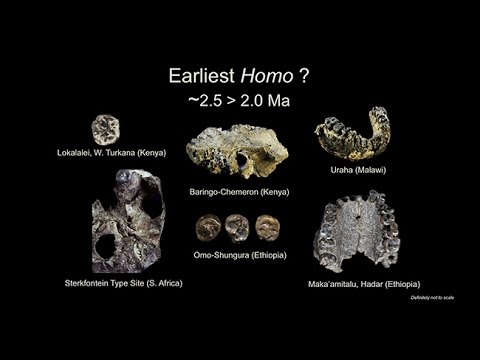
CARTA: Origins of Genus Homo – William Kimbel: Australopithecus and the Emergence of Earliest Homo
Introduction to the Paradoxical Ape
The video begins with a narration that introduces humans as the "paradoxical ape," characterized by bipedalism, lack of body hair, and large brains. Despite our advanced capabilities in fire, tool-making, and language, we still grapple with self-understanding. The narrative emphasizes our awareness of mortality and the optimism that accompanies our slow growth and knowledge transmission. The Center for Academic Research and Training in Anthropogeny (CARTA) aims to bring together experts from various fields to deepen our understanding of human origins and evolution, highlighting the importance of public support for such endeavors.
William's Perspective on Human Origins
William, a speaker at the event, expresses skepticism about our understanding of the origins of the genus Homo, suggesting that we know very little. He acknowledges the fossil record's richness but points out that it primarily covers the last two million years, leaving a significant gap in our understanding of earlier ancestors. He likens the challenge of reconstructing human evolutionary history to piecing together a car wreck from minimal evidence, emphasizing the need for more discoveries from older strata.
Historical Context of Homo Evolution Studies
William discusses the modern history of Homo evolution studies, tracing back to Louis Leakey's recognition of Homo habilis in 1964. This species was identified based on fossils from Olduvai Gorge, which exhibited human-like dexterity, increased brain size, and reduced tooth size. These features led researchers to place Homo habilis at the base of the Homo lineage. Philip Tobias, a co-author of the species description, famously claimed that Homo habilis filled a significant gap in the story of human evolution. The narrative of human evolution was initially viewed as a linear progression towards modern humans, characterized by specific traits that emerged gradually over time.
Challenges in Understanding Early Homo
However, the fossil record before two million years ago is sparse, leading to debates about whether human traits developed piecemeal or as a cohesive package. Since the 1980s, research has revealed a more complex picture of the genus Homo, with multiple contemporaneous species existing around two million years ago, including Homo rudolfensis, Homo habilis, and Homo erectus. This diversity suggests that there may not be a single adaptive package that explains the evolution of all these forms, prompting questions about their origins and the environmental conditions that influenced their development.
Environmental Factors and the Origin of Homo
William highlights the significance of global climatic changes around the time the Homo lineage is believed to have emerged. These changes included the expansion of ice sheets and a drying out of the African interior, which may have influenced the evolution of early hominids and the development of stone tools. However, the lack of fossil evidence from this critical period complicates our understanding of these evolutionary processes. The Oldowan tools, dating to around 2.6 million years ago, may or may not be directly associated with the genus Homo, raising further questions about the capabilities of earlier species.
Research Focus in Ethiopia
William discusses ongoing research in Ethiopia, particularly in the Ledi-Geraru area, where his team aims to fill the gaps in the fossil record between Australopithecus and the genus Homo. The sediments in this region span a crucial time frame from 2.8 to 2.6 million years ago, providing an opportunity to explore the evolutionary developments leading to the emergence of Homo. The research team has been studying various fault blocks, which offer unique slices of time, allowing for a more detailed understanding of the environmental contexts in which early hominids lived.
Discovery of a Significant Jaw Fossil
In 2013, a graduate student discovered a jaw fossil in the Gurumaha block, dated to approximately 2.8 million years ago. This find is significant as it provides a data point in an otherwise sparse record of early Homo. William argues against the myth that only complete skeletons can yield meaningful insights, citing numerous species identified from fragmentary remains. The jaw exhibits characteristics that align more closely with later Homo species than with Australopithecus, suggesting that it may represent an early member of the Homo lineage.
Comparative Analysis of Jaw Fossils
William compares the newly discovered jaw to those of Australopithecus and Homo erectus, noting distinct differences in morphology. The Ledi-Geraru jaw displays features that are more consistent with later Homo species, indicating a potential evolutionary trajectory. This analysis raises questions about the adaptive packages present in early Homo and the environmental conditions that may have influenced their evolution.
Implications for Understanding Human Evolution
Finally, William discusses the implications of these findings for our understanding of human evolution. The evidence suggests that the environment in which early Homo lived was likely more open and grassland-like compared to the habitats of earlier Australopithecus species. This shift in environment may have played a role in the evolutionary adaptations of the genus Homo. Additionally, new findings from Kenya suggest that stone tool use may predate the genus Homo, potentially pushing back the timeline for the emergence of technological behaviors.
Conclusion
In conclusion, the research conducted in the Ledi-Geraru area and the discovery of the jaw fossil contribute valuable insights into the origins of the genus Homo. While many questions remain unanswered, the findings highlight the complexity of human evolution and the need for continued exploration and research in this field. The evolving narrative of our origins underscores the dynamic interplay between environmental factors and evolutionary adaptations, paving the way for a deeper understanding of what it means to be human.
The transcript mentions several significant hominin species and human-like groups, each associated with specific time periods and geographical locations. The prominent species discussed include:
- Homo habilis: Recognized in 1964, this species is dated to approximately 1.7 to 1.75 million years ago and is associated with the Olduvai Gorge in Tanzania. It is characterized by a notable increase in brain size and a dexterous ability in the hands, which are considered emblematic of early human-like traits.
- Homo erectus: Mentioned in relation to a jawbone found at the Dmanisi site, dated to around 1.8 million years ago. This species illustrates the evolutionary trajectory leading towards modern humans.
- Australopithecus afarensis: This species, famously represented by the fossil named 'Lucy', is dated to about 3 million years ago and is primarily found in East Africa, specifically the Hadar region.
- Australopithecus africanus: Closely related to Australopithecus afarensis, this species is mentioned in connection with the Ledi-Geraru findings and is also associated with South Africa.
- Robust Australopithecines: While not a specific species, these groups are suggested to have evolved around the same time as the genus Homo, potentially impacted by environmental changes.
Additionally, the transcript discusses the lack of fossils for the genus Homo prior to 2 million years ago, indicating the challenges faced in understanding the early evolutionary timeline of our lineage.
- [04:10] "The modern history of the study of the evolution of the genus Homo really begins with Louis Leakey and colleagues and the recognition of the species, Homo habilis in 1964."
- [10:24] "All of these fossils have been promoted by one person or another as identifying the genus Homo older than 2.0 million years ago and all of them have been doubted."
- [22:57] "The modal environmental signal at 2.8 in this area is one essentially of a grassland environment."
The transcript presents several central claims regarding the process of human evolution, emphasizing the complexity and challenges in understanding our ancestral lineage. Key assertions include:
- Knowledge Gaps: The speaker expresses a nihilistic view regarding the origins of the genus Homo, suggesting that despite the fossil record, much remains unknown about the evolutionary history of this group. This is likened to reconstructing a history using minimal, fragmented evidence.
- Adaptive Diversity: The existence of multiple species such as Homo habilis, Homo erectus, and Homo rudolfensis suggests that there is not a singular adaptive package that defines human evolution. Instead, these species may have evolved under various adaptive pressures.
- Environmental Influences: The transcript discusses how significant climatic changes may have played a role in the evolution of early hominins. The drying out of Africa is linked to the emergence of certain adaptations, including tool use and dietary changes.
- Jaw Morphology: A newly discovered jaw from Ledi-Geraru, dated to 2.8 million years ago, shows anatomical features that align more closely with Homo than with earlier Australopithecines, indicating possible early traits of the genus.
These claims collectively highlight the intricate interplay of anatomical, behavioral, and environmental factors that have shaped human evolution, suggesting that our understanding is still evolving as new discoveries are made.
- [02:25] "My view is we actually know nothing about the origin of Homo, just saying."
- [07:44] "The idea that there is not one adaptive package that can describe them all, but there are perhaps multiple ones."
- [21:19] "This is a jaw that exhibits characteristics that forecast anatomy that is common, the most common anatomical patterns in jaws of the genus Homo younger than 2 million."
In the transcript, the speaker refers to several specific types of data and evidence that support their claims about human evolution:
- Fossil Evidence: The discussion highlights various fossils attributed to different hominin species, including the jawbone found in the Ledi-Geraru area, which is dated to 2.8 million years ago. This fossil is significant as it shows morphological traits closely associated with the genus Homo.
- Comparative Anatomy: The speaker compares the morphology of the Ledi-Geraru jaw to that of Australopithecus afarensis and Homo erectus, noting distinct differences that suggest an evolutionary transition within the genus Homo.
- Archaeological Finds: Mentions of stone tools, specifically Oldowan tools dated to around 2.6 million years, provide context for technological advancements and their potential correlation with early hominin behavior.
- Geological Context: The speaker describes the sedimentary environments of the Ledi-Geraru area, indicating how the geological conditions can inform our understanding of the habitats in which these early hominins lived.
- Paleoecological Data: Evidence from animal fossils found alongside the Ledi-Geraru jaw suggests that the environment was predominantly grassland, providing insights into the ecological conditions that may have influenced hominin evolution.
This multifaceted approach, integrating fossil records, comparative studies, and ecological data, illustrates the complexity of reconstructing the evolutionary history of humans.
- [08:32] "I think it speaks fairly clearly to the idea that these three at 2 million did in fact share a single unified ancestry predating that time period."
- [10:31] "We do have of course Oldowan tools at around 2.6 million."
- [22:11] "This jaw is found in a context of animal species that lived in essentially grassland environments."
The transcript reveals significant uncertainty regarding the fossil record and the evolutionary history of the genus Homo. The speaker expresses a strong skepticism about the current understanding of the origins of Homo, stating, "[02:11] I tend sometimes to be accused of nihilism with regard to the origin of Homo because my view is we actually know nothing about the origin of Homo." This sets the tone for a discussion that emphasizes the limitations of the existing fossil evidence. The speaker likens the fossil record to a fragmented puzzle, asserting that the evidence available is akin to "[03:36] a car wreck" where only parts of the vehicle can be identified, making it challenging to reconstruct a comprehensive evolutionary history.
Furthermore, it is highlighted that the fossil record of the genus Homo from the period between 2 and 2.5 million years ago is alarmingly sparse. The speaker notes, "[10:58] It would fit in a shoe box and leave room for a decent pair of shoes," indicating the profound scarcity of evidence that complicates the understanding of early human evolution. The speaker stresses that this scarcity has led to ongoing debates and differing interpretations within the scientific community about the lineage and characteristics of early Homo species.
Overall, this suggests that while there are hypotheses surrounding the evolution of the genus Homo, the lack of concrete fossil evidence means that many questions remain open, and the scientific community must continue to explore new sites and gather more data to fill these gaps.
- [02:11] "I tend sometimes to be accused of nihilism with regard to the origin of Homo because my view is we actually know nothing about the origin of Homo."
- [03:36] "This is what we have to solve, this is the problem we have to solve and this comes from field work..."
- [10:58] "It would fit in a shoe box and leave room for a decent pair of shoes."
The transcript discusses various scientific debates within the field of anthropogeny, particularly regarding the evolutionary origins of the genus Homo. The speaker presents a view that there is a lack of consensus regarding the adaptive packages that characterize early members of the Homo lineage. Specifically, the speaker states, "[07:44] there is not one adaptive package that can describe them all, but there are perhaps multiple ones," indicating a divergence in hypotheses about how different species of Homo might have evolved and adapted to their environments.
Additionally, the debate extends to the identification of a common ancestor for the various Homo species. The speaker asserts that while there may be a monophyletic group of species around 2 million years ago, the exact nature of their shared ancestry and the characteristics of their environment remain contentious. The speaker mentions the impact of global climatic changes on the evolution of hominids, suggesting that ecological factors played a significant role in shaping the evolutionary path of Homo species, stating, "[09:02] information from global climate change, paleo-climatic change, has made it clear that..."
Furthermore, the speaker addresses debates regarding whether the genus Homo emerged as a result of specific environmental conditions, such as the drying out of Africa. They emphasize that while these hypotheses are prevalent, the lack of fossil evidence complicates the narrative. This ongoing discussion highlights the complexities involved in tracing human evolutionary history and the different interpretations that scientists have regarding the relationships and characteristics of early human ancestors.
- [07:44] "there is not one adaptive package that can describe them all, but there are perhaps multiple ones."
- [09:02] "information from global climate change, paleo-climatic change, has made it clear that..."
- [10:01] "This has become the prevailing hypothesis that the complexification... is all associated with the local impacts of these global changes."
[00:00] - [Recording] This UCSD-TV program is presented by University of California[00:05] television. Like what you learn? Visit our website or follow us on Facebook and[00:10] Twitter to keep up with the latest programs.[00:19] ♪ [music] ♪[00:23] - [Narrator] We are the paradoxical ape: bipedal, naked, large-brained. Long the[00:31] master of fire, tools and language, but still trying to understand ourselves.[00:38] Aware that death is inevitable yet filled with optimism. We grow up slowly. We hand[00:48] down knowledge. We empathize and deceive. We shape the future from our shared[00:56] understanding of the past. CARTA brings together experts from diverse disciplines[01:03] to exchange insights on who we are and how we got here. An exploration made possible[01:11] by the generosity of humans like you.[01:30] ♪ [music] ♪[02:00] - [William] Good afternoon everyone and thank you to the organizers here of CARTA[02:06] for inviting me to participate and thank all of you, a great crowd, for coming out[02:11] to see this fascinating topic explored. I tend sometimes to be accused of nihilism[02:18] with regard to the origin of Homo because my view is we actually know nothing about[02:25] the origin of Homo, just saying. And the reason is simple in my view; is that while[02:37] it is true that we have a pretty good fossil record of the genus Homo, the Homo[02:43] lineage as Bernard just finished explaining, by around 2 million years ago[02:48] with some diversity and different adaptive packages in different species: erectus,[02:57] habilis, rudolfensis. On the assumption that these three forms shared a common[03:06] ancestor at some point. That common ancestor lived older than 2 million years[03:12] ago in a period of time in which we have not a fender and a tire and a piece of[03:20] gear shift, but in which we have a fragment of tire thread, which we have a[03:28] fragment of a headlight. And we are trying to reconstruct an evolutionary history of[03:36] a group for which we basically have a car wreck. And this is what we have to solve,[03:45] this is the problem we have to solve and this comes from field work and I'm going[03:50] to illustrate for you today in my view where I think the genus, the Homo lineage[03:56] arose and where we have to re-double our efforts for increasing the representation[04:02] of this lineage older than 2 million years ago. Now, as Bernard ably suggested, the[04:10] modern history of the study of the evolution of the genus Homo really begins[04:15] with Louis Leakey and colleagues and the recognition of the species, Homo habilis[04:23] in 1964 based on material from Bed I in Olduvai Gorge dated to between around 1.7[04:27] and 1.75 million years, they discerned in the type specimen of the species older by[04:34] Hominid VII what they thought was a human-like dexterous ability in the hands,[04:39] they discerned a notable increase in endocranial volume, brain size, in[04:44] relation to then known Australopithecus species, mostly from southern Africa and a[04:51] reduction in tooth size which they saw as emblematic of an overall gracilization of[04:57] the chewing apparatus in almost a human-like arrangement. And putting these[05:03] three characteristics together with the plentiful stone tools that had been[05:06] recovered for years in these sediments, they arrived at the conclusion that this[05:11] species, habilis, belonged near the base of the genus Homo. So convinced were they[05:19] of this conclusion that Philip Tobias, one the co-authors of the species, was able to[05:23] write in 1965 that Homo habilis represented that last remaining major gap[05:29] in the pleistocene evolution of the genus Homo, "of the story of human evolution, "[05:33] to quote him directly. And in this phylogeny shown here from one of Tobias'[05:38] papers, you can see the genus Homo is represented as a single, gradually[05:45] evolving line characterized by uniquely human characteristics related to large[05:54] brain size, reduced canine teeth, a perfection of bipedal locomotion as we now[06:01] see it, a slowing down of the growth trajectory, technology, language and so[06:07] forth. This was a package of characteristics seen in modern humans and[06:12] thought to go back in time to at least 2 million years as an integrated whole,[06:20] along this slowly emerging lineage culminating in Homo sapiens. The problem[06:26] was of course is that older than 2 millions years ago, there was virtually no[06:31] fossil record that could be confidently associated uniquely with our lineage. And[06:38] so whether these characteristics emerged piecemeal, step-wise and therefore each[06:44] demanding a separate explanation for origin, or whether they emerged as a[06:48] package together, where one explanation would take care of them all, could not be[06:54] discerned. Now a lot has happened, as Bernard has pointed out in the years since[07:00] early 1960s. And beginning in the 1980s, in large part due to the work that he and[07:06] others have done in those years, we now see the genus Homo as a much more[07:11] complicated array of species. In my view, there are at least three broadly[07:20] contemporaneous forms present at around 2 million years ago whereas in 1964, the[07:27] Leakeys would have said there's one in the genus Homo: Homo rudolfensis, Homo habilis[07:33] and Homo erectus. And one of the lessons that we have learned from the appreciation[07:39] of greater diversity in our own genus at this period of time, is the idea that[07:44] there is not one adaptive package that can describe them all, but there are perhaps[07:49] multiple ones. And the question is which, if any, are germane to the origin of the[07:55] lineage itself? Or, are they all, in one form or another, subsequent developments[08:01] to the establishment of the lineage? Following on Bernard's talking about[08:08] Toyotas and clades, my appreciation, my rendering of the information available[08:15] from these three forms between around 1.7 and 2 million years ago is that they do,[08:22] in fact, constitute a monophyletic group. This is not the place to go into a[08:27] detailed rendition about the evidence for it, but I think it speaks fairly clearly[08:32] to the idea that these three at 2 million did in fact share a single unified[08:37] ancestry predating that time period, moving back towards the 3 million year[08:44] mark. And the question is, where is it? And who was it? And here's where we run up[08:50] against a roadblock. Now, why is this important more than just for the purposes[08:56] of putting cladograms or phylogenies on the page is because in the last decade or[09:02] two, information from global climate change, paleo-climatic change, has made it[09:09] clear that the tim period in which many people suspect the Homo lineage arose was[09:14] one of a very widespread, impactful change in global climate, creating an expansion[09:24] of ice sheets, reduction in sea levels, drying out of the African interior. And[09:31] that time period has been focused right after the 3 million year mark; 2.8, 2.7[09:38] and so forth. And that drying out of Africa has been seen as motive in the[09:48] origin of the robust Australopithecines, the origin of the genus Homo, even to[09:55] stone tool manufacture. This has become the prevailing hypothesis that the[10:01] complexification, if you will, of hominids and the origin of technology is all[10:06] associated with the local impacts of these global changes. The problem is that[10:12] there's no fossil evidence for the genus Homo that is informative on exactly what[10:18] those changes were at this particular point in time. We do have of course[10:24] Oldowan tools at around 2.6 million. And as Bernard and others have pointed out,[10:31] perhaps that is a proxy for the genus Homo or maybe it isn't. It's not outside the[10:38] realm of possibility given what we know about how chimpanzees can make tools that[10:42] some Australopithecus is capable of making them, too. So, questions and an absence of[10:49] evidence. And here is the sum total of the fossil record of the genus Homo between 2-[10:58] and 2.5 million years ago. It would fit in a shoe box and leave room for a decent[11:04] pair of shoes. All of these fossils have been promoted by one person or another,[11:14] one group or another as identifying the genus Homo older than 2.0 million years[11:19] ago and all of them have been doubted. And I'm not going to go through them here to[11:24] point out the weaknesses and strengths of the various arguments, other than to say[11:29] that the very fact that there's debate can be traced to the fact that there's[11:34] relatively little evidence. And this is why groups return to Africa, go to the[11:42] field to African sites, in East Africa, in South Africa all the time focusing on this[11:47] time period which, in my view, is one of the most intriguing of all the time[11:51] periods in human evolution to increase our understanding of the fossil record. One[11:57] area where the group from The Institute of Human Origins which I direct at ASU has[12:03] been focusing on, of course, for years is Ethiopia. We've worked at the Lucy site[12:09] more or less continuously since 1990. And colleagues of mine, Dr. Kaye Reed at ASU[12:15] and Chris Campisano and others, have expanded the work, the IHO work in[12:19] Ethiopia, to a place called Ledi-Geraru as seen here as slightly north and east of[12:24] the Hadar area. What attracted them to this area? Two things, knowledge that the[12:31] environments represented by the sediments in this area looked different from those[12:37] that were very common and well-understood in the Lucy time period, older than 3[12:43] million, some 20, 30 kilometers away at Hadar. And second, the suspicion verified[12:50] since then that the rocks may actually represent a slightly younger time period[12:55] and that's important because at Hadar, as you will see, we have Lucy species,[13:00] Australopithecus afarensis up to about 3 million years and then we jump across[13:05] three quarters of a million years and we have a jaw of Homo with some stone tools[13:09] at 2.3 million. Lucy, Homo; older, younger. Gap in the middle, let's try to[13:17] fill it. And that was their mission. Now, in the lower Awash Valley, these areas[13:25] around Hadar and middle Ledi and Gona and Dikika and Woranso-Mille, there are[13:31] excellent sediments going backwards in time from around 3 million years ago. And[13:39] we have an excellent set of sediments in places like Gona and Hadar that take us[13:43] forward from around 2.5 million years ago. It is the time period in between that is[13:51] critical and is germane to the questions about where the three forms of Homo that[13:56] we know of at 2 million perhaps emerged from? And these sediments are present[14:03] amply, now well-studied in the Ledi-Geraru area spanning in time from around 2.8[14:12] million years to about 2.6 million years. And what's really important to understand[14:18] about these sediments, and this is both an advantage and a disadvantage is that they[14:23] are not continuous across time, but instead are exposed in fault blocks,[14:31] adjacent fault blocks which means that each block of sediment is a unified slice[14:37] of time separated from another block next to it which has itself a unified period of[14:43] time with slight gaps in between them. Disadvantaged because we can't trace[14:49] evolutionary events continuously but advantage because fossils that come,[14:54] demonstrably come, from particular fault blocks can be narrowed to a very narrow[15:00] range of environments and associations with other animal species, etc. So, a plus[15:05] and a minus. And here is the Ledi-Geraru area. Kaye and her team have been working[15:12] her for more than a decade before they found their first hominid. Looking at the[15:16] fauna, looking at the geology, trying to understand the environments. And by the[15:22] way, this is an area called the Lee Adoyta basin and you can see here, here's one[15:27] fault block, here's another fault block, and here's a third fault block. They're[15:32] about three or four fault blocks just exposed in this one view, very clearly[15:37] delineated. You can see one of the faults running right through here. Now, back in[15:42] 2013, Kaye and her group of paleontologists were surveying an area in[15:46] the Lee Adoyta basin called the Gurumaha block just in the one fault block. And at[15:52] the base of this one hillside, there's a volcanic ash that is now well-dated, very[15:58] precisely dated to 2.8 to 2, plus or minus a handful of years, in the million year[16:05] range. And on one winter's day, one of our graduate students at ASU, Chalachew[16:13] Seyoum, was surveying up on this hillside and found this little jaw. That jaw eroded[16:22] out of this hill, perhaps in a recent rain storm and resides about 10, maybe 12[16:28] meters above that volcanic ash. And on the hillside, there are no sediments up above[16:35] younger that the jaw could have floated down from. It eroded out of that hillside[16:42] and it's around 10 meters above the tough. So here's the jaw after it has been[16:47] cleaned up. And I'm here to tell you that it answers some questions, answer some[16:54] very specific questions. It doesn't answer all the questions. But there's a myth out[17:01] here in Paleoanthropology that unless you have a complete skeleton, you're not[17:07] prepared to answer any meaningful questions and I wish to dispel that myth.[17:11] You know, since Raymond Dart named Australopithecus in 1925, there have been[17:16] a plethora of hominid species named, recognized; Australopithecus africanus,[17:24] Paranthropus robustus, Paranthropus boisei, Homo Habilis, on and on. Many of[17:30] them, if not most of them on the basis of material that we here today would[17:34] consider, at best, imperfect. A fragment of a jaw, a bit of a brain case, some[17:40] teeth, and the fact of the matter is is that in the intervening years, the vast[17:46] majority of those species recognized on the basis of imperfect material have been[17:51] verified as to be meaningful evolutionary units. We are not at sea when we have[17:57] small fragments. We are limited in the type of questions we can ask. If complete[18:02] skeletons were the answer to all of our questions, then Lucy would have settled,[18:08] once and for all, the debate about when early humans made a commitment to[18:16] terrestrial bipedality. Instead, she generated what is now going on to five[18:21] decades of debate about that question. It depends on the question and this question,[18:28] the question that we address to this jaw, is it the same thing as Australopithecus[18:33] at 2.8 million or is it something different? And I engaged in that question[18:38] with my former PhD student, Brian Brian Villmoar now at University of Nevada, Las[18:42] Vegas, and Chalachew Seyoum our graduate student who found the jaw. And we came to[18:50] the conclusion that in many respects, it differs from your standard issue[18:54] generalized Australopithecus jaw. Seen here on the left is a nice jaw of Lucy's[19:00] species, Australopithecus afarensis and on the right is a reconstructed from a scan[19:05] of the specimen from Ledi-Geraru. We noticed that the jaw differs[19:11] rather...these two jaws differ rather remarkably. The afarensis jaw is typically[19:16] long and narrow with fat molar teeth, primitive pre-molars and so forth. And our[19:24] major comparison was to something like this, one of the jaws from the Dmanisi[19:30] site dated to about 1.8 million years which is attributed to Homo erectus. And[19:36] there's a much greater similarity in the shape of the dental arch, in the form of[19:40] the teeth, the pre-molars being symmetrical and so forth, to this 1.8[19:45] million year old Homo erectus jaw than to Lucy's species. And it extends also to the[19:53] architecture of the jaw and I'm not going to go into the details here, but[19:56] underneath the pre-molar, the afarensis jaw is characterized by a highly sculpted[20:01] out, contour like a chimpanzee probably due to the very large canine teeth absent[20:07] in the Ledi-Geraru jaw. The back part of the mandible where the vertical part[20:13] called the ascending ramus arises from the body of the jaw is located in the Ledi jaw[20:18] well back of the third molar, not forward as it is in Lucy's species over the second[20:24] molar. And the upper and lower boundaries of the mandibular borders beneath the[20:31] teeth and at the base are more or less parallel. And in Australopithecus, they're[20:38] not, it gets shallower to the rear. And by the way, it's also true of[20:42] Australopithecus africanus which is slightly closer in age to the Ledi jaw in[20:47] South Africa, the same kind of thing. So, when we made the comparison to jaws of the[20:54] genus Homo, later in time obviously because we don't have much in the 2.5 to 3[20:59] million year period, the similarities were very apparent to us. This is a jaw that[21:05] exhibits characteristics that forecast anatomy that is common, the most common[21:14] anatomical patterns in jaws of the genus Homo younger than 2 million. So we[21:19] published it, in not quite a year ago, in the Journal of Science as a 2.8 million[21:24] year old jaw of the genus Homo. Now does it answer questions about what were the[21:30] adaptive packages present early on in the lineage leading to us? Of course. But what[21:37] it does do is that it puts one data point in an area that is otherwise a void in the[21:45] evolution of our own genus. Question is what kind of environment did it live in?[21:53] Did it live in a dry environment? Did it live in an open one? Germane to the[21:57] questions about what drove early evolution of Homo. And data that's been put together[22:03] by Kaye Reed and given to me for this purpose shows that this jaw is found in a[22:11] context of animal species that lived in essentially grassland environments, very[22:19] different in terms of how open or closed the habitats were compared to time periods[22:28] in which Lucy's species lived. And this is just a couple hundred thousand years[22:34] later. Now, I hasten to add here, I am not asserting that the origin of the genus[22:41] Homo is due to a drying out of the environment. But one thing we can say,[22:46] because of the very confined time period of the Gurumaha fault block in which the[22:52] mandible and the fauna on which this inference is made, suggest that the modal[22:57] environmental signal at 2.8 in this area is one essentially of a grassland[23:03] environment. And we can see that by looking at some of the other animal[23:09] fossils that have been found associated with the horizon from which that mandible[23:14] has come. This is the Gurumaha block, these are El Salafin bovid frequencies and[23:20] the horse frequencies, both of which of course are well-known grazers. And[23:24] together, in the Gurumaha block, they constitute nearly 40% of the macrofauna,[23:30] excludes elephants and hippos and stuff. I'm not saying it's dry, we're saying it's[23:34] open. So it's 40% of the macrofauna and that is very impressive compared to the[23:40] frequencies back in Lucy's time starting just 200,000 years earlier. Opens up areas[23:48] for inquiry. And finally, some new data coming out of Kenya from Sonia Harmand's[23:55] group suggests that stone tool use, in fact, began not with the genus Homo,[24:02] maybe. But perhaps as long ago as 3.5 million years when we have[24:09] Australopithecus. And if these finds are verified, it opens up a whole new range of[24:16] possibilities looking at the adaptive packages that constitute the ancestral[24:22] platform from which the genus Homo emerged. And so to finish up, here we have[24:30] Ledi-Geraru, here we have our formerly first appearance, a former first[24:34] appearance of stone tools now pushed back here perhaps and does that imply that the[24:40] genus Homo itself has even an earlier origin than we think of at 2.8, perhaps[24:47] back as far as Lucy? Or could Lucy herself have been the first stone tool maker?[24:53] Thank you.[24:56] ♪ [music] ♪
The Origins of the Genus Homo | Bernard Wood
In this presentation, the speaker expresses gratitude for the audience's presence and acknowledges the pleasant weather in Chicago, humorously suggesting that it is always like this. The discussion begins with a reflection on the term "human," which the speaker's mentor, Michael Day, insisted should be qualified. The speaker emphasizes the need for clarity in defining what is meant by "human," whether it refers to an individual, a member of the species Homo sapiens, or a broader classification within the genus Homo. This sets the stage for a deeper exploration of human evolution, particularly focusing on the genus Homo.
The speaker takes the audience back to 1964, a significant year marked by the Civil Rights Act, the Beatles' rise in music, and a warning from the Surgeon General about smoking and cancer. This historical context is juxtaposed with the scientific landscape of human evolution at the time, where only a few taxa were recognized in the hominin fossil record. These included African taxa, Homo erectus primarily found in Asia, and Neanderthals and Heidelbergensis from Europe. The speaker recalls their own learning experience about human evolution during this period, highlighting the limited understanding of the time.
In 1964, a pivotal discovery was made by the Leakeys, who unearthed a cranium known as "nutcracker man" or Zinjanthropus boisei. This discovery was crucial as it introduced a new species into the conversation about human evolution. The speaker describes the cranium and its distinctive features, including a strange molar tooth that was initially puzzling until the cranium was found. On April 4, 1964, a groundbreaking paper was published in Nature by Lewis Leakey and his colleagues, Philip Tobias and John Napier, which proposed a new species of the genus Homo from Olduvai Gorge. This paper redefined the genus Homo, suggesting that it included a new, primitive species, Homo habilis.
The speaker delves into the implications of this redefinition, noting that it was a dramatic proposal that suggested a new understanding of human ancestry. The discussion highlights the significance of the cranium of Zinjanthropus boisei, which was initially thought to be the maker of stone tools. However, the discovery of Homo habilis, which appeared to have a larger brain and more advanced features, shifted the narrative. The speaker explains how the interpretation of skeletal remains, including a foot skeleton and hand bones, led to the conclusion that Homo habilis was a dexterous biped capable of tool-making.
As the presentation progresses, the speaker addresses the criteria for defining a genus, particularly in the context of Homo. The first criterion discussed is that all species within a genus must belong to the same clade, meaning they share a recent common ancestor. The speaker uses an analogy of car makes, specifically Toyota, to illustrate the concept of a clade. Just as all Toyota cars descend from a common ancestor, so too must all species within a genus share a recent common ancestor.
The second criterion involves the concept of a grade, which refers to the adaptive features shared by species within a genus. The speaker explains that all members of a genus should occupy a similar ecological niche or adaptive zone. This analogy is further illustrated with the example of four-wheel-drive vehicles within the Toyota brand, which represent a specific adaptive grade while still belonging to the broader clade of Toyota cars.
The speaker emphasizes the challenges faced by paleoanthropologists in reconstructing the evolutionary history of hominins, likening it to trying to piece together a complex puzzle with limited evidence. The discussion highlights the difficulty of establishing clear criteria for the genus Homo, particularly as new fossil evidence emerges. The speaker notes that while Homo sapiens is the type species of the genus Homo, the inclusion of other species, such as Neanderthals and Homo erectus, complicates the classification.
As the presentation continues, the speaker reflects on the historical context of the genus Homo and how the criteria for inclusion have evolved over time. The initial classification of Homo erectus as the most primitive member of the genus was challenged by the discovery of Homo habilis, which prompted a reevaluation of what constitutes a member of Homo. The speaker raises questions about whether the criteria for inclusion have been relaxed too much, potentially undermining the coherence of the genus.
In discussing the evidence that has emerged since 1964, the speaker notes that the Leakeys continued to discover more specimens that supported the classification of Homo habilis. These included associated skeletons that provided further insights into the morphology and behavior of early hominins. The speaker highlights the importance of associated skeletons in understanding the evolutionary relationships among species, despite the challenges posed by fragmentary remains.
The speaker also addresses the ongoing debate regarding the adaptive features of Homo habilis compared to other hominins. They suggest that while Homo habilis may have shared some traits with Australopithecus, it also exhibited characteristics that aligned more closely with later members of the genus Homo. This raises questions about the adaptive significance of Homo habilis and its role in the evolutionary lineage leading to modern humans.
As the presentation nears its conclusion, the speaker emphasizes the need for caution in interpreting the fossil record and the origins of the genus Homo. They argue that the origin of Homo is likely to be earlier than the first appearances recorded in the fossil record, highlighting the limitations of our current understanding. The speaker encourages the audience to remain skeptical of conventional wisdom and to recognize the complexities involved in reconstructing human evolutionary history.
In closing, the speaker pays tribute to Frank Brown, a geologist who contributed significantly to the field of paleoanthropology and the Leakey Foundation. They express gratitude to the audience for their attention and patience, acknowledging that the discussion may have been lengthy but is essential for understanding the intricate history of human evolution.
The transcript discusses several hominin species and human-like groups, detailing their evolutionary significance and contextual background. Here’s a comprehensive list of the mentioned species along with relevant information regarding their time periods and geographical locations:
- Homo habilis: Identified as one of the earliest members of the genus Homo, Homo habilis was dated to approximately 1.8 million years ago. This species was discovered at Olduvai Gorge in Tanzania, which was a significant site for early hominin fossils.
- Homo erectus: Mentioned as the most primitive member of the genus Homo prior to the identification of Homo habilis. It was primarily known from Asia and is recognized as a pivotal species in human evolution.
- Zinjanthropus boisei: Referred to as “nutcracker man,” this species was notably part of the discussion around stone tool usage and was found at Olduvai Gorge, although its exact dating was not specified in the transcript.
- Neanderthals: Discussed as a member of the genus Homo, Neanderthals are noted for their distinctive anatomical features, although the transcript does not specify exact dates or locations for their findings.
- Australopithecus: The speaker mentions that some fossils may belong to this genus but does not elaborate on specific species or dates.
Overall, the transcript emphasizes the significance of Olduvai Gorge as a central location for these discoveries, illustrating the evolutionary timeline and geographical diversity of early hominins.
- [10:45] "...homo habilis was dated one of it was one of the first hominins to be dated using potassium argon dating..."
- [21:30] "...the proposal in 1964 that there was an even more primitive creature in the genus homo that relaxed the criteria even more..."
- [39:42] "...the origin of homo is sometime before the earliest evidence for it..."
This transcript outlines several central claims regarding the process of human evolution, focusing particularly on the redefinition of the genus Homo and the implications of newly discovered species. Key assertions include:
- Redefinition of the Genus Homo: The speaker discusses a significant proposal made in 1964 to redefine the genus Homo to include Homo habilis, which was suggested to be the most primitive species in this genus. This redefinition stemmed from the discovery of fossil evidence that indicated a more complex evolutionary history.
- Brain Size and Cognitive Development: The transcript indicates a common assumption that brain size increases were pivotal in the evolution of Homo, particularly around 1.8 million years ago. This claim suggests that cognitive capacities evolved alongside physical changes, leading to more sophisticated tool use and social behaviors.
- Behavioral Adaptations: The emergence of Homo habilis is linked to tool-making capabilities, which signifies a behavioral adaptation crucial for survival and resource acquisition. The speaker mentions that this species had a larger brain and dexterous hands, which facilitated the development of complex tools.
- Environmental Adaptation: The discussion also touches on how evolving dietary patterns reflected in stable isotope analysis suggest shifts in habitat use and feeding strategies between Homo habilis and later species like Homo erectus.
These points reflect a nuanced understanding of human evolution, highlighting the interplay between anatomical changes, behavioral adaptations, and environmental contexts.
- [19:15] "...homo sapiens is the type species of the genus homo even though there is no type specimen of homo sapiens..."
- [22:09] "...if you're a paleontologist you come up with a hypothesis..."
- [26:22] "...the inclusion of habilis changed sort of destroyed the adaptive coherence of homo..."
The speaker references various types of data and evidence to support their claims regarding human evolution. Key forms of evidence include:
- Fossil Evidence: The discussion heavily relies on fossil discoveries, particularly from Olduvai Gorge. Notable mentions include Homo habilis, which was dated to approximately 1.8 million years ago, and the associated skeleton OH 62, which is partially fragmented but provides insight into the anatomy of early hominins.
- Dating Techniques: The use of potassium-argon dating and magnetostratigraphy as methods to establish the age of fossils is highlighted, indicating that Homo habilis is one of the earliest hominins dated using these techniques, showcasing advancements in dating methods during the time.
- Stable Isotope Analysis: The speaker mentions stable isotopes to infer dietary habits, suggesting that changes in carbon isotope ratios reflect dietary shifts from Homo habilis to Homo erectus. This type of evidence supports claims of evolutionary adaptation in response to environmental changes.
- Comparative Studies: There are indirect references to comparative studies with other primates, particularly in assessing anatomical features such as brain size, dexterity, and locomotion, as well as behavioral traits associated with tool use.
These forms of evidence collectively contribute to the understanding of human evolution, illustrating the complex interplay between physical changes and environmental adaptations.
- [10:27] "...one of the first hominins to be dated using potassium argon dating..."
- [26:19] "...the inclusion of habilis changed sort of destroyed the adaptive coherence of homo..."
- [39:00] "...it's racingly certain that all the tracks are in that diagram were around before the bottom of their column..."
The transcript reflects a nuanced understanding of the limitations and uncertainties inherent in the field of paleoanthropology. The speaker discusses the challenges of reconstructing evolutionary history, emphasizing the scarcity of evidence that scientists must contend with. This fragility of the fossil record is underscored by the speaker's statement that paleoanthropology is a "difficult science" rather than a hard or soft science, indicating that the field operates under conditions of uncertainty.
Moreover, the speaker points out that the evidence available is often incomplete, likening the search for fossils to a "drunk person looking for their keys under a lamppost," suggesting that researchers primarily focus on well-explored areas, such as the Rift Valley, which may not represent the full picture of human evolution. This analogy highlights the potential gaps in the fossil record, as significant portions of Africa remain unexplored.
Additionally, the speaker notes, "the origin of Homo is sometime before the earliest evidence for it," which implies that the scientific community acknowledges that current fossil evidence may only represent a snapshot in time, lacking the broader context needed for a comprehensive understanding of human origins. This awareness of limitations is crucial for ongoing research, as it sets the stage for future discoveries that may fill existing gaps in knowledge.
- [18:06] "...we have to deal with this picture... in other words we have to reconstruct the equivalent of the history of the toyota motor company using little scraps of evidence."
- [45:28] "...the origin of the genus homo like all origins related questions is challenging to answer scientifically."
- [22:11] "...if you're a paleontologist you come up with a hypothesis... and then people find more fossils and those fossils are either consistent with your hypothesis or they're not..."
The transcript reveals a rich tapestry of ongoing scientific debates within the field of anthropogeny, particularly regarding the classification and evolutionary relationships among early human species. The speaker highlights a significant discussion surrounding the inclusion of Homo habilis in the genus Homo, positing that this inclusion may have weakened the criteria for defining the genus. This debate raises questions about the adaptive coherence of the genus, as the speaker asks whether the addition of Homo habilis renders the genus less coherent.
Moreover, the speaker references competing hypotheses regarding the evolutionary significance of various hominin fossils discovered over time, noting that the criteria for inclusion in the genus have been relaxed. This relaxation is compared to a tennis club that initially has strict membership standards but ultimately lowers its criteria to maintain membership. The speaker points out that this shift has resulted in a more inclusive definition of the genus, which may lead to inconsistencies regarding the traits and behaviors expected of its members.
Additionally, the speaker discusses the implications of new fossil evidence, which could either support or challenge existing hypotheses about the evolutionary lineage of modern humans. The discourse surrounding the age and classification of early Homo species, especially in relation to Homo erectus and Homo habilis, illustrates the complexity of establishing direct ancestor-descendant relationships. The ongoing nature of these discussions highlights the dynamic and often contentious character of scientific inquiry in paleoanthropology.
- [27:16] "...there was an argument to be made that homo habilis should not be included in the genus Homo..."
- [20:25] "...you relax the criteria a little more and you still say it's a tennis club..."
- [21:24] "...the question I want to ask really in this lecture is were those criteria relaxed more than they should have been..."
[00:02] thank you very much[00:04] thank you for coming um thank you for[00:06] arranging for a[00:08] wonderful day and[00:11] i gather chicago is like this 365 days[00:15] in the year[00:19] i the word[00:22] human my mentor[00:26] a man called michael day would never let[00:29] me use it without qualifying it[00:32] do you mean an individual human being[00:36] do you mean a member of the species homo[00:39] sapiens[00:40] do you mean a member of the genus homo[00:43] or do you mean[00:45] a a member of the part of the tree of[00:48] life that leads to modern humans[00:50] so he would never let me use it without[00:52] some qualification[00:53] and of course that means that i never[00:55] let my students use it without some[00:57] qualification[00:58] and it drives them mad but i want to use[01:01] the word human this evening in the sense[01:03] of[01:05] whether something is a member of the[01:07] genus homer[01:09] and um and in order to do that i need to[01:12] take you[01:13] um to back to 1964.[01:18] um so it was the year of the civil[01:21] rights act[01:25] this is one i couldn't resist um it was[01:27] the year that[01:28] the beatles had um songs that were in[01:31] the top[01:31] five of the of the billboard[01:35] top 40. um[01:38] it was the year that elizabeth taylor[01:40] and richard burton got married for the[01:41] first[01:42] time[01:45] and it was the year that the surgeon[01:48] general[01:48] issued a warning about the possibilities[01:50] of a link between[01:52] smoking and cancer in other words it was[01:54] quite a long time ago[01:58] and in those days um these were the taxa[02:02] that were[02:03] recognized in the hominin fossil record[02:06] um[02:07] there were some african taxa[02:10] and there was homo erectus that was[02:12] mainly known from[02:14] from asia there was homoredesiensis that[02:16] was[02:18] it was obviously an african taxon there[02:21] was attacks on court homo helmei[02:23] and then neanderthals and[02:25] heidelbergensis from europe[02:27] so that was what i had to learn um[02:32] when i did a course on human evolution[02:34] in[02:36] in those days just um[02:40] 1964 was just five years after the[02:43] leakys had um[02:45] um had[02:50] the leakys had recovered a cranium[02:54] that they called nutcracker man or[02:57] zinganthropus boisei[03:00] and that's a remarkable creature you can[03:02] see the[03:03] the cranium here and you can see um[03:07] a strange molar tooth that they didn't[03:10] know what it was until they found the[03:12] cranium and thought[03:13] maybe that's this strange molar tooth[03:15] belongs to the creature[03:17] that the the cranium belongs to[03:21] and then in 1964 or at least on april[03:25] 3rd 1964[03:28] the oldest member of the genus homo and[03:30] the most primitive member of the genus[03:32] homo[03:33] was homo erectus which was mainly known[03:35] from asia[03:39] then on april the 4th 1964[03:44] this paper was published in nature[03:47] and it says a new species of the[03:49] genocomo from older by gorge[03:51] from the same place that zagatopus[03:54] boisei had been found[03:57] and it was by lewis leaky and a[04:00] colleague of his[04:01] who he had asked to describe that[04:04] wonderful cranium from[04:07] um zinjanthropus boisei a man called[04:09] philip tobias[04:11] and john napier who was a colleague[04:15] of bob's and mine in the university of[04:18] london and a very distinguished[04:19] primatologist[04:23] and what they did in that paper was that[04:26] they[04:26] revised the diagnosis of the genus homo[04:30] so let me try and unpack that for you[04:32] they sort of[04:33] redefined homo[04:38] so what i want to do this evening is[04:41] just to consider what led up to that[04:43] proposal because that was a pretty[04:45] dramatic proposal[04:47] we're going to redefine the genus that[04:50] all modern humans belong to[04:53] and we are suggesting[04:56] that we are describing[05:00] a new species and the and the basal[05:03] species the most[05:04] primitive species in the genus homo[05:08] so what led up to that was that the[05:11] craniums in jantipus boisei was called[05:13] aldebar hominid 5.[05:16] okay you come from chicago so you must[05:18] realize that ultima hominin 3 was[05:20] discovered with[05:22] before alder by hominin 5 and ultima[05:25] hominid 4 was discovered before older by[05:27] hominin 5.[05:29] and all dubai hominid 4 was[05:32] as the little sort of scraps of teeth[05:36] that they really didn't sort of know[05:39] what to do with and while they were[05:41] considering these[05:42] which they were extremely pleased to[05:44] have just[05:45] just a few weeks later they discovered[05:47] this cranium so they[05:49] you if know discover a cranium[05:53] you stop worrying about a couple of[05:55] teeth so they stopped worrying about a[05:57] couple of teeth[05:58] and then they discovered their age six[06:02] i don't have my driving lesson my[06:04] driving license for this[06:06] machine so they discovered oh[06:10] six were which is just a few pieces of a[06:13] cranium[06:16] and then they discovered a little more[06:20] of a different cranium[06:22] and then a mandible here[06:27] and they began to realize that this was[06:29] a creature[06:30] that was unlike zinjanthropus boisei[06:34] gingentropus boisei is a creature with a[06:38] flat wide face with a crest down the[06:41] middle of the cranium[06:42] with huge teeth huge molar teeth[06:46] this was a different sort of animal[06:50] now in 1959 when they found zinc[06:52] anthropos boisei[06:55] this was the first hominin they had[06:57] found which was the same age as the[06:59] stone tools that they have been[07:00] recovering[07:02] so they thought zinc antibes poisoning i[07:04] must be the maker of the stone tools[07:08] sergeant xinjanthropus boisei had a[07:11] rather short career[07:13] as the maker of the stone tools because[07:15] in 1964 they thought[07:18] this is a better candidate for the maker[07:21] of the stone tools[07:23] why was it a better candidate because it[07:25] seemed to have a bigger brain[07:28] it seemed to have a bigger brain and so[07:31] they[07:32] said to you know zinc antibes boisei[07:36] sorry uh we found a better[07:40] a more likely maker of the stone tools[07:44] and they also found the skeleton of a[07:48] foot and they interpreted the skeleton[07:51] of the foot as being the skeleton of a[07:53] striding[07:57] a biped biped and you must realize that[08:01] at the authors john napier was a brit[08:05] and in britain when we walk we strive[08:12] i've always been struck by this notion[08:14] that it's a striding biped[08:16] it's a it's a stock broker on the way to[08:20] the stock exchange or it's a banker on[08:22] the way to the bank of england[08:24] so so it not only had a larger brain[08:29] it was interpreted as being a striding[08:31] biped[08:33] and there were some hand bones and they[08:35] interpreted those hand bones as being[08:38] as being dextrous the[08:42] the hand of a dexterous creature[08:46] so they put all these inferences[08:48] together[08:50] and and so they call this creature homo[08:53] habilis[08:54] habile capable of making things[08:59] and so they said you know this was the[09:01] creature that was making[09:03] the tools[09:07] and they also had some other specimens[09:10] oh 13[09:12] and they had this rather fragmented[09:16] cranium[09:17] that are pretty reasonable or at least[09:20] pretty reasonable for 1.8 million[09:22] years set of teeth[09:25] so this was the material that they wrote[09:29] about[09:30] in this article in nature and there's[09:32] louis leakey who always had a grin on[09:34] his face[09:36] and philip tobias who has rather a[09:38] questionable taste in sweaters[09:42] and john napier and they[09:45] and these three people were the authors[09:47] of the the paper[09:50] the paper is called a new species of the[09:52] genus homo from older by gorge[09:58] so um so on april the 4th 1964[10:04] and the other thing that happened was[10:05] that ultimate gorge wasn't just a source[10:08] of fossils it was also a place[10:12] where new dating methods were tried out[10:15] and were found to be successful[10:18] and so um aldevi gorge[10:21] the the material homo habilis was[10:25] was dated one of it was one of the first[10:27] hominins to be dated using potassium[10:29] argan dating[10:30] and it was one of the first hominids to[10:32] be dating using mag[10:34] using what's called magneto stratigraphy[10:39] and so it had the surprising age of[10:41] about 1.8 million years[10:45] so this was a sort of a double whammy[10:47] okay we found a new species of homo[10:50] and it's 1.8 million years ago by the[10:52] way[10:54] substantially older than anything that[10:56] had been found before[11:00] so so having confused you with all that[11:03] information[11:04] i want to spend the rest of my time[11:05] asking a question so what is a genus[11:09] and which taxer shall be included in our[11:12] own genocomo and why[11:15] and then when and where did the the[11:18] genus homo begin so i want to try and[11:20] answer those questions[11:22] and in doing so i'm going to draw on[11:24] research of[11:25] of of graduate students who were my[11:28] graduate students in the past[11:30] or um who are current graduate students[11:33] eve boyle mark collard andrew do and[11:35] david patterson[11:38] so what is a genus well this is[11:40] something that mark[11:42] collard and i thought long and hard[11:45] about and we thought you could just go[11:47] to you know any one of[11:50] many evolution textbooks and there would[11:53] be a nice sort of definition of the[11:55] genus[11:56] actually it turned out that there were[11:58] lots of definitions of the genus[12:00] so we had to sort of sort through all[12:03] these definitions and use our own grey[12:05] cells and say well you know[12:07] what is a jealous and[12:10] and there were two criteria it seemed to[12:12] me uh[12:15] there were two criteria it seemed to us[12:17] and the first was that the species needs[12:19] to be in the same[12:19] clade also known as a monophyletic group[12:23] which i'm sure has helped you[12:25] um as the type species of the[12:28] prospective genes and the clade i will[12:30] try and explain[12:32] what that is using an analogy in a[12:34] minute[12:37] so that converts into a definition in[12:39] other words all of the taxa[12:41] no more and no less than our[12:45] that are uh descended from a recent[12:47] common ancestor[12:48] so that's what a that's what a clade is[12:52] so i'm going to use most of the[12:54] amusement of my colleagues who[12:57] think i'm obsessed with cars which i'm[12:59] not[13:00] i'm going to use the example of a make[13:03] of car[13:04] as an illustration of what a clade is[13:08] and the an example i'm i'm going to use[13:11] is the[13:13] toyota motor company[13:17] which which emerged from a company[13:19] called toyota[13:21] that made equipment to to manufacture[13:25] material[13:27] and the japanese had no[13:31] car industry themselves so they decided[13:34] that the toyota company[13:37] should start to make cars[13:40] and they did and this is the[13:43] the prototype of the first toyota[13:48] toyota and this is the first car and it[13:51] was made in 1935.[13:55] so that is the common ancestor of all[13:59] toyota cars[14:03] okay and we know because somebody's[14:06] written the history of the toyota motor[14:08] company[14:10] and so it's the same as all of the taxi[14:14] no more or no less in other words you[14:16] can't have a nissan[14:18] okay and you can't leave out any toyotas[14:22] because it's the whole nine yards is the[14:25] whole shooting match[14:27] and the recent common ancestor is the[14:29] prototype car[14:32] the second criterion for a genus we[14:36] suggested that it needs to be the same[14:38] grade[14:40] so what's a grade so it's a clade is[14:43] like a make of car what's a grade[14:46] so it needs to be in the same grade in[14:48] other words its[14:49] way of living needs to be closer[14:53] to it's it's a group of animals that are[14:57] doing more or less[14:58] the same thing disregard the mumbo jumbo[15:02] on the slide[15:04] so it's a group of taxa that shares a[15:06] suite of adaptive[15:11] features in other words all the members[15:14] of a journalist need to be in the same[15:16] adaptive zone[15:19] so back to motor cars[15:24] one of the great successes of the second[15:26] world war was the willis[15:29] jeep and so the japanese decided that[15:32] they would make a japanese version of[15:35] this[15:36] jeep so in 1951[15:40] instead of making passenger cars they[15:42] made a four-wheel[15:43] drive vehicle and this is called[15:46] it was called the bj so within the[15:50] toyota clade[15:54] there is a subgroup of toyotas which are[15:57] four-wheel drive vehicles they can go[16:00] places that[16:01] two-wheel drive vehicles can't[16:05] and so they are a new adaptive grade[16:08] yet they're in the toyota clade[16:12] and so i'm going to suggest to you that[16:14] four-wheel drive[16:16] toyota vehicles are a good example[16:21] of something that's equivalent to a[16:23] genus[16:25] they are all sort of adaptively coherent[16:29] and they're all made by the same motor[16:31] car company[16:34] and there are people who spend their[16:36] life[16:39] worrying about the history of of of[16:42] four-wheel drive cars made by[16:46] toyota and so here is a diagram of[16:50] the evolution of four-wheel drive[16:54] passenger vehicles made by[16:58] toyota and i'm going to ask you or at[17:00] least[17:01] suggest to you that it's a good analogy[17:04] for a a genus[17:08] one of the reasons we need the leaky[17:10] foundation is of course[17:12] for the toyota motor company it's pretty[17:14] easy because there are people who[17:15] remember what happened[17:18] and the toyota motor motor company has[17:20] some historians who work for the toyota[17:22] motor company so they record all these[17:24] things[17:27] and there are people who have nothing[17:28] better to do who[17:30] spend their time on the internet writing[17:33] about[17:34] the the history of the toyota motorcycle[17:36] i shouldn't say because there may be[17:37] somebody here who's[17:38] who's an expert on the toyota motor[17:40] company and it's it's a perfectly[17:42] wonderful thing to do[17:43] and thank goodness people have done it[17:45] otherwise i couldn't do this[17:48] but our problem is that[17:53] that instead of this picture[17:57] we have to deal with this picture[18:01] in other words we have to reconstruct[18:03] the equivalent of the history of the[18:04] toyota motor company[18:06] using little scraps of evidence[18:10] and there is nobody writing it down and[18:14] that's the challenge and that's why[18:15] paleoanthropology[18:17] and bob martin i remember very well[18:22] i'm not sure whether it was in this[18:24] rather mindless class about how to[18:26] lecture[18:27] but uh but um[18:30] but in those days there was[18:34] there was a sort of a category of hard[18:36] sciences things like[18:38] chemistry and physics and softer[18:41] sciences[18:43] things like economics and things like[18:44] that and bob said[18:47] you know the problem is that we work in[18:48] a difficult science[18:50] it's not hard it's not soft it's just[18:53] really difficult because you're trying[18:55] to recover evolutionary history[18:57] and there's not a lot of evidence so[19:01] so if a genus needs to be a clade and a[19:03] grade[19:04] which taxes should be included in the[19:06] genus homo[19:08] and why well[19:11] um homo sapiens is the type[19:15] species of the genus homo even though[19:18] there is no[19:19] type specimen of homo sapiens[19:23] uh but it's the type species so that has[19:26] to be included in the genus hemo[19:30] when the anatoles were discovered they[19:33] were suggested that that species[19:36] should be added to the genotymo[19:39] so it's like sort of taking a modest[19:41] sized car[19:43] and you know which looks like homo[19:45] sapiens and then you know neanderthals[19:47] are different they have[19:49] different shaped cranium different sort[19:53] of[19:54] different shaped teeth but nonetheless[19:56] they sort of live their lives[19:58] much like modern humans live their lives[20:01] so you're making the genus homo a little[20:04] more inclusive[20:06] it's a bit like having a tennis club you[20:08] know and you start with great[20:09] aspirations that in order to belong to[20:11] this tennis club you have to[20:12] you know be this good at tennis and then[20:14] you discover there are only nine people[20:16] who are that good at tennis and you[20:17] realize that[20:18] that doesn't make for a very vibrant[20:20] club so you say okay[20:22] we'll relax our criteria and we'll you[20:25] know let other people join[20:29] then with the inclusion of what was[20:31] pathetic anthropos erectus and[20:33] sinantropus pekinensis into the[20:34] genocimal[20:37] homo became even more inclusive[20:41] and so the criteria for joining the[20:43] tennis club were relaxed even more[20:45] you know can you hold a tennis racquet[20:50] do you know which bit to hold okay[20:54] so so so you relax the criteria a little[20:58] more and you[20:58] but you still say it's a tennis club[21:03] then and so that[21:06] the situation in 1944[21:11] was that that homo erectus was the most[21:15] primitive member of the genus hammer[21:18] then with the proposal in 1964[21:21] that there was an even more primitive[21:24] creature in the genocima[21:27] that relaxed the criteria even more[21:30] and the question i want to ask really in[21:32] this lecture is were those criteria[21:35] relaxed[21:37] more than they should have been in other[21:39] words does the inclusion of homo habilis[21:42] in the genus homo[21:44] render the clade criterion[21:47] mute and does it render the grade[21:50] criterion[21:51] in other words does it sort of destroy[21:54] the adaptive[21:56] coherence of of the genus homo[22:02] so how did the 1964 proposal[22:07] withstand the test of evidence because[22:09] because if you're a paleontologist you[22:11] come up with a hypothesis[22:13] this is you know how i think the world[22:15] is organized and looks[22:17] and then people find more fossils and[22:19] those fossils are either consistent with[22:21] your hypothesis[22:23] or they're not in which case[22:26] your hypothesis bites the dust and[22:29] somebody comes up with a different[22:30] hypothesis[22:31] that's how that's how this historical[22:35] science works[22:38] so after 1964 the leakys found more[22:41] specimens[22:43] from alta by gorge which they thought[22:46] were consistent[22:47] with these new specimens[22:50] belong to homo habilis[22:54] they found an associated skeleton[22:57] now an associated skeleton is[23:00] a is um is a specimen[23:04] that preserves more than one element of[23:07] the postcranial skeleton as well as[23:10] maybe some teeth or jaws[23:13] now the good news is that oh 62 is an[23:16] associated skeleton[23:18] there is there is a piece of humerus and[23:20] some forearm bones and a bit of the[23:22] femur[23:23] and the proximal tibia the bad news is[23:26] is that it's been in a serious road[23:27] traffic accident[23:30] and so oh 62 is really fragmented the[23:34] cranium is is in lots of pieces lots of[23:37] the teeth are in lots of pieces[23:39] so the good news is that it's an[23:41] associated skeleton the bad news is that[23:44] it's a highly fragmented one but[23:45] nonetheless[23:47] that palette looks nothing like the[23:50] palette of oh[23:52] five which is the type specimen of[23:54] xinjiangtopus boisei[23:56] so that also probably belonged to homo[23:59] habilis[24:01] and then this is material that we were[24:03] finding[24:04] in in northern kenya[24:08] and this was also suggested that it[24:10] might belong to homo habilis[24:13] and then material was found from from[24:15] sites in[24:17] southern africa and they were suggested[24:19] that it was suggested that they also[24:21] belong to herma habers[24:25] one of the jobs i was given as as a[24:27] member of the kubifora[24:30] research group was to try and make sense[24:33] of all the cranial remains that were[24:34] discovered at ku before and this is[24:37] the book that um that if you really[24:40] can't sleep[24:41] this is the solution to your problems[24:46] and what i suggested was that it's[24:49] most likely that the material[24:54] that was discovered sampled[24:57] not one but[25:01] two species but what i suggested was[25:04] that[25:04] the leakys were probably right leaky[25:06] tobias and napier were probably right[25:09] that even though there was some evidence[25:11] that there were two species of homo[25:13] represented[25:14] at kubifora and in the shangri-formation[25:18] in[25:18] in the omo there was no evidence that[25:21] there was more than one sort of early[25:23] homo at aldeba[25:25] so homo habilis was good and the[25:28] question was were the two species of[25:30] qibifura was one of them homo habilis[25:34] or were they two new species of early[25:36] homo[25:37] and if one of them was homo habilis what[25:39] the hell was the other one[25:43] so um so how did this new evidence[25:47] affect the clade and the grade[25:50] definitions of a genus well as far as[25:52] the clade[25:53] definitions of a degeneracy[25:58] the new evidence made not that much[26:00] difference[26:02] but as far as the grade criteria was[26:04] concerned[26:06] mark collard and i suggested that the[26:09] inclusion of habilis[26:12] changed sort of destroyed the adaptive[26:16] coherence of homo[26:19] and we set out the case for that in a[26:22] paper in science in[26:24] 1999 called the human genus[26:26] imaginatively called the human genus[26:30] and what we did was to look at various[26:33] criteria[26:36] things like body size and body shape and[26:38] inferred locomotion[26:40] and the size of the jaws and teeth and[26:42] the rate of development[26:45] and brain size and basically it's not[26:48] surprising that uh[26:49] neanderthals get an h for homo for all[26:52] of those things[26:54] homo height against this there's not a[26:56] lot of evidence but there are some h's[26:58] and one a[26:59] for australopithecus homo erectus gets[27:02] h's[27:04] homogasta gets ages but homo habilis got[27:06] a lot of a's for australopithecus[27:09] so we suggested that[27:13] there was an argument to be made that[27:16] homo habilis[27:17] should not be included in the genocima[27:20] it was a[27:21] it was it was a you know it was a great[27:23] idea at the time[27:25] but nonetheless the years that had[27:28] passed between 1964 and 1999[27:32] the hype the the hypothesis that habilis[27:35] should be included in homo[27:38] it seemed to us that it had been[27:40] substantially weakened[27:43] um what i need to say was that it seemed[27:46] to us that it had been substantially[27:47] weakened but almost nobody took any[27:49] notice of what we said[27:52] even though i still think we were right[27:54] and i i will try and persuade you that[27:56] we were right[27:58] so we suggested that homo[28:01] it was quite right to have stopped the[28:05] tennis club[28:08] um the performance relaxation at the[28:11] bottom of homo erectus[28:14] and so we suggested that uh[28:17] that the two species of early homo[28:19] should actually be[28:21] be um should actually be included in[28:24] australopithecus as australopithecus[28:26] um habilis and australopithecus[28:27] rudolfensis but this went down like the[28:30] proverbial[28:31] lead balloon so what has happened since[28:36] 1999 well there's been more fossil[28:38] evidence[28:40] and that's the sort of thing that the[28:41] leaky foundation[28:45] that the funding from the leaky[28:46] foundation allows to happen[28:49] and this is new fossil evidence from[28:53] this jaw from from uh from kubifora[28:59] and then miss maxilla[29:02] and basically the new fossil evidence[29:04] the good news[29:05] uh for bernard wood was that the notion[29:08] that there were two species in[29:09] la homo was consistent with this new[29:12] fossil record[29:13] uh with this new fossil evidence the bad[29:16] news is that i[29:17] might have got some of the allocations[29:19] slightly wrong[29:20] okay that may be a jaw that i thought[29:23] belonged to henry[29:25] may actually belong to herman hablis but[29:27] in general[29:29] you know the news was you know the[29:31] balance of the news for me was good[29:35] that doesn't happen very often[29:38] the other thing that's happened since[29:40] 1999 is that there has been a proposal[29:43] that the genus homo goes back in time um[29:47] to 2.8 million years on the basis of[29:49] this mandible found from a site[29:52] at lady guerraru in ethiopia[29:56] so the other thing that's happened since[29:57] 1999[29:59] is that and basically[30:03] what i do is try and now what i do is[30:07] analyze[30:08] the fossils that other people find[30:13] and so what you need is[30:16] more fossils there's no doubt about that[30:19] but you need to get smarter at analyzing[30:21] the fossils that you do find[30:24] there's no point in just finding more[30:25] fossils and not developing methods[30:28] there's no point in developing methods[30:29] if you don't find new fossils[30:34] you need both of those things[30:37] so there has been new evidence since[30:40] 1999[30:41] new methods of of really[30:44] crawling all over the fossil evidence[30:46] trying to extract[30:48] more and more information from it[30:51] some of that new evidence involves[30:53] inferences about body shape some of it[30:55] involves inferences about locomotion[30:58] some about cognition some about[30:59] dexterity some about diet and some about[31:02] life history[31:05] the inferences about locomotion that[31:06] have been made since 1999[31:10] really backed up what mark collard and i[31:13] said was that homo habilis[31:14] probably was not moving around in the[31:18] same way that homo erectus was homo[31:20] erectus was an obligate biped[31:22] homo habilis was capable of bipedalism[31:25] but it was using its arms a lot more[31:28] than you and i do[31:29] to to move around as a biped[31:34] there was also some evidence which is[31:36] which has come up about cognition[31:39] and of course we don't know anything[31:41] about the cognition of hominins that[31:43] lived millions of years ago but we make[31:45] inferences about[31:46] cognition based on their brain size[31:49] um that's not you know but that's what[31:53] we do[31:53] whether we should do that is another[31:55] matter but that's what we did[31:59] and basically there's been some sort of[32:01] conventional wisdom about brain science[32:04] and and the conventional wisdom was[32:08] that there was an increase in brain size[32:10] that occurred about 1.8 million years[32:13] ago[32:14] which coincided with the origin of the[32:17] genus homo if you included homo habilis[32:19] in the genocima[32:22] and so this diagram which was in a paper[32:25] by leslie aiolo and peter wheeler has[32:28] become sort of iconic to the extent[32:31] that now in textbooks there is the[32:34] generous[32:34] homo burst of increase in brain size at[32:37] 1.8 million years[32:40] now like all conventional wisdom you[32:42] should suspect it[32:44] okay you should suspect it and c.h[32:48] waddington[32:49] um he referred to conventional wisdom as[32:51] the conventional wisdom of the dominant[32:53] group[32:54] and his acronym really appeals to me[32:56] it's cow dung[33:00] conventional wisdom of the dominant[33:02] group always suspect conventional wisdom[33:04] so what we did what i did was[33:08] was was to get a group of bright[33:10] graduate students that was led by andrew[33:12] dew[33:13] who's now a postdoc at the university of[33:14] chicago[33:16] and said there are more data points[33:19] but of course these are points[33:23] and we know that you know if you're[33:24] collecting information about something[33:26] that's a couple of million years ago[33:29] one point would suggest that there is no[33:31] error[33:32] and that's unlikely because often the[33:34] endocranial volume[33:36] the brain size is extrapolated on the[33:39] basis of a rather fragmentary cranium[33:43] and there is also some error in the date[33:47] so probably you shouldn't have these[33:50] points[33:51] you should have a diagram that expresses[33:53] the error[33:55] that's involved in the measurement of[33:57] the brain volume[33:58] and the date and when you do that to cut[34:02] a long story short[34:04] and you test those data against various[34:08] um um[34:12] various evolutionary modes random warp[34:14] gradualism stasis punctuated equilibrium[34:17] because this[34:18] genus homo burst was an example of[34:20] punctuated[34:22] was an example of of an event[34:27] that that's called that's called a[34:30] punctuation event[34:32] in an otherwise equilibrium of brain[34:34] size[34:36] and when these guys did that they found[34:40] that the data[34:41] fitted far far far far better[34:45] to a gradualism model then to[34:48] an increase in brain size at 1.8 million[34:51] years[34:52] so that weakened the case[34:56] for you know the 1.8 million years[35:01] the other thing this is another student[35:03] this is david patterson's work[35:05] uh was looking at stable isotopes and[35:08] stable isotopes you are what you eat[35:13] and uh you can[35:16] if you eat a lot of grass you have[35:20] high levels you have levels which are[35:23] called[35:24] c4 okay if you eat a lot of leaves[35:28] you have levels of stable isotope which[35:31] is called[35:32] c3 if you eat a mixture of grass and[35:35] leaves[35:36] you're a mixed feeder and so you're c3[35:39] slash[35:40] c4 okay[35:44] if you're a grazer you're c4 if you're a[35:46] browser like a giraffe or c3[35:49] if you're an antelope that both grazes[35:51] and browsers[35:52] you're a mixed feeder[35:55] you can look at these stable isotopes in[35:58] the soil[36:00] so not in not in the bones of animals[36:02] but in the soil[36:03] and when you do that you see[36:07] that in lake turkana from 2 million[36:09] years to about 1.3 million years[36:12] there isn't much of a trend[36:16] okay stays more or less the same[36:19] so the wooded grassland signal[36:23] sort of equivalent signal[36:26] so what happens if you look at the[36:29] isotopes in animals[36:32] from this we would infer that there[36:34] hasn't been a great deal of change in[36:36] the environment[36:38] in other words the animals what they[36:41] could eat was much the same at 2 million[36:44] years as it was at 1.3 million years[36:47] so what happens if you look at the[36:48] animals well if you look at[36:52] a paranthropus boisei uh[36:55] the early part of that time range is[36:58] much the same[36:59] as the later part of the time range and[37:02] paranthropus boisei is a c4[37:04] sort of type of animal and it's c4[37:08] uh you know two million years and it's[37:12] c4 at 1.3 million years it doesn't[37:14] change[37:16] whereas if you look at homo[37:20] the early ones are[37:23] c3 stroke c4[37:27] and the c4 signal becomes stronger in[37:31] the later ones[37:32] these early ones are homo habilis stroke[37:35] homo rude offenses[37:36] that we were suggesting should not be in[37:38] homo[37:40] the later ones are our early african[37:43] homo erectus[37:44] which we suggested was a perfectly good[37:48] member of the genocimal[37:51] so what might be the explanation for the[37:53] change in the stable isotope[37:56] well we don't know but one explanation[37:59] is[38:00] that this c4 sort of grassland[38:04] signal is because homos started to eat[38:08] animals that were eating grass[38:11] because you are what you eat and if you[38:15] eat[38:15] meat of animals that are grass eaters[38:19] you inherit their grass signal[38:23] now we don't know that that's the[38:25] explanation but that's[38:27] that's the explanation i would like it[38:28] to be[38:32] what's interesting[38:35] is that homo is the only taxon that[38:39] undergoes a significant enrichment in[38:41] delta 13[38:42] in carbon delta 13 through time[38:47] all the other animals either stay the[38:49] same or they become[38:50] more c3 not c4[38:55] so we think that's pretty good evidence[39:00] that there is a shift between the way[39:02] that homo habilis was making its living[39:05] and the way that homo erectus or early[39:07] african[39:09] um um early african homo erectus was[39:13] making its living so we[39:14] think if there was a shift it wasn't[39:17] from australopithecus to homo habilis[39:21] because homo habilis has a stable[39:23] isotope signature which is like[39:24] australopithecus it was a shift between[39:27] homo habilis and homo erectus[39:30] so you will be relieved to hear i'm[39:34] getting to the bottom of this slide[39:36] so when did homo originate well[39:42] we think it originated here and not[39:45] there[39:47] but what you have to realize is that[39:49] these columns and this is a diagram that[39:51] the bob was referred to or at least an[39:53] updated version of it[39:56] these columns are they represent a[39:59] hypothesis about[40:01] the existence of a taxon and they[40:04] represent a hypothesis about[40:06] well not a hypothesis they represent an[40:09] observation[40:10] about the first[40:13] time we see that taxon in the fossil[40:15] record and the last time we see that[40:17] taxon in the fossil record[40:20] so the existence of the taxon is a[40:22] hypothesis[40:24] the the bottoms of those columns isn't a[40:27] hypothesis[40:28] it's an observed fact and the tops of[40:31] those columns is not a hypothesis[40:33] it's an observed fact the fact that[40:36] that's a separate species is of course a[40:38] hypothesis[40:39] so each column represents a hypothesis[40:42] about the existence of a taxon[40:44] and the ages of the existing site[40:46] samples of that taxon[40:51] but the observed first and last[40:53] appearance dates of a taxon are[40:55] just that they are not[40:59] the first time that taxon walked on the[41:01] earth[41:02] or the top of the column is not you know[41:06] but the last person standing of that[41:09] taxon[41:11] so so the column doesn't necessarily[41:14] represent the beginning of the existence[41:16] of the taxon it just represents[41:18] its appearance in our fossil record so[41:21] it's racingly certain[41:23] that all the tracks are in that diagram[41:25] were around before the bottom of their[41:27] column[41:28] and it's racingly certain they were all[41:30] around uh[41:31] um subsequent to the top of the column[41:37] and there are different sorts of errors[41:39] around[41:41] the first appearance date and the last[41:42] appearance stage[41:44] depending on how many fossil sites there[41:46] are how many fossils[41:48] were discovered at those fossil sites[41:50] and so on[41:53] so what the columns are not are[41:56] take to the bank statements about the[41:58] timing of the origin[41:59] and extinction of each taxon i cannot[42:02] emphasize that too much[42:05] so for example you can't say[42:08] oh if the lady goraru mandible belongs[42:11] to homo[42:12] then homo begins at[42:15] um 2.8 million years[42:19] i should say not that you can't say[42:21] because people do say it[42:23] i'm saying you shouldn't say[42:28] and so what i'm suggesting is that homo[42:33] the origin of homo is sometime before[42:37] the earliest evidence for it[42:43] likewise if you think like us that uh[42:46] the to that homo erectus is the earliest[42:48] um is the earliest evidence of homo[42:51] that's not the origin of the genome[42:54] sometime before the earliest homo[42:56] erectus fossil[42:58] so the last question is where did homer[43:02] originate[43:04] well what you have to realize is is that[43:07] africa is a big place i remember coming[43:09] to the field museum a few years ago and[43:11] there was an exhibit[43:12] there was an exhibition about africa[43:16] and they drew africa on the floor of the[43:19] hall[43:20] and they put other countries in africa[43:23] to show just how damn large[43:25] africa was and the problem is that[43:28] the projections of the world that you[43:30] see in atlases[43:32] they systematically minimize the size of[43:36] the countries[43:37] closest to the equator that's just the[43:39] way these projections work[43:43] so you know i was really impressed[43:45] because in africa was you know[43:47] australia north america south america[43:50] europe you know it's a big place okay[43:53] africa is a big place[43:54] and the fossil sites in africa[43:58] the evidence for human evolution comes[44:00] from sites in and around the rift valley[44:03] and from a few sites here in the dominic[44:05] limestone in southern africa[44:06] and from sites in central africa at the[44:10] most you can persuade yourself that[44:11] that's three and a half percent of the[44:13] land surface of africa[44:15] so if you think that we know everything[44:18] about human evolution[44:20] by discovering what was happening in[44:22] parts of three and a half percent of the[44:24] surface of africa[44:26] i'm sure anybody coming to this lecture[44:29] would say[44:29] that's probably unlikely okay that's[44:32] really unlikely[44:34] and the problem is you know it's it's[44:36] the problem of the drunk and the keys[44:39] you know the drunk person has dropped[44:40] their keys[44:42] whether they look for their keys they[44:43] look for their keys under the lamppost[44:46] not because that's where they drop their[44:47] keys because the only place you can see[44:51] and the only place we can see is the[44:54] rift valley[44:54] and the dolomatic and the caves and the[44:56] dolomitic limestones[44:58] but that doesn't mean that that's where[45:00] the keys were dropped[45:02] and so you have to realize that that you[45:04] know we probably haven't[45:06] sampled everything there is to know[45:09] so given we cannot know what data we're[45:11] missing[45:13] what should we say about the origin of[45:15] homo[45:16] the answer is as little as possible[45:22] really and i'm serious i mean you know[45:24] as little as possible[45:26] and the origin of the genus homo like[45:28] all origins related questions[45:30] is challenging to answer scientifically[45:34] that doesn't mean it's not a legitimate[45:37] question to ask[45:39] but if you're a scientist you have to[45:41] say i can't do everything[45:43] you have a very interesting question but[45:46] i can't answer it scientifically[45:48] and our job is not to pretend that we[45:50] can do things that we can't do[45:53] there are a lot of people around at the[45:54] moment doing that in spades[45:58] and so we shouldn't sort of join them[46:02] so i want to thank you for coming this[46:04] evening and i just want to pay tribute[46:06] to a colleague who died last year[46:09] frank brown who was a geologist who[46:11] worked in east africa and[46:13] and he was really intimately connected[46:15] with the leaky foundation[46:17] and a lot of these columns the heights[46:20] of those columns and the dates[46:22] and the information that goes into[46:24] assembling those columns[46:26] it's due to frank and he's[46:30] sadly missed so thank you for coming and[46:33] thank you for your patience i know some[46:35] of you[46:36] expected to be home or having your[46:38] supper now so[46:40] thank you very much[46:41] [Applause][47:05] you
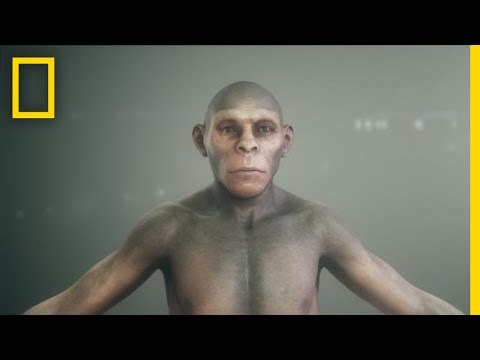
Human Origins 101 | National Geographic
The Evolution of Humanity: A Comprehensive Overview
The narrative of humanity's evolution is a complex tale that spans millions of years, beginning approximately seven million years ago when the human lineage diverged from that of chimpanzees. This pivotal moment set the stage for the emergence of various early human species, known as hominins, with over 20 distinct species identified throughout history. While many of these species ultimately faced extinction, some are believed to be direct ancestors of modern humans.
These hominins displayed a range of physical and behavioral traits that were increasingly human-like, including larger brain sizes, smaller teeth, bipedalism, and the use of tools. The evolution of hominins can be categorized into three major groups: early hominins, australopithecines, and the genus Homo. The earliest relatives of humanity, which existed between seven and 4.4 million years ago in Africa, retained many ape-like characteristics, such as smaller cranial capacities. However, fossil evidence indicates that some of these ancient hominins began to develop traits more akin to modern humans, such as smaller canines that were likely adapted for a diet rather than for hunting or fighting.
The subsequent phase of evolution introduced the australopithecines, who thrived between 4.4 and 1.4 million years ago across Africa. While they also retained some ape-like traits, significant changes in their skull, spine, and leg structures marked a transition towards consistent bipedal locomotion, a hallmark of human evolution.
The third and current phase of human evolution is represented by members of the genus Homo, with the earliest species dating back over two million years, coexisting with some australopithecines. Unlike their predecessors, Homo species exhibited increasingly human-like characteristics, including larger cranial capacities than any other hominins. They developed advanced stone tool technologies and were the first to harness fire, which played a crucial role in their survival and adaptation.
These physical and behavioral advancements, coupled with technological innovations, enabled certain Homo species to migrate out of Africa, leading to the exploration of new territories across the globe. Despite the existence of numerous hominin species throughout history, only one remains today: Homo sapiens. Shaped by millions of years of evolutionary processes, Homo sapiens embarked on a journey of exploration and industrialization that their ancestors could scarcely have imagined, marking a significant milestone in the story of life on Earth.
The transcript provides insights into several hominin species and human-like groups that played significant roles in the evolution of humanity. The key groups mentioned include:
- Early Hominins: These are the earliest known ancestors of modern humans, who lived between 7 and 4.4 million years ago in Africa. While specific species are not named, they are noted for having some ape-like characteristics, including a small cranial capacity.
- Australopithecines: This group thrived between 4.4 and 1.4 million years ago across the African continent. They exhibited a mix of ape-like traits and significant adaptations towards bipedalism, suggesting a critical evolution towards human-like locomotion.
- Genus Homo: The transcript refers to the earliest members of this genus, likely dating back to more than 2 million years ago, existing contemporaneously with some australopithecines. This group is characterized by a notable increase in cranial capacity and the development of sophisticated tools and the control of fire, marking a significant departure from earlier hominins.
Overall, the transcript indicates that while many hominin species have existed, only Homo sapiens remains today, having undergone millions of years of evolution.
- [00:17] 'The story of humanity's evolution began about seven million years ago when the human lineage broke away from that of chimpanzees.'
- [01:00] 'Humanity's earliest relatives lived between seven and 4.4 million years ago in Africa.'
- [02:14] 'The third and current phase of human evolution involves members of the genus homo.'
The transcript outlines several central claims regarding the process of human evolution, focusing on anatomical, behavioral, and cognitive developments that were pivotal for the emergence of modern humans. The key assertions include:
- Separation from Ancestors: The human lineage diverged from that of chimpanzees approximately seven million years ago, setting the stage for subsequent evolution.
- Diversity of Hominins: Over 20 early human species emerged, showcasing a range of physical and behavioral traits that contributed to their survival and adaptation.
- Evolution of Bipedalism: The australopithecines displayed significant anatomical changes, such as modifications in the skull, spine, and legs, which facilitated bipedal locomotion. This adaptation is crucial for the efficient movement of early humans.
- Advancements in Technology: Members of the genus Homo developed sophisticated stone tool technology and were the first to control fire, which were critical steps in human innovation and survival.
- Migration Out of Africa: The physical and behavioral adaptations of Homo species enabled them to be the first to migrate out of Africa and explore other parts of the world, marking a significant expansion of the human presence on the planet.
These developments collectively highlight the complex interplay between evolution and adaptation that has defined the human journey.
- [01:08] 'Each species exhibited varying degrees of human-like physical and behavioral traits such as large brains, small teeth, bipedality and tool use.'
- [02:42] 'Their cranial capacity was growing larger than any other hominins.'
- [03:04] 'These physical and behavioral adaptations, along with advancements in technology, allowed some homo species to be the first to migrate out of Africa.'
The transcript references various types of evidence that support the claims made about human evolution. While it does not delve into specific fossils, genetics, or archaeological finds in detail, it does allude to some key forms of evidence:
- Fossils: The mention of ancient hominins and their fossil records suggests that paleontological evidence plays a significant role in understanding the anatomical changes over time. For instance, the evolution from early hominins to australopithecines and finally to Homo species is inferred through fossil records that exhibit changes in cranial capacity and bipedalism.
- Comparative Studies: The transcript indicates a comparison with chimpanzees, the closest living relatives of humans, to illustrate the evolutionary divergence. This comparative approach highlights the shared characteristics and distinctive adaptations that characterize the human lineage.
- Technological Evidence: The development of sophisticated stone tools and the control of fire by Homo species serves as a form of archaeological evidence that marks significant technological and behavioral advancements in early human history.
While specific data or examples are not elaborated upon in the transcript, these references indicate the reliance on a variety of scientific methods to understand the evolutionary narrative of humanity.
- [01:40] 'The next phase of hominin evolution involved primates called australopithecines.'
- [02:09] 'Consistent bipedal locomotion.'
- [02:52] 'They developed sophisticated stone tool technology.'
The transcript does not provide explicit statements regarding the reliability, certainty, or quality of the data being discussed. It primarily focuses on the evolutionary journey of hominins and does not delve into the scientific community's confidence in the findings or the robustness of the fossil record. However, the mention of over 20 early human species suggests an acknowledgment of the complexity and richness of human evolution, which inherently implies a potential for gaps or uncertainties in the fossil record.
For instance, the transcript notes that most early hominins became extinct, and while some may have been ancestors to modern humans, it does not clarify how these relationships are established or the extent of evidence supporting them. As such, the absence of specific details on the available fossil evidence or scientific consensus regarding the evolutionary pathways leaves open questions about the fragility and scarcity of the evidence. The narrative implies a progression of understanding but does not emphasize the ongoing debates or challenges faced by researchers in reconstructing the human lineage.
In summary, while the transcript provides a coherent overview of human evolution, it lacks direct commentary on the certainty of the data or the limitations that may exist within the fossil record.
- [02:32] "But unlike earlier hominins who exhibited a mosaic of ape and human-like traits."
- [03:10] "While a cast of over 20 hominin species have walked this Earth only one remains."
The transcript does not explicitly mention any scientific debates, competing hypotheses, or disagreements within the field of anthropogeny. It offers a linear narrative that outlines the evolutionary trajectory of hominins without addressing any controversies or differing viewpoints regarding their classification, migration, or behavioral traits. Instead, the focus is largely on the chronological development of hominins, detailing the transition from early ancestors to modern humans.
However, it does highlight the existence of multiple hominin species and suggests that some of these species may have shared common ancestors with modern humans. The lack of specific discussions around migration routes, ancestor-descendant relationships, or behavioral traits indicates a missed opportunity to explore ongoing research questions or unresolved issues in the field. For example, while it mentions that some Homo species were the first to migrate out of Africa, the transcript does not elaborate on the implications of these migrations or any associated theories.
In conclusion, the transcript provides a rich narrative about human evolution but does not engage with the complexities or debates that characterize the scientific understanding of these topics. Thus, it presents a more educational overview rather than a critical examination of the current state of anthropogeny.
- [01:57] "These hominins fell into three major groups."
- [02:20] "The earliest homo species likely date to more than two million years ago."
[00:00] - [Narrator] Millions of years before industry,[00:03] agriculture and civilization[00:06] the world stage was set for one creature's[00:10] unprecedented rise.[00:17] The story of humanity's evolution[00:20] began about seven million years ago[00:22] when the human lineage broke away from that of chimpanzees.[00:27] Over time an ensemble cast of over 20 early humans species[00:32] or hominins came to the fore.[00:36] Most became extinct[00:38] while others might have been ancestors to today's humans.[00:43] Each species exhibited varying degrees[00:46] of human like physical and behavioral traits[00:49] such as large brains, small teeth, bipedality and tool use.[00:57] These hominins fell into three major groups.[01:00] Early hominins, australopithecines, and homo genus.[01:08] Humanity's earliest relatives[01:10] lived between seven and 4.4 million years ago in Africa.[01:16] Having most recently shared a common ancestor[01:18] with chimpanzees they had many ape-like traits[01:21] such as a small cranial capacity.[01:24] However fossils show that some ancient hominins[01:28] were also beginning to show human-like characteristics[01:31] such as small canines that were likely used more for eating[01:35] and not for hunting or fighting.[01:38] The next phase of hominin evolution[01:40] involved primates called australopithecines.[01:43] They lived between 4.4 and 1.4 million years ago[01:48] across the African continent.[01:53] Like their ancient brethren[01:55] australopithecines had some ape-like traits.[02:02] However changes in the skull, spine and legs[02:05] indicate a notable shift toward a very human-like trait.[02:09] Consistent bipedal locomotion.[02:14] The third and current phase of human evolution[02:17] involves members of the genus homo.[02:20] The earliest homo species likely date[02:23] to more than two million years ago[02:26] making them a contemporary of some australopithecines.[02:32] But unlike earlier hominins[02:34] who exhibited a mosaic of ape and human-like traits.[02:37] Homo species were becoming distinctly more human.[02:42] Their cranial capacity was growing larger[02:45] than any other hominins.[02:48] They developed sophisticated stone tool technology.[02:52] And they became the first to control fire.[02:56] These physical and behavioral adaptations[02:59] along with advancements in technology[03:01] allowed some homo species to be the first[03:04] to migrate out of Africa and explore the rest of the world.[03:10] While a cast of over 20 hominin species[03:13] have walked this Earth only one remains.[03:18] Homo sapiens shaped by millions of years of evolution[03:22] embarked on a journey of exploration and industry[03:26] its ancestors could have only dreamed.
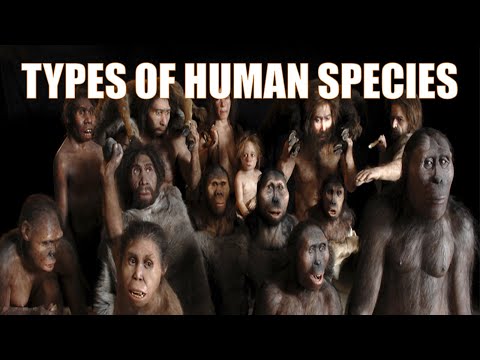
14 Different Types of Human Species | Explained
In the video, the narrator discusses the existence of various human species that have lived on Earth before Homo sapiens, emphasizing that we are not the only human species to have ever existed. The video outlines approximately 13 different human species, each with unique characteristics and evolutionary significance.
The first species mentioned is Homo habilis, which lived between 2.4 and 1.4 million years ago in Africa. This species is noted for its ape-like features, including long arms and a cranial capacity that was less than half that of modern humans. Some researchers suggest that Homo habilis may have evolved into Homo erectus, the next species discussed.
Homo erectus thrived from 1.9 million years ago to about 143,000 years ago, originating in Africa and spreading to regions such as India, China, and Java. They were taller than Homo habilis, standing around 5 feet 10 inches, and had a greater cranial capacity. Their potential use of rafts for ocean crossing marks a significant advancement in human adaptability.
Next, the video introduces Homo gautengensis, characterized by large teeth suited for chewing plant materials. This species, believed to have lacked advanced speech and language skills, stood about 3 feet tall and spent considerable time in trees, indicating a lifestyle that combined terrestrial and arboreal activities.
Homo neanderthalensis, or Neanderthals, are highlighted as one of the most well-known extinct human species, appearing around 200,000 years ago in Eurasia. They shared many physical traits with modern humans and utilized sophisticated tools for hunting, as well as creating ornamental objects, suggesting a complex social structure.
Homo floresiensis, often referred to as "hobbits," lived from approximately 95,000 to 17,000 years ago in Indonesia. This species was notably small, around 3.5 feet tall, and exhibited unique physical traits such as large feet. Evidence suggests they made tools and hunted small game, linking them to local folklore.
Homo rudolfensis is noted for its larger brain case and massive teeth, existing around 1.9 to 1.8 million years ago. The physical characteristics of this species remain largely unknown due to limited fossil evidence.
Homo heidelbergensis existed between 700,000 and 200,000 years ago and is believed to have been the first to bury their dead and adapt to colder climates, showcasing early forms of social behavior and environmental adaptation.
The Denisova hominin, known from limited fossil remains found in Siberia, lived between 200,000 and 50,000 years ago. Their classification remains tentative due to the scarcity of evidence, yet they are recognized as a distinct group within the human lineage.
Homo naledi is another intriguing species, with a mix of modern and primitive traits, believed to have existed between 300,000 and 200,000 years ago in South Africa. Their brain size was comparable to that of a chimpanzee, raising questions about their cognitive abilities.
Homo ergaster existed around 1.4 million years ago and displayed physical traits similar to modern humans, including a smaller face and larger cranial capacity, indicating a gradual evolution towards more advanced human characteristics.
Homo antecessor, known as the "Explorer," lived in Western Europe between 1.2 and 0.8 million years ago. They exhibited traits such as potential right-handedness and developmental patterns similar to modern humans, suggesting a complex social structure.
Homo rhodesiensis, discovered in Zambia, is recognized for its robust skull and significant brow ridges, existing between 400,000 and 125,000 years ago. This species contributes to our understanding of human diversity in physical traits.
The video concludes with Homo sapiens idaltu, a subspecies of modern humans that lived around 160,000 years ago in Africa. They are believed to have evolved from Homo rhodesiensis and exhibit heavier brow ridges.
Finally, the narrator emphasizes that Homo sapiens are the last surviving species of the genus, characterized by advanced cognitive abilities, bipedal locomotion, and complex social structures. They first appeared in Africa about 200,000 years ago and have since spread globally, showcasing unparalleled technological and artistic advancements.
The video encourages viewers to engage with the content by liking, subscribing, and sharing their thoughts in the comments section, fostering a community interested in the history of human evolution.
The transcript identifies several hominin species, detailing their time periods and geographical locations. Below is a comprehensive list of the hominins discussed:
- Homo habilis: Lived between 2.4 to 1.4 million years ago, primarily in Africa.
- Homo erectus: Existed from 1.9 million years ago to approximately 143,000 years ago, originating in Africa and spreading to regions including India, China, Georgia, and Java.
- Homo gautengensis: Known for having lived in a timeframe that is not specified in the transcript; however, they are described as having certain physical adaptations.
- Homo neanderthalensis: Appeared in Eurasia approximately 200,000 years ago.
- Homo floresiensis: Lived from 95,000 to 17,000 years ago in Indonesia.
- Homo rudolfensis: Existed around 1.9 to 1.8 million years ago, with no specific location mentioned.
- Homo heidelbergensis: Lived between 700,000 to 200,000 years ago, with origins in Africa.
- Denisova hominin: Existed in Eastern Asia between 200,000 and 50,000 years ago.
- Homo naledi: Alive around 300,000 to 200,000 years ago in South Africa.
- Homo ergaster: Existed about 1.4 million years ago in Africa.
- Homo antecessor: Present in Western Europe, specifically Spain, England, and France from 1.2 to 0.8 million years ago.
- Homo rhodesiensis: Existed between 400,000 and 125,000 years ago in northern Rhodesia (now Zambia).
- Homo sapiens idaltu: Emerged around 160,000 years ago in Africa.
- Homo sapiens sapiens: The modern humans, who first appeared in Africa about 200,000 years ago and spread worldwide.
- [00:40] 'There are around 13 human species that have ever lived before us.'
- [01:40] 'They had a cranial capacity greater than that of Homo habilis.'
- [07:23] 'We the modern humans are the wise men, are the only extant members of the hominins.'
The transcript presents several central claims regarding the process of human evolution and highlights key anatomical, behavioral, and cognitive developments pivotal for the emergence of modern humans.
Firstly, it asserts that humans are not the only species to have walked the Earth, with around 13 human species existing before Homo sapiens. This underlines the evolutionary diversity and complexity of the human lineage. The speaker emphasizes that Homo sapiens are the only surviving species, categorized as the 'surviving species.'
Key anatomical features mentioned include:
- Cranial Capacity: Species like Homo erectus exhibited a cranial capacity greater than that of Homo habilis, indicating advancements in brain size and cognitive abilities.
- Physical Attributes: Species such as Homo heidelbergensis were characterized by a flatter face and larger brain cases, suggesting adaptations to their environments.
- Posture and Locomotion: The evolution of bipedalism is highlighted as a crucial adaptation for movement and survival.
Behaviorally, the transcript indicates that species like Homo neanderthalensis engaged in tool-making and symbolic activities, which suggests a level of cognitive sophistication and cultural development. The use of tools for hunting, along with the practice of burying the dead by Homo heidelbergensis, points to complex social behaviors.
Overall, the narrative of human evolution as portrayed in the transcript reflects a gradual accumulation of anatomical and behavioral traits that have defined modern humans.
- [00:15] 'The truth is that we are not the only human species to have ever lived.'
- [01:17] 'Some say that one population of Homo habilis might have evolved into the earliest undisputable human species, the Homo erectus.'
- [07:43] 'None seems to have been able to compete with our technological and artistic sophistication.'
The speaker references various types of evidence to support the claims made regarding human evolution and the existence of different hominin species. The types of data and evidence mentioned include:
- Fossils: Numerous species, such as Homo habilis, Homo erectus, and Homo neanderthalensis, are supported by fossil evidence that illustrates their physical characteristics and timeframes. For example, fossils found in Denisova cave provide insights into the Denisovans.
- Archaeological Finds: The mention of stone tools created by species like Homo floresiensis indicates archaeological evidence that reflects their ability to hunt and adapt to their environment.
- Comparative Studies: The transcript discusses the cranial capacities and physical features of various species in relation to each other, suggesting a comparative approach to understanding evolutionary relationships.
- Behavioral Evidence: The speaker highlights behaviors such as tool usage and burial practices, suggesting cognitive developments associated with these activities.
Despite the comprehensive nature of the evidence presented, the transcript does not mention genetic or DNA data explicitly, nor does it provide direct references to specific genetic studies or comparative genome analyses.
- [01:15] 'Some say that one population of Homo habilis might have evolved into the earliest undisputable human species.'
- [04:24] 'Fragments of their fossils were found in the remote Denisova cave in the Altai Mountains in Siberia.'
- [06:05] 'They had strange mix of features with some parts of its skeleton indistinguishable from those of living people.'
The transcript provides some insights into the reliability and certainty of the data it discusses, particularly regarding the scarcity of fossil evidence and the consequent uncertainties surrounding various human species. The speaker mentions that some species, such as Homo naledi, have uncertain age estimates, stating that, "[05:54] no official data has been published regarding the species age although unofficial reports suggest it was alive between 300 and 200 thousand years ago." This indicates a gap in the fossil record and a level of uncertainty within the scientific community about the timeline of this species.
Moreover, the transcript points out the challenges in categorizing certain species due to the fragmentary nature of the fossil evidence. For instance, the Denisovans are described as having a "[04:44] slight reluctance in giving them any scientific name yet in regards to being a part of a homo species" because so little is known about them. This reflects the ongoing challenges faced by researchers when it comes to accurately defining and understanding the relationships among various hominin species.
Overall, the transcript highlights the scientific community's acknowledgment of the limitations of current evidence and the ongoing work required to fill in the gaps in our understanding of human evolution. It suggests that while substantial progress has been made in identifying and understanding these ancient species, significant uncertainties remain.
- [05:54] "no official data has been published regarding the species age although unofficial reports suggest it was alive between 300 and 200 thousand years ago."
- [04:44] "there's a slight reluctance in giving them any scientific name yet in regards to being a part of a homo species."
The transcript primarily focuses on outlining various human species and their characteristics without delving deeply into scientific debates or competing hypotheses. However, it does hint at underlying complexities in the field of anthropogeny, particularly concerning the relationships and evolutionary paths of different hominin species.
For example, the speaker mentions the Homo habilis as possibly evolving into Homo erectus, which could imply a debate regarding direct ancestor-descendant relationships between these species. The statement, "[01:15] some say that one population of Homo habilis might have evolved into the earliest undisputable human species, Homo erectus" reflects the uncertainty surrounding lineage and evolution. This suggests that there are differing views on how these species may be interrelated.
Furthermore, the transcript discusses the physical and behavioral traits of Homo neanderthalensis, noting their similarities to modern humans as well as their use of tools. This acknowledgment of shared traits may reflect a broader discourse on whether Neanderthals exhibited behaviors akin to those of modern humans, which is a subject of ongoing research and debate in the field.
While the speaker does not take a definitive side on these issues or present multiple perspectives explicitly, the mentions of potential ancestor-descendant relationships and behavioral traits of Neanderthals imply an awareness of the complexities and debates that exist in anthropogeny.
- [01:15] "some say that one population of Homo habilis might have evolved into the earliest undisputable human species, Homo erectus."
- [02:42] "they are sometimes labeled past a cousin of our species that is because they had most of the features of modern humans."
[00:00] [Music][00:08] when we say humans most people think we[00:11] are the only ones are the only species[00:13] that have ever walked this earth but the[00:15] truth is that we are not the only human[00:17] species to have ever lived[00:19] we are just the human species that[00:21] survived hence we can call ourselves the[00:23] surviving species welcome back to this[00:26] channel guys in today's video we are[00:27] going to talk about the various kinds of[00:29] human species that have existed before[00:31] us but before we start please remember[00:33] to check our previous videos and hit[00:36] like and subscribe[00:37] there are around 13 human species that[00:40] have ever lived before us all these have[00:42] varying features but there are some[00:44] characteristics that they have left[00:45] behind in us so let us check them out[00:48] number one Homo habilis of all the homo[00:51] species this is the one that is the[00:53] least similar to Homo sapiens in lift[00:55] between 2.4 to 1.4 million years ago it[00:58] evolves in Africa and when extinct in[01:00] the same place they possess some[01:02] ape-like features such as long arms a[01:05] moderately[01:05] pragmatic face and they had a cranial[01:08] capacity slightly less than half of the[01:10] size of modern humans some say that one[01:13] population of Homo habilis might have[01:15] evolved into the earliest undisputable[01:17] human species the homo erectus number[01:21] two Homo erectus they lived throughout[01:23] the Pleistocene period from 1.9 million[01:26] years ago to most recently 143 thousand[01:29] years ago studies prove that homo[01:31] erectus originated in Africa and spread[01:33] through India China Georgia and then[01:35] Java they had a cranial capacity greater[01:37] than that of Homo habilis and it stood[01:40] about 5 feet 10 inches tall and they[01:42] were extraordinarily slender with long[01:44] arms and legs it has been suggested that[01:47] they may have been the first guys to use[01:49] rafts to cross oceans number 3 homo goat[01:54] and ganses fossils of this species show[01:56] that they had big teeth to chew plant[01:59] materials and most researchers believed[02:00] that they lacked in speech and language[02:02] skills especially due to the small brain[02:04] the species was found to have stood over[02:06] 3 feet tall and weighed about a hundred[02:09] ten pounds researchers say they could[02:11] walk on two feet when on the ground but[02:13] most prof[02:14] spend considerable time in trees perhaps[02:16] feeding sleeping and escaping predators[02:18] but besides all that they believed it[02:21] was a very pretty close relative of Homo[02:23] sapiens number four Homo[02:25] neanderthalensis the Neanderthals were[02:28] found to have appeared in Eurasia[02:30] approximately 200,000 years ago they are[02:32] the most famous of all the extinct human[02:34] species that is probably the reason why[02:36] the Big Bang Theory's team song was made[02:39] based on them or included them they are[02:42] sometimes labeled past a cousin of our[02:44] species that is because they had most of[02:45] the features of modern humans they[02:47] looked the same they used different[02:49] tools for hunting and was symbolic[02:51] ornamental objects number five Homo[02:54] floresiensis they were believed to have[02:57] lived ninety five thousand years ago to[02:58] 17,000 years ago in Indonesia also known[03:01] as the hobbits[03:02] they were quite small in size around 3.5[03:04] feet tall with a tiny brain besides a[03:06] short body and a small brain they had[03:08] unusually large and long feet exactly[03:11] like hobbits there are some evidences[03:13] that tell us that this species made[03:15] stone tools and used them to hunt small[03:16] elephants and large rodents and they may[03:19] be connected by folk memory to the EBU[03:21] gogo myths of the Isle of Flores number[03:25] six homo rudolfensis they are believed[03:28] to have lived around 1.9 million years[03:30] ago to 1.8 million years ago they[03:32] displayed less prognathism and around[03:34] the brain case then rather than a[03:35] burning brain case it was found that a[03:38] male hormone rudolfensis had massive[03:40] teeth and compared to a female hobo[03:41] habilis and it portrays a much larger[03:44] brain case but their physical belt[03:46] weight and height are still unknown due[03:49] to the scarcity of cranium fossils[03:51] number seven Homo heidelbergensis the[03:55] lifts on earth between seven hundred and[03:56] two hundred thousand years ago and was[03:58] found that they emerged from africa the[04:00] approximate height of the species was[04:01] five feet five inches tall and weighed[04:03] about 58 kilograms or slightly more than[04:06] 120 pounds they had a large brain case[04:08] with a flatter face than modern humans[04:10] findings show that they might have been[04:13] the first species to have buried their[04:14] dead and also who were the first human[04:16] species to adapt to colder climates and[04:18] to build their own shelters to live in[04:20] number eight Denisova hominin also known[04:24] as the Denisovans possibly throughout[04:26] eastern asia between about two hundred[04:28] thousand years ago and fifty thousand[04:29] years ago fragments of their fossils[04:31] were found in the remote Denisova cave[04:33] in the Altai Mountains in Siberia a cave[04:35] which has also been inhabited by Homo[04:38] Neanderthals and Homo sapiens all the[04:41] modern humans because so little is known[04:42] about them there's a slight reluctance[04:44] in giving them any scientific name yet[04:46] in regards to being a part of a homo[04:49] species number nine homo Naledi found to[04:52] have existed in south africa but no[04:54] official data has been published[04:56] regarding the species age although[04:57] unofficial reports suggest it was alive[04:59] between 300 and 200 thousand years ago[05:01] they had strange mix of features with[05:04] some parts of its skeleton[05:05] indistinguishable from those of living[05:07] people while other parts look almost[05:09] caped like he also had a brain a little[05:11] bigger than that of a chimpanzee number[05:14] 10 Homo ergaster this species existed[05:17] and remain stable for approximately[05:19] 500,000 years ago in Africa before[05:21] disappearing from the fossil records[05:23] about 1.4 million years ago they had[05:25] thinner bones more producer faces and a[05:27] lower forehead the species had reduced[05:30] sexual dimorphism meaning males and[05:32] females were almost the same in size[05:34] they were with a smaller face a smaller[05:37] dental arcade and a larger cranial[05:39] capacity overall their body was so much[05:41] alike to a modern humans body number 11[05:44] Homo antecessor it actually means[05:47] Explorer and was known to have been[05:49] present in Western Europe in Spain[05:50] England and France between 1.2 million[05:53] years ago and 0.8 million years ago they[05:56] are about five feet five inches tall to[05:58] six feet tall and males weighed[06:00] approximately 90 kilograms studies say[06:03] they might have been right-handed which[06:04] is a trait that makes the species[06:06] different from other Apes and based on[06:08] teeth eruption pattern the researchers[06:10] thing that they had the same development[06:11] of stages as us Homo sapiens number 12[06:15] homo rhodesiensis it was also named[06:18] because they found it in northern[06:19] rhodesia now Zambia it was also known as[06:22] the Rhodesian man[06:23] the skull was dubbed a rude Asian man at[06:25] a time of the fine but it is now[06:27] commonly referred to as the Broken Hill[06:29] skull or the calf way cranium they were[06:32] found to have the[06:33] between 400 and 125 thousand years ago[06:35] the skull found was from an extremely[06:38] robust individual and was seen to have[06:39] comparatively the largest brow ridges of[06:42] any known permanent remains number 13[06:45] the homo sapiens idaltu[06:47] otherwise known as the herd to man are[06:49] the firstborn they are the subspecies of[06:52] Homo sapiens and never proximately[06:54] 160,000 years ago in place to see in[06:56] Africa they were discovered and a Herto[06:59] buried near middle awash site of[07:01] Ethiopia's afar triangle in 1997 by Tim[07:04] white but were first unveiled in 2003[07:07] they were said to have developed from[07:09] the homo rhodesiensis and had heavier[07:11] brow ridges number 14 homo sapiens[07:15] sapiens lasts never the least and the[07:18] last surviving species of the genus[07:19] that's us we the modern humans are the[07:23] wise men are the only extant members of[07:26] the hominins glade we are characterized[07:28] by erect posture bipedal locomotion[07:30] larger complex brains and manual[07:33] dexterity our species was said to have[07:35] first appeared in Africa about 200,000[07:37] years ago and spread across the rest of[07:39] the world and none seems to have been[07:41] able to compete with our technological[07:43] and artistic sophistication anyway[07:48] thanks for watching guys please support[07:50] our channel by liking our videos and[07:52] subscribing to the channel you can also[07:54] tell us about your thoughts in the[07:55] comment section[07:57] [Music]

After 50 years, Lucy faces rivals with other human ancestors
Introduction to Lucy and Her Significance
The video discusses the significance of Lucy, a pivotal fossil in the study of human evolution, marking her 50th anniversary since discovery. Lucy is considered a primitive ancestor, providing insights into the common lineage shared with chimpanzees. Discovered in 1974 by Don Johansson and Tom Gray, Lucy's age of approximately 3 million years was revolutionary, as it suggested a much earlier existence of hominins than previously believed.
Discovery Context and Initial Skepticism
Initially, the scientific community was skeptical about Lucy's classification as a member of the human family. Early researchers even speculated that she might be an early baboon. It wasn't until the 1950s that fossils from East Africa began to confirm the existence of human ancestors dating back at least 2 million years. The discovery of Lucy, however, marked a significant turning point in understanding human ancestry.
The Discovery Process
During the discovery, the conditions were challenging, with temperatures exceeding 100°F. Johansson's team found various fragments, including parts of the elbow, skull, and jaw, which led them to conclude that they had found an early hominin. The name "Lucy" was suggested by a team member, inspired by the Beatles song "Lucy in the Sky with Diamonds," although there was a desire to honor her Ethiopian roots with a local name, such as "Dinkes," meaning "you are wonderful."
Physical Characteristics and Evolutionary Implications
Lucy's physical characteristics, such as her upright walking posture, indicated her place in the human lineage. Her pelvis and knee structure suggested bipedalism, a defining trait of hominins. Although her brain size was still within the range of apes, it was larger than that of earlier ancestors, hinting at cognitive evolution. For two decades, Lucy was the oldest known hominin, shaping the understanding of human evolution.
Subsequent Discoveries and Evolving Perspectives
In recent years, numerous discoveries have emerged that challenge Lucy's status as the sole ancestor of modern humans. Fossils older than Lucy, such as Australopithecus anamensis and Sahelanthropus, have been found, indicating a more complex evolutionary tree. The understanding of the human lineage has shifted from a simple linear model to a more intricate bush-like structure, with multiple branches representing various hominin species coexisting and potentially interbreeding.
Technological Advancements in Fossil Analysis
The methods used to study fossils have evolved significantly. Modern techniques include CT scanning, which allows for detailed analysis of both external and internal features of fossils. Researchers can now extract ancient proteins from bones, enhancing the understanding of species relationships and evolutionary timelines. These advancements have also improved the ability to reconstruct ancient environments, providing context for Lucy's habitat.
Future of Paleoanthropology
The celebration of Lucy's discovery is not only a reflection on the past but also a call to action for the future of paleoanthropology. There is a growing emphasis on involving local researchers from African countries in fossil studies, fostering a collaborative approach to uncovering human history. The complexity of human evolution continues to unfold, with new discoveries expected to reshape the understanding of our ancestry.
Conclusion
Lucy remains a crucial figure in the narrative of human evolution, representing a significant link in the evolutionary chain. As research progresses, the understanding of human ancestry will continue to evolve, highlighting the importance of Lucy and her contemporaries in the broader context of our species' history.
This transcript provides a wealth of information regarding several hominin species and human-like groups, particularly focusing on their time periods and geographic locations. The most notable species mentioned is Australopithecus afarensis, commonly known as 'Lucy', which is a significant find dating back to approximately 3 million years ago. Lucy was discovered in Ethiopia, which highlights the region's importance in the study of human evolution.
Additionally, the transcript references other early hominins such as Orrorin tugenensis, Sahelanthropus tchadensis, and Ardipithecus ramidus. Orrorin tugenensis, while not dated explicitly in the transcript, is implied to be an earlier species. Sahelanthropus, discovered in Chad, is noted for its implications of upright walking, although specific dates are not provided.
Furthermore, the transcript points out that the split between the human lineage and that of chimpanzees likely occurred around 8 million years ago, and researchers have discovered fossils that are older than Lucy, indicating a richer and more complex tree of human evolution than previously understood. These discoveries span across various locations in Africa, including Ethiopia, Kenya, and Tanzania, showcasing the continent's critical role in understanding the origins of humanity.
- [00:25] "the great thing about an anniversary like this is it can help us take tasks of what we learned what we knew before."
- [05:41] "Lucy is still the best candidate right we have a lot more of her and she has features she shares with us but was there another fossil in between another species in between."
- [09:34] "the tree is going to change again so where with new discoveries but by and large AAR ances continues to be the last common ancestor."
The transcript articulates several pivotal claims regarding the process of human evolution, emphasizing both anatomical and behavioral developments that have been essential to the emergence of modern humans. A central figure in this narrative is Lucy, whose discovery drastically shifted the understanding of our evolutionary lineage.
One of the prominent anatomical features highlighted is Lucy's ability to walk upright, which is considered a defining characteristic of the human family. The transcript notes that this is evidenced by her pelvis and knee structure, which indicate bipedalism. In addition to this skeletal evidence, the transcript also mentions that Lucy's brain size was beginning to increase, although it still fell within the range of apes. This increase in brain size is significant as it suggests the early stages of cognitive development.
Moreover, the speaker discusses the evolution of the human family tree, noting that it has transitioned from a simple model, where Lucy was viewed as the sole ancestor, to a more complex model that includes multiple branches and species. This complexity indicates a more intricate evolutionary process with various hominins coexisting and potentially interbreeding. The final assertion involves the idea that the understanding of human evolution is continually evolving as more discoveries are made, suggesting that the tree of life is not static but rather dynamic and subject to change.
- [02:40] "that is a defining feature of being a member of the Human family we know that from her pelvis and her knee."
- [09:20] "the human story is so complicated it's not this simple neat line of one species evolving into another to become us."
- [05:49] "it's not really clear which one gave rise to our genus homo."
The speaker references various types of evidence and data to support claims about human evolution, illustrating a multifaceted approach to understanding our origins. Among the most significant forms of evidence discussed are fossils, which play a crucial role in establishing timelines and anatomical features of early hominins.
1. Fossils: The transcript highlights the discovery of Lucy herself, alongside other specimens, indicating that there are now over 500 specimens of her species, which provide a comprehensive view of anatomical variations. The mention of fossils such as Orrorin tugenensis and Sahelanthropus tchadensis further underscores the importance of fossil evidence in constructing the human lineage.
2. CT Scanning Technology: Advances in technology, such as CT scanning, have allowed researchers to study both the external and internal morphology of fossils, including the shape of the inside of the brain. This technology has revolutionized the way scientists analyze fossil remains, providing deeper insights into cognitive abilities.
3. Protein Analysis: The transcript mentions the extraction of proteins from bones that are as old as 2 million years. This data is critical in determining species relationships and understanding evolutionary pathways.
4. Isotope Analysis: The speaker refers to the study of isotopes from the teeth of both hominins and animals, which helps reconstruct dietary habits and ecological contexts. This analysis aids researchers in building a clearer picture of the environments in which these ancient beings lived.
5. Geological Evidence: Collaboration with geologists to understand ancient geology and volcanics also plays a critical role in dating fossils and reconstructing the habitats of early hominins.
- [07:21] "we now even have started extracting protein from bones that are as old as 2 million years from thousand Africa ancient proteins."
- [08:04] "they also look at the Isotopes from the teeth of the animals and the hominin can tell them what they were eating."
- [07:57] "the technology has changed not only in terms of how we study the bones but also in terms of how we analyze the environment in which these early HS lived."
The transcript provides insights into the uncertainty and evolving nature of scientific understanding regarding human evolution. The speaker highlights that for about 20 years, Lucy was considered the only known member of the human family from approximately 3 million years ago, a period during which significant discoveries were made. However, with the advent of new fossil finds, the understanding of early hominins has shifted considerably. The speaker notes, "Lucy is still the best candidate" for being a direct ancestor, but acknowledges that this status is subject to change as new discoveries are made. This illustrates the fragility of the fossil record and the inherent uncertainties involved in piecing together the timeline of human evolution.
Moreover, the speaker discusses the challenges posed by the gaps in the fossil record. They mention the significant discovery of fossils older than Lucy, which has shifted the conversation about her role in the human lineage. The speaker indicates that while Lucy offers important clues, the existence of other species that lived concurrently complicates the narrative of human ancestry. This suggests that the scientific community remains aware of the limitations of the evidence available and recognizes the potential for new insights to emerge that could redefine established theories.
- [05:40] "Lucy is still the best candidate right we have a lot more of her and she has features she shares with us but was there another fossil in between another species in between."
- [06:00] "The tree is going to change again so where with new discoveries but by and large AAR ancestors continues to be the last common ancestor to those later branches on the tree."
The transcript reveals several scientific debates and competing hypotheses within the field of anthropogeny, particularly concerning the relationships between various hominin species and the complexity of the human family tree. The speaker highlights that Lucy was once viewed as a pivotal figure, the sole ancestor leading to modern humans. However, the emergence of new fossils that are both older than Lucy and contemporaneous with her has generated considerable discussion about the lineage of early hominins. The speaker states that the understanding of human ancestry has evolved from a simple model to a more intricate one, stating that the tree is "beginning to get more filled out".
One of the primary debates arises around the timing of the split between humans and chimpanzees. The speaker mentions that this split is estimated to have occurred around 8 million years ago. Yet, the exact nature of the relationships between these early species remains contested, as researchers continue to discover fossils that challenge previously held views. For instance, the discovery of Ostrapothicus anamensis and Ardipithecus have added layers of complexity to understanding evolutionary pathways.
Furthermore, the ongoing research is not only about the physical evidence but also about understanding behavioral traits and environmental adaptations, which are critical to forming a complete picture of human evolution. The speaker does not rigidly take sides but presents a narrative that underscores the dynamic and often contentious nature of ongoing research in the field.
- [05:56] "Now it's beginning to get more filled out I wouldn't say it's a super bushy tree but there are other fossils hanging on different branches."
- [04:43] "Lucy was not the homon species that came right after the split from the commes over shed with chimpanzees now the split is probably like close to 8 million years ago."
[00:00] she was so primitive in so many ways[00:03] that scientists felt like they could[00:05] just reach back and touch the common[00:07] ancestor we shared with[00:09] chimpanzees here was a Anonymous human[00:13] ancestor that had sort of lay in[00:16] suspended animation for over 3 million[00:21] years it's been 50 years since Lucy was[00:24] discovered this is her golden[00:25] anniversary the great thing about an[00:27] anniversary like this is it can help us[00:29] take tasks of what we learned what we[00:31] knew before Lucy wasn't a lot the first[00:34] fossil found in Africa researchers[00:36] didn't believe for a long time that it[00:37] was a member of the Human family they[00:39] thought maybe it was an early baboon but[00:41] it wasn't until the 1950s that[00:43] researchers began finding fossils in[00:45] East Africa that showed that there were[00:47] members of the Human family dating way[00:49] back to at least 2 million years so the[00:52] big revolution of Lucy in 1974 when Don[00:55] Johansson and his student Tom Gray found[00:57] her was that she was 3 million years old[01:02] the middle of the day it was hot it was[01:04] well over[01:05] 100° I happened to glance over my right[01:08] shoulder and I saw a little piece of[01:11] elbow that allows you to flex and extend[01:15] your arm and as we looked around we saw[01:18] other pieces we saw a couple of shards[01:20] of a skull we saw fragments of an armb[01:23] bone we saw fragments of of a lower jaw[01:26] and that clinched I knew immediately[01:29] this was some kind of early[01:33] hinant one of the members of the[01:35] Expedition said you really think it's a[01:37] female I said oh yeah I mean the length[01:39] of the thigh bone is only about a foot[01:42] long well maybe it's a child well we[01:44] looked at the teeth and saw that the[01:47] third Bowers the wisdom teeth were[01:48] erupted so this was a mature adult and[01:53] she said well if you think that why[01:55] don't we call her Lucy after Lucy in the[01:57] Sky with Diamonds that was playing and I[02:00] thought my gosh I've just gotten my PhD[02:03] I need to find what its scientific name[02:05] is but it was too late what bothered me[02:09] was she was found in Ethiopia and she[02:13] really deserved an Ethiopian name we had[02:16] members of the ministry of culture at[02:18] that time come to visit the site and one[02:21] of them said I think she should be[02:24] called dinkes and dinkes in amaric means[02:27] you are wonderful[02:30] and she certainly[02:31] is what do we see in her face that we[02:34] recognize that looks like us what is it[02:36] in her smile right one she's walking[02:38] upright okay that is a defining feature[02:40] of being a member of the Human family we[02:42] know that from her pelvis and her knee[02:44] her species brain is beginning to get[02:46] bigger it's still in the size range of[02:48] an Apes but it's actually appreciably[02:51] bigger we thought we were right at the[02:54] Horizon of when the Human family was[02:56] born at about 3 million years of course[02:59] a lot of new discoveries changed that[03:00] picture for 20 years she was the only[03:02] only game in town she was it she was the[03:05] oldest member of the Human family and[03:07] seen as this whole lineage around at the[03:10] time as we continued in following years[03:14] working at hodar and others at other[03:17] sites there are well over 500 specimens[03:21] of this species over almost a million[03:24] years of time this was a highly[03:26] adaptable species that could live in a[03:29] multi itude of environments it's known[03:32] from Ethiopia from Kenya from Tanzania[03:36] and it has become reference collection[03:39] whenever new things are found they give[03:42] us a good sense of how much variation to[03:45] expect in a single species but that's[03:47] usually our problem in P anthropology we[03:49] find one mandible or two teeth and all[03:53] the subtle differences that we see[03:55] comparing with others they look like[03:57] they're taxonomically significant[04:00] one of the big revolutions since the[04:01] early '90s is we finally have found[04:03] fossils that are older than Lucy in[04:05] Rapid succession we found ostop[04:08] anamensis that looks a lot like Lucy but[04:10] that's more[04:11] primitive then right after that a team[04:14] found fossils of arpus which is a more[04:17] primitive[04:19] homin in the middle of the desert chat a[04:21] French paleontologist found fossils[04:23] there something called sahal anthropus[04:25] Chad Enis and while they didn't find leg[04:28] bones that proved upright walking they[04:30] found that the way the skull sat the top[04:33] the spine suggests upright walking[04:36] that's when things became like really[04:38] clear Lucy was not the homon species[04:41] that came right after the split from the[04:43] commes over shed with chimpanzees now[04:45] the split is probably like close to 8[04:47] million years[04:49] ago researchers have started finding[04:51] other Fales that were not only older but[04:53] also that were alive at the same time as[04:55] Lucy in 2001 they announced the[04:59] discovery of a species called[05:29] that belongs to the brutal the discovery[05:32] of all these[05:34] species kind of made Lucy like shy of[05:37] being the sole ancestor of[05:40] everything the Human family Tree it used[05:43] to be a very simple bush with a main[05:44] trunk leading from Lucy down to our[05:47] family and others now it's beginning to[05:49] get more filled out I wouldn't say it's[05:51] a super bushy tree but there are other[05:53] fossils hanging on different branches[05:56] and it's not really clear which one gave[06:00] rise to our genus homo Lucy is still the[06:03] best candidate right we have a lot more[06:05] of her and she has features she shares[06:07] with us but was there another fossil in[06:09] between another species in between we[06:11] now have a partial job which has been[06:13] dated to 2.8 million years ago and they[06:16] think this is the earliest homo maybe we[06:19] will find at some point something that's[06:21] older than 2.8 million years ago which[06:23] could represent the first appearance of[06:26] that genus it puts early homo around at[06:28] a time when we start to see other[06:29] species that were alive maybe other[06:31] species could have been ancestral or in[06:34] breeding at the edges that's the big[06:36] mystery right[06:37] now so the thing that's changed the most[06:40] in the years that I've been covering[06:41] human evolution for science is not so[06:44] much how we actually look for fossils[06:46] because that's pretty basic I'm sad to[06:49] say that the only way to find them is to[06:52] go out there under the African sun and[06:55] walk and look and look and walk and hope[06:58] that your eyes fall on something once[07:01] the fossils are discovered the tools[07:03] that are put to try to reconstruct not[07:05] only the fossil but to reconstruct the[07:08] ancient habitats and dates and geology[07:11] are tremendous what we had were like[07:14] calipers measure teeth and measure CR[07:17] capacity now we have CT scanning[07:21] technology you could study not only the[07:23] external morphology but also the[07:25] internal morphology the shape of the[07:28] inside of the brain[07:30] which we couldn't do before we now even[07:32] have started extracting protein from[07:35] bones that are as old as 2 million years[07:37] from thousand Africa ancient proteins[07:39] are helping us look back in time to to[07:41] tell if things are from the same species[07:43] or not are we going to be able to push[07:45] that technology to actually sample[07:47] protein from like 3 million year old[07:49] fossils the technology has changed not[07:52] only in terms of how we study the bomes[07:54] but also in terms of how we analyze the[07:57] environment in which these early HS[07:58] lived these teams also bring in people[08:00] in different disciplines that are[08:02] studying the ancient geology the[08:04] volcanics for dating and then they also[08:06] look at the Isotopes from the teeth of[08:08] the animals and the hominin can tell[08:10] them what they were eating they can[08:11] start to build a picture of the world of[08:14] Lucy's world let's say 3 million years[08:16] ago when Lucy lived it was not dry it[08:19] was much higher inm sub altitude and[08:22] there was a lot of water there were lots[08:24] of animals that we don't see today in[08:26] the region they tried to divide their[08:29] habitat not every animal lives in the[08:31] same habitat if they did there will be a[08:33] lot of[08:34] competition the way fossil hunting has[08:37] evolved over the years that I've been[08:38] covering human evolution is also very[08:40] exciting there are now Africans[08:43] Ethiopians Kenyans who are leading teams[08:46] doing research in their country so it's[08:49] not just as Russia foreigners coming in[08:51] to treasure hunt and find the best[08:54] fossils this whole celebration of Lucy[08:56] 50 is not just about Lucy[09:00] it's also about thinking about the[09:02] future her Discovery for example in[09:04] Ethiopia has built wonderful laboratory[09:07] we need to do the same in other African[09:09] countries with a lot of fossil wealth[09:12] local Scholars get involved in those[09:14] kinds of research that we do is our[09:18] advantage the human story is so[09:20] complicated it's not this simple neat[09:22] line of one species evolving into[09:24] another to become us the tree is going[09:27] to change again so where with new[09:30] discoveries but by and large AAR ances[09:34] continues to be the last common ancestor[09:37] to those later branches on the tree Lucy[09:40] is one of the most important players and[09:41] will always be she persists as a really[09:45] significant member of a really[09:47] significant species
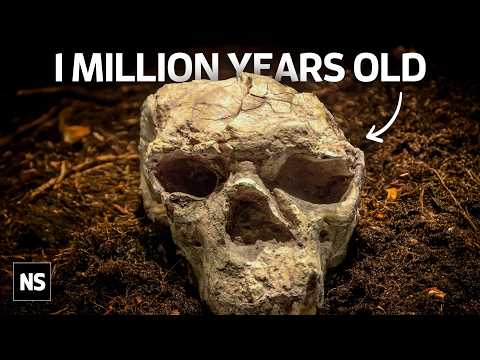
Humans May Be Far Older Than We Thought
The Discovery of Dragon Man and Its Implications for Human Evolution
Recent advancements in the study of human evolution have led to the revelation of a new species, dubbed "Dragon Man," which has significant implications for our understanding of human ancestry. This discovery suggests that our relationship with Neanderthals may not be as close as previously thought, and introduces the Denisovans as a crucial player in the narrative of human origins.
The exploration of human ancestry has long been a complex endeavor, with scientists continuously piecing together the intricate family tree of our species. The emergence of the Denisovans, a previously unknown group of ancient humans, has added layers of complexity to this narrative. The Denisovans were first identified through a small finger bone discovered in Denisova Cave, Russia, in 2010. Genetic analysis revealed that this specimen belonged to a distinct species, separate from both Neanderthals and Homo sapiens, marking a groundbreaking moment in paleoanthropology.
As research progressed, scientists uncovered that some modern human populations, particularly Tibetans, carry genetic traits inherited from Denisovans that enable them to thrive in high-altitude environments. This adaptation highlights the Denisovans' unique evolutionary path and their interactions with other human species. However, until recently, the physical appearance of the Denisovans remained a mystery, as only a few fragments of their remains had been found.
The situation changed dramatically with the discovery of a well-preserved skull in Harbin, China, which dates back approximately 146,000 years. This skull, named Dragon Man (Homo Longi), exhibits a robust structure and distinct features that suggest a close relationship with the Denisovans. The skull's discovery has led researchers to hypothesize that it may represent the long-sought "face" of the Denisovans, providing a tangible link to this enigmatic group.
The narrative surrounding Dragon Man is steeped in historical intrigue, as the skull was reportedly hidden during the Japanese occupation of China in World War II. After lying undisturbed for decades, it was rediscovered and eventually analyzed by scientists, who confirmed its significance as a new species. The skull's features, including a pronounced brow ridge and a modernized brain structure, suggest a complex evolutionary history that intertwines with both Neanderthals and Homo sapiens.
Further analysis of the skull and additional fossils from China, such as the Yang Xian 2 skull, has prompted a reevaluation of the human family tree. The Yang Xian 2 fossil, which is around one million years old, challenges previous assumptions about the timeline of human evolution. It suggests that the divergence between Denisovans, Neanderthals, and Homo sapiens may have occurred much earlier than previously believed, potentially over one million years ago.
This new understanding raises questions about the relationships between these species. Traditionally, Neanderthals and Homo sapiens were considered sister species, but emerging evidence suggests that Denisovans may actually be our closest relatives. This shift in perspective is controversial and has sparked debates within the scientific community regarding the accuracy of genetic and morphological analyses.
As researchers continue to explore these findings, they are also investigating the implications of the Denisovans' adaptations to various environments. Evidence indicates that some Denisovans were well-suited to cold climates, while others thrived in warmer regions, suggesting a diverse and adaptable species. This adaptability contrasts with Neanderthals, who seem to have struggled in extreme conditions.
Additionally, the archaeological record of the Denisovans is limited compared to that of Neanderthals, making it challenging to fully understand their culture and lifestyle. The Denisova Cave has yielded some artifacts, but it is essential to consider that it was also inhabited by Neanderthals and Homo sapiens, complicating the attribution of cultural practices.
In contrast, the Bashia Cast Cave on the Tibetan Plateau appears to have been exclusively occupied by Denisovans, providing a unique opportunity to study their behavior and adaptations. Excavations at this site have revealed evidence of fire use and hunting practices, indicating that Denisovans were capable of surviving in harsh environments, even at high altitudes.
The implications of these discoveries extend beyond the Denisovans themselves. They challenge the long-held belief that modern humans originated solely in Africa, suggesting instead that our common ancestors may have emerged in Asia. This theory, while controversial, underscores the need for further research and fossil discoveries to clarify the complex web of human evolution.
As the field of paleoanthropology continues to evolve, the discoveries surrounding Dragon Man and the Denisovans serve as a reminder of the dynamic nature of scientific inquiry. Each new fossil or piece of evidence has the potential to reshape our understanding of human history, prompting us to reconsider our place within the broader narrative of life on Earth. The ongoing exploration of our origins is not just an academic pursuit; it is a quest to understand what it means to be human in a world filled with mysteries yet to be unraveled.
The transcript outlines various hominin species and human-like groups, providing insights into their chronological existence and geographical origins. The following species are mentioned:
- Neanderthals: Closely related to modern humans, Neanderthals are discussed in relation to their evolutionary significance. They are inferred to have existed around 500,000 years ago and are primarily associated with Eurasian terrains.
- Denisovans: This group was identified through DNA analysis from a finger bone found in Denisova Cave, Russia. The species is suggested to have been contemporary with Neanderthals and possibly modern humans, living roughly 300,000 to 146,000 years ago. Their presence has also been linked to Tibet, where adaptations for high-altitude living have been observed.
- Homo Longi (Dragon Man): Discovered in Harbin, China, this species is described as a new addition to the human family tree, potentially dating back 146,000 years. The skull's robust features suggest it may be related to the Denisovans.
- Homo Erectus: The transcript mentions a skull, Yang Xian 2, dated to about 1 million years old, which challenges the understanding of human evolution timelines. This species is generally associated with early human development and is believed to have existed in Asia and Africa.
- Australopithecus: While not specifically mentioned in the transcript, it is generally acknowledged as an early hominin significant to human evolution. The transcript focuses more on later species.
These species illustrate the complex tapestry of human evolution, suggesting that multiple human-like groups coexisted in various regions, particularly across Asia and Europe.
- [01:02] "...by the time our species appears around 300,000 years ago, it shared the world with as many as six, perhaps more other human species."
- [04:18] "...they realized it was a new species and they called it Homo Longi or Dragon Man."
- [08:40] "...ancestor X is the name sometimes given to the common ancestor of ourselves, the Denisovans, and the Neanderthals."
The transcript presents several central claims regarding the process of human evolution, emphasizing the complexity and diversity of our ancestral lineage. Key assertions include:
- Human Evolution is Complex: The transcript highlights that the human family tree is not linear but rather a tangled web of various species coexisting at different times. The discovery of multiple hominin species has reshaped our understanding of human origins.
- Discovery of New Species: The identification of the Denisovans and Homo Longi (Dragon Man) suggests that the human lineage may be more diverse than previously thought. The robust skull of Dragon Man is proposed as a potential face of the Denisovans, indicating a close relationship between these groups.
- Geographical Context: The narrative suggests a shift in thinking about where modern humans and their relatives originated, positing that significant developments may have occurred in Asia rather than solely in Africa. The mention of ancient human activities in high-altitude environments suggests adaptive behaviors that were crucial for survival in diverse climates.
- Revisiting Relationships Among Species: The transcript discusses the possibility that Neanderthals may not be the closest relatives to modern humans, as new analyses suggest Denisovans could occupy that position. This challenges long-held beliefs about human ancestry.
Overall, these claims underscore a dynamic and ongoing exploration of human evolution, where new findings continuously prompt a reevaluation of what it means to be human.
- [01:36] "...they realized it was not a Neanderthal and it was not a Homo sapien. However, it was a human."
- [09:16] "...the common ancestor might even have lived somewhere like Western Asia."
- [12:07] "...if it's a species that was hanging out at really high altitude all the way over in the east in Asia, does kind of paint a slightly different picture."
The speaker references various types of evidence to support claims regarding human evolution, emphasizing the significance of fossils, genetics, and archaeological findings. The key types of data mentioned include:
- Fossils: The discovery of the Dragon Man skull in Harbin, China, is a pivotal finding that provides new insights into human evolution. This fossil, along with others like Yang Xian 2, is used to reconstruct the human family tree and re-evaluate relationships among species.
- Genetic Data: DNA analysis plays a crucial role in the identification of the Denisovans. The sequencing of their genome has revealed adaptations, such as those found in modern Tibetans, who possess DNA from Denisovans that allows them to thrive in high-altitude environments. The analysis also raises questions about the divergence timelines between various hominin groups.
- Comparative Studies: The transcript mentions comparative anatomical analyses that challenge previous understandings of relationships among species. For instance, the potential re-evaluation of Neanderthals as not being the closest relatives to modern humans is partly based on anatomical comparisons.
- Archaeological Finds: The findings at Denisova Cave, including stone tools and jewelry, illustrate the cultural complexity of Denisovans. In contrast, the Bashia Cast Cave in Tibet is significant because it suggests exclusive habitation by Denisovans, providing insights into their lifestyle, including hunting practices and environmental adaptation.
In summary, the integration of fossil evidence, genetic data, and archaeological discoveries is fundamental to understanding the intricate narrative of human evolution.
- [00:10] "...it has kind of opened up a can of worms for us because potentially it has suggested that we are no longer as closely related to the Neanderthals as we once thought."
- [12:38] "...we know from DNA evidence that at least some Neanderthals were well adapted genetically to high altitude."
- [10:21] "...there's some ones from Africa that are about a million years old. It will be important to put them in too."
The transcript discusses the reliability and uncertainty of the data surrounding human origins and anthropogeny, emphasizing the complexities and ongoing debates within the scientific community. The speaker highlights that the fossil record is sparse and that many significant discoveries, such as the Denisovans and the newly identified Homo Longi (Dragon Man), challenge existing theories about human evolution. The scientist expresses the notion that our understanding is continually evolving, stating, "[18:18] ...we just don't know if what we have in research labs and museums is accurate and paints a proper picture of our story or if it really is just giving us snapshots." This reflects a broader concern about the fragility of evidence in paleoanthropology.
Furthermore, the speaker mentions the necessity for further discoveries to support or contest current findings. For instance, they note that recent fossil discoveries, such as those in Morocco, could potentially support the claim that humans may be older than previously believed. Additionally, the speaker remarks, "[10:12] ...the coming years are going to be crucial in seeing what evidence backs up this 1 million-year claim..." This illustrates a recognition of the provisional nature of scientific conclusions in the face of new evidence and the scarcity of data that can lead to significant shifts in understanding human ancestry.
- [18:18] "We have so few fossils, so few data points that we just don't know if what we have in research labs and museums is accurate..."
- [10:12] "The coming years are going to be crucial in seeing what evidence backs up this 1 million-year claim..."
The transcript reveals several scientific debates and competing hypotheses regarding human evolution, particularly the relationships among various species, including Homo sapiens, Neanderthals, and Denisovans. One significant point of contention is the ancestor-descendant relationships among these groups. The speaker mentions that previous analyses suggested Neanderthals and Homo sapiens were sister species; however, new findings, particularly those related to the Yungshan 2 fossil, challenge this perspective. The transcript states, "[07:07] ...this group could be more closely related to Homo sapiens which is a conflict then potentially with much of the genetic data," indicating a division in the scientific community regarding the lineage and relationships of these early humans.
Another area of debate is the geographical origins of these species. The speaker introduces the controversial claim that our common ancestors may not have originated in Africa, as traditionally thought, but perhaps in Asia instead. This assertion is based on the age and significance of the Yungshan 2 fossil, which could push back the timeline of human ancestry and suggests, "[11:11] ...that our common ancestor might even have lived somewhere like Western Asia." The mention of differing perspectives, such as the divergence dates between species, indicates that the scientific community is grappling with conflicting evidence and interpretations.
- [07:07] "This group could be more closely related to Homo sapiens which is a conflict then potentially with much of the genetic data."
- [11:11] "...the common ancestor might even have lived somewhere like Western Asia."
[00:00] One of the biggest mysteries in human[00:01] evolution has finally just been solved.[00:04] But in doing so, it has kind of opened[00:06] up a can of worms for us because[00:09] potentially it has suggested that we are[00:12] no longer as closely related to the[00:14] Neanderthalss as we once thought and[00:16] that there is another player in the[00:18] room. I'm working with Chinese[00:20] colleagues on studying really[00:22] interesting fossils from China which I[00:23] think will have a big impact on this[00:25] story of our origins. The origins of the[00:27] Neandals and the origins of the Denisven[00:30] >> the question was who were the mysterious[00:33] Denisans? Where did we come from? It's[00:36] one of the most fundamental questions we[00:38] ask ourselves. Every year scientists get[00:40] closer to discovering the answer. In[00:43] fact, one of the great discoveries of[00:44] the 21st century is that the human[00:46] family tree is far more tangled and[00:48] diverse, far more complicated, perhaps[00:51] more interesting than we could have[00:52] imagined, with two or more human species[00:54] often living at the same time, even in[00:57] the same place. And by the time our[00:59] species appears around 300,000 years[01:02] ago, it shared the world with as many as[01:04] six, perhaps more other human species.[01:08] Now, thanks to a 146,000-year-old[01:11] skull unearthed in Harbin, China, what[01:13] we think we know about who we are, where[01:15] we come from, and who we call our[01:17] closest relative may just be changing.[01:20] Meet Dragon Man. Yes, I did say Dragon[01:23] Man.[01:27] In 2010, a tiny finger bone was[01:30] discovered in a cave called Denisva Cave[01:32] in Russia. But upon extracting its DNA,[01:34] they realized it was not an Neanderthal.[01:37] and it was not a homo sapien. However,[01:40] it was a human. And so they realized[01:42] that they had accidentally stumbled upon[01:44] a whole new species of human. This had[01:47] never happened before. We were never in[01:49] a situation where a new human had been[01:52] discovered through DNA. It had always[01:54] been through fossils. And so we were in[01:56] this very complicated situation where we[01:59] had the DNA of a species, but we had no[02:02] idea what it looked like. In fact, they[02:05] managed to sequence the whole genome of[02:08] this species which they called the[02:10] denisven. And when they sequenced that[02:12] genome, they found all kinds of[02:15] additional mysteries hidden within it.[02:16] Like for example, Tibetans who are able[02:18] to exist at very high altitude.[02:21] >> These people, some of them at least were[02:23] adapted to very cold conditions and[02:25] interestingly some populations in Tibet[02:27] today have DNA from denissance that[02:29] helps them live at high altitude in low[02:31] oxygen conditions. But still there was[02:34] no face to the denisens. In fact, there[02:35] were really no fossils beyond that one[02:37] tiny fingerbone and a few teeth. And so[02:40] we started saying that perhaps this is[02:42] the holy grail of paleo anthropology. We[02:44] knew that these denisans were very[02:47] closely related to Neanderthalss.[02:50] But beyond that, we were kind of stumped[02:52] and then a tiny bit of jawbone was[02:56] analyzed. Now this jawbone was found in[02:59] Tibet. And upon DNA analysis, they[03:01] realized that it was Denisven. Great. We[03:05] finally had a bit more of a fossil, but[03:07] it was just a tiny bit of jawbone. And[03:09] lo and behold, finally, this summer, the[03:13] whole mystery blew up. And this is how[03:15] it went down.[03:19] Back in World War II, the story goes[03:22] that a man in China, while China was[03:24] Japanese occupied, found a fascinating[03:27] skull. Now if you look at this skull you[03:29] can see it is quite large. It is more[03:31] robust than you would even expect from a[03:33] Neanderthal.[03:34] >> The workers who found it in the river[03:35] grabbles at Harbin decided to keep it[03:38] away from the Japanese and they actually[03:40] one of them took it home and wrapped it[03:42] up and put it down a well a dissued[03:44] well. And it lay there for the next 80[03:47] years or so until that person on their[03:49] deathbed told their relatives to go and[03:50] look down the well. And sure enough they[03:52] found this beautifully preserved fossil[03:54] down there. And then fast forward[03:55] another few years and it ends up with us[03:57] studying it and publishing it in 2021.[04:00] We're not sure if that story is true. So[04:02] there is work going on in Harbin to try[04:05] and pin down more accurately uh the[04:08] history, the early history of this[04:09] fossil.[04:09] >> Now when the scientists looked at this[04:11] fossil, they realized that it wasn't an[04:14] old fossil that they already knew. They[04:16] realized it was a new species and they[04:18] called it Homo Longi or Dragon Man. So,[04:22] brilliant name, by the way, to give a[04:24] species. And it was it was really[04:26] fascinating. It was great to have a new[04:28] species of human to add to the family[04:30] tree. But here's where it gets[04:32] interesting. They kept looking at this[04:33] skull thinking, "We think we have this[04:36] suspicion that Homo Longi or Dragon Man[04:40] may just be the face of the Dissipants,[04:42] that it is finally the holy grail, that[04:45] we have finally found it. But to do[04:47] that, they did need to extract DNA. And[04:49] in the summer of 2025,[04:52] they managed to confirm that the DNA of[04:55] Homolongi, the DNA of Dragon Man matches[04:59] the DNA of the Denisans. And so finally,[05:03] we were able to look into the face of[05:05] the Denisans.[05:07] >> So I mentioned the massive size of this,[05:08] of course, it's got the huge brow ridge,[05:10] which many of these have got and very[05:12] big brain in there, a completely[05:13] modernized brain. um and a mixture of[05:15] features which for this is long and low[05:18] the brain case which is like Neanderles[05:20] but when we look at the face it's much[05:23] more like the face of homo sapiens it's[05:25] flat across and it's tucked under the[05:27] brain case so an interesting mixture of[05:29] features there so speculation was that[05:31] this could be a denisant um and our[05:34] ongoing analysis suggests that it is and[05:36] that most of those other Chinese fossils[05:38] belong in the denisan group as well[05:40] >> but the scientists weren't finished yet[05:42] because a few months ago they looked at[05:44] Another ancient skull found in China[05:46] called Yang Xian 2. This one was about 1[05:49] million years old which is about to[05:51] become very significant. However, this[05:53] skull was very badly squashed. But[05:56] scientists reconstructed it and in doing[05:58] so and in comparing it to Dragon Man and[06:02] other early human fossils, they started[06:04] drawing a different family tree[06:10] >> because if I can come on to this Yungjan[06:12] fossil. So this one um is from a site[06:16] where there there are three crania and[06:17] this is the one that we managed to[06:18] reconstruct. So my Chinese colleagues[06:20] use highquality CT scans. The original[06:23] fossil is crushed down and distorted but[06:25] they basically use CT scanning to take[06:28] it apart and put it back together again,[06:29] make it symmetrical and we end up with[06:31] this reconstructed fossil and it's a[06:33] million years old that the fossils from[06:35] this site are a million years old give[06:37] or take 100,000 years and that would[06:40] suggest that they should be Homo[06:41] erectus. So the default is that humans[06:43] large brain humans a million years ago[06:45] will be homo erectus but this isn't an[06:47] erectus skull and our analysis certainly[06:49] confirmed that. So the DNA evidence[06:51] would suggest that denisphans are more[06:53] closely related to neanderals than they[06:56] are to us homo sapiens whereas our[06:59] analyses of harbin our analyses of the[07:01] Chinese material suggests that actually[07:02] this group could be more closely related[07:04] to homo sapiens which is a conflict then[07:07] potentially with much of the genetic[07:08] data. See, around 500,000 years ago, we[07:11] think broadly many species fell into[07:14] three groupings. Homo sapiens, modern[07:17] humans, Neanderthalss, and the denisans.[07:20] And we had thought that the[07:22] Neanderthalss and homo sapiens were the[07:24] most closely related, that we were[07:26] sister species. Now, this is based on[07:28] DNA analysis and anatomical analysis.[07:31] But with the addition of the young Shian[07:35] 2 fossil, this family tree was starting[07:38] to look really different because they[07:39] suggested that actually homo sapiens and[07:43] Neanderthalss are not the most closely[07:45] related. That actually our closest[07:48] relative were the Denisans. If that is[07:51] true, that means that the Neanderthalss[07:53] are more distantly related than we[07:55] realized. Now, it's incredibly[07:57] controversial because the DNA analysis[07:59] doesn't necessarily back that up, but it[08:03] is incredible to think about.[08:04] >> Genetic data often suggests there's a[08:06] divergence between us and the antiles[08:08] and possibly 600,000 years ago. Our[08:11] analysis suggested that divergence[08:12] probably goes back at least a million[08:14] years. So, a much deeper divergence and[08:16] then earlier diversification of those[08:19] lineages. So, we've got potential[08:21] conflicts between our morphological[08:23] analyses and the genetic data. But it[08:25] has to be said that even for the genetic[08:26] data, there are other geneticists who[08:28] have deeper divergences and different[08:30] relationships between the groups.[08:32] >> Ancestor X is the name sometimes given[08:34] to the common ancestor of ourselves, the[08:38] Denisven, and the Neanderthals. Put[08:40] another way, it means that ancestor X[08:44] eventually gave rise to the[08:45] Neanderthals, to ourselves, and to the[08:49] Denisans. See, because Yang Xian 2 is 1[08:53] million years old, it means that our[08:55] common ancestor, Homo sapien, and the[08:58] Denisan common ancestor must be over 1[09:01] million years old. And logically,[09:03] therefore, it means that we must be[09:06] older than the 300,000 years that we[09:09] thought we were. We must also be around[09:11] 1 million years or older because our[09:14] sister species is. You can imagine that[09:16] is kind of a bombshell. It's still very[09:20] controversial and we still need a lot[09:22] more data[09:23] >> and let's see where it goes. And we've[09:25] got more to do because there are many[09:27] traits that we haven't managed to put[09:28] into the analysis yet. For example, the[09:31] earbones, they're very important in[09:33] terms of taxonomy. So, Neanderl[09:35] earbones, tiny little bones inside,[09:37] buried deep in the temporal bone.[09:38] They're distinct in shape from our own.[09:40] So, we want to analyze the earbones of[09:42] these fossils and see how they relate.[09:44] It's important to remember that[09:45] additional fossil discoveries are really[09:48] crucial when these kinds of[09:50] announcements are made because they can[09:51] either support or not support the[09:54] findings. In fact, very recently,[09:56] scientists announced that they had found[09:58] some human fossils in Morocco that are[10:00] about 3/4 of a million years old. And[10:02] the suggestion is that they're very[10:04] early homo sapien. The coming years are[10:07] going to be crucial in seeing what[10:10] evidence backs up this 1 million-year[10:12] claim and potentially that Moroccan[10:14] evidence might support it.[10:16] >> And there are other fossils we haven't[10:17] managed to put into the analysis yet. So[10:19] there's some ones from Africa that are[10:21] about a million years old. It will be[10:22] important to put them in too. And[10:24] there's some new material from atapa in[10:26] Spain, maybe 1.2, to 1.3 million years[10:29] old, which could be a late form of Homo[10:32] erectus, but it might even relate to[10:34] some of these early divergences when we[10:36] when we get more data on it.[10:37] >> The scientists behind the young Xiang[10:40] research aren't just wanting to push[10:42] back the date of our origins. They're[10:45] also suggesting that perhaps[10:48] we and the Denisvens, our common[10:51] ancestor, didn't actually originate in[10:53] Africa, but originated in Asia. And they[10:56] claim this because if that young Shiang[10:59] fossil is a million years old, it is[11:01] technically the oldest fossil we have of[11:03] a denisan or a homo sapiion and[11:06] therefore it places the common ancestor[11:08] potentially not in Africa but in Asia.[11:11] But as you can imagine that is an[11:13] incredibly controversial claim.[11:16] >> So the picture seems to be that uh you[11:19] know these groups evolved largely[11:21] separately. Neandertos in the west of[11:23] Eurasia, Homongi over in the east of[11:25] Eurasia, Homongi Dunisants and us in[11:28] Africa. Um the common ancestor[11:30] interestingly may not have started off[11:32] in Africa. That's one of the interesting[11:33] things is that our analyses suggests the[11:35] common ancestor might even have lived[11:37] somewhere like Western Asia.[11:39] >> It upends so much theory and research[11:42] that's already out there. It isn't just[11:44] that it potentially changes all those[11:46] textbooks. It also kind of changes the[11:49] image we have of us in our head. So[11:52] often we imagined that that species that[11:55] hung out in quite cold climates or um[11:58] more temperate climates was our closest[12:00] relative, that kind of European West[12:03] Asian species. But actually, if it's a[12:05] species that was hanging out at really[12:07] high altitude all the way over in the[12:10] east in Asia, does kind of paint a[12:13] slightly different picture. There are[12:14] even reconstructions of the range of[12:16] these populations and some of those[12:18] which are based on climate modeling[12:20] suggest that denisphans could have[12:21] actually ranged even more widely to the[12:23] west even right across Asia even towards[12:27] eastern Europe it's possible that[12:29] denisphans at times extended westwards a[12:31] lot further than we know them[12:32] >> what would the denisans being such an[12:34] explosive species potentially you would[12:37] think we would know a lot more about[12:38] them but actually we don't know that[12:41] much about the denisipans it's not like[12:43] the Neanderthalss where we have lots and[12:45] lots of artifacts. We are really[12:48] clutching at straws here. But here's[12:50] what we do know.[12:54] So far, scientists have only found two[12:57] sites that are Denisven. One is the[13:00] Denisa cave itself in Russia where[13:02] archaeologists have found hundreds of[13:04] stone tools as well as some spectacular[13:06] jewelry. We're talking here about[13:08] headbands carefully carved out of woolly[13:11] mammoth ivory and a bracelet of green[13:13] rock that is so finely polished. It[13:15] would look quite spectacular today in a[13:17] modern jeweler store. However, and this[13:20] is the really really important bit,[13:22] Denisa cave did not just belong to[13:26] Denisven. See, it was dwelled in by the[13:28] Denisans, yes, but also by Neanderthalss[13:31] and by Homo sapiens. Some have suggested[13:33] that the Denisvens are behind that[13:35] jewelry. Although most seem to think[13:37] that actually it belongs to homo[13:39] sapiens. This is why Bashia cast cave on[13:42] the Tibetan plateau is so important[13:44] because as far as archaeologists can[13:46] tell Denisven were the only humans who[13:48] lived there. So any artifacts they find[13:51] in the cave must have been used and left[13:53] by Denisven. Excavations there have[13:56] barely begun. But already they suggest[13:58] that Denisven built fires in the cave as[14:01] well as venturing out on the Tibetan[14:03] plateau to hunt an amazing range of[14:06] animals including snow leopards, birds,[14:08] and rodents. From cut marks left on some[14:11] of these animal bones, it also looks[14:14] like the denisven stripped the animals[14:16] of their skins, perhaps turning them[14:19] into clothes. Now, this might seem to be[14:21] exactly the way ancient humans from the[14:23] Stone Age should behave, living in caves[14:26] and hunting wild animals for their meat[14:28] and fur, but there's something about[14:30] Bashia Cast Cave that doesn't fit with[14:32] our expectations of ancient human[14:35] behavior, and it's the location. Bashia[14:38] Cast lies about 3,200 m above sea level.[14:42] Life at that altitude can be tough. Some[14:45] of the archaeologists who have visited[14:47] the cave have complained that the thin[14:49] air gives them headaches. But the[14:51] Denisans, on the other hand, seem to[14:53] have thrived there, maybe even at higher[14:56] altitudes because archaeologists[14:58] recently found signs of ancient Denisven[15:00] activity on the Tibetan plateau at a[15:03] site 3,700[15:05] m above sea level. Why would one group[15:08] of Denisans have decided to move into[15:10] such a challenging environment? They[15:13] probably didn't have to. There weren't[15:15] that many humans on Earth at that time.[15:17] So, it's unlikely that anyone was[15:19] forcing them to climb up into the[15:21] Tibetan plateau just to find some space[15:23] to call home. Some of them at least were[15:26] adapted to very cold conditions. Harbin[15:28] today is one has some of the coldest[15:30] winters in the whole of China. Average[15:31] about -15 or -6 in the winter. So, these[15:34] people were coping with extreme cold[15:37] more so than the adults. And yet the DNA[15:40] data in humans today of Denisven[15:43] suggests that some of the interbreeding[15:45] with denisphants happened much further[15:47] south possibly in island Southeast Asia[15:49] places like Somatra, Borneo, Sulowi. So[15:52] Denisans may have been living down there[15:54] as well. And of course that's a very[15:55] different region. Uh we've got you know[15:58] subtropical and tropical conditions. So[15:59] the denisphins look like a much more[16:01] varied group than Neandertos both[16:03] genetically in terms of the different[16:05] groups that diverged early and also in[16:07] terms of their adaptive capabilities.[16:09] Neandertos ranged a long way east and[16:11] west but when it got really cold they[16:13] disappeared. These people homongi seemed[16:16] to have coped with some extremely cold[16:18] conditions but also down south with much[16:20] warmer conditions. Now, we know from DNA[16:22] evidence that at least some[16:23] Neanderthalss were well adapted[16:26] genetically to high altitude, which[16:28] means that like the Neanderthalss, like[16:30] ourselves, they were incredibly well[16:32] adapted to their environment. However[16:35] unusual that environment might seem to[16:38] us,[16:41] New Scientist has been following[16:43] questions like this for decades. Since[16:46] 1956, their journalists and editors have[16:49] worked with researchers across[16:51] disciplines to explore not just what we[16:54] know, but what we don't know yet and why[16:57] that matters. From human origins and[16:59] ancient cultures to breakthroughs in[17:01] physics, space, and technology. We focus[17:04] on the ideas that reshape how we[17:06] understand the universe and our place[17:08] within it. If you want to go deeper than[17:10] a single story, a new scientist digital[17:13] subscription gives you access to all of[17:15] this award-winning science and[17:18] technology journalism. That includes[17:20] daily reporting on new discoveries as[17:22] they happen and in-depth features that[17:25] unpack complex debates like the one long[17:27] after the headlines fade. To get a[17:30] specially discounted New Scientist[17:32] digital subscription, head to[17:34] newcientist.com/youtube.[17:37] And if you're drawn to the kind of[17:38] scientific discoveries that spark real[17:40] debate and controversy, then you're[17:42] going to love this next part. 2025 was[17:45] for me a absolutely fascinating year[17:49] because of these Denise discoveries.[17:51] See, not only were we finally able to[17:53] put a face on the Denisven, but it did[17:55] become the gift that kept on giving and[17:57] it made us question and still question[18:00] who we are and where we come from. And[18:02] that is the reality of paleo[18:04] anthropology. We kind of think we have a[18:07] picture of the family tree of where we[18:09] fit into it and then a fossil is[18:11] discovered that just changes the whole[18:14] picture. The reality is that we have so[18:16] few fossils, so few data points that we[18:18] just don't know if what we have in[18:21] research labs and museums is accurate[18:24] and paints a proper picture of our story[18:28] or if it really is just giving us[18:30] snapshots. And there is a lot left to be[18:34] discovered.[18:34] >> And of course, all of this is is really[18:36] building up to the the really big[18:38] question that we still don't have an[18:40] answer to. Why are we the only last[18:42] species? Why why are we the only[18:44] survivors of all these experiments in[18:46] how to be human? Um, you know, as I say,[18:48] 100,000 years ago, there probably five[18:50] or six different kinds of human around[18:51] on the planet. Now there's only us. So[18:54] why is that? Was there something special[18:55] about us? Did we get lucky? What was the[18:58] fundamental reason for our success? if[19:00] you can call call it that. When you look[19:02] at what we're doing to the planet now,[19:03] >> it is amazing how much mystery each of[19:06] those skulls can hold, containing entire[19:08] lives stories and questions about where[19:11] we come from and who we're related to.[19:13] And remember, it all started with a tiny[19:17] finger bone. If you want to keep digging[19:20] into what other ancient faces can tell[19:22] us about our origins, check out our[19:24] conversation with paleo anthropologist[19:26] Chris Stringer. Until next time, stay[19:28] curious.
Ancient Human Species We Once Co-Existed With
Human evolution is often perceived as a simple, linear progression, culminating in the emergence of Homo sapiens as the sole surviving species. However, this narrative is misleading. In reality, human evolution has been a complex process characterized by diversification and coexistence among multiple human species. For most of our history, Homo sapiens shared the planet with various other human species, each with unique traits and abilities. This presentation aims to explore six ancient human species that once inhabited the Earth alongside our ancestors, revealing a more intricate and nuanced family tree than commonly understood.
The notion of a straightforward evolutionary path is challenged by the fact that for tens of thousands of years, multiple human species coexisted. Some of these species were physically stronger, others were shorter, and some displayed remarkable intelligence. The fossil and genetic records indicate that human evolution is not a linear story but rather a branching tree of diverse species. This complexity is underscored by the fact that many traits we consider uniquely human may have originated from these earlier species.
Among the ancient human species discussed are the Neanderthals, Homo floresiensis (often referred to as "the Hobbit"), and the Denisovans. Each of these species contributed to the rich tapestry of human evolution, and many modern humans carry genetic legacies from these ancient relatives. The presentation highlights the surprising similarities and differences between these species and Homo sapiens, emphasizing that many characteristics we attribute to modern humans were shared with our ancient cousins.
Neanderthals, or Homo neanderthalensis, are perhaps the most well-known of these ancient humans. They thrived in Europe and parts of Asia, with a robust physique adapted for Ice Age hunting. Neanderthals stood about 5.5 feet tall and possessed a strong build, with dense bones and thick muscle mass. Contrary to the stereotype of Neanderthals as brutish cavemen, they exhibited complex behaviors, including the use of fire, tool-making, and possibly even artistic expression. Their brain size was comparable to that of modern humans, suggesting they were capable of sophisticated thought and social interaction.
Despite their similarities, Neanderthals eventually went extinct around 40,000 years ago, shortly after the arrival of Homo sapiens in Europe. The reasons for their extinction remain a topic of debate among scientists. Some hypotheses suggest competition for resources, climate change, or even disease as potential factors. However, it is crucial to note that all non-African modern humans carry a small percentage of Neanderthal DNA, a testament to the interbreeding that occurred between the two species.
Another fascinating species is Homo floresiensis, discovered on the island of Flores in Indonesia. This species is notable for its diminutive stature, with adults averaging about 3.5 feet in height. The small size is attributed to a phenomenon known as island dwarfism, where species evolve smaller body sizes in response to limited resources on islands. Despite their small brains, comparable in size to those of chimpanzees, Homo floresiensis demonstrated the ability to create and use stone tools, challenging assumptions about the relationship between brain size and intelligence.
The extinction of Homo floresiensis around 50,000 years ago raises questions about their lifestyle and survival strategies. They likely scavenged for food, possibly relying on the remains of larger animals, such as the dwarf elephants that once roamed Flores. The disappearance of these large prey animals, coupled with environmental changes, may have contributed to their extinction. The unique adaptations of Homo floresiensis highlight the diverse evolutionary experiments that took place in human history.
The Denisovans, a lesser-known group, were identified primarily through genetic analysis rather than fossil evidence. The first Denisovan remains were discovered in a cave in Siberia, and subsequent DNA analysis revealed that they interbred with both Neanderthals and modern humans. This genetic legacy persists in many contemporary populations, particularly among Tibetans, who possess adaptations for high-altitude living linked to Denisovan ancestry. The Denisovans' ability to thrive in various environments across Asia underscores the adaptability and resilience of ancient human species.
Homo heidelbergensis, another significant ancestor, is believed to have lived in Europe, Africa, and possibly Asia. This species exhibited a mix of primitive and advanced features, with a larger brain than Homo erectus and evidence of complex behaviors, including hunting and possibly the construction of shelters. Their existence around 700,000 years ago marks a crucial point in human evolution, as they are thought to be a common ancestor of both Neanderthals and modern humans.
Homo naledi, discovered in South Africa, presents an intriguing case in the study of human evolution. This species, with a small brain size, exhibits a combination of primitive and modern traits. The discovery of intentional burial practices among Homo naledi raises questions about their cognitive abilities and social behaviors. The implications of these findings challenge traditional notions of what it means to be human and suggest that complex behaviors may not be exclusive to species with larger brains.
As we explore these ancient species, it becomes evident that human evolution is characterized by a rich diversity of forms and behaviors. The interactions between these species, including competition, interbreeding, and shared environments, played a significant role in shaping the trajectory of human evolution. The genetic evidence of interbreeding between Homo sapiens, Neanderthals, and Denisovans illustrates the interconnectedness of our species and highlights the complexity of our evolutionary history.
In conclusion, the story of human evolution is far from linear. The coexistence of multiple human species, each with unique adaptations and behaviors, paints a more intricate picture of our ancestry. The discoveries of ancient human fossils and genetic analysis continue to reshape our understanding of who we are and where we come from. As research advances, we can expect to uncover even more about our ancient relatives and the factors that contributed to the survival of Homo sapiens as the last remaining human species.
Ultimately, the exploration of our ancient family tree reveals that we are not alone in our evolutionary journey. The legacies of Neanderthals, Homo floresiensis, Denisovans, and other ancient species live on in our DNA, reminding us of the shared history that connects us to the diverse tapestry of humanity. As we continue to investigate the past, we may find that the answers to our questions about human evolution are still waiting to be discovered.
The transcript provides insights into several hominin species, each with distinct characteristics, time periods, and geographical locations. Below is a detailed list of these species:
- Neanderthals (Homo Neanderthalensis): This species emerged around 500,000 years ago and was primarily located in Europe and Asia. They were known for their robust build and were skilled Ice Age hunters.
- Homo erectus: This species is noted as the longest-surviving ancestor, existing for approximately 2 million years until around 100,000 years ago, with evidence of their presence in Africa and Java. Homo erectus is credited with significant evolutionary advancements, including the control of fire and the development of early stone tools.
- Homo floresiensis (the Hobbit): This species lived around 80,000 years ago on Flores Island in Indonesia. They were notably small, standing about 3.5 feet tall and exhibiting unique traits that challenge conventional views of human evolution.
- Denisovans: While specific dates are not provided, they are referenced as a group that coexisted with Neanderthals and modern humans across various locations, including eastern Asia and the Tibetan plateau.
- Homo heidelbergensis: This species is believed to have existed around 700,000 years ago and is noted for having larger brain sizes compared to earlier ancestors, with fossils found in Europe and Africa.
- Homo naledi: This species, which lived between 2 to 300,000 years ago, was discovered in a cave near Johannesburg, South Africa. It has been associated with potentially complex behaviors.
- [05:02] "Neanderthals, of course, are really the best known ancient humans... They were strong. They were incredible Ice Age hunters."
- [11:00] "Homo erectus... survived as late as 100,000 years ago on the island of Java."
- [20:55] "Homo floresiensis is a remarkable species... Some of them were barely more than a meter tall as adults."
The transcript outlines several central claims regarding the complex and non-linear process of human evolution, emphasizing diversification rather than a straightforward lineage. The following key assertions are made:
- Human Evolution is Non-linear: The speaker highlights that human evolution is not a linear progression from one species to another; instead, it involves multiple hominin species coexisting and interacting over time.
- Diversity of Hominin Species: The transcript mentions the existence of various ancient human species, such as Neanderthals, Homo erectus, and Homo floresiensis, indicating a rich tapestry of human ancestry that includes both similarities and differences.
- Behavioral and Anatomical Developments: The emergence of complex behaviors and anatomical features, such as the ability to walk upright, the use of tools, and social structures, played pivotal roles in distinguishing modern humans from their ancestors. For instance, Neanderthals are noted for their sophisticated hunting strategies and possible use of fire.
- Genetic Interactions: The interbreeding between Homo sapiens and other hominins, particularly Neanderthals and Denisovans, is emphasized, suggesting that these interactions contributed to the genetic diversity observed in contemporary human populations.
- Survivorship and Extinction: The reasons behind the extinction of various hominin species, including environmental changes and competition with Homo sapiens, are considered, raising questions about the adaptability and superiority of modern humans.
These assertions collectively underscore the notion that human evolution is a dynamic and multifaceted process shaped by environmental pressures, genetic exchanges, and behavioral adaptations.
- [00:26] "Human evolution isn't actually linear. It's much more complicated than that..."
- [01:09] "What we see from this whole fossil record... is that human evolution is a process of diversification."
- [14:26] "We really don't have the answer. We don't know if our species got lucky or whether there was a real element of... superiority in our brains or our behavior."
The transcript refers to various types of evidence that support the claims regarding human evolution. These include:
- Fossil Records: The speaker discusses the significance of fossil discoveries, such as those belonging to Neanderthals and Homo erectus, which provide insights into their anatomical features and behaviors. For example, the Neanderthals are noted to have left behind numerous complete skeletons and behavioral information.
- Genetic Evidence: The analysis of DNA plays a crucial role in understanding the relationships between different hominin species. The speaker notes that everyone outside of Africa has a bit of Neanderthal DNA due to ancient interbreeding, highlighting the genetic legacy these species have left on modern humans.
- Archaeological Finds: Specific archaeological discoveries, such as stone tools and evidence of fire usage, are mentioned. For instance, Neanderthals are said to have created fire and used tools, demonstrating their cognitive capabilities and adaptations to their environments.
- Comparative Studies: There are references to behavioral and anatomical comparisons with other primates, particularly regarding brain size and complex behaviors. The speaker notes that Neanderthals had brains similar in size to modern humans, challenging preconceived notions about intelligence.
These pieces of evidence collectively contribute to a broader understanding of human evolution, emphasizing the intricate web of interactions and adaptations that have shaped our species.
- [01:05] "What we see from this whole fossil record and indeed the genetic record is that human evolution is a process of diversification."
- [09:00] "Everyone outside of Africa has a little bit of Neanderthal DNA in their genomes from ancient interbreeding 40 or 50,000 years ago."
- [13:00] "We think they're the first species to control fire, for example, which is critical... for cooking, warmth, community building, and warding off predators."
The transcript highlights several aspects concerning the reliability and certainty of the data discussed in the study of human evolution. It acknowledges that the field of paleoanthropology is marked by a dynamic and evolving landscape, where new discoveries continually reshape our understanding of our ancient ancestors. The speaker notes that many discoveries often lead to debates, indicating a level of uncertainty within the scientific community. For instance, the speaker mentions, [02:31] "...the behavior is so strange it's still dividing scientists today," suggesting that while some findings are groundbreaking, they do not come without controversy.
Additionally, the transcript refers to the gaps in the fossil record and the inherent scarcity of evidence. The speaker states that one could go through life without encountering fossilized remains, which emphasizes the fragility of the evidence available to researchers. This scarcity creates challenges in drawing definitive conclusions about our evolutionary path. The speaker elaborates that, [01:01] "...it's exploding," referring to the recent surge in discoveries, but also hints at the historical difficulty in accessing substantial data, as seen in the context of the Neanderthals and their coexistence with Homo sapiens. The mention of potential future discoveries in island Southeast Asia also indicates that our knowledge is far from complete and that ongoing research may fill in these gaps.
-
- [01:01] "...you could go your entire life and never make one of these discoveries."
- [02:31] "...the behavior is so strange it's still dividing scientists today."
The transcript is rich with references to scientific debates and competing hypotheses within the field of anthropogeny. One of the primary discussions revolves around the interrelationships between various ancient human species, particularly the Neanderthals and Homo sapiens. The speaker notes the complexity of human evolution characterized by a diversification process, challenging the traditional linear narrative often depicted in educational materials. This complexity is underscored by the statement that [05:50] "Neanderthals weren't dummies," which addresses misconceptions regarding their intelligence and capabilities.
Another significant debate mentioned involves the reasons behind the extinction of Neanderthals and other ancient species. The speaker poses several questions, such as whether climate change, disease, or competition with Homo sapiens played crucial roles in their disappearance. The discussion highlights the uncertainty in the scientific community regarding these factors, stating, [08:35] "Did we outcompete them? Or perhaps an unspoken alliance was formed?" This rhetorical questioning illustrates the complexity of interpreting evidence and the various perspectives scientists hold.
Furthermore, the emergence of new species, such as the Denisovans, raises additional questions regarding their interactions with other hominins. The transcript indicates that the DNA analysis of these ancient humans has led to debates about their physical appearance and behaviors, showcasing that the field is rife with ongoing discussions that scientists are actively exploring.
-
- [05:50] "Neanderthals weren't dummies."
- [08:35] "Did we outcompete them? Or perhaps an unspoken alliance was formed?"
[00:00] For most of us, the story of human[00:01] evolution feels straightforward,[00:03] inevitable, kind of familiar. If I was[00:05] to ask you to conjure up in your mind[00:07] the image [music] that most represents[00:10] human evolution, it would probably be[00:12] that much of progress illustration. One[00:14] species leads to another species leads[00:16] to another species until eventually we[00:19] homo sapiens [music] enter the scene and[00:21] it is game over for everyone else. Only[00:24] it turns out that human evolution isn't[00:26] actually linear. [music] It's much more[00:28] complicated than that because this is[00:30] the only time in our species history[00:33] that only one species of human walked[00:35] this earth. We previously for tens of[00:37] thousands of years shared the planet[00:40] with many, many other species of human.[00:43] Some were stronger than us, some were[00:45] tall, some were tiny, some were[00:47] incredibly [music][00:48] smart. Today, with the help of some of[00:50] the leading experts in the field,[00:52] >> you have to remember that you could go[00:54] your entire life and never make one of[00:55] these discoveries. not even a piece, not[00:57] even a tooth.[00:59] And yet now we're in this period where[01:01] it's exploding.[01:03] >> So what we see from this whole fossil[01:05] record and indeed the genetic record is[01:07] that human evolution is a process of[01:09] diversification.[01:10] >> We introduce you to six ancient human[01:12] species we once lived alongside, hunted[01:15] alongside, and in some cases even had[01:18] children with. [music] From the[01:19] intelligent Neanderthalss to the island[01:21] dwarf hobbits to the long-lost Denisvens[01:24] who gifted millions of us with their[01:26] genes, this is the real story of the[01:28] extended human family tree most of us[01:31] never learned about in [music] school. A[01:33] lot of the things that we think make us[01:35] uniquely human aren't actually unique at[01:39] all. In fact, some of them we actually[01:41] got from these earlier species. Now,[01:44] many of our ancient cousins were so[01:46] similar to us modern humans, but some[01:48] were true evolutionary oddballs. So,[01:51] let's play a game. Which of these[01:53] species are the most surprising? We'll[01:55] keep score along the way, and in the[01:57] end, we will crown a champion. We're[02:00] going to cover the gamut. From the birth[02:02] of paleo anthropology almost 200 years[02:04] ago when a discovery was made that was[02:07] so baffling that it took decades [music][02:09] to understand its full implications up[02:11] to the present day which many of us[02:13] would argue is the golden age of the[02:15] [music] study of paleo anthropology. The[02:17] discoveries that are being made today[02:18] are often baffling and always lead to[02:21] debate, [music][02:22] including about one ancient human[02:26] species whose behavior is so strange[02:28] it's still dividing scientists today.[02:31] Well, I think the fact that it's there[02:32] at all, the fact that Fizianis is on[02:34] this small island isolated suggests that[02:37] there could be many more examples of[02:40] species like this to be discovered in[02:42] island Southeast Asia. So this[02:43] experiment in human evolution that[02:45] happened on Flores could have happened[02:46] on many of the other islands as well. So[02:48] there could be many more exciting[02:50] discoveries to come.[02:51] >> While some of these species may have[02:52] vanished without a trace, some have[02:55] legacies that are alive and well. As[02:58] you're about to see, the homogenous is[03:00] anything but [music] homogeneous. And[03:03] the saga of our ancestors is anything[03:05] but ancient history. The brains. What[03:09] separates humans from all other[03:11] creatures, large and small, that helped[03:13] us spread to every corner of the world?[03:16] Now, many would say it's down to our[03:18] large and complex brains. Homo [music][03:21] sapiens, Latin for wise men. I love that[03:24] we gave ourselves that particular name.[03:26] But then again, we had mastered fire. We[03:28] could make stone tools. We built the[03:30] pyramids. How special are we? For[03:33] millennia, we have reigned supreme as[03:36] the last human species [music] standing[03:38] and also it was long assumed the only[03:41] one. All that changed though in 1829,[03:44] even if no one realized it at the time.[03:48] That year, amateur scientists entered a[03:50] cave in Belgium and stumbled upon an[03:52] unusual skull. Now, the explorers[03:54] identities are unknown. The significance[03:57] of their find was utterly lost on them[03:59] as well. They assumed it belonged to[04:02] some long deadad person who'd suffered[04:04] from maybe disease or deformity. Now[04:07] some historical context. Darwin had not[04:10] yet published on the origin of the[04:11] species. That would not happen for[04:13] another 30 years. The word dinosaur[04:15] wasn't coined for another decade. And[04:18] the idea of evolution or for that matter[04:21] extinction was heretical to the[04:24] widespread western world view which[04:26] longheld creation as it is described in[04:31] the Old Testament. But then 27 years[04:33] later, quarry workers uncovered more[04:36] bones in the Neander Valley in Germany.[04:39] And this time the world took notice.[04:42] Long before homo sapiens, a species[04:44] arose that was in many ways our equal[04:47] and in others even more than that. Chris[04:50] Stringer is a leading British paleo[04:52] anthropologist at London's Natural[04:54] History Museum. He has spent decades[04:56] unraveling the story of our species and[04:59] others.[04:59] >> So Neanderls, of course, are really the[05:02] best known ancient humans. We've got a[05:04] lot of material from sites in in Europe[05:06] and Asia, nearly complete skeletons and[05:08] a lot of behavioral information. And[05:09] what's interesting about them, of[05:10] course, is they are very evolved humans.[05:13] >> Homo Neanderthalencis came into its own[05:16] around half a million years ago. Their[05:18] ancestors migrated from Africa into[05:20] Europe and Asia. Their men stood at[05:23] around 165 cm tall. That's about 5 1/2[05:28] ft. So that is shorter than your average[05:31] modern human today. Although it's more[05:34] in line with, let's say, Europeans from[05:36] the Middle Ages. They were strong. They[05:39] were incredible Ice Age hunters. They[05:42] traversed long distances. They were[05:43] probably built for endurance. They had[05:46] dense bones, thicker muscle mass than[05:48] most of us. And let me show you their[05:52] profile. You might think that they[05:53] [clears throat] have really prominent[05:55] foreheads. Well, they have very, very[05:56] prominent forebrows, but the forehead[05:59] itself, look at it.[06:02] It recedes.[06:05] It's actually the opposite of a[06:08] protruding or prominent forehead, but[06:11] it's what's behind the bones that you[06:15] might find most surprising.[06:17] >> They walked as upright as we do that[06:18] brains as large as ours. They had[06:20] complex behavior.[06:21] >> Brains don't [music] preserve in the[06:23] fossil record, but the brain case does.[06:25] And it suggests that Neanderthalss[06:28] boasted brains very similar in size to[06:31] our own brains, which seems shocking[06:33] [music] because if they have big brains[06:35] too, where are they?[06:37] >> Not that bigger brains are more[06:39] intelligent, but certainly with more[06:42] neural connections [music] and so on,[06:45] you become a more creative species.[06:48] >> How might we know this? many potential[06:51] answers lie in their skulls[06:53] >> cuz that's that's how we all identify[06:56] each other. We identify each other by[06:58] looking at each other's skulls. We don't[07:00] look at someone's knee and say, "Oh, how[07:03] nice to [music] see you, Glattus." So[07:05] skulls have all the clues about who we[07:07] are. The shape of the Neanderthal skull[07:10] suggests [music] the region of the brain[07:12] associated with vision and physical[07:14] coordination were especially large[07:17] relative to the frontal lobe which[07:18] [music] is the area responsible for[07:20] reasoning. Still, contrary to modern[07:22] connotations associated with their name,[07:25] Neanderthalss weren't dummies.[07:27] >> [music][07:27] >> And recently there's evidence that at[07:29] least 400,000 years ago in Britain,[07:32] people probably early Neanderals were[07:34] making fire at the site [music] of[07:36] Barnum in Suffukk. There are traces of[07:39] fire. There are traces of stone tools[07:41] that have been cracked by being in that[07:43] fire. And there are even pieces of iron[07:45] pyite. And this is a mineral which we[07:47] know can be used. It can be struck by[07:50] stone to make sparks [music] and then[07:52] give rise to fire. And that iron pyite[07:54] is not native to the area. [music] So,[07:56] it's been imported to the site and we[07:58] think those people were making fire[08:00] there 400,000 years ago and yet they're[08:03] not here. So, there's one of that longl[08:04] lasting questions is, you know, why are[08:06] we here and not the Neanderthalss? So,[08:09] why aren't there any Neanderthalss left?[08:11] The truth is, no one really knows for[08:14] sure. But our best guess is that they[08:16] all went extinct around 40,000 years[08:19] ago.[08:19] >> But it wasn't long after our appearance[08:22] in Europe that Neanderls vanished. Uh,[08:26] was there a tropical disease? Was did we[08:29] simply uh outbreed them? Was climate[08:33] change involved that it was getting[08:34] warmer?[08:35] >> Did we out compete them? Or perhaps an[08:37] unspoken alliance was formed? At this[08:40] point, we simply can't be sure. It is[08:42] tempting to picture one ancient human[08:45] species passing on the baton to another.[08:48] Neanderthalss and homo sapiens, however,[08:51] coexisted on this earth for over 200,000[08:55] years. And we did more than simply cross[08:57] paths.[08:58] >> Everyone outside of Africa has a little[09:00] bit of neanderal DNA in their genomes[09:02] from ancient interbreeding 40 or 50,000[09:05] years ago.[09:06] >> Everyone with ancestry from outside of[09:08] subsaharan Africa [music] have about 2%[09:11] Neanderthal DNA in them. In fact, some[09:13] people within subsahara and Africa also[09:15] have Neanderthal DNA. But here's the fun[09:17] part. They don't all have the [music][09:19] same 2%. Collectively, scattered through[09:22] the DNA of modern humans today, we find[09:24] as much as 20% of their total genome, a[09:28] living vestage of a vanished species.[09:31] Meaning, if someone has ever called you[09:34] a bit of a Neanderthal, they might[09:36] actually be right.[09:37] >> You know, Neanderal is used an insulting[09:39] term. Politicians with with reactionary[09:42] policies are called Neanderal. Soccer[09:43] hooligans are called Neanderal. And I[09:46] think that's an insult to the Neandals.[09:48] Um, they were very evolved humans in[09:49] their own way. Uh, they walked upright[09:51] as well as we do. They had brains as[09:53] large as ours. They certainly had many[09:55] elements of our complex behavior. So,[09:57] they were certainly not uh the the[09:59] traditional caveman beastlike image.[10:02] >> So, how close were they to [music] us?[10:05] Very. They are our sister species,[10:09] likely our closest relatives. so similar[10:12] to us that some of our ancestors[10:14] interbred with them and many of us are[10:16] the result of those let's say diances[10:19] and so when it comes to giving them a[10:22] score[10:24] how surprising were they really they[10:26] were so similar to us that they're not[10:28] really that surprising at all I'd[10:30] probably give them a three out of 10 but[10:33] in of itself the fact that they are so[10:36] similar to us should blow our minds[10:39] because to think [music] that an ancient[10:41] species was so similar to us and no[10:43] longer is with us is in of itself[10:45] fascinating to me.[10:47] >> The survivor [snorts] well before the[10:49] Neanderthalss came the ancestor of them[10:52] all really the greatest survivor our[10:56] genus has ever known Homo erectus. Now[11:00] to be clear they didn't invent[11:02] bipedalism which is walking upright on[11:05] two legs. Other species before them were[11:07] also doing it. But those earlier species[11:10] were also in the trees. Whereas erectus[11:13] was exclusively walking upright.[11:16] >> As Darwin said, one of the cardinal[11:18] features of being human, which is[11:20] walking upright. A very strange mode of[11:22] locomotion. There aren't many bipeds[11:25] [music] on this planet. But certainly[11:28] with 8 billion of us on the planet, it's[11:31] been very successful. Back in 1890, what[11:33] began as a hobby for a Dutch surgeon[11:36] named Eugene Dubois blossomed into an[11:38] all-consuming passion, one which would[11:40] change the course of paleo anthropology.[11:42] Captivated by Darwin, Dubois became[11:44] obsessed [music] with finding a bridge[11:46] species from ape to man. He abandoned[11:50] his career and joined the Dutch colonial[11:52] army just so he'd be sent to Southeast[11:55] Asia where he believed his so-called[11:57] [music] missing link might be found. And[12:00] as you might have guessed it, he was[12:02] kind of right. Now, as with the[12:04] Neanderthal discoveries, skepticism[12:06] again prevailed. Critics claimed the[12:08] elongated feur Dubois uncovered belonged[12:12] to Homo sapiens. But thanks to[12:14] subsequent finds over 30 years later,[12:16] Dubois's vision was vindicated. So this[12:20] is an example of Homo erectus and but[12:23] compared with us many more primitive[12:25] features great big brow ridge a smaller[12:27] brain a very angular cranium and [music][12:30] this is one of the really longest[12:32] lasting of human species so examples of[12:35] homo erectus are known from Africa at uh[12:37] [music] more than one and a half million[12:39] years ago and it seems to have survived[12:41] as late as 100,000 years ago on the[12:44] island of Java. So, a very successful[12:46] species.[12:46] >> With a track record that long, it is no[12:49] surprise that Homo erectus claims many[12:52] potential firsts amongst our ancestors.[12:54] We think they're the first species to[12:57] control fire, for example, which is[12:59] critical, of course, for cooking,[13:00] warmth, community building, and warding[13:03] off predators. The excavation of a site[13:05] inside a South African cave dating back[13:08] 1 million years revealed evidence of[13:10] [music] a repeated series of small fires[13:13] all in the same spot.[13:15] >> But in those early stages probably[13:17] people were [music][13:18] capturing natural fires perhaps from[13:20] volcanic eruptions perhaps from natural[13:23] forest fires perhaps from [music][13:24] lightning strikes and they were then[13:26] keeping that fire going as long as they[13:28] could. But it took a long time, it[13:31] seems, for people to develop the ability[13:33] to make fire at will.[13:34] >> Her erectus may also be able to claim[13:36] the first major innovations of stone age[13:40] technology such as handaxes and possibly[13:43] [music] possibly also Earth's first[13:45] artwork. The disappearance of Homoctus[13:48] and other ancient human species just as[13:51] Homo sapiens were coming into their own[13:53] does seem to support this idea that we[13:56] [music] simply out competed them. But a[13:58] lot of research indicates that it is a[14:01] much more complicated [music][14:02] and nuanced picture than that.[14:04] >> So the pattern of human evolution[14:06] overall for millions of years has been a[14:09] diversity of species uh living at least[14:12] in proximity to each other if not in[14:14] exactly the same places. So there's all[14:16] that diversity which is typical of the[14:18] whole of human evolution until this last[14:20] 30,000 years when we're left alone on[14:23] the planet and [music] we're the only[14:25] survivors of all these experiments in[14:26] how to be human. We really don't have[14:28] the answer. We don't know if our species[14:30] got lucky or whether there was a real[14:33] element of, if you like, superiority in[14:36] our brains or our behavior that led us[14:38] take over the planet and cause these[14:40] other species to die out. So, it's still[14:43] unclear to what extent we were[14:44] responsible for the extinctions directly[14:46] [music] of these other human species. In[14:49] the case of Hermerectus, it's possible[14:51] they failed to adapt as the grasslands[14:54] in which they had flourished grew into[14:56] less forgiving jungle. Or maybe [music][14:58] they failed to compete with smarter[15:00] species capable of fashioning more[15:02] advanced tools and formulating superior[15:05] hunting strategies. But maybe, just[15:08] maybe, after their enormously long day[15:11] in the sun, 2 million years on this[15:13] planet, that's 10 times longer than we[15:16] homo sapiens have existed on Earth.[15:20] Maybe it was simply their time. So, in[15:23] [music] conclusion, how similar were[15:25] Homo erectus to us? Well, if they hadn't[15:29] have perfected their posture, our lives[15:31] would be very, very different today. In[15:34] fact, it's not just us that owes him[15:36] that huge debt of gratitude. We think[15:38] that many of the other human species[15:40] that were around at the same time as us[15:42] were also descended from that species[15:45] Homo erectus. And it makes you think[15:47] they are kind of remarkable and[15:50] surprising. They make sense in terms of[15:52] their place in the evolutionary tree.[15:55] That longevity[15:58] is slightly bonkers. And so I would[16:00] probably give them a 6 out [music] of[16:02] 10. the builder. Across the ancients, we[16:05] find many reoccurring achievements using[16:08] fire, for example, and making tools, but[16:10] Homer Hydroenzis may be able to claim[16:13] the achievement of the first homes built[16:16] by human hands.[16:17] >> So, Homer Haidobensis, and I've got an[16:19] example here of from Cabway or Broken[16:22] Hill. This is a replica of a fossil that[16:24] was found back in 1921.[16:26] >> In 1907, a German quarry worker happened[16:29] upon a massive jawbone. An[16:31] anthropologist determined this oversized[16:34] and mostly chinless mandible belonged to[16:36] a species distinct from any yet known.[16:39] Naming this human ancestor after the[16:41] town which it was found in, the[16:43] so-called H Highleberg man, aka Homo[16:46] Hidleberenis. The history of[16:48] Homohyleberenzis may stretch back as far[16:51] as 1.3 million years, but conservative[16:54] estimates place their dawn closer to[16:56] 700,000 years ago. The Homo H Highleberg[17:00] male stood a relatively strapping 175 cm[17:04] or 5'9. Compared to the earlier Homo[17:08] erectus, the brain was larger,[17:10] approaching modern human proportions.[17:12] >> It's more derived than erectus, a larger[17:15] brain, a more expanded cranium, but also[17:17] still some primitive features. So the[17:19] back of the skull has this strong ridge[17:21] of bone like erectus with angulation and[17:23] the cranium is not so expanded and[17:25] filled out as it is in us or or[17:28] neanderals. So a mixture of features and[17:31] this seems to have been a very[17:32] successful species certainly complex[17:34] behavior in hydrogensis perhaps not as[17:37] complex as ours or neanderals or longi[17:39] but certainly more complex than erectus.[17:42] Proof of Homer H Highleberg's complex[17:44] reasoning and physical abilities lie[17:46] most dramatically in how they address[17:49] the need for shelter.[17:50] >> In terms of behavior, we think that[17:52] Hydeensis did have complex behavior. The[17:54] brain is certainly approaching the[17:56] levels of of people today and Neandertos[17:59] um and we look at something like like[18:00] this and we've got examples of[18:02] Haidobensis even from Britain uh[18:04] probably from the summit of Boxgrove[18:06] from about 480,000 years ago. Homoid[18:09] Beenza's homes may have been built with[18:11] wooden poles or bones fixed in place by[18:14] heavy stones [music] and we think they[18:16] were covered with animal hides or[18:19] branches. One H Highleberg's community[18:21] discovered in Germany and approximately[18:24] [music] 400,000 years old may have even[18:27] featured fences perhaps to keep large[18:29] predators out or to contain freshly[18:31] captured game until it was time to[18:33] feast. Homo had begun may have [music][18:35] been the first big game hunters.[18:38] >> And there we've got evidence that these[18:41] people were able to hunt actively horse,[18:43] deer, probably even rhinos. They were[18:45] butchering all these animals at the[18:47] site, making uh beautiful hand axes and[18:50] then systematically dismembering these[18:53] carcasses, getting all the meat off of[18:54] them in what was a dangerous landscape[18:56] with many dangerous wild animals around.[18:58] So they were kind of possessing that[19:00] carcass and fully in control of that[19:02] local environment.[19:03] >> Homo hydroleenzis migrated [music][19:05] throughout Europe.[19:06] >> Opinions differ about what's in[19:08] haidensis, how widespread it was, but in[19:10] my view, hide against was a long live[19:12] species. It was present in Europe and[19:14] Asia and Africa.[19:16] >> Their trail goes cold some 200,000 years[19:19] ago. And the usual suspects may well[19:21] apply. Climate change, food scarcity,[19:24] disease, competition. But some[19:26] scientists would argue that their story[19:28] never ended because for them hidelenzis[19:32] may have given rise to the Neanderthalss[19:33] [music][19:34] and us. So in terms of how similar they[19:37] are to us, well if they were our[19:39] ancestors, very similar. But H[19:42] Highleberg is in many ways a [music][19:45] mystery because were they our ancestor[19:48] or weren't they? [music] So, in[19:51] conclusion, when it comes to how[19:53] surprising of a species are they, well,[19:56] they were capable. They were not[19:58] primitive, but it would be nice to know[20:01] if they were our grandparents. So, I[20:03] give [music] them a seven out of 10.[20:05] >> And also, it provides a kind of[20:07] evolutionary bridge between the more[20:08] primitive erectus and the more derived[20:11] humans, us and Longi [music][20:12] and Neander.[20:14] >> The Hobbit. Up till this point, we've[20:17] covered what might be called the first[20:19] golden age of paleo anthropology. So[20:21] from the mid [music] 19th century[20:23] through to the turn of the 20th century,[20:25] scientists had unearthed and analyzed[20:27] evidence proving that homo sapiens both[20:30] sprang from and once shared the planet[20:33] with other [music] human species. But[20:35] then the new century brought in the[20:37] second golden age of paleoanthropology[20:40] with miniature skeletons, DNA[20:42] bombshells, and possible mysterious[20:45] rituals. And it all kicks off in 2003[20:47] when paleo anthropology leaped back into[20:50] the headlines with some very big news[20:52] about some very small humans. Meet Homo[20:55] Floresensis,[20:57] aka the Hobbit.[20:58] >> So Homo Floresensis is a remarkable[21:01] species. um homophoresensis suggesting[21:04] it's genus homohouan although I'm not[21:06] sure it really is. Um but this is a[21:08] really tiny species. This is the[21:11] cranium. It has an apesized brain there.[21:13] The whole [music] skeleton suggests[21:15] these individuals. Some of them were[21:16] barely more than a meter tall as adults.[21:19] So this is very smallbodied small brain.[21:21] So it looks like a completely separate[21:23] line of evolution that evolved [music][21:25] there for hundreds of thousands perhaps[21:27] even a million years. Inside a cave on[21:29] Indonesia's Flores Island, a joint[21:31] Indonesian on Australian research team[21:34] was stunned to find a nearly complete[21:37] and extremely petite skeleton of an[21:39] adult female who lived and died about[21:42] 80,000 years ago. The typical adult[21:45] homoizenzis stood on average of 3 and[21:48] 1/2 ft tall. So that's about 105 cm and[21:51] weighed all of about 30 kg or [music] 65[21:55] lb. The origin of this species of course[21:57] is still unknown. Some people believe[21:59] it's a dwarf form of Homo erectus. So it[22:02] may have come from somewhere like Java.[22:04] But others and that includes me think[22:06] that it's something much more primitive.[22:08] It may be a relic of a group that spread[22:10] into the region maybe 2 million years[22:12] ago and then evolved for a long time in[22:15] isolation. Homo floresensis was likely[22:18] pintsized because of this incredible[22:20] phenomenon known as island dwarfism[22:22] which basically means that on an island[22:24] the large animals get smaller thanks to[22:28] a reduction in resources but weirdly the[22:31] small things on the island get bigger[22:34] because [music] there are less predators[22:35] on that island. Homo floresientists[22:38] challenges many of the assumptions about[22:41] ancient [music] human species not only[22:43] in regards to their physical stature but[22:45] in their brain size and therefore brain[22:48] power and capabilities. Now we typically[22:50] equate brain size with intelligence and[22:53] we humans are supposed to be intelligent[22:56] and yet somehow homophorizes[22:59] has a brain the size of the brain of[23:02] chimpanzees[23:04] and yet they were able to make stone[23:07] tools. So really it does challenge what[23:10] we think it is to be [music][23:12] human.[23:13] >> So I think that in terms of its behavior[23:15] homo floresensis was much less like us.[23:18] [music] I think it although it's using[23:20] stone tools I think its way of life is[23:22] much simpler and I think it really[23:23] wasn't showing the complexity of[23:25] behavior that we find in us in the[23:27] Neanderles.[23:28] >> How and why did homophoresensis[23:30] disappear 50,000 years ago. So it turns[23:32] out they weren't the only striking and[23:35] exotic species on the island of Flores.[23:37] So from what we know of Florizens, yes,[23:39] it was using stone tools and it was[23:41] eating meat and obviously plant[23:43] resources as well, but it may well have[23:45] got much of its food from scavenging the[23:47] kills of Komodo dragons, which were the[23:50] main predator on the island of Flores.[23:51] [music][23:52] >> In addition to those giant lizards,[23:53] there were also species of giant stalks[23:56] and giant [music] rats. And if it was[23:59] acquiring its own food by hunting, it[24:02] probably was getting things like giant[24:04] rats and much smaller beasts than the[24:06] large animals on the island.[24:08] >> Homophoresensus' diet may also have[24:10] depended on a another island um[24:14] creature, a rather remarkable[24:16] elephantlike mammal called a stegodon[24:19] that on this island was so small, so[24:22] dwarfed that it was the size of a cow.[24:25] And so you have a human the size of a[24:29] 4-year-old hunting elephant-like[24:31] creatures the size of cows on this[24:33] island. The stegodons died out, possibly[24:35] even hunted to extinction. And when that[24:37] happened, the problem it presented for[24:39] homo floresiansis might have [music][24:41] been anything but small. Now we're not[24:43] sure why homopesis went extinct. The[24:45] stegodons might have been a contributing[24:47] factor, but volcanic eruptions do look[24:50] like they were incredibly detrimental.[24:52] It's also possible that we were a final[24:54] nail in the coffin. And the final[24:56] question, how surprising are they as a[24:59] human species?[25:00] >> So I think for Floriziansis, of course,[25:02] there's the whole question of whether it[25:03] is human. The name Homo Floresensis[25:05] implies it is, you know, a member of the[25:08] genus Homo, which I call human. But in[25:10] fact, many of its features are much more[25:12] primitive, more apeike. It suggests it[25:15] was probably still spending time in the[25:16] trees. In many ways, I doubt that it[25:19] really is showing human features in the[25:20] way that say Neandertos or Holongi are[25:23] showing human features.[25:24] >> Well, they're humans the size of[25:26] fouryear-olds making stone tools and[25:28] hunting elephant like creatures on an[25:30] island. [music] So, I'm going to go for[25:32] a 10 out of 10 for surprising or an 11[25:36] out of 10 or 100 out of 10. [music][25:38] The Enigma. So if it wasn't for modern[25:41] DNA analysis, it is not clear when we[25:44] would have discovered the Denisven, a[25:47] remarkable species that does blow my[25:50] mind.[25:51] >> So I've got here a replica of the[25:53] harbing cranium and we're pretty sure[25:55] that this is the most complete fossil of[25:58] a denisan that we've got.[25:59] >> So in 2010, a bone, a finger bone to be[26:03] precise, was sent off for analysis in a[26:07] German laboratory. Now this particular[26:09] finger bone came from a Neanderthal in[26:12] Denisa cave in Siberia and they crushed[26:14] it up to analyze its DNA [music] only[26:18] they extracted its DNA but it wasn't[26:21] Neanderthal DNA that they found and it[26:24] also wasn't homo sapiens DNA but it was[26:27] human DNA. So it turned out that this[26:29] fingerbone belonged to a human that was[26:32] as yet an undescribed unknown species to[26:36] science but it was human. And so the[26:38] question was who were the mysterious[26:41] Denisans? The analysis of Denisven DNA[26:45] showed that their DNA is inside many[26:48] many modern humans living today. In fact[26:51] Tibetans who are able to live at very[26:53] high altitude are able to live at high[26:55] altitude. Turns out because of a[26:57] mutation that they picked up off[26:59] Denissance. [music][27:01] >> So these people were widespread across[27:03] eastern Asia, very successful living in[27:06] a range of environments up in northeast[27:08] China, [music][27:09] in Siberia, up on the Tibetan plateau.[27:12] And from their DNA, we think that they[27:14] were also down in places like Ireland,[27:16] Southeast Asia. [music][27:17] >> The big question remained, what did the[27:19] Denisans actually look like? Because we[27:22] didn't really have a fossil for them.[27:25] Now there was one part of a jaw that[27:27] [music] was found in Tibet by a monk and[27:32] upon further analysis [music] it turned[27:34] out to be a denissant but it was only a[27:36] part of the jaw. It wasn't the full[27:38] face. [music][27:39] >> It is very much like one of those[27:41] detective shows seeking evidence and[27:44] trying to identify clues [music] that[27:48] will allow us to interpret the lifestyle[27:51] or the anatomy of these creatures.[27:53] [music] And so the mystery continued. It[27:56] became almost like the golden chalice[27:59] was the holy grail of paleo[28:01] anthropology. [music][28:02] What did the Denisans look like? And[28:04] then another discovery was made in[28:06] Denisa cave. Again, a bit of bone was[28:09] analyzed and it was found [music] to[28:11] have a Neanderthal parent and a Denisven[28:14] parent. And so we effectively had a[28:17] hybrid individual. Now they called this[28:19] girl Denny. But again, we still had no[28:21] [music] face for the Denisven. And then[28:24] in 2001, a skull [music] was analyzed[28:27] that they called Dragon Man. Now, there[28:29] is a whole story behind this skull. It[28:31] was apparently found at the bottom of[28:32] the world, but some people question this[28:34] [music] story cuz it goes all the way[28:35] back to World War II. But when they did[28:37] the analysis, they were able to confirm[28:40] that it was a new species [music] called[28:41] Homo Longi. But when they did the DNA[28:44] analysis, they were able to confirm that[28:46] it was also [music] a Denisven. So we[28:48] finally knew what the Denisans actually[28:51] looked like. By the way, [music] they[28:54] looked a bit like Neanderthalss, but[28:56] perhaps a bit more robust, a bit kind of[28:58] more rugged, shall [music] we say. And[29:00] so when it comes to how similar they are[29:02] to us, honestly, like the Neanderthalss,[29:04] their DNA lives on in many, many of us[29:07] walking around today. The denisan seem[29:09] to have been capable of living in very[29:11] cold conditions in high altitude[29:13] conditions and also down in the south of[29:15] Asia and island Southeast Asia in[29:17] tropical and subtropical conditions. So[29:19] for example, it seems to have helped[29:21] populations adapt to high altitude[29:23] conditions in Tibet and down in island[29:25] Southeast Asia. It's certainly part of[29:28] disease protection uh down there helping[29:31] the immune systems. So they're[29:32] incredibly similar to us because clearly[29:35] [music][29:35] our ancestors were at times frolicking[29:39] with the Denisven. They're also very[29:41] similar to us in many kinds of [music][29:44] uh technology and behavior. But when it[29:48] comes to how surprising of a species[29:50] they are, a species that was discovered[29:53] from its DNA, I'd give that a solid 8[29:56] out of 10 for surprising. The mourner.[29:59] Now on first glance our final species[30:01] may appear primitive compared [music] to[30:03] modern humans but in homonyi we do find[30:06] an echo of an attribute that is[30:08] decidedly us.[30:10] >> And here we've got examples of homonyi.[30:14] So this is a really interesting species.[30:16] We've only known about it in just really[30:18] the last 10 years or so.[30:19] >> They were in South Africa 2 to 300,000[30:22] years ago. Their history may stretch[30:24] back as far [music] as 2 million years.[30:26] They are yet another thread in the[30:28] tangled web of the so-called muddle in[30:31] the middle. A phrase which we use to[30:32] describe many different human species[30:35] that existed in the middle plea scene[30:37] whose relationship with each other and[30:39] with us remains very unclear. The[30:41] discovery of Hermoni is worthy of[30:44] Hollywood. It begins in 2013 near[30:46] Johannesburg inside the cradle of[30:48] humankind. A world heritage site and as[30:51] the name implies an established[30:54] paleropological hotspot. A group of[30:56] explorers spotted a narrow opening[30:58] inside a cave which they discovered[31:00] offered a small entrance [music] to a[31:02] hidden chamber. Inside it the largest[31:04] collection of a single homminin species[31:07] ever found in Africa. One that lay[31:09] undisturbed for hundreds of thousands[31:12] [music] of years. Enter[31:13] paleanthropologist Lee Berger.[31:15] >> It had instantly become the richest[31:18] fossil homminate site discovered in all[31:21] of history on the continent of Africa,[31:23] perhaps in the world. working in[31:25] confines so claustrophobic only a team[31:28] of small pale anthropologists known as[31:30] underground astronauts could negotiate[31:32] [music] them. The remains of at least 15[31:35] ancient humans were painstakingly[31:37] recovered. Hermani was small. Adult[31:40] males stood at about 5 ft tall. So[31:42] that's 150 cm. [music] On average they[31:44] weighed about 100 lb or 45 kilos.[31:48] >> Like homophorizensis it's got very small[31:50] brain. This is an apesized brain here.[31:53] And yet the teeth show, you know, quite[31:55] derived features. They're quite small.[31:57] [music] The diet seems to have been very[31:58] humanlike. And yet this is a small brain[32:01] creature with a skeleton that combines[32:03] some humanlike features in, for example,[32:05] the legs and the feet and the hands, but[32:07] also some much more primitive features,[32:10] suggesting that the creature was still[32:12] spending a lot of time climbing uh maybe[32:15] up on rocks, but also up in trees.[32:17] >> While hermoni brains were not much[32:19] larger than a chimps, they were[32:21] asymmetrical. and the frontal loes were[32:23] elongated each in ways that recall[32:26] another species, namely [music] us. Some[32:29] controversially believe that homeowner[32:31] practice behavior previously thought to[32:34] be unique [music] to modern humans and[32:36] perhaps Neanderthals, symbolic and[32:38] ritualized disposal of [music] the dead.[32:41] A possibility which it turns out offers[32:43] the suggestion that brain shape may[32:46] [music] ultimately trump size. Now,[32:49] given the location of those fossils,[32:51] remote and hard to reach, a tantalizing[32:54] theory holds that fellow homei[32:56] intentionally put them there. Perhaps as[32:59] a way of paying final respect. Is it[33:01] possible these ancient and seemingly[33:03] primitive creatures had a fully[33:06] developed concept of a soul of an[33:08] afterlife?[33:09] >> It's claimed that Hommoni was engaging[33:11] in very complex behavior, burying its[33:13] dead, engraving the cave walls, and[33:15] building fires deep in the cave. And[33:18] that is still the subject to a lot of[33:20] scientific debate. So I think for[33:22] Homundi, one of the outstanding[33:23] questions is how complex was its[33:25] behavior with that small brain? And I[33:27] think some of us really doubt that it[33:29] could have had such complex behavior[33:31] with basically an ape oropithesine sized[33:34] brain. Um, and I think it really will be[33:36] a big test of of of the whole question[33:38] of why we have big brains because it's[33:40] assumed, you know, brains are[33:41] energetically very expensive. And it's[33:44] assumed that evolution drove the[33:46] development of larger brains along with[33:49] complex behavior. Um, and if Nledi shows[33:51] that complex behavior with such a small[33:53] brain, it really raises the question of[33:55] of how Nledi could even do that with[33:58] that small brain. Lee Burgerer is more[34:01] convinced on the idea that homeowner Lei[34:03] deliberately buried their dead. Here he[34:06] discusses what he sees as a clue, one[34:09] left for us some quarter of a million[34:11] years ago. Discovered in the deepest[34:13] recesses of the rising star cave system.[34:16] This little child's skull is a great[34:18] mystery. It's found in one of the most[34:20] inaccessible places and it's there[34:23] alone. There are no parts of its body.[34:25] There are no parts of its mandible. It's[34:28] just [music] a skull and it appears to[34:29] have been placed on a ledge in a place[34:32] that's probably the most difficult place[34:34] to get in the entire rising star cave[34:37] system. Uh so it's a great mystery and[34:40] we think possibly several hundred[34:42] thousand years ago a homonyi placed that[34:44] child's skull there.[34:46] >> Burger notes that in his experience one[34:48] rarely finds bones of any one species[34:52] without finding remains of others close[34:54] by. During the expedition itself, only[34:57] hominids were coming. There's always[34:59] other stuff. There was no other stuff.[35:02] They were alone.[35:03] >> If Burger is correct, the implication[35:05] could hardly be bigger.[35:07] >> We've already claimed that this is a[35:09] site of deliberate bodies disposal. What[35:12] I think a lot of people may not really[35:14] understand is if that's true, then[35:16] Homoleti is already operating at a level[35:19] that we're not claiming for Homo sapiens[35:21] for another 200,000 years. [music] It's[35:23] already operating at a level that[35:26] borders on the symbolic likely.[35:28] >> Why might Home and Ali have ritually[35:30] buried their [music] dead? For the same[35:32] reason we still do today.[35:34] >> Why? Cuz we spend all our time trying to[35:37] explain why we're separate from [music][35:38] nature. And so did our ancestors. And[35:42] all of them did it in the past. They saw[35:43] themselves as separate from nature and[35:45] separated. They didn't want bodies going[35:47] undergoing those[35:48] >> [music][35:48] >> uh natural processes for whatever[35:50] reasons. And that does vary. But it's[35:52] almost a universal truism in human[35:54] behavior into the relatively deep past[35:56] where we know they're humans. So if it's[35:58] true in homonyi, then it's astounding.[36:01] [music] Beyond questions regarding[36:03] potential burial practices, many other[36:05] fundamental mysteries remain surrounding[36:07] homonyi. [music][36:08] >> The questions that we all have. Is[36:12] homonyi related to us? But did homonyi[36:15] ever meet [music] Homo sapiens? Or maybe[36:17] more appropriately, did homo sapiens[36:19] ever meet homonyi? And if so, what[36:22] happened? We don't have an answer for[36:24] that yet. Is Homonyi that elusive[36:27] species X that interbred with modern[36:29] humans in Africa around 200,000 [music][36:32] years ago?[36:34] Is homonyi[36:36] another thing that is related to us and[36:39] not species X? And how is it [music][36:41] related to us? Is homttleti not related[36:44] to us at all? That would almost be more[36:46] remarkable.[36:48] And yet homonyleti is so primitive. It[36:50] would be remarkable.[36:52] There's no no answer that's not going to[36:55] be striking within that.[36:58] >> The bad [music] news is the answers to[37:00] many of our questions are as yet[37:02] unknown. The good news, as only small[37:05] sections of Hermoni's caves have been[37:07] excavated, there's reason to hope the[37:09] answer [music] to this and many other[37:11] mysteries still waits us inside their[37:14] walls. If it could hide from us, if it[37:17] could remain and invisible from us[37:20] [music] for likely millions of years as[37:23] it existed in parallel to all these[37:25] other things we're finding, other things[37:27] could too. There's more out [music][37:30] there to find.[37:31] >> We asked the question one final time,[37:33] how close were they to us? A potentially[37:36] well-developed spiritual side helps[37:38] their case immensely. However, whether[37:41] they really did have a spiritual side is[37:43] one of the most hotly debated questions[37:45] in the field, which helps me when it[37:47] comes to [music] scoring how surprising[37:49] of a species they are. Because if they[37:51] are doing that, tiny brains practicing[37:55] spirituality or shamanism,[37:58] that is a 9 and a half out of 10 for me.[38:01] When it comes to the homogenous, that[38:02] which unites us all may ultimately trump[38:05] that which made [music] each ancient[38:07] human species unique. But in conclusion,[38:10] which species is the most surprising?[38:12] Denisven, sure. NDI, why not? Homo[38:15] floresiansis, the hobbit, definitely.[38:18] But perhaps the most surprising is that[38:20] they existed [music][38:22] collectively alongside us. And which[38:26] ultimately of all of these species bears[38:28] the closest resemblance to our species,[38:30] [music] it would probably be between the[38:32] Neanderthals and the denissipants.[38:35] Now, [music] in each of the ancient[38:37] species with whom we once shared the[38:39] planet, we see elements of ourselves.[38:41] Some, like the Denisvens and the[38:43] Neanderthalss have been shown to[38:45] literally live on in contemporary human[38:48] DNA. [music][38:49] And as research and genetic testing[38:51] improves, it's likely others will join[38:53] their ranks.[38:54] >> So, I think the evidence suggests that[38:56] we and the Neanderles and Homolongi[38:58] diverged probably more than a million[39:00] years ago. Our Linges went their[39:02] separate ways. Neander was evolving in[39:04] Western Eurasia. us evolving in Africa[39:06] most of the time and the longe denisman[39:09] lineage evolving over in eastern Asia[39:11] but now and again these lineages came[39:13] together and did some interbreeding and[39:15] certainly within the last 60,000 years[39:17] as homo sapiens spread more widely there[39:20] was distinct episodes of interbreeding[39:22] with neanderals in the west that was[39:25] then carried around the whole of the[39:27] rest of the world as as homo sapien[39:29] spread but also over in the far east and[39:32] island southeast Asia there were[39:33] separate phases of interbreeding with[39:35] different groups of denisants and that[39:37] DNA is found in humans today.[39:40] >> Our genetic connection to the ancients[39:42] is far more than academic. Interbreeding[39:45] provided benefits for all parties[39:47] involved.[39:48] >> So what we see from this whole fossil[39:50] record and indeed the genetic record is[39:52] that human evolution is a process of[39:54] diversification. And we've got these[39:56] branching patterns of [music] species[39:57] diverging from each other, adapting,[39:59] developing different behaviors,[40:01] developing [music] adaptations to live[40:03] in particular environments, but it[40:05] wasn't a complete separation because[40:06] these branches now [music] and again in[40:08] some places came together and exchange[40:10] DNA. And this is a pattern we see today[40:13] for closely [music] related species that[40:15] they'll go their own way, but now and[40:17] again, if they get the [music] chance,[40:18] they will interbreed with closely[40:20] related species and pick up a bit of[40:22] diversity that they may have lost or[40:24] [music] perhaps acquire some bits of DNA[40:26] that are good for them that they hadn't[40:27] yet evolved. With new DNA studies, what[40:30] we're find out is they don't [music][40:32] all disappear. There's almost always[40:34] some small introgression of DNA that[40:37] gets captured by homo sapiens. And maybe[40:39] that's our trick. Maybe we just keep[40:41] breeding oursel into the better[40:43] mousetrap. [music][40:44] >> The effects of ancient interbreeding can[40:46] still show up in ways that surprise[40:49] [music] us.[40:49] >> It seems that some of these bits of DNA[40:51] are linked with autoimmune diseases[40:53] [music] in people today. And down in[40:55] Ireland, Southeast Asia, it's certainly[40:57] part of disease protection uh down there[41:00] helping the immune [music] systems.[41:02] >> Associations have been found with[41:03] Crohn's disease, CO 19, immunities, and[41:06] even addiction. [music][41:08] Ancient humans remain relevant to modern[41:10] life. The past is never really gone.[41:12] Given the [music] recent explosion of[41:14] groundbreaking new discoveries, at least[41:16] three possible new species have already[41:19] been discovered in this very young[41:21] century. So, who knows what or who else[41:24] is still [music] waiting to be found.[41:29] Well, I think the fact that it's there[41:30] at all, the fact that Ferosiansis is on[41:33] this small island isolated suggests that[41:35] there could be many more [music][41:37] examples of species like this to be[41:39] discovered in island Southeast Asia. So,[41:41] this experiment in human evolution that[41:43] happened on Flores [music] could have[41:44] happened on many of the other islands as[41:46] well. So, there could be many more[41:47] exciting discoveries to come. The only[41:49] thing we [music] absolutely know is that[41:51] we're alone today.[41:53] >> What else will we learn about our[41:54] ancient ancestors? And what more can[41:57] this tell us about ourselves?
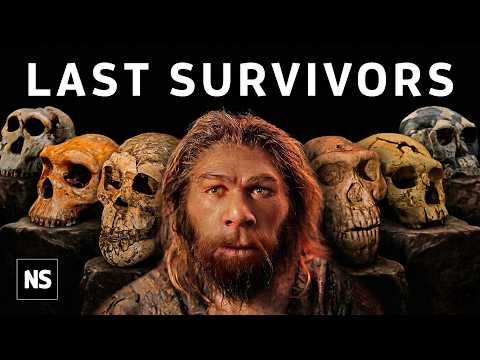
What Happened to the Other Humans?
Introduction to Human Evolution
For most of human history, we were not the only humans living on Earth. Neanderthals, Homo erectus, and more all walked alongside us. And yet, here we are alone. So, where did the others go? This series of videos is not a history lesson; it's a detective story. We are here to follow the evidence and meet the others.
For most of us, the story of human evolution feels straightforward, inevitable, and kind of familiar. If I were to ask you to conjure up in your mind the image that most represents human evolution, it would probably be that much of progress illustration. One species leads to another species leads to another species until eventually Homo sapiens enter the scene, and it is game over for everyone else. However, it turns out that human evolution isn't actually linear; it's much more complicated than that. This is the only time in our species' history that only one species of human walked this earth. Previously, for tens of thousands of years, we shared the planet with many other species of human. Some were stronger than us, some were tall, some were tiny, and some were incredibly smart.
Today, with the help of some of the leading experts in the field, we will explore this extended human family tree that most of us never learned about in school. A lot of the things that we think make us uniquely human aren't actually unique at all. In fact, some of them we actually got from these earlier species. Many of our ancient cousins were so similar to us modern humans, but some were true evolutionary oddballs.
The Game of Surprises
Let's play a game. Which of these species are the most surprising? We'll keep score along the way, and in the end, we will crown a champion. We will cover the gamut, from the birth of paleoanthropology almost 200 years ago when a discovery was made that was so baffling that it took decades to understand its full implications, up to the present day, which many of us would argue is the golden age of the study of paleoanthropology. The discoveries being made today are often baffling and always lead to debate, including about one ancient human species whose behavior is so strange it's still dividing scientists today.
One example is the Floresians, whose existence on a small island suggests that there could be many more examples of species like this to be discovered in island Southeast Asia. This experiment in human evolution that happened on Flores could have happened on many of the other islands as well, suggesting that there could be many more exciting discoveries to come.
Understanding Human Distinction
What separates humans from all other creatures, large and small, that helped us spread to every corner of the world? Many would say it's down to our large and complex brains. Homo sapiens, Latin for "wise men," is a name we gave ourselves. But how special are we? For millennia, we have reigned supreme as the last human species standing, and it was long assumed we were the only one. All that changed in 1829 when amateur scientists entered a cave in Belgium and stumbled upon an unusual skull. The explorers' identities are unknown, and the significance of their find was utterly lost on them. They assumed it belonged to some long-dead person who had suffered from disease or deformity.
Some historical context is necessary here. Darwin had not yet published "On the Origin of Species," which would not happen for another 30 years. The word "dinosaur" wasn't coined for another decade, and the idea of evolution or extinction was heretical to the widespread Western worldview, which long held creation as described in the Old Testament. However, 27 years later, quarry workers uncovered more bones in the Neander Valley in Germany, and this time the world took notice.
Neanderthals: Our Best-Known Ancestors
Long before Homo sapiens, a species arose that was in many ways our equal and in others even more than that. Neanderthals are really the best-known ancient humans. We have a lot of material from sites in Europe and Asia, including nearly complete skeletons and a wealth of behavioral information. Neanderthals, or Homo neanderthalensis, came into their own around half a million years ago. Their ancestors migrated from Africa into Europe and Asia. Their men stood at around 165 cm tall, which is about 5.5 ft, making them shorter than the average modern human today, although more in line with Europeans from the Middle Ages.
They were strong and incredible Ice Age hunters, traversing long distances and likely built for endurance. They had dense bones and thicker muscle mass than most of us. Their profile might suggest prominent foreheads, but they actually had very prominent forebrows, while their foreheads themselves receded. Interestingly, they walked upright as we do and had brains as large as ours. This raises the question: if they had big brains too, where are they now?
Not that bigger brains are necessarily more intelligent, but certainly, with more neural connections, one becomes a more creative species. The shape of the Neanderthal skull suggests that the region of the brain associated with vision and physical coordination was especially large relative to the frontal lobe, which is responsible for reasoning. Contrary to modern connotations associated with their name, Neanderthals weren't primitive. Recent evidence suggests that at least 400,000 years ago in Britain, early Neanderthals were making fire at the site of Barnham in Suffolk. Traces of fire, stone tools cracked by being in that fire, and even pieces of iron pyrite, which can be struck by stone to make sparks, have been found.
So, why aren't there any Neanderthals left? The truth is, no one really knows for sure. Our best guess is that they went extinct around 40,000 years ago, shortly after our appearance in Europe. Was it a tropical disease? Did we simply outbreed them? Was climate change involved? Did we outcompete them? Or perhaps an unspoken alliance was formed? At this point, we simply can't be sure.
It is tempting to picture one ancient human species passing on the baton to another. However, Neanderthals and Homo sapiens coexisted on this earth for over 200,000 years, and we did more than simply cross paths. Everyone outside of Africa has a little bit of Neanderthal DNA in their genomes from ancient interbreeding 40 or 50,000 years ago. In fact, everyone with ancestry from outside of Sub-Saharan Africa has about 2% Neanderthal DNA in them. Some people within Sub-Saharan Africa also have Neanderthal DNA, but here's the fun part: they don't all have the same 2%.
Collectively scattered through the DNA of modern humans today, we find as much as 20% of their total genome, a living vestige of a vanished species. Meaning, if someone has ever called you a bit of a Neanderthal, they might actually be right. The term "Neanderthal" is often used as an insult, but they were very evolved humans in their own way. They walked upright as well as we do, had brains as large as ours, and certainly exhibited many elements of our complex behavior. So, how close were they to us? Very.
Homo Erectus: The Greatest Survivor
Before Neanderthals came Homo erectus, the ancestor of them all, the greatest survivor our genus has ever known. Homo erectus is notable for having survived for an astonishing 2 million years, which is no small feat considering that many of us who spend our lives hunched over a desk are still struggling to do so today. To be clear, they didn't invent bipedalism, which is walking upright on two legs, as other species before them were also doing it. However, earlier species were also in the trees, whereas erectus was exclusively walking upright.
As Darwin said, one of the cardinal features of being human is walking upright, a very strange mode of locomotion. There aren't many bipeds on this planet, but certainly, with 8 billion of us on the planet, it's been very successful. Back in 1890, what began as a hobby for a Dutch surgeon named Eugene Dubois blossomed into an all-consuming passion that would change the course of paleoanthropology. Captivated by Darwin, Dubois became obsessed with finding a bridge species from ape to man. He abandoned his career and joined the Dutch Colonial Army just so he'd be sent to Southeast Asia, where he believed his so-called missing link might be found.
As with the Neanderthal discoveries, skepticism prevailed. Critics claimed the elongated femur Dubois uncovered belonged to Homo sapiens. However, thanks to subsequent finds over 30 years later, Dubois's vision was vindicated. Homo erectus is characterized by many more primitive features, including a larger brow ridge, a smaller brain, and a very angular cranium. This species is one of the longest-lasting of human species, with examples known from Africa dating back more than 1.5 million years ago, and it seems to have survived as late as 100,000 years ago on the island of Java.
With a track record that long, it is no surprise that Homo erectus claims many potential firsts amongst our ancestors. They are thought to be the first species to control fire, which is critical for cooking, warmth, community building, and warding off predators. Excavation of a site inside a South African cave dating back 1 million years revealed evidence of a repeated series of small fires all in the same spot. In those early stages, people were likely capturing natural fires from volcanic eruptions, natural forest fires, or lightning strikes and keeping that fire going as long as they could. However, it took a long time for people to develop the ability to make fire at will.
Homo erectus may also be able to claim the first major innovations of Stone Age technology, such as hand axes and possibly the first artwork. The disappearance of Homo erectus and other ancient human species just as Homo sapiens were coming into their own seems to support the idea that we simply outcompeted them. However, a lot of research indicates that it is a much more complicated and nuanced picture than that.
The pattern of human evolution overall for millions of years has been a diversity of species living at least in proximity to each other, if not in exactly the same places. This diversity is typical of the whole of human evolution until this last 30,000 years when we are left alone on the planet as the only survivors of all these experiments in how to be human. We really don't have the answer as to why we are the only ones left. We don't know if our species got lucky or whether there was a real element of superiority in our brains or our behavior that allowed us to take over the planet and cause these other species to die out.
Homo Heidelbergensis: The Builder
Across the ancients, we find many recurring achievements, such as using fire and making tools, but Homo heidelbergensis may be able to claim the achievement of the first homes built by human hands. Homo heidelbergensis, named after the town where it was found, is believed to have existed as far back as 1.3 million years ago, but conservative estimates place their dawn closer to 700,000 years ago. The Homo heidelbergensis male stood a relatively strapping 175 cm or 5'9". Compared to earlier Homo erectus, the brain was larger, approaching modern human proportions.
Homo heidelbergensis was more derived than erectus, with a larger brain and a more expanded cranium, but still retained some primitive features. The back of the skull has a strong ridge of bone like erectus, with angulation, and the cranium is not so expanded and filled out as it is in us or Neanderthals. This species seems to have been very successful, exhibiting complex behavior, though perhaps not as complex as ours or Neanderthals.
Proof of Homo heidelbergensis's complex reasoning and physical abilities lies most dramatically in how they addressed the need for shelter. Evidence suggests that they had complex behavior, with a brain approaching the levels of people today and Neanderthals. For example, they built structures with wooden poles or bones fixed in place by heavy stones, likely covered with animal hides or branches. One Homo heidelbergensis community discovered in Germany, approximately 400,000 years old, may have even featured fences, perhaps to keep large predators out or to contain freshly captured game until it was time to feast.
Homo heidelbergensis migrated throughout Europe, and opinions differ about how widespread they were. In my view, Homo heidelbergensis was a long-lived species present in Europe, Asia, and Africa. Their trail goes cold some 200,000 years ago, and the usual suspects may well apply: climate change, food scarcity, disease, and competition. However, some scientists argue that their story never ended, as Homo heidelbergensis may have given rise to the Neanderthals and us.
In terms of how similar they are to us, if they were our ancestors, they would be very similar. However, Homo heidelbergensis remains a mystery because we are still unsure if they were our ancestors or not. In conclusion, when it comes to how surprising of a species they are, they were capable and not primitive, but it would be nice to know if they were our grandparents.
The Hobbit: Homo Floresiensis
Up until this point, we've covered what might be called the first golden age of paleoanthropology. From the mid-19th century through to the turn of the 20th century, scientists unearthed and analyzed evidence proving that Homo sapiens both sprang from and once shared the planet with other human species. However, the new century brought in the second golden age of paleoanthropology, with miniature skeletons, DNA bombshells, and possible mysterious rituals. This all kicks off in 2003 when paleoanthropology leaped back into the headlines with some very big news about some very small humans.
Meet Homo floresiensis, also known as the Hobbit. Homo floresiensis is a remarkable species. This tiny species has an ape-sized brain, and the whole skeleton suggests these individuals were barely more than a meter tall as adults. The typical adult Homo floresiensis stood on average about 3.5 ft tall and weighed about 30 kg or 65 lb. The origin of this species is still unknown. Some believe it's a dwarf form of Homo erectus, possibly coming from Java, while others think it may be a relic of a group that spread into the region maybe 2 million years ago and then evolved for a long time in isolation.
Homo floresiensis was likely pint-sized due to a phenomenon known as island dwarfism, where large animals get smaller due to a reduction in resources, while smaller animals get bigger due to fewer predators on the island. Homo floresiensis challenges many assumptions about ancient human species, not only regarding their physical stature but also their brain size and therefore brain power and capabilities. Typically, we equate brain size with intelligence, and while humans are supposed to be intelligent, Homo floresiensis had a brain the size of a chimpanzee and yet were able to make stone tools. This challenges our understanding of what it means to be human.
Homo floresiensis was using stone tools and eating meat, but it may have scavenged food from the kills of Komodo dragons, the main predator on the island of Flores. In addition to those giant lizards, there were also species of giant storks and giant rats. If it was acquiring its own food by hunting, it probably targeted smaller animals like giant rats rather than large animals on the island.
Homo floresiensis may have depended on a remarkable elephant-like mammal called a stegodon, which on this island was so small it was the size of a cow. Imagine a human the size of a four-year-old hunting elephant-like creatures the size of cows on this island. The stegodons eventually died out, possibly hunted to extinction, which presented a significant problem for Homo floresiensis. The reasons for their extinction are still unclear, but volcanic eruptions appear to have been incredibly detrimental. It's also possible that Homo sapiens played a role in their extinction.
When it comes to how surprising Homo floresiensis is as a human species, there are debates about whether it should even be classified as human. The name Homo floresiensis implies it is a member of the genus Homo, which I consider human. However, many of its features are much more primitive, suggesting it was probably still spending time in trees. In many ways, I doubt that it exhibited the same human features as Neanderthals or Homo sapiens.
Nonetheless, these were humans the size of four-year-olds making stone tools and hunting elephant-like creatures on an island. Therefore, I would rate them a 10 out of 10 for surprise.
The Enigma: Denisovans
If it weren't for modern DNA analysis, it is unclear when we would have discovered the Denisovans, a remarkable species that truly blows my mind. In 2010, a finger bone was sent off for analysis in a German laboratory. This particular finger bone came from a Denisovan in Denisova Cave in Siberia. When they crushed it up to analyze its DNA, they found it wasn't Neanderthal DNA, nor was it Homo sapiens DNA, but it was human DNA. This meant that the finger bone belonged to a previously undescribed, unknown species to science, but it was human. The question was, who were the mysterious Denisovans?
The analysis of Denisovan DNA showed that their DNA is present in many modern humans living today. For instance, Tibetans who can live at very high altitudes have a mutation that they picked up from Denisovans. These people were widespread across eastern Asia, living successfully in a range of environments, including northeast China, Siberia, and the Tibetan plateau. The big question remained: what did the Denisovans actually look like? Because we didn't really have a fossil for them.
There was one part of a jaw that was found in Tibet, and upon further analysis, it turned out to be Denisovan. However, it was only a part of the jaw, not the full face. The mystery continued, becoming almost like a detective show seeking evidence and trying to identify clues that would allow us to interpret the lifestyle or anatomy of these creatures. Then another discovery was made in Denisova Cave. A bit of bone was analyzed and found to have a Neanderthal parent and a Denisovan parent, effectively giving us a hybrid individual named Denny. Yet, we still had no face for the Denisovans.
In 2021, a skull was analyzed that was called Dragon Man. This skull was apparently found at the bottom of a well, but some questioned this story as it goes back to World War II. When they did the analysis, they were able to confirm that it was a new species called Homo longi. However, they also confirmed that it was a Denisovan. Finally, we knew what the Denisovans actually looked like. They appeared somewhat similar to Neanderthals but were perhaps a bit more robust.
When it comes to how similar they are to us, like the Neanderthals, their DNA lives on in many of us walking around today. The Denisovans seem to have been capable of living in very cold conditions, high altitude conditions, and also down in Southeast Asia in tropical and subtropical conditions. For example, they seem to have helped populations adapt to high altitude conditions in Tibet, as well as providing disease protection in Southeast Asia, helping immune systems. They are incredibly similar to us because our ancestors were at times interacting with the Denisovans. In terms of how surprising they are as a species discovered through DNA, I would give that a solid 8 out of 10 for surprise.
The Mourner: Homo Naledi
At first glance, our final species may appear primitive compared to modern humans, but in Homo naledi, we find an echo of an attribute that is decidedly us. This species was discovered in 2013 near Johannesburg inside the Cradle of Humankind, a world heritage site and an established paleontological hotspot. A group of explorers spotted a narrow opening inside a cave, which led to a hidden chamber. Inside it lay the largest collection of a single hominin species ever found in Africa, one that lay undisturbed for hundreds of thousands of years.
Lee Berger, the paleontologist behind this discovery, described it as the richest fossil hominin site discovered in all of history on the continent of Africa, perhaps in the world. Working in confines so claustrophobic that only a team of small paleontologists known as "underground astronauts" could negotiate them, the remains of at least 15 ancient humans were painstakingly recovered. Homo naledi was small, with adult males standing about 5 ft tall and weighing about 100 lb. Their brains were small, resembling those of apes, yet their teeth showed quite derived features, suggesting a very human-like diet.
Homo naledi's skeleton combines some human-like features in the legs, feet, and hands with much more primitive features, suggesting that the creature was still spending a lot of time climbing, possibly up on rocks and in trees. While their brains were not much larger than a chimp's, they were asymmetrical, and the frontal lobes were elongated in ways that recall modern humans. Some scientists controversially believe that Homo naledi practiced behaviors previously thought to be unique to modern humans and perhaps Neanderthals, such as the symbolic and ritualized disposal of the dead.
This possibility raises the suggestion that brain shape may ultimately trump size. If Homo naledi did bury their dead, it would imply that they were operating at a level that we wouldn't typically associate with a species that had such a small brain. Lee Berger discusses a clue left for us some 250,000 years ago: a child's skull found in one of the most inaccessible places in the Rising Star cave system. This skull appears to have been placed on a ledge in a challenging location, suggesting that Homo naledi may have engaged in some form of ritual behavior.
Berger notes that it is rare to find bones of any one species without finding remains of others close by. During the expedition itself, only hominins were coming out. There were no other species present, suggesting that Homo naledi may have intentionally placed their dead there, perhaps as a way of paying final respect. If this is true, it would mean that grief, care for the dead, and perhaps even ritual behavior emerged far earlier than anyone thought possible.
While some scientists argue that the evidence is being over-interpreted, the implications are significant. If Homo naledi engaged in deliberate burial practices, it would suggest that complex behavior may not be solely linked to brain size. This discovery challenges our understanding of what it means to be human and raises questions about the origins of ritualistic behavior.
Conclusion: The Complexity of Human Evolution
As we continue to uncover the mysteries of our ancient past, we are reminded that our understanding of human evolution is far more complex than we once thought. The discoveries of Neanderthals, Homo erectus, Homo heidelbergensis, Homo floresiensis, Denisovans, and Homo naledi all contribute to a richer narrative of our shared history. Each of these species offers insights into the diversity of human experience and the various paths our ancestors took.
Despite the many questions that remain, one thing is clear: we are not alone in our evolutionary journey. The legacies of these ancient species live on in our DNA and in the stories we tell about ourselves. As we continue to explore the fossil record and genetic data, we may yet uncover new chapters in the story of humanity, revealing the intricate web of connections that bind us all.
In conclusion, the evidence suggests that we and the Neanderthals and Denisovans diverged probably more than a million years ago. These lineages went their separate ways, with Neanderthals evolving in Western Eurasia, Homo sapiens evolving in Africa, and Denisovans evolving over in Eastern Asia. Now and again, these lineages came together and interbred, leading to the complex tapestry of human ancestry we see today. The past is never really gone, and as research continues, we may discover even more about the ancient humans who once shared our world.
The transcript discusses several hominin species and human-like groups that have played significant roles in the narrative of human evolution. Below is a detailed enumeration of these species along with relevant information regarding their active time periods and geographical locations:
- Neanderthals (Homo neanderthalensis): Active approximately 400,000 to 40,000 years ago. They primarily inhabited regions across Europe and Asia. Findings suggest that they coexisted with Homo sapiens for around 200,000 years.
- Homo erectus: This species is believed to have emerged around 1.9 million years ago and survived until approximately 100,000 years ago. They are known to have originated from Africa and migrated to various regions, including Java in Southeast Asia, where they persisted until the later periods.
- Homo floresiensis (the 'hobbit'): This diminutive species lived on Flores Island in Indonesia around 100,000 to 50,000 years ago. They are characterized by their small stature and unique adaptations to their island environment.
- Denisovans (Homo denisova): Described primarily through DNA evidence extracted from a finger bone found in Denisova Cave, Siberia around 400,000 years ago. These hominins are thought to have inhabited regions across Asia and interbred with modern humans, leaving traces of their DNA in contemporary populations.
- Homo naledi: Discovered in South Africa, this species may have existed as recently as 300,000 years ago, although specific dates were not provided in the transcript. Their fossils were uncovered in the Rising Star Cave system, which has sparked debates regarding their cognitive capabilities and potential burial practices.
This rich tapestry of hominin existence illustrates the complexity and diversity of our evolutionary history, challenging the notion that human evolution followed a linear path.
- [00:54] "So, where did the others go? This series of videos is not a history lesson. It's a detective story."
- [01:06] "We previously for tens of thousands of years shared the planet with many, many other species of human."
- [10:10] "Everyone outside of Africa has a little bit of Neanderthal DNA in their genomes from ancient interbreeding 40 or 50,000 years ago."
The transcript presents several central claims regarding the process of human evolution, highlighting the complexity and interrelatedness of various hominin species. The speaker emphasizes that human evolution is not a straightforward, linear progression but rather a branching tree with multiple species coexisting and interacting over time. Key points regarding anatomical, behavioral, or cognitive developments include:
- Diversity of Species: The speaker asserts that for most of human history, multiple species of humans coexisted, such as Neanderthals, Homo erectus, and Denisovans. This diversity suggests a competitive and collaborative environment rather than a singular path to modern humans.
- Interbreeding: The transcript discusses the genetic legacy left by Neanderthals and Denisovans, indicating that modern humans outside Africa carry a small percentage of DNA from these ancient relatives due to interbreeding events. This genetic mixing is claimed to have contributed to various traits in contemporary humans.
- Complex Behavior: The speaker suggests that many behaviors traditionally attributed to Homo sapiens, such as tool-making and possibly burial practices, may have originated from interactions with other hominin species. Evidence of complex behavior in Neanderthals and other ancient humans challenges the notion of a uniquely advanced Homo sapiens.
- Environmental Adaptations: The discussion includes how different human species adapted to varied environments, including extreme cold and high altitudes, showcasing their resilience and ingenuity in survival.
Overall, the transcript posits that human evolution is a rich narrative of interactions, adaptations, and shared traits among multiple hominin species rather than a simplistic story of 'survival of the fittest.'
- [01:37] "Human evolution is a process of diversification."
- [04:05] "Some of our ancestors interbred with them and many of us are the result of those let's say diances."
- [16:02] "We don't know if our species got lucky or whether there was a real element of superiority in our brains or our behavior that let us take over the planet."
In the transcript, the speaker refers to various types of data and evidence to substantiate their claims about human evolution and the interactions between different hominin species. The following categories of evidence are mentioned:
- Fossil Evidence: The transcript highlights the significance of fossil discoveries, particularly those of Neanderthals, Homo erectus, and Denisovans. For instance, Neanderthals are noted for having well-preserved skeletal remains that provide insights into their morphology and behavior.
- Genetic Data: The speaker discusses the importance of DNA analysis, particularly in understanding the genetic contributions of Neanderthals and Denisovans to modern humans. It is mentioned that everyone outside Africa carries traces of Neanderthal DNA, indicating past interbreeding. The genetic legacy of Denisovans is also noted, especially in populations adapted to high altitudes.
- Archaeological Finds: The transcript references archaeological sites such as Denisova Cave in Siberia, where significant artifacts and genetic material were discovered. These findings are pivotal for mapping the existence and adaptations of ancient human species.
- Comparative Studies: There is mention of behavioral comparisons with other primates, suggesting that elements of our behavior could be shared with earlier species. This is exemplified by discussions of burial practices, which may not be exclusive to Homo sapiens.
This multifaceted approach to evidence—from fossils to genetics—underscores the complexity of human evolution as a continuum of interactions among various species rather than isolated events.
- [02:18] "What we see from this whole fossil record and indeed the genetic record is that human evolution is a process of diversification."
- [10:27] "Collectively scattered through the DNA of modern humans today, we find as much as 20% of their total genome, a living vestige of a vanished species."
- [12:11] "Many of our ancient cousins were so similar to us modern humans, but some were true evolutionary oddballs."
The transcript highlights a range of statements regarding the reliability and quality of the data being discussed in the context of human evolution and paleoanthropology. Throughout the discussion, there is a clear acknowledgment of the uncertainties and gaps that exist in the fossil record, which significantly impact our understanding of ancient human species and their interrelationships. For instance, the speaker emphasizes that the scientific community is still piecing together the puzzle of human ancestry, with many discoveries leading to more questions than answers.
One significant point raised is the fragility and scarcity of the evidence available. The speaker notes, "[01:29:44] ...we haven't managed to put into the analysis yet" regarding the ear bones of various human fossils, indicating that crucial anatomical features that could provide insights into species relationships still require further study. This implies that while advances are being made, much remains unknown, and the current understanding may change with new findings.
Furthermore, the speaker mentions the evolutionary tree of humans, stating, "[01:40:25] ...why are we the only last species?" This question reflects the uncertainty surrounding why Homo sapiens are the sole surviving lineage among many ancient human species. The mention of ongoing excavations and the potential for new discoveries emphasizes that the current data is incomplete and that the narrative of human evolution is still under construction. The speaker's remarks about the importance of these explorations suggest a level of confidence in the scientific method, yet also a recognition of the inherent limitations of the existing evidence.
- [01:35:29] "...we haven't managed to put into the analysis yet."
- [01:40:25] "...why are we the only last species?"
- [01:59:40] "...we still don't have an answer to. Why are we the only last species?"
The transcript contains numerous references to scientific debates and competing hypotheses within the field of anthropogeny, particularly concerning human evolution, migration routes, and interspecies relationships. One of the central themes of the discussion revolves around the relationships between various ancient human species, including Homo sapiens, Neanderthals, and Denisovans. The speaker notes the evolving nature of these debates, highlighting the complexities in understanding how these species interrelated and coexisted.
For instance, the speaker mentions the uncertainty about the lineage connections, stating, "[01:47:48] ...Denisovans are more closely related to Neanderthals than they are to us Homo sapiens." This claim suggests a shift in understanding regarding how these ancient species are categorized and how they relate to modern humans. The discussion also points to the significance of new fossil discoveries that could potentially redefine existing theories about our ancestry.
Moreover, there is mention of the difficulties in confirming these hypotheses, as the speaker states, "[01:49:00] ...there are other geneticists who have deeper divergences and different relationships between the groups." This acknowledgment of differing opinions within the scientific community underscores the dynamic and often contentious nature of research in paleoanthropology. The debates over whether certain ancient species contributed to the gene pool of modern humans also reflect a broader discussion about how behaviors, such as burial practices and adaptation to environments, are interpreted across different species.
- [01:47:48] "...Denisovans are more closely related to Neanderthals than they are to us Homo sapiens."
- [01:49:00] "...there are other geneticists who have deeper divergences and different relationships between the groups."
- [01:35:29] "...we haven't managed to put into the analysis yet."
[00:44] For most of human history, we were not[00:46] the only humans living on Earth.[00:48] Neanderthalss, Homo erectus, and more[00:51] all walked alongside us. And yet, here[00:54] we are alone. So, where did the others[00:57] go? This series of videos is not a[00:59] history lesson. It's a detective story.[01:03] And we're here to follow the evidence.[01:05] To begin, let's meet the others.[01:10] >> For most of us, the story of human[01:12] evolution feels straightforward,[01:13] inevitable, kind of familiar. If I was[01:16] to ask you to conjure up in your mind[01:18] the image that most represents human[01:20] evolution, it would probably be that[01:22] much of progress illustration. One[01:24] species leads to another species leads[01:27] to another species until eventually we[01:29] homo sapiens enter the scene and it is[01:32] game over for everyone else. only. It[01:34] turns out that human evolution isn't[01:37] actually linear. It's much more[01:39] complicated than that because this is[01:41] the only time in our species history[01:43] that only one species of human walked[01:46] this earth. We previously for tens of[01:48] thousands of years shared the planet[01:50] with many, many other species of human.[01:54] Some were stronger than us, some were[01:56] tall, some were tiny, some were[01:58] incredibly smart. today with the help of[02:01] some of the leading experts in the[02:03] field.[02:03] >> You have to remember that you could go[02:04] your entire life and never make one of[02:06] these discoveries. Not even a piece, not[02:07] even a tooth.[02:09] And yet now we're in this period where[02:12] it's exploding. So what we see from this[02:15] whole fossil record and indeed the[02:16] genetic record is that human evolution[02:18] is a process of diversification. We[02:21] introduce you to six ancient human[02:23] species we once lived alongside, hunted[02:25] alongside, and in some cases even had[02:28] children with. From the intelligent[02:30] Neanderthalss to the island dwarf[02:32] hobbits to the long-lost Inisans who[02:34] gifted millions of us with their genes.[02:37] This is the real story of the extended[02:39] human family tree most of us never[02:42] learned about in school. A lot of the[02:44] things that we think make us uniquely[02:47] human aren't actually unique at all. In[02:50] fact, some of them we actually got from[02:52] these earlier species. Now, many of our[02:55] ancient cousins were so similar to us[02:58] modern humans, but some were true[03:00] evolutionary oddballs. So, let's play a[03:02] game. Which of these species are the[03:04] most surprising? We'll keep score along[03:07] the way, and in the end, we will crown a[03:09] champion. We're going to cover the[03:11] gamut. From the birth of paleo[03:13] anthropology almost 200 years ago when a[03:16] discovery was made that was so baffling[03:18] that it took decades to understand its[03:20] full implications up to the present day[03:23] which many of us would argue is the[03:25] golden age of the study of paleo[03:26] anthropology. The discoveries that are[03:28] being made today are often baffling and[03:31] always lead to debate, including about[03:34] one ancient human species whose behavior[03:37] is so strange it's still dividing[03:40] scientists today. Well, I think the fact[03:42] that it's there at all, the fact that[03:44] Ferosians is on this small island[03:47] isolated suggests that there could be[03:49] many more examples of species like this[03:51] to be discovered in island Southeast[03:53] Asia. So this experiment in human[03:55] evolution that happened on Flores could[03:57] have happened on many of the other[03:58] islands as well. So there could be many[04:00] more exciting discoveries to come.[04:01] >> While some of these species may have[04:03] vanished without a trace, some have[04:05] legacies that are alive and well. As[04:08] you're about to see, the homogenous is[04:11] anything but homogeneous. And the saga[04:14] of our ancestors is anything but ancient[04:17] history. The brains. What separates[04:20] humans from all other creatures, large[04:23] and small, that helped us spread to[04:25] every corner of the world? Now, many[04:28] would say it's down to our large and[04:30] complex brains. Homo sapiens, Latin for[04:33] wise men. I love that we gave ourselves[04:35] that particular name. But then again, we[04:37] had mastered fire. We could make stone[04:39] tools. We built the pyramids. How[04:42] special are we? For millennia, we have[04:45] reigned supreme as the last human[04:48] species standing and also it was long[04:50] assumed the only one. All that changed[04:53] though in 1829, even if no one realized[04:57] it at the time. That year, amateur[04:59] scientists entered a cave in Belgium and[05:02] stumbled upon an unusual skull. Now, the[05:04] explorers identities are unknown. The[05:07] significance of their find was utterly[05:09] lost on them as well. They assumed it[05:11] belonged to some long deadad person[05:14] who'd suffered from maybe disease or[05:16] deformity. Now some historical context.[05:19] Darwin had not yet published on the[05:21] origin of the species. That would not[05:23] happen for another 30 years. The word[05:25] dinosaur wasn't coined for another[05:27] decade. And the idea of evolution or for[05:31] that matter extinction was heretical to[05:34] the widespread western world view which[05:37] longheld creation as it is described in[05:41] the Old Testament. But then 27 years[05:44] later quarry workers uncovered more[05:46] bones in the Neander Valley in Germany.[05:50] And this time the world took notice.[05:52] Long before homo sapiens, a species[05:55] arose that was in many ways our equal[05:58] and in others even more than that. Chris[06:01] Stringer is a leading British paleo[06:03] anthropologist at London's Natural[06:04] History Museum. He has spent decades[06:07] unraveling the story of our species and[06:09] others.[06:10] >> So Neanderles of course are really the[06:12] best known ancient humans. We've got a[06:14] lot of material from sites in in Europe[06:16] and Asia, nearly complete skeletons and[06:18] a lot of behavioral information. And[06:20] what's interesting about them, of[06:21] course, is they are very evolved humans.[06:23] >> Homo Neanderthalencis came into its own[06:26] around half a million years ago. Their[06:28] ancestors migrated from Africa into[06:31] Europe and Asia. Their men stood at[06:33] around 165 cm tall. That's about 5 1/2[06:38] ft. So that is shorter than your average[06:41] modern human today. Although it's more[06:44] in line with, let's say, Europeans from[06:47] the Middle Ages. They were strong. They[06:50] were incredible Ice Age hunters. They[06:52] traversed long distances. They were[06:54] probably built for endurance. They had[06:56] dense bones, thicker muscle mass than[06:59] most of us. And let me show you their[07:02] profile. You might think that they have[07:04] really prominent foreheads. Well, they[07:06] have very, very prominent forebrows, but[07:09] the forehead itself, look at it.[07:13] It recedes.[07:15] It's actually the opposite of a[07:18] protruding or prominent forehead, but[07:22] it's what's behind the bones that you[07:26] might find most surprising.[07:27] >> They walked as as upright as we do. They[07:29] had brains as large as ours. They had[07:31] complex behavior.[07:32] >> Brains don't preserve in the fossil[07:34] record, but the brain case does. And it[07:36] suggests that Neanderthalss boasted[07:39] brains very similar in size to our own[07:42] brains, which seems shocking because if[07:45] they have big brains too, where are[07:47] they?[07:47] >> Not that bigger brains are more[07:49] intelligent, but certainly with more[07:52] neural connections and so on, you become[07:56] a more creative species.[07:59] >> How might we know this? many potential[08:02] answers lie in their skulls[08:04] >> because that's that's how we all[08:06] identify each other. We identify each[08:08] other by looking at each other's skulls.[08:10] We don't look at someone's knee and say,[08:13] "Oh, how nice to see you, Glattus." So[08:15] skulls have all the clues about who we[08:18] are. The shape of the Neanderthal skull[08:20] suggests the region of the brain[08:23] associated with vision and physical[08:25] coordination were especially large[08:27] relative to the frontal lobe, which is[08:29] the area responsible for reasoning.[08:31] Still, contrary to modern connotations[08:34] associated with their name,[08:35] Neanderthalss weren't dummies. And[08:38] recently there's evidence that at least[08:40] 400,000 years ago in Britain, people[08:43] probably early Neanderals were making[08:45] fire at the site of Barnum in Suffukk.[08:48] There are traces of fire. There are[08:50] traces of stone tools that have been[08:52] cracked by being in that fire. And there[08:55] are even pieces of iron pyite. And this[08:57] is a mineral which we know can be used.[08:59] It can be struck by stone to make sparks[09:02] and then give rise to fire. And that[09:04] iron pyite is not native to the area.[09:07] So, it's been imported to the site and[09:09] we think those people were making fire[09:11] there 400,000 years ago and yet they're[09:13] not here. So, there's one of that longl[09:15] lasting questions is you why are we here[09:17] and not the Neanderthalss? So, why[09:20] aren't there any Neanderthalss left? The[09:22] truth is no one really knows for sure.[09:25] But our best guess is that they all went[09:27] extinct around 40,000 years ago.[09:30] >> But it wasn't long after our appearance[09:33] in Europe that the Neanderls vanished.[09:36] Uh, was there a tropical disease? Was[09:39] did we simply uh outbreed them? Was[09:43] climate change involved that it was[09:45] getting warmer?[09:46] >> Did we out compete them? Or perhaps an[09:48] unspoken alliance was formed? At this[09:50] point, we simply can't be sure. It is[09:53] tempting to picture one ancient human[09:55] species passing on the baton to another.[09:59] Neanderthalss and homo sapiens however[10:02] coexisted on this earth for over 200,000[10:05] years and we did more than simply cross[10:08] paths.[10:08] >> Everyone outside of Africa has a little[10:10] bit of neanderal DNA in their genomes[10:13] from ancient interbreeding 40 or 50,000[10:15] years ago.[10:16] >> Everyone with ancestry from outside of[10:18] subsaharan Africa have about 2%[10:21] Neanderthal DNA in them. In fact, some[10:23] people within subsaharan Africa also[10:25] have Neanderthal DNA. But here's the fun[10:27] part. They don't all have the same 2%.[10:31] Collectively scattered through the DNA[10:33] of modern humans today, we find as much[10:35] as 20% of their total genome, a living[10:38] vestage of a vanished species. Meaning,[10:42] if someone has ever called you a bit of[10:45] a Neanderthal, they might actually be[10:47] right.[10:47] >> You know, Neanderal is used an insulting[10:49] term. Politicians with with reactionary[10:52] policies are called Neanderal. So[10:54] hooligans are called Neanderal. And I[10:56] think that's an insult to the Neandals.[10:58] Um, they were very evolved humans in[11:00] their own way. Uh, they walked upright[11:02] as well as we do. They had brains as[11:04] large as ours. They certainly had many[11:06] elements of our complex behavior. So,[11:08] they were certainly not uh the the[11:09] traditional caveman beastlike image.[11:13] >> So, how close were they to us? Very.[11:17] They are our sister species. Likely our[11:20] closest relatives. so similar to us that[11:23] some of our ancestors interbred with[11:25] them and many of us are the result of[11:27] those let's say diances and so when it[11:31] comes to giving them a score[11:34] how surprising were they really they[11:37] were so similar to us that they're not[11:38] really that surprising at all I'd[11:40] probably give them a 3 out of 10 but in[11:44] of itself the fact that they are so[11:47] similar to us should blow our minds[11:50] because to think that an ancient species[11:52] was so similar to us and no longer is[11:54] with us is in of itself fascinating to[11:57] me.[11:58] >> The survivor well before the[12:00] Neanderthalss came the ancestor of them[12:03] all really the greatest survivor our[12:06] genus has ever known Homo erectus which[12:10] is no small feat considering that many[12:12] of us who spend our lives hunched over a[12:15] desk are still struggling to do so[12:17] today. Now to be clear, they didn't[12:19] invent bipedalism, which is walking[12:22] upright on two legs. Other species[12:24] before them were also doing it. But[12:27] those earlier species were also in the[12:29] trees, whereas erectus was exclusively[12:33] walking upright.[12:34] >> As Darwin said, one of the cardinal[12:36] features of being human, which is[12:38] walking upright, a very strange mode of[12:41] locomotion.[12:42] There aren't many bipeds on this planet,[12:45] but certainly with 8 billion of us on[12:48] the planet, it's been very successful.[12:50] >> Back in 1890, what began as a hobby for[12:53] a Dutch surgeon named Eugene Dubois[12:55] blossomed into an all-consuming passion,[12:57] one which would change the course of[12:59] paleo anthropology. Captivated by[13:01] Darwin, Dubois became obsessed with[13:04] finding a bridge species from ape to[13:07] man. He abandoned his career and joined[13:10] the Dutch Colonial Army just so he'd be[13:12] sent to Southeast Asia where he believed[13:15] his so-called missing link might be[13:17] found. And as you might have guessed it,[13:20] he was kind of right. Now, as with the[13:22] Neanderthal discoveries, skepticism[13:24] again prevailed. Critics claimed the[13:27] elongated femur Dubois uncovered[13:30] belonged to Homo sapiens. But thanks to[13:32] subsequent finds over 30 years later,[13:35] Dubois's vision was vindicated.[13:37] >> So this is an example of Homo erectus[13:40] and but compared with us many more[13:43] primitive features, great big browage, a[13:45] smaller brain, a very angular cranium[13:48] and this is one of the really longest[13:50] lasting of human species. So examples of[13:53] homo erectus are known from Africa at uh[13:56] more than one and a half million years[13:57] ago and it seems to have survived as[14:00] late as 100,000 years ago on the island[14:02] of Java. So a very successful species.[14:05] >> With a track record that long, it is no[14:07] surprise that Homo erectus claims many[14:10] potential firsts amongst our ancestors.[14:13] We think they're the first species to[14:15] control fire, for example, which is[14:17] critical, of course, for cooking,[14:19] warmth, community building, and warding[14:21] off predators. The excavation of a site[14:23] inside a South African cave dating back[14:26] 1 million years revealed evidence of a[14:29] repeated series of small fires all in[14:32] the same spot. But in those early stages[14:35] probably people were capturing natural[14:37] fires perhaps from volcanic eruptions[14:40] perhaps from natural forest fires[14:42] perhaps from lightning strikes and they[14:44] were then keeping that fire going as[14:46] long as they could but it took a long[14:49] time it seems for people to develop the[14:51] ability to make fire at will. Her[14:53] erectus may also be able to claim the[14:55] first major innovations of stone age[14:58] technology such as handaxes and possibly[15:01] possibly also earth's first artwork. The[15:04] disappearance of homo erectus and other[15:06] ancient human species just as homo[15:10] sapiens were coming into their own does[15:12] seem to support this idea that we simply[15:15] out competed them. But a lot of research[15:18] indicates that it is a much more[15:20] complicated and nuanced picture than[15:22] that.[15:23] >> So the pattern of human evolution[15:24] overall for millions of years has been a[15:27] diversity of species uh living at least[15:30] in proximity to each other if not in[15:32] exactly the same places. So there's all[15:34] that diversity which is typical of the[15:36] whole of human evolution until this last[15:38] 30,000 years when we're left alone on[15:41] the planet and we're the only survivors[15:43] of all these experiments in how to be[15:45] human. We really don't have the answer.[15:47] We don't know if our species got lucky[15:50] or whether there was a real element of,[15:52] if you like, superiority in our brains[15:54] or our behavior that let us take over[15:57] the planet and cause these other species[15:59] to die out. So, it's still unclear to[16:02] what extent we were responsible for the[16:04] extinctions directly of these other[16:06] human species. In the case of Homoctus,[16:09] it's possible they failed to adapt as[16:11] the grasslands in which they had[16:13] flourished grew into less forgiving[16:15] jungle. Or maybe they failed to compete[16:18] with smarter species capable of[16:20] fashioning more advanced tools and[16:22] formulating superior hunting strategies.[16:25] But maybe, just maybe, after their[16:28] enormously long day in the sun, 2[16:30] million years on this planet, that's 10[16:34] times longer than we homo sapiens have[16:36] existed on Earth.[16:39] Maybe it was simply their time. So, in[16:41] conclusion, how similar were Homo[16:44] erectus to us? Well, if they hadn't have[16:47] perfected their posture, our lives would[16:50] be very, very different today. In fact,[16:53] it's not just us that owes them that[16:54] huge debt of gratitude. We think that[16:56] many of the other human species that[16:58] were around at the same time as us were[17:00] also descended from that species Homo[17:04] erectus. And it makes you think they are[17:06] kind of remarkable and surprising. They[17:09] make sense in terms of their place in[17:12] the evolutionary tree. That longevity[17:16] is slightly bonkers. And so I would[17:18] probably give them a 6 out of 10. the[17:21] builder. Across the ancients, we find[17:24] many reoccurring achievements using[17:26] fire, for example, and making tools, but[17:28] Homer Hagenzis may be able to claim the[17:31] achievement of the first homes built by[17:34] human hands.[17:35] >> So, Homer beensis, and I've got an[17:37] example here of from Cabway or Broken[17:40] Hill. This is a replica of a fossil that[17:42] was found back in 1921.[17:44] >> In 1907, a German quarry worker happened[17:47] upon a massive jawbone. An[17:49] anthropologist determined this oversized[17:52] and mostly chinless mandible belonged to[17:54] a species distinct from any yet known.[17:57] Naming this human ancestor after the[17:59] town which it was found in, the[18:01] so-called H Highleberg man, aka[18:04] Homohidlebergenzis.[18:06] The history of Homohidlebergis may[18:08] stretch back as far as 1.3 million[18:11] years, but conservative estimates place[18:13] their dawn closer to 700,000 years ago.[18:17] The homo hyidleberenis male stood a[18:19] relatively strapping 175 cm or 5'9.[18:25] Compared to the earlier homo erectus,[18:27] the brain was larger, approaching modern[18:29] human proportions.[18:30] >> It's more derived than erectus, larger[18:33] brain, a more expanded cranium, but also[18:36] still some primitive features. So the[18:37] back of the skull has this strong ridge[18:39] of bone like erectus with angulation and[18:42] the cranium is not so expanded and[18:44] filled out as it is in us or or[18:46] neanderals. So a mixture of features and[18:49] this seems to have been a very[18:51] successful species certainly complex[18:53] behavior in hydrogensis and perhaps not[18:55] as complex as ours or neandertos or[18:57] longi but certainly more complex than[18:59] erectus. Proof of Homer Hidylebergens's[19:02] complex reasoning and physical abilities[19:04] lie most dramatically in how they[19:07] address the need for shelter.[19:09] >> In terms of behavior, we think that[19:10] hydrogensis did have complex behavior.[19:12] The brain is certainly approaching the[19:14] levels of of people today and Neandals[19:17] um and we look at something like like[19:18] this and we've got examples of hyobensis[19:21] even from Britain uh probably from the[19:23] site of Boxgrove from about 480,000[19:26] years ago. Homoid Beagens homes may have[19:29] been built with wooden poles or bones[19:31] fixed in place by heavy stones and we[19:34] think they were covered with animal[19:36] hides or branches. One H highleberas[19:39] community discovered in Germany and[19:41] approximately 400,000 years old may have[19:45] even featured fences perhaps to keep[19:47] large predators out or to contain[19:49] freshly captured game until it was time[19:51] to feast. Homohyle Beagenzis may have[19:53] been the first big game hunters.[19:56] >> And there we've got evidence that these[19:59] people were able to hunt actively,[20:01] horse, deer, probably even rhinos. They[20:04] were butchering all these animals at the[20:05] site, making uh beautiful hand axes and[20:08] then systematically dismembering these[20:11] carcasses, getting all the meat off of[20:13] them in what was a dangerous landscape[20:14] with many dangerous wild animals around.[20:16] So, they were kind of possessing that[20:18] carcass and fully in control of that[20:20] local environment. Homohylebergensis[20:23] migrated throughout Europe.[20:24] >> Opinions differ about what's in[20:26] Hyobensis, how widespread it was, but in[20:28] my view, Haidobensis was a long lived[20:30] species. It was present in Europe and[20:33] Asia and Africa.[20:34] >> Their trail goes cold some 200,000 years[20:38] ago. And the usual suspects may well[20:40] apply. Climate change, food scarcity,[20:42] disease, competition. But some[20:44] scientists would argue that their story[20:47] never ended. Because for them, H[20:49] Highleberg may have given rise to the[20:51] Neanderthalss and us. So, in terms of[20:54] how similar they are to us, well, if[20:57] they were our ancestors, very similar.[21:00] But H Highleberg is in many ways a[21:03] mystery because were they our ancestor[21:06] or weren't they? So, in conclusion, when[21:11] it comes to how surprising of a species[21:13] are they? Well, they were capable. They[21:16] were not primitive, but it would be nice[21:18] to know if they were our grandparents.[21:21] So, I give them a seven out of 10.[21:24] >> And also, it provides a kind of[21:25] evolutionary bridge between the more[21:27] primitive erectus and the more derived[21:29] humans, us and Longi and Neanderls.[21:33] >> The Hobbit. Up till this point, we've[21:35] covered what might be called the first[21:37] golden age of paleo anthropology. So[21:39] from the mid 19th century through to the[21:42] turn of the 20th century, scientists had[21:44] unearthed and analyzed evidence proving[21:46] that homo sapiens both sprang from and[21:49] once shared the planet with other human[21:52] species. But then the new century[21:55] brought in the second golden age of[21:57] paleo anthropology with miniature[21:59] skeletons, DNA bombshells, and possible[22:02] mysterious rituals. And it all kicks off[22:05] in 2003 when paleo anthropology leaped[22:08] back into the headlines with some very[22:10] big news about some very small humans.[22:13] Meet Homo floriziansis[22:15] aka the hobbit.[22:16] >> So homrinesis is a remarkable species.[22:20] Um homophorizes suggesting it's genus[22:23] homohum although I'm not sure it really[22:25] is. Um but this is a really tiny[22:28] species. This is the cranium. It has an[22:30] apesized brain there. The whole skeleton[22:33] suggests these individuals, some of them[22:34] were barely more than a meter tall as[22:36] adults. So this is very smallbodied,[22:39] small. So it looks like a completely[22:41] separate line of evolution that evolved[22:43] there for hundreds of thousands, perhaps[22:45] even a million years. Inside a cave on[22:47] Indonesia's Flores Island, a joint[22:50] Indonesian on Australian research team[22:52] was stunned to find a nearly complete[22:55] and extremely petite skeleton of an[22:57] adult female who lived and died about[23:00] 80,000 years ago. The typical adult[23:03] homopesis stood on average of 3 and 1/2[23:06] ft tall. So that's about 105 cm and[23:09] weighed all of about 30 kg or 65 lb. The[23:14] origin of this species, of course, is[23:16] still unknown. Some people believe it's[23:18] a dwarf form of Homo erectus. So, it may[23:21] have come from somewhere like Java. But[23:23] others, and that includes me, think that[23:25] it's something much more primitive. It[23:26] may be a relic of a group that spread[23:29] into the region maybe 2 million years[23:31] ago and then evolved for a long time in[23:33] isolation. Homo floresensis was likely[23:36] pint-sized because of this incredible[23:38] phenomenon known as island dwarfism[23:40] which basically means that on an island[23:43] the large animals get smaller thanks to[23:46] a reduction in resources but weirdly the[23:50] small things on the island get bigger[23:52] because there are less predators on that[23:54] island. Homo floresientists challenges[23:57] many of the assumptions about ancient[24:00] human species not only in regards to[24:02] their physical stature but in their[24:04] brain size and therefore brain power and[24:07] capabilities. Now we typically equate[24:09] brain size with intelligence and we[24:12] humans are supposed to be intelligent[24:14] and yet somehow homophoresis[24:18] has a brain the size of the brain of[24:21] chimpanzees[24:22] and yet they were able to make stone[24:25] tools. So really it does challenge what[24:28] we think it is to be human.[24:31] >> So I think that in terms of its behavior[24:33] homo floresensis was much less like us.[24:36] I think it although it's using stone[24:38] tools I think its way of life is much[24:40] simpler and I think it really wasn't[24:42] showing the complexity of behavior that[24:44] we find in us in the Neandertos.[24:46] >> How and why did homophorizes disappear[24:49] 50,000 years ago. So it turns out they[24:51] weren't the only striking and exotic[24:54] species on the island of Flores. So from[24:56] what we know of Floriziansis, yes, it[24:58] was using stone tools and it was eating[25:00] meat and obviously plant resources as[25:02] well, but it may well have got much of[25:04] its food from scavenging the kills of[25:06] Komodo dragons, which were the main[25:08] predator on the island of Flores.[25:10] >> In addition to those giant lizards,[25:12] there were also species of giant stalks[25:14] and giant rats. And if it was acquiring[25:18] its own food by hunting, it probably was[25:21] getting things like giant rats and much[25:23] smaller beasts than the large animals on[25:25] the island.[25:26] >> Homo Floresenses diet may also have[25:29] depended on a another island um[25:32] creature, a rather remarkable[25:34] elephantlike mammal called a stegodon[25:37] that on this island was so small, so[25:40] dwarfed that it was the size of a cow.[25:43] And so you have a human the size of a[25:47] 4-year-old hunting elephant-like[25:49] creatures the size of cows on this[25:51] island. The stegodons died out, possibly[25:53] even hunted to extinction. And when that[25:56] happened, the problem it presented for[25:57] homophoresensis might have been anything[26:00] but small. Now we're not sure why homo[26:02] floresensis went extinct. The stegodons[26:04] might have been a contributing factor,[26:06] but volcanic eruptions do look like they[26:09] were incredibly detrimental. It's also[26:11] possible that we were a final nail in[26:13] the coffin. And the final question, how[26:15] surprising are they as a human species?[26:18] >> So I think for florosencis, of course,[26:20] there's the whole question of whether it[26:21] is human. And the name Homo Floresensis[26:24] implies it is, you know, a member of the[26:26] genus Homo, which I call human. But in[26:28] fact, many of its features are much more[26:31] primitive, more apeike. It suggests it[26:33] was probably still spending time in the[26:34] trees. In many ways, I doubt that it[26:37] really is showing human features in the[26:39] way that, say, Neandertos or Holongi are[26:41] showing human features.[26:43] >> Well, they're humans the size of[26:45] fouryear-olds making stone tools and[26:46] hunting elephantlike creatures on an[26:49] island. So, I'm going to go for a 10 out[26:51] of 10 for surprising or an 11 out of 10[26:54] or 100 out of 10. The Enigma. So if it[26:58] wasn't for modern DNA analysis, it is[27:01] not clear when we would have discovered[27:03] the Denisvens, a remarkable species that[27:08] does blow my mind.[27:09] >> So I've got here a replica of the[27:11] harbing cranium and we're pretty sure[27:13] that this is the most complete fossil of[27:16] a denisan that we've got.[27:17] >> So in 2010, a bone, a finger bone to be[27:21] precise, was sent off for analysis in a[27:25] German laboratory. Now this particular[27:27] fingerbone came from a Neanderthal in[27:30] Denisa cave in Siberia and they crushed[27:33] it up to analyze its DNA only they[27:36] extracted its DNA but it wasn't[27:39] Neanderthal DNA that they found and it[27:42] also wasn't homo sapiens DNA but it was[27:45] human DNA. So it turned out that this[27:47] fingerbone belonged to a human that was[27:50] as yet an undescribed unknown species to[27:54] science but it was human. And so the[27:57] question was who were the mysterious[28:00] Denisven? The analysis of Denisven DNA[28:03] showed that their DNA is inside many[28:06] many modern humans living today. In fact[28:09] Tibetans who are able to live at very[28:11] high altitude are able to live at high[28:14] altitude. It turns out because of a[28:16] mutation that they picked up off[28:18] Denisven.[28:19] >> So these people were widespread across[28:22] eastern Asia, very successful living in[28:24] a range of environments up in northeast[28:27] China, in Siberia, up on the Tibetan[28:30] plateau. And from their DNA, we think[28:32] that they were also down in places like[28:34] Ireland, Southeast Asia.[28:35] >> The big question remained, what did the[28:37] Denisans actually look like? Because we[28:40] didn't really have a fossil for them.[28:43] Now there was one part of a jaw that was[28:46] found in Tibet by a monk and upon[28:50] further analysis it turned out to be a[28:53] Denisven but it was only a part of the[28:55] jaw. It wasn't the full face.[28:57] >> It is very much like one of those[29:00] detective shows seeking evidence and[29:03] trying to identify clues that will allow[29:06] us to interpret the lifestyle or the[29:10] anatomy of these creatures. And so the[29:12] mystery continued. It became almost like[29:16] the golden chalice was the holy grail of[29:19] paleo anthropology. What did the[29:20] Denisvens look like? And then another[29:23] discovery was made in Denisa cave.[29:25] Again, a bit of bone was analyzed and it[29:28] was found to have a Neanderthal parent[29:31] and a Denisan parent. And so we[29:34] effectively had a hybrid individual. Now[29:37] they called this girl Denny. But again,[29:39] we still had no face for the Denisven.[29:42] And then in 2001, a skull was analyzed[29:45] that they called Dragon Man. Now, there[29:47] is a whole story behind this skull. It[29:49] was apparently found at the bottom of[29:50] the well, but some people question this[29:52] story cuz it goes all the way back to[29:54] World War II. But when they did the[29:56] analysis, they were able to confirm that[29:58] it was a new species called Homo Longi.[30:01] But when they did the DNA analysis, they[30:03] were able to confirm that it was also a[30:05] Denisven. So, we finally knew what the[30:08] Denisans actually look like. By the way,[30:12] they looked a bit like Neanderthalss,[30:14] but perhaps a bit more robust, a bit[30:16] kind of more rugged, shall we say. And[30:18] so, when it comes to how similar they[30:20] are to us, honestly, like the[30:22] Neanderthalss, their DNA lives on in[30:24] many, many of us walking around today.[30:26] The Denisans seem to have been capable[30:28] of living in very cold conditions, in[30:30] high altitude conditions, and also down[30:32] in the south of Asia and island[30:34] Southeast Asia in tropical and[30:36] subtropical conditions. So, for example,[30:38] it seems to have helped populations[30:40] adapt to high altitude conditions in[30:42] Tibet and down in island Southeast Asia.[30:45] It's certainly part of disease[30:47] protection uh down there, helping the[30:49] immune systems. So they're incredibly[30:52] similar to us because clearly our[30:54] ancestors were at times frolicking with[30:57] the denisans. They're also very similar[31:00] to us in many kinds of uh technology and[31:04] behavior. But when it comes to how[31:06] surprising of a species they are, a[31:09] species that was discovered from its[31:12] DNA, I'd give that a solid 8 out of 10[31:15] for surprising. The mourner. Now, on[31:17] first glance, our final species may[31:20] appear primitive compared to modern[31:22] humans, but in homonyi, we do find an[31:24] echo of an attribute that is decidedly[31:28] us.[31:28] >> And here we've got examples of homonyi.[31:32] So, this is a really interesting[31:33] species. We've only known about it in[31:35] just really the last 10 years or so.[31:37] >> They were in South Africa 2 to 300,000[31:40] years ago. Their history may stretch[31:42] back as far as 2 million years. They are[31:45] yet another thread in the tangled web of[31:48] the so-called muddle in the middle. A[31:49] phrase which we use to describe many[31:52] different human species that existed in[31:54] the middle plea scene whose relationship[31:56] with each other and with us remains very[31:59] unclear. The discovery of Hermoni is[32:01] worthy of Hollywood. It begins in 2013[32:04] near Johannesburg inside the cradle of[32:07] humankind, a world heritage site and as[32:09] the name implies an established[32:12] paleological hotspot. A group of[32:14] explorers spotted a narrow opening[32:16] inside a cave which they discovered[32:18] offered a small entrance to a hidden[32:20] chamber. Inside it the largest[32:23] collection of a single homminin species[32:25] ever found in Africa. One that lay[32:28] undisturbed for hundreds of thousands of[32:30] years. Enter pale anthropologist Lee[32:33] Bergher.[32:33] >> It had instantly become the richest[32:37] fossil homminet site discovered in all[32:39] of history on the continent of Africa[32:42] perhaps in the world. working in[32:44] confines so claustrophobic only a team[32:46] of small pale anthropologists known as[32:48] underground astronauts could negotiate[32:51] them. The remains of at least 15 ancient[32:54] humans were painstakingly recovered.[32:56] Hermani was small. Adult males stood at[32:59] about 5 ft tall. So that's 150 cm. On[33:02] average they weighed about 100 lb or 45[33:06] kilos.[33:06] >> Like homophosis it's got very small[33:09] brain. This is an apesiz brain here. And[33:11] yet the teeth show, you know, quite[33:13] derived features. They're quite small.[33:15] The diet seems to have been very[33:17] humanlike. And yet this is a small brain[33:19] creature with a skeleton that combines[33:21] some humanlike features in, for example,[33:24] the legs and the feet and the hands, but[33:26] also some much more primitive features[33:28] suggesting that the creature was still[33:30] spending a lot of time climbing uh maybe[33:33] up on rocks, but also up in trees. While[33:35] Hermani brains were not much larger than[33:38] a chimps, they were asymmetrical and the[33:40] frontal loes were elongated each in ways[33:43] that recall another species, namely us.[33:47] Some controversially believe that[33:48] homeowner practiced behavior previously[33:51] thought to be unique to modern humans[33:54] and perhaps Neanderthals, symbolic and[33:57] ritualized disposal of the dead. a[33:59] possibility which it turns out offers[34:01] the suggestion that brain shape may[34:05] ultimately trump size. Now given the[34:07] location of those fossils remote and[34:10] hard to reach a tantalizing theory holds[34:13] that fellow hommoni intentionally put[34:16] them there perhaps as a way of paying[34:18] final respect. Is it possible these[34:20] ancient and seemingly primitive[34:22] creatures had a fully developed concept[34:25] of a soul of an afterlife? It's claimed[34:27] that Homuna Lei was engaging in very[34:30] complex behavior, burying its dead,[34:32] engraving the cave walls and building[34:34] fires deep in the cave and that is still[34:37] the subject to a lot of scientific[34:39] debate. So I think for Homi one of the[34:41] outstanding questions is how complex was[34:43] its behavior with that small brain and I[34:45] think some of us really doubt that it[34:47] could have had such complex behavior[34:49] with basically an ape oropithesine sized[34:52] brain. Um, and I think it really will be[34:54] a big test of of of the whole question[34:56] of why we have big brains because it's[34:58] assumed, you know, brains are[35:00] energetically very expensive. And it's[35:02] assumed that evolution drove the[35:05] development of larger brains along with[35:07] complex behavior. Um, and if Nledi shows[35:10] that complex behavior with such a small[35:12] brain, it really raises the question of[35:14] of how NDI could even do that with that[35:16] small brain. Lee Burgerer is more[35:19] convinced on the idea that homeowner Ley[35:21] deliberately buried their dead. Here he[35:24] discusses what he sees as a clue, one[35:27] left for us some quarter of a million[35:29] years ago. Discovered in the deepest[35:32] recesses of the rising star cave system.[35:34] This little child's skull is a great[35:36] mystery. It's found in one of the most[35:39] inaccessible places and it's there[35:41] alone. There are no parts of its body.[35:44] There are no parts of its mandible. It's[35:46] just a skull and it appears to have been[35:48] placed on a ledge in a place that's[35:51] probably the most difficult place to get[35:53] in the entire rising star cave system.[35:56] Uh so it's a great mystery and we think[35:59] possibly several hundred thousand years[36:01] ago a homei placed that child's skull[36:04] there.[36:04] >> Burger notes that in his experience one[36:06] rarely finds bones of any one species[36:10] without finding remains of others close[36:12] by. During the expedition itself, only[36:15] homminids were coming. There's always[36:17] other stuff. There was no other stuff.[36:20] They were alone.[36:22] >> If Burger is correct, the implication[36:24] could hardly be bigger.[36:25] >> We've already claimed that this is a[36:27] site of deliberate bodies disposal. What[36:30] I think a lot of people may not really[36:32] understand is if that's true, then[36:34] Homoleti is already operating at a level[36:37] that we're not claiming for Homo sapiens[36:39] for another 200,000 years. It's already[36:42] operating at a level that borders on the[36:45] symbolic likely.[36:46] >> Why might Home and Ali have ritually[36:48] buried their dead for the same reason we[36:51] still do today.[36:53] >> Why? Cuz we spend all our time trying to[36:55] explain why we're separate from nature.[36:57] And so did our ancestors. And all of[37:00] them did it in the past. They saw[37:02] themselves as separate from nature and[37:03] separated. They didn't want bodies going[37:05] undergoing those uh natural processes[37:07] for whatever reasons. And that does[37:09] vary. But it's almost a universal truism[37:12] in human behavior into the relatively[37:14] deep past where we know they're humans.[37:16] So if it's true in homonyi, then it's[37:18] astounding.[37:19] >> Beyond questions regarding potential[37:21] burial practices, many other fundamental[37:24] mysteries remain surrounding homonyi.[37:27] >> The questions that we all have is[37:30] Homonyi related to us. But did Homonoli[37:33] ever meet Homo sapiens? Or maybe more[37:35] appropriately, did Homo sapiens ever[37:38] meet Homonyi? And if so, what happened?[37:41] We don't have an answer for that yet. Is[37:43] homonyi that elusive species X that[37:46] interbred with modern humans in Africa[37:49] around 200,000 years ago?[37:53] Is homonyi[37:54] another thing that is related to us and[37:57] not species X? And how is it related to[38:00] us? Is homoni not related to us at all?[38:03] That would almost be more remarkable.[38:06] And yet Homonyi is so primitive. It[38:09] would be remarkable.[38:11] There's no no answer that's not going to[38:13] be striking within that.[38:16] >> The bad news is the answers to many of[38:18] our questions are as yet unknown. The[38:21] good news, as only small sections of[38:23] Hermoni's caves have been excavated,[38:26] there's reason to hope the answer to[38:28] this and many other mysteries still[38:31] waits us inside their walls. If it could[38:34] hide from us, if it could remain and[38:36] invisible from us for likely millions of[38:40] years as it existed in parallel to all[38:43] these other things we're finding, other[38:45] things could, too. There's more out[38:48] there to find.[38:49] >> We ask the question one final time, how[38:52] close were they to us? A potentially[38:54] well-developed spiritual side helps[38:56] their case immensely. However, whether[38:59] they really did have a spiritual side is[39:01] one of the most hotly debated questions[39:03] in the field, which helps me when it[39:05] comes to scoring how surprising of a[39:07] species they are. Because if they are[39:10] doing that, tiny brains practicing[39:13] spirituality or shamanism,[39:16] that is a 9 and a half out of 10 for me.[39:19] When it comes to the homogenous, that[39:21] which unites us all may ultimately trump[39:23] that which made each ancient human[39:26] species unique. But in conclusion, which[39:28] species is the most surprising?[39:30] Denessans, sure. Netti, why not?[39:33] Homophorizes, the hobbit, definitely.[39:36] But perhaps the most surprising is that[39:39] they existed collectively[39:42] alongside us. And which ultimately of[39:45] all of these species bears the closest[39:47] resemblance to our species? It would[39:49] probably be between the Neanderthalss[39:52] and the Denisipants.[39:54] Now in each of the ancient species with[39:56] whom we once shared the planet, we see[39:58] elements of ourselves. Some like the[40:00] Denisvens and the Neanderthalss have[40:03] been shown to literally live on in[40:05] contemporary human DNA. And as research[40:08] and genetic testing improves, it's[40:10] likely others will join their ranks.[40:12] >> So I think the evidence suggests that we[40:15] and the Neanderiles and Homongi diverged[40:18] probably more than a million years ago.[40:19] Alenes went their separate ways. Neander[40:21] was evolving in Western Eurasia. us[40:23] evolving in Africa most of the time and[40:26] the longeis evolving over in Eastern[40:29] Asia. Now and again these lineages came[40:32] together and did some interbreeding and[40:33] certainly within the last 60,000 years[40:36] as homo sapiens spread more widely there[40:38] was distinct episodes of interbreeding[40:41] with neanderileles in the west that was[40:44] then carried around the whole of the[40:45] rest of the world as as homosap spread[40:48] but also over in the far east and island[40:50] southeast Asia there were separate[40:52] phases of interbreeding with different[40:54] groups of denisipans and that DNA is[40:56] found in humans today. Our genetic[40:59] connection to the ancients is far more[41:01] than academic. Interbreeding provided[41:04] benefits for all parties involved.[41:06] >> So what we see from this whole fossil[41:08] record and indeed the genetic record is[41:10] that human evolution is a process of[41:12] diversification. And we've got these[41:14] branching patterns of species diverging[41:16] from each other, adapting, developing[41:18] different behaviors, developing[41:20] adaptations to live in particular[41:22] environments. But it wasn't a complete[41:24] separation because these branches now[41:26] and again in some places came together[41:28] and exchanged DNA. And this is a pattern[41:30] we see today for closely related species[41:33] that they'll go their own way. But now[41:35] and again if they get the chance they[41:37] will interbreed with closely related[41:38] species and pick up a bit of diversity[41:40] that they may have lost or perhaps[41:42] acquire some bits of DNA that are good[41:44] for them that they hadn't yet evolved.[41:46] With new DNA studies, what we're finding[41:48] out is they don't all disappear and[41:51] there's almost always some small[41:53] introgression of DNA that gets captured[41:56] by homo sapiens. And maybe that's our[41:58] trick. Maybe we just keep breeding[42:00] oursel into the better mousetrap.[42:02] >> The effects of ancient interbreeding can[42:05] still show up in ways that surprise us.[42:08] >> It seems that some of these bits of DNA[42:10] are linked with autoimmune diseases in[42:12] people today. And down in Ireland,[42:14] Southeast Asia, it's certainly part of[42:16] disease protection down there, helping[42:19] the immune systems.[42:20] >> Associations have been found with[42:22] Crohn's disease, CO 19, immunities, and[42:25] even addiction. Ancient humans remain[42:27] relevant to modern life. The past is[42:30] never really gone. Given the recent[42:32] explosion of groundbreaking new[42:33] discoveries, at least three possible new[42:36] species have already been discovered in[42:38] this very young century. So, who knows[42:41] what or who else is still waiting to be[42:43] found?[42:47] >> Well, I think the fact that it's there[42:49] at all, the fact that Fizianis is on[42:51] this small island isolated suggests that[42:54] there could be many more examples of[42:56] species like this to be discovered in[42:58] island Southeast Asia. So, this[42:59] experiment in human evolution that[43:01] happened on Flores could have happened[43:03] on many of the other islands as well.[43:04] So, there could be many more exciting[43:06] discoveries to come. The only thing we[43:08] absolutely know is that we're alone[43:10] today.[43:12] >> We didn't just share the planet with[43:14] these ancient human species. We lived[43:16] alongside them. We interacted and[43:19] interbred with them. But what were their[43:21] lives like? In 2013, we walked into[43:25] their world in a cave system in South[43:27] Africa. We found a trove of bones of a[43:30] brand new species of human. And this[43:33] finding opened up a whole new realm of[43:35] questions. How did such a large set of[43:37] bones get to such an inaccessible[43:40] location? Did someone intentionally[43:43] place them there? And if so, was it as[43:45] part of some kind of ceremony? And if[43:48] not, was it something else entirely?[43:51] This discovery is something that forces[43:53] us to rethink what it truly means to be[43:57] human.[44:01] Deep underground in a cave so narrow you[44:04] can barely breathe. Scientists[44:06] discovered something that may change[44:08] what we think we know about death[44:10] itself. Because hidden inside this cave[44:13] were the remains of an ancient human[44:15] species and evidence that suggests they[44:18] may have intentionally placed their dead[44:21] there. If that's true, it would mean[44:24] grief, care for the dead, and perhaps[44:26] even ritual behavior emerged far earlier[44:30] than anyone thought possible. At first[44:33] glance, the idea sounds kind of[44:35] impossible. The species found had a[44:38] brain barely a third the size of our own[44:41] brain. Many scientists still argue that[44:43] what was discovered in this cave is[44:45] being over interterpreted, that it's[44:47] coincidence, not ceremony. Now this[44:50] discovery came at a really interesting[44:52] moment in paleo anthropology because[44:54] traditionally people thought that we had[44:56] pretty much discovered all the major[44:59] human species.[45:01] However, there was a trickling trend of[45:04] very significant discoveries that forced[45:07] us to see our family tree as bigger and[45:09] more complicated. And this was one of[45:11] those discoveries. Deep beneath South[45:14] Africa's rising star cave system,[45:17] everything changed. The fossils weren't[45:19] found near the surface. They were found[45:21] at the end of an almost impossible[45:23] journey through pitch darkness, crawling[45:26] through passages just centimeters wide,[45:29] squeezing through a vertical chute so[45:31] tight that taking a full breath could[45:34] get you stuck. At the bottom is the[45:36] Dinleti chamber, and covering its floor[45:40] were remarkably intact skeletons of a[45:42] previously undiscovered human species.[45:45] We spoke directly with scientists who[45:47] made this discovery and with experts who[45:49] remain deeply skeptical about some of[45:51] their conclusions. Our aim was to[45:53] understand what was found in this cave,[45:56] why it sparked global controversy, and[45:58] what it might reveal about the origins[46:00] of death rituals, grief, and what it[46:03] might really mean to be human. This is[46:06] the story of homeowner Lei and of the[46:09] ancient discovery forcing us to rethink[46:12] how long our ancestors and relatives[46:14] have been saying goodbye to their dead.[46:19] This is 20 cm. That's it. And somehow[46:23] this tiny crack was the gateway to one[46:26] of the most important fossil discoveries[46:28] ever made in Africa. But finding the[46:30] fossils was only the beginning. Every[46:33] single bone had to be recovered in the[46:35] darkness of a cave in stifling humidity.[46:38] Then carefully hauled up through a 12[46:40] meter vertical chute passing through[46:43] that 20 cm gap. No elevators, no[46:47] shortcuts, just humans gravity and a[46:50] very small margin of error. It was[46:53] incredibly dangerous. So the question[46:55] wasn't just what they had found. It was[46:58] how on earth they were going to get it[47:00] out. And finding volunteers for this[47:01] particular job was not easy. And[47:04] remember, this is scientific research.[47:06] So, not only did they need to bring the[47:09] bones out, but they needed to do it in a[47:12] careful and scientific fashion. Lee[47:15] Burgerer, the professor behind this[47:18] discovery, explains more.[47:20] >> How am I going to find people to do[47:22] this? this. I mean, I have colleagues[47:23] and stuff, but this is going to take not[47:25] only people with PhDs and stuff that can[47:28] actually work on potentially some of the[47:30] most precious material, but they they[47:32] have to fit. And so, I did what anyone[47:34] would do in that circumstance. I put a[47:36] Facebook ad out. Now, you don't have to[47:39] read the Facebook ad. Basically says, "I[47:41] need skinny scientists. I'm going to[47:43] launch an expedition. I'm not going to[47:45] pay you, but I will feed you, and I'm[47:47] going to risk your life." I just love[47:49] this because so often we think that the[47:51] biggest scientific discoveries, the most[47:54] adventurous bits of exploration are kind[47:56] of all behind us and belong to a[47:58] different century. But here these[48:00] scientists were and they actually got[48:03] nicknamed the underground astronauts[48:05] which may sound like a stretch except[48:08] that initially it was six young[48:12] scientists who were all female trying to[48:14] squeeze through that tiny little gap in[48:17] very difficult and dangerous conditions[48:20] while doing worldclass science. They[48:24] weren't just trying to get into the cave[48:26] to get into the cave. They were trying[48:27] to get into the cave with high-tech[48:29] equipment, very carefully lifting out[48:32] these precious ancient fossils. At one[48:35] point, Leeburgger actually employed his[48:37] son to help because he was 15 and[48:40] slender and that's why you have kids,[48:42] right? And boy did it bear fruit because[48:45] this was one of the biggest fossil holes[48:49] on the whole of the African continent.[48:51] These scientists ventured to that 20 cm[48:54] crack multiple times a day to discover[48:57] more fossils than at any other site in[49:00] the African continent.[49:04] A new human.[49:08] We'd recovered well over 1,500[49:10] individual remains representing at least[49:13] 15 individuals from a surface collection[49:16] and a 1 mx 1 m by 20 cm deep excavation.[49:22] The floor appeared to be literally made[49:25] of these fossils and they were truly[49:27] extraordinary. Dozens of scientists[49:29] arrived at Leeburgger's research site to[49:32] figure out what exactly they had found[49:35] because all these fossils were unlike[49:37] anything they had ever seen before.[49:39] These fossils were in fact so different[49:41] from any fossil on record that they were[49:43] sure it was from an entirely new species[49:46] of homminin which they named Homo Nei[49:50] which translates roughly as star man or[49:53] man of the star. and a global superstar[49:56] it certainly became. It was a species[49:59] that threw a wrench in so much of what[50:01] paleo anthropologists thought that they[50:03] knew about human ancestry and offered a[50:06] tantalizing glimpse into human culture[50:09] and ritual that predated our own. This[50:13] was all so controversial that some[50:15] experts were anything but convinced of[50:18] the findings of the team. But before we[50:20] get to all that, let's hear what they[50:22] found about these fossils.[50:24] >> And it truly was a mystery to behold. It[50:27] had a tiny brain about the third the[50:30] size of modern human brains. It had[50:32] bizarre apelike shoulders. It had a[50:36] chest like an ape, a spine that was tiny[50:39] but resembled in some ways Neanderl[50:41] spines. As you went down its arm, its[50:44] arms became more and more and more[50:46] humanlike until you hit that hand, which[50:48] was incredibly humanlike in the wrist.[50:51] The diet seems to have been very[50:52] humanlike. And yet, this is a small[50:55] brain creature with a skeleton that[50:57] combines some humanlike features in, for[50:59] example, the legs and the feet, but also[51:02] some much more primitive features,[51:04] suggesting that the creature was still[51:06] spending a lot of time climbing uh maybe[51:08] up on rocks, but also up in trees. So[51:11] this was a strange hybrid or mosaic of[51:15] features. You had very advanced[51:18] characteristics very similar to our own[51:21] people living today but mixed in with[51:24] very very primitive features. Now those[51:27] primitive features made scientists[51:29] suspect that these fossils were very old[51:32] about 2 million years. Advanced analysis[51:35] revealed that the fossils were in fact[51:37] 200 to 300,000 years old. That is a very[51:43] very big difference and let me say[51:46] mindboggling because what that meant was[51:49] that within the same species you were[51:51] looking at very primitive and very[51:54] advanced features all at once which[51:58] really challenged our timeline of human[52:02] evolution.[52:03] Before this discovery, scientists had by[52:06] and large thought that large brain[52:08] hominins always replaced smaller[52:12] hominins. It's kind of what we were[52:14] taught at school, right? The assumption[52:16] was that hominins with small brains[52:18] would just struggle to survive alongside[52:22] larger[52:23] humans. But now here we were with small[52:27] brain hominins whose time stamp placed[52:30] them directly alongside us and other[52:34] human species also with larger brains in[52:38] the same general area. It turned out[52:41] they were our contemporaries.[52:43] How do we explain that? And the answer[52:45] is we don't have an explanation for that[52:48] right now.[52:48] >> Super helpful but so incredibly[52:51] exciting. We have no idea of our exact[52:54] relationship to Homo Netti. How were we[52:57] related to them? Is it even possible[52:59] that they were potentially ancestors of[53:01] ours? Was my great great great something[53:04] or other greatgrandfather perhaps one of[53:06] the fossils discovered in the rising[53:08] star cave system? Everything is on the[53:11] table.[53:13] >> The questions that we all have is[53:16] Hommonali related to us? Is homonyi that[53:20] elusive species X that interbred with[53:23] modern humans in Africa around 200,000[53:26] years ago? Is homonetti[53:28] another thing that is related to us and[53:31] not species X? And how is it related to[53:34] us? Is homttleti not related to us at[53:37] all? That would almost be more[53:38] remarkable. And yet homoi is so[53:41] primitive. It would be remarkable.[53:44] There's no no answer that's not going to[53:46] be striking within that.[53:49] >> We don't yet know where Hermani sits in[53:52] our family tree, but it sits somewhere.[53:55] And it being species X is an absolutely[53:58] intriguing idea. See, species X is the[54:01] name given to the unknown DNA belonging[54:06] to a species that interbred with the[54:09] ancestors of some West Africans living[54:12] today. For clarity, that means that some[54:15] West Africans living today have an[54:18] ancient ancestor who we haven't[54:20] identified yet because it was identified[54:22] simply through its DNA. But some people[54:24] have said, well, seeing as it's in West[54:26] Africa and seeing as Hermani is a[54:29] species in South Africa, might species X[54:32] be heroni.[54:34] Intriguing. And if all of this wasn't[54:35] enough to stir up the scientific[54:37] community, Lee's team noticed something[54:40] even more peculiar about the sight of[54:42] the fossils.[54:50] Through all of our research, we cannot[54:52] find another entrance. They appear to[54:54] have been using the same chute we use to[54:57] get in.[54:59] And so when we published Homonyi,[55:02] we came out with a hugely controversial[55:06] hypothesis.[55:08] We said there is only one reason we can[55:10] think of why there would be only homoni[55:14] inside of this chamber. Practically the[55:17] only fossils in this cave were homonyi.[55:20] Usually if you find fossils in a cave um[55:24] you think right perhaps a predator[55:26] brought these fossils in. But if it was[55:28] a predator, you would also expect other[55:31] species, other prey in there. But there[55:33] were no other animals in there besides[55:35] some rodents and one owl. Just lots and[55:38] lots of hominins. The cave also bore no[55:41] signs that these fossils were deposited,[55:44] say from a flood waters actions. And[55:48] Burger's team concluded that the[55:50] entrance that they used was the only[55:53] entrance to the cave. So what does that[55:56] all mean? It means that Home and Ali had[55:59] entered this cave system alive and on[56:02] purpose. And years after the first[56:04] explorations, Burgers team discovered[56:06] some evidence of fire, which only backs[56:09] these claims. These ancient hominins[56:12] were navigating these dark, suffocating[56:14] tunnels and leaving behind their dead.[56:18] But why would a small brain species want[56:22] to bring their dead here? Burger[56:24] hypothesized that the presence of[56:25] fossils in a hard-to-reach location was[56:28] evidence of a funeral tradition. Homei[56:31] seems to have brought their dead into[56:33] these remote chambers of the rising star[56:36] cave system and left them there almost[56:40] like some sort of burial funeral[56:43] ceremony even. Why else were there[56:46] almost no other types of fossils in[56:48] there? The researchers even found an[56:51] area where the fossilrich soil seemed to[56:53] have been disturbed, which they think[56:56] might be evidence of deliberate burial.[56:59] Here they say a shallow hole was dug,[57:02] the body positioned very carefully, and[57:04] dirt was thrown back over the top.[57:07] That's effectively the same as some of[57:09] our modern burial traditions and[57:11] rituals, just without such a deep hole[57:14] and without the casket. And if these[57:17] chambers were truly burial grounds, it[57:20] would predate the first known human[57:22] burial by at least 160,000 years. That[57:27] did not please many people. They said it[57:30] was impossible. They said it's a single[57:32] occurrence. So, we found another one 110[57:36] m away in another chamber that we would[57:39] call the Letti chamber. We found this[57:41] remarkable skeleton and two other[57:43] individuals. except this time they're[57:46] tucked into al coes in the walls of the[57:48] cave. Exactly the same anatomy.[57:52] >> One of these individuals was a young[57:54] child that had been named Lety. Burger's[57:57] colleagues found fragments of the[57:58] child's skull on a small rocky ledge[58:01] inside an extremely difficult to enter[58:04] fisher in the cave wall. An elevated[58:07] place through extremely claustrophobic[58:09] passages. Let's skull does seem to have[58:13] been placed there intentionally because[58:16] it's so difficult to get there. The[58:19] researchers think someone took great[58:21] care to leave it there. Was it to honor[58:25] Leti as we honor our dead today in[58:28] funerals? Or was it perhaps simply a[58:33] refuge for fleeing homei? There were so[58:36] many theories put forward because it was[58:38] so controversial. Another theory put[58:40] forward by some scientists was that[58:42] perhaps they were dumped there, but it[58:46] was because the corpses were smelling[58:49] and were rotting. And this therefore[58:52] didn't rely upon a complex burial[58:55] tradition. But that theory does rest on[58:57] the idea that at some point in history,[59:00] the cave wasn't as difficult to get into[59:03] as it is today.[59:05] In some of the geology team's work, it[59:08] is indicated that there would have been[59:11] an easier access route into this cave at[59:14] some point in antiquity. And then things[59:16] shift, cadence happen, pieces of the[59:19] roof fall in, and you end up with a much[59:21] more convoluted route with the previous[59:24] access point closed off. And I think[59:28] that the team from Rising Star has kind[59:31] of modified this narrative in the last[59:35] couple of years and they maintain very[59:38] strongly that it has always been that[59:41] hard to get into the cave despite some[59:44] of their own team's previous[59:46] publications indicating that there may[59:49] have been another way. The primary[59:51] points of criticism come through kind of[59:55] the rigor through which the various[59:57] hypotheses that have been put forth have[01:00:00] been tested. If you dig a hole, take the[01:00:02] dirt out, put something back in, and put[01:00:04] the dirt back in, chemically, if it all[01:00:07] is the same, you can't tell that the[01:00:09] hole was dug, right? Um, and so this was[01:00:12] one of the main criticisms is that the[01:00:15] team chose to use chemistry to try to[01:00:18] tell that that pit was dug where a lot[01:00:21] of people are arguing they should have[01:00:22] been looking at the soil texture and the[01:00:25] structure and the direction that the[01:00:27] little particles are sitting.[01:00:29] >> As of right now, there is clearly a lot[01:00:31] of scrutiny applied to existing findings[01:00:33] and not enough evidence to confirm any[01:00:36] one theory. Through the controversy,[01:00:39] Burger and his team continued to explore[01:00:41] the cave system. Then they made another[01:00:45] discovery. Marks on the cave wall that[01:00:47] the scientists say look like etchings.[01:00:50] Here on this side, you've got like[01:00:52] squares and you've got what appear to be[01:00:54] kind of triangle type things and what[01:00:56] look like ladders. And there you're kind[01:00:58] of seeing ladders or crosses. I don't[01:01:00] think personally uh the possibly one or[01:01:03] two people who got into here before Rick[01:01:05] and Steve would do something like this.[01:01:07] This doesn't isn't kind of western[01:01:09] graffiti that you see uh in caves. This[01:01:12] is I think it's something else.[01:01:14] Something did that. The cave wall is[01:01:17] dolomite stone, which is an incredibly[01:01:20] hard rock that they say would demand[01:01:22] great effort to carve into, to make[01:01:25] etchings into, which suggests to Burger[01:01:28] that these engravings were not by[01:01:31] accident, that they were intentional.[01:01:33] Everything about this cave felt[01:01:35] intentional to him. But the team[01:01:37] published these findings and immediately[01:01:41] faced backlash. the actual, you know,[01:01:44] incisions that we're looking at in this[01:01:46] particular cave system. It's it's not[01:01:51] art in the sense that we can recognize[01:01:53] what it is. It's not depicting something[01:01:55] that we can see in the landscape. If we[01:01:59] see something like cross-hatching,[01:02:02] you know, it could be art. It could also[01:02:04] be a counting system. It could also be a[01:02:08] kid doodling on the walls while they're[01:02:10] bored. It could be a way to extract dust[01:02:13] and pigment out of that wall to be used[01:02:16] for something else. So, I think we need[01:02:18] to be pretty careful about what we[01:02:21] attribute to the homonyi consciousness[01:02:24] based on what we have. Personally, I'm[01:02:27] not convinced that it's hominin made.[01:02:29] Mostly because in that same cave system[01:02:32] and all throughout that landscape, there[01:02:35] is a type of rock called elephant skin[01:02:37] dolomite that naturally forms these[01:02:40] linear cross-hatched patterns.[01:02:45] At this point in the story,[01:02:46] intriguingly, there isn't an answer, and[01:02:49] different scientists are reading the[01:02:50] same evidence differently. And it's[01:02:53] exactly why stories like this fascinate[01:02:55] us. They capture our imagination. And[01:02:58] they do not end with a single discovery[01:03:00] in a single cave. New Scientist has been[01:03:03] following questions like this for[01:03:05] decades. Since 1956, their journalists[01:03:08] and editors have worked with researchers[01:03:10] across disciplines to explore not just[01:03:14] what we know, but what we don't know yet[01:03:17] and why that matters. From human origins[01:03:19] and ancient cultures to breakthroughs in[01:03:21] physics, space, and technology, we focus[01:03:24] on the ideas that reshape how we[01:03:26] understand the universe and our place[01:03:28] within it. If you want to go deeper than[01:03:31] a single story, a new scientist digital[01:03:33] subscription gives you access to all of[01:03:36] this award-winning science and[01:03:38] technology journalism that includes[01:03:40] daily reporting on new discoveries as[01:03:42] they happen and in-depth features that[01:03:45] unpack complex debates like the one long[01:03:48] after the headlines fade. To get a[01:03:50] specially discounted New Scientist[01:03:52] digital subscription, head to[01:03:54] newcientist.com/youtube.[01:03:57] And if you're drawn to the kind of[01:03:59] scientific discoveries that spark real[01:04:01] debate and controversy, then you're[01:04:03] going to love this next part.[01:04:09] Could these fossils and cave etchings[01:04:11] indicate burial traditions and[01:04:13] creativity? Absolutely. Was there enough[01:04:16] evidence to prove it with certainty?[01:04:18] Absolutely not. Scientists continue to[01:04:22] explore alternative explanations as a[01:04:24] result of this. Perhaps the cave system[01:04:27] was a shelter of sorts and over the[01:04:29] years of its use some Hermani would die[01:04:32] there and the cave naturally accumulated[01:04:36] fossils. The debate is still very much[01:04:38] ongoing and evidence is still emerging[01:04:41] and thanks to some of that evidence[01:04:44] interestingly Burger's team have managed[01:04:47] to convince many experts of this burial[01:04:50] hypothesis.[01:04:51] Now that kind of movement within the[01:04:53] scientific community is a big deal. He[01:04:56] might not have convinced everyone but it[01:04:58] is a very very dominant theory. Now it[01:05:02] may seem like an issue of semantics to[01:05:03] some but this is a high stakes argument[01:05:06] and here's why. Because prior to this[01:05:09] discovery homei well no one really[01:05:12] thought that smallrained homminins were[01:05:14] capable of any ritualistic ceremonial or[01:05:17] creative practice. We're still arguing[01:05:20] as to whether Neanderthalss who had the[01:05:22] same size brains as us or similar sized[01:05:25] brains certainly were capable of that[01:05:28] kind of ritualistic burial behavior. So[01:05:31] you can see how suggesting that a[01:05:34] species whose brain was so fundamentally[01:05:37] smaller than our own was doing that.[01:05:42] Well, why that would be such a big deal?[01:05:46] Because if Nledi really buried their[01:05:49] dead, what does that say about the[01:05:52] origins of ritualistic behavior?[01:05:55] Funerals are one of the ways we process[01:05:57] our grief. We honor our loved ones with[01:06:00] ceremony. We reckon with our[01:06:03] impermanence and with our feelings of[01:06:05] loss. These are all deeply complicated[01:06:08] emotions associated with human[01:06:11] advancement. But where did they come[01:06:13] from? We do know that even some of our[01:06:17] primate relatives show careful attention[01:06:19] to their dead. Chimpanzees, for example,[01:06:21] have been observed grooming and cleaning[01:06:23] the fur and teeth of deceased members of[01:06:26] their group. Though this does not come[01:06:28] close to rivaling human rituals, it does[01:06:32] show some amount of awareness of the[01:06:34] importance of death. It just doesn't[01:06:37] carry the same symbolism. And[01:06:39] chimpanzees aren't routinely moving[01:06:41] their dead to a special site like Homer[01:06:44] may have been doing. But some other[01:06:47] early humans with large brains might[01:06:50] have done this. In northern Spain,[01:06:53] paleoarchchaeologists found the remains[01:06:55] of 29 distinct hominins, Neanderthalss[01:06:58] to be exact, in a deep hole inside a[01:07:01] cave. The hole is colloquially known as[01:07:04] Sema de loses, which means the pit of[01:07:06] bones. These fossils are dated between[01:07:09] 430,000[01:07:11] years ago and 300,000 years ago.[01:07:14] Scientists hypothesized that these[01:07:16] individuals died elsewhere and had their[01:07:18] bodies dropped into the pit by other[01:07:21] ancient humans. Another potential early[01:07:24] burial ritual. This kind of advanced[01:07:28] behavior though is so controversial[01:07:31] that even at 75,000[01:07:34] years it's being heavily debated and the[01:07:37] evidence is not definitive. There is a[01:07:41] very famous cave for paleo[01:07:42] anthropologists called Shannadar cave.[01:07:44] It's in northern Iraq and within it are[01:07:46] the remains of a number of Neanderthalss[01:07:50] and pollen was found amongst those[01:07:54] remains. So, one interpretation was that[01:07:58] they were being buried with flowers,[01:08:01] which is such[01:08:04] homo sapien behavior, you'd think,[01:08:06] right? It's ethereal as well. It's it's[01:08:08] moving. Except that other academics have[01:08:12] suggested that the pollen while being[01:08:14] there was actually deposited[01:08:17] by rodents who had basically created a[01:08:20] system of burrows. Now having worked on[01:08:22] that site, there are a lot of burrows in[01:08:26] that site. But there is something else.[01:08:28] If you look at Shannadar Cave from a[01:08:31] distance or up close, it's[01:08:33] cathedral-like. It's huge. It's[01:08:36] significant and dominant on the[01:08:38] landscape.[01:08:40] And so in some ways as it catches your[01:08:43] eye, you can understand why[01:08:46] Neanderthalss might wanted to have[01:08:47] buried their dead in what looks a lot to[01:08:50] us perhaps like a mole. Now one of these[01:08:53] individuals is Shannadar Juan. And[01:08:56] Shannadar Juan was a man who survived[01:08:59] despite devastating injuries and[01:09:02] disabilities. He was missing one arm. He[01:09:07] had injuries to his face that were[01:09:09] incredibly significant and affected[01:09:11] things we think like sight and hearing.[01:09:14] And he would not have survived with[01:09:17] those injuries without the help of[01:09:20] others. Imagine trying to hunt and[01:09:25] create anything back then with those[01:09:27] kind of injuries. Without help, it just[01:09:29] wouldn't have been possible. And so what[01:09:31] that tells us is that he was being cared[01:09:34] for by some members of his community. He[01:09:38] was cared for and perhaps when he died[01:09:41] he was also missed by the rest of that[01:09:43] group. Funerary behavior may have[01:09:45] developed alongside with these more[01:09:48] complicated[01:09:49] feelings of love, affection, care, and[01:09:54] dependence.[01:09:56] Let me tell you about one of the most[01:09:58] unusual patterns of the last 100,000[01:10:01] years.[01:10:06] One of the most intriguing and actually[01:10:10] emotive unusual patterns over the last[01:10:13] 100,000 years is the over representation[01:10:17] of children's remains. At various homo[01:10:19] sapien burial sites around Africa,[01:10:22] researchers found only the remains of[01:10:25] young children. Now, the mortality rate[01:10:27] of juveniles in huntergatherer societies[01:10:29] is and was exceptionally high and their[01:10:33] deaths are more painful. Professor Paul[01:10:35] Pettit, an archaeologist at Durham[01:10:37] University, coined the term bad deaths[01:10:40] to suggest that these were individuals[01:10:42] who died unexpectedly and too soon.[01:10:45] Those who suffered a bad death may have[01:10:48] been more likely to be buried because an[01:10:50] elaborate burial ritual may have helped[01:10:53] other family members begin to process[01:10:56] that heavy emotional pain. Homonyi may[01:11:00] have conducted these kinds of bad death[01:11:03] rituals as well because many of the[01:11:05] remains in the rising star cave system[01:11:09] were juveniles like Homo sapiens.[01:11:12] Hermani also seems to have had a long[01:11:15] childhood according to some scientists[01:11:17] which means they were often exposed to[01:11:20] death as children. Perhaps burial[01:11:23] rituals emerged to help the community[01:11:26] come to terms with the death of[01:11:28] youngsters. If this is all true, it[01:11:31] means that Hermoni experienced grief and[01:11:34] had to process loss just like[01:11:37] biggerrained humans did and were doing[01:11:40] it in a similar way to perhaps some[01:11:44] bigrained humans. This completely[01:11:46] decouples the idea that having a large[01:11:50] brain is what is needed to experience[01:11:52] these complicated sets of emotions and[01:11:55] the behaviors that might go with them.[01:11:57] And it's worth pointing out that burial[01:12:01] may not be about a belief in an[01:12:04] afterlife or any kind of belief system.[01:12:07] It may be simply about the living[01:12:11] learning to say goodbye.[01:12:13] >> There is a scenario where deliberate[01:12:16] burial could be not existential in any[01:12:21] way or symbolic. Um it could be[01:12:24] cultural. It could be part of a[01:12:26] tradition, a group tradition, a a you[01:12:29] know symbol of respect or some a[01:12:32] reverence or something for the dead[01:12:34] without having to invoke symbolism or[01:12:37] existential[01:12:39] cognitive stuff, right? And so you could[01:12:42] just as easily make the argument though[01:12:45] that it is some kind of conception of an[01:12:49] afterlife or you know some of the more[01:12:51] modern ways that we conceptualize[01:12:53] burying our dead.[01:12:59] Making any claim with a 100% certainty[01:13:02] is almost an impossible thing to do[01:13:04] within the field of paleo anthropology.[01:13:06] There are so many explanations for why[01:13:08] an object or fossil is in a place. And[01:13:10] unless anyone figures out a way to[01:13:13] resurrect a fossil and asks them[01:13:14] directly, it is difficult to say which[01:13:17] of these conclusions is definitely[01:13:19] correct.[01:13:21] While that might be frustrating, it is[01:13:24] also deeply exciting. Any explanation[01:13:28] could be wrong, but any explanation[01:13:30] could also be right. You can't make any[01:13:33] assumptions. And the discoveries in the[01:13:35] rising star cave system mean that we can[01:13:39] no longer assume small brains rule out[01:13:43] complex behavior.[01:13:45] It no longer is a world of big brains[01:13:48] are the only things that get us to big[01:13:51] ideas. This calls into question our own[01:13:54] uniqueness too. Where do we get the[01:13:57] stuff that makes us really human? What[01:14:00] does it even mean to be us? How ancient[01:14:04] and universal are our experience? And[01:14:07] how unique are we? Within the cold,[01:14:10] dark, humid chambers of Rising Star, we[01:14:13] discovered something that challenged us[01:14:17] and challenged what we thought we knew.[01:14:19] If these ancient humans buried their[01:14:21] dead, then processing grief in this way[01:14:25] may be older than we ever imagined. This[01:14:28] isn't a discovery that offers easy[01:14:30] answers. It leaves us with questions[01:14:33] that linger long after the evidence is[01:14:35] unearthed. That's why we sat down with[01:14:37] paleo anthropologist Lee Burgerer for a[01:14:39] longer conversation about what else he's[01:14:42] found. The other human species still[01:14:44] hiding in the fossil record and why he[01:14:47] believes our past was far more crowded[01:14:49] than we ever imagined.[01:14:53] The discovery in the rising star cave[01:14:55] system forced us to rethink the[01:14:56] behaviors of other human species. But[01:14:59] DNA analysis changed the way we look at[01:15:02] our entire family tree. The Denisans,[01:15:05] our so-called ghost cousins, live on in[01:15:08] the DNA of living populations with very[01:15:10] little physical evidence to show they[01:15:12] ever walked among us. But if we carry[01:15:15] their DNA, they clearly survived long[01:15:17] enough to meet and breed with Homo[01:15:19] sapiens. So where did they go?[01:15:23] >> In 2010, there was the identification of[01:15:26] a new lineage of humans to discip.[01:15:29] >> A lot of this new evidence is really[01:15:30] changing what we think about who we're[01:15:32] related to in the human family tree.[01:15:35] >> The default is that large brain humans a[01:15:37] million years ago will be erectus, but[01:15:39] this isn't an erectus scar. Genetic data[01:15:41] often suggests there's a divergence[01:15:43] between us and the stars and possibly[01:15:46] 600,000 years ago. Our analysis[01:15:48] suggested that divergence probably goes[01:15:50] back at least a million years.[01:15:55] >> Chris, you've had a really long[01:15:56] fascinating career in studying ancient[01:15:59] humans. How much has that field changed[01:16:01] just in your lifetime?[01:16:02] >> Well, yeah, enormously. Uh I mean[01:16:04] obviously incredible new discoveries um[01:16:07] new dating techniques and of course in[01:16:09] the last say 15 years in particular DNA[01:16:13] to have uh you know completely undertold[01:16:16] genomes and the genomes of of course[01:16:18] these other mysterious people called the[01:16:20] Denisven which we only got from 2010[01:16:23] onwards. So that that's made a big[01:16:25] impact and of course to learn that[01:16:27] people like the neanderals and denisans[01:16:29] interbred with us. So, so they haven't[01:16:31] gone completely extinct. A bit of them[01:16:33] lives on in us in our DNA.[01:16:35] >> And you said things changed in 2010.[01:16:38] Could you just contextualize what we[01:16:39] knew before 2010? How where was the[01:16:42] field then and and that family tree of[01:16:45] of our relatives then?[01:16:46] >> Yeah. So before 2010, we knew that there[01:16:49] were a number of different kinds of[01:16:51] humans around and we knew that[01:16:54] Neanderles were distinct from us and I[01:16:56] consider them a distinct species. We had[01:16:58] homo erectus. We had homohydropagensis[01:17:00] by then we had homo floresiansis this[01:17:03] weird species that lives over on flores.[01:17:05] So we we knew there was a lot of variety[01:17:07] and we knew that um even in the last[01:17:09] 100,000 years there were probably five[01:17:11] different kinds of humans around but[01:17:13] there was this mystery about the ones in[01:17:15] China. So there were a group of fossils[01:17:16] in China that clearly weren't Homo[01:17:19] erectus. They seem more de derived uh[01:17:22] compared with homo erectus things like a[01:17:25] larger brain but some people thought[01:17:27] they were revolved erectus. Some people[01:17:29] called them primitive homo sapiens.[01:17:31] Sometimes I thought some might be hard[01:17:32] up against it. So there was that mystery[01:17:34] about who they were. But in 2010 we got[01:17:38] obviously the first high quality[01:17:40] reconstructions of Neanderto genomes,[01:17:42] but also there was the identification of[01:17:44] a new lineage of humans from Dennis of a[01:17:46] cave in the Alai mountains in Russian[01:17:50] Siberia. And so Russian archaeologists[01:17:52] had dug up fragmentaryary fossils, a[01:17:54] little finger bone and some teeth. And[01:17:56] from 2010 onwards, DNA started to come[01:17:59] from these fragmentaryary fossils. Um,[01:18:01] high quality in some cases. And so it[01:18:04] was realized that there was a distinct[01:18:05] kind of human that became known as[01:18:07] dissipans. So how did they fit with the[01:18:09] fossils with the bigger picture? And[01:18:11] it's gradually become clear that these[01:18:13] many of these so-called China archaics[01:18:17] um are probably denisvants. So that[01:18:19] really helps us. We've got a third[01:18:21] lineage of of large brain humans. us the[01:18:24] Neanderalars and the Denisven[01:18:26] and best of all we've got this wonderful[01:18:28] fossil from Harbin. So this was found a[01:18:31] long time ago but we only managed to[01:18:33] study it in the last few years. So[01:18:35] working with Chinese colleagues this[01:18:37] fossil which is at least 146,000 years[01:18:40] old. It's beautifully complete. This is[01:18:42] of course only a replica in this lovely[01:18:44] green color. It's virtually intact. We[01:18:46] haven't got the jawbone but the upper[01:18:48] upper part of the you know the brain[01:18:49] case and everything beautifully[01:18:50] preserved. I mean the anter are big.[01:18:52] This is even bigger, you know. I[01:18:53] couldn't believe it when I got this[01:18:54] replica. It's just And it's weighted to[01:18:56] the same weight as the original.[01:18:58] >> Yeah.[01:18:59] >> Oh, yeah. That's quite[01:19:00] >> It's pretty solid.[01:19:01] >> So, unfortunately, all the teeth fell[01:19:03] out except one very large mer. So,[01:19:06] already there's a clue there because[01:19:07] denisans are characterized by very large[01:19:09] mers. And here is one that matches the[01:19:11] ones from Denis cave. So, speculation[01:19:14] was that this could be a denisant. And[01:19:16] our ongoing analyses suggests that it is[01:19:18] and that most of those other Chinese[01:19:20] fossils belong in the Dunisan group as[01:19:22] well. And there's even been a bit of[01:19:24] proteomic evidence and DNA evidence[01:19:26] which backs that up. So we start to see[01:19:28] that Denisven yes not only present in[01:19:31] Denisva cave in Siberia but they're up[01:19:34] on the Tibetan plateau of China a site[01:19:36] called Bishia cave has a denisan[01:19:39] jawbone. Um and there's a jawbone from[01:19:42] off the coast of Taiwan from Pangu that[01:19:44] seems to be a Denisan. We've got the[01:19:46] harbing fossil seems to be denisven and[01:19:48] a number of other Chinese ones such as[01:19:50] Dari Jin Shan who are long dong. So[01:19:53] that's quite a big group and we can see[01:19:55] them as a third kind of human um in some[01:19:58] ways like us in some ways like[01:20:00] Neanarsiles and in other ways with their[01:20:02] own individual features. So I mentioned[01:20:04] the massive size of this of course it's[01:20:06] got the huge brow ridge which many of[01:20:08] these have got and very big brain in[01:20:10] there a completely modern sized brain um[01:20:13] and a mixture of features which for this[01:20:15] is long and low the brain case which is[01:20:17] like neanderals but when we look at the[01:20:20] face it's much more like the face of[01:20:22] homicapians it's flat across and it's[01:20:24] tucked under the brain case so an[01:20:27] interesting mixture of features there[01:20:28] >> what's some of the backstories behind[01:20:30] finding these skulls[01:20:31] >> so Russian archaeologists have been[01:20:33] digging in Denisva cave for for many[01:20:35] years and they had found rich[01:20:37] archaeology, a lot of animal bones and[01:20:40] some fragmentaryary human fossils and it[01:20:42] was unclear how to classify those[01:20:44] fragmentaryary fossils. The teeth were[01:20:46] very large. They look kind of erectus[01:20:48] like uh the fingerbone was more likely[01:20:50] built. Um and since then there there are[01:20:53] even some cranial fragments from Denis[01:20:55] cave but still not very much to give us[01:20:58] a picture of what they look like. And[01:20:59] then we start to get this fossil[01:21:01] evidence broadening out. So a jawbone[01:21:03] from the Tibetan plateau of China nearly[01:21:06] 10 years ago was um classified as a[01:21:10] probable denisven on proteomic evidence.[01:21:13] It's very robust. It's got big molar[01:21:14] teeth like the ones from Dunis cave. No[01:21:17] chin at the front. Um so that fossil is[01:21:21] probably 150,000 years old and it shows[01:21:23] that these people were living already,[01:21:25] you know, 3,000 mters high altitude[01:21:27] adaptation 150,000 years ago. The[01:21:30] Harbing cranium had been out of the[01:21:32] ground for a long time. There is a story[01:21:34] that it was found in 1933 during the[01:21:37] Japanese occupation of northeast China.[01:21:40] And the workers who found it in the[01:21:42] river grabbers at Harbin decided to keep[01:21:44] it away from the Japanese. And they[01:21:46] actually one of them took it home and[01:21:49] wrapped it up and put it down a well, a[01:21:51] disused well. And it lay there for the[01:21:54] next 80 years or so until that person on[01:21:57] their deathbed told their relatives to[01:21:58] go and look down the well. And sure[01:22:00] enough, they found this beautifully[01:22:01] preserved fossil down there.[01:22:03] >> Um, and then fast forward another few[01:22:05] years and it ends up with us studying it[01:22:07] and publishing it in 2021.[01:22:10] >> Um, we're not sure if that story is[01:22:11] true. So, there is work going on in[01:22:14] Harbin to try and pin down more[01:22:16] accurately uh the history, the early[01:22:18] history of this fossil. Uh and of course[01:22:20] it's possible that Harbin will have[01:22:22] other fossils. That's what's exciting.[01:22:24] >> Could more come out of out of that site?[01:22:26] >> Yeah. And also Harbin backs up the[01:22:28] picture from Siberia and the Tibetan[01:22:30] plateau that these people some of them[01:22:32] at least were adapted to very cold[01:22:34] conditions. Harbin today is one has some[01:22:36] of the coldest winters in the whole of[01:22:38] China. Average about -5 or -6 in the[01:22:41] winter. So these people were coping with[01:22:43] extreme cold more so than the adults.[01:22:46] And interestingly, some populations in[01:22:49] Tibet today have DNA from denisans that[01:22:52] helps them live at high altitude in low[01:22:54] oxygen conditions. And yet the DNA data[01:22:57] in humans today of denisans suggests[01:23:00] that some of the interbreeding with[01:23:02] denisphants happened much further south[01:23:04] possibly in island Southeast Asia places[01:23:07] like Simatra, Borneoi, Sului. So[01:23:09] Denisans may have been living down there[01:23:11] as well. And of course that's a very[01:23:13] different region. uh we've got you know[01:23:16] subtropical and tropical conditions. So[01:23:17] the denisipans look like a much more[01:23:20] varied group than neanderals both[01:23:22] genetically in terms of the different[01:23:24] groups that diverged early and also in[01:23:26] terms of their adaptive capabilities.[01:23:28] Neandertos ranged a long way east and[01:23:30] west but when it got really cold they[01:23:33] disappeared. These people homongi seem[01:23:36] to have coped uh with with some[01:23:38] extremely cold conditions but also down[01:23:40] south with much warmer conditions. When[01:23:42] we started finding these early[01:23:45] Denisphans, did we consider them as a[01:23:47] unique species or were they would[01:23:50] categorize as Denisphans because that's[01:23:51] where they were found? But we didn't[01:23:53] actually know enough evidence[01:23:55] about what made them unique, if indeed[01:23:58] they were unique. Is is that fair to[01:23:59] say?[01:24:00] >> Yeah. So for the Denisans, of course,[01:24:02] there were many different views straight[01:24:03] away about what they were. They were[01:24:04] obviously a third lineage and some[01:24:07] geneticists just backed off calling them[01:24:10] a different species. they just wanted to[01:24:11] call them an informal name denisants and[01:24:13] that's that's a good name for them when[01:24:15] you're not sure what else they are um so[01:24:17] it represented the the DNA group if you[01:24:21] like and those fragmentaryary fossils[01:24:22] denis cave but by extending it um we can[01:24:26] start to include these Chinese fossils[01:24:27] and that brings in other possible names[01:24:29] if we're going to give a species name[01:24:31] this fossil has been named homolongi[01:24:34] dragman and if this is really a denisan[01:24:37] then the homolongi name may well be the[01:24:39] right species name for the denisipans.[01:24:41] So that's my current view and obviously[01:24:44] other people have different views. Some[01:24:46] people think because of the[01:24:47] interbreeding these aren't even[01:24:49] different species um from us. So there[01:24:52] are different views but yeah for me[01:24:54] homolongi is a denisan or denisans are[01:24:56] homolongi.[01:24:57] >> Should we stop using denisven as as a[01:25:00] term now and and really push forward[01:25:01] with with homolongi?[01:25:03] >> Yeah I think the question of whether[01:25:04] homolongi is going to be the name for[01:25:05] the denisans is not final. Of course[01:25:07] that's the results. Our work would[01:25:09] suggest that but there are other views[01:25:11] around and there are other fossils to[01:25:13] come. Um and for example what's very[01:25:15] exciting is that there is a third[01:25:17] cranium from Yongjan from the same site[01:25:20] uh which is apparently quite complete[01:25:22] and not as distorted as the other two[01:25:24] from Yukon. So that we're still awaiting[01:25:27] data on that. When that is published[01:25:29] that will be an important test of the[01:25:30] conclusions we've reached and how we've[01:25:32] reconstructed it. Will that show the[01:25:34] same features? Will it place them again[01:25:36] as early members of the longe group? So[01:25:38] that will be important. So I'm cautious.[01:25:40] We, you know, we don't want to impose[01:25:42] the long name on Denisven. Dinisans is a[01:25:45] nice informal term and I'm sure[01:25:47] geneticists will keep using it. Um, so[01:25:49] it's there and I don't have a problem[01:25:51] with that. But in our view, yes,[01:25:52] Denisven belong to Homolongi.[01:25:54] >> A lot of this new evidence is really[01:25:56] it's changing what we think about our[01:25:59] who we're related to in in the human[01:26:01] family tree. Could you just[01:26:02] contextualize how we think we were[01:26:04] related prior to this new evidence and[01:26:06] then we'll talk about what came[01:26:08] afterwards?[01:26:10] >> Yes. Well, before the DNA evidence, it[01:26:12] it was unclear for those Chinese folks[01:26:14] how they related to us. As I say, some[01:26:16] people thought they were just a locally[01:26:17] evolved branch of Homo erectus. Many[01:26:21] workers, particularly in China, thought[01:26:22] that they were direct ancestors of[01:26:23] modern Asian populations. So, they were[01:26:26] ancestors for living people in in East[01:26:29] Asia. Um I always thought they were[01:26:31] distinct but the question was what to[01:26:33] call them and how they related to these[01:26:35] other humans and there are you know[01:26:38] different views even from the analyses[01:26:40] we've done. So the DNA evidence would[01:26:42] suggest that Denisphans are more closely[01:26:45] related to Neandertos than they are to[01:26:47] us happy ends. Um whereas our analyses[01:26:51] of Harbin and I'll come on a bit later[01:26:54] to this fossil from Yuk Jean. Our[01:26:56] analysis of the Chinese material[01:26:57] suggests that actually this group could[01:26:59] be more closely related to homo sapiens[01:27:01] which is a conflict then potentially[01:27:03] with much of the genetic data and also[01:27:05] the divergence dates. So genetic data[01:27:08] often suggests there's a divergence[01:27:10] between us and the andars and possibly[01:27:13] 600,000 years ago. Our analysis[01:27:15] suggested that divergence probably goes[01:27:17] back at least a million years. So a much[01:27:19] deeper divergence and then earlier[01:27:22] diversification of those lineages. So[01:27:24] we've got potential conflicts between[01:27:27] our morphological analyses and the[01:27:28] genetic data. But it has to be said that[01:27:30] even for the genetic data, there are[01:27:32] other geneticists who have deeper[01:27:34] divergences and different relationships[01:27:35] between the groups.[01:27:37] >> It's a it's a deeply disputed field,[01:27:39] would you say?[01:27:40] >> Yes. I mean, human evolution's always[01:27:42] been a disputed field and and that[01:27:44] hasn't changed. I mean, we think our[01:27:45] analyses have clarified the picture in a[01:27:47] way. Uh because if I can come on to this[01:27:49] Yungjan fossil. So this one um is from a[01:27:54] site where there there are three crania[01:27:55] and this is the one that we managed to[01:27:57] reconstruct. So my Chinese colleagues[01:27:59] used high quality CT scans uh that the[01:28:02] original fossil is crushed down and[01:28:03] distorted but they basically use CT[01:28:07] scanning to take it apart and put it[01:28:09] back together again. Make it symmetrical[01:28:11] and we end up with this reconstructed[01:28:13] fossil. and it's a million years old[01:28:16] that the fossils from this site are a[01:28:18] million years old give or take 100[01:28:20] thousand years. Um, and that would[01:28:24] suggest that they should be Homo[01:28:25] erectus. So, the default is that humans,[01:28:28] large brain humans a million years ago[01:28:29] will be Homo erectus. But this isn't an[01:28:31] erectus skull. And our analysis[01:28:33] certainly confirmed that. Yes, it's it's[01:28:35] long and low with a big brow ridge like[01:28:37] erectus, but the back of the skull[01:28:39] doesn't have the strong ridge of bone[01:28:40] across it and the angulation you find in[01:28:42] erectus. This is the largest brain human[01:28:45] for a million years ago. It's bigger[01:28:46] brain than any erectus at that time. Um[01:28:49] the face is not like typically erectus[01:28:51] specimens. It's tucked under the the[01:28:53] vault a bit. Um it's big fossil of[01:28:56] course very broad across the base a very[01:28:59] broad pallet. But interestingly a little[01:29:01] feature here this tiny little third mer[01:29:04] >> and in fact in the later ones the later[01:29:07] China archaics most of them completely[01:29:09] lack thermolers. So that's an[01:29:11] interesting characteristic of the group.[01:29:13] And it seems to be the beginning of that[01:29:14] evolution is here. So on our analysis,[01:29:17] this fossil a million years old is a[01:29:18] early member of the Homolongi and[01:29:21] Duninisan group. So it suggests again[01:29:23] confirms really that that group's[01:29:25] origins go back a million years and that[01:29:27] has implications for us and Neanderps[01:29:29] because their lineages on our analyses[01:29:32] had already split off. And so that split[01:29:34] must have occurred also more than a[01:29:36] million years ago. And does that mean us[01:29:39] modern humans are more closely[01:29:41] potentially related to Denisvens than[01:29:42] Neandertos? Is that[01:29:44] >> that's what our analyses are suggesting.[01:29:47] But of course, you know, we got a long[01:29:48] way to go on this. And what we'd like to[01:29:51] do and my Chinese colleagues are working[01:29:53] on this is to try and combine the[01:29:55] genetic data where we've got it on[01:29:56] fossils with the fossil data and build a[01:29:59] tree that actually brings those two[01:30:01] together and let's see where it goes.[01:30:03] And we've got more to do because there[01:30:05] are many traits that we haven't managed[01:30:07] to put into the analysis yet. For[01:30:09] example, the earbones, they're very[01:30:12] important in terms of taxonomy. So,[01:30:14] Neanderl earbones, tiny little bones[01:30:16] inside, buried deep in the temporal[01:30:17] bone. They're distinct in shape from our[01:30:20] own. So, we want to analyze the earbones[01:30:22] of these fossils and see how they[01:30:23] relate. And there are other fossils we[01:30:25] haven't managed to put into the analysis[01:30:27] yet. So, there's some ones from Africa[01:30:28] that are about a million years old. It[01:30:30] will be important to put them in, too.[01:30:32] And there's some new material from[01:30:34] Atapua in Spain, maybe 1.2 1.3 million[01:30:37] years old, which could be a late form of[01:30:40] Homo erectus, but it might even relate[01:30:42] to some of these early divergences when[01:30:44] we when we get more data on it.[01:30:46] >> What does that mean for our common[01:30:48] ancestor for all of these species, what[01:30:50] what we might call ancestor X.[01:30:52] >> Yeah. So the common sense of all the[01:30:54] group first of all clarify um this[01:30:56] Yungjan fossil although it's in the long[01:30:58] group we aren't saying it is homongi cuz[01:31:01] it's much older and it looks quite[01:31:03] different. So this probably will turn[01:31:06] out to be a different species, but we[01:31:07] haven't given it a species name. And one[01:31:09] of the reasons for that is there's[01:31:11] another fossil group I haven't mentioned[01:31:12] yet. Homo antiscessor pioneer man um[01:31:15] from Spain from Atapua dated at about[01:31:18] 850,000 years old. And that fossil too[01:31:21] shows facial features which are like[01:31:23] homo sapiens. Um and our analyses place[01:31:26] homoentecessor with yung Jean and[01:31:29] Homolongi. So of course there is that[01:31:31] species name already down the bottom of[01:31:33] the tree if you like early in the[01:31:35] divergence of homecessor and that name[01:31:37] might be important in in decisions later[01:31:39] on about what to call these early[01:31:41] members of the long lineage but yes the[01:31:44] divergence goes back um well beyond a[01:31:46] million on our analyses um and[01:31:49] hydrogensis branches off even earlier so[01:31:51] that species may have diverged 1.3 1.4 4[01:31:54] million years ago and then evolved[01:31:56] alongside the others for a considerable[01:31:58] period of time probably down to at least[01:32:00] 300,000 years and then Asian erectus is[01:32:03] an earlier branch still at 1.5 million[01:32:07] or older. So we get these successive[01:32:09] branches and then in the latter part of[01:32:12] the story we've got these three main[01:32:14] groups uh which are as we've said[01:32:16] neanderals over in the west of Eurasia[01:32:19] we've got denisans over in the eastern[01:32:21] part homongi and they're covering a wide[01:32:24] area of that region uh up north at[01:32:26] Harbin and and in Siberia genetic data[01:32:30] in humans today would suggest that they[01:32:32] also live much further south and they[01:32:34] were a very diverse group so the[01:32:36] interbreeding with homosap sapiens today[01:32:38] suggests that there are three or four[01:32:40] distinct groups of denisans that had[01:32:42] split from each other and were each[01:32:45] interbreeding with homo sapiens at[01:32:47] different times and in different places[01:32:49] >> and and that question of interbreeding[01:32:50] is quite interesting as well that that[01:32:52] we contain DNA and with with neandertos[01:32:55] is that is that correct could you just[01:32:56] talk about that flow of genetics and[01:32:58] that interbreeding[01:32:59] >> yeah so the picture seems to be that uh[01:33:02] you know these groups evolved largely[01:33:05] separately neander in the west of[01:33:07] Eurasia, Homongi over in the east of[01:33:10] Eurasia, Homongi Dunisants, uh, and us[01:33:12] in Africa. Um, the common ancestor,[01:33:15] interestingly, may not have started off[01:33:17] in Africa. That's one of the interesting[01:33:18] things is that our analyses suggest the[01:33:21] common ancestor might even have lived[01:33:23] somewhere like western Asia um and then[01:33:25] Neanderls evolved to the westongi[01:33:29] to the east and our ancestors must have[01:33:31] then gone back into Africa because[01:33:32] there's no doubt that the later part of[01:33:34] the story of homo sapiens evolution is[01:33:36] an African story. Uh the oldest fossils[01:33:39] in our analyses were African fossils of[01:33:41] homo sapiens. So what we know then is[01:33:44] that homo sapiens then reemerge from[01:33:46] Africa um at maybe 60,000 years ago. A[01:33:50] small group of homo sapiens came out.[01:33:52] There probably were earlier exits but[01:33:54] the main one was soon after 60,000 years[01:33:57] ago moving into the territory of[01:33:59] Neandertos. There was then some[01:34:00] interbreeding with Neandertols and as[01:34:03] those homo sapiens populations spread[01:34:05] out across the rest of the world they[01:34:07] took that little bit of Neandertol with[01:34:08] them. So populations in Europe, in[01:34:11] China, in the Americas, in Australia,[01:34:14] they have about 2% Neanderl DNA uh[01:34:18] spread out. So that was taken across the[01:34:21] old world as these populations spread[01:34:22] out. Some got back into Africa with back[01:34:25] migrations, but Africans in general have[01:34:27] much lower levels of Neanderl DNA. So[01:34:30] those populations that moved eastwards[01:34:32] also then met Denisans and the Denisan[01:34:35] interbreeding was added on top of the[01:34:37] Neanderl into breeding. So it occurred[01:34:39] later and as I mentioned there were[01:34:41] several different denisiman populations[01:34:43] doing the interbreeding with homo[01:34:44] sapiens. Um and these had split earlier[01:34:47] so they're genetically different. Um[01:34:49] some of them are related to the ones in[01:34:51] Siberia and some of them must be[01:34:53] populations that were living further[01:34:54] south. So we have these separate[01:34:56] interbreeding events. On some[01:34:58] calculations some of them occurred as[01:34:59] late as 30,000 years ago. So genisans[01:35:02] might well have lingered on physically[01:35:04] longer than the Neandertos did. We think[01:35:06] Neanderles physically disappeared around[01:35:08] 40,000 years ago. Um but the denisman[01:35:11] may have survived longer. Um they were[01:35:14] more widespread. Um but they too[01:35:16] probably had gone by about 30,000 years[01:35:19] ago. Um but of course they hadn't[01:35:21] completely gone and we've got this kind[01:35:22] of paradoxical situation that we didn't[01:35:24] evolve from Neandertos or Denisants but[01:35:28] uh they're partly our ancestors. So it's[01:35:29] an interesting kind of combination of of[01:35:31] of things there. Is it a case of similar[01:35:33] to Neandertols that we interbred until[01:35:35] we assimilated and that's that's where[01:35:38] this our lineage continues now or or is[01:35:42] there a case that they died out for[01:35:43] other reasons?[01:35:45] >> Yeah, we still don't really know why[01:35:47] we're the last ones left of these[01:35:48] different kinds of humans that were[01:35:49] around. It seems to be more than a[01:35:51] coincidence that they disappeared after[01:35:54] we spread widely and we moved into the[01:35:56] areas where they were. Um so there could[01:35:58] have been an element of economic[01:36:00] competition between the groups. In the[01:36:02] case of Neanderles, it looks like at the[01:36:04] end of their time they were a species in[01:36:06] trouble. They were low in numbers, low[01:36:07] in diversity. So it may not have taken[01:36:10] much to tip them over the edge to[01:36:12] physical extinction. But certainly part[01:36:14] of it was this interbreeding, the fact[01:36:15] that we were absorbing some of those[01:36:17] individuals um meant that they were[01:36:20] being taken out of the breeding pool of[01:36:21] of the parent populations. And for the[01:36:23] generans, we have really no data on how[01:36:26] that interbreeding happened. Um, and of[01:36:28] course, were these encounters friendly[01:36:30] or was it a case of like capturing[01:36:32] females and bringing them into the[01:36:34] group? We don't know. And of course, it[01:36:36] may have varied from one place to[01:36:37] another. We're talking about a huge[01:36:38] area. The interbreeding was going on in[01:36:40] Western Europe and it was going on down[01:36:42] in Southeast Asia with these[01:36:44] populations. So, there could have[01:36:45] actually been many different ways of[01:36:47] interactions uh that led to this[01:36:49] interbreeding. But the net result is yes[01:36:52] most of us outside of Africa have around[01:36:53] 2% Neanderal DNA and some populations in[01:36:57] Ireland Southeast Asia have as much as[01:36:58] four or 5% of denisiman DNA as well.[01:37:02] >> Yeah with all the benefits uh[01:37:04] evolutionary benefits that that brings[01:37:06] >> and and the downside. So yes that DNA in[01:37:09] some cases it's certainly beneficial. So[01:37:12] um getting Neanderl DNA helped our[01:37:15] immune systems and the same must have[01:37:16] happened over in the Far East with[01:37:18] Denisman DNA because of course having[01:37:20] evolved in Africa we had no natural[01:37:22] immunities to the diseases the pathogens[01:37:25] the parasites outside of Africa whereas[01:37:28] Neandertos and Longi had evolved these[01:37:30] these over a long time would have[01:37:33] evolved resist natural resistances to[01:37:35] some of those diseases and pathogens. By[01:37:37] interbreeding with them, we got a quick[01:37:39] fix to our immune systems and that was[01:37:41] good news 40 or 50,000 years ago. Not[01:37:44] such good news today when some of that[01:37:46] is linked with autoimmune diseases. So[01:37:49] Chris, let's bringing it up to date.[01:37:50] We've had since the harbing fossil,[01:37:52] we've spoken about some of these newer[01:37:54] fossils that have been discovered. Can[01:37:55] you just talk about those? Where were[01:37:56] they found? What's happened since?[01:37:59] >> Um well, yes, there's been the discovery[01:38:01] at Yung Shan of a third cranium and[01:38:04] apparently it's really well preserved.[01:38:06] it's more complete and it's not so[01:38:08] crushed or distorted as the first two.[01:38:11] So, it will very important to see what[01:38:12] that looks like and when it's published,[01:38:14] how much it backs up the story we've[01:38:17] built up from the Yung Shan 2 fossil and[01:38:19] whether it belongs to the Homolongi[01:38:21] group or not. And there's also been[01:38:23] ongoing work on Denisven. So, there's a[01:38:25] a wonderful new genome uh that's just[01:38:27] been made available um Dinisa 25. And[01:38:30] this genome is from a 200,000y old[01:38:33] denisipan fossil in Denis of a cave a[01:38:35] tooth and it's got a high quality genome[01:38:38] and it reveals a wealth of information[01:38:40] about the earlier history of denisipants[01:38:42] that they seem to contain interbreeding[01:38:45] from some other species and we can[01:38:47] speculate that might be homo erectus.[01:38:50] They also even at 200,000 years have[01:38:52] some interbreeding from Neandertos and[01:38:53] that's something we haven't talked about[01:38:55] that as well as the interbreeding with[01:38:57] us. Neandertos and Denisven were also[01:38:59] interbreeding with each other at least[01:39:01] intermittently and there's even a[01:39:03] fragment of bone from Denisa cave that[01:39:06] is from what seems to be a girl who had[01:39:09] a Neanderl mother and a Denisim father.[01:39:12] So first generation hybrid. So that's[01:39:14] the amazing kind of data. But that[01:39:15] interbreeding seems to be a regular[01:39:17] feature of the Neandertolins and is[01:39:19] lineages. Mostly they're separated but[01:39:22] now and again they come together and[01:39:24] exchange genes. Um and there are even[01:39:27] reconstructions of the range of these[01:39:29] populations and some of those which are[01:39:31] based on climate modeling suggest that[01:39:33] Denisans could have actually ranged even[01:39:35] more widely to the west even right[01:39:37] across Asia even towards Eastern Europe.[01:39:40] It's possible that Denise at times[01:39:42] extended westwards a lot further than we[01:39:45] know them.[01:39:46] >> We've learned so much in the last 15[01:39:47] years.[01:39:50] How what are some of the big questions[01:39:51] that you would like answered or to be[01:39:53] able to answer if if the evidence[01:39:56] presents itself or if the um fossil[01:39:59] records present themselves?[01:40:01] >> Yes. I mean, if fossils turn up from[01:40:03] from India or island Southeast Asia, you[01:40:05] know, I'd love to be involved in their[01:40:07] study. I've been very lucky to be[01:40:08] involved in the study of these Chinese[01:40:09] fossils, but of course there are plenty[01:40:11] of other very competent people around to[01:40:13] study them. Um, and it will be[01:40:16] fascinating to see what they look like[01:40:17] and how they relate. Uh, and of course[01:40:20] all of this is is really building up to[01:40:22] the the really big question that we[01:40:24] still don't have an answer to. Why are[01:40:25] we the only last species? Why why are we[01:40:28] the only survivors of all these[01:40:30] experiments in how to be human? Um, you[01:40:32] know, as I say, 100,000 years ago, there[01:40:34] were probably five or six different[01:40:35] kinds of human around on the planet. Now[01:40:37] there's only us. So why is that? Uh, was[01:40:40] there something special about us? Did we[01:40:42] get lucky? Um, what was the fundamental[01:40:45] reason for our success, if you can call[01:40:48] call it that, when you look at what[01:40:49] we're doing to the planet now?[01:40:52] >> One of the biggest mysteries in human[01:40:53] evolution has finally just been solved.[01:40:56] But in doing so, it has kind of opened[01:40:58] up a can of worms for us because[01:41:01] potentially it has suggested that we are[01:41:04] no longer as closely related to the[01:41:06] Neanderthalss as we once thought and[01:41:08] that there is another player in the[01:41:10] room.[01:41:11] >> I'm working with Chinese colleagues on[01:41:13] studying really interesting fossils from[01:41:15] China which I think will have a big[01:41:16] impact on this story of our origins, the[01:41:19] origins of the Neanderiles and the[01:41:20] origins of the Denison. The question[01:41:23] was, who were the mysterious denisants?[01:41:27] Where did we come from? It's one of the[01:41:29] most fundamental questions we ask[01:41:30] ourselves. Every year, scientists get[01:41:32] closer to discovering the answer. In[01:41:35] fact, one of the great discoveries of[01:41:36] the 21st century is that the human[01:41:38] family tree is far more tangled and[01:41:40] diverse, far more complicated, perhaps[01:41:43] more interesting than we could have[01:41:44] imagined, with two or more human species[01:41:46] often living at the same time, even in[01:41:49] the same place. And by the time our[01:41:51] species appears around 300,000 years[01:41:54] ago, it shared the world with as many as[01:41:56] six, perhaps more other human species.[01:42:00] Now, thanks to a 146,000-year-old[01:42:03] skull unearthed in Harbin, China, what[01:42:05] we think we know about who we are, where[01:42:07] we come from, and who we call our[01:42:09] closest relative may just be changing.[01:42:12] Meet Dragon Man. Yes, I did say Dragon[01:42:15] Man.[01:42:19] In 2010, a tiny finger bone was[01:42:22] discovered in a cave called Denisva Cave[01:42:24] in Russia. But upon extracting its DNA,[01:42:26] they realized it was not an Neanderthal[01:42:29] and it was not a homo sapien. However,[01:42:32] it was a human. And so they realized[01:42:34] that they had accidentally stumbled upon[01:42:36] a whole new species of human. This had[01:42:40] never happened before. We were never in[01:42:41] a situation where a new human had been[01:42:44] discovered through DNA. It had always[01:42:46] been through fossils. And so we were in[01:42:48] this very complicated situation where we[01:42:51] had the DNA of a species but we had no[01:42:54] idea what it looked like. In fact they[01:42:57] managed to sequence the whole genome of[01:43:00] this species which they called the[01:43:02] Denisvants. And when they sequenced that[01:43:04] genome they found all kinds of[01:43:07] additional mysteries hidden within it.[01:43:08] Like for example Tibetans who were able[01:43:10] to exist at very high altitude. These[01:43:13] people, some of them at least were[01:43:15] adapted to very cold conditions. And[01:43:17] interestingly, some populations in Tibet[01:43:19] today have DNA from Denise that helps[01:43:22] them live at high altitude in low oxygen[01:43:24] conditions. But still, there was no face[01:43:26] to the Denisans. In fact, there were[01:43:28] really no fossils beyond that one tiny[01:43:29] finger bone and a few teeth. And so, we[01:43:32] started saying that perhaps this is the[01:43:34] holy grail of paleo anthropology. We[01:43:37] knew that these denisans were very[01:43:39] closely related to Neanderthalss.[01:43:42] But beyond that, we were kind of[01:43:44] stumped. And then a tiny bit of jawbone[01:43:48] was analyzed. Now, this jawbone was[01:43:50] found in Tibet. And upon DNA analysis,[01:43:53] they realized that it was Denisven.[01:43:56] Great. We finally had a bit more of a[01:43:58] fossil, but it was just a tiny bit of[01:44:01] jawbone. And lo and behold, finally,[01:44:04] this summer, the whole mystery blew up.[01:44:06] And this is how it went down.[01:44:11] Back in World War II, the story goes[01:44:14] that a man in China, while China was[01:44:17] Japanese occupied, found a fascinating[01:44:19] skull. Now, if you look at this skull,[01:44:21] you can see it is quite large. It is[01:44:23] more robust than you would even expect[01:44:24] from a Neanderthal. The workers who[01:44:26] found it in the river grabbers at Harbin[01:44:29] decided to keep it away from the[01:44:30] Japanese and they actually one of them[01:44:33] took it home and wrapped it up and put[01:44:35] it down a well, a disused well and it[01:44:37] lay there for the next 80 years or so[01:44:39] until that person on their deathbed told[01:44:41] their relatives to go and look down the[01:44:43] well and sure enough they found this[01:44:44] beautifully preserved fossil down there[01:44:46] and then fast forward another few years[01:44:48] and it ends up with us studying it and[01:44:50] publishing it in 2021. We're not sure if[01:44:53] that story is true. So there is work[01:44:55] going on in Harbin to try and pin down[01:44:58] more accurately uh the history the early[01:45:00] history of this fossil.[01:45:01] >> Now when the scientists looked at this[01:45:03] fossil they realized that it wasn't an[01:45:07] old fossil that they already knew. They[01:45:08] realized it was a new species and they[01:45:11] called it Homo Longi or dragon man. So[01:45:14] brilliant name by the way to give a[01:45:16] species. And it was it was really[01:45:18] fascinating. It was great to have a new[01:45:20] species of human to add to the family[01:45:22] tree. But here's where it gets[01:45:24] interesting. They kept looking at this[01:45:25] girl thinking, "We think we have this[01:45:28] suspicion that Homo Longi or Dragon Man[01:45:32] may just be the face of the Discipants,[01:45:34] that it is finally the holy grail, that[01:45:37] we were finally found it. But to do[01:45:39] that, they did need to extract DNA. And[01:45:41] in the summer of 2025, they managed to[01:45:45] confirm that the DNA of Homolongi, the[01:45:48] DNA of Dragon Man matches the DNA of the[01:45:52] Denisans. And so finally we were able to[01:45:56] look into the face of the Denisans.[01:45:59] >> So I mentioned the massive size of this[01:46:00] because it's got the huge brow ridge[01:46:02] which many of these have got and very[01:46:04] big brain in there, a completely modern[01:46:06] sized brain. um and a mixture of[01:46:07] features which for this is long and low[01:46:10] the brain case which is like Neanderiles[01:46:12] but when we look at the face it's much[01:46:15] more like the face of homicapians it's[01:46:17] flat across and it's tucked under the[01:46:19] brain case so an interesting mixture of[01:46:21] features there so speculation was that[01:46:23] this could be a denisant um and our[01:46:26] ongoing analysis suggests that it is and[01:46:28] that most of those other Chinese fossils[01:46:30] belong in the denisan group as well[01:46:32] >> but the scientists weren't finished yet[01:46:34] because a few months ago they looked at[01:46:36] Another ancient skull found in China[01:46:38] called Yang Xian 2. This one was about 1[01:46:41] million years old which is about to[01:46:43] become very significant. However, this[01:46:45] skull was very badly squashed. But[01:46:48] scientists reconstructed it and in doing[01:46:50] so and in comparing it to Dragon Man and[01:46:54] other early human fossils, they started[01:46:56] drawing a different family tree[01:47:02] >> because if I can come on to this Yungjam[01:47:04] fossil. So this one um is from a site[01:47:08] where there there are three crania and[01:47:09] this is the one that we managed to[01:47:10] reconstruct. So my Chinese colleagues[01:47:12] use highquality CT scans. The original[01:47:15] fossil is crushed down and distorted but[01:47:17] they basically use CT scanning to take[01:47:20] it apart and put it back together again[01:47:21] make it symmetrical and we end up with[01:47:23] this reconstructed fossil and it's a[01:47:25] million years old that the fossils from[01:47:27] this site are a million years old give[01:47:29] or take 100 thousand years and that[01:47:31] would suggest that they should be Homo[01:47:33] erectus. So the default is that humans[01:47:35] large brain humans a million years ago[01:47:37] will be homo erectus but this isn't an[01:47:39] erectus skull and our analysis certainly[01:47:41] confirmed that. So the DNA evidence[01:47:43] would suggest that denisphans are more[01:47:45] closely related to neandertos than they[01:47:48] are to us homo sapiens whereas our[01:47:51] analyses of harbing our analyses of the[01:47:53] Chinese material suggests that actually[01:47:55] this group could be more closely related[01:47:56] to homo sapiens which is a conflict then[01:47:59] potentially with much of the genetic[01:48:00] data. See, around 500,000 years ago, we[01:48:03] think broadly, many species fell into[01:48:06] three groupings. Homo sapiens, modern[01:48:09] humans, Neanderthalss, and the Denisans.[01:48:12] And we had thought that the[01:48:14] Neanderthalss and Homo sapiens were the[01:48:16] most closely related, that we were[01:48:18] sister species. Now, this is based on[01:48:20] DNA analysis and anatomical analysis.[01:48:23] But with the addition of the young Shien[01:48:27] 2 fossil, this family tree was starting[01:48:30] to look really different because they[01:48:31] suggested that actually homo sapiens and[01:48:35] Neanderthalss are not the most closely[01:48:37] related. That actually our closest[01:48:40] relative were the denissants. If that is[01:48:43] true, that means that the Neanderthalss[01:48:45] are more distantly related than we[01:48:47] realized. Now, it's incredibly[01:48:49] controversial because the DNA analysis[01:48:51] doesn't necessarily back that up, but it[01:48:55] is incredible to think about.[01:48:56] >> Genetic data often suggests there's a[01:48:58] divergence between us and the andilears[01:49:00] and possibly 600,000 years ago. Our[01:49:03] analysis suggested that divergence[01:49:04] probably goes back at least a million[01:49:06] years. So, a much deeper divergence and[01:49:08] then earlier diversification of those[01:49:11] lineages. So, we've got potential[01:49:13] conflicts between our morphological[01:49:15] analyses and the genetic data. But it[01:49:17] has to be said that even for the genetic[01:49:18] data, there are other geneticists who[01:49:20] have deeper divergences and different[01:49:22] relationships between the groups.[01:49:24] >> Ancestor X is the name sometimes given[01:49:26] to the common ancestor of ourselves, the[01:49:30] Denisvens and the Neanderthals. Put[01:49:32] another way, it means that ancestor X[01:49:36] eventually gave rise to the[01:49:37] Neanderthals, to ourselves, and to the[01:49:41] Denisans. See, because Young Shiang 2 is[01:49:45] 1 million years old, it means that our[01:49:47] common ancestor, Homo sapien, and the[01:49:50] Denisan common ancestor must be over 1[01:49:53] million years old. And logically,[01:49:55] therefore, it means that we must be[01:49:58] older than the 300,000 years that we[01:50:01] thought we were. We must also be around[01:50:03] 1 million years or older because our[01:50:06] sister species is. You can imagine that[01:50:08] is kind of a bombshell. It's still very[01:50:12] controversial and we still need a lot[01:50:14] more data[01:50:15] >> and let's see where it goes. And we've[01:50:17] got more to do because there are many[01:50:19] traits that we haven't managed to put[01:50:20] into the analysis yet. For example, the[01:50:23] earbones, they're very important in[01:50:25] terms of taxonomy. So Neanderthal[01:50:27] earbones, tiny little bones inside,[01:50:29] buried deep in the temple bone, they're[01:50:31] distinct in shape from our own. So we[01:50:33] want to analyze the earbones of these[01:50:34] fossils and see how they relate. It's[01:50:36] important to remember that additional[01:50:38] fossil discoveries are really crucial[01:50:41] when these kinds of announcements are[01:50:42] made because they can either support or[01:50:45] not support the findings. In fact, very[01:50:48] recently scientists announced that they[01:50:49] had found some human fossils in Morocco[01:50:51] that are about 3/4 of a million years[01:50:54] old. And the suggestion is that they're[01:50:56] very early homo sapien. The coming years[01:50:59] are going to be crucial in seeing what[01:51:02] evidence backs up this 1 million-year[01:51:04] claim and potentially that Moroccan[01:51:06] evidence might support it.[01:51:08] >> And there are other fossils we haven't[01:51:09] managed to put into the analysis yet. So[01:51:11] there's some ones from Africa that are[01:51:13] about a million years old. It will be[01:51:15] important to put them into. And there's[01:51:16] some new material from atapa in Spain,[01:51:19] maybe 1.2, 2 1.3 million years old,[01:51:22] which could be a late form of Homo[01:51:24] erectus, but it might even relate to[01:51:26] some of these early divergences when we[01:51:28] when we get more data on it.[01:51:29] >> The scientists behind the young Xiang[01:51:32] research aren't just wanting to push[01:51:34] back the date of our origins. They're[01:51:37] also suggesting that perhaps[01:51:40] we and the Denisans, our common[01:51:43] ancestor, didn't actually originate in[01:51:46] Africa, but originated in Asia. And they[01:51:48] claim this because if that young Shiang[01:51:51] fossil is a million years old, it is[01:51:53] technically the oldest fossil we have of[01:51:55] a denisan or a homo sapien and therefore[01:51:59] it places the common ancestor[01:52:00] potentially not in Africa but in Asia.[01:52:03] But as you can imagine that is an[01:52:05] incredibly controversial claim.[01:52:08] >> So the picture seems to be that uh you[01:52:11] know these groups evolved largely[01:52:13] separately. Neanderals in the west of[01:52:15] Eurasia, Homongi over in the east of[01:52:17] Eurasia, Homongi dunisants and us in[01:52:20] Africa. Um the common ancestor[01:52:22] interestingly may not have started off[01:52:24] in Africa. That's one of the interesting[01:52:25] things is that our analyses suggests the[01:52:27] common ancestor might even have lived[01:52:29] somewhere like Western Asia.[01:52:31] >> It upends so much theory and research[01:52:34] that's already out there. It isn't just[01:52:36] that it potentially changes all those[01:52:38] textbooks. It also kind of changes the[01:52:41] image we have of us in our head. So[01:52:44] often we imagined that that species that[01:52:47] hung out in quite cold climates or um[01:52:50] more temperate climates was our closest[01:52:52] relative, that kind of European West[01:52:55] Asian species. But actually, if it's a[01:52:58] species that was hanging out at really[01:52:59] high altitude all the way over in the[01:53:02] east in Asia, does kind of paint a[01:53:05] slightly different picture. There are[01:53:06] even reconstructions of the range of[01:53:08] these populations and some of those[01:53:10] which are based on climate modeling[01:53:12] suggest that Denisans could have[01:53:13] actually ranged even more widely to the[01:53:15] west even right across Asia even towards[01:53:19] Eastern Europe it's possible that[01:53:21] Denisans at times extended westwards a[01:53:23] lot further than we know them.[01:53:24] >> What would the Denisans being such an[01:53:26] explosive species potentially you would[01:53:29] think we would know a lot more about[01:53:31] them but actually we don't know that[01:53:33] much about the denisipans. It's not like[01:53:35] the Neanderthalss where we have lots and[01:53:37] lots of artifacts. We are really[01:53:40] clutching at straws here. But here's[01:53:42] what we do know.[01:53:46] So far, scientists have only found two[01:53:49] sites that are Denisven. One is the[01:53:52] Denisa cave itself in Russia where[01:53:54] archaeologists have found hundreds of[01:53:56] stone tools as well as some spectacular[01:53:58] jewelry. We're talking here about[01:54:00] headbands carefully carved out of woolly[01:54:03] mammoth ivory and a bracelet of green[01:54:05] rock that is so finely polished. It[01:54:08] would look quite spectacular today in a[01:54:09] modern jeweler store. However, and this[01:54:12] is the really really important bit,[01:54:14] Denisa cave did not just belong to[01:54:18] Denise. See, it was dwelled in by the[01:54:20] Denisans, yes, but also by Neanderthalss[01:54:23] and by Homo sapiens. Some have suggested[01:54:25] that the Denisvens are behind that[01:54:27] jewelry. Although most seem to think[01:54:29] that actually it belongs to homo[01:54:31] sapiens. This is why Bashia cast cave on[01:54:34] the Tibetan plateau is so important[01:54:36] because as far as archaeologists can[01:54:38] tell Denisven were the only humans who[01:54:40] lived there. So any artifacts they find[01:54:43] in the cave must have been used and left[01:54:45] by Denisven. Excavations there have[01:54:48] barely begun. But already they suggest[01:54:50] that Denisven built fires in the cave as[01:54:53] well as venturing out on the Tibetan[01:54:55] plateau to hunt an amazing range of[01:54:58] animals including snow leopards, birds[01:55:01] and rodents. From cut marks left on some[01:55:03] of these animal bones, it also looks[01:55:06] like the deniffs stripped the animals of[01:55:09] their skins, perhaps turning them into[01:55:11] clothes. Now, this might seem to be[01:55:13] exactly the way ancient humans from the[01:55:15] Stone Age should behave, living in caves[01:55:18] and hunting wild animals for their meat[01:55:20] and fur, but there's something about[01:55:22] Bashia Cast Cave that doesn't fit with[01:55:24] our expectations of ancient human[01:55:27] behavior, and it's the location. Bashia[01:55:30] Cast lies about 3,200 m above sea level.[01:55:34] Life at that altitude can be tough. Some[01:55:37] of the archaeologists who have visited[01:55:39] the cave have complained that the thin[01:55:41] air gives them headaches. But the[01:55:43] Denisans, on the other hand, seem to[01:55:45] have thrived there, maybe even at higher[01:55:48] altitudes because archaeologists[01:55:50] recently found signs of ancient Denisven[01:55:52] activity on the Tibetan plateau at a[01:55:55] site 3,700[01:55:57] m above sea level. Why would one group[01:56:00] of Denisans have decided to move into[01:56:02] such a challenging environment? They[01:56:05] probably didn't have to. There weren't[01:56:07] that many humans on Earth at that time.[01:56:09] So, it's unlikely that anyone was[01:56:11] forcing them to climb up into the[01:56:13] Tibetan plateau just to find some space[01:56:15] to call home. Some of them at least were[01:56:18] adapted to very cold conditions. Harbin[01:56:20] today is one has some of the coldest[01:56:22] winters in the whole of China. Average[01:56:23] about -15 or - 16 in the winter. So,[01:56:26] these people were coping with extreme[01:56:28] cold more so than the adults. And yet[01:56:31] the DNA data in humans today of denisven[01:56:35] suggests that some of the interbreeding[01:56:37] with denisphans happened much further[01:56:39] south possibly in Ireland Southeast Asia[01:56:41] places like Somatra Borneo Silowi. So[01:56:44] Denisans may have been living down there[01:56:46] as well and of course that's a very[01:56:47] different region. Uh we've got you know[01:56:50] subtropical and tropical conditions. So[01:56:52] the denisphins look like a much more[01:56:54] varied group than Neandertos both[01:56:55] genetically in terms of the different[01:56:57] groups that diverged early and also in[01:56:59] terms of their adaptive capabilities.[01:57:01] Neanderls ranged a long way east and[01:57:03] west but when it got really cold they[01:57:05] disappeared. These people homongi seemed[01:57:08] to have coped with some extremely cold[01:57:10] conditions but also down south with much[01:57:12] warmer conditions. Now, we know from DNA[01:57:14] evidence that at least some[01:57:15] Neanderthalss were well adapted[01:57:18] genetically to high altitude, which[01:57:20] means that like the Neanderthals like[01:57:22] ourselves, they were incredibly well[01:57:24] adapted to their environment. However[01:57:27] unusual that environment might seem to[01:57:30] us,[01:57:33] New Scientist has been following[01:57:35] questions like this for decades. Since[01:57:38] 1956, their journalists and editors have[01:57:41] worked with researchers across[01:57:43] disciplines to explore not just what we[01:57:46] know, but what we don't know yet and why[01:57:49] that matters. From human origins and[01:57:51] ancient cultures to breakthroughs in[01:57:53] physics, space, and technology, we focus[01:57:56] on the ideas that reshape how we[01:57:58] understand the universe and our place[01:58:00] within it. If you want to go deeper than[01:58:02] a single story, a new scientist digital[01:58:05] subscription gives you access to all of[01:58:07] this award-winning science and[01:58:10] technology journalism. That includes[01:58:12] daily reporting on new discoveries as[01:58:14] they happen and in-depth features that[01:58:17] unpack complex debates like the one long[01:58:19] after the headlines fade. To get a[01:58:22] specially discounted New Scientist[01:58:24] digital subscription, head to[01:58:26] newcientist.com/youtube.[01:58:29] And if you're drawn to the kind of[01:58:30] scientific discoveries that spark real[01:58:32] debate and controversy, then you're[01:58:34] going to love this next part. 2025 was[01:58:37] for me a absolutely fascinating year[01:58:41] because of these denissuan discoveries.[01:58:43] See, not only were we finally able to[01:58:45] put a face on the denisven, but it did[01:58:47] become the gift that kept on giving and[01:58:49] it made us question and still question[01:58:52] who we are and where we come from. And[01:58:54] that is the reality of paleo[01:58:56] anthropology. We kind of think we have a[01:58:59] picture of the family tree of where we[01:59:01] fit into it and then a fossil is[01:59:03] discovered that just changes the whole[01:59:06] picture. The reality is that we have so[01:59:08] few fossils, so few data points that we[01:59:10] just don't know if what we have in[01:59:13] research labs and museums is accurate[01:59:16] and paints a proper picture of our story[01:59:20] or if it really is just giving us[01:59:22] snapshots and there is a lot left to be[01:59:26] discovered.[01:59:26] >> And of course, all of this is is really[01:59:28] building up to the the really big[01:59:30] question that we still don't have an[01:59:32] answer to. Why are we the only last[01:59:34] species? Why why are we the only[01:59:36] survivors of all these experiments in[01:59:38] how to be human? Um you know as I say[01:59:40] 100,000 years ago there probably five or[01:59:42] six different kinds of human around on[01:59:43] the planet. Now there's only us. So why[01:59:46] is that? Was there something special[01:59:48] about us? Did we get lucky? What was the[01:59:50] fundamental reason for our success? if[01:59:52] you can call call it that. When you look[01:59:54] at what we're doing to the planet now,[01:59:55] >> it is amazing how much mystery each of[01:59:58] those skulls could hold, containing[02:00:00] entire lives stories and questions about[02:00:02] where we come from and who we're related[02:00:05] to. And remember, it all started with a[02:00:08] tiny finger bone.[02:00:12] So far, we've met the species, explored[02:00:15] their caves, found their DNA, and even[02:00:18] examined their skulls. But these weren't[02:00:21] isolated stories. They weren't little[02:00:23] pockets of humanity. These species[02:00:26] traveled. They migrated and reached[02:00:28] places that we thought only modern[02:00:31] humans could get to. This is the story[02:00:34] of how they took to the waves.[02:00:39] Welcome to the world, the universe, and[02:00:40] us from new scientists. I'm Dr. Penny[02:00:42] Saje.[02:00:42] >> And I'm Dr. Rowan Hooper.[02:00:44] >> So, let's start with the mystery of the[02:00:46] dispersal of ancient people across a[02:00:48] watery planet. Yeah, it does make me[02:00:50] think of Moana. This[02:00:52] >> people looking gazing across the ocean[02:00:54] and just wanting to go there, you know,[02:00:56] and and and that they managed to get to[02:00:58] places they couldn't see from the land.[02:01:00] Um and they have to sail overnight. They[02:01:02] have to use the stars to to navigate.[02:01:05] How did they do that?[02:01:06] >> Yeah. And it seems to be one of these[02:01:07] things that's inherently human. Um the[02:01:10] more we learn about how we dispersed[02:01:11] around the planet, ancient people did[02:01:13] just take that leap of faith. They[02:01:14] figured it out and they went out there.[02:01:15] And what I love about this kind of uh[02:01:17] science is that it tells us about the[02:01:19] brains of you know what were these[02:01:20] ancient people thinking. Mike Marshall[02:01:23] has reported on this story for us um all[02:01:25] about ancient seafaring. Hi Mike.[02:01:27] >> Hello.[02:01:28] >> So this particular story this week then[02:01:30] is about evidence the ancient people got[02:01:33] to Malta. Right. Perhaps first you could[02:01:35] tell us why it's impressive that they[02:01:37] got to Malta particularly.[02:01:38] >> So Malta is one of the most remote[02:01:41] islands in the Mediterranean. Uh the[02:01:43] nearest land is Sicily which is about 85[02:01:46] km north which today you know you just[02:01:48] hop on a ferry for a few hours that's[02:01:50] that's nothing but if you imagine we're[02:01:52] you know 10,000 years ago Malta is[02:01:55] suddenly very difficult to get to. Uh[02:01:57] it's far enough from Sicily that you[02:01:59] can't see it over the horizon at least[02:02:02] if you're at ground level. And if you[02:02:04] paddle there in a canoe it's going to[02:02:06] take over 24 hours. So you can't you're[02:02:08] not going to be able to do it during[02:02:10] daylight hours. We're going to have to[02:02:11] navigate by starlight, which means[02:02:13] you're going to actually have to[02:02:14] understand something about navigating by[02:02:16] the stars.[02:02:17] >> So, in short, if we were thinking about[02:02:19] stone age people and sort of easy places[02:02:21] to go by boat, this Moltar would not be[02:02:23] one of them.[02:02:24] >> No, I mean, it it seems on the face of[02:02:26] it somewhere that would be really hard[02:02:27] to get to. And it's generally been[02:02:29] thought that particularly hunter[02:02:30] gatherers, you know, which is what[02:02:32] humans were for most of our existence,[02:02:34] just wouldn't have had the the knowhow[02:02:36] to either build the craft or to navigate[02:02:38] AC across that sort of distance. But the[02:02:41] evidence says that in fact they did get[02:02:43] there. Uh we know this because a team of[02:02:45] archaeologists led by Elellanena Sherry[02:02:47] at the Maxplank Institute of[02:02:49] Geoanthropology excavated a sinkhole in[02:02:52] northern Malta. And what they found[02:02:54] there is abundant evidence of people[02:02:56] being there. So there were ash from[02:02:59] hearths. There were stone tools uh[02:03:01] butchered animal bones like deer bones.[02:03:03] And all this stuff is about 8 and a half[02:03:05] thousand years ago. So this is before[02:03:08] long it was well before people were sort[02:03:10] of farming in this area. These were[02:03:12] hunter gatherers who had made this[02:03:14] journey we presume from Sicily all the[02:03:16] way to Malta.[02:03:17] >> Wow. This is another thing I love about[02:03:19] the story is that that they were hunter[02:03:21] gatherers and you know over the recent[02:03:24] years Mike I I guess we took them for[02:03:27] granted a lot but hunter gatherers could[02:03:29] do a lot more than we gave them credit[02:03:31] for. Right.[02:03:31] >> Oh yeah absolutely. I mean the hunter[02:03:33] gatherers are people who you know were[02:03:35] often kind of kind of dismissed by[02:03:37] western science as being sort of you[02:03:39] know primitive or savage and just[02:03:41] lacking in sophistication but in fact[02:03:43] you living as a hunter gatherer requires[02:03:45] an incredible amount of knowledge about[02:03:47] the world around you uh that a lot of us[02:03:49] would sort of be completely oblivious to[02:03:51] and yeah the fact that they were able to[02:03:53] sort of figure out how to build and you[02:03:56] know assemble a craft that would be able[02:03:58] to able to be seaorthy and then plan to[02:04:01] sort of you go all the way across, you[02:04:03] know, beyond the horizon to find this[02:04:05] island is is sort of one more evident,[02:04:07] one more piece of evidence of just how[02:04:09] much um hunter gatherers and prehistoric[02:04:11] peoples in general were able to do.[02:04:13] >> I find it fascinating because one of the[02:04:15] um things I discovered quite recently is[02:04:18] archo astronomy and the fact that people[02:04:20] did look up at the night sky and used it[02:04:22] to navigate. And I I think it's[02:04:24] something that sort of uh when people[02:04:26] say, you know, why stargaze? It's[02:04:28] because we've always done it and there's[02:04:29] something magical about it. And I always[02:04:32] have this image in my mind of um sort of[02:04:34] yeah primitive people not even being[02:04:35] able to communicate with words but just[02:04:37] being mesmerized by the night sky. So[02:04:39] it's something I think fundamentally in[02:04:41] all of us and it pushes us to you know[02:04:43] pushes us to the limits you know maybe[02:04:45] across the sea but out into space as[02:04:47] well. I think there's a desire to know[02:04:49] more[02:04:50] >> and that's that's a great connection[02:04:51] isn't it? We navigated by the stars then[02:04:53] and we're still going to the stars now[02:04:55] or hopefully we are. And I think we've[02:04:58] really underestimated how much[02:05:00] astronomical knowledge these people had[02:05:02] because there's no written record. So[02:05:04] you you're kind of having to like infer[02:05:05] this stuff. But there is good evidence[02:05:06] for example from Australia that[02:05:09] Aboriginal Australians could predict[02:05:11] lunar eclipses like with quite a[02:05:14] surprising degree of accuracy given that[02:05:15] they weren't making written records. But[02:05:17] they do seem to have understood when[02:05:18] they were going to happen and they had[02:05:20] ceremonies built around when that would[02:05:22] when they would occur.[02:05:22] >> Yeah. So reading the night sky. Yes. And[02:05:25] as speaking of inferences, Mike, um, you[02:05:27] know, we know that people like, ancient[02:05:30] people were in Malta by what they left[02:05:31] there rather than finding their boats.[02:05:34] Um, boats are really hard to preserve,[02:05:35] aren't they? What's the oldest boat?[02:05:38] >> So, the oldest known boat is called the[02:05:40] Pesa Canoe. Uh, and it was found in a[02:05:42] Pete bog in the Netherlands. And it's[02:05:45] about 10,000 years oldish.[02:05:48] >> Well, I looked at I looked at a picture[02:05:50] of this and it is literally like a a[02:05:52] trunk of a tree like hollowed out. Yeah,[02:05:54] >> like can you imagine going to sea in[02:05:56] that?[02:05:57] >> It's a bit like you know the rides you[02:05:59] get at theme parks in a in a[02:06:01] >> except much more unstable.[02:06:04] >> Um and yet there is good evidence I[02:06:06] we've mentioned Australia already that[02:06:08] we um people got to places like[02:06:10] Australia long before the oldest canoe[02:06:13] and and a lot earlier than we used to[02:06:15] think uh 65,000 years ago potentially.[02:06:18] >> Yeah. So, you know, modern humans were[02:06:20] sort of, you know, there's there was[02:06:22] this big expansion out of Africa sort of[02:06:24] perhaps around about 70,000 years ago.[02:06:26] So, people sort of assumed, oh, you[02:06:27] know, they wouldn't have got to[02:06:28] Australia for quite some time after[02:06:30] that. But no, there is evidence of[02:06:31] people there, you know, potentially as[02:06:33] early as 65,000 years ago. And that is a[02:06:37] really impressive thing because it's you[02:06:39] have to cross an awful lot of um ocean[02:06:42] gaps. It's not just one little gap that[02:06:44] you have to nip across. It's multiple[02:06:46] gaps between islands, you know, or you[02:06:49] having to sort of go through what we now[02:06:50] think of as Indonesia all the way to um[02:06:53] New Guinea and then into Australia[02:06:55] itself.[02:06:57] There were times in prehistory when this[02:06:59] was actually easier than it is now. So[02:07:01] um during um you know as the as the ice[02:07:04] ages sort of waxed and Wayne, sea levels[02:07:06] rose and fell and at times when sea[02:07:09] level was lower, there were huge[02:07:10] expanses of land that were exposed in[02:07:13] these in these places. So a chunk of[02:07:15] what is now Indonesia was actually[02:07:17] connected to mainland Asia and New[02:07:20] Guinea and a few other islands were[02:07:22] connected to what's now Australia. There[02:07:24] was this huge exposed land mass called[02:07:26] Sahul[02:07:27] >> and so it was somewhat easier to get[02:07:29] there but there was always there were[02:07:31] always multiple seaways that had to be[02:07:33] got across some of which you know have[02:07:35] quite treacherous currents in them. So[02:07:37] it was yeah it was always going to be[02:07:39] multiple sea journeys that required an[02:07:41] awful lot of uh planning and forethought[02:07:43] >> and and also um even earlier humans[02:07:46] right so Homo erectus went to um Flores[02:07:50] right and um evolved into hobbits like[02:07:53] well I wanted to say that the hobbits[02:07:55] went to Flores but you know Frodo and[02:07:57] Sam in their canoe.[02:07:59] >> Yeah. Yeah. Um but no they but but so[02:08:03] homoerectus was was seafaring maybe[02:08:06] accidentally we don't know but[02:08:07] >> yeah so this is where it gets sort of[02:08:09] more more contentious because there is[02:08:10] there is evidence of early hominins on[02:08:13] islands really early so there's evidence[02:08:16] that someone we don't know who was on[02:08:18] Luzon which is one of the big islands in[02:08:20] the Philippines over 700,000 years ago[02:08:24] there are stone tools on Sula from a[02:08:26] little over a million years ago that if[02:08:30] You can sort of look at that in the same[02:08:31] way that you look at the Malter evidence[02:08:32] and go okay well they were there they[02:08:35] must have got there somehow. So does[02:08:37] that imply that therefore that they had[02:08:39] some kind of watercraft and some kind of[02:08:41] seafaring capability.[02:08:43] >> The trouble is that sometimes animals do[02:08:45] cross oceans accidentally and it's and[02:08:48] it's difficult to eliminate Montipython.[02:08:50] I accidentally made it across this[02:08:53] island.[02:08:55] Is it are you are you Eurasian[02:08:57] swallowed?[02:09:00] >> But yes, accidental crossings is this is[02:09:03] also our best explanation for how[02:09:05] monkeys got to South America. Am I[02:09:06] right? Is we just think they got there[02:09:08] somehow by accident?[02:09:09] >> That's right. Cuz yeah, there are[02:09:10] monkeys in South America. We know from[02:09:13] genetics and so forth that they are[02:09:15] quite distantly related to the monkeys[02:09:17] that you find in Africa and Eurasia. But[02:09:20] there's no fossil record of them having[02:09:22] gone to America the easy the easiest way[02:09:24] which would be to go up into Siberia,[02:09:26] hop across into Alaska and then down in[02:09:28] through the Americas. You the trivial[02:09:30] thing, but there's no fossil evidence of[02:09:32] that at all. The only thing that seems[02:09:34] to make any sense is that somehow they[02:09:36] went west across the Atlantic probably.[02:09:39] You this would have been tens of[02:09:40] millions of years ago at a time when due[02:09:42] to continental drift the Atlantic wasn't[02:09:44] as wide as it is now. But it's still,[02:09:46] you know, a pretty extreme thing. But I[02:09:49] mean the monkeys are there.[02:09:50] >> We need a Pixar animation about this[02:09:53] voyage across.[02:09:54] >> Yes.[02:09:56] >> But so if monkeys are accidentally[02:09:57] turning up in South America and Homo[02:09:59] erectus or something similar is[02:10:01] accidentally on the island of Flores. Um[02:10:03] what is it about the journey that um[02:10:05] ancient people took to Australia that[02:10:07] seems more deliberate?[02:10:09] >> I think it's the argument that[02:10:10] researchers are making about this is[02:10:12] that it's multiple journeys in quite a[02:10:16] short time span. So instead the people[02:10:18] that are on Luzon, it's sort of one bit[02:10:20] of evidence from several hundred[02:10:22] thousand years ago. So essentially one[02:10:24] crossing in a million years maybe to get[02:10:26] there. You can sort of you can explain[02:10:28] that away. But getting you know through[02:10:30] all the way through these different[02:10:32] islands all the way across into Sahul[02:10:34] requires multiple crossings with and it[02:10:36] all seems to have happened within a few[02:10:38] thousand years. So really quite quite[02:10:40] rapidly. That becomes just much harder[02:10:43] to explain away by accident. It looks[02:10:44] much more that looks much more like an[02:10:46] you know intentional planned crossings[02:10:48] particularly because there's actually[02:10:49] there's at least some evidence of trade[02:10:51] among some of the islands of like things[02:10:53] being transported which really sort of[02:10:55] starts to think make you think okay you[02:10:56] know[02:10:57] >> they've they've got some boats and[02:10:58] they're going back and forth. Well, and[02:11:00] and also that's what it tells us, Mike,[02:11:01] isn't it more about the the ancient mind[02:11:04] as it was and how complex it was able to[02:11:07] consider long-term multiple stage trip,[02:11:11] the trading that you'd need to do, you[02:11:14] know, that's the insight that we that's[02:11:16] what I love about these stories. It[02:11:17] gives you an insight into into the mind[02:11:19] of our ancient ancestors. I[02:11:22] >> mean I mean you're seeing a degree of[02:11:23] planning because you have to think,[02:11:24] okay, well that that's where I want to[02:11:25] go. So I need to build this kind of[02:11:27] boat. And you know, building a boat is a[02:11:28] complicated business. You know, you're[02:11:30] going to have to gather wood and all all[02:11:31] these other materials, put it together,[02:11:34] probably test. That's a lot of planning[02:11:36] and forethought. You're it also, I[02:11:38] think, points to cooperation. You're not[02:11:41] going to build any kind of complic any[02:11:43] kind of large boat by yourself. You're[02:11:44] probably going to do that in a group,[02:11:46] you know. So, there's there's evidence[02:11:47] there of, you know, people working[02:11:48] together in a sort of coordinated way.[02:11:50] And I think also it it points up[02:11:52] something that we perhaps don't often[02:11:54] talk about in in these sorts of topics[02:11:56] because it sort of feels a little bit[02:11:57] like a a squishy thing to say, but I[02:11:59] think it it just says courage that you[02:12:02] you're able to sort of maybe you have[02:12:03] some evidence that there's land over the[02:12:05] horizon. Maybe you can see birds flying[02:12:07] over. Maybe you can see smoke rising[02:12:08] from a wildfire or something. But even[02:12:10] so, it still takes uh serious backbone,[02:12:12] I think, to hurl yourself out into the[02:12:14] sea in a hollowedout log or a raft that[02:12:17] you've lashed together with twine and[02:12:19] hope that there's some there's going to[02:12:21] be something there. I think, you know,[02:12:22] that that speaks to Yeah, it's[02:12:24] cooperation, planning, and courage.[02:12:26] >> But I think it also shows intent because[02:12:29] um you were mentioning the trading and[02:12:30] things like that and that it happened[02:12:31] quite rapidly. So, it wasn't just sort[02:12:33] of mosing along and sort of bumping into[02:12:35] it. It was okay, let's go and do this.[02:12:36] Let's, you know, expand the empire.[02:12:38] Let's let's see what's beyond. And so I[02:12:40] find that quite interesting cuz I I keep[02:12:42] thinking that they were quite sort of[02:12:44] selffocused, but they were looking[02:12:46] beyond.[02:12:47] >> We can we can take a lesson from that[02:12:49] maybe.[02:12:53] >> It seems we keep finding evidence that[02:12:55] rewrites what we thought we knew. But if[02:12:57] that's the case, how much of the[02:12:59] official story can we actually trust?[02:13:02] This final film isn't about another[02:13:04] discovery. It's a challenge to the[02:13:06] methodology itself.[02:13:11] >> About half the people in America believe[02:13:13] in this myth of Atlantis. This idea of a[02:13:16] lost global civilization with advanced[02:13:19] technology. Pseudoarchchaeology or fake[02:13:22] archaeology is presented to the public[02:13:25] as if it's legitimate and it acts as[02:13:27] kind of I think a a gateway to more[02:13:30] subversive conspiracies. I'm an[02:13:32] archaeologist. I root through the trash[02:13:34] of people from a long time ago. I try to[02:13:36] use scientific methods to understand[02:13:38] what people were doing in terms of how[02:13:40] they were producing food, how they were[02:13:42] processing it, and how they were[02:13:43] consuming it. And then I link that to[02:13:45] larger social processes that were going[02:13:47] on in the past.[02:13:48] >> You are known for this appearance that[02:13:50] you made on the Joe Rogan podcast.[02:13:52] >> And I'm happy you're both here. Thank[02:13:53] you. Uh Flint and Graham, everybody[02:13:55] knows you.[02:13:56] >> Largely thanks to you, Joe. I think[02:13:57] we're looking at a civilization, like[02:13:59] all civilizations, that emerged out of[02:14:01] shamanism. I believe that they did have[02:14:04] rather advanced astronomy.[02:14:06] >> Graham Hancock claims that there's a[02:14:08] transfer of technology from the[02:14:11] survivors of his lost civilization and[02:14:13] they handed over the secrets of[02:14:15] agriculture. But the reality is we know[02:14:18] they were not agriculturalists because[02:14:20] of what they were growing and what they[02:14:22] were eating. And they called me a liar.[02:14:28] Flint Dibble. It's uh absolutely a[02:14:30] pleasure to have you with us today.[02:14:32] We're sat here um on the balcony of the[02:14:34] Excel Center in London and we can sort[02:14:36] of see this skyline of this wonderful[02:14:40] modern civilization behind you, but[02:14:43] we're here to talk about ancient[02:14:45] civilizations, of course. Would you mind[02:14:47] just introducing yourself first of all[02:14:48] for us?[02:14:49] >> My name is Flint and I'm an[02:14:50] archaeologist. And what that means is I[02:14:52] root through the trash of people from a[02:14:54] long time ago. And that is just as[02:14:56] creepy as it sounds because rooting[02:14:58] through somebody's trash is actually the[02:15:00] best way to get to know who they are. In[02:15:02] fact, I encourage everybody to root[02:15:04] through their own trash. So my name my[02:15:06] name is Flint and I I was named that way[02:15:08] because my dad is an archaeologist and[02:15:10] he studied stone tools made of flint and[02:15:12] I was born in Tucson, Arizona where he[02:15:14] got his PhD. And right about that time[02:15:16] when I was born at the University of[02:15:18] Arizona, there was a pro project called[02:15:20] the Tucson Trash Project. And they went[02:15:22] door to door to door and they they[02:15:24] interviewed people who were willing to[02:15:26] volunteer about what was in their trash[02:15:28] and about what they were doing.[02:15:30] Goodness. And and then they went through[02:15:31] their trash and compared the interview[02:15:33] responses to what was in the trash. And[02:15:36] it turns out that we're all liars. We[02:15:38] lie to ourselves. Even though these[02:15:40] surveys were anonymous, people thought[02:15:42] they ate more healthy food than they[02:15:44] actually ate. They ate less junk food[02:15:46] than they actually ate. They drank more[02:15:48] alcohol than they said they did.[02:15:50] >> I'm definitely not agreeing to this[02:15:51] survey, by the way, if you're if you're[02:15:53] trying to get asked.[02:15:54] >> Well, it's anonymous. It's anonymous.[02:15:56] And since it was the 70s, they threw out[02:15:57] more pornography than they claimed they[02:15:59] read.[02:15:59] >> Okay.[02:16:00] >> So, you know, this is what[02:16:01] archaeologists do. We get at the truth[02:16:03] of who people were. We we can look at[02:16:05] them in an intimate level because we can[02:16:07] root through their trash. I think you[02:16:09] said earlier that your brother's name is[02:16:11] >> Yeah, my brother's name is Chip cuz my[02:16:13] dad studied Chip stone tools. He's not[02:16:15] an archaeologist though.[02:16:16] >> We won't hold that against him.[02:16:18] >> I don't at all. No. No.[02:16:20] >> You are known to to some extent for this[02:16:23] appearance that you made on the Joe[02:16:24] Rogan podcast.[02:16:26] >> I'm here to present what I see are two[02:16:28] clear disproofs of a lost advanced ice[02:16:31] age civilization.[02:16:32] >> Just tell us a little bit about that.[02:16:34] It's it's perhaps a bit surprising that[02:16:36] you would choose to kind of go into the[02:16:37] lion's den. Um, tell us about what that[02:16:40] was like. Why did you go on? Who were[02:16:42] you debating and what was it like?[02:16:45] >> Yeah, I went on. It was actually because[02:16:46] of Graham Hancock that I was on there,[02:16:48] not because of Joe Rogan. Um, Graham[02:16:50] Hancock had been challenging[02:16:52] archaeologists to a debate for decades.[02:16:54] This is the first time ever that a[02:16:58] mainstream archaeologist has sat down in[02:17:00] a public forum and debated somebody[02:17:04] who's looking at the past from an[02:17:05] alternative point of view.[02:17:06] >> He was very viferous about this and very[02:17:09] aggressive. He started calling[02:17:10] archaeologists cowards. Um, there was[02:17:12] one moment where he challenged Zahi[02:17:14] Hawas to a debate and this was in 2015[02:17:16] and they had it all set up and then he[02:17:19] insulted Zahi really badly before the[02:17:21] debate and Zahi stormed off and so[02:17:23] >> and of course Graeme Hanok being the the[02:17:25] presenter of Netflix. And so this all[02:17:28] was in the aftermath of Ancient[02:17:30] Apocalypse[02:17:31] >> on Netflix where on social media this[02:17:34] rose to a fever pitch where thousands of[02:17:37] people were harassing archaeologists and[02:17:39] saying you need to go on Joe Rogan and[02:17:41] debate Graham Hancock because we want to[02:17:43] know the truth. And so it was I felt[02:17:46] that the this had reached such a period[02:17:48] and I didn't know really know too much[02:17:50] about Graham Hancock but when I saw the[02:17:51] show I wrote a Twitter thread that went[02:17:53] viral and then I wrote an op-ed in the[02:17:55] conversation that went viral and so I[02:17:56] figured all right I've started my[02:17:58] research let's keep doing research on[02:17:59] this and let's let's somebody needs to[02:18:01] represent archaeology and so uh I[02:18:04] figured why not I'll do it. Yeah. And so[02:18:06] I I chose to go ahead and do it.[02:18:08] >> And uh Flint just just give us a sense[02:18:10] of like what it was like being on that[02:18:12] podcast. Was it a tiny bit frightening?[02:18:14] Like what what was it? What was it like?[02:18:16] >> It was absolutely surreal. Um to be[02:18:18] honest, parts of it I don't remember at[02:18:20] all. Um because yeah, it was it was a[02:18:23] nerve-wracking experience. I've never[02:18:24] talked to[02:18:26] >> millions of people before and at this[02:18:28] point 7 million have seen it on YouTube[02:18:29] and maybe as as many or more on Spotify.[02:18:32] And so uh so I knew that many people[02:18:34] would see it. So yeah, it was extremely[02:18:36] nerve-wracking. But uh look, I'm a I'm a[02:18:38] scholar and as I tell my students, do[02:18:41] your homework before you go and do[02:18:42] something. And I made sure that I'd done[02:18:44] my homework. I had a strategy put[02:18:46] together. Um you know, I I firmly wanted[02:18:48] to make sure that he could not control[02:18:50] the narrative. So I my one demand to[02:18:53] agreeing to do this was that I could go[02:18:54] first. And so I went first and I[02:18:56] explained what real archaeology is[02:18:59] before we got into the weeds of whether[02:19:01] there's a lost civilization or not.[02:19:03] >> Yeah,[02:19:04] >> that's that's great. And you've got this[02:19:05] lovely idea called truth sandwiches,[02:19:07] haven't you? I think we're going to come[02:19:09] back to that uh maybe maybe towards the[02:19:11] end. Um but what I'd like to do is just[02:19:14] talk to you a little bit about real[02:19:16] archaeology and kind of myth busting if[02:19:19] that's okay because you have this[02:19:20] YouTube channel where you have you talk[02:19:22] about what you call real archaeology.[02:19:23] Maybe we can start with Atlantis which[02:19:26] is kind of linked to the stuff that[02:19:27] Graeme Hanok has kind of been promoting.[02:19:30] I wonder if you can tell us firstly why[02:19:33] are people so fascinated by this myth do[02:19:35] you think what is the myth and how do we[02:19:38] know that there wasn't this kind of ice[02:19:41] age advanced civilization yeah so I mean[02:19:44] it shocked me as I started doing more[02:19:45] and more research on this that about[02:19:47] half the people in America and to be[02:19:50] honest I see it elsewhere as well[02:19:52] believe in this myth of Atlantis this[02:19:54] idea of a lost global civilization with[02:19:58] advanced technology ology[02:20:00] >> and I actually think that climate change[02:20:02] is one of the big reasons why people[02:20:04] believe in it. We live in this period of[02:20:06] major upheaval in our own societies with[02:20:09] all the different political tensions[02:20:11] that are going on, worries about nuclear[02:20:13] war, worries about the climate changing[02:20:16] and worries about things like AI. We are[02:20:19] constantly worried about our own society[02:20:21] and our future. And this story therefore[02:20:25] has that kind of appeal. It had it's a[02:20:27] story about the end of an advanced[02:20:30] civilization and the the few survivors[02:20:33] that were left to transmit the[02:20:35] technology that they had to the hunter[02:20:37] gatherers that that existed alongside[02:20:39] them.[02:20:40] >> Yeah.[02:20:40] >> And so in that sense I think it really[02:20:42] resonates with what's going on. And I[02:20:44] actually think what it does is this this[02:20:46] story this this modern myth of Atlantis[02:20:49] it takes away from our own attention to[02:20:53] the the problems that we're dealing with[02:20:55] real climate change. We should be[02:20:57] looking at the examples like my own[02:20:58] research in the real climate change and[02:21:00] how people adapted and how long it took[02:21:03] them and the impacts it had. Instead,[02:21:05] people are focused on this kind of fake[02:21:06] archaeology. So, that's one of the main[02:21:08] reasons I wanted to step up and fight it[02:21:10] as well. Yeah.[02:21:11] >> Well, yeah, it's interesting, Flint,[02:21:12] isn't it? I mean, I I sort of slightly[02:21:13] want to push push you on that because[02:21:16] some people might, you know, I mean, I[02:21:18] personally it's not like I spend all my[02:21:20] time reading books about Atlantis, but[02:21:23] could couldn't you argue that it's kind[02:21:25] of, you know, it's a harmless myth, you[02:21:27] know, it's a story. I mean, you know,[02:21:28] okay, if people really believe it,[02:21:30] that's kind of, you know, that's maybe[02:21:31] misinformed or misguided, but is it[02:21:34] really is it really distracting us from[02:21:35] climate change? Do you think do you[02:21:36] think it's harmful?[02:21:38] >> Yeah, I think so. for one of the reasons[02:21:39] that I think it directly direct[02:21:41] distracts people from climate change[02:21:42] because the proponents of it today, they[02:21:44] have different explanations for what[02:21:46] happens. Even though they situated at[02:21:48] the end of the ice age, they actually[02:21:50] claim it's a catastrophe of a cosmic[02:21:52] impact or a solar flare, which distracts[02:21:55] us from the evidence that we have at[02:21:57] that exact time of the climate changing.[02:21:59] So these myths of fake archaeology, they[02:22:02] serve to delegitimize cultures around[02:22:04] the world. And you know, this ties in[02:22:06] today with our discussions of racism and[02:22:08] white supremacy and stuff like that, but[02:22:10] we can look back not that far and see[02:22:13] how it happened in real time. So, for[02:22:15] example, this myth of Atlantis back in[02:22:17] the 19th century, it was tied in with[02:22:20] indigenous Native American mounds in the[02:22:24] across the eastern seabboard of the US.[02:22:26] And President Andrew Jackson when he[02:22:28] signed the order that that removed and[02:22:30] displaced tens of thousands of[02:22:32] indigenous people from their land and[02:22:34] sent them on the Trail of Tears where[02:22:36] tens of thousands of them died of famine[02:22:38] and exposure. He actually cited this[02:22:41] myth of these lost civilizations that[02:22:44] they were the ones that got credit[02:22:47] for building these mounds rather than[02:22:49] indigenous people. and and even more[02:22:52] recently the sort of in Nazi Germany,[02:22:55] the Nazi Germans actually believed that[02:22:57] the Aryans were descendants of the[02:22:59] Atlanteanss and they use that as part of[02:23:02] their claim to claim land around the[02:23:04] world. And so these these stories they[02:23:08] they serve to discredit indigenous[02:23:10] people, non-white people, traditional[02:23:13] cultures, and their own heritage and to[02:23:15] cause people to look down on them as if[02:23:17] they don't deserve their heritage.[02:23:18] >> Yeah. When you put it like that, it's[02:23:20] kind of Yeah, that is that's harmful,[02:23:22] isn't it? So, maybe we can talk a little[02:23:25] bit about how we know that[02:23:28] >> Atlantis, this myth of Atlantis, this[02:23:31] myth of this advanced ice age[02:23:33] civilization, how do how do we know that[02:23:35] it's not true? And and I guess like one[02:23:38] thing that you've raised in the past is[02:23:40] what people will say is kind of like,[02:23:42] well, just because there's no evidence[02:23:44] of it doesn't mean it's not true. You[02:23:45] know, that idea of it's quite difficult[02:23:46] to prove a negative. So tell us about[02:23:49] how you how you go about kind of[02:23:51] debunking or disproving these this idea[02:23:54] of Atlantis.[02:23:55] >> Yeah. So I mean I didn't agree to go on[02:23:57] the show and the Joe Rogan show until I[02:23:59] already had a strategy of how to prove a[02:24:01] negative because that is the biggest[02:24:03] challenge. I wasn't there to toot my own[02:24:05] horn. I was there to represent my[02:24:07] colleagues in my field. Right?[02:24:09] >> And so it it takes a lot of work to[02:24:11] prove a negative. After all, you know,[02:24:13] if you're going to say somebody's going[02:24:15] to claim there's a spaghetti monster[02:24:16] hidden behind the moon, how do you show[02:24:18] that that's not there? Right? I think at[02:24:21] this point our our coverage of, you[02:24:23] know, outer space and of the moon and of[02:24:25] around Earth is probably enough we could[02:24:27] actually completely disprove that idea.[02:24:30] But how do you do something like that[02:24:32] for 12,000 years ago? And so what I sort[02:24:35] of racked my brain and I sort of thought[02:24:36] to myself, you know, the best way to[02:24:38] prove a negative is to prove what[02:24:40] actually was there and how that's[02:24:42] mutually exclusive with this idea of a[02:24:44] global civilization with advanced[02:24:47] technology. And so I sort of have three[02:24:50] ways that I do that when it comes to[02:24:52] this Atlantis myth. One of them is the[02:24:54] the the historioggraphy, the ways in[02:24:57] which this myth developed. It's very[02:24:59] much a modern myth. Nobody believed in[02:25:01] this idea back when Plato wrote it down[02:25:04] the the story of Atlantis in his[02:25:06] philosophical dialogues of the Tomus and[02:25:08] the Critous. To him he actually includes[02:25:11] a lot of verifiable false information[02:25:13] about Athens where he grew up where he[02:25:16] lived and where most of his readers[02:25:17] would have read this that they would[02:25:19] know that this is not a true story. So[02:25:21] nobody around Plato's time thought this[02:25:24] story of Atlantis was true. It was only[02:25:26] after the discovery of the Americas[02:25:28] where it moved from philosophy to[02:25:30] fiction with Francis Bacon writing the[02:25:32] new Atlantis to then pseudo non-fiction[02:25:36] where various European uh scholars and[02:25:38] and and just thinkers sort of picked it[02:25:41] up as maybe America is the Atlantis and[02:25:44] again they used it as a as as a way to[02:25:46] claim land. The Spanish government used[02:25:48] the story of Atlantis to claim colonial[02:25:51] lands in the Americas to say they had[02:25:52] justification for it. So there's the way[02:25:54] the story gets developed. Yeah.[02:25:56] >> But people don't always want to care[02:25:58] care too much about historioggraphy.[02:26:00] It's a little boring if you haven't[02:26:01] noticed. As scholars like to talk about[02:26:03] historioggraphy, but uh the general[02:26:05] public it sort of[02:26:07] >> hard evidence. I suppose people might[02:26:09] >> argue. Yeah. Exactly. It's not hard[02:26:11] evidence, but but maybe this story was[02:26:13] just there anyway. And and you know,[02:26:15] maybe you know like even though Plato[02:26:16] included not true aspects, maybe there[02:26:19] were true aspects, right? Sure. And so[02:26:21] uh so that's where I started thinking[02:26:23] how does the hard evidence disprove this[02:26:25] where the proving the positive that is[02:26:27] mutually exclusive of the negative. And[02:26:29] so my dad was an ice age archaeologist[02:26:31] which is what gave me uh I'm in a[02:26:33] network of of ice age scholars and I[02:26:35] could talk with them about the kind of[02:26:36] evidence that would disprove this. And[02:26:38] Graham Hancock and others they what they[02:26:40] always do is they say it's an areas[02:26:42] archaeologists aren't looking. So at the[02:26:44] end of the ice age, the sea level rose[02:26:46] over a 100 to 150 meters and therefore[02:26:50] this civilization is underwater where we[02:26:52] can't look. So I got in touch with[02:26:54] Jessica Cale who's now at the University[02:26:56] of Bradford. She does underwater[02:26:58] archaeology focusing on targeting ice[02:27:01] age sites. She uses kind of predictive[02:27:04] modeling of where there's ice age sites[02:27:06] on land, our understanding of[02:27:07] geomorphology underwater. and she's been[02:27:10] very successful of finding sites that[02:27:11] date to right around the end of the ice[02:27:13] age when there was some sort of Atlantis[02:27:16] and there is no advanced civilization.[02:27:18] These are hunter gatherers or you could[02:27:20] look at for example modern areas where[02:27:23] the ancient coastline is not underwater.[02:27:25] So where tectonic uplift has lifted the[02:27:28] land up and so we can survey these[02:27:30] areas. One of my colleagues Dr. Tom[02:27:32] Strazer, he surveyed this area on the[02:27:35] southern coast of Cit where the African[02:27:37] plate is going underneath the European[02:27:39] plate and the ice age coastline is still[02:27:41] above water. Okay?[02:27:42] >> Or along the Pacific Northwest where[02:27:44] with the melting of glaciers, the[02:27:46] glaciers produce so much weight on the[02:27:48] land that they're pushing it down, but[02:27:50] as they melt, there's something called[02:27:52] isostatic rebound where there's less[02:27:54] weight. So the land rises at around the[02:27:57] same rate that the sea level is rising.[02:27:58] And archaeologists target these areas[02:28:00] because we want to understand what was[02:28:02] going on on the coasts in the ice age.[02:28:05] And guess what? We have ephemeral[02:28:07] huntergatherer camps. We have their[02:28:09] footprints even. We have we have[02:28:11] campfires and we have areas where they[02:28:12] did flintnapping. What we don't have is[02:28:15] an Atlantis.[02:28:16] >> So the idea that there's just this kind[02:28:18] of sort of area off the map somewhere[02:28:21] that we haven't explored. It just[02:28:23] doesn't add up. We have we have explored[02:28:25] those those places and we know what was[02:28:27] happening. They were hunter gatherer[02:28:28] communities. Yeah.[02:28:29] >> And in fact, we're targeting those[02:28:30] areas. These areas that they claim were[02:28:33] not looking the rainforest. We're[02:28:35] targeting with LAR to understand where[02:28:37] to investigate there. In deserts like[02:28:39] the Sahara, where we knew it was greener[02:28:41] then. We target the dried up river[02:28:43] valleys of areas where it's not lush and[02:28:46] green right now. It's dry Sahara desert,[02:28:48] but back 10, 20,000 years ago, it was[02:28:51] green. We target and survey those areas[02:28:53] and we find evidence from the ice age in[02:28:55] all of these places. None of it matches[02:28:57] with these things. And they claim we're[02:28:59] not looking there when we actually are.[02:29:00] >> Yeah.[02:29:01] >> The third point is is that this advanced[02:29:03] civilization was reliable upon[02:29:04] agriculture. They claim. And the[02:29:06] survivors introduced agriculture to[02:29:10] primitive hunter gatherers. Primitive I[02:29:12] put in quotes because no real[02:29:13] archaeologist would use such a term[02:29:15] anymore. We understand hunter gatherers[02:29:17] to be complex sophisticated people like[02:29:19] you and I. Yeah.[02:29:20] >> And so uh what I what I focused on for[02:29:22] that is sort of the development from[02:29:25] wild to domestic. I actually brought in[02:29:28] ancient seeds and ancient corn cobs to[02:29:30] Joe Rogan. Joe Rogan held a corn cob[02:29:32] about this big in his hand and he[02:29:34] compared it to his thumb and he was he[02:29:35] was actually astounded. He loved it. So[02:29:37] you can track the the sort of over the[02:29:40] over the eons you can track the way that[02:29:42] wild kind of staple crops have evolved[02:29:45] to become and and they've been[02:29:47] domesticated and you can see that[02:29:49] process happen.[02:29:50] >> Yeah. So plants only survive in a few[02:29:52] ways. They get desiccated in deserts.[02:29:54] They get water logged underwater or most[02:29:57] of the time they get charred. burned[02:29:59] enough that they don't burn to ash, but[02:30:02] burned enough where the bacteria won't[02:30:04] uh sort of rot them[02:30:05] >> and so they'll survive for us. And we[02:30:07] have thousands upon thousands of seeds,[02:30:09] tens of thousands of seeds from the ice[02:30:11] age down to today. And we can track in[02:30:13] real time the ways in which these plants[02:30:15] change. Do you know the difference[02:30:17] between wild and domestic wheat?[02:30:19] >> Uh, no.[02:30:20] >> No. So, it's changed in shape. So, it's[02:30:24] about it's about humans taking control[02:30:26] over the reproductive life cycle of the[02:30:28] plant. So with wild stand of wheat, wild[02:30:31] wheat wants to fall off the plant.[02:30:33] >> So it can so[02:30:35] it can be the first plant that seeds[02:30:37] itself, right? So the adaptation is is[02:30:40] that the it's brittle. The seed breaks[02:30:43] off very easily. Right? That makes[02:30:45] sense. But when humans start harvesting[02:30:47] these plants, taking them back with[02:30:49] them, eating some, but then planting[02:30:51] some somewhere else, all of a sudden,[02:30:53] the plant that has an adaptation where[02:30:55] it's tough rather than brittle,[02:30:57] >> it tanks on.[02:30:59] >> Therefore, that's what gets planted. And[02:31:01] that mutation gets selected for[02:31:03] accidentally by humans just by taking[02:31:05] control over the reproductive life cycle[02:31:07] of the plant. And conveniently for us,[02:31:09] whether it's tough or brittle leaves a[02:31:11] different scar where that seed breaks[02:31:14] off. And so it's versus a really uh[02:31:17] sharp scar versus a jagged one where it[02:31:20] rips off in a in[02:31:21] >> so fascinating. And so presumably the[02:31:23] point is that you can date that and it[02:31:25] doesn't align with this kind of[02:31:27] >> because you can radiocarbon date these[02:31:29] plants. You can radiocarbon date all[02:31:30] organic material. And so we can[02:31:32] radiocarbonate the wild ones that have[02:31:34] the the the brittle rockus versus the[02:31:37] tough ones. And guess what? This doesn't[02:31:39] just happen in wheat. It happens in[02:31:41] almost all domesticated plants from peas[02:31:44] and beans to corn to to to wheat to[02:31:47] barley and thousands upon thousands of[02:31:49] species of plants that we domesticate.[02:31:51] This is the first step that we see[02:31:53] archaeologists in the domestication[02:31:55] process. And we see this happen all over[02:31:57] the world in different places and[02:31:59] different times when we domesticate[02:32:01] animals. We see that transition from[02:32:02] wild to domestic.[02:32:04] >> So we know what happened in that story.[02:32:06] Um I wanted to come to this monument in[02:32:10] Turkey called Gbeclay Teepe. If you can[02:32:12] tell me if I'm mispronouncing that.[02:32:14] >> Oh, you're fine. Goe. Yeah.[02:32:15] >> And uh cuz so for people who who don't[02:32:18] know, this is kind of a little bit like[02:32:20] Stonehenge. It's a kind of a monument,[02:32:22] isn't it? And it's in Turkey. And this[02:32:24] is brought up by what you would call[02:32:27] these these fake archaeologists as as[02:32:29] more evidence which I think is kind of[02:32:31] linked to some of these Atlantis myths.[02:32:33] So just tell us a little bit about what[02:32:35] what actually is Quebec and why you[02:32:38] presumably you would disagree that this[02:32:40] is evidence of such a civilization.[02:32:42] >> Yes.[02:32:43] >> Tell us about that.[02:32:44] >> I would definitely disagree that this is[02:32:45] evidence of such a civilization. Now[02:32:47] goep is one of the most phenomenal[02:32:50] archaeological discoveries of the last[02:32:51] 30 or 40 years. Um it was actually[02:32:53] discovered in the 1960s where the[02:32:56] surface survey of it had identified an[02:32:58] archaeological site there but uh the[02:33:00] German archaeological institute underlid[02:33:02] discovered it again in the 1990s with a[02:33:05] Turkish collaboration and so it's in[02:33:08] sort of southeast Turkey right in the[02:33:10] fertile crescent where agriculture[02:33:12] develops and it dates to the sort of[02:33:14] earliest Neolithic period right when uh[02:33:18] that that transition from wild to[02:33:20] domestic that we were just talking about[02:33:22] happens. And when it was first[02:33:24] discovered, the archaeologists thought[02:33:26] this was evidence of sort of early[02:33:29] farmers and this was their monument.[02:33:31] Like you said, it's kind of like[02:33:32] Stonehenge. It's a series of stone[02:33:34] circles with these T-shaped pillars and[02:33:37] they're intricately carved with animals[02:33:38] on them. And it's very, very impressive[02:33:41] because erosion had caused it to fill in[02:33:43] suddenly after the site was in use for a[02:33:45] couple thousand years, but it filled in[02:33:47] rapidly with erosion after abandonment.[02:33:49] So, it was preserved really well. and uh[02:33:52] and it looks just all striking to see[02:33:54] these kind of sculptures and you know[02:33:56] the German Archaeological Institute and[02:33:58] the Turkish Ministry of Culture, they do[02:34:00] a good job with the photographs and the[02:34:01] video showing this and they capture[02:34:03] everybody's imagination.[02:34:04] >> Now, in many ways, it's one of the most[02:34:07] impressive of the really old sites that[02:34:09] we have dating back to about 11,000[02:34:12] years ago. That's really early, you[02:34:14] know, that's right when crops are[02:34:15] domesticated, right, as the first[02:34:17] Neolithic people. Now what's interesting[02:34:20] here is that when archaeologists first[02:34:22] finally sat down and studied the animal[02:34:24] bones and the seeds they discovered that[02:34:27] surprisingly these were not[02:34:28] agriculturalists. These were not[02:34:30] farmers. They were actually hunting[02:34:32] gazelle and they were gathering wild[02:34:34] crops including wheat. So the the scar[02:34:37] on the seed is actually from that[02:34:39] brittle type that breaks off easily. So[02:34:41] we know it's from the wild type. Got it?[02:34:43] >> And this shocked everybody. But fake[02:34:46] archaeologists, they think that this is[02:34:48] the sign of their Atlantis. Uh that that[02:34:51] this is so early, it's such a beautiful[02:34:55] magnificent monument that it is the[02:34:57] sign. In fact, Graham Hancock claims[02:34:59] that there's a transfer of technology at[02:35:02] Gobecletepe from the survivors of his[02:35:05] lost civilization and they handed over[02:35:07] the secrets of agriculture and of art[02:35:10] and of monumental construction.[02:35:12] >> That's precisely what Gbeckli is. It's a[02:35:14] it's a time capsule. What we're looking[02:35:16] at in that whole area is the outcome of[02:35:21] contact with an earlier largely lost[02:35:24] civilization. I think it passed on its[02:35:26] cultural genes right there. But the[02:35:29] reality is is a we know they were not[02:35:32] agriculturalists because of what they[02:35:34] were growing and what they were eating[02:35:35] and what they were hunting. B, we[02:35:38] actually have monumental sites that we[02:35:40] archaeologists already discovered about[02:35:41] 50 years ago, just south of Gobecletepe[02:35:44] in modern Israel at a site that many[02:35:46] people know of as as Jericho. It's also[02:35:48] called Telos Sultan. And at this site[02:35:51] back in the 1960s, Kathleen Kenyon[02:35:54] excavated the site. She found that these[02:35:56] were farmers, so they had those wheat[02:35:59] seeds with the tough attachments on,[02:36:02] right? and that kind of morphology. But[02:36:04] they also built monumental architecture.[02:36:07] There's the tower of Jericho as it's[02:36:09] known and that dates to the same period[02:36:11] as Gobeclete. So this is not some new[02:36:14] discovery that monumental architecture[02:36:17] all of a sudden appeared at this time[02:36:19] and we didn't know about it. We already[02:36:21] knew that people were experimenting with[02:36:23] monumental architecture at that time.[02:36:25] But of course, people that have not[02:36:27] taken archaeology classes, that are not[02:36:29] familiar with the pre- pottery Neolithic[02:36:31] B as it's called in in in the fertile[02:36:33] crescent, well, they didn't know about[02:36:35] the Tower of Jericho. And they claim[02:36:37] that this is something new and it proves[02:36:39] Atlantis when it doesn't at all.[02:36:41] >> Yeah. So presumably your point is sort[02:36:43] of that if Graham Hancock knew knew[02:36:46] about this site at Jericho, that would[02:36:47] actually have kind of been a better[02:36:49] better one for him to to hook on. It[02:36:51] still wouldn't have been true, but like[02:36:53] if do you know what I mean? like that[02:36:54] would have been that would have been[02:36:55] >> that actually has farming and it has[02:36:57] monumental architecture. It doesn't have[02:36:59] beautiful sculpture though like a[02:37:00] goallet is so it doesn't catch the eye[02:37:03] in the same way. So it doesn't have that[02:37:04] mystery.[02:37:05] >> Yeah. We don't want to give Hanok any[02:37:06] any sort of tips either do. So maybe we[02:37:09] should[02:37:09] >> I think his next book he's writing I'm[02:37:11] going to now promote his book but uh I[02:37:13] think it's on near eastern archaeology.[02:37:15] So I wonder if he actually discusses[02:37:16] Jericho and stuff like that. It'll be[02:37:18] interesting to see what he has to say.[02:37:20] Gobecep has been in the news a lot[02:37:22] lately. In fact, they just discovered[02:37:23] this really phenomenal life-sized human[02:37:26] sculpture on a T-pillar because[02:37:28] excavations are going on right now. And[02:37:29] that's that's that's I guess they just[02:37:32] finished up their season of excavation a[02:37:33] couple weeks ago. Um, but that's become[02:37:35] one of the big flash points. There's[02:37:37] this one uh fake archaeologist who's[02:37:39] who's buddies with Graham Hancock. His[02:37:41] name is Jimmy Corsetti and he has a[02:37:43] major YouTube channel and he started[02:37:45] this conspiracy theory. So, Gobecletepe,[02:37:49] brother, if there is such a thing as an[02:37:51] ancient conspiracy theory, it's it's[02:37:54] this that the Turkish government is[02:37:56] trying to cover up what's going on at[02:37:57] Gobeclete and they've shut down[02:37:59] excavations. And that's just not true at[02:38:02] all. Excavations are still happening.[02:38:04] They've been in the press and uh I hope[02:38:06] to get there and visit at some point. I[02:38:07] had Lee Claire, the director of[02:38:09] excavations, uh the field director of[02:38:11] excavations on on my YouTube channel[02:38:12] last year. And so, what they're[02:38:14] uncovering is really quite interesting.[02:38:16] and their sort of re their like I I[02:38:19] mentioned to you before their study of[02:38:20] plants and animal remains that's revised[02:38:22] what they've said at the site their[02:38:24] study of geoarchchaeology for a long[02:38:26] time the the scholars thought maybe the[02:38:28] site was intentionally filled in we now[02:38:30] know it's due to natural erosion for[02:38:32] example and so they're really still[02:38:34] uncovering quite a bit and and[02:38:36] excavations are ongoing and we're[02:38:37] discovering more about this really[02:38:39] fabulous site[02:38:40] >> that underlines the fact that actually[02:38:42] like we don't necessarily need these[02:38:44] myths like if we want to like read[02:38:46] interesting stuff about archaeology.[02:38:48] There's plenty of real stuff like Gbeckl[02:38:50] that's going on right now that's got[02:38:52] plenty of interest. We don't need to[02:38:53] have all these kind of uh myths.[02:38:56] >> That's actually one of my major points[02:38:57] is we need to stop focusing on mysteries[02:39:00] that archaeologists have already solved.[02:39:02] Sure.[02:39:03] >> Right. And instead we should be focusing[02:39:04] on the mysteries that we're working on[02:39:06] right now. Like what's the relationship?[02:39:08] Why are there hunter gatherers building[02:39:10] enormous monuments right next door to[02:39:13] farmers that are also building a[02:39:15] different type of enormous monuments? So[02:39:17] there's kind of a competition going on[02:39:19] culturally, society between hunter[02:39:22] gatherers and agriculturalists just at[02:39:24] the same time. And that's really[02:39:25] fascinating if you think about it. And[02:39:28] people don't think about that though[02:39:29] because they're focused on Atlantis.[02:39:30] >> Yeah. I want to talk about one more[02:39:33] topic that brings out some uh some[02:39:35] interesting ideas, should we say, and[02:39:37] that's the pyramids. Mhm.[02:39:38] >> Um people of course will say that the[02:39:41] pyramids were built by aliens. Um there[02:39:44] are a range of other ideas out there. Um[02:39:47] would you like to just talk to us about[02:39:49] that? I know you were talking in your[02:39:50] presentation earlier about the pyramids[02:39:52] like yeah tell tell us a bit about what[02:39:54] people believe, what they get wrong and[02:39:57] what we really know about about the[02:39:58] pyramids. In many ways, pyramids, the[02:40:01] pyramids of Giza in particular are that[02:40:03] perfect example of a mystery that[02:40:05] archaeologists have already sort of[02:40:06] dealt with, right? They are that thing[02:40:09] that that for, you know, in the Middle[02:40:11] Ages,[02:40:12] >> Christians and and Muslims and Jews[02:40:15] thought that they were the the[02:40:18] graineries of Joseph.[02:40:20] >> Right.[02:40:20] >> Right. Even though the pyramids are not[02:40:22] even mentioned once in the Old Testament[02:40:25] or the New Testament, there's this idea[02:40:28] that Joseph who who told the Pharaoh to[02:40:31] uh to to save grain in the in to prevent[02:40:35] a famine that was coming.[02:40:36] >> Yeah.[02:40:36] >> For some reason in the Middle Ages, a[02:40:39] series of people came up with the idea[02:40:40] that the pyramids themselves were[02:40:42] graineries, which of course, if[02:40:44] anybody's been inside the pyramids, is[02:40:46] absolutely ridiculous. They're built[02:40:48] fairly solid. There's no space this size[02:40:50] beer. There's a few corridors here and[02:40:53] there. There's a couple little chambers,[02:40:54] but they aren't going to hold that much[02:40:56] grain. And you know, the this myth of[02:40:58] the of these being Joseph graeries, it[02:41:00] was debunked time and time again in the[02:41:02] Middle Ages by people that actually went[02:41:04] and saw the pyramids in person.[02:41:05] >> Yeah.[02:41:06] >> But it still persists today. You know,[02:41:07] Ben Carson, who was the Secretary of[02:41:10] Housing and Urban Development under[02:41:11] Trump in the first term, he actually[02:41:13] believes that the pyramids were[02:41:15] graineries because he's an evangelical[02:41:17] Christian. And so, uh, so it's a good[02:41:19] example. The pyramids have been the[02:41:21] epicenter of fake archaeology for over a[02:41:24] thousand years is kind of what I'm[02:41:26] getting at. And the biggest mystery of[02:41:28] course is what were they and how were[02:41:31] they built? And the reality is is at[02:41:33] this point, especially with even new[02:41:35] discoveries, but old discoveries,[02:41:37] archaeologists can be 100% sure that[02:41:39] they were tombs. We know this because,[02:41:42] of course, the Egyptians told us they[02:41:44] were tombs. They wrote down in dozens[02:41:46] upon dozens of texts describing these as[02:41:49] tombs. And many of these texts of course[02:41:52] come several hundred years or a thousand[02:41:54] years after the great pyramids of Giza.[02:41:57] But just recently in what uh professor[02:41:59] Zah was described as the the greatest[02:42:02] find of Egyptology in the 21st century,[02:42:04] the Red Sea scrolls or the diary of[02:42:06] mirror were found what 15 years ago or[02:42:09] so along the Red Sea at Wadi Eljarf. And[02:42:13] this what this is is this actually is a[02:42:15] contemporary document. It was written[02:42:17] down by one of the supervisors of a work[02:42:20] gang that built the pyramids.[02:42:22] >> Okay. Really?[02:42:22] >> And it's actually dated specifically in[02:42:24] this is his day journal every single day[02:42:26] of what he did and his team did moving[02:42:29] stones from point A to point B, doing[02:42:31] this job, that job, etc.[02:42:33] >> So most of it's like really boring,[02:42:34] right?[02:42:34] >> Oh, it's completely boring as having[02:42:36] it'll put you to sleep, right? It is on[02:42:39] this day we did that. We moved some[02:42:41] stones[02:42:41] >> and you know it's dated precisely to the[02:42:43] 26th year of Kufu's reign and it talks[02:42:46] about moving stones from the limestone[02:42:49] quarry of Turra to Giza to build the[02:42:54] pyramid for Kufu and it's identified as[02:42:57] the pyramid for Kufu. So we have[02:43:00] contemporary text or or inside the[02:43:02] pyramids in areas that we had to[02:43:04] dynamite to get into. Colonel Vise in[02:43:07] the 19th century, he dynamited past the[02:43:09] king's chamber into these chambers that[02:43:12] were not meant to be visible in any way.[02:43:14] And so the blocks were still roughly[02:43:16] carved. They were not finished in a nice[02:43:18] way. And on it, there's still the kind[02:43:20] of mason's marks for these work gangs,[02:43:23] right? So these work gangs, they would[02:43:25] know that they need to move a giant[02:43:27] stone from point A to point B, and[02:43:29] they'd be labeled which work gang was[02:43:32] working with which stone. And this is[02:43:33] common practice for monument building[02:43:35] from the ancient Egyptians before the[02:43:37] great pyramids to after to other[02:43:40] cultures and civilizations that marked[02:43:42] these stones with kind of quarry marks[02:43:43] or or workarks. And so on these marks,[02:43:47] these work gangs identified themselves[02:43:49] as like Kufu's boys.[02:43:51] >> So Kufu's name is the pyramid, right?[02:43:54] >> And and so[02:43:55] >> come on lads, let's get some stones[02:43:57] moved.[02:43:59] And so, you know, people always argue[02:44:00] all the time, well, but there's no[02:44:02] mummies found in the pyramids.[02:44:04] >> Yeah.[02:44:04] >> And it's like, well, yeah, because these[02:44:07] were giant tombs filled with treasure[02:44:09] that were a flag to people to rob them.[02:44:12] >> And we know that tomb robbery was an[02:44:15] ongoing problem in ancient Egypt. So,[02:44:18] for example, the Egyptians knew this[02:44:19] quite quickly. They moved away after a[02:44:22] few dynasties from above ground pyramids[02:44:25] to underground tombs. Yeah. Because they[02:44:27] were better hidden. But even then, these[02:44:29] still got all robbed. So we have papyrie[02:44:32] from sort of uh much later,500[02:44:35] years after the pyramids were built that[02:44:37] talk about a spate of tomb robberies,[02:44:40] right?[02:44:40] >> And and we we we see trials and[02:44:43] convictions. We see investigations[02:44:45] really. And and at the same time, not[02:44:46] only do we have papyrie in the British[02:44:48] Museum or in the World Museum in[02:44:50] Liverpool or in the uh National Museum[02:44:52] in Egypt in Cairo, but uh we we have[02:44:55] most of our feronic mummies, mummies of[02:44:58] pharaohs and their relatives, their[02:45:00] queens and their children were never[02:45:02] found in their own tombs. So, you know,[02:45:05] just in February, for example, the tomb[02:45:07] of Tut Moses II, the first royal tomb to[02:45:10] have been found since King Tut was found[02:45:12] in the Valley of the Kings. one of the[02:45:14] major missing tombs of a pharaoh inside.[02:45:18] His mummy was not there.[02:45:20] >> Oh,[02:45:21] >> we know it was a tomb because it was[02:45:23] identified. It's written on it and stuff[02:45:24] like that. Okay.[02:45:25] >> But his mummy had already been found a[02:45:27] hundred years earlier. I see.[02:45:28] >> In what's called the royal cache in the[02:45:31] same area right outside the valley of[02:45:32] the kings, there's a cache right above[02:45:35] the mortterary temple of Hotepshoot. And[02:45:37] in there are found over 50 mummies. many[02:45:40] of the most famous pharaohs t Moses the[02:45:43] first second and third Ramsy's the great[02:45:46] 50 pharaohs in there because the[02:45:48] Egyptians the ancient Egyptians they had[02:45:50] to combat these tomb robbers and so they[02:45:53] moved out the their their ancestors and[02:45:56] moved them from tomb to tomb to tomb and[02:45:59] ended up gathering 50 of them in this[02:46:01] one cache and this is not our only mummy[02:46:03] cash we have two we have two actually um[02:46:05] and so[02:46:06] >> because I guess what we can forget maybe[02:46:07] is that the ancient Egyptian kingdom[02:46:10] span thousands of years, right? So,[02:46:11] there's plenty of time for people to[02:46:14] kind of, you know, the royal aurora to[02:46:16] wear off and for these to be robbed and[02:46:18] then for people to correct that as well.[02:46:20] Exactly. That's what's going on.[02:46:22] >> Yeah.[02:46:22] >> And the one pyramid where we actually[02:46:24] have the skeletal remains of a pharaoh,[02:46:27] pieces of a mummy I should say, because[02:46:29] it was looted a little bit, was the[02:46:30] unfinished pyramid.[02:46:32] >> The unfinished pyramid at Abuir, that's[02:46:35] one of the few. And guess what? That's[02:46:36] not like a giant red flag. come loot me[02:46:39] because it's a giant pyramid that's[02:46:40] visible above the ground. Makes sense.[02:46:42] It was unfinished and it was left[02:46:44] unfinished. The underground chambers[02:46:46] though were finished at the time and so[02:46:48] it was still where the pharaoh was[02:46:49] buried but uh but but we actually have[02:46:52] skeletal remains from that pharaoh in[02:46:54] that pyramid. And we have in the fifth[02:46:56] dynasty they start writing the pyramid[02:46:58] texts where they write out in detail the[02:47:00] death rituals. So we know those were[02:47:02] tombs for example. Okay. And so it's the[02:47:04] hundred and I forget how many there are[02:47:06] maybe 160 180 pyramids throughout Egypt.[02:47:09] They put together the context through[02:47:11] which we interpret pyramids. Yeah.[02:47:13] >> Yeah. And I guess for me like I find it[02:47:17] hard to imagine that people doubt that[02:47:19] the pyramids are tombs. But there is[02:47:21] this other idea isn't there which I can[02:47:22] sort of slightly see why people might[02:47:25] you know uh believe in it. This idea[02:47:27] that there could be these kind of secret[02:47:30] substructures beneath the pyramids. I[02:47:33] suppose like there's a sense in which[02:47:37] well you know we it's hard to look under[02:47:39] there you know there could be something[02:47:41] underneath the pyramids you know we[02:47:42] can't rule it out so is that is that[02:47:45] also a myth that you've come across and[02:47:46] and[02:47:47] >> of course yeah that's been a big one[02:47:48] especially this year this year a team of[02:47:51] scientists and they they have PhDs so[02:47:54] they are scientists um they put out a[02:47:56] press release that they found using[02:47:59] synthetic aperture radar[02:48:01] >> that they found the hidden city[02:48:03] underneath the pyramids. And not just[02:48:05] underneath the pyramids, 2,000 mters, 2[02:48:08] kilometers,[02:48:09] >> okay,[02:48:09] >> under the pyramids.[02:48:10] >> That's serious,[02:48:11] >> right? Yeah, that's serious, right? And[02:48:13] by scientist, what I mean is that the[02:48:15] lead investigator on this team, Karado[02:48:17] Malanga, he has a PhD in chemistry,[02:48:20] nothing to do with archaeology, and he[02:48:22] doesn't do chemistry anymore. He's[02:48:23] famous in Italy for interviewing and[02:48:26] hypnotizing the survivors of alien[02:48:28] abductions.[02:48:29] >> Oh, okay.[02:48:30] >> So, that's the kind of science that he[02:48:31] does, right? That's what we're talking[02:48:32] about here. Got it.[02:48:33] >> And uh there is no evidence for this. I[02:48:36] want to be really clear. And uh there is[02:48:38] not only no evidence, there is no[02:48:40] peer-reviewed report on this. So it's[02:48:42] never gone through peerreview. And the[02:48:44] technology they're using, synthetic[02:48:46] aperture radar, is a known technology.[02:48:48] Archaeologists have been using it to map[02:48:50] out archaeological features for 20, 30[02:48:53] years. And what this is is this is radar[02:48:56] that's being beamed down from satellites[02:48:57] from space. But they only penet the[02:48:59] radar only penetrates about 5 meters[02:49:01] below the soil.[02:49:03] >> So it can't detect anything 2,000 meters[02:49:06] below. But of course when you tell these[02:49:09] people there's millions of people that[02:49:11] believe this. It's very popular. It's[02:49:12] been published in the press and the[02:49:14] Daily Mail and other other other[02:49:16] newspapers and whatnot. I don't think[02:49:18] New Scientist has published on it yet.[02:49:20] But maybe[02:49:20] >> I'm going to go ahead and stick my neck[02:49:22] out and say we haven't done that one. Uh[02:49:25] although[02:49:26] >> maybe soon. Yeah. And so maybe once the[02:49:28] peer-reviewed publication comes out, but[02:49:30] when you try to explain to the millions[02:49:31] of people that believe this because it's[02:49:33] been highlighted on so many podcasts,[02:49:35] it's and it's jinned up by AI images,[02:49:39] right? AI images of these coils that[02:49:41] some people think are part of the power[02:49:43] plant and you know all this kind of[02:49:45] stuff. They say, "Well, you can't debunk[02:49:47] this yet because it hasn't been[02:49:49] published.[02:49:49] >> We haven't looked and we don't really[02:49:52] know.[02:49:52] >> It's using a new method. How can you[02:49:54] debunk the method if they haven't[02:49:55] published the method? And the reality is[02:49:58] is that we actually again we know more[02:50:00] about the pyramids than people give[02:50:01] credit you know like so we understand[02:50:04] excavations have dug all the way down to[02:50:06] bedrock at Giza. They found the ramps[02:50:10] that the stones were carded up with for[02:50:12] example. Those have been published,[02:50:14] photographed, drawn, excavated, right?[02:50:17] But they've excavated down and the core[02:50:19] of the Great Pyramid is not actually[02:50:21] stone blocks. It's Giza limestone[02:50:24] bedrock.[02:50:25] >> They quaried out the bedrock and we've[02:50:27] done geocchemistry of this stone here[02:50:30] and of the quaries right next to it to[02:50:32] identify that this stone came from there[02:50:34] and that stone came from over here and[02:50:36] etc. And so we actually understand that[02:50:39] this is solid bedrock that's underneath[02:50:41] the pyramids. And at the same time[02:50:43] because it's limestone bedrock that[02:50:45] dissolves slowly from water. So there's[02:50:48] been a lot of investigation into the[02:50:49] water table to understand what the water[02:50:51] table was like in the present and in the[02:50:53] past. So for example, a team of[02:50:55] researchers about a couple years ago,[02:50:57] they published that there's a branch of[02:50:59] the Nile that extends, it's called[02:51:00] Kufu's branch conveniently, and it[02:51:03] extends all the way up to Giza Plateau.[02:51:05] So that's how Mirror, the diary that we[02:51:07] talked about earlier, that's how he was[02:51:09] able to transport the Tura limestone to[02:51:12] Giza.[02:51:13] >> He could ship it right up right up on a[02:51:16] barge. And at the same time, there's[02:51:18] been, you know, pseudo archaeologists,[02:51:20] fake archaeologists, they say the only[02:51:22] way to prove there's not something 2,000[02:51:24] m below is to drill that far down below.[02:51:27] Drill, baby, drill. Right? Not realizing[02:51:30] that's going to destroy a world heritage[02:51:32] site. How are you going to drill 2,000 m[02:51:34] below without destroying this fragile[02:51:36] landscape? But the reality is we've[02:51:38] also, not me, but but colleagues of mine[02:51:41] in Egypt have drilled on Giza. They[02:51:44] found that the water table is only about[02:51:46] 5 to 10 meters underground. Okay? And so[02:51:48] what that means is if there's an[02:51:50] underground city 2,000 meters below the[02:51:53] pyramids, it would be underwater.[02:51:55] >> It's underwater.[02:51:55] >> This would be mermaids and mermen that[02:51:57] are living there. This is Aquaman. This[02:51:59] is the this is the Atlantis of comic[02:52:01] books rather than the Atlantis of[02:52:04] Plato's allegory. Right?[02:52:05] >> So this is an example of how there is a[02:52:07] a mutually exclusive truth. Like we know[02:52:11] that the you know that if there was[02:52:13] something we know that the water table[02:52:14] is is is as high as you've just said. So[02:52:16] therefore there can't be a city down[02:52:18] there. It would simply be underwater.[02:52:20] And we even know that the water table[02:52:22] was that high 2,000 years ago because[02:52:24] Herodotus, the very first historian, he[02:52:27] goes from Greece to Egypt and he visits[02:52:30] the pyramids and he was taken to this[02:52:32] underground chamber that he called the[02:52:34] tomb of Osiris and it was surrounded in[02:52:37] water and Egyptologists have discovered[02:52:39] this Osiris shaft and it's still filled[02:52:42] with water today.[02:52:43] >> Okay.[02:52:44] >> Yeah. So, we know where the water table[02:52:45] was. We have independent confirmation. I[02:52:48] wanted to um finish by coming back to[02:52:50] this idea uh of the truth sandwich which[02:52:53] you kind of employed in your debate uh[02:52:56] with with Graeme Hancock.[02:52:58] >> Tell us a bit about what a truth[02:52:59] sandwich is and I'd love to know if[02:53:01] there's any way like if people do get[02:53:03] into situations where they're trying to[02:53:04] kind of debunk uh some some myth. How[02:53:07] can they kind of use this idea to help[02:53:09] them?[02:53:10] >> Yeah. So a truth sandwich is something[02:53:12] that came up with social scientists who[02:53:14] studied the phenomenon of misinformation[02:53:16] in today's internet world have come up[02:53:19] with this idea and in many ways this[02:53:21] comes out of sort of early debunking[02:53:23] comes out of the Carl Sean school of[02:53:25] thought where if somebody's making[02:53:27] extraordinary claims ask them for their[02:53:29] evidence and then debunk that evidence[02:53:31] if you think it's BS which often times[02:53:33] if it's misinformation it is and what's[02:53:36] been proven is in today's online world[02:53:38] that just doesn't work very well On[02:53:40] average, social scientists have shown[02:53:42] that people are more likely to remember[02:53:44] the first thing that they're told and[02:53:47] not the second thing that they're told.[02:53:49] So if the first thing that they're told[02:53:51] is the the misinformation, that fake[02:53:54] news, that false bit of information,[02:53:57] you're going to remember that that[02:53:59] there's mega structures under the[02:54:00] pyramids before you remember the debunk[02:54:03] of it that there's the hydrogeeology of[02:54:05] the Giza Plateau. Which is why I make[02:54:08] sure to always start with, well, here's[02:54:10] how we know the pyramids were tombs and[02:54:12] that the Egyptians built it before I[02:54:14] move on to introduce the mega structures[02:54:16] sort of topic, right? Because what we[02:54:19] want to do is we want to start off by[02:54:20] pre-bunking by setting up a bit of[02:54:23] truth, some facts, some evidence that we[02:54:26] know what that that that that[02:54:29] misinformation that we have to debunk.[02:54:31] We know it's coming. So, we we prime the[02:54:33] audience with something interesting,[02:54:35] something interesting about how we know[02:54:36] how the pyramids were built and when[02:54:37] they were dated and the the fact that we[02:54:40] found the diary, the day journal of this[02:54:42] individual who worked on them before we[02:54:44] then go and debunk some sort of[02:54:47] falsehood about them. And then we want[02:54:49] to end of course with something really[02:54:51] interesting and something again truthful[02:54:54] and that's the hydrogeeology of Giza[02:54:57] plateau. That water table and the tomb[02:54:59] of Osiris that Herododus described. And[02:55:02] so this is a rhetorical device to a[02:55:04] don't make the mistake of just debunking[02:55:06] something because if you just go ahead[02:55:08] and debunk something, people are going[02:55:10] to remember the falsehood first because[02:55:12] you have to start off with the[02:55:13] falsehood. So instead, try to act as an[02:55:16] educator and educate the public first[02:55:18] about what your field is, what you do,[02:55:20] and how you do it. And then move on to a[02:55:23] bit of falsehood that you're going to[02:55:24] debunk and then end with something else[02:55:27] that's kind of interesting about how we[02:55:29] understand that climate change, for[02:55:31] example, is implicated in the end of[02:55:33] many societies across the world. And so[02:55:35] it's something therefore that we need to[02:55:37] be worried about because we know that[02:55:39] climate change has had an impact on[02:55:41] people in the past and we know that the[02:55:44] climate is changing rapidly right now[02:55:46] and in fact we know that that's due to[02:55:48] humans because of climate change at the[02:55:50] end of the ice age. Did you know that[02:55:52] we're actually supposed to be in the in[02:55:55] the in the in an interglacial period in[02:55:58] between two periods of ice ages? I have[02:56:00] heard that. I have if the climate was[02:56:03] changing in a natural way, the climate[02:56:05] should actually slowly, very slowly be[02:56:07] getting colder and going back to another[02:56:10] ice age, but instead it's getting warmer[02:56:13] rapidly. It's doing the exact opposite[02:56:16] of what we would expect the climate to[02:56:18] be doing naturally. And so we know by[02:56:20] studying Doggerland, for example, just[02:56:23] off the coast of the UK, we can see this[02:56:26] lost world, these hunter gatherers that[02:56:28] lived there and prospered for thousands[02:56:30] of years. We saw them deal with the end[02:56:33] of their society as the sea level rose[02:56:37] over a thousand, 2,000 years. And so we[02:56:39] need to be very worried that our society[02:56:41] is going to be ending as well in the[02:56:43] face of this very rapid climate change[02:56:45] because we've seen the damage that it's[02:56:47] done to societies in the past.[02:56:48] >> I suppose what you're saying about this[02:56:51] this truth sandwich approach, it takes a[02:56:54] bit of thought, doesn't it? It takes a[02:56:55] bit of forethought, but as you rightly[02:56:57] point out, it's so important that we do[02:56:59] that.[02:56:59] >> Yeah. I think we live in a world where[02:57:01] misinformation and conspiracy theories[02:57:03] are growing and they're impacting the[02:57:05] world around us. It leads to funding[02:57:07] cuts for science and education. It leads[02:57:09] to ignorant decisions about what to do[02:57:11] politically or in the world around us.[02:57:13] And I think it it should arm us to stand[02:57:16] up and do something about it. You know,[02:57:18] all this talk about how to combat[02:57:20] misinformation has much wider[02:57:22] significance than just archaeology.[02:57:23] Important though archaeology is. I mean,[02:57:26] we started by talking about Joe Rogan[02:57:28] and his the podcast, but of course, he's[02:57:30] had a role in kind of, you know, the the[02:57:33] the sort of rise of, you know, the[02:57:35] Trump, for example, in America and and[02:57:37] that kind of movement, that America[02:57:39] first uh movement. I mean, do you think[02:57:42] do you think there's wider lessons here[02:57:44] for not just archaeology, but society in[02:57:46] general?[02:57:47] >> Yeah, I I very much do. Um I I I tend to[02:57:51] think that archaeology, especially[02:57:52] pseudoarchchaeology, there's a few[02:57:54] different intertwining factors that[02:57:56] makes it extremely important in this[02:57:58] moment. For one, we live in a historical[02:58:00] moment where we all know that history[02:58:01] matters because we're making history. So[02:58:03] everybody's paying attention to history[02:58:04] right now. It's sort of living through[02:58:06] this fluoresence of popularity and that[02:58:08] includes fake history. Um the second[02:58:11] thing is is that there's a lot of[02:58:13] research that shows that one a person[02:58:15] who believes in one conspiracy theory is[02:58:17] more likely to start believing in others[02:58:19] and pseudoarchchaeology or fake[02:58:21] archaeology is presented to the public[02:58:24] as if it's legitimate. So it's listed on[02:58:27] IMDb or Amazon or Netflix these sort of[02:58:31] fake archaeology documentaries and books[02:58:33] as if they are real rather than them[02:58:36] being pseudocience. They're they're put[02:58:38] in the archaeology section of[02:58:40] bookstores, right? And so and and what[02:58:42] that means, but they're filled with all[02:58:44] this rhetoric that's anti-experts, anti-[02:58:47] scholars, anti-intellectuals.[02:58:49] So, it's feeding people this kind of[02:58:51] rhetoric very knowingly, and it acts as[02:58:54] kind of, I think, a a gateway to more[02:58:57] subversive conspiracies that will lead[02:58:59] people to not get getting vaccines for[02:59:01] their kids or to not actually trying to[02:59:04] tackle climate change. And you know, on[02:59:06] that note, I I met Joe Rogan and I have[02:59:08] to say I was absolutely shocked by who[02:59:10] he was in my mind. Um, most I was told[02:59:13] beforehand, expect him to be a a dumb[02:59:16] meatthead.[02:59:18] >> Not at all. The dude was extremely[02:59:20] intelligent, extremely charismatic. He[02:59:22] followed an extremely complex[02:59:24] conversation that delved into real[02:59:26] archaeological evidence in in, you know,[02:59:29] in spades u from all over the globe for[02:59:32] 4 and a half hours. And he was with it.[02:59:34] He knew what was going on. And by the[02:59:36] end, he sure seemed to be convinced.[02:59:38] >> And then you know what he did? He went[02:59:40] he had Graham Hancock back on and they[02:59:43] called me a liar.[02:59:44] >> People like Flint just out and out lie[02:59:46] to try to dismiss these things.[02:59:48] >> It was most unfortunate. I think he I[02:59:50] think he let archaeology down very badly[02:59:52] in the way that he manipulated that[02:59:54] debate. Even though he spent six months[02:59:57] praising me on his show, time after time[02:59:59] again, I have a video on my YouTube that[03:00:01] shows how he learned from me how[03:00:03] Egyptians cut granite, how he learned[03:00:06] from me about how seeds were[03:00:07] domesticated. He learned all these[03:00:09] things that he repeated later on in[03:00:11] different episodes. And then once he had[03:00:13] Graham Hancock on again, for the next[03:00:15] six months, he just called me a liar[03:00:17] because he wanted to protect his brand[03:00:20] of conspiracy theor thinking because he[03:00:23] has a goal in mind, which is to promote[03:00:25] this type of misinformation and these[03:00:27] purveyors and he does so consciously,[03:00:30] even if he knows the real stuff is[03:00:32] actually real. Doing so in a knowing[03:00:35] way, it's it's extremely cynical. And[03:00:38] what it's done is he's helped not only[03:00:41] Trump get elected, but he's helped RFK[03:00:43] Jr. for example, become the secretary of[03:00:46] health and human safety. Um, which has[03:00:48] obviously led to a major change in the[03:00:51] kind of uh health uh advice that is[03:00:54] given and the policy around vaccines in[03:00:57] the US. And you know, people like Peter[03:00:59] Hotz are warning about more and more[03:01:01] outbreaks of measles, a disease that we[03:01:03] thought would be gone from areas like[03:01:05] the US. And so this is actually having a[03:01:08] real impact and it's having a real[03:01:09] impact upon climate change policy and[03:01:11] stuff like that. And you know I firmly[03:01:14] believe that if there's one thing that a[03:01:16] study of history teaches anybody it is[03:01:20] that humans can do something about it.[03:01:23] When there we have a challenge we see[03:01:25] humans in some cases trying and failing[03:01:28] but often times we see humans trying and[03:01:31] overcoming adversity. So if there's[03:01:33] anything we can learn, we can do[03:01:35] something about all the negatives in the[03:01:36] world around us. What this is doing is[03:01:38] it's feeding us false information, false[03:01:41] science, and what that's doing is it's[03:01:43] preventing us from rising to the[03:01:45] challenges that we face in our 21st[03:01:47] century world.[03:01:48] >> And what what do you think each of us[03:01:50] can can do about that?[03:01:52] >> I think if you are a scholar and you are[03:01:54] an expert, speak up. There's lots of[03:01:56] evidence out there. There's different[03:01:57] studies that show that scholars when we[03:01:59] speak up, we are heard. We make a[03:02:01] difference. We have experience and we[03:02:03] have expertise. And if you're not a[03:02:05] scholar, well then you should be[03:02:06] supporting education and you should be[03:02:08] supporting science and you should be[03:02:10] supporting those that are speaking up.[03:02:12] You can start your own blog. You can[03:02:13] start your own YouTube channel. And we[03:02:16] all understand the the way that these[03:02:17] algorithms work online. Just a very[03:02:20] simple action of just liking and leaving[03:02:23] a comment on somebody's blog post, a new[03:02:26] scientist article, one of my YouTube[03:02:29] videos. All of these little things,[03:02:32] sharing them and promoting them and and[03:02:34] promoting the way that the algorithms[03:02:36] work is in many ways what we can all do.[03:02:39] We have to create a a stronger ecosystem[03:02:42] online and in person that supports[03:02:44] education and educational content.[03:02:48] >> So, we've asked what happened to all the[03:02:51] other human species? And while we keep[03:02:53] uncovering more chapters, the story[03:02:55] itself isn't finished. Thank you for[03:02:58] staying with us. What we've covered[03:03:00] today was a vast and varied tour of our[03:03:03] current understanding of our own ancient[03:03:05] history, and still we barely scratched[03:03:08] the surface. To find out even more on[03:03:10] these topics, please consider[03:03:11] subscribing and check out our previous[03:03:14] videos and marathons on our ancient[03:03:16] history. Click the link below and keep[03:03:18] watching. We'll have lots more coming[03:03:20] soon.
Scientists Found Unknown Humans in Our DNA
Understanding Human Ancestry and Genetic Legacy
Recent advancements in genetics have significantly altered our understanding of human ancestry and the uniqueness of Homo sapiens. Contrary to the long-held belief that our species is distinct and separate from other human species, modern genetic research reveals that only about 1.5% to 7% of our DNA is unique to Homo sapiens. The majority of our genetic material is shared with our ancient relatives, including Neanderthals, Denisovans, and even unidentified “ghost populations” that have left traces in our genome. This new perspective challenges the narrative of human evolution, suggesting that we are not as unique as we once believed.
The traditional view posited that Homo sapiens were the sole survivors among human species, having outcompeted and replaced others. However, genetic evidence indicates that when our ancestors encountered these other species, they did not merely compete; they interbred. This interbreeding has left a lasting imprint on our DNA, meaning that remnants of these ancient humans persist within us today. For instance, if someone identifies as having 2% Neanderthal DNA, it reflects a complex history of separation and eventual reconnection between different human populations over hundreds of thousands of years.
Chapter 1: The Discovery that Changed Our Understanding of Human Evolution
The turning point in our understanding began in 2010 when evolutionary geneticist Svante Pääbo successfully sequenced Neanderthal DNA. This groundbreaking work revealed that many people outside of sub-Saharan Africa carry approximately 2% Neanderthal DNA, indicating that these ancient humans were not merely competitors but also partners in our evolutionary journey. The discovery of Denisovan DNA further complicated our family tree, with some populations, particularly in East Asia, carrying up to 5% Denisovan DNA. This interbreeding suggests a rich tapestry of human ancestry, where different species contributed to the genetic makeup of modern humans.
To clarify the significance of these findings, it is essential to differentiate between the shared DNA that indicates a common ancestor, such as the 98% similarity with chimpanzees, and the DNA that comes from direct interbreeding with Neanderthals and Denisovans. The latter is a more recent genetic inheritance, highlighting the complex interactions between these species.
Research indicates that while Homo sapiens have been around for at least 300,000 years, our genetic evolution has been influenced by significant changes over the last 10,000 years, particularly with the advent of agriculture and increased trade. This has led to the emergence of unique DNA sequences exclusive to Homo sapiens, which are not found in other ancient human species.
Chapter 2: The Interactions Between Homo Sapiens and Other Human Species
Historically, the dominant theory was the "Out of Africa" model, which suggested that Homo sapiens evolved in isolation and then spread globally, replacing other human species. However, it is now understood that when our ancestors migrated from Africa, they encountered multiple other human species, including Neanderthals and Denisovans. Instead of solely competing, they interbred with these groups, leading to the genetic diversity observed in modern humans.
Genetic evidence shows that all individuals with ancestry from Western Eurasia carry Neanderthal DNA, while those with East Asian ancestry may also possess Denisovan DNA. Interestingly, some populations in Africa also exhibit traces of ghost DNA, indicating that interbreeding with unidentified ancient human species was more widespread than previously thought. This suggests a complex web of interactions rather than a linear progression of evolution.
Chapter 3: The Benefits of Ancient Genetic Upgrades
As Homo sapiens ventured into new environments, they faced numerous challenges, particularly regarding diseases and pathogens. The interbreeding with Neanderthals and Denisovans provided our ancestors with genetic advantages, particularly in immune system resilience. For example, the acquisition of Neanderthal DNA may have enhanced the immune responses of early Homo sapiens, allowing them to thrive in diverse environments.
Specific genetic traits inherited from Denisovans have also been linked to adaptations that enable modern populations, such as Tibetans, to survive at high altitudes. Approximately 80% of Tibetans carry a variant of a gene inherited from Denisovans that enhances their ability to metabolize oxygen efficiently in low-oxygen environments. Similarly, other genetic variants inherited from ancient populations have provided modern humans with advantages in cold climates, such as the ability to generate heat from body fat.
Chapter 4: The Denisovan Surprise
Recent discoveries have further illuminated the complexity of human ancestry. For instance, a significant finding in 2021 revealed that indigenous Americans carry Denisovan DNA in a gene critical for mucus production, which plays a vital role in pathogen resistance. This genetic material was inherited through interbreeding with Neanderthals, showcasing the intricate genetic history that shaped modern human populations.
The presence of Denisovan DNA in the MUC19 gene highlights how ancient genetic exchanges have had lasting impacts on human health and survival, particularly in new environments like the Americas. This genetic legacy underscores the importance of understanding our shared history with other human species.
Chapter 5: The Hidden Costs of Ancient DNA
While the interbreeding with Neanderthals and Denisovans has conferred several advantages, it has also introduced potential drawbacks. For example, the Neanderthal version of the PGR gene, which may enhance fertility, has been linked to an increased risk of ovarian cancer. This duality illustrates the complexity of genetic inheritance, where beneficial traits can also carry risks.
Moreover, certain Neanderthal genes associated with immune responses have been implicated in autoimmune diseases, demonstrating that traits advantageous in the past may not necessarily be beneficial in the modern context. The interplay between ancient DNA and contemporary health issues emphasizes the need for ongoing research into the implications of our genetic legacy.
Chapter 6: The Real Story of Human Origins
The evolving narrative of human origins reveals a more intricate picture than previously understood. Rather than a straightforward lineage, human evolution is characterized by a complex interplay of genetic exchanges among various species. The discovery of hybrid individuals, such as Denny—a first-generation hybrid between Neanderthals and Denisovans—suggests that interbreeding was a common occurrence, further complicating our understanding of human ancestry.
This evidence challenges the notion that ancient human species were mere evolutionary dead ends. Instead, they contributed significantly to the genetic diversity and adaptability of modern humans. The legacy of these ancient encounters is evident in our genetic makeup, influencing everything from our immune systems to our physical characteristics.
In conclusion, the story of human evolution is not one of isolation and competition but rather one of collaboration and genetic exchange. The ancient human species that once roamed the Earth did not simply vanish; they became part of us. As we continue to unravel the complexities of our genetic heritage, it becomes increasingly clear that our identity is a mosaic of ancient legacies, shaping who we are today.
The transcript discusses several hominin species and human-like groups that have played significant roles in the narrative of human evolution. Here is a detailed look at each of them:
- Neanderthals: This species is mentioned frequently throughout the transcript. They are reported to have existed contemporaneously with Homo sapiens and contributed approximately 2% of the DNA of modern humans who are non-African. They existed in Eurasia, and evidence suggests they were prevalent until around 40,000 years ago.
- Denisovans: Another critical group mentioned is the Denisovans. They are indicated to have existed in Asia, with some populations carrying up to 5% Denisovan DNA. Their presence is linked to the interbreeding that occurred as Homo sapiens migrated out of Africa.
- Ghost populations: These populations are referred to as "ghost lineages" that contribute to the genetic makeup of modern humans, particularly in African populations. The exact identity and time period of these groups remain unknown, but genetic evidence suggests they existed around 600,000 years ago.
- Australopithecus and Homo erectus: While not discussed in detail in this transcript, they are commonly referenced in the context of human evolution. However, specific time periods and geographical locations for these species are not provided in the transcript.
This information helps to illustrate the complex web of interbreeding and genetic contribution that has shaped modern human DNA.
- [03:37] "People outside of Sub-Sahara Africa and some within carry roughly 2% Neanderthal DNA inside their bodies."
- [04:07] "It turned out that some people today carry Denisovan DNA in their bodies. Up to about 5% in the case of some populations in East Asia."
- [12:14] "They exist. We see their signature, but we don’t know the origin of it."
The transcript presents several central claims regarding the process of human evolution, challenging the traditional narrative that Homo sapiens evolved in isolation and replaced other hominin species without interbreeding. Instead, it suggests a more complex story characterized by:
- Interbreeding: The transcript asserts that Homo sapiens did not just outcompete other human species such as Neanderthals and Denisovans, but rather actively mated with them. This interbreeding is crucial to understanding our genetic heritage, as modern humans carry DNA from these ancient relatives.
- Genetic Diversity: It emphasizes that a significant portion of our DNA (1.5% to 7%) is unique to humans, indicating that most of our genetic makeup is shared with these ancient hominins. This genetic blending has led to a more diverse evolutionary path than previously thought.
- Adaptations: The text discusses how interbreeding with other human species provided advantages, such as improved immune responses based on the adaptations of Neanderthals and Denisovans to their environments. These adaptations are portrayed as essential for survival as humans migrated into new territories.
- Modern Implications: The inheritance of ancient genes is shown to have both beneficial and detrimental effects in modern populations, influencing traits such as susceptibility to diseases and even physical characteristics like skin tone.
These claims collectively paint a picture of human evolution as a mosaic of genetic exchanges rather than a linear progression, highlighting the importance of understanding our shared ancestry with other hominins.
- [03:03] "It came with biological trade-offs, and we may still be paying the price for that today."
- [10:15] "What we know then is that Homo sapiens reemerged from Africa... and maybe 60,000 years ago, a small group of Homo sapiens came out..."
- [31:27] "They didn’t make way for us. They made us. They became us."
The speaker refers to several types of evidence and data to support their claims about human evolution, providing a multi-faceted view of our genetic history:
- Genetic Analysis: The sequencing of Neanderthal DNA by evolutionary geneticist Svante Pääbo in 2010 is highlighted as a pivotal moment in understanding the genetic contributions of ancient humans. This discovery revealed that non-African populations carry approximately 2% Neanderthal DNA, illustrating direct evidence of interbreeding.
- Fossil Discoveries: The transcript mentions the discovery of a 90,000-year-old girl with hybrid DNA (half Neanderthal and half Denisovan) as a crucial piece of evidence. This fossil, nicknamed Denny, serves as a significant example of the interbreeding that occurred between these ancient human species.
- Comparative Genetics: The discussion about specific genetic sequences unique to Homo sapiens, as well as those inherited from Neanderthals and Denisovans, illustrates the impact of interbreeding. The use of algorithms such as Sarge (the speedy ancestral recombination graph estimator) was also noted to determine the proportion of our genome that is uniquely human.
- Modern Genetic Studies: The transcript refers to ongoing research showing how ancient genes continue to affect modern human health and traits, including the impacts of specific gene variants linked to various health conditions and characteristics.
This array of evidence underscores the complex interplay between ancient hominins and modern humans, highlighting how our evolutionary history is shaped by both collaboration and competition.
- [03:23] "He revealed a truth that rewrote our identity."
- [03:40] "These ancient humans weren’t just rivals. They were partners."
- [12:18] "Those ghost lineages we were talking about... we just have no idea who they are."
The transcript contains several statements that reflect the uncertainty and limitations of the scientific data being discussed, particularly regarding ancient human genetics and the fossil record. It highlights the evolving nature of our understanding of human origins, emphasizing that the current narrative is a work in progress and subject to change as new evidence emerges.
One notable assertion is the mention of gaps in the fossil record, which suggests that our knowledge of human evolution is incomplete. The speaker notes, "...we have only managed to sequence the genomes of a tiny handful of archaic individuals," indicating that only a limited number of specimens have been analyzed, which restricts the conclusions that can be drawn about our ancestors.
Furthermore, the discussion around the Neanderthal and Denisovan DNA in modern humans underscores the fragility of the evidence. The transcript states, "...the ancient DNA still living inside us portrays this long and winding backstory," which implies that while we do have some genetic continuity from these ancient populations, the overall picture remains complex and not fully understood. The speaker also mentions that the genetic data suggests a history of interbreeding among different hominin species, yet the exact implications of this genetic mixing are still being unraveled.
Overall, the transcript suggests a cautious approach to interpreting the findings in the field of anthropology, as the scientific community continues to explore and debate the intricacies of human evolution.
- [27:40] "We have only managed to sequence the genomes of a tiny handful of archaic individuals."
- [20:14] "The ancient DNA still living inside us portrays this long and winding backstory."
The transcript highlights various scientific debates and competing hypotheses within the field of anthropogeny, particularly regarding the relationships between Homo sapiens and other ancient human species such as Neanderthals and Denisovans. One of the key debates centers around the traditional Out of Africa model, which posits that modern humans evolved in isolation in Africa and subsequently replaced all other hominin species. However, the transcript challenges this notion by presenting evidence that suggests a much more complex interaction between these groups.
The speaker states, "When our ancestors crawled out of the evolutionary cradle 300,000 years ago, there were as many as six other human species coexisting," indicating that Homo sapiens did not simply outcompete their rivals but rather engaged in interbreeding with them. This assertion directly contradicts the Out of Africa theory, which has been a dominant view in the scientific community.
Additionally, the transcript mentions "ghost populations" and highlights the presence of unidentified archaic hominins in modern African genomes, which further complicates our understanding of human ancestry and migration patterns. The existence of these ghost lineages suggests that there were other interactions occurring that have yet to be fully characterized.
There’s also a suggestion of differing perspectives among scientists regarding whether Neanderthals and Denisovans should be classified as separate species or as populations within Homo sapiens. The speaker notes, "There are plenty of scientists who think we can view our ancient human relatives like the Neanderthals and the Denisovans as separate species... but there are also some who think that all of the interbreeding we are now uncovering is evidence that we should see them as simply populations within Homo sapiens." This illustrates the ongoing debate about the classification and understanding of our evolutionary tree.
- [10:02] "When our ancestors crawled out of the evolutionary cradle 300,000 years ago, there were as many as six other human species coexisting."
- [29:22] "There are plenty of scientists who think we can view our ancient human relatives like the Neanderthals and the Denisovans as separate species."
[00:00] Homo sapiens aren't as unique as we once[00:03] thought. In fact, only about 1.5 to 7%[00:06] of our DNA originated in our species[00:10] alone. Everything else we share with our[00:14] ancestors and those human species we[00:17] coexisted with, including Neanderthals,[00:19] Denisven, and even something we like to[00:21] call ghost populations. This rewrites[00:25] the story we have told ourselves about[00:28] our species. We just aren't that unique.[00:31] For a long time, we believed homo[00:33] sapiens were the special ones, the human[00:36] species that outco competed and replaced[00:38] everyone else. But modern genetics has[00:42] revealed something much stranger. When[00:44] our ancestors met these other species,[00:47] they did not just compete with them,[00:50] they mated with them. And those[00:52] encounters left a permanent record in[00:54] our DNA. In other words, those ancient[00:57] humans we thought had vanished did not[01:00] necessarily disappear. Some of them are[01:03] still here inside you.[01:05] >> When you're looking at the the sort of[01:08] biblical account of where humans came[01:10] from, you're looking at an account that[01:12] says that humans had a single origin and[01:14] everybody fits within that very common[01:17] frame. And then they introduced these[01:19] other people, right? And there like east[01:23] of Eden there were these other people[01:25] and who were unexplained[01:28] with our actual story. When you say that[01:31] I'm 2% Neanderl, what that means is that[01:34] there were groups of people that were[01:35] separated for 800,000 years from each[01:38] other that in the end came back together[01:41] and found a way to make it work. And[01:44] that's kind of wild, right? We we that's[01:46] a story that our histories don't give[01:51] us.[01:52] >> We have been reporting on ancient human[01:54] origins for decades here at New[01:56] Scientist. And today we are bringing our[01:58] experts together to explore the[02:00] discoveries that are rewriting the story[02:02] of our species. From a 90,000year-old[02:05] girl with fascinating hybrid DNA to[02:08] those ghost populations I mentioned[02:10] hiding in our own genome. We will[02:13] uncover how these ancient encounters[02:16] gave us the genetic tools that may have[02:18] helped us conquer the planet. But these[02:21] ancient encounters did not just shape[02:23] how we survived. They're still shaping[02:27] how our bodies work today. Sometimes in[02:30] ways that help us and sometimes in ways[02:33] that actually hurt us. Think about it.[02:35] Our ancestors entered a new environment[02:38] where another species of human had[02:41] already spent hundreds of thousands of[02:43] years evolving to the local conditions,[02:46] evolving immunities to the local[02:48] parasites. Picking up some of their DNA[02:52] was a bit like accessing a cheat code,[02:55] but it did not come for free. It came[02:58] with biological trade-offs, and we may[03:00] still be paying the price for that[03:03] today.[03:04] Chapter 1, the discovery that rewrote[03:07] human evolution.[03:10] Our story begins in 2010. For a century,[03:13] paleonthropological research was largely[03:16] limited to stones and bones. But when[03:18] evolutionary geneticist Suante Pabau[03:20] successfully sequenced Neanderthal DNA,[03:23] he revealed a truth that rewrote our[03:26] identity. Something so big he won a[03:28] Nobel Prize for the research. People[03:31] outside of subsahara and Africa and some[03:33] within carry roughly 2% Neanthal DNA[03:37] inside their bodies. These ancient[03:40] humans weren't just rivals. They were[03:42] partners.[03:43] >> People like Neanderals and Denisvens[03:45] interbred with us. So, so they haven't[03:48] gone completely extinct. A bit of them[03:49] lives on in us in our DNA. That's made a[03:52] big impact.[03:53] >> That same year, a finger bone from a[03:55] Russian cave revealed a third player,[03:57] the Denisven. Our family tree was[04:00] becoming a bit more crowded. More[04:02] surprises were to come. It turned out[04:05] that some people today carry Denisan DNA[04:07] in their bodies. Up to about 5% in the[04:11] case of some populations in East Asia.[04:13] 2% Neanderthal DNA, 5% Denisan DNA.[04:17] Let's take a minute to ask what exactly[04:20] that means. Now, you might have heard[04:22] that we share 98% of our DNA with[04:25] chimpanzees or even 50% with bananas.[04:28] This isn't the same thing. Those numbers[04:30] indicate how we evolved from a common[04:32] ancestor millions or even billions of[04:35] years ago and still use similar systems[04:37] and proteins. But if we're talking about[04:39] how similar our DNA is to Neanderthalss,[04:42] it's more than it is with chimpanzees[04:44] and certainly with bananas, let me tell[04:47] you. The DNA from the Neanderthalss,[04:49] that 2% and the 5% from Denisven, that's[04:52] because of interbreeding with them. Now,[04:55] you might think 2% is really small, but[04:57] think about it. About 50% of the DNA in[05:00] your body comes from your mother and[05:02] another 50% from your father. And as you[05:04] go back in time through your family[05:06] tree, the number of your ancestors grows[05:09] with each generation. So, you have four[05:11] grandparents, eight great-grandparents,[05:13] and so on and so forth. This also means[05:16] that the amount of DNA inside you that[05:18] specifically came from those more[05:21] distant ancestors is smaller. You have[05:23] to go back a lot of generations before[05:26] you find any Neanderthalss or Denisven[05:29] in your family tree, but they are[05:31] probably there. And remarkably, a few[05:34] tiny snippets of the DNA that those[05:37] ancient humans had in their bodies still[05:40] survives inside yours today. Enough to[05:44] make up about 2% of your genome when it[05:46] comes to the Neanderthals. Okay, now[05:49] we've cleared up that puzzle. Let's[05:51] think about the inheritance question in[05:53] a different way. There's some debate[05:55] over exactly how long our species Homo[05:58] sapiens has been around, but it's safe[06:00] to say that we've been around for at[06:02] least 300,000 years. And over those[06:05] 300,000 years, human genomes have been[06:08] evolving. Slowly but surely, the DNA[06:10] they contain has changed. When we look[06:13] at populations around the world today,[06:16] there have been huge genetic changes[06:18] that have unfolded in the last 10,000[06:20] years as people became agriculturalists,[06:23] as they established greater trade links[06:25] between very different people and and[06:28] those changes have made a big[06:29] difference.[06:30] >> This means there are some DNA sequences[06:32] in our body that are unique to our[06:35] species, Homo sapiens. These aren't the[06:37] DNA sequences we inherited from ancient[06:40] ancestors. They aren't the DNA sequences[06:43] that we inherited from the Neanderthalss[06:45] or denisants through interbreeding.[06:47] These are sequences you will only find[06:50] in homo sapiens because they changed[06:52] after we split from other species of[06:55] human. Think of our genome as a massive[06:58] book. We used to think we wrote the[06:59] whole thing ourselves from beginning to[07:02] end and we just borrowed a few sentences[07:04] here and there from the Neanderthalss.[07:07] Most of our book, it turns out, is[07:09] actually plagiarized.[07:11] So, how much of our DNA falls into this[07:14] category? In 2021, Nathan Schaefer and[07:17] his team at University of California,[07:19] San Francisco came up with a way to[07:21] answer that question. They developed an[07:24] algorithm known as Sarge, the speedy[07:26] ancestral recombination graph estimator.[07:29] Schaefer's team examined the DNA from[07:32] Wanderness, two Neanderthalss, and 279[07:36] very lucky modern humans. Their[07:38] conclusion, a surprisingly small amount[07:40] of our genome is truly just us. In fact,[07:44] maybe just 1.5 to 7%.[07:48] >> For the most part, we're 98% the same as[07:50] chimpanzees. The things that make us[07:52] human, we know are a small fraction of[07:55] our overall DNA. Within that small[07:58] fraction, the things that actually[08:00] mattered, the things that we can track[08:02] down and say, "Oh, yeah. This series of[08:05] genetic changes made us into a language[08:09] using species that is more inventive and[08:12] more creative and is more social and[08:15] more tolerant of of of being around[08:17] other people. All the things that make[08:19] us human. We don't know yet what they[08:21] are, but we are increasingly able to[08:24] find the things that did change.[08:27] SGE also revealed that these slivers,[08:29] these DNA fragments that are uniquely[08:31] homo sapiens weren't scattered randomly.[08:35] They were clustered around genes for[08:37] early brain development. Specifically,[08:40] the development that happens before[08:42] we're even born. In other words, homo[08:45] sapiens is far from a wholly new model.[08:49] Our bodies are overwhelmingly made of[08:52] basically recycled parts. This ancient[08:55] DNA isn't just a handful of leftovers or[08:58] a biological souvenir from the past. It[09:01] is the vast majority of our living[09:04] blueprint. But the regions governing our[09:07] neural wiring, how our neurons connect[09:10] in the developing brain, received a very[09:13] specific and very recent proprietary[09:16] software update. We like to think of[09:18] ourselves as a brand new invention,[09:20] right? But the reality is that we are a[09:24] massive collection of ancient proven[09:26] survival traits wrapped up around a[09:29] small uniquely human spark.[09:33] Chapter 2. When humans first met other[09:35] humans.[09:37] For decades, the out of Africa model was[09:40] by far the dominant theory. It held that[09:42] homo sapiens evolved in isolation in[09:44] Africa and then the big bad new kid on[09:47] the block, us spread across the world[09:49] and simply replaced everyone else. We[09:53] now know the story is wrong. When our[09:56] ancestors crawled out of the[09:57] evolutionary cradle 300,000 years ago,[10:00] there were as many as six other human[10:02] species coexisting. Instead of just out[10:05] competing their rivals, Homo sapiens[10:09] merged with some of them. Every piece of[10:11] evidence that we have from ancient[10:12] genetics today tells us that against all[10:15] odds, people made it work with with[10:18] other populations that were really[10:20] different from them. What we know then[10:22] is that homo sapiens reemerge from[10:24] Africa. Um, and maybe 60,000 years ago,[10:27] a small group of homo sapiens came out[10:29] moving into the territory of Neandertos.[10:31] There was then some interbreeding with[10:33] Neandertos. And as those homo sapiens[10:36] populations spread out across the rest[10:38] of the world, they took that little bit[10:39] Neanderthal with them.[10:40] >> These encounters left a map in DNA.[10:44] Because we met Neanderthalss in Western[10:45] Eurasia, all people with ancestry in[10:48] Western Eurasia, carry Neandthal DNA[10:50] inside them. When Homo sapiens spread[10:52] further east, they met the Denisans,[10:54] which is why some people, particularly[10:56] those with East Asian ancestry, have[10:58] denisant DNA in their bodies. And those[11:01] are just the groups we've named. Genomes[11:04] from modern populations in Africa hold[11:07] the genetic signature from unknown,[11:10] unidentified archaic hominins, ghost[11:13] DNA. Now, you might be thinking, "Oh, so[11:16] it sounds like if you're from outside of[11:18] Subsahara and Africa, you have some DNA[11:22] from these other ancient human species,[11:24] but if you're from within subsahara and[11:26] Africa, you only have Homo sapiens DNA."[11:30] Not quite. Those ghost lineages we were[11:33] talking about, those ghost populations,[11:35] well, they tell a kind of fascinating[11:37] story. It turns out that there are some[11:40] populations within West Africa that have[11:44] ghost DNA. And that means that when the[11:47] geneticists have looked at their DNA,[11:49] they have seen that the source of the[11:51] DNA in some populations, specifically[11:54] the Europa and the men come from a[11:57] source that is not homo sapien. It's not[12:00] Neanderthal. It's not Denisan. It's[12:02] basically no human species that we have[12:04] the genetic material of. It comes from a[12:08] different ancient human species. We call[12:11] those ghost lineages because we just[12:14] have no idea who they are. They exist.[12:16] We see their signature, but we don't[12:18] know the origin of it. It might be that[12:22] it's one of the species that already[12:24] exists that we know of. So, for example,[12:27] Hermoni in Africa or Hermohalenzis that[12:30] we know of in Africa. But we can't be[12:32] sure because we still don't have DNA[12:34] from either of those two species. But[12:35] what we do know is that that DNA seems[12:39] to have originated around 600,000 years[12:42] ago, probably before Neanderthals[12:45] existed, which blows my mind because it[12:48] means that interbreeding with ancient[12:50] human species was kind of ubiquitous for[12:54] our human species. Homo sapiens were[12:57] constantly apparently on every continent[13:00] having sex with other species. In short,[13:03] there was no single line of ancestry[13:05] leading to where we are today. Through[13:07] our migrations and over millennia, via[13:10] gene exchange, modern humans gradually[13:14] coalesed into a composite of multiple[13:18] ancient human lineages. We are a mosaic[13:22] species.[13:23] >> It's again and again finding ways to to[13:28] come together. And to me that is really[13:31] the story of genetics right when we say[13:33] what's the evidence that we came from[13:35] some small number the evidence is that[13:38] every time we try to trace our[13:40] genealogies they intertwine.[13:42] >> This mixing and remixing radically[13:45] changed our biology. It's why we are a[13:49] mosaic. In many cases, the individual[13:52] archaic threads woven into the genetic[13:55] fabric provided a vital function, a sort[13:58] of genetic cheat code. In some cases,[14:01] these genetic gifts continue to serve us[14:03] well into the present day. We humans[14:06] really think we are special and we have[14:09] come to dominate the world around us,[14:11] build civilizations, explore the[14:12] universe, and share our knowledge with[14:14] each other, including here on YouTube.[14:16] But clearly we are just the current[14:19] pinnacle of a long history of curious[14:22] individuals, thinkers, explorers, and[14:24] dare I say it, scientists. It's exactly[14:27] this quest for a better understanding of[14:29] the world around us that New Scientists[14:32] has been exploring since 1956.[14:35] Their journalists and editors have[14:37] worked with researchers across[14:38] disciplines to explore not just what we[14:42] know, but what we don't know yet and why[14:45] that matters. From human origins and[14:47] ancient cultures to breakthroughs in[14:49] physics, space, and technology, they[14:52] focus on the ideas that reshape how we[14:54] understand the universe and our place[14:56] within it. If you want to go deeper than[14:58] a single story, a new scientist digital[15:01] subscription gives you access to all of[15:03] this award-winning science and[15:05] technology journalism that includes[15:07] daily reporting on new discoveries as[15:10] they happen and in-depth features that[15:12] unpack complex debates like this one.[15:15] long after the headlines fade. To get a[15:18] specially discounted Newcientist digital[15:21] subscription, head to[15:22] newcientist.com/youtube.[15:26] And if you're drawn to the kind of[15:27] scientific discoveries that spark real[15:29] debate and controversy, then you're[15:32] going to love the next part.[15:35] Chapter 3, the ancient genetic upgrades.[15:40] When homo sapiens first ventured across[15:43] the planet, they encountered new[15:45] challenges for which in many cases they[15:48] were dangerously defenseless. Our[15:51] ancestors faced long odds. Luckily, they[15:53] also encountered groups of ancient[15:55] humans who had arrived long before them[15:58] and had through evolution developed[16:01] natural resistance to the local[16:03] parasites, pathogens, and other[16:05] pitfalls. If you were going to invent a[16:08] part of our genome where it was good to[16:10] get DNA from somebody really different,[16:13] the immune system is it because anything[16:15] new can be advantageous against the[16:17] disease that everybody gets. Getting[16:20] Neanderl DNA helped our immune systems[16:22] and the same must have happened over in[16:24] the far east with genis DNA because of[16:26] course having evolved in Africa we had[16:28] no natural immunities to the diseases[16:31] the pathogens the parasites outside of[16:33] Africa whereas Neandertos and longi had[16:36] evolved these these over a long time[16:39] would have evolved resist natural[16:40] resistances to some of those diseases[16:42] and pathogens[16:43] >> by mating with both Neanderthalss and[16:45] denisans which we now also refer to as[16:48] homolongi[16:49] Early homo sapiens got a quick fix to[16:52] their immune system, the ancient[16:53] equivalent of a modern technological[16:56] security patch and thereby acquired[16:58] traits necessary to flourish throughout[17:01] Eurasia. These biological shortcuts[17:04] sometimes took on a regional flavor and[17:06] provided adaptations to local extremes.[17:10] So Neander diverged east west across[17:13] Eurasia but the Denisans seem to have[17:15] been capable of living in very cold[17:18] conditions in high altitude conditions[17:20] and also down in the south of Asia and[17:22] island Southeast Asia in tropical and[17:25] subtropical conditions.[17:26] >> Modern Tibetans are famed for their[17:28] ability to survive and thrive at[17:30] altitudes where most others tap out.[17:34] About 80% carry a variant of the gene[17:37] inherited from Denisven.[17:40] >> The most famous of these is a Denisven[17:42] gene that is involved in red blood cell[17:46] metabolism and enables people who carry[17:48] the Denisven version of this to have a[17:51] better response to hypoxia. It acts as a[17:54] biological regulator keeping their blood[17:57] oxygen efficient in the thin mountain[17:59] air without the heart straining side[18:02] effects experienced by everybody else.[18:05] There are other examples of very handy[18:08] DNA which we inherited off other[18:10] species. So some Arctic populations[18:12] carry Denisven genes, Denisven variants[18:16] of TBX-15 and W2,[18:20] which acts as an environmental hack.[18:22] While shivering is an adaptation that[18:24] helps us keep warm, those variants help[18:26] humans generate heat directly from body[18:29] fat, a survival trait that may have[18:31] helped homo sapiens to conquer the north[18:34] without waiting thousands of years for[18:38] their own mutations to catch up.[18:40] Borrowed genes, which is what we're[18:42] talking about, did more than just[18:44] bolster areas of weakness. In some[18:46] cases, they also bestowed new strengths.[18:50] >> People have subjected to measurements[18:52] and have gone into MRI machines and had[18:54] their brain scanned and have done, you[18:56] know, all the blood tests and[18:57] everything. So, we can say, "Oh, yeah,[18:59] this Neanderl gene, the people that[19:01] carry it, it makes this difference."[19:03] Some things we can say unambiguously[19:07] make a difference.[19:08] One chunk of Neanderthal DNA carried by[19:10] some people comes in a variant of the[19:13] PGR gene which plays a role in[19:15] pregnancy. And there is some evidence it[19:17] brings benefits for carriers because it[19:20] appears to promote fertility and reduces[19:22] the chance of miscarriage. Without DNA[19:25] like this that we got from[19:26] Neanderthalss, perhaps our spread across[19:29] the globe might have stalled. But we[19:32] weren't just a rising power gobbling up[19:35] secrets from lesser competitors. The[19:38] reality is far less linear and far more[19:41] interesting.[19:43] Chapter 4. The Disan surprise.[19:47] Human evolution wasn't a tree. As our[19:50] friend Chris Stringer has described it,[19:52] it's a braided stream. Imagine a river[19:56] delta riddled with channels that[19:57] alternately diverge, meander, and[20:00] converge over and over and over. It[20:03] won't be a necessarily a simple story[20:05] because of this more complex web of[20:07] populations that eventually converged if[20:10] you like to make what we call homo[20:12] sapiens today.[20:14] >> The ancient DNA still living inside us[20:16] portrays this long and winding[20:18] backstory. The ultimate example to date[20:20] was uncovered beginning in 2021 by[20:23] Fernando Vienna. The story begins in[20:25] South America and it centers on mucus.[20:29] Not very glamorous yet something that is[20:31] critical to human survival. Vienna[20:34] observed that indigenous Americans carry[20:37] high levels of denisan DNA in the MUC19[20:40] gene which affects the consistency of[20:43] salivory mucus and it was sandwiched[20:46] between two segments of Neanderthal DNA.[20:49] How did this genetic sandwich get there[20:51] and what does it tell us?[20:53] >> The coolest example is a gene called[20:54] mucin 19. This gene is one where there[20:58] was a Denisven variant of this that was[21:01] brought up into Neanderl populations.[21:03] And we know this because today there's[21:05] people that carry it. And the people who[21:08] carry it have a central part of the gene[21:10] that that is identical to Denise[21:13] sequences, but around it are two sort of[21:16] flanking regions that are basically[21:19] identical to Neanderl gene regions. When[21:21] homo sapiens first arrived in the[21:23] Americas, likely over 20,000 years ago,[21:26] they came armed with this mu19 variant.[21:30] It sounds like a minor detail, but in a[21:33] new and frozen wilderness, this was a[21:35] matter of life and death, early homo[21:38] sapiens were adapted to resist pathogens[21:40] in equatorial Africa. But MUC19[21:44] transformed their saliva into a highly[21:46] effective trap that caught pathogens in[21:49] the Americas before they could take[21:51] hold. Long before our ancestors set foot[21:54] in the Americas, Neanderthalss and[21:55] Denisvens were interbreeding in Eurasia.[21:58] It was there that this Denisven code was[22:00] stitched into a Neanderthal chromosome.[22:03] When our ancestors met those[22:05] Neanderthalss, they inherited the entire[22:08] genetic sandwich in one piece. We[22:11] carried that new and improved first line[22:13] of defense into the Americas, surviving[22:16] a frozen frontier thanks to someone[22:19] else's saliva.[22:21] This is a smoking gun. If we had mated[22:24] with a denisven directly, we would only[22:27] see the Denisven variant. But because[22:29] that material is physically stitched[22:31] inside Neanderthal DNA segments, it[22:35] proves the code was living inside[22:37] Neanderthalss long before it ever[22:39] reached a homo sapien. We are the[22:42] beneficiaries of biological inheritance[22:45] from our ancient human relatives. And[22:47] the DNA they gave us has in some cases[22:50] served us well. But there is a catch.[22:54] Some traits that enabled our survival[22:56] 50,000 years ago have now in a modern[23:00] world which is vastly different from the[23:02] Paleolithic transformed into a curse.[23:07] Chapter 5. The hidden cost of ancient[23:10] DNA.[23:12] Take the PGR gene. There is evidence[23:15] that many people carry a version of this[23:18] gene that came from the Neanderthalss[23:20] and it may have boosted the survival of[23:22] our species by imparting fertility[23:24] benefits as we've mentioned. However,[23:28] the human body is complicated and a[23:31] single gene can influence seemingly[23:33] unrelated processes. In this case, the[23:36] version of the PGR gene containing[23:37] Neanderthal DNA has also been linked to[23:40] a higher occurrence of ovarian cancer.[23:43] So, it's hard to say whether it's[23:46] beneficial or detrimental. What's clear[23:48] is that some inherited genetics can both[23:52] save lives and also on occasion turn[23:54] against the bodies it was built to[23:56] protect, particularly when it comes to[23:58] our immune system. So, it's hard to say[24:00] whether it's beneficial or detrimental.[24:02] What's clear is that some inherited[24:05] genetics can both save lives and also on[24:08] occasion turn against the bodies it was[24:11] built to protect. By interbreeding with[24:13] them, we got a quick fix to our immune[24:15] systems. And that was good news 40 or[24:17] 50,000 years ago. Not such good news[24:20] today when some of that is linked with[24:22] autoimmune diseases.[24:23] >> The Neanthal versions of the IRF5 and[24:26] stat 4 genes which once stood against[24:29] lethal infections are now risk factors[24:32] for the autoimmune disease lupus. The[24:35] ancient Neanderthal versions of a group[24:37] of genes called TLR represent yet[24:39] another evolutionary compromise. TLR[24:42] once helped Eurasian humans ward off[24:45] parasites, but now may cause immune[24:48] systems to overreact.[24:51] Basically, allergies. Although that's[24:53] usually more an annoyance than a matter[24:56] of life and death, it still shows how[24:59] DNA from ancient humans can impact lives[25:02] in the modern world. The effects of our[25:04] genetic legacy play out in countless and[25:07] often surprising ways. Neanderthal DNA[25:09] is linked to a higher risk of type 2[25:11] diabetes, heart attacks, and even[25:13] depression. It's also edged into our[25:15] physical features, the shade of your[25:17] skin, how easily you tan or burn, and[25:20] the presence of freckles or red hair.[25:22] Now, I will say a lot of this research[25:24] is really at the beginning stages. So,[25:27] sometimes we're seeing associations, but[25:30] that doesn't necessarily mean that[25:31] they're definitely linked. And it's also[25:34] worth saying that perhaps when we first[25:37] picked up those variants from the[25:39] Neanderthalss and the Discipants and[25:40] others, the negatives that we[25:43] experienced from them were less negative[25:45] because the world of the Paleolithic was[25:47] so different. Today, many of us live in[25:49] a world of plenty. Type 2 diabetes as a[25:51] result is more prevalent. However, back[25:54] in the Paleolithic when food was much[25:57] more scarce, you can see how potentially[25:59] type two diabetes would present itself[26:02] much less. So, if you do have one of[26:05] these conditions or you just have[26:07] freckles and red hair, don't immediately[26:09] blame Neanderthalss and denisins.[26:11] However, the research is plentiful. So,[26:15] even the shape of your face tells a[26:16] story. According to a 2023 study, the[26:19] prominent bridge of your nose, perhaps[26:21] inherited from Neanderthalss, may be a[26:24] 50,000-year-old space heater, a clever[26:27] device for warming freezing air when the[26:29] climate was much colder. The legacy of[26:32] these ancient encounters isn't just[26:34] hidden in our genes. Every day, it[26:36] stares right back at us in the mirror.[26:40] Chapter 6. The real story of human[26:43] origins.[26:44] By the beginning of the 21st century,[26:47] the reigning paradigm was the out of[26:49] Africa model. The idea that modern[26:51] humans evolved abruptly and conquered[26:54] the world, completely replacing any and[26:57] all archaic humans they encountered. But[27:00] over the past 15 years or so, genetics[27:02] has revealed a much messier truth about[27:05] our family tree. Our story and the story[27:07] of the ancient humans in our[27:10] evolutionary tree is one of continuous[27:13] shuffling and reshuffleling of a genetic[27:16] deck of cards that has spanned nearly a[27:18] million years.[27:19] >> So what we see from this whole fossil[27:22] record and indeed the genetic record is[27:24] that human evolution is a process of[27:26] diversification.[27:27] And we've got these branching patterns[27:29] of species diverging from each other.[27:31] But it wasn't a complete separation[27:32] because these branches now and again in[27:34] some places came together and exchanged[27:37] DNA.[27:37] >> In 2018, archaeologists found tiny bone[27:40] fragments of a girl who lived 90,000[27:43] years ago whose DNA once sequenced was[27:47] revealed to be half Neanderthal and half[27:50] Denisan. She was nicknamed Denny and she[27:53] represents a miracle find, a first[27:56] generation hybrid. To understand why[27:59] this is a bombshell, consider the odds.[28:03] We have only managed to sequence the[28:05] genomes of a tiny handful of archaic[28:08] individuals. Statistically, you would[28:10] think that there is little chance of[28:13] finding a direct 50/50 hybrid in such a[28:16] small sample. That is unless[28:19] interbreeding was a common occurrence.[28:23] The fact that Denny exists in our fossil[28:25] record might just be a hint that people[28:27] just like her were a lot more common[28:29] than we thought. This suggests that when[28:32] different groups of humans met, they[28:35] didn't necessarily see each other as[28:36] aliens or different species, they[28:39] recognized something familiar in each[28:41] other and maybe even recognized[28:43] potential partners. Further proof is[28:46] hidden in Denny's father. Even though he[28:48] was denisan, his DNA showed he also had[28:53] Neanderthal ancestry further back in his[28:56] family tree. These groups didn't share[28:59] just fleeting encounters. They shared a[29:02] long and fruitful history.[29:04] >> Those populations that moved eastwards[29:07] also then met denisans and the denisan[29:09] interbreeding was added on top of the[29:12] neanderal interbreeding. Does this have[29:14] any implication for our understanding of[29:16] our species? Well, it really depends who[29:19] you ask. There are plenty of scientists[29:22] who think we can view our ancient human[29:24] relatives like the Neanderthalss and the[29:26] Denisven as separate species. But there[29:30] are also some who think that all of the[29:32] interbreeding we are now uncovering is[29:34] evidence that we should see them as[29:36] simply populations within Homo sapiens.[29:39] that the Neanderthalss and the Denisans[29:42] actually belong to our species.[29:43] Whichever view you prefer, and both are[29:45] considered valid right now, there's one[29:47] inescapable conclusion. Neanderthalss[29:50] and Denisans and the other ancient[29:52] humans that lived on our planet over the[29:55] past 300,000 years never fully lost the[29:58] ability or the willingness to mingle and[30:01] breed with each other. Maybe not all of[30:04] them were open-minded enough to consider[30:05] those liaison, but enough of them were[30:08] to influence the DNA of people alive[30:10] today. Until now, we've regarded ancient[30:13] human species as bit players who[30:16] dutifully vanished once the real[30:18] protagonists arrived, as evolutionary[30:22] deadends almost. We've used the word[30:24] extinct to conjure images of prototypes[30:27] who came up short, as a synonym for[30:29] failed. But at our most basic level, our[30:33] genetic code h that story does[30:36] disintegrate. The Neanderthalss, the[30:39] Denisans, those ghost species and others[30:42] whose remains we have yet to reunite[30:44] with, they did not disappear. Perhaps[30:47] they were subsumed into a larger human[30:50] project. They provided the biological[30:53] armor that allowed us to conquer the[30:55] planet. I think that for us to tell[30:59] stories and understand the past, we have[31:02] to think through the diversity of the[31:06] way that we look at the present. But[31:07] there's going to be much more to this[31:10] story, right? It doesn't get simpler. It[31:11] just gets more complicated.[31:13] >> In return, their legacy lives on in the[31:15] shape of your face, the strength of your[31:17] immune system, and the very blueprint of[31:20] your survival. They didn't make way for[31:22] us. They made us. They became us. If you[31:27] want to learn more about who they were,[31:30] check out our deep dive on the[31:31] Deniscipans. For years, they were known[31:34] from nothing more than a tiny[31:35] fingerbone. Now, scientists think they[31:38] may have finally found their face, and[31:39] the discovery could change our entire[31:42] family tree.
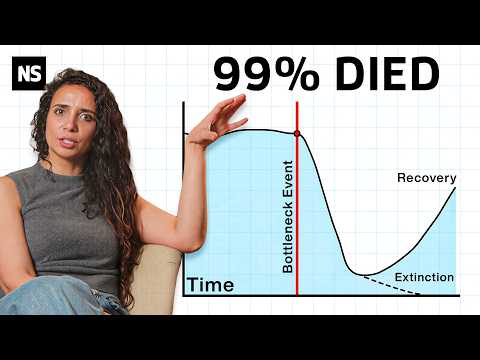
We Might Be Wrong About Humanity’s Near Extinction
Introduction to Human Population Dynamics
Today, the global human population exceeds 8 billion, yet recent genetic studies suggest that there may have been a time in our evolutionary history when the entire human population plummeted to approximately 1,280 adults. This figure is strikingly small, as it could fit within a large school building or a small section of a sports stadium. If such a scenario were to occur today, Homo sapiens would be classified as one of the most endangered species on the planet. Remarkably, scientists believe that a similar event may have transpired around 930,000 years ago, as evidenced by genetic markers in our DNA. These markers indicate that our ancestors endured a catastrophic population crash that eradicated about 99% of the human population at that time. The implications of this discovery are profound, raising questions about the resilience of our species and the potential for similar events in the future.
Chapter 1: The Genetic Bottleneck
Humanity's success as a species is evident in our current population size and cultural diversity. However, genetic analysis reveals that we are not as genetically diverse as one might expect. For instance, a comparison of DNA from individuals in Tokyo and Rio de Janeiro shows that 99.9% of their DNA is identical. In contrast, chimpanzees, despite their smaller population size, exhibit greater genetic diversity. This discrepancy suggests that humans have undergone significant genetic bottlenecks in our history, where only a small number of individuals contributed to the gene pool. These bottlenecks are akin to traffic bottlenecks, where only a few vehicles pass through while the majority are left behind. The implications of such bottlenecks are that they strip away genetic diversity, leaving a population that is genetically similar.
Scientists have identified one major bottleneck that occurred approximately 930,000 years ago. An international team led by Hine Pong Lee at the Chinese Academy of Sciences discovered this bottleneck while attempting to estimate ancient population sizes through DNA analysis. Their findings indicated a drastic reduction in population size, suggesting that a significant event must have occurred to cause such a decline. However, the exact nature of this event remains a subject of debate.
Chapter 2: Potential Causes of the Population Crash
Given that early humans were intelligent and resourceful, the question arises: what could have led to the extinction of 99% of the population? One hypothesis is that a major environmental disaster, such as a volcanic eruption, could have triggered this decline. A well-known example is the Toba eruption in Indonesia around 74,000 years ago, which is believed to have caused a volcanic winter and a subsequent population crash. However, there is no evidence of a similar catastrophic event around 930,000 years ago.
Instead, scientists point to significant climate changes during this period. The Earth was experiencing global cooling, leading to the formation of large ice sheets at high latitudes. This cooling trend would have had dire consequences for human populations confined to lower latitudes in Africa and parts of Asia. As temperatures dropped, the atmosphere became drier, resulting in widespread droughts and a potential collapse of local ecosystems. This shift in climate would have made survival increasingly difficult for early humans, who relied on stable environments for hunting and gathering.
As drought conditions persisted, vegetation would have withered, and grazing animals would have faced starvation. The survival strategies that had worked for generations became ineffective, leading to population declines as food sources dwindled. While some scientists remain skeptical about the severity of these climate changes, the evidence suggests that our ancestors faced significant challenges during this period.
Chapter 3: The Complexity of Extinction Events
As researchers delve deeper into human evolution, they uncover a more intricate narrative. The discovery of new fossils and genetic data continually reshapes our understanding of how Homo sapiens emerged. For instance, a recent podcast episode discusses a remarkable skull found in China that could challenge long-held beliefs about human origins. This evolving narrative highlights the complexity of human history, suggesting that our species has faced numerous challenges and potential extinction events.
Despite the genetic evidence indicating a bottleneck, archaeological records do not support the notion of a dramatic decline in human populations around 930,000 years ago. Numerous archaeological sites from this period indicate that humans were still present and active, raising questions about the validity of the genetic findings. Some researchers propose that rather than a catastrophic event, the observed genetic bottleneck may have resulted from a smaller, isolated population that contributed significantly to the modern gene pool.
Chapter 4: The Reality of Human Survival
Throughout history, Homo sapiens have not always thrived in new environments. Early populations in Europe, for example, faced significant challenges and ultimately disappeared without leaving a genetic trace in modern Europeans. This suggests that our species has experienced multiple instances of failure and extinction, rather than a continuous trajectory of success. The narrative of human evolution is not merely one of survival against the odds, but also one of repeated failures and adaptations.
Moreover, the arrival of humans in the Americas presents another example of this complex history. While there is evidence of early human footprints in New Mexico dating back 23,000 years, genetic data suggests that these populations may not have survived to contribute to modern genetic lineages. This raises the possibility that early human migrations were fraught with challenges, leading to population replacements rather than continuous habitation.
Conclusion: The Uncertain Future of Humanity
Understanding our deep past is crucial for contextualizing our present and future. The story of humanity is filled with unexpected twists and turns, revealing that our survival was never guaranteed. While we may celebrate our current dominance, it is essential to recognize the hardships and challenges that have shaped our species. As we continue to explore our evolutionary history, we must remain vigilant about the potential for future crises that could threaten our existence. The question remains: who were the other humans that almost inherited the Earth, and what can their stories teach us about resilience and survival?
The transcript mentions several hominin species and human-like groups that have played a significant role in the evolutionary history of humans. Notable among these are:
- Homo erectus: This species is noted to have evolved around 2 million years ago. The transcript discusses how Homo erectus was one of the various human species present on Earth at that time.
- Neanderthals: They are referred to as ancient human species that existed in Europe before modern humans. The presence of Neanderthals is highlighted as part of the complex tapestry of human evolution.
- Denisovans: Another group mentioned alongside Neanderthals, contributing to the ancestral lineage of modern humans.
These species were primarily located across Europe and Asia, with Homo erectus having a broader range that included Africa. The transcript also emphasizes that modern humans, or Homo sapiens, are the last surviving species of the numerous human-like groups that once existed. The context of their existence and eventual extinction adds layers to our understanding of human evolution.
- [17:59] "We're talking Homo erectus, for example, an ancient species that actually evolved around 2 million years ago."
- [26:06] "Homo sapiens were not the first species in Europe. In fact, there have been many humans there for about a million years."
- [27:23] "It took out the full 100%. It looks like no one survived."
The transcript presents several central claims regarding the process of human evolution, particularly emphasizing the significant challenges faced by early humans and the implications of genetic bottlenecks. Key assertions made include:
- Genetic Bottlenecks: The discussion emphasizes that at one point in our evolutionary history, the human population may have diminished to as few as 1,280 individuals, suggesting a significant bottleneck in our genetic diversity. This claim raises questions about the resilience of our species and highlights the precariousness of human survival.
- Cognitive and Technological Development: Despite experiencing major population declines, early humans were described as being intelligent and equipped with the technology necessary to adapt to their environments. This indicates that cognitive advancements were crucial in navigating the challenges they faced.
- Adaptation to Environmental Changes: The transcript discusses the impact of severe climate changes, specifically global cooling and the resultant droughts, on early human populations. This suggests that adaptability to changing environments was key to human survival.
These points collectively suggest that while humans have demonstrated extraordinary adaptability and resilience, their evolutionary journey has been fraught with significant challenges that could have led to extinction.
- [02:07] "If humanity came this close to extinction once, how many other times has it happened?"
- [12:45] "The world was in flux and our ancestors began to find that survival strategies that had worked for generations were no longer effective."
- [32:30] "Our survival was never guaranteed."
The speaker references a variety of data types and evidence to substantiate claims about human evolution and the bottleneck effect in our ancestry. These include:
- Genetic Evidence: The analysis of genomes from living people revealed a startling lack of genetic diversity among modern humans, suggesting a significant bottleneck event. The study led by Hine Pong Lee highlights that modern humans share a genetic heritage from a much smaller ancestral population than previously thought.
- Fossil Evidence: The transcript mentions the importance of examining fossils and archaeological finds to understand human evolution. For example, the absence of DNA from earlier populations in Europe indicates that early modern humans did not successfully establish a permanent presence until much later.
- Comparative Studies: The speaker compares human genetic diversity with that of other primates, such as chimpanzees and bonobos, showing that despite a larger population size, humans have much less genetic variation. This comparison underscores the implications of evolutionary pressures and population bottlenecks.
These types of evidence collectively support the narrative of human evolution as a complex interplay of survival, adaptation, and the impact of environmental challenges.
- [08:04] "Something big must have happened to wipe out so many people, leaving just 1% to continue that lineage that would eventually lead to us."
- [15:06] "The DNA inside our bodies is a surprisingly powerful tool for investigating our prehistoric past, but it is not the only tool on offer."
- [15:21] "If humanity experienced a massive population crash about 930,000 years ago, one that wiped out 99% of people, well, surely we should see that in the archaeology."
The transcript delves into the reliability and certainty surrounding the genetic data that suggests a catastrophic population crash in human history. The speaker notes that scientists have discovered evidence within our DNA indicating that humanity may have experienced a dramatic drop in population, decreasing to around 1,280 adults approximately 930,000 years ago. This conclusion is drawn from an analysis of genetic diversity, which reveals that modern humans are far less diverse at the genetic level than one would expect, especially when compared to other species like chimpanzees.
Furthermore, the speaker points out potential gaps in the fossil record and how the archaeological evidence does not entirely align with the genetic findings. For instance, while DNA suggests a massive bottleneck event, the archaeological record shows that humans were present across various regions even after this time, raising questions about the accuracy and interpretation of the genetic data.
Moreover, the transcript highlights the fragility of the evidence presented. The speaker acknowledges the skepticism among scientists regarding the severity of the climate changes that could have triggered such a bottleneck, stating, "[12:40]...not surprisingly, aren't that convinced that conditions became tough enough to trigger a global population crash." This illustrates the ongoing uncertainty and the need for further evidence to clarify these historical events. In summary, while the genetic data suggests a significant population bottleneck, the reliability of this data is complicated by inconsistencies with archaeological findings and ongoing debates within the scientific community.
- [12:40] "...not surprisingly, aren't that convinced that conditions became tough enough to trigger a global population crash."
- [16:14] "The DNA is clearly showing us that our ancestors experienced a massive population crash. And the archaeology is revealing that there probably were plenty of humans around even after this supposed crash."
- [19:22] "...until we have another ancient genome that gives us more leverage on this, I expect that we're not going to settle it."
The transcript outlines several scientific debates and competing hypotheses within the field of anthropogeny, particularly regarding the implications of genetic bottlenecks and the possible causes behind them. One major point of contention arises from the interpretation of genetic evidence suggesting that humanity faced a significant population crash. This raises questions about whether this event was a result of a catastrophic disaster or a natural evolutionary bottleneck due to environmental changes.
The speaker discusses the controversial nature of the bottleneck hypothesis by referencing the Toba eruption, a known volcanic event that occurred around 74,000 years ago. Some scientists have proposed that this eruption caused a similar population bottleneck; however, the speaker notes that there is little consensus on the matter. They assert, "[09:20]...the Toba eruption bottleneck idea is more controversial amongst scientists," indicating that not all researchers agree on the extent or impact of such events.
Additionally, the transcript mentions the skepticism surrounding the climatic conditions that could have led to the bottleneck event 930,000 years ago. The statement, "[12:46]...not surprisingly, aren't that convinced that conditions became tough enough to trigger a global population crash," highlights the disagreement among scientists about the severity of climate shifts during that period and whether they were impactful enough to cause a drastic population decline.
Ultimately, the speaker presents a balanced view by acknowledging differing perspectives within the scientific community. They suggest that the evidence from DNA and archaeology might both be valid but could represent different narratives in human history. This open-minded approach allows for multiple interpretations, reflecting the complexity of human evolution and the ongoing debates that shape our understanding of it.
- [09:20] "...the Toba eruption bottleneck idea is more controversial amongst scientists."
- [12:46] "...not surprisingly, aren't that convinced that conditions became tough enough to trigger a global population crash."
- [16:11] "...the DNA is clearly showing us that our ancestors experienced a massive population crash. And the archaeology is revealing that there probably were plenty of humans around even after this supposed crash."
[00:00] Today, there are more than 8 billion[00:03] humans on Earth. But according to a[00:05] recent genetic study, there may have[00:07] been a moment in our past when the[00:10] entire human population dropped to just[00:13] about 1,280[00:16] adults. That is a number small enough[00:19] for every single human alive to fit[00:22] inside of one large school building or[00:25] just a small section of a sports[00:27] stadium.[00:29] If that happened today, homo sapiens[00:31] would instantly become one of the most[00:33] endangered species on Earth. And yet,[00:36] scientists now think something very[00:38] close to this may actually have happened[00:41] 930,000[00:43] years ago. Hidden inside our DNA is[00:48] evidence that our ancestors passed[00:50] through a catastrophic population crash[00:54] that wiped out about 99% of humans alive[00:58] at that time. For a species that now[01:01] dominates the planet, builds cities, and[01:04] even maintains a permanent presence in[01:07] space, the idea that humanity once came[01:10] within a hair's breath of extinction is[01:14] almost impossible to imagine. But is it[01:17] true? We first reported on this[01:20] controversial discovery back in 2023.[01:23] Since then, scientists have been[01:24] debating what it really means. In this[01:28] video, we'll dig into the genetic clues[01:30] that suggest that humans nearly vanished[01:32] and explore what kind of catastrophe[01:35] could have pushed humans to the brink.[01:38] Because the deeper scientists look into[01:40] our past, the more unsettling the[01:43] picture becomes. Our species dominates[01:46] the planet today. But nearly a million[01:48] years ago, the entire future of humans[01:52] may have rested on the survival of just[01:55] a few hundred families. Which raises an[01:58] even bigger question because if humanity[02:01] came this close to extinction once, how[02:04] many other times has it happened? And[02:07] what's to stop it from happening again?[02:11] Chapter one, the disaster hidden in our[02:14] DNA.[02:16] Our species is incredibly successful.[02:20] You don't get to 8 billion people[02:21] without doing something right. We're[02:24] culturally diverse, too. Just look at[02:26] all of the different societies across[02:28] the world. All the different customs,[02:30] cuisine, literature, architecture. This[02:33] amazing variety is what makes the world[02:36] such an exciting and interesting place.[02:39] But hidden in our DNA is a secret. We[02:42] now have the technology to quickly and[02:45] cheaply analyze DNA. In fact, millions[02:48] of people have now had their DNA read to[02:51] some extent. And as scientists have[02:54] begun to compare the genomes from people[02:56] all across the world, they've discovered[02:59] something unexpected.[03:02] We are nowhere near as diverse at the[03:06] genetic level as you would think. Let me[03:09] explain that. Imagine today picking[03:12] someone at random from Tokyo and[03:14] somebody at random from Rio de Janeiro[03:17] and then comparing their DNA and amazing[03:20] 99.9% of the DNA will be identical.[03:24] But if we look at our great ape[03:27] relatives, that is not the case. There[03:30] are probably no more than 300,000[03:32] chimpanzees left in the wild and they[03:34] are confined to Africa. Now, with such a[03:37] small population, you would think that[03:38] chimpanzees would be more or less[03:41] identical at the genetic level. Only[03:44] they aren't. In fact, their DNA is far[03:47] more diverse than ours is. That means[03:50] that two chimpanzees, both living in[03:52] central Africa on opposite sides of a[03:55] river, might be more genetically[03:56] distinct from each other than two humans[03:59] living on opposite sides of the planet.[04:03] Today's people have about the same[04:05] genetic diversity in that sense as[04:08] bonobos do and bonobos live in a very[04:11] small part of of sort of the DRC. Humans[04:14] and our ancestors have lived across[04:15] almost all of Africa and and much of[04:17] Eurasia. So this is a mismatch. We can[04:20] look at our comparisons with other[04:23] ancient humans including Neanderls,[04:26] Denise um and we could say well if you[04:30] pull all of us we still have kind of low[04:33] variation compared to many other kinds[04:36] of mammals. Some of our low variation[04:39] comes from the connections between[04:41] people. All the populations of Europe,[04:43] of East Asia, of Australia, of the[04:45] Americas, all of those people have[04:49] shared events that suggest that they[04:51] came from a very small group, a few[04:54] thousands of of people.[04:57] >> And that raises an obvious question.[05:00] Why? To answer that question, we have to[05:03] talk about something called bottlenecks.[05:07] We're all familiar with traffic[05:09] bottlenecks, right? So narrow pinch[05:11] points that are difficult to pass[05:12] through. Nobody likes bottlenecks. They[05:14] slow down traffic and that means delays[05:17] upon delays upon delays. But we do[05:19] ultimately get to our destination. But[05:22] genetic bottlenecks are a little bit[05:25] different. There are still narrow pinch[05:27] points, but crucially only a few[05:29] individuals make it through the[05:31] bottleneck. The rest, well, they die[05:34] trying. When we talk about bottlenecks,[05:37] what we're saying is that looking at[05:40] people that we have to sample, their[05:43] ancestors were a smaller number than we[05:46] think that they should be. When we look[05:47] at the variation in the world today, it[05:50] looks like it came from a population[05:52] that was tens of thousands of people and[05:56] not millions of people, not hundreds of[05:59] thousands of people. So that seems like[06:02] a mismatch. So, let's go back to that[06:04] traffic bottleneck for a second. Imagine[06:06] there are a thousand vehicles trying to[06:08] squeeze through. There are lots of[06:10] variations in those vehicles. There are[06:12] some red cars, some blue, silver, even[06:15] some yellow ones. And there are some[06:17] sports cars, SUVs, some large trucks,[06:20] lorries, too. Now, imagine only 10 of[06:23] those vehicles ever make it through that[06:25] bottleneck. The rest are forever trapped[06:28] on the wrong side. You're not going to[06:32] have that much variety left, are you? Of[06:35] those lucky 10 vehicles that make it[06:37] through, maybe four are silver SUVs,[06:40] maybe there are three black cars, a[06:42] couple of red ones, and a blue one. No[06:44] trucks, no sports cars, no yellow cars.[06:48] And that is what a genetic bottleneck is[06:51] like. It strips out a lot of the variety[06:53] in the original population. The[06:56] survivors might go on to flourish and[06:58] the population might grow to a vast size[07:01] to billions of individuals, but the[07:04] memory of the bottleneck is still there[07:07] in the DNA. All of those individuals[07:11] will have pretty similar DNA because[07:13] they all came from that small population[07:15] of survivors that made it through the[07:18] bottleneck. So because living people are[07:20] so similar at the genetic level, we know[07:23] our ancestors must have passed through[07:25] at least one of these genetic[07:27] bottlenecks in the past. And a few years[07:30] ago, almost by accident, an[07:32] international team discovered one of[07:34] them, a big one. This team led by Hine[07:38] Pong Lee at the Chinese Academy of[07:40] Sciences weren't actually looking for[07:42] bottlenecks. They just wanted to[07:43] estimate ancient population sizes, which[07:46] they could do by analyzing the DNA from[07:48] a large number of living people, about[07:51] 3,000 in this case. But when the results[07:53] of their analysis came in, they revealed[07:56] that our ancestors experienced a massive[07:58] drop in their population size about[08:00] 930,000[08:02] years ago. Something big must have[08:04] happened to wipe out so many people,[08:08] leaving just 1% to continue that lineage[08:11] that would eventually lead to us. But[08:14] what?[08:17] Chapter 2. What could have wiped us out?[08:22] Even 930,000 years ago, humans were[08:25] smart. They had the brains and the[08:26] technology they needed to cope with a[08:29] lot of challenges. So, what on earth[08:31] could have wiped out 99% of them?[08:35] >> If something bad happened, we want to[08:37] know what it was, right? What what[08:38] happened to make the population small?[08:41] >> Now, maybe you're thinking it must have[08:43] been a big environmental disaster,[08:45] right? And in theory, it could have[08:47] been. For instance, much more recently,[08:49] about 74,000 years ago, there was an[08:51] enormous volcanic eruption in Indonesia.[08:54] And some people have suggested that this[08:56] eruption, it's called the Toba eruption,[08:58] by the way, was so extreme that it sent[09:01] so much ash into the atmosphere that[09:03] what followed was a year-long volcanic[09:07] winter and a collapse in the human[09:08] populations around at the time. In other[09:11] words, a volcanically triggered genetic[09:14] bottleneck. The thing is, these days the[09:17] Toba eruption bottleneck idea is more[09:20] controversial amongst scientists. And in[09:22] any case, going back to our bottleneck[09:24] at 930,000 years ago, we don't know[09:27] about any major volcanic eruption at[09:30] that time.[09:31] >> There was no giant meteorite that[09:33] happened a million years ago, right?[09:35] There was no asteroid. There was no[09:37] comet. There was no giant volcano that[09:41] made a big difference to human[09:43] population at that time. And to the[09:45] extent that we see giant volcanoes in[09:48] the last two million years, they don't[09:50] really seem we we don't see population[09:52] effects that that have this kind of[09:54] genetic effect.[09:56] >> But what we do know is that the climate[09:58] was changing back then. The problem[10:01] wasn't rising temperatures. It wasn't[10:03] global warming. Instead, it was global[10:05] cooling. There were some big ice sheets[10:08] at high latitudes up near the poles. Now[10:11] at that time our ancestors were really[10:13] confined to lower latitudes in Africa[10:16] and perhaps also in Asia but they[10:19] wouldn't have escaped the effects of the[10:21] glaciation.[10:22] >> A lot of people get interested in[10:24] climate, right? Maybe the initiation of[10:27] the glaciations caused this huge[10:28] problem.[10:29] >> That's because glaciations have global[10:31] consequences. As temperatures dropped,[10:34] sea water cooled. Now cooler water is[10:37] less likely to evaporate. So the[10:39] atmosphere above the seas and oceans[10:42] would have become drier and the winds[10:44] would have helped spread that drier air[10:46] across the world. Drier air means less[10:49] rain and less rain means drought. In[10:52] fact, the scientists think there might[10:54] have been widespread and longlasting[10:56] drought at this time with some deserts[11:00] expanding. Not only that, but there is[11:03] some evidence from the fossil record of[11:04] a wildlife turnover. That's an event[11:07] where plenty of wild species on the[11:09] landscape become rare or even vanish[11:12] altogether. Now, by this point in[11:14] prehistory, our ancestors had spent a[11:16] million years or more living in Africa.[11:20] They had learned to make impressive[11:21] stone tools, hand axes that are[11:23] sometimes compared to Swiss Army knives[11:25] because they are so versatile. They had[11:27] learned to hunt big game, even ancient[11:30] relatives of today's elephants. But for[11:33] most of that time, our ancestors had[11:35] lived in a lush green landscape. Severe[11:38] droughts might have been rare and[11:40] short-lived. Challenging to deal with[11:42] for sure, but not necessarily a survival[11:46] threat. But what if the world's climate[11:50] suddenly flipped? Instead of severe[11:53] droughts being rare, they became very[11:55] common. Maybe the ground was parched for[11:58] years on end. vegetation withered and[12:01] died. Grazing animals starved. Finding[12:05] food were suddenly a much bigger[12:08] challenge. To put it another way, the[12:11] world was in flux and our ancestors[12:14] began to find that survival strategies[12:16] that had worked for generations[12:19] were no longer effective. Hunts failed.[12:22] People starved. Populations shrank.[12:26] Humans came within a hair's breath of[12:29] extinction.[12:31] But hold on just one moment. Before we[12:34] get too carried away, I should say that[12:37] some other scientists, not surprisingly,[12:40] aren't that convinced that conditions[12:42] became tough enough to trigger a global[12:45] population crash.[12:46] >> We have major climate effects throughout[12:48] the pleaene that don't correspond with[12:52] anything that's really tangible in terms[12:54] of genetics. That tells us that well[12:56] okay if there was some sort of climate[12:59] shift it's exceptional on a scale that[13:02] that we don't see later and we just[13:04] don't see signs of of that scale of[13:06] shift[13:07] >> and they have good reason to be[13:08] skeptical because there is actually[13:10] another side to this story that we[13:12] haven't explored yet and when we do the[13:15] narrative begins to look very different[13:18] >> if you ask me what is the most likely[13:20] right what's actually going to explain[13:22] this I would say that it's probably[13:27] we're not seeing a crash, right? The[13:29] evidence for a bottleneck is never that[13:31] we see a crash.[13:34] Chapter 3, the extinction event that[13:37] never was.[13:39] If you're as fascinated as we are by the[13:41] story of human evolution, then you'll[13:43] probably enjoy exploring some of those[13:46] mysteries a little further. Because the[13:48] deeper scientists look into our past,[13:51] the more complicated the story becomes.[13:53] New fossils, genetic discoveries, and[13:56] ancient clues are constantly forcing[13:58] researchers to rethink how our species[14:01] emerged. One of our recent podcast[14:04] episodes explores a remarkable skull[14:06] discovered in China, and it could[14:08] challenge one of the most widely[14:10] accepted ideas about human origins,[14:13] potentially pushing parts of our[14:15] evolutionary story back hundreds of[14:18] thousands of years, raising new[14:20] questions about who we are. You can find[14:24] the conversation on our new scientist[14:26] podcast channel, The World, the[14:27] Universe, and Us. Our award-winning[14:30] weekly show is hosted by Dr. Penny Sache[14:33] and Dr. Rowan Hooper. Each week, they[14:35] unpack the biggest developments in[14:37] science from mathematical mysteries and[14:39] human evolution to the frontiers of[14:41] physics and the future of our planet,[14:44] bringing in expert guests to explain[14:46] what the latest discoveries really mean.[14:49] Remember, the podcast now has its own[14:52] dedicated channel. Click the link in the[14:54] description to subscribe and make sure[14:56] you don't miss an episode.[14:59] The DNA inside our bodies is a[15:01] surprisingly powerful tool for[15:03] investigating our prehistoric past, but[15:06] it is not the only tool on offer.[15:08] Another way is to examine the fossils[15:10] that we dig up. There are thousands of[15:13] archaeological sites across the world,[15:15] preserving the artifacts and skeletal[15:17] remains of people. now long gone. Now,[15:21] logically, if humanity experienced a[15:24] massive population crash about 930,000[15:27] years ago, one that wiped out 99% of[15:31] people, well, surely we should see that[15:35] in the archaeology. We're not talking[15:37] here about mass graves, but we would[15:40] expect a dramatic decline in the number[15:42] of archaeological sites recording human[15:45] activity.[15:47] And we don't really see that. There are[15:49] actually plenty of archaeological sites[15:51] across Africa, Asia, and Europe that[15:54] were occupied by humans 930,000[15:57] years ago. and they were still occupied[16:00] after that time even though the DNA[16:03] tells us that by then our ancestors[16:06] could comfortably be squeezed into a[16:09] large gymnasium.[16:11] So something here doesn't quite add up.[16:14] The DNA is clearly showing us that our[16:17] ancestors experienced a massive[16:19] population crash. And the archaeology is[16:22] revealing that there probably were[16:25] plenty of humans around even after this[16:28] supposed crash. And I know what you're[16:31] thinking. They surely can't both be[16:33] right. Either the DNA is wrong or the[16:36] archaeology is wrong.[16:38] >> Some reconstructions of what happened[16:40] suggest that well there was a bottleneck[16:43] there. There was a time that ancient[16:46] humans arose and that ancient human[16:49] group grew enough and the Neanderls and[16:52] Denisans went their own way and the[16:55] African populations became more diverse[16:57] at that time. This was a beginning in[17:00] some way of of maybe our lineage. other[17:04] folks to look at that and say what we[17:06] can see is that this was a smaller less[17:11] diverse population at that time but was[17:13] it really tiny right was was there some[17:15] catastrophic really crash so that seems[17:20] like a mismatch it's a mismatch in[17:22] particular relative to the fossil and[17:25] archaeological records because we know[17:28] that we have tools that were made by[17:30] hominins people that were across large[17:33] parts of Africa, large parts of Eurasia[17:35] across this time. So that's the basic[17:37] principle of bottleneck. There's a[17:39] mismatch.[17:40] >> But here's the surprising truth. The DNA[17:44] and the archaeology might both be right.[17:48] Here's how. If we wind the clock back to[17:50] 930,000 years ago, there were quite a[17:53] few different human species on the[17:56] planet. We're talking Homo erectus, for[17:59] example, an ancient species that[18:01] actually evolved around 2 million years[18:03] ago. And we know that there were others[18:06] as well. But today, all that variety has[18:09] vanished. Homo sapiens, we are the last[18:12] human standing. So when we look at the[18:14] DNA of living people, we're really only[18:17] getting an insight into what our direct[18:20] ancestors were doing 930,000[18:24] years ago. Our DNA can tell us very[18:27] little about the fortunes of all of[18:30] those other species that also existed[18:33] 930,000 years ago because those other[18:36] humans aren't our direct ancestors[18:40] or most of them aren't anyway. These[18:43] days we do know that there was some[18:45] mixing and interbreeding between these[18:47] species but we don't know how much. What[18:50] that means is that the DNA could be[18:53] correct. Our ancestors experienced a 99%[18:57] population crash and the archaeology[19:00] could also be correct. Humans in[19:02] general, all those other species that[19:05] never made it to the present in the[19:07] broader sense were still surviving and[19:10] thriving back then. a lot of things are[19:12] possible and that's exciting because it[19:15] means that we have, you know, different[19:18] ways to align the genetic evidence with[19:20] with the fossil record. But it's[19:22] frustrating because until we have[19:24] another ancient genome that gives us[19:27] more leverage on this, I expect that[19:29] we're not going to settle it.[19:31] >> And there's one more take on this 99%[19:34] population crash. It's becoming clearer[19:36] that these ancient humans were split[19:39] into a number of distinct populations[19:41] that didn't mix much. Now, what if one[19:44] of those distinct populations around[19:47] 930,000[19:48] years ago saw, let's say, 1,280 adults[19:53] split away from that bigger population[19:56] and set off on their own? And what if[19:59] just by chance that small population[20:02] ended up having a big influence over the[20:05] modern gene pool? In that scenario, our[20:08] modern DNA would carry a signature of[20:11] this event 930,000 years ago when our[20:15] ancestors numbered just 1,280.[20:18] But that tiny population isn't evidence[20:20] of a disaster that wiped out 99% of[20:23] humans. In fact, those 99% of humans[20:26] might have continued to do just fine.[20:29] It's just that they no longer mixed with[20:31] that tiny population, that 1% of humans,[20:35] those 1,280[20:37] individuals who contributed most DNA to[20:41] humans today. It's the extinction event[20:44] that never was. The evidence is always[20:47] that we see an expansion and we cannot[20:49] answer whether the expansion happened in[20:52] the context of extinction or if the[20:55] expansion happened in the context of[20:57] some small number of groups really[20:59] succeeding and the rest of them just[21:02] didn't succeed as much. But what[21:04] happened was that some groups just[21:06] really worked. they really expanded and[21:09] what we see in the end is the signs of[21:11] their success and and not the direct[21:14] evidence of failure of everybody else.[21:17] Right now we actually don't have enough[21:18] evidence to judge whether that scenario[21:21] might have played out, but we do know[21:24] that some other genetic bottlenecks in[21:26] our past can be explained by this sort[21:28] of population split. Probably the most[21:31] famous of these occurred 60,000 years[21:33] ago. By then, our species, Homo sapiens,[21:36] had appeared. We were present across[21:38] Africa and had a foothold elsewhere.[21:41] However, elsewhere outside of Africa, we[21:45] would go extinct. Then, about 60,000[21:47] years ago, one small population of our[21:50] species left Africa successfully. And[21:54] these guys, they were incredibly[21:58] successful. In fact, pretty much all[22:00] living people with ancestors from[22:02] Europe, Asia, the Americas, Australia,[22:05] anywhere outside of Africa, basically[22:08] can trace their origins to this small[22:11] population. How small was that[22:13] population? It's been estimated that it[22:16] could be as small as 10,000 people. If[22:19] that's correct, that's larger than the[22:21] population 930,000[22:24] years ago. Remember that one has been[22:26] estimated at around 1,500 people, but[22:30] 10,000 people is still a tiny number.[22:34] All of the people outside of Africa in[22:37] recent historic time, all the[22:39] populations of Europe, of East Asia, of[22:41] Australia, of the Americas, all of those[22:44] people have shared events that suggest[22:48] that they came from a very small group,[22:51] a few thousands of of people at a time[22:55] around 50,000 years ago. In Africa, it's[22:58] different. Um, African populations today[23:01] retain more variation from that period[23:03] of time. Their populations were not[23:06] restricted to a small number of[23:08] ancestors. That event, what we today[23:11] term the out of Africa event, was a[23:14] major transition in the histories of[23:18] peoples of Eurasia.[23:19] >> And here's the thing, this example shows[23:22] you how important context is. Because if[23:25] I told you that all these non-affrican[23:27] populations passed through this severe[23:29] bottleneck just 60,000 years ago, you[23:32] might well think, wa, something[23:34] absolutely disastrous must have happened[23:36] to reduce the ancestral population to[23:38] just 10,000 people. But if I told you,[23:41] no, no, what you're really seeing here[23:43] is not an ancient disaster, but the[23:46] moment that a small group of pioneers[23:48] stroed out of Africa to explore the[23:51] world, well, it puts a completely[23:53] different spin on things. And more[23:55] importantly, it fits with the story we[23:57] like to tell about ourselves as a[23:59] species, that we're curious, we're[24:01] clever, we have this burning desire to[24:04] stride out and explore. It's actually[24:06] quite a romantic image. It's very[24:08] powerful and there's really very little[24:11] room there for this idea of a[24:13] catastrophe and disaster because the[24:15] human story is a successful one. So when[24:18] we learn there was a mysterious genetic[24:20] bottleneck about 930,000 years ago and[24:23] we're not sure why, what are we going to[24:26] decide is the most likely explanation.[24:30] It just feels more likely that the[24:32] bottleneck is another of these[24:34] pioneering moments when a few hundred[24:37] humans decide to stride out on their own[24:40] and try something new.[24:43] Because the alternative that this was a[24:46] moment when humans nearly failed, it[24:49] does feel almost unthinkable.[24:51] >> I'll tell you, everybody wants a garden[24:54] of Eden, right? Everybody wants a Noah's[24:56] arc. Everybody wants this story that[24:59] that we against all odds we came from[25:02] some very tiny number and we succeeded[25:04] and we survived[25:06] >> except except that there's one final[25:09] strand of evidence we still need to[25:12] explore because in the past few years we[25:15] have actually discovered something quite[25:17] unsettling about our species. It turns[25:19] out that the unthinkable can and does[25:22] happen. Humans have not only come close[25:25] to failure, they actually have failed[25:29] repeatedly.[25:31] Chapter 4. The surprising truth about[25:33] human survival.[25:36] Homo sapiens were not the first species[25:39] in Europe. In fact, there have been many[25:42] humans there for about a million years.[25:44] But those earlier humans belong to[25:47] ancient species groups like the[25:49] Neanthals. Modern humans had entered[25:51] Europe numerous times. However, they[25:54] didn't establish a permanent foothold[25:56] until about 54,000 years ago. Now, our[26:00] species is perhaps the most successful[26:03] and sophisticated human species of them[26:06] all, particularly when you consider that[26:08] our species now numbers in the billions[26:11] and all of those other ancient human[26:13] species are long gone. So, it does make[26:16] sense to us that those pioneering homo[26:19] sapiens who first reached Europe[26:21] thrived, that they gradually took over[26:24] the continent and squeezed out all of[26:26] those ancient Neanderthalss.[26:29] But that is not actually the full story.[26:32] In fact, those very first populations of[26:35] our species in Europe did not thrive.[26:38] They were really struggling. What went[26:41] wrong?[26:43] We don't really know. These first[26:45] populations, they were clearly[26:47] sophisticated people. They spread across[26:50] the continent from Poland in the east to[26:53] the British Isles in the west. They[26:55] hunted reindeer and woolly rhinos using[26:57] beautiful stone tools to butcher their[26:59] carcasses. But then they disappeared. We[27:03] know this because geneticists have[27:05] managed to extract DNA from the ancient[27:08] skeletons of people who belonged to[27:10] these first populations. and there is no[27:13] trace of their DNA in today's Europeans.[27:17] This wasn't a genetic bottleneck that[27:19] took out 99% of the population. It took[27:23] out the full 100%. It looks like no one[27:27] survived.[27:28] It was only when our species returned to[27:31] Europe that they managed to thrive and[27:34] establish a permanent presence. So[27:38] essentially, you're looking at a case of[27:41] the most successful species of human[27:43] that ever existed, entering into Europe[27:47] numerous times, not making it, and then[27:50] only eventually gaining a foothold.[27:54] >> Every piece of evidence that we have[27:55] from ancient genetics today tells us[27:58] that against all odds, people made it[28:00] work with with other populations that[28:03] were really different from them. Right?[28:06] When you say that I'm 2% Neanderl, what[28:08] that means is that there were groups of[28:10] people that were separated for 800,000[28:13] years from each other that in the end[28:16] came back together and found a way to[28:17] make it work.[28:18] >> Stories like this, stories of our[28:20] species trying but ultimately failing to[28:22] survive in a new landscape. Well, we're[28:26] beginning to suspect that they're[28:27] actually quite common in prehistory.[28:29] Here's another possible example. One of[28:32] the biggest questions in archaeology is[28:34] about the arrival of our species in the[28:36] America. Many archaeologists think that[28:39] humans reached the land mass when[28:41] Earth's climate was colder, when lots of[28:44] water was frozen into massive ice sheets[28:47] in the northern hemisphere. Because[28:49] those ice sheets were so large and[28:51] contained so much water that sea levels[28:54] were much lower. It was actually[28:56] possible as a result to walk from[28:58] Siberia to Alaska because the bearing[29:00] sea that now separates the two didn't[29:03] exist at that time in that way. So[29:07] there's broad agreement on how humans[29:09] reached the America via the bearing[29:11] straight. But is there agreement on when[29:15] they did so? Not so much. Were people in[29:19] the Americas 18,000 years ago? Were[29:21] people in the Americas 20,000 years ago?[29:23] Were people in the Americas only in the[29:26] last 14,000 years? Right? Genetics[29:28] doesn't answer that question clearly.[29:30] >> Previously, evidence suggested that[29:32] humans have been living in the Americas[29:34] for about 15,000 years. But did humans[29:37] reach there earlier? New evidence is[29:40] suggesting that that is actually the[29:42] case. Probably the most dramatic[29:45] evidence comes from thousands of ancient[29:48] human footprints preserved in New[29:51] Mexico. A few dozen of them seem to be[29:55] really old. We're talking maybe 23,000[29:59] years old. Now, there is some DNA[30:01] evidence that suggests that the first[30:03] Americans entered into that land mass[30:06] sometime after 20,000 years, which isn't[30:10] really compatible with footprints that[30:13] are 23,000 years old. But if those[30:18] footprints were left by humans who were[30:22] there earlier, perhaps they didn't[30:25] survive to pass on their DNA to modern[30:27] populations. Then archaeology and[30:31] genetics could actually both be correct.[30:34] Perhaps they were another group that hit[30:35] tough times. Perhaps they came up[30:37] against a 100% population replacement.[30:41] >> Is there an earlier movement that[30:43] somehow got covered up, which is very[30:45] possible? Um, and and there's some[30:48] suggestion of this in South America now.[30:50] Or is this, you know, sort of a slower[30:53] motion expansion and and that's what it[30:57] signature looks like is what we see[30:59] today. I think it's going to be great.[31:02] >> Chapter 5. Survival was never[31:05] guaranteed.[31:07] Why do we care about the deep past at[31:09] all? Well, I think one reason is that we[31:12] love stories. And we particularly love[31:15] stories about ourselves. Stories that[31:17] help us make sense of the world and our[31:19] place in it. And there's no better way[31:21] to understand our place in the world[31:24] than by investigating the deep history[31:27] of our species and uncovering the clues[31:29] that help explain why we came to[31:32] dominate our planet. Now, a really good[31:34] story should be full of unexpected[31:36] surprises, right? And that's why our[31:39] starting point here was so compelling.[31:41] It's almost unthinkable to imagine our[31:44] ancestors struggling to survive. So the[31:46] idea that 99.9%[31:49] of them vanished. It's not what we[31:52] expect to hear, not something many of us[31:55] have really contemplated. So it makes us[31:58] sit up and take notice. We want to know[32:00] more. And then we dig deeper. And we[32:03] find that there are ways to explain that[32:05] 99% figure that don't necessarily[32:08] involve major disasters or the near[32:10] extinction of all humans. And I think we[32:13] find that reassuring. And for a lot of[32:16] us, that's probably where we would like[32:18] the story to end. But science doesn't[32:21] always meet our expectations because we[32:24] know that there's an epilogue to our[32:26] story, and it's a really unsettling one.[32:30] Our survival was never guaranteed.[32:34] It's comforting to imagine that our[32:36] species moved from success to success on[32:39] its route to world domination. But we're[32:42] now beginning to realize that the story[32:44] was much more complicated, that it[32:46] involved plenty of hardship and wiped[32:49] out whole populations.[32:51] >> Everybody likes a story about a pioneer,[32:53] you know, surviving against the odds.[32:56] Every day people in the world are[32:59] surviving against the odds, right? And[33:01] those of us who are not fighting against[33:03] the odds at any given minute should feel[33:06] fortunate. When I look at past people[33:08] and their skeletal records and I[33:11] understand the the real challenges that[33:13] they persisted through, they survived[33:15] through.[33:17] I say, "Wow, you know, that is something[33:20] that is intrinsically us is that we find[33:24] ways to make it work even when[33:25] everything seems to be broken."[33:28] And um and I think that that's a shared[33:30] message that all of us can take away.[33:33] >> Our species dominates the world today[33:35] that if our survival wasn't inevitable,[33:38] then the real question is this. Who were[33:42] the other humans that almost inherited[33:45] the Earth instead? Click on our next[33:48] video to find out.
New Denisovan Skull Rewrites Our Family Tree
This skull changes everything we know about human origins and our closest relatives. Currently, there is only one species of human, but tens of thousands of years ago, there were nine other remarkable species that inhabited the Earth. The discovery of these ancient remains raises a crucial question: how are all these species related? A particular skull, believed to be from an ancient human closely related to modern humans, may hold the key to answering this question.
Scientists are actively studying fossils from China, which are expected to significantly impact our understanding of human evolution, particularly regarding Neanderthals and Denisovans. The quest to understand where we came from is a fundamental inquiry, and with each passing year, researchers uncover more ancient human fossils. For instance, fossils discovered in Africa, nearly 4 million years old, exhibit a combination of features: long arms akin to an orangutan, gripping toes like a chimpanzee, and long legs resembling those of modern humans. Over millennia, evolution gradually transformed these ancestors into creatures that more closely resembled contemporary humans.
One of the most notable fossils is Lucy, who exemplified the transitional phase between ape and human. By approximately 2.5 million years ago, early humans emerged in Africa, but these were not members of our species. The human family tree is more complex and diverse than previously understood, suggesting that when modern humans appeared around 315,000 years ago, they coexisted with at least five other human species.
- Homo floresiensis: A species from Indonesia, often referred to as the "hobbit" due to their small stature.
- Homo luzonensis: Found in the Philippines, this species exhibited curved finger and toe bones, indicating they may have been adept climbers.
- Neanderthals: Known for their robust physiques and prominent brow ridges, they lived across Europe.
- Homo naledi: An almost ape-like species from southern Africa, believed to have engaged in complex burial rituals despite their small brain size.
- Homo erectus: An ancient species that appeared around 2 million years ago and persisted until about 110,000 years ago.
While the relationship among these species is still debated, a prevailing idea is that Neanderthals were our closest relatives. Recent advancements in DNA analysis revealed that Neanderthals and modern humans interbred, with many people today carrying Neanderthal DNA. This genetic evidence suggests that both groups shared a common ancestor, referred to as Ancestor X, approximately 500,000 to 700,000 years ago.
The recent discovery of a skull has prompted scientists to rethink our family tree. This skull, found in a well in China and dating back about 146,000 years, does not resemble modern humans or Neanderthals. Researchers have classified it as a new species, named Homo longi, or "dragon man." This skull is associated with Denisovan DNA, indicating that Denisovans may be more closely related to modern humans than Neanderthals.
Understanding the Denisovans is challenging due to the limited fossil evidence available. However, recent excavations at the Denisova cave and Baishiya Karst cave have provided insights into their existence. The Denisova cave has yielded stone tools and jewelry, but it has also been occupied by Neanderthals and modern humans, complicating the attribution of artifacts. In contrast, Baishiya Karst cave appears to have been exclusively occupied by Denisovans, providing a clearer context for studying their tools and lifestyle.
Excavations at Baishiya Karst cave suggest that Denisovans may have adapted to high-altitude living, hunting a variety of animals and possibly using their skins for clothing. This adaptability raises questions about their motivations for inhabiting such challenging environments, with some archaeologists proposing that curiosity may have driven their exploration.
The discovery of this skull not only sheds light on the Denisovans but also prompts further questions about the fate of other human species and the origins of Homo sapiens. The complexities of human evolution are encapsulated in this single skull, which holds the potential to unlock many mysteries about our past. As research continues, scientists are eager to explore what other ancient remains can reveal about our origins.
The transcript discusses several hominin species and groups that contribute to our understanding of human evolution. Here is a comprehensive list of the species mentioned, along with their active time periods and geographical locations:
- Australopithecus: No specific time period or geographical location was provided in the transcript, but this genus is known to have existed in Africa around 4 million years ago. The transcript mentions fossils found in Africa, implying a connection to this genus.
- Lucy: A famous specimen of Australopithecus afarensis, Lucy is described as walking a fine line between ape and human approximately 3.2 million years ago. This indicates her existence in Africa, although specific locations are not provided.
- Homo sapiens: Our own species appeared around 315,000 years ago in Africa, but the transcript emphasizes that these early humans were not the only hominins present at that time.
- Homo floresiensis: This species, often referred to as 'the hobbit,' lived on the Indonesian island of Flores. The exact time period of their existence was not detailed in the transcript.
- Homo luzonensis: Found in the Philippines, this species is mentioned briefly, with no specific time frame or details about its existence provided in the text.
- Neanderthals: Known to have heavily built bodies, Neanderthals lived in Europe, although specific dates were not mentioned.
- Homo naledi: Described as having almost ape-like features, this species is said to have existed in southern Africa. The transcript suggests complexity in their burial rituals but does not provide specific dates.
- Homo erectus: This ancient species is noted to have first appeared about 2 million years ago and was still present on Earth as recently as 110,000 years ago. It occupied regions across Africa and Eurasia.
- Denisovans: Although not a species per se when first discovered, the transcript notes that the skull recovered in China is associated with Denisovan DNA, which is believed to represent this group of ancient humans.
This information underscores the rich diversity of human ancestry and evolutionary relationships that have been unearthed through fossil discoveries.
- [01:49] 'By about 2 and 1/2 million years ago, humans had appeared in Africa. But those first humans weren't members of our species.'
- [02:13] 'This means that by the time our species did appear about 315,000 years ago, it shared the world with as many as five other human species.'
- [04:00] 'They argued that after ancestor X gave rise to the Neanderthal group and the modern human group, the Neanderthal group quickly split again.'
The transcript presents several central claims about human evolution, emphasizing the complexity and diversity of our ancestry. Below are the key assertions regarding the process of human evolution:
- Complexity of Human Ancestry: It is suggested that the human family tree is not linear but rather 'far more tangled and diverse than we could have imagined.' This complexity is evident from the numerous species that coexisted with Homo sapiens.
- Interbreeding: The transcript highlights that Neanderthals and modern humans interbred, leading to the presence of Neanderthal DNA in contemporary humans. This interbreeding is presented as a significant aspect of our genetic heritage.
- Denisovans as Close Relatives: New findings suggest that Denisovans might be more closely related to modern humans than Neanderthals, prompting a revision of the evolutionary narrative. This challenges long-held assumptions about Neanderthals being our nearest relatives.
- Evolutionary Features: The development of distinct anatomical features, such as the upright walking ability seen in Lucy and other early hominins, is noted as vital in the evolutionary transition from ape-like ancestors to modern humans.
- Exploration and Adaptation: The behavior of Denisovans, particularly their ability to adapt to challenging environments such as the Tibetan plateau, is discussed as a trait that may reflect human curiosity and adaptability, traits likely shared with modern humans.
These claims collectively foster a more nuanced understanding of human evolution, suggesting that survival and adaptation were influenced by a combination of environmental challenges and interspecies relationships.
- [02:06] 'One of the greatest discoveries of the 21st century is that the human family tree is far more tangled and diverse than we could have imagined.'
- [08:44] 'We've always known Neanderthals to be our closest ancestors, but this new skull discovery reveals that the Denisovans are actually more closely related to modern humans than the Neanderthal group.'
- [10:12] 'Archaeologists have found hundreds of stone tools, as well as some spectacular jewelry.'
The speaker references various types of data and evidence to support claims about human evolution in the transcript. This evidence includes:
- Fossils: The transcript mentions numerous ancient human fossils discovered across different continents, such as Africa and Eurasia. Notable examples include Lucy and the fossils from the Denisova cave.
- Genetics/DNA: The analysis of DNA from ancient bones, particularly those of Neanderthals and Denisovans, provides crucial evidence regarding interbreeding and evolutionary relationships. The transcript states that researchers found unexpected DNA in fossils that did not match known species, leading to the identification of Denisovans.
- Comparative Studies: The speaker discusses how the skull from China has been compared to other ancient human skulls to construct a new family tree, highlighting differences and similarities that reveal evolutionary relationships.
- Archaeological Finds: Evidence from archaeological sites, particularly the presence of tools and artifacts, is cited as critical for understanding the behaviors and lifestyles of ancient hominins. Specifically, the findings at the Denisova cave and Baishia karst cave indicate the types of activities and environments inhabited by these ancient peoples.
These various forms of data collectively enhance our comprehension of human evolution, illustrating how different lines of evidence converge to paint a clearer picture of our ancestry.
- [03:29] 'To this day, scientists argue about exactly how these species relate to one another.'
- [04:43] 'They said it belonged to a mysterious group of ancient humans who were closely related to the Neanderthals.'
- [10:26] 'As far as archaeologists can tell, Denisovans were the only humans who lived here.'
The transcript sheds light on the uncertainty and challenges faced by scientists in understanding human evolution. It highlights the fragility of the evidence available and the ongoing debates surrounding the human family tree. For example, it is noted that the human family tree is "far more tangled and diverse than we could have imagined," indicating that our understanding is still evolving and that there are numerous gaps in the current fossil record that prevent a clear picture of our ancestry.
Moreover, the speaker mentions that many ideas about ancient humans are recent and have not yet undergone extensive debate within the scientific community. This is particularly evident when discussing the implications of a newly discovered skull and its potential reclassification of ancient human relationships: "these ideas are so new that scientists haven't had much of a chance to debate and further test them yet." This statement underscores the tentative nature of the current understanding of our evolutionary history.
Additionally, the speaker notes that while we have some evidence of ancient human species, such as Homo floresiensis and Homo naledi, the fossil record remains sparse for others, like the Denisovans. The speaker states, "For the Denisovans, scientists had a few tiny fossils that would comfortably fit in the palm of your hand," suggesting that much remains to be discovered about this group and their place in our evolutionary history. Overall, the transcript points to the dynamic and evolving nature of anthropogeny, where each new discovery can shift the understanding of our origins.
- [02:01] "This means that by the time our species did appear about 315,000 years ago, it shared the world with as many as five other human species."
- [09:09] "It's worth saying that all of these ideas are so new that scientists haven't had much of a chance to debate and further test them yet."
- [04:11] "The DNA also suggested that Neanderthals and modern humans both shared a common ancestor about 500,000 to 700,000 years ago."
The transcript reveals several scientific debates and competing hypotheses within the field of anthropogeny, particularly concerning the relationships among different ancient human species and their connections to modern humans. One of the key debates highlighted is regarding the relationship between Neanderthals, Denisovans, and modern humans. The speaker notes that there is a longstanding belief that Neanderthals were our closest relatives, but new evidence may alter this perspective. For instance, the discovery of a new skull associated with Denisovan DNA has led to hypotheses suggesting that Denisovans might actually be more closely related to modern humans than Neanderthals.
This shift in understanding is significant as it implies that the definition of 'closest relatives' may need to be reconsidered. The statement, "this new skull discovery reveals that the Denisovans are actually more closely related to modern humans than the Neanderthal group," encapsulates the ongoing discussions within the scientific community about how these ancient species interrelate.
Moreover, the speaker also alludes to potential gaps in knowledge regarding the behaviors and lifestyles of Denisovans, saying, "to really understand the lives of the Denisovans, we'll need to study the tools and other artifacts they made," which indicates that current evidence is insufficient for drawing comprehensive conclusions about their behavior. The speaker does not take a definitive side in these debates but rather presents the evolving nature of the discussions, reflecting a landscape where multiple perspectives are being considered and where new findings could reshape existing theories.
- [08:54] "It seems that the Denisovans belong to the species Homo longi."
- [10:32] "So far, scientists have only found two of those sites... where archaeologists have found hundreds of stone tools, as well as some spectacular jewelry."
- [12:11] "If the Denisovans really were our closest relatives, curiosity is just the sort of character trait we might expect to share with them."
[00:00] This skull changes everything we know[00:03] about who we are, where we came from,[00:06] and who we should call our closest[00:09] relatives. Today, there's only one[00:11] species of human. But did you know tens[00:14] of thousands of years ago, there were[00:16] nine other incredible species that roam[00:19] the earth? These are some of their[00:21] remains that scientists have discovered.[00:23] And with this discovery, one question[00:26] has been nagging away at the back of our[00:28] minds. How are we all related? Well,[00:31] this skull might hold the answer.[00:33] >> I'm working with Chinese colleagues on[00:35] studying really interesting fossils from[00:37] China, which I think will have a big[00:38] impact on this story of our origins, the[00:41] origins of the neanderals and the[00:43] [music] origins of the deniscans. It[00:45] comes from an ancient human that's more[00:47] closely related to us than any other[00:50] species. And it might change [music][00:53] everything we know about human[00:55] evolution.[00:58] Where did we come from? It's one of the[01:00] most fundamental questions we ask[01:02] ourselves. Every year, scientists get[01:04] closer to discovering this answer. They[01:07] dig up hundreds of ancient human fossils[01:09] annually. Take a look at these fossils[01:12] discovered in Africa. They're nearly 4[01:14] million years old, and they have a list[01:17] of incredibly odd [music] features. long[01:20] arms like an orangutan, gripping toes[01:23] like a chimpanzee, and long [music] legs[01:26] like us. As the millennia passed,[01:29] evolution gradually turned those[01:31] ancestors into creatures that looked a[01:34] little more like us. Let me introduce[01:36] you to Lucy, one of the most famous[01:38] fossils ever discovered. Lucy walked a[01:41] fine line between ape and human,[01:44] upright, curious, and [music] on the[01:46] brink of something new. And by about 2[01:49] and 1/2 million years ago, humans had[01:52] appeared in Africa. But those first[01:54] humans weren't members of our species.[01:57] In fact, one of the greatest discoveries[01:59] of the 21st century is that the human[02:01] family tree is far more tangled and[02:04] diverse than we could have imagined.[02:06] This means that by the time our species[02:09] did appear about 315,000 years ago, it[02:13] shared the world with as many as five[02:15] other human species. Let me tell you all[02:18] about them quickly. On the Indonesian[02:20] island of Flores, there was a species of[02:23] unusually short humans [music] known as[02:25] Homo Floresensis. This species is[02:28] sometimes nicknamed the hobbit. Just[02:31] 2500 km to the north in the Philippines,[02:34] there lived another species known as[02:36] Homolusinensis.[02:37] They had curved finger and toebones,[02:40] hinting that they might have been one of[02:42] the last humans able to climb trees as[02:44] easily as they walked on the ground.[02:46] Across in Europe, meanwhile, there were[02:48] the familiar Neanderls with heavily[02:51] built bodies and prominent bony ridges[02:54] above their eyes. In southern Africa,[02:56] there were odd almost ape-like humans[02:59] known as Homonetti. Some scientists[03:02] think that this species developed[03:04] complex burial rituals despite having a[03:07] relatively small brain. And all across[03:10] Africa and Eurasia, there were small[03:12] populations of Homo erectus, [music][03:15] an ancient species that had first[03:17] appeared on Earth about 2 million years[03:19] ago and was still present on our planet[03:22] as recently as 110,000 years ago. To[03:25] this day, scientists argue about exactly[03:29] how these species relate to one another.[03:31] [music] But one central idea has rarely[03:34] been questioned. Most scientists suspect[03:36] that among all these ancient humans, it[03:39] was the Neandertols who were our closest[03:41] relatives. [music] About 15 years ago,[03:44] we learned just how closely related the[03:46] Neanderls were to our ancestors. Using[03:49] new tools to read DNA trapped inside[03:52] ancient human bones. Scientists began[03:55] studying the Neanderl genome. They found[03:57] clear evidence that Neanderls and our[04:01] ancestors interbred [music] with each[04:03] other. In fact, even today, most of us[04:06] carry some Neanderl DNA in our bodies[04:09] left over from this interbreeding. The[04:11] DNA also suggested that Neanderls and[04:14] modern humans both shared a common[04:17] ancestor about 500,000 to 700,000 years[04:21] ago. We don't know the exact identity of[04:24] that ancient human species. So, it's[04:26] sometimes known simply as Ancestor X.[04:29] So, where exactly does this skull fit[04:32] into the story? And why does it change[04:35] everything we know? When scientists[04:38] began reading the DNA locked away in[04:40] ancient human bones, they found[04:43] something unexpected. In a tiny finger[04:46] bone and a few teeth, all dug up at[04:48] Denise of a cave in southern Siberia,[04:51] they found DNA that didn't match any[04:54] they had seen before. It didn't belong[04:56] to a Neanderl and it didn't belong to[04:59] one of our modern human ancestors.[05:01] Eventually, the scientists worked out[05:03] how to explain this unusual DNA. [music][05:06] They said it belonged to a mysterious[05:09] group of ancient humans who were closely[05:11] related to [music] the Neandertols. That[05:14] meant they had to redraw our family[05:17] tree. They argued that after [music][05:19] ancestor X gave rise to the Neanderl[05:22] group and the modern human group, the[05:24] Neanderl group quickly [music] split[05:27] again. One branch led to the familiar[05:29] Neanderls and the other led to the[05:32] enigmatic humans from the Denise of a[05:35] cave. The scientists even gave these[05:37] humans a name, the Denisven. But the[05:40] Denisven were still very mysterious.[05:43] Think back to those other ancient human[05:45] species we met earlier. Homo[05:47] floresiansis from Indonesia, Homonetti[05:50] from southern Africa and so on. We know[05:52] quite a lot about all these species[05:54] because scientists have unearthed plenty[05:57] of fossil bones and even some almost[05:59] complete skeletons belonging to them.[06:02] For the Denisven, [music][06:03] scientists had a few tiny fossils that[06:06] would comfortably fit in the palm of[06:08] your hand. Things began to change in[06:11] 2019 when experts confirmed that a[06:13] jawbone found in Baishia karst cave[06:17] which is on the Tibetan plateau[06:18] contained denisven protein molecules.[06:21] Then earlier this year scientists pulled[06:24] off a similar trick with this skull. It[06:27] has just one tooth still attached. And[06:30] when scientists scraped some of the[06:32] plaque off the tooth and analyzed it,[06:34] they found traces of Denisven DNA. For[06:37] the first time, scientists could[06:40] actually stare a Denisven in the face.[06:43] But what do we know about this skull?[06:45] And how does it relate to us? Well,[06:47] appropriately enough for a mysterious[06:49] Denisven, its discovery is also[06:52] something of a mystery. The official[06:54] story is that it was found by a laborer[06:57] working near Harbon in northeast China[06:59] in the 1930s. The laborer is said to[07:02] have hidden the skull in the bottom of a[07:04] well for decades, only revealing the[07:07] secret of its existence to his family[07:09] shortly before he died. His family[07:12] recovered the skull and handed it over[07:13] to scientists in 2018. Those scientists[07:17] then ran some tests and in 2021,[07:20] >> you know, I was on that Dragger Man[07:21] paper that created Homol Longi and we're[07:23] pretty sure that's a genis,[07:25] >> concluded the skull is about 146,000[07:30] years old. They also looked closely at[07:32] the skull's [music] shape and[07:33] appearance. In their 2021 study, they[07:36] argued that the skull didn't look like a[07:39] modern human or a Neanderl. They[07:42] actually placed it in a new species[07:44] which [music] they named Homolongi which[07:47] means dragon man. So with this year's[07:50] news that [music] this skull is[07:52] associated with Denisven DNA, it looks[07:55] like we can finally give the Denisven a[07:57] proper species name. It seems that the[08:00] Denisven belong to the species[08:02] Homolongi. But the [music] scientists[08:04] weren't finished yet. By comparing the[08:07] shape of this skull with the shape of[08:09] dozens of other ancient human skulls,[08:11] they constructed a new human family[08:14] tree. And this one looks very different.[08:18] It suggests that many of the ancient[08:20] human fossils from the past 500,000[08:23] years fall into three large groups.[08:26] [music] One of these groups corresponds[08:28] with the Neandertols, one with modern[08:31] humans like us, and the third includes[08:34] [music] this skull and some others. It's[08:37] a Denisven group, or [music] giving it a[08:39] scientific name, a Homolongi group.[08:42] What's even more shocking, we've always[08:44] known Neanderls to be our closest[08:47] ancestors, but [music] this new skull[08:49] discovery reveals that the Denise are[08:52] actually more closely related to modern[08:54] humans than the Neanderl group. And if[08:57] that's the case, Ancestor X changes,[08:59] too. It's worth saying that all of these[09:03] ideas are so new that scientists haven't[09:06] had much of a chance to debate and[09:08] further test them yet. But if that way[09:10] of thinking is right, then this skull is[09:13] three things at the same time. It's a[09:15] Denisven skull. It belongs to the[09:18] species Homolongi. And it represents the[09:21] ancient humans most closely related to[09:24] our own species. But if the Denisven[09:28] really were our closest relatives, what[09:31] do we actually know about the way they[09:33] lived? Well, the short answer is not[09:35] very much. Yet to really understand the[09:38] lives of the Denisven, we'll need to[09:40] study the tools and other artifacts they[09:43] made, which we can only do when we find[09:46] archaeological sites where they lived.[09:49] So far, scientists have only found two[09:51] of those sites. One is the Denise of a[09:54] cave itself, where archaeologists have[09:56] found hundreds of stone tools, as well[09:59] as some spectacular jewelry. But the[10:02] Denise of a cave is unusual. Sometimes[10:05] it was occupied by Denisven, sometimes[10:08] by Neandertols and sometimes by modern[10:11] humans. So we can't say for sure which[10:14] group made the jewelry. This is why Ba[10:17] Shiast cave on the Tibetan plateau is so[10:20] important. As far as archaeologists can[10:22] tell, Denisven were the only humans who[10:26] lived here. So any artifacts they find[10:29] in the cave must have been used and left[10:32] by the Denisvens. Excavations have[10:34] barely begun, but already they suggest[10:37] that the Denisvens built fires in the[10:39] cave, as well as venturing out onto the[10:42] Tibetan plateau to hunt an amazing range[10:44] of animals, including sheep, snow[10:47] leopards, birds, and rodents [music][10:49] from cut marks left on some of those[10:52] animal bones. It also looks like the[10:54] Denisven stripped the animals of their[10:56] skins, perhaps turning them into[10:59] clothes. Now, this might seem to be[11:01] exactly the way ancient humans from the[11:03] stone age should behave, living in caves[11:06] and hunting wild animals for their meat[11:08] and fur. But there's something about the[11:11] Bishiaakarst cave that doesn't fit with[11:14] our expectations of ancient human[11:16] behavior. Its location[11:20] cave lies about 3,200 m above sea level.[11:25] Life at that altitude can be tough. Some[11:27] of the archaeologists who have visited[11:30] the cave have complained that the thin[11:32] air gives them headaches. Why would one[11:34] group of Denise have decided to move[11:37] into such a challenging environment?[11:40] Well, they probably didn't have to.[11:42] There weren't that many humans on Earth[11:44] [music] in the Stone Age, so it's[11:46] unlikely anyone was forced to climb onto[11:48] the Tibetan plateau just to find some[11:51] space to call their own. In fact, we[11:54] still don't know why one group of[11:56] Denisvens made this journey. But some[11:58] archaeologists think they were driven by[12:01] simple human curiosity to explore. If[12:04] the Denise really were [music] our[12:06] closest relatives, curiosity is just the[12:09] sort of character trait we might expect[12:11] to share with them. So why are we here?[12:13] And what happened to all those other[12:15] species? Why did they disappear? That's[12:17] one of the really big questions. But of[12:19] course, when we go back in time, we've[12:21] got this question of what originated the[12:23] homo sapiion's lineage? What began our[12:25] evolution? Even what continent [music][12:27] did it happen on? It's amazing how much[12:30] mystery a single skull can hold,[12:32] containing entire lives, stories, and[12:36] questions about where we came from. If[12:38] you want to keep [music] digging into[12:40] what other ancient faces can tell us[12:42] about our origins, check out our[12:44] conversation with paleontologist Chris[12:46] Stringer. And [music] until next time,[12:49] stay curious.

How did Humankind Emerge? On the Trail of the First Human at Kromdraai in Africa (Full Documentary)
In a remote part of southern Africa lies a UNESCO World Heritage site known as the Cradle of Humankind, recognized for its unparalleled fossil discoveries. More fossil hominids have been unearthed in this valley than anywhere else globally, yet the narrative of human origins remains riddled with gaps. Despite the archaeological treasures found in this unique location, critical questions about the nature of early humans and their emergence remain unanswered due to the scarcity of fossils from the relevant periods.
Paleoanthropologist Jose Braga has recently embarked on excavations at a site called Crom Drie, located in an unexplored sector of the hill. The fossil bones being uncovered may provide the essential clues needed to solve the enduring riddle of human origins. The implications of solving this mystery extend beyond mere curiosity; it would illuminate the factors that caused humans to diverge from other primates and ultimately define what it means to be human.
Jose Braga, a highly regarded paleoanthropologist, has dedicated his life to uncovering the mysteries of human origins. For over 30 years, he has confronted the same obstacle: significant portions of human history are missing. While it is widely accepted that all contemporary humans, classified as Homo sapiens sapiens, have African roots dating back around 100,000 years, the timeline becomes murky when delving deeper into the past. The emergence of the genus Homo is debated, with some researchers suggesting it appeared around 2 million years ago, while others push the timeline back to around 3 million years ago. This lack of consensus underscores the complexity of human evolution.
Braga is convinced that South Africa, particularly the Cradle of Humankind, holds the answers to these questions. This valley, situated approximately 50 kilometers northwest of Johannesburg, is where most fossils that inform our understanding of human history have been discovered. The valley's geological history is rich, with significant evolutionary developments occurring around 7 million years ago, when a branch of the evolutionary tree diverged from the great apes to form the hominins, a group that includes both pre-human and human species.
Over the years, several pre-human Australopithecus skeletons dating back over 3 million years have been found. However, after 2 million years ago, evidence indicates that Australopithecus had vanished, and early humans had emerged. The transition from Australopithecus to Homo remains a mystery, as no hominid fossils from the critical period between 3 and 2 million years ago have been discovered, leaving a significant gap in our understanding of human evolution.
In the early 2000s, Braga was appointed to oversee one of the valley's emblematic sites, Crom Drie. Although promising fossil evidence was initially found at this site in the 1930s, subsequent excavations yielded few significant discoveries, leading to a decline in interest. However, Braga's intuition prompted him to continue exploring the site. He employed new technologies, including photogrammetry, to analyze the area, believing that Crom Drie might be more extensive than previously thought.
To test this hypothesis, Braga conducted a photogrammetric survey of an area beyond the historically excavated site. By comparing the resulting 3D map with soil chemistry analysis, he aimed to identify additional fossil-bearing locations. The results revealed that Crom Drie extends northward into an area geologically similar to the historical excavation site. Despite the long-held belief that this region contained no fossils, Braga's inner conviction led him to excavate this unexplored area, anticipating astonishing finds.
The valley's unique geological characteristics contribute to its richness in fossils. The low level of soil erosion has preserved strata that are millions of years old, providing a safe haven for ancient fossils. This geological stability allows researchers to reconstruct the landscape as it appeared during the time of early humans, which closely resembles its present state. The hills of the Cradle of Humankind served as habitats for the earliest humans, and as archaeologists begin their excavations, they are on the trail of our distant ancestors.
During the excavation, the team quickly confirmed Braga's hypothesis about the site's extent. Among the finds was a primate tooth, which indicated the presence of a member of the genus Homo. This discovery was significant, as it included an almost complete lower jawbone of a hominid child in excellent condition. The challenge now lies in determining the genus to which this child belonged—whether it was Australopithecus, a human, or a representative of the transitional period between the two.
To advance the investigation, Braga enlisted the help of Benjamin Moreno, a medical imaging specialist, to create a digital model of the fossil. This digital double would reveal features invisible to the naked eye with remarkable precision. The analysis confirmed that the mandible belonged to a member of the genus Homo, but the specific evolutionary placement of this individual remained uncertain.
Braga noted that the characteristics of the mandible exhibited a unique blend of modern and primitive traits. For instance, the child’s canine teeth displayed primitive characteristics reminiscent of Australopithecus, suggesting that this fossil represents a transitional phase in human evolution. The fact that the specimen is a juvenile offers critical insights into the developmental stages of early humans and their evolutionary trajectory.
Dating the Crom Drie child is a complex task, as traditional methods such as DNA analysis or carbon dating are not feasible for remains this ancient. Instead, the age of the fossil must be inferred from the soil layer in which it was found. This process requires meticulous excavation to uncover chronological clues. Braga assembled a team of experienced geologists to assist in this monumental task, focusing on understanding the geological structure of the new excavation area.
To gain insights into the geological history of Crom Drie, the team examined the nearby Sturk Fontaine site, where the famous Littlefoot skeleton was discovered. This site provided valuable information about the geological processes that shaped the region, revealing how the cave systems formed and how fossils became trapped within them. The findings at Sturk Fontaine indicated that the Crom Drie site was part of a larger underground network, which had previously gone unnoticed by archaeologists.
The excavation at Crom Drie revealed that the site was once an underground cave that had lost its rock ceiling and become filled with sediment over time. Understanding how this cave was filled is crucial for dating the Crom Drie child and piecing together the timeline of human evolution. The geologists noted that the cave's filling process created a "temporal trap," preserving the remains of animals and other organic materials for thousands of years.
As the excavation progressed, the team discovered various animal fossils, including a saber-toothed cat, which provided a date range for the Crom Drie child’s jawbone. This saber-toothed cat lived approximately 3 million years ago and became extinct just under 2 million years ago, offering a crucial timeframe for the fossils found at Crom Drie. The discovery of this predator not only aids in dating the child but also provides context for the ecosystem in which early humans lived.
The findings at Crom Drie are significant for understanding the transition period between Australopithecus and Homo. The fossils discovered at the site offer a unique opportunity to fill in the gaps in our knowledge of human evolution. The research being conducted at Crom Drie is not just about uncovering bones; it is about reconstructing the story of our origins and understanding what it means to be human.
In conclusion, the discoveries at Crom Drie have the potential to redefine our understanding of human evolution. The fossils unearthed, particularly the jawbone of the Crom Drie child, provide invaluable insights into the characteristics that distinguish early humans from their predecessors. The research conducted at this site will continue to shed light on the complex narrative of human origins, emphasizing the importance of social structures, child-rearing practices, and the evolutionary adaptations that have shaped our species over millions of years.
The transcript discusses several significant hominin species and groups that play a crucial role in understanding human evolution. Below are the mentioned species along with their respective time periods and geographical locations:
- Australopithecus: This group is noted for existing over 3 million years ago. The specific geographical location associated with Australopithecus in the transcript is the Cradle of Humankind, a UNESCO World Heritage site in southern Africa. However, the transcript does not specify the exact time frame for each Australopithecus species.
- Homo sapiens sapiens: This subspecies of modern humans is believed to have originated in Africa approximately 100,000 years ago. The Cradle of Humankind is again highlighted as the region where significant fossils related to this lineage have been found.
- Paranthropus: This genus is mentioned as being closely related to early humans, having appeared around the same time as the genus Homo. The transcript refers to the discoveries made at the Crom drry site, which is also located in the Cradle of Humankind, indicating the geographical significance of this area in the context of Paranthropus.
Through these references, the transcript emphasizes the importance of the Cradle of Humankind in understanding the evolutionary lineage of these hominins and the ongoing research efforts to fill gaps in the fossil record.
- [01:16] "...the story of our Origins is still full of gaps...we still do not know what the first humans were like or how they came into being..."
- [02:16] "...most everyone agrees that all humans who inhabit the Earth today have an African origin somewhere around 100,000 years old..."
- [04:10] "...the period between 3 and 2 million years ago is a blank no hominid fossil from this period has enabled scientists to solve the mystery of how humans emerged..."
The transcript outlines several central claims regarding the process of human evolution, emphasizing critical anatomical, behavioral, and cognitive developments that are pivotal for the emergence of modern humans:
- Human Origins and Divergence: The narrative asserts that understanding the first humans involves exploring what caused divergence from other primates. It highlights that the evolution of the genus Homo emerged from a lengthy evolutionary process that began millions of years ago.
- Transitional Characteristics: A significant focus is placed on the discovery of a lower jawbone from a child, which exhibits both modern and primitive traits. This finding suggests a unique combination of characteristics that link Australopithecus and Homo species, indicating a transitional phase in human evolution.
- Social Organization: The transcript posits that the way early humans organized their societies to protect and educate their children is fundamental to defining what it means to be human. This contrasts with other primates, implying that the extended period of childhood and the social structures surrounding it are key to understanding human behaviors and cognitive development.
Ultimately, these claims highlight the intricate interplay of anatomical features, social behaviors, and cognitive advancements that collectively define the emergence of humanity.
- [01:18] "...solving the mystery of the first humans would not just mean finding out what they were like and how they emerged..."
- [10:49] "...we have a completely new mix of Australopithecus characteristics and ultra-modern characteristics that we've never seen on such ancient fossils..."
- [51:37] "...what makes a species part of the human family...is the way we bring up our children and organize our society to protect and educate them..."
The transcript refers to various types of data and evidence that support the claims regarding human evolution:
- Fossils: A key focus is the discovery of a lower jawbone from a child, identified as a member of the genus Homo. This fossil is described as being in perfect condition and offers critical insights into the transitional features between Australopithecus and early humans.
- Geological Analysis: The excavation team employs photogrammetry and soil chemistry analysis to identify fossil-bearing locations, indicating a methodical approach to uncovering evidence of past life.
- Comparative Studies: The transcript mentions the need to compare the characteristics of the newly discovered Crom drry child with those of other hominins, including Paranthropus and Australopithecus, to better understand their evolutionary significance. This comparative study aims to fill the gaps in the fossil record and provide a clearer picture of human evolution.
- Stalagmite Dating: The geological findings from the STK Fontaine site provide indirect dating of the Crom drry child. The age of stalagmites is estimated to be between 2 and 2.3 million years, which helps establish a chronological framework for the fossils found.
These diverse sources of evidence collectively strengthen the framework for understanding the complexities of human origins and evolution.
- [08:14] "...the paleoanthropologist has recognized a member of our genus at a glance..."
- [22:07] "...the discovery of the meganon fossil is a real turning point because it is known when the species appeared and died out..."
- [24:26] "...by measuring the ratio of uranium to lead the geologists have been able to estimate the stalagmite's age..."
The transcript highlights significant concerns regarding the reliability, certainty, and quality of the data surrounding human origins. One of the primary challenges noted is the gaps in the fossil record, which hinder a comprehensive understanding of human evolution. The paleoanthropologist Jose Braga emphasizes that vital pages are missing from the history of humankind, indicating a consensus among scholars that much remains unknown about the early stages of human ancestry. He notes that while all modern humans are believed to have an African origin approximately 100,000 years ago, moving further back in time reveals a lack of consensus and a considerable void in knowledge about the emergence of the genus Homo around 2 million years ago. This uncertainty extends to discussions about the transition from Australopithecus to Homo, as no hominid fossils from the crucial timeframe of 3 to 2 million years ago have been identified.
Furthermore, the transcript mentions the inherent fragility and scarcity of the evidence being presented. Professor Braga expresses a strong conviction that the Cradle of Humankind may hold the key to solving these mysteries, but he acknowledges the complex task ahead: “Dating the Crom Dr child is a challenging and highly complex task”, due to the limitations of conventional dating methods like DNA analysis or Carbon-14 dating for such ancient remains. This reflects a broader skepticism within the scientific community regarding the certainty of findings and the methodologies employed to analyze them.
- [02:12] "Whole sections of our family tree are a blank when we look into the origin of the subspecies to which all present humans belong."
- [12:11] "Dating the Crom Dr child is a challenging and highly complex task."
- [03:01] "If there is one place that can provide answers, it is in South Africa in this Valley."
The transcript delves into several significant scientific debates within the field of anthropogeny, particularly regarding the origins and evolutionary pathways of early hominids. A central point of contention revolves around the timeline and classification of early human ancestors. For instance, there is a notable disagreement about when the genus Homo appeared, with some researchers suggesting it emerged around 2 million years ago, while others push the timeline back to as far as 3 million years ago. This lack of consensus reflects broader debates concerning the migration routes of early humans and their relationship with other primates.
Professor Braga's assertion that "the period between 3 and 2 million years ago is a blank" highlights the scientific community's acknowledgment of the need for more fossil evidence to bridge the gaps in understanding how humans evolved from Australopithecus. The debate is not merely academic; it holds implications for how we define our ancestry and understand our place within the broader context of primate evolution.
The transcript also showcases the contrasting characteristics of early hominids, such as the differences between Homo and Paranthropus. It is suggested that Paranthropus had specialized features for hard vegetable consumption, while early Homo exhibited more opportunistic dietary traits. This divergence in dietary habits raises questions about behavioral traits and social structures among early hominids. The speaker does not take a definitive side but rather presents multiple perspectives, indicating that the resolution of these debates is still ongoing and contingent on future discoveries.
- [04:04] "No hominid fossil from this period has enabled scientists to solve the mystery of how humans emerged."
- [24:54] "The blank every paleoanthropologist longs to fill is exactly what we are missing."
- [32:14] "Paranthropus is our closest relative descended like us from Australopithecus."
[00:02] [Music][00:07] in a remote part of southern Africa is a[00:10] UNESCO world heritage site known as the[00:12] Cradle of humankind more fossil hominids[00:16] have been found in this Valley than[00:17] anywhere else in the world yet the story[00:20] of our Origins is still full of gaps and[00:23] despite the archaeological Treasures[00:25] found in this unique place we still do[00:28] not know what the first humans were like[00:30] or how they came into being because[00:32] hardly any fossils from the relevant[00:34] period have been[00:36] [Music][00:41] found however the paleoanthropologist[00:44] Jose Braga has recently begun Excavating[00:47] at crom drry in a sector of the Hill[00:49] that has not previously been[00:52] explored the fossil bones now being[00:54] Unearthed might well provide the[00:56] precious missing Clues needed to answer[00:59] the riddle of our orig[01:01] [Music][01:03] it is a dizzying[01:07] thought solving the mystery of the first[01:09] humans would not just mean finding out[01:11] what they were like and how they emerged[01:13] in the prehistoric[01:15] Savannah above all it would mean finally[01:18] comprehending what caused us to diverge[01:21] from the other primates and made us[01:23] human[01:24] [Music][01:46] Jose Braga may look like a character[01:47] from an adventure yarn but he is one of[01:50] the world's most highly regarded[01:52] paleoanthropologists equally at home in[01:54] the dust of the African bush or in a[01:56] research laboratory he has spent his[01:58] entire life seeking to fathom our[02:00] Origins for 30 years he has been coming[02:03] up against the same obstacle vital pages[02:05] are missing from the history of[02:07] humankind whole sections of our family[02:09] tree are a[02:12] blank when we look into the origin of[02:14] the subspecies to which all present[02:16] humans belong Homo sapiens sapiens most[02:19] everyone agrees that all humans who[02:21] inhabit the Earth today have an African[02:23] origin somewhere around 100,000 years[02:27] old however if we delve much further[02:30] into the past over a period that is 20[02:32] times older about 2 million years ago we[02:35] realize there isn't a[02:37] consensus some think that Humanity the[02:39] genus homo appeared at that time While[02:43] others delve deeper into Humanity's[02:44] origin around 3 million years[02:47] ago given this there is a broad debate[02:51] and a total lack of[02:52] [Music][02:55] consensus Professor brager is convinced[02:58] that if there is one place that can[02:59] provide ANS answers it is in South[03:01] Africa in this Valley 50 km Northwest of[03:05] [Music][03:07] Johannesburg most of the fossils on[03:10] which current knowledge about our[03:11] history is based were found here in the[03:14] Cradle of[03:22] humankind around 7 million years ago one[03:26] particular branch of the tree of[03:27] evolution split off from the great eight[03:30] to form the hominins a group that[03:32] includes preh humans and[03:35] [Music][03:36] humans over the years several prehuman[03:39] ostala skeletons from over 3 million[03:41] years ago have been found all the finds[03:44] from after 2 million years ago indicate[03:47] that by then ostralegus had completely[03:49] disappeared and humans had arrived but[03:52] for the moment nothing is known about[03:54] the transition from Australopithecus to[03:56] humans the period between 3 and 2[03:59] million years ago is a blank no homonid[04:02] fossil from this period has enabled[04:04] scientists to solve the mystery of how[04:06] humans[04:08] emerged the mystery Professor brager has[04:10] been attempting to solve all these years[04:13] here in the Cradle of[04:15] humankind in the early 2000s he was put[04:18] in charge of one of the Valley's[04:20] emblematic sites the hill of[04:28] crry you was the first Frenchman to[04:30] inherit one of these archaeological[04:32] Jewels but it was a jewel that had lost[04:35] its[04:36] Sparkle although promising fossil[04:38] evidence was found at crom drry when the[04:40] site was first discovered in the[04:42] 1930s very little had been found since[04:45] and interest in the site had gradually[04:47] waned during their first 10 years of[04:50] excavation the French team Unearthed few[04:53] important finds it looked as if the seam[04:56] really was exhausted but Professor[04:58] brager's intuition prompted him to keep[05:01] looking he decided to try a different[05:03] approach and use new technologies to[05:06] analyze the site on top of your[05:08] photogrametry[05:13] [Music][05:15] professor bragger believes the crom dry[05:18] site is bigger than is generally[05:20] thought to test this hypothesis he has a[05:23] photogrammetric survey done of an area[05:25] extending beyond the historical[05:27] excavation[05:28] site but comparing the resulting 3D map[05:31] with soil chemistry analysis he hopes to[05:33] detect additional locations with fossil[05:36] bearing[05:42] potential the results reveal crom dry in[05:44] a totally new light extending northwards[05:47] from the historical excavation site is[05:50] an area that is geologically similar to[05:58] it professor brager decides to excavate[06:01] the new sector even though it has always[06:03] been thought that it contained no[06:05] fossils he has an inner sense that this[06:08] totally unexplored area will yield[06:10] astonishing[06:12] finds after all this is the Cradle of[06:15] humankind the place where the greatest[06:17] paleoanthropological discoveries[06:19] occurred surely crom drry can be no[06:23] exception so why is this area so[06:26] uniquely rich in[06:27] fossils the level of soil erosion here[06:30] is among the lowest in the world Stratus[06:32] several million years old have remained[06:35] intact by a geological fluke the valley[06:38] has provided a safe haven for ancient[06:40] fossils Through the[06:42] Ages this extraordinary permanence makes[06:44] it easy to reconstruct the landscape at[06:47] the time of the first humans it would[06:49] have looked almost exactly the same as[06:51] it does[06:52] today these Hells were home to the[06:54] earliest humans before they have even[06:57] started to explore the subsoil the AR[06:59] ologists are on the trail of our distant[07:06] [Music][07:21] [Music][07:27] ancestors they dig energetically in the[07:29] new excavation area Professor brager's[07:33] hypothesis about the true extent of the[07:34] crom drry site is soon[07:37] confirmed but he scarcely imagines how[07:39] right he[07:41] was and he has not yet grasped the full[07:44] implications of this minuscule[07:50] find look that's a[07:52] toothb a primate[07:57] toothbud I'm in the maxer[08:02] what is[08:08] this what is[08:11] this that's beautiful nice[08:14] one it looks like an inferior permanent[08:17] toothbud it's not no no that's not a[08:21] bon it is a fantastic find for the start[08:24] of an excavation the archaeologists[08:26] haven't just Unearthed a few odd teeth[08:28] they can all already make out the[08:32] Jawbone damn it's hummin exceptional[08:36] this is[08:38] unique the paleoanthropologist has[08:41] recognized a member of our genus at a[08:44] glance once the fossil has been cleaned[08:46] and assembled he realizes how important[08:49] it is an almost complete lower Jawbone[08:52] of a hominine child in a perfect state[08:55] of[08:56] preservation now the challenge is to[08:58] find out what genus the child child[08:59] belonged to was it an Australopithecus a[09:03] human or perhaps a representative of the[09:05] mysterious transitional period between[09:07] the two to move the investigation[09:10] forward Professor bragger has asked[09:12] Benjamin Moreno a medical imaging[09:14] specialist to create a digital double of[09:16] the precious fossil features invisible[09:19] to the naked eye are revealed with[09:20] amazing[09:23] Precision so we've integrated the data[09:26] that you provided to us on the mandible[09:28] of the Chom Dr[09:30] and we've also segmented all of the[09:32] tooth[09:35] buds it's[09:36] extraordinary absolutely[09:41] extraordinary here I've never seen that[09:43] on[09:47] australicus on[09:48] australicus you never have Central or[09:51] lateral incizors of this[09:55] width this characteristic confirms the[09:57] visual impression I had I found this[10:02] mandible will add additional criteria to[10:05] airm I mean airm that we're dealing here[10:08] with a[10:11] humanand the shape and position of teeth[10:13] are specific to each[10:15] species the teeth rooted in the mandible[10:18] stopped growing at the stage they had[10:20] reached when the child died offering a[10:22] fantastic[10:23] snapshot Professor Baga is now certain[10:26] that the mandible belongs to a member of[10:28] the genus homo[10:30] but where does the individual belong on[10:32] the tree of[10:33] evolution[10:35] wow this baby from chome dry has an[10:38] association of characteristics that is[10:39] completely[10:41] new it's both modern and primitive at[10:44] the same time you see this little canine[10:46] for[10:47] example it has very primitive[10:49] characteristics of[10:51] Australopithecus we have a completely[10:53] new mix of australicus characteristics[10:55] and Ultra Modern characteristics that[10:57] we've never seen on such ancient[11:01] fossils clearly human characteristics[11:04] without a doubt and if we had found this[11:06] individual when he was a few years older[11:09] we wouldn't have that[11:10] information so the fact it's a baby[11:13] gives us essential information[11:16] yes yes because today we don't yet have[11:19] a very clear idea of what makes a human[11:21] millions of years ago I'm convinced this[11:23] is its growing[11:25] stages and to be able to say this we[11:28] have to find human babies[11:29] and we have one in front of us the fact[11:32] that the child died so young is a boon[11:34] for[11:35] paleoanthropologists Professor Braga is[11:37] convinced that a species defining[11:38] characteristics are to be found in a[11:40] Jawbone that is still developing and[11:43] disappear once the jaw is fully[11:46] formed this young human has retained[11:49] much of his ostr ticus inheritance[11:52] everything about this baby suggests that[11:53] it belongs to the transition period but[11:56] Professor Bara has to check that he is[11:58] right by da in the find[12:01] scientifically now that we have our[12:03] Chrome dry child the problems begin[12:05] there are problems I like and problems I[12:07] don't like I love this one but it'll be[12:09] complicated because we'll have to date[12:11] this fossil especially to know if it's[12:13] older than 2 million years or from after[12:15] 2 million years I'm absolutely convinced[12:18] it's older than 2 million years but[12:19] that's not enough we'll have to prove[12:22] it this is just the start of a thrilling[12:25] archaeological experience dating the[12:27] crom drry child is a challenging and[12:29] highly complex task none of the usual[12:32] techniques such as DNA analysis or[12:34] Carbon 14 dating are possible with[12:36] remains this[12:38] ancient the age of the fossil has to be[12:41] worked out indirectly by dating the soil[12:43] layer in which it was[12:46] found that is easier said than done the[12:49] site will have to be painstakingly[12:51] excavated for Chronological[12:56] [Music][12:57] Clues professor brager has assembled a[13:00] team of experienced geologists to assist[13:02] him with this Mammoth task first they[13:05] need to work out how the subsoil is[13:07] structured in the new excavation area a[13:09] near rectangle bounded by calcarius rock[13:12] walls that are in an advanced state of[13:14] degradation in[13:17] places do you have the impression that[13:19] the blocks are completely altered[13:22] absolutely you have the impression that[13:24] all this was flooded like like you said[13:26] Ben that it was soaked yes there must[13:28] have been water but not circulating[13:31] water before the excavation can continue[13:35] the team has to work out why this[13:36] stagnant water was there and what it[13:38] reveals about the geological history of[13:40] the site that history might contain[13:43] precious information about the period in[13:46] which the crom drry child[13:48] lived the clue to how crom drry subsoil[13:51] formed is to be found just a mile away[13:54] in the bowels of the famous STK Fontaine[13:56] site[14:01] it was here in these underground[14:03] galleries that Littlefoot the most[14:05] complete Australopithecus skeleton ever[14:07] found was discovered in[14:09] 1994 pist Lauren brel led the team of[14:13] geologists who succeeded in dating[14:15] Littlefoot after years of research they[14:18] established that the layer in which the[14:19] fossil was found was 3.7 million years[14:22] old La specializes in caves he knows[14:26] this Labyrinth like the palm of his hand[14:28] and has studied each stage of its[14:31] formation we arrive in the galleries[14:33] which have kept the traces of the Cave's[14:35] formation[14:37] there we see the process taking place[14:40] here below the water table all that is[14:42] bathed in water that flows very slowly[14:44] and will gradually wash away the[14:46] carbonates or magnesium Solutions and[14:48] anything nonsoluble or less soluble will[14:50] remain in[14:51] place as the valley is wider groundwater[14:54] level goes down and the Very poorest[14:57] ghost Rock will tend to disintegrate[14:59] into itself and so we have caves that[15:01] are tens of kilm long in are veritable[15:03] labyrinths where one can get lost the[15:05] history of the St fontain cave[15:07] spectacularly reveals the true nature of[15:09] the crom dry[15:11] site the geologists have seen rocks that[15:14] have undergone the same process of[15:15] digestion at the Dig both sides belong[15:18] to a single underground Network this[15:21] visible surface Rift is the remains of a[15:23] collapsed gallery that was part of[15:26] it until Professor braas team arrived D[15:29] excavations at crom Dr were restricted[15:31] to this narrow strip of land in fact it[15:34] opens onto a much larger chamber that[15:36] had gone unnoticed by earlier[15:39] archaeologists incredible as it may seem[15:42] the area now being excavated at crom[15:44] drry was once the interior of an[15:46] underground cave it has lost its Rock[15:48] ceiling and has been completely filled[15:52] in this is where the crom Dred child was[15:54] found now the archaeologists need to[15:57] understand the process by which the cave[15:59] was filled it is the only way to date[16:01] the precious fossil and get a step[16:03] closer to knowing who our ancestors were[16:10] [Music][16:23] [Music][16:40] we're in one of the great rooms of STK[16:42] Fontaine it's about 30 m long 20 M wide[16:46] and about 30 m high it's exactly the[16:49] size of the Chrome dry site it's[16:52] interesting because we have the cave[16:53] here before it got filled today we still[16:56] have a vault separating us from the[16:57] surface it's 10 m of rocks but we must[17:01] imagine if we continue the geological[17:03] Evolution that little by little as[17:05] erosion thins The Vault one day an entry[17:08] will form and in through the entry Falls[17:10] Pebbles Earth plants but also animals[17:13] which will constitute all the fossils[17:14] that we are looking for it will[17:16] gradually form a mound in an hourglass[17:18] form a natural hourglass that contains[17:21] passing time and these rooms are[17:23] temporal traps meaning we've kept for[17:25] several tens of thousands of years or[17:27] several hundreds of thousands years the[17:29] memory of what was happening on the[17:32] outside the cave continued to fill up[17:35] until the aperture was blocked for[17:37] instance by a rock slide the absolute[17:40] Stillness inside the cave enabled the[17:42] bones to fossilize in tandem with this[17:45] delicate process stalagmites gradually[17:47] formed on the[17:49] tus meanwhile The Rock ceiling was[17:51] eroded from outside when it reopened a[17:55] tailor from a more recent period formed[17:57] on top of the earlier one[18:03] at crom dry the entire ceiling and the[18:05] top of the tus were eventually eroded[18:07] bringing fossils from the dawn of time[18:09] to the[18:11] surface so here we have a sort of[18:13] snapshot of what CH dry could have been[18:14] like four five or six million years ago[18:17] before the room was connected with the[18:20] surface and this room is a sight in the[18:22] making the day when erosion opens the[18:24] Vault a mound will form and we will[18:27] record a new part of the evolution of[18:31] the sturk Fontaine chamber mirrors the[18:33] long vanished chamber at crom dry[18:35] providing a fantastic opportunity to go[18:37] several million years back in time and[18:40] work out how these amazing fossil traps[18:47] [Music][18:49] operated at crom dry the infill in the[18:52] former cave looks uniform but[18:54] electromagnetic analysis reveals that it[18:56] is made up of different tailess deposits[18:59] piled up on top of each other each one[19:02] contains the memory of a specific[19:04] period the geologists Endeavor to trace[19:07] the Contours of the tus in which the[19:09] human jawb was found Professor braer[19:12] concentrates the excavations here in the[19:15] hope of finding chronological clues that[19:17] will help date the crom drry[19:20] child a[19:25] tooth this is a very pretty buet inzer[19:31] very[19:33] nice Jean batist for is an expert on[19:36] animal fossils he can identify a species[19:39] and its level of evolution from just a[19:42] fragment careful it's fragile right the[19:45] clues it provides might enable him to[19:47] estimate when the animal was alive a[19:51] femur is it[19:54] bid yes the paleontologist concludes[19:57] that these Bine B fragments belong to a[19:59] small[20:01] Antelope the crom dry child's Clan lived[20:03] in this African landscape and would have[20:05] shared their territory with this[20:08] species what can the bone fragment tell[20:10] us about their[20:14] environment I'll will try to restore all[20:16] the links in the chain from the death of[20:18] the animal until the day we took it from[20:20] the ground and all these elements allow[20:22] me to finally describe the ecosystem in[20:25] which the homin evolved based on what I[20:27] identified in crom dry we are still in[20:30] an environment that is quite open like[20:32] Savannah a wooded Savannah we have[20:34] springb a small antalope that still[20:36] lives in herds the way antelopes live[20:38] today is very similar or at least[20:40] comparable to species of 2 million years[20:42] ago or even earlier so it's a safe B[20:45] that the environment we have in crom dry[20:47] is quite close to this wooded[20:49] Savannah but although the bone provides[20:51] Clues to the animals environment it[20:53] comes from a species whose Anatomy is[20:55] known to have remained virtually[20:56] unchanged for millions of years so it is[20:59] no help with[21:03] dating the team needs to find remains[21:06] from species whose Anatomy altered more[21:08] significantly over[21:12] time after only a few hours digging a[21:15] compact block has been extracted from[21:16] the area where the fossils were[21:19] found where the Earth has been loosened[21:22] the team can make out more fossil[21:24] [Music][21:25] bones but in order to study them they[21:28] will need to clear away a thick coating[21:30] of[21:32] sediment in his field laboratory Jean[21:35] batist forel attacks the hardened[21:37] sediment with a dentist[21:39] drill it is a tricky process the fossils[21:42] must on no account be[21:46] damaged I thought it was a feline but I[21:48] didn't get any further than that when[21:51] it's cleaned I'm going to have the whole[21:53] pet and the whole face of a[21:55] saber-toothed feline a little over 2[21:57] million years old like a meganon the[22:00] discovery of the meganon fossil is a[22:02] real turning point because it is known[22:04] when the species appeared and died out[22:07] it appeared about 3 million years ago[22:09] and became extinct just under 2 million[22:12] years[22:13] ago at last the archaeologists have a[22:16] date range for the crom drry child's[22:18] Jawbone which came from the same[22:21] tus their hopes sore these findings take[22:25] them a step closer to the transition[22:27] period between ostr ithacus and[22:29] Homo a time when a fearsome Predator[22:32] reigned over the Savannah[22:39] [Music][22:47] [Music][22:52] [Music][23:09] [Music][23:17] it is vital to narrow the date range for[23:19] the crom drry child to determine[23:21] precisely when humankind as a whole[23:23] first[23:26] appeared an undertaking of such[23:28] importance calls for close cooperation[23:30] between the various Specialists on the[23:33] team the next stage of the investigation[23:35] will once again draw on the resources of[23:37] geology the collapsed cave contains an[23:40] odd vertical concretion it looks as if[23:43] it had been set on top of the tus the[23:45] archaeologists have been Excavating[23:47] Lauren brel has studied it at[23:50] [Music][23:51] length here is the Chrome dry stalagmite[23:55] it's very important because it is the[23:56] only one we know of in the Cradle[23:58] Humanity that is in place this[24:00] stalagmite can be[24:02] dated we know how to do analysis on it[24:05] and determine when it was[24:06] formed the drops of water that formed[24:09] this stalagmite long ago contained[24:11] minute quantities of uranium over time[24:14] this element was slowly and steadily[24:16] replaced by lead creating a natural[24:18] atomic clock by measuring the ratio of[24:21] uranium to lead the geologists have been[24:23] able to estimate the Stalag mite's age[24:26] it is between 2 and 2.3 3 million years[24:29] old so the tus on which it formed the[24:32] one containing the crry child must be[24:35] older the stall might provide[24:37] spectacular confirmation of the dates[24:39] inferred from the saber-toothed cat[24:40] fossil and takes us even further back[24:43] beyond the 2 million year mark a body of[24:46] corroborating evidence now confirms that[24:48] the crom drry child lived during the[24:50] transition period between[24:52] Australopithecus and Homo the blank[24:54] every paleoanthropologist longs to fill[24:57] in if you find what the Chrome BR site[24:59] documents is exactly what we are missing[25:01] at St Fon here we have the link between[25:04] the appearance of Australopithecus and[25:06] the appearance of the genis homo in St[25:09] Fontaine it corresponds to a time when[25:11] there was erosion so we lost these[25:13] levels we have them here in Chrome dry[25:15] and it is here that we'll be able to[25:17] make the link between all the stories of[25:19] the entire cradle of[25:21] humanity the discovery of the crom drry[25:24] child really is as important as[25:26] Professor bragger divined we know now[25:28] know that it is the earliest human child[25:30] ever found given how crucial fossil[25:33] children are to Modern paleoanthropology[25:36] the research being conducted in the[25:37] laboratory takes on a new importance it[25:40] might at last shed light on the first[25:42] humans and tell us how they differed[25:44] from australicus and from modern humans[25:48] between two and 3 million years ago all[25:50] the fossils we have we can almost put in[25:52] the palm of my hand[25:55] today and these fossils among them we[25:58] have children now in crom dry we have a[26:01] child and thanks to the characteristics[26:03] we observe on it we can Define what a[26:06] human could have been 2 million years[26:10] ago we did um a 3D scene from the data[26:13] you provided[26:16] us to compare the mandible of a modern[26:19] 2-year-old[26:21] baby with the mandible of the Crum dry[26:25] child and with the mandible of the tong[26:27] child[26:29] the ionic epicus[26:31] baby the first Australopithecus to be[26:34] discovered known as the tong child was[26:37] found in 1924 also in South Africa but[26:41] at the time Scholars were only[26:42] interested in adults bones so the[26:44] official discovery of the genus had to[26:46] wait for over a decade this unique[26:49] fossil of a young Australopithecus is[26:51] vital for the comparisons Professor[26:53] bragger wants to conduct so the epicus[26:57] child in red[26:58] CH dry child in blue the actual child so[27:02] now if you can do a[27:04] profile mid sagital profile we can cut[27:08] half of the chin to see a chin symphasis[27:10] super you see the tongue child really[27:13] doesn't have a chin it's completely[27:15] oblique you see the human Crum dry[27:17] child's profile is very vertical on the[27:19] anterior[27:22] portion he's very far from that not only[27:25] because his chin recedes much less than[27:27] that of the tongue child but even the[27:29] width of this region called the[27:30] symphasis is much[27:32] smaller this is added to the morphology[27:34] of this tooth that's already moving away[27:36] from Australopithecus so we have a whole[27:39] set of characteristics that allow us to[27:40] establish a portrait of this human child[27:43] and that allow us to say that it is much[27:44] closer to a modern child than to an[27:46] australicus this is a real intellectual[27:49] Revolution much more modern than what we[27:51] thought until now we'll have to push the[27:54] analysis further because in recent years[27:56] everything that until now has been used[27:58] to consider that we had a human several[28:00] million years ago all these criteria[28:03] have fallen bipedalism tools the large[28:06] Brain these three characteristics have[28:09] fallen we know that the tool is OST lius[28:12] we know that bipedalism is epicus we[28:14] know that the large Brain is after the[28:16] first humans on the other hand more and[28:18] more we think the criteria we must[28:20] absolutely explore to Define humanity to[28:22] define the first homos are criteria[28:24] linked to human development and here[28:27] because we have a fossil of a baby we[28:29] can answer this question for the first[28:31] time this human child over 2 million[28:34] years old has only just begun to reveal[28:36] its Secrets no paleoanthropologist could[28:39] have predicted that it would be this[28:41] modern the next stage is the most[28:44] exciting but also the most difficult[28:46] identifying the characteristics that[28:48] allowed us to enter the world of human[28:51] beings in tandem with this totally new[28:53] type of anatomical exploration the field[28:56] investigation into the OR of our genus[28:59] continues as he reconstructs each stage[29:02] of the Cave's history Laurel gleans more[29:05] information about the lifestyles of the[29:06] first[29:08] humans there is a time when the cave[29:11] functions as a trap the animals fall[29:13] into it or animal remains fall into it[29:15] and they accumulate in the cave then[29:17] there is a time when the entrance is[29:18] eroded enough so that the animals can[29:20] enter the cave on their own and use it[29:22] as a shelter thanks to the work of Jean[29:24] Baptist we can see this passage very[29:26] well the moment when we pass from the[29:28] trap to the carnivore layer and we see[29:31] it not only in the nature of the[29:32] deposits that's what geology indicates[29:34] but also with the fauna which[29:36] paleontology[29:37] indicates what I observe on the bone at[29:40] least for the upper part in large part[29:43] anyway is an occupation by Predators[29:46] though we can't exclude that part of the[29:47] bones are the result of another[29:49] phenomenon the geologists have added a[29:51] crucial chapter to the history of crond[29:53] which must have occurred before the rock[29:55] ceiling had totally disappeared the the[29:58] cave must have continued to fill until[30:00] the tailor reached the aperture in the[30:02] ceiling allowing live animals to make[30:04] their way inside at the time when[30:07] humankind emerged crom drry was used as[30:09] a den by predators and most of the[30:12] fossils found in the tus are their prey[30:15] but where did the first humans fit into[30:17] this daunting[30:20] ecosystem a predator human is an[30:23] opportunistic Predator he eats meat but[30:25] is not a great Hunter he takes advantage[30:27] of the carcasses that are provided by[30:29] other large Predators big cats in[30:31] particular[30:34] [Music][30:56] [Music][31:17] it's funny to think that 2 million years[31:19] ago we were mainly scavengers we profit[31:21] from what others killed we are also prey[31:24] we are easily eaten so finding the of[31:28] our ancestors in Crum dry who are the[31:31] prey it's exciting all the questions[31:34] this poses about how we've changed how[31:37] we've evolved that's very[31:43] exciting to learn more about the first[31:45] humans the team needs to find more[31:49] fossils comparing the crom drry child[31:51] with an Australopithecus and a modern[31:53] human of the same age was a necessary[31:55] stage but it's not enough to redefine[31:59] what it means to be human they need to[32:01] compare this child with the other homin[32:03] genus from the same[32:06] period[32:08] paranthropus etymologically paranthropus[32:11] means next to human the reason Scholars[32:14] chose this name was that paranthropus is[32:17] our closest relative descended like us[32:19] from[32:20] Australopithecus it probably appear[32:22] during the same period as the genus[32:24] homo very first paranthropus was[32:28] discovered right here in cromy almost 80[32:30] years ago the South African[32:32] panthropologie[32:34] played a part in the story of this[32:37] amazing Discovery in[32:40] 1938 a young school boy was walking from[32:45] St Fontaine to his school and he[32:48] discovered some teeth sticking out he[32:51] knocked the teeth out with a stone and[32:54] he took it to Dr Robert broom and[32:58] together this school boy K T blanch with[33:02] Robert groom had discovered a very[33:05] important specimen of paryus robustus[33:09] they found the fossil but they did not[33:12] record the exact position where the[33:16] fossil had been found I tried to solve[33:19] the mystery by doing chemical analysis[33:22] in the rocks with the fossil and then I[33:27] excavated some of the rocks from the[33:28] site and did a similar chemical analysis[33:32] so we plotted it all on a big map and we[33:36] were able to say this is probably the[33:39] spot where the skull was found 70 years[33:43] before and then we excavated Jose Brer[33:47] and I and we found a Toth that belongs[33:52] to the same skull so it was Through[33:55] Chemistry that we were able to relocate[33:58] the exact position of the[34:01] skull the first humans and the first[34:03] paryus are completely different[34:06] completely different in many[34:07] ways paranthropus had a spectacular[34:10] facial morphology with an[34:12] overdevelopment of the chewing[34:15] musles and so these animals were very[34:18] specialized in eating hard[34:20] vegetables they were vegetarians the[34:23] first humans were not at all geochemical[34:26] studies show that the first first humans[34:28] were already[34:30] opportunistic they at plants and also[34:32] meat in sufficient quantity so that we[34:34] find geochemical signatures of it inside[34:37] early human[34:40] [Music][34:44] teeth for the next stage of his[34:46] investigation into our Origins Professor[34:49] Braga needs to compare the development[34:50] of human and paranthropus children over[34:53] 2 million years ago he is convinced that[34:56] child development holds the key to what[34:58] sets us apart from the other[35:03] primates but there is a major hurdle to[35:06] overcome he already has the human crom[35:09] drry child but so far no primitive[35:11] paranthropus child has ever been[35:14] found the only solution is to go back[35:17] and look for more fossils using[35:19] technology to identify the best place to[35:23] look a South African studying for a[35:25] doctorate in Archaeology is tasked with[35:28] analyzing the spatial pattern of the[35:29] fossil findes and using statistics to[35:32] determine where they should keep[35:34] Excavating my specific area of studies[35:37] is on the 3D reconstruction of the site[35:41] and understanding spatial patterning[35:43] using 3D digitization methods these are[35:47] actually the fossils whose coordinates[35:49] we've collected using the total station[35:52] in red you have the bits and in green[35:54] you have the homins and in yellow you[35:57] have ofor so what we found from our 3D[36:00] spatial analysis is that we actually[36:03] have four main clusters cluster one and[36:07] two contain the most fossils so this is[36:09] the most dense region of the[36:12] site Archaeology is very destructive[36:16] process and part of the discovery is[36:19] destruction but my focus within my PhD[36:23] is to ensure that we can actually[36:26] Preserve data in such a way that future[36:29] Generations can have an image of what it[36:32] looked like before it was removed[36:35] compared to the AAR times I think now[36:38] there's a lot more knowledge and[36:40] awareness of this and a lot more[36:43] representation as well so me for example[36:47] being a black woman studying this it's[36:50] very rare but we are pioneering and[36:54] opening spaces for us to know our[36:58] history and disseminate it as[37:06] well Professor bragger decides to dig a[37:09] trench through the areas identified by[37:11] inbe and guli as the most[37:20] promising that I think is probably a[37:23] piece of tusk[37:27] completely in a[37:29] puzzle there are pieces of ivory[37:33] everywhere it's the kind of fossil you[37:35] can't do anything[37:41] with it's only interest is that it[37:43] indicates a dip like[37:47] that Benji come look at this later I[37:51] think there's a piece of Tusk at an[37:52] angle opposite to the[37:55] paranthropus it orientation is like that[37:59] right it's clearly north to[38:01] south and that's good because it[38:03] corresponds to the hypothesis that[38:05] there's another entry and another origin[38:07] for the material chronologically older[38:10] older of course H that indicates a much[38:12] longer and more complex[38:15] story an elephant's Tusk that is of no[38:18] interest in itself has created a[38:20] sensation it is positioned in counter[38:23] slope to the tailor the team have been[38:25] Excavating which means it belongs to a[38:27] different layer that comes from another[38:29] aperture in the cave[38:31] roof this tus is partly covered by the[38:34] one containing the first human and[38:35] paranthropus fossils so it is older but[38:39] what period does it date[38:41] from the archaeologists are on tenter[38:44] hooks they might find anything in this[38:46] unknown[38:48] terrain this level is very rich is this[38:52] bone all of this yellow here is bone to[38:55] know what it is we'll have to it[38:58] out but it's too hard to dig out with[39:00] this small[39:02] tool we'll need a stronger[39:09] [Music][39:16] method the aggregate is unbelievably[39:19] hard removing the fossil from it will[39:21] take a very long time and exposure to[39:24] the air could seriously damage the bones[39:28] to take no risks large blocks have been[39:31] cut out using an angle grinder and[39:33] transferred to the laboratory at sturk[39:35] Fontaine where the fossils will be[39:37] extracted from[39:38] them this atmospheric Cabinet of[39:41] Curiosities belongs to a legendary[39:44] paleoanthropologist Ron Clark who[39:47] discovered Littlefoot the founding[39:49] ostapius specimen here in[39:53] 1994 as well as being the world's[39:55] greatest expert on prehuman[39:57] he is the most enigmatic only his friend[40:00] Jose is allowed inside his lair perhaps[40:03] because Clark himself is curious about[40:06] the[40:07] finds wow now I see[40:12] it this piece corresponds to the right[40:17] maxila of that specimen so it still[40:20] needs some[40:21] preparation yeah it certainly does but[40:25] wow this is yours this this is already[40:29] peing my[40:31] interest this doesn't look like a[40:34] paranthropus between you and me yeah and[40:37] at the moment in the matrix it's not[40:41] that easy to tell what about the if you[40:43] look at the pre if you look at the[40:47] praxilla it doesn't look like[40:50] hom I me the just here yeah bring that[40:54] comp for comparison[40:59] and also 252 is[41:02] [Music][41:04] 252 the more I look at this the more I[41:08] feel that it's one of these for the[41:10] first time now at Crome[41:12] dry you have an Australopithecus[41:16] yeah I'm sure of that I'm so pleased for[41:19] you and I'm pleased I'm pleased for the[41:22] science because this this adds so much[41:25] to our knowledge of the way these[41:28] hominids were developing and the and the[41:31] different species that existed at any[41:33] one time so well[41:37] done no wonder even Ron Clark has lost[41:41] his legendary composure already this[41:43] partially cleaned fossil has revealed a[41:46] staggering archaeological sequence[41:48] making crom drry the only site in the[41:50] world to contain the complete transition[41:53] from Australopithecus to paranthropus[41:55] and Homo the the three pieces needed to[41:58] complete the puzzle of our[42:00] [Music][42:03] Origins this athus is very close to the[42:07] separation it is perhaps one of the last[42:09] osthus in the population which will then[42:11] give us paranthropus and the first[42:14] humans another important point in chome[42:16] dry is that in the layer immediately[42:18] above where we found the[42:19] skull well we have the oldest[42:22] paranthropus on one side and the oldest[42:24] humans on the other so in these layers[42:26] we actually have the transition the[42:28] moment when it happens finding epicus[42:31] far from the separation or finding[42:32] paranthropus long after the[42:34] separation it's very interesting of[42:36] course the more epicus or paranthropus[42:39] skulls we have it's great but that's not[42:41] what interests me what I want is the[42:43] blank page the moment of Separation[42:46] that's what interests[42:49] me Professor bra knows how incredibly[42:52] lucky he is this is every[42:54] paleoanthropologist dream to be where[42:57] humankind[42:59] began we're tickling our[43:02] ancestors above all we're tickling their[43:04] descendants so Chrome dry is a time[43:08] machine yet a crucial piece of the[43:10] puzzle is still missing but Professor[43:13] Braga comparing the development of human[43:15] and paranthropus children over 2 million[43:17] years ago is of capital[43:20] importance from the outset he has been[43:23] convinced that this is the key to the[43:25] behaviors that Define Being Human[43:28] but the Dig is almost over the chance of[43:30] finding a baby paranthropus child seems[43:33] to have slipped through their[43:37] fingers or has it what if crom dry has a[43:40] last surprise in store just as the team[43:43] are on the point of leaving I have the[43:45] bottom teeth I have another Dental row[43:48] oh wow[43:50] look it's beautiful[43:58] you're getting there you're getting[43:59] there I have the front and[44:02] sizers oh that's great and there's more[44:08] beautiful the world's first known baby[44:11] paranthropus[44:16] face every time I come here I ask myself[44:19] would you like to[44:20] find each time the answer is the[44:24] same a baby paranthropus or a human[44:29] baby welcome baby[44:32] paranthropus this child will teach us a[44:34] lot of things when we compare them to[44:36] the human[44:37] baby manable we also found as if crom[44:41] dry had answered the paleoanthropologist[44:43] call the long awaited Discovery occurs[44:46] although it is broken the Jawbone is in[44:49] a perfect state of preservation it will[44:51] be possible to reconstruct it in the[44:53] laboratory Professor Braga now has[44:56] everything he needs to to compare the[44:57] Primitive paranthropus baby with the[44:59] teen's first find the oldest human baby[45:02] ever discovered it is the culmination of[45:05] 10 years hard work in fact this little[45:08] baby paranthropus is the new star of[45:10] South African[45:12] paleoanthropology the first skull of a[45:14] baby paryus that we know today in the[45:16] [Music][45:21] world thanks to synchron Imaging we are[45:24] now going to get inside the tooth and[45:26] look at the structures that are five[45:28] microns thick and these structures[45:30] correspond to the thickness of the[45:32] enamel that will be deposited in a baby[45:34] paranthropus or in a human baby in the[45:36] space of 24[45:37] hours a bit the same Principle as for[45:40] tree rings the greater the thickness[45:42] deposited in 24 hours the more speed of[45:45] tooth formation was[45:47] important and that's exactly what we[45:51] observed the small paranthropus have a[45:53] speed of growth which is clearly[45:54] Superior to that observed in the first[45:56] humans[45:58] so that's the first thing and the second[46:00] thing is geochemistry of course the two[46:02] great chemical forms of calcium when we[46:04] dose them over the entire height of the[46:06] tooth of this little human or this[46:08] little paranthropus that allows us to[46:10] see how the ratio between these two[46:12] isotopes could have varied over the[46:13] course of the formation of this[46:15] tooth and that's very important because[46:19] when we go from an essentially maternal[46:21] diet to a solid diet while the cot ratio[46:24] will change[46:27] in fact what we discovered is that[46:29] paranthropus babies were wean very soon[46:31] after birth certainly around birth or[46:34] only a few months after[46:35] birth while baby humans were weaned much[46:39] later probably around the age of[46:41] three So that obviously has implications[46:44] in terms of social[46:46] structuring because raising a baby that[46:48] is weaned very early and raising a baby[46:49] that is weaned much later me a complete[46:52] difference in the investment on the part[46:54] of the group and particular on the part[46:55] of the parents[46:59] studying present-day great apes shows[47:01] that social organization is closely[47:03] linked to the length of childhood this[47:06] is true for all present and past[47:07] primates and could help piece together[47:10] the lifestyle of the first[47:13] humans Sabrina KF is an eminent[47:16] primatologist based at the mom in Paris[47:24] [Music][47:27] if we look at gorillas weaning is much[47:30] closer to birth than in chimpanzees[47:32] where infancy is[47:34] long before weaning the entire[47:36] metabolism will be concentrated on the[47:38] brain's development which is growing and[47:41] its cognitive capacities are developing[47:44] the other functions including Locomotion[47:47] functions will be put on standby we[47:50] clearly see the young chimpanzee stays[47:52] gripped to his mother and completely[47:55] dependent on the mother's locomotion[47:59] protection the community plays a very[48:01] big role in defending its most[48:03] vulnerable[48:12] individuals young gorillas become more[48:15] independent earlier than young[48:17] chimpanzees yet contrary to what one[48:20] might think this earlier autonomy[48:23] reduces their learning period shortening[48:25] this period when individuals are like[48:29] sponges in chimpanzees we see that this[48:32] is the period when they will learn to[48:34] handle tools and that takes time for the[48:37] observation of other[48:40] individuals when I observe chimpan I[48:43] feel close to them for me they are part[48:46] of my family and it's true that when we[48:50] imagine the first humans we imagine this[48:52] environment and this way of living in[48:55] society what makes the big difference is[48:57] that their tools have remained the same[49:00] we know that there is a transmission but[49:02] there has been no change modification or[49:04] Improvement of their tools that's what[49:07] makes the difference between human[49:09] cultures which are cumulative and which[49:11] little by little arrive at very[49:13] sophisticated tools and the chimpanzee[49:15] Society whose tools remain relatively[49:17] similar reproduce from generation to[49:25] generation childhood last Ed much longer[49:27] in primitive humans than in paranthropus[49:30] in the same way that infancy lasts[49:31] longer in chimpanzees than in[49:35] gorillas this startling analogy with[49:38] present day great apes sheds light on[49:40] the social organization of homins over 2[49:43] million years[49:45] ago the earliest human communities were[49:48] entirely structured around the need to[49:50] protect infants who remained vulnerable[49:52] for much longer than the young of other[49:55] primates the addition burden meant the[49:57] community was more exposed to the[50:00] dangers of the Savannah but this social[50:02] organization offered a decisive[50:04] Advantage it made it easier to pass on[50:07] knowledge between[50:11] Generations history teaches us Chrome[50:13] dry teaches us that the human strategy[50:15] was the good one since paranthropus[50:17] disappeared 1 million years ago humans[50:20] from their origin had a very original[50:22] development mode compared to what was[50:23] previously known in Australopithecus and[50:25] paranthropus[50:27] the first humans reproduction strategy[50:29] which consisted of making babies very[50:31] needy in energy to develop their[50:34] brains but also babies who needed a lot[50:36] of attention from the group and from[50:38] their parents this was ultimately the[50:40] winning strategy it prevailed and[50:43] allowed our species today to colonize[50:44] the entire[50:46] planet from ancestral species that I am[50:49] convinced most certainly lived in the[50:51] same way as us at least as far as their[50:53] relationship with their children is[50:55] concerned[51:01] the spectacular finds made at crom dry[51:03] have finally told their secret a secret[51:06] more than 2 million years old the[51:09] children from the cradle of humankind[51:11] are the oldest infant homon ever found[51:14] their teeth contain the story of how[51:16] paranthropus and humankind came into[51:19] being Professor brager's intuition was[51:21] correct the key to defining hominine[51:24] species lies in the first years of of[51:26] Life what makes a species part of the[51:29] human family from the earliest humans to[51:32] ourselves is not walking upright or[51:34] using tools or having a bigger brain but[51:37] the way we bring up our children and[51:39] organize our society is to protect and[51:41] educate them suddenly our remote[51:44] ancestors seem touchingly close the long[51:47] quest for knowledge has achieved its aim[51:49] and redefined the very notion of Being[51:52] Human[51:55] [Music][51:56] oh[51:58] [Music][52:04] [Music][52:10] [Music]

Human Evolution: The Complete Story Of Our Existence
The Complexity of Human Evolution
Human beings are described as the most complex creatures on Earth, characterized by a large brain and bipedalism. This complexity is the result of nearly 4 billion years of evolution, marked by numerous challenges and disasters that have threatened our existence. From the earliest forms of life, such as single-celled organisms, to the sophisticated beings we are today, our evolutionary journey is a remarkable story of survival against overwhelming odds.
The Birth of Earth and Life
Approximately 4 billion years ago, Earth was a chaotic sphere of rock and molten lava, devoid of life. The emergence of life required a series of improbable events, including the arrival of water, which experts believe may have been delivered by asteroids or comets. In the primordial waters, a mixture of chemicals and organic compounds created the conditions necessary for life. Lightning strikes ignited chemical reactions, leading to the formation of genetic material. This fragile genetic material eventually led to the creation of the first living cell, marking the beginning of life as we know it.
The First Living Organisms
For the next 2 billion years, life on Earth was dominated by simple single-celled organisms. A pivotal moment occurred when two cells merged, leading to sexual reproduction. This process introduced genetic variation, allowing for mutations that would eventually give rise to a multitude of species. The tree of life began to branch out, with only one lineage ultimately leading to humans.
From Water to Land
As evolution progressed, our ancestors transitioned from aquatic environments to land. This shift was driven by the need to escape predators and find new sources of food. The development of lungs allowed our ancestors to breathe air, a significant adaptation that facilitated their survival in terrestrial habitats. Over millions of years, these early creatures evolved into more complex forms, eventually leading to the first land-dwelling vertebrates.
Adaptations to Terrestrial Life
Transitioning to land posed new challenges, including exposure to the sun and the need for thicker skin to prevent dehydration. Our ancestors adapted by developing tougher skin and claws, which would later evolve into fingernails. The reproductive strategy also changed, with the evolution of eggs that could withstand the harsh conditions of land, ensuring the survival of offspring.
The Rise of Mammals
As dinosaurs dominated the Earth, mammals remained small and inconspicuous. However, a catastrophic event, such as an asteroid impact, led to the extinction of the dinosaurs, paving the way for mammals to flourish. This event allowed for the diversification of mammals, leading to the emergence of various species, including our own ancestors.
The Evolution of Intelligence
As mammals evolved, so did their brains. The development of the neocortex allowed for complex thought processes, enhancing survival capabilities. Our ancestors became adept at using tools, which significantly changed their way of life. The ability to create and use tools not only provided a means for hunting and gathering but also facilitated social cooperation among early humans.
The Emergence of Homo Sapiens
After millions of years of evolution, Homo sapiens emerged approximately 200,000 years ago. This species possessed the largest brain relative to body size among all creatures. Equipped with advanced tools, language, and superior intelligence, humans began to spread across the globe, adapting to various environments and challenges. This adaptability ultimately established Homo sapiens as the dominant species on the planet.
Conclusion
The journey from a single-celled organism to modern humans is a testament to the resilience and adaptability of life. Each step in this evolutionary process was marked by significant challenges and adaptations that shaped our species. Today, as we reflect on our origins, we recognize the intricate tapestry of life that has led to our existence, highlighting the remarkable story of humanity's evolution.
The transcript mentions several hominin species and human-like groups, detailing their significance in the evolutionary timeline of humans. The following species are identified:
- Australopithecus (specific species mentioned: Australopith): Active around 3.2 million years ago, this species is noted for its bipedal locomotion, using two legs to walk, which allowed it to gather food more efficiently.
- Homo habilis (also referred to as Handyman): This species emerged 2.3 million years ago, characterized by a larger brain and the ability to create tools, marking a significant step in human evolution.
- Homo erectus: Appearing around 1.8 million years ago, this species transitioned from scavengers to hunters and displayed advanced social cooperation skills.
- Homo sapiens: This modern human species, meaning 'wise man,' appeared approximately 200,000 years ago and is identified as the most intelligent species, equipped with tools, language, and complex social structures.
These species illustrate the gradual evolution of human-like traits, from simple bipedalism to the development of sophisticated cognitive abilities, which laid the groundwork for modern humans.
- [32:42] "...the only way to survive is to outthink them."
- [34:40] "...we're the first of an entirely new type of creature."
- [42:41] "We are Homo sapiens meaning wise men... we spread out across every continent."
The transcript makes several central claims regarding the process of human evolution, highlighting key anatomical, behavioral, and cognitive developments that were pivotal for the emergence of humans. The following assertions are presented:
- Bipedalism: The ability to walk on two legs, first seen in Australopith, allowed early hominins to move more efficiently in search of food. This adaptation marks a significant shift from life in trees to life on land.
- Tool Use: The development of tools, first exemplified by Homo habilis, was a crucial evolutionary step. It enabled early humans to hunt, gather, and manipulate their environment, leading to better food acquisition and survival rates.
- Social Cooperation: Homo erectus demonstrated advanced social structures and cooperative hunting strategies, which provided a competitive edge in a dangerous environment.
- Language and Communication: The evolution of speech, attributed to changes in the tongue and throat, allowed for complex communication, enhancing social interaction and collaboration among early humans.
- Increased Brain Size: Over time, a significant increase in brain size relative to body size occurred, particularly in Homo sapiens, enabling advanced cognitive functions, problem-solving abilities, and the capacity for abstract thought.
These developments represent the evolutionary pressures and adaptations that shaped humans into the dominant species we are today, highlighting the intricate interplay between biology and environment in our evolutionary history.
- [07:59] "...the only living things are simple single cells..."
- [12:59] "...the fierce Sun dries out our skin..."
- [42:55] "...armed with tools, speech, and superior intelligence we spread out across every continent..."
Throughout the transcript, various types of data and evidence are referenced to support the speaker's claims about human evolution. The following types of evidence are mentioned:
- Fossils: The mention of fossils is implicit when discussing species like Australopith and Homo habilis, as their physical remains provide insights into their anatomy, behavior, and environment.
- Genetics/DNA: While specific genetic data points are not explicitly stated, the transcript discusses the concept of genetic material and mutations as pivotal to evolution, indicating an understanding of hereditary mechanisms.
- Comparative Studies: The transcript discusses evolutionary adaptations, such as the transition from aquatic to terrestrial life, highlighting how different species adapted to their environments. This suggests an understanding of comparative studies between modern humans and other primates, although specific studies are not cited.
- Archaeological Finds: The creation and use of tools by early hominins are discussed, implying archaeological evidence of tool use and the transition from scavenging to hunting.
While the transcript does not delve deeply into specific pieces of evidence, it emphasizes the importance of these various data types in piecing together the complex puzzle of human evolution.
- [01:08] "This is the most extraordinary improbable story ever told..."
- [35:22] "...the tool is the key to a whole new way of life..."
- [38:10] "...we're scavengers but now we're hunters..."
The transcript delves into the intricate journey of human evolution, highlighting the complexities and uncertainties inherent in the scientific understanding of our origins. It emphasizes that while the narrative of humanity's evolution is compelling, it is fraught with gaps and uncertainties. For instance, the speaker notes, "There are many theories; nobody knows exactly how or where life began", indicating that the scientific community has yet to reach a consensus on the precise origins of life on Earth. This suggests a significant level of uncertainty surrounding the foundational aspects of anthropogeny.
Moreover, the discussion acknowledges the fragility and scarcity of evidence regarding our evolutionary past. The speaker mentions that "less than one bone in a billion becomes a fossil", which underscores the challenges faced in reconstructing human evolutionary history. This scarcity of fossil evidence leads to an incomplete understanding of the evolutionary tree, as noted by the statement that "our family tree is a giant puzzle with most of the pieces missing". Such comments reflect the ongoing challenges in paleontology and anthropology, where the data available for study can be sparse and subject to interpretation, affecting the reliability of the conclusions drawn.
In summary, the transcript reveals a landscape of scientific inquiry where certainty is elusive, with many fundamental questions remaining unanswered. The acknowledgment of gaps in the fossil record and the fragility of evidence serves as a reminder of the ongoing quest for knowledge in understanding our evolutionary journey.
-
- [02:19] "There are many theories; nobody knows exactly how or where life began."
- [37:38] "Less than one bone in a billion becomes a fossil."
- [37:56] "Our family tree is a giant puzzle with most of the pieces missing."
The transcript presents a narrative on human evolution that subtly alludes to the scientific debates and uncertainties surrounding anthropogeny. Although it does not explicitly state any competing hypotheses or disagreements, it implies the existence of multiple perspectives within the scientific community. For instance, the speaker acknowledges various theories about the origins of life, stating, "There are many theories; nobody knows exactly how or where life began". This suggests that there are differing viewpoints on how life may have originated, reflecting an ongoing debate among scientists.
Additionally, the text touches upon the concept of sexual reproduction as a pivotal evolutionary development, stating that the merging of two cells to create offspring with genetic diversity is a significant turning point. This introduction of sexual reproduction is framed as an 'accident', which could imply a debate about the evolutionary advantages of sexual reproduction versus asexual reproduction, although specific details are not elaborated upon in the transcript.
Furthermore, the discussion of various adaptations and survival strategies employed by our ancestors hints at potential disagreements regarding the evolutionary pressures that shaped human development. For example, when discussing the transition from aquatic to terrestrial life, the speaker notes, "but natural selection helps our ancestor adapt thicker skin protects us from the Sun", which could lead to discussions about the environmental factors that influenced these adaptations.
In conclusion, while the transcript does not provide explicit debates or competing hypotheses, it does indicate that the journey of human evolution is marked by uncertainties and varying interpretations, which could be the subject of ongoing research and discussion in the field of anthropogeny.
-
- [02:19] "There are many theories; nobody knows exactly how or where life began."
- [04:44] "We call this accident sex; sex introduces variation."
- [13:33] "Natural selection helps our ancestor adapt thicker skin protects us from the Sun."
[00:03] we are the most complex creature on this[00:06] planet a big brain two-legged mammal[00:10] we've risen from the raw materials of[00:12] the earth to dominate and shape[00:17] it wind the clock backwards and the[00:20] story of how we got to be us is a puzzle[00:23] that defies all[00:25] logic through nearly 4 billion years of[00:28] evolutionary twists and turns[00:32] disaster[00:33] strike Predators threaten to wipe us[00:37] out from rodent to[00:40] reptile we Face Extinction at every[00:44] turn from the land into the water[00:47] fighting to survive every step of the[00:54] way from fish to worm back to the very[00:57] first Spark of life[01:01] to a single simple[01:06] cell this is the most extraordinary[01:08] improbable story ever told the story of[01:13] mankind[01:17] [Music][01:25] Rising 4 billion years ago a ball of[01:28] rock and dust spins in the Frozen vacuum[01:31] of[01:37] space this isn't[01:40] Mars or[01:46] Venus this hell is[01:52] Earth this seething lifeless mass of[01:54] molten lava will become home to nearly 9[01:57] million living species[02:09] but generating life from this will take[02:11] a chain of events that defies the laws[02:13] of[02:16] probability there are many theories[02:19] nobody knows exactly how or where life[02:23] began but it couldn't happen without[02:28] water[02:33] experts believe asteroids or comets[02:35] delivered it[02:42] here the water is churning with[02:44] chemicals and organic[02:53] compounds lightning strikes the chemical[02:56] suit at the right place and the right[02:59] time[03:01] billions of volts of electricity trigger[03:03] a chain of improbable[03:06] coincidences the chemicals atoms join up[03:09] in a precise sequence creating a bundle[03:13] of genetic[03:17] material these fragile genes don't stand[03:19] a chance in this extreme[03:21] [Music][03:24] environment but luck strikes again a[03:27] blob of oily material engulfes s SLE[03:30] chain to create the first ever[03:35] cell now the genes send out messages[03:39] chemical[03:41] instructions and 3.5 billion years ago[03:45] they do something[03:47] extraordinary they copy themselves and[03:50] the cell to create a perfect[03:53] clone this is the very first living[03:57] thing every human every animal every bug[04:02] every plant can trace its Origins to[04:05] this single[04:08] cell the genes tell each cell to[04:10] reproduce guaranteeing their survival as[04:13] they pass from one generation to the[04:16] next for 2 billion years the only living[04:20] things are simple single cells but a[04:23] random accident changes[04:25] everything two cells merge their gen[04:31] combined the merge cell clones itself[04:35] its Offspring contains genes from not[04:37] one but two cells two[04:40] parents we call this accident[04:44] sex sex introduces[04:49] [Music][04:54] variation occasionally things go wrong[04:57] as the cells reproduce genes get deleted[05:00] duplicated these cells are[05:04] mutants mutations pile up differences[05:07] increase until the cells become so[05:10] different they're separate species the[05:13] Tree of Life branches out into billions[05:15] of species but only one will lead to[05:22] us mutating and diversifying spreading[05:26] out through the oceans getting bigger[05:29] more[05:30] complex until our ancestor is a 3-in[05:33] long water[05:38] worm This Is Us 550 million years[05:49] ago mutations create distinct male and[05:52] female[05:53] Sexes we produce more offspring passing[05:56] on more[05:58] genes[06:01] Mars and Venus Boy Meets Girl it all[06:05] starts[06:09] here but finding a partner is almost[06:12] impossible when every living thing is[06:19] blind in this sea of Darkness the[06:22] ability to see will give us a critical[06:27] Advantage Nature's most perfect[06:29] Innovation begins to take shape a[06:32] handful of skin cells[06:34] mutate now we can tell dark from light[06:38] find more prey Dodge more Predators we[06:42] live longer and produce more offspring[06:46] soon creatures with light sensitive[06:48] cells dominate the[06:50] population over countless Generations[06:54] more mutations refine the[06:56] cells this is natural selection in[06:59] action[07:00] the process that allows every living[07:02] thing to adapt to the world and that[07:05] gives our ancestor[07:07] [Music][07:22] eyes we can see and everything we can[07:25] see is descended from that first single[07:28] cell[07:33] but we need to make sense of what we're[07:37] seeing behind our eyes a tiny collection[07:40] of nerve cells cluster together they're[07:43] no bigger than a pin[07:45] head one day this will be Nature's most[07:48] complex and mysterious[07:51] organ 521 million years ago this is the[07:55] very first[07:58] brain with we are a fish-like creature[08:00] called Milo[08:03] conia our brain can make simple[08:05] decisions process basic[08:09] [Music][08:12] information but we can't outwit or[08:16] outrun[08:19] this anoma larus the great white of the[08:23] ancient[08:25] oceans our odds of Extinction are far[08:28] higher than than[08:38] survival of all the species that have[08:40] ever lived 99% of them are[08:50] extinct but a lucky role of the genetic[08:53] dice helps Milo toughen[08:58] up[09:09] your jaws your teeth they exist because[09:13] over 400 million years ago we Face the[09:16] wrath of a primeval[09:18] monster jaws and teeth mean more food[09:21] and a bigger stronger[09:24] body until 375 million years ago we're a[09:29] foot long armored[09:44] fish we look[09:48] Invincible but we're[09:56] not now the choice is simp simple get[09:59] out of his way or[10:08] [Music][10:13] die we're safe in the shallow water or[10:17] are[10:18] we the water's stagnant there's not[10:21] enough[10:23] oxygen starved of oxygen cells shut[10:26] down toxic carbon dioxide side saturates[10:30] the blood we can't go[10:32] back we can't stay here there's only one[10:36] place left for us to[10:47] go it takes over 3 billion years for our[10:51] ancestor to evolve from a single cell to[10:54] a foot long armored[10:57] fish now now our future looks[11:02] bleak but natural selection throws us a[11:08] Lifeline over millions of years[11:10] thousands of generations our body adapts[11:13] until we do something no fish has done[11:16] before breathe[11:25] air the air travels into a new organ[11:29] a[11:31] lung take a breath and remember it's[11:35] because a monster fish chased our[11:37] ancestor into the stagnant water forcing[11:40] them to breathe[11:44] air we're in ichio[11:46] stega we can breathe air or water[11:50] closing off our windpipe to switch[11:52] between lungs and gills today our gills[11:55] are gone but the mechanism remains[11:59] and sometimes it spasms giving us the[12:06] hiccups 365 million years[12:10] ago we stick our head out of the[12:16] water there's a swamp behind us Paradise[12:21] ahead the choice is simple but the[12:24] consequences are[12:27] immense we pull ourselves out of the[12:31] water and change the course of[12:40] history this is the moment we leave the[12:43] water for a new life on[12:46] land but all this food comes at a[12:57] price[12:59] the fierce Sun dries out our[13:03] skin the hard terrain tears at our soft[13:09] feet iioa is a fish out of[13:15] water we dodged Extinction in a stagnant[13:19] swamp only to slam straight into another[13:22] deadly[13:23] [Music][13:27] environment countless creatures[13:30] perish but natural selection helps our[13:33] ancestor[13:35] [Music][13:38] adapt thicker skin protects us from the[13:42] [Music][13:45] Sun and tough claws that will one day[13:48] become our fingernails help us move[13:50] across the rough[13:53] terrain until we're[13:57] cineria we've we've adapted to life on[14:00] land but our eggs[14:02] haven't they need a tough shell to stop[14:04] them drying out in the[14:08] sun the problem is males can't fertilize[14:11] an egg through a tough shell but they[14:14] can fertilize it before the shell forms[14:17] inside the female's[14:20] body sex as we know it starts[14:26] here the result is a masterpiece of[14:29] Evolution an egg in a tough shell with[14:32] all the nutrients the embryo needs[14:34] sealed[14:40] inside sex is the best way to increase[14:43] genetic variety and keep our species[14:46] [Music][14:50] alive thanks to sex 340 million years[14:54] ago cineria becomes the first of our[14:57] ancestors to live in entirely on[15:03] land it's a new world different from[15:06] anything we've experienced up to now we[15:09] breathe air support our own weight and[15:13] wrestle with an onslaught of new smells[15:16] sounds[15:19] sights bombarded with information our[15:23] brains[15:26] evolve we're smart and we need to be[15:31] from that first creature to set foot on[15:33] land millions of species have[15:37] evolved more competitors mean less food[15:40] to go[15:49] round a mutation gives us bigger more[15:52] powerful jaw muscles it's a critical[15:55] Advantage we can eat more food faster[16:03] and it[16:05] [Music][16:11] shows we're varanops a slab of pure meat[16:15] eating[16:22] power this little creature is a[16:25] protorosaurus[16:26] once a competitor[16:29] now he's[16:39] pre with Veron Ops for an ancestor our[16:43] success seems[16:45] [Music][16:50] certain but our story is a roller[16:53] coaster ride and there's a big dip[16:57] coming[17:11] 250 million years ago thousands of miles[17:14] away in Siberia the Earth tears itself[17:21] apart a giant plume of magma surges up[17:25] from deep inside the planet molten rock[17:28] oozes through cracks in the Earth's[17:30] crust covering an area the size of the[17:33] United States under a layer a th000 ft[17:37] deep and it continues for half a million[17:42] years trillions of tons of noxious[17:45] carbon dioxide tra the sun's heat inside[17:48] the[17:51] atmosphere temp temperatures soar to[17:53] over[17:54] 100° plants the plant eaters and event[17:58] eventually the meat eaters[18:00] perish 95% of all species[18:04] die only a tiny handful hang[18:09] on among them us and another species[18:15] that will one day become the[18:20] dinosaurs as the fight for survival[18:22] winds down the battle for Supremacy[18:27] begins[18:33] 30 million years since volcanic[18:35] eruptions wiped out 95% of all living[18:44] things when the eruption struck we look[18:48] like a large[18:50] lizard now we're a cat-sized creature[18:53] covered in fur called[18:57] tinon[18:59] imagine you've survived the apocalypse[19:02] and today is the day it's finally safe[19:05] to venture out of[19:07] hiding you discover you're not[19:13] alone the last thing you want to see is[19:17] a[19:22] dinosaur a 5T tall[19:27] herrerasaurus[19:28] she evolved from one of the small[19:30] reptiles that survived the mass[19:33] extinction her ancestors adapted faster[19:36] than ours putting the dinosaurs ahead in[19:38] the game and leaving us playing[19:42] [Music][19:44] catchup this one's fast strong and[19:51] [Music][19:57] hungry[20:16] we're staring down the barrel of an[20:18] evolutionary[20:21] gun Our Only Hope natural[20:27] selection[20:30] over millions of years we get smaller so[20:33] we're harder to[20:35] catch we become[20:37] nocturnal making us harder to[20:40] see we're cold and[20:42] scared tiny muscles around the base of[20:45] each hair contract making our fur stand[20:48] on end trapping air as insulation that's[20:52] why today when we're cold or startled we[20:55] get[20:57] goosebumps[21:05] our senses sharpened so we can see hear[21:08] and smell a dinosaur before a dinosaur[21:12] sees[21:21] us inside our brain a new structure[21:24] evolves the[21:26] neocortex the of complex thought that[21:30] allows us to analyze a situation and[21:33] respond it will one day give us the[21:36] power to imagine create and[21:41] communicate 66 million years ago we're[21:45] badon a 2-in long shrew likee creature[21:49] living on our wits in the ancient[21:51] forests of[21:53] Montana Humanity's future depends on[21:55] badon Sharp senses[21:58] and supercharged brain if these fail we[22:02] may never[22:24] [Applause][22:26] exist[22:34] the dinosaurs may be the best thing that[22:36] ever happened to[22:40] us thanks to them we have powerful[22:42] senses and Brilliant[22:45] brains without them we could still be[22:48] laying[22:53] eggs to protect our Offspring from[22:55] Hungry dinosaurs we evolved to give[22:58] birth to live[23:03] young instead of leaving them to fend[23:05] for themselves we nurture them with[23:10] milk sweat glands evolve to become[23:13] mamory[23:16] glands it's a major milestone in our[23:19] journey from cell to human the birth of[23:22] a new kind of[23:23] animal one that will Branch out into[23:26] more than 4,000 species[23:29] from the smallest mouse to the largest[23:31] whale to[23:34] us the mammals have[23:39] arrived the dinosaurs help shape who we[23:45] are but we lost the battle for[23:55] Supremacy the dinosaurs rain for over[23:59] 165 million[24:00] years nothing can stop them or so it[24:18] seems[24:19] Montana 65 million years ago an asteroid[24:24] strikes 1,800 mil away off Mexico's[24:27] Yucatan[24:36] Peninsula a small rat-like mammal is[24:39] about to face the fight of his life lose[24:43] and humans may never[24:48] exist pulverized Rock and dust engulf[24:52] the entire[24:56] planet[25:05] [Music][25:16] the only way out is to[25:26] dig[25:29] smoke and Ash from the fires block out[25:31] the sun temperatures plummet vegetation[25:38] dies the local disaster becomes a global[25:42] catastrophe for the[25:44] dinosaurs it's a disaster they're big[25:48] creatures with big appetites and now[25:52] that's a big[25:56] problem[26:00] as the Mighty Fall the small rise to the[26:05] top bugs Tough Enough To Survive the[26:09] worst catastrophe gorge on the dead and[26:14] decaying and they make the perfect[26:18] snack next time you're about to squash a[26:21] bug remember that we wouldn't be here[26:24] without[26:26] them 64 million years ago our buge[26:30] eating ancestor is purgatorius just[26:33] under 6 in long this little creature and[26:36] the rest of his mammal family are the[26:38] unlikely inheritors of the dinosaurs[26:41] Crown mammals become the dominant[26:44] animals on[26:47] land they spread out across the newly[26:50] formed[26:55] continents our future rests on their[26:58] tiny[27:01] shoulders From the Ashes of Destruction[27:04] new life begins to[27:10] sprout 60 million years ago fruit ripens[27:14] on the[27:16] [Music][27:18] trees packed full of nutrients the more[27:22] fruit we eat the longer we live we leave[27:26] Solid ground for new life in the[27:36] trees a new world Demands a new[27:40] body we've come a long way from that[27:43] first single cell now at last we're[27:47] beginning to glimpse a family[27:49] [Music][27:51] resemblance we're Alti at laus one of[27:54] the first members of a new group of[27:56] mammals[27:58] the[28:01] [Music][28:07] primates by 56 million years ago we've[28:11] adapted to our[28:14] [Music][28:23] world but that world is about to change[28:26] again[28:32] over 10 million years extreme[28:35] temperature shifts ravage the[28:41] forests forests get smaller food gets[28:45] harder to[28:47] reach natural selection intervenes[28:54] again our tail shrinks back to the base[28:57] face of the spine where it stays as the[29:01] coxics a reminder of our days spent[29:03] leaping through the[29:10] trees instead of Leaping we[29:14] stretch our arms grow long and[29:22] flexible changing temperatures changed[29:24] our ancestors and us[29:28] forever but the planet's not finished[29:32] yet deep underground the African and[29:35] Arabian plates pull apart the land[29:38] between them drops to form the East[29:41] African Rift[29:43] Valley along its Edge a 3 and 1 12,000[29:47] mm long mountain chain Rises[29:49] [Music][29:51] up rains from the Indian Ocean once[29:54] watered all of Africa now the mountains[29:57] blocked their[30:01] path the trees get even further apart[30:05] the food harder to[30:08] reach we're[30:10] starving[30:12] desperate 4.4 million years ago the will[30:16] to survive that's driven us from a[30:18] single cell in the ocean to a complex[30:21] primate in the forests of Africa is[30:24] about to make us do something[30:26] extraordinary[30:28] something no primate has ever done[30:42] before after 3 billion years of[30:45] evolution we hit an evolutionary dead[30:50] end we're arpus[30:52] ramidus 4 ft tall at 80 lb with a brain[30:57] the size of an[31:01] orange our dense rainforest home has[31:04] become patchy[31:10] Forest we can stand on branches Move[31:14] Along[31:15] them but to reach more food we need to[31:19] let[31:20] [Music][31:26] go[31:29] [Music][31:38] [Music][31:41] 4.4 million years[31:43] ago these are our first steps on two[31:49] legs walking takes us to the food and[31:53] leaves our hands free to pick it it[31:55] catches on[31:57] fast arpus is smart enough to copy and[32:02] learn walking gets passed from parent to[32:06] child over the next 1.2 million years[32:09] our body evolves so that we can walk[32:11] further and[32:13] [Music][32:18] faster finding shelter a mate and food[32:22] gets easier but childbirth gets harder[32:27] with a narrower pelvis giving birth to a[32:29] fully developed infant becomes[32:34] impossible babies have to come out early[32:37] when their heads are smaller and they're[32:39] barely[32:40] developed that's why we are one of the[32:42] few species to spend years caring for[32:44] our Offspring protecting them feeding[32:47] them and keeping them out of[32:51] [Music][32:54] trouble 3.2 million years ago we're an[32:59] australopith our brain is the size of a[33:01] grapefruit and we walk on two legs all[33:04] the[33:14] [Music][33:25] time[33:36] we got lucky the lion has already[33:40] eaten this[33:42] time we can't outrun our Predators the[33:46] only way to survive is to outthink them[33:50] the smarter we get the longer we[33:53] live natural selection promotes the[33:55] mutations that improve impr our brain[33:58] power like weaker jaw[34:02] muscles released from the muscles vice[34:04] likee grip the brain is free to grow it[34:08] doubles in[34:15] size 2.3 million years ago this is homo[34:21] habis also known as[34:25] handyman walking on two legs with a big[34:28] brain we're the first of an entirely new[34:31] type of[34:32] creature we're the first[34:35] man we bigger stronger and hungrier than[34:40] ever[34:41] before there's food out there but it's[34:45] more likely to eat us before we can eat[34:53] it we're a[34:55] scavenger[34:57] working alone we eat whatever we can[35:25] find[35:29] The Edge is razor[35:36] sharp we have just made the very first[35:43] tool armed with this we will change the[35:55] world[35:58] East Africa 2.3 million years ago after[36:02] over 3 billion years of evolution we[36:05] take our fate into our own[36:07] hands we are the first species to make[36:11] tools in this hostile environment we[36:14] need every Advantage we can get we must[36:17] fight off Predators[36:20] starvation and our own[36:25] relatives[36:29] [Applause][36:37] [Music][36:48] there's no meat left it looks like we're[36:51] going hungry[36:55] again but there's bone marrow locked[36:58] inside packed with[37:01] energy the tool is the key to a whole[37:03] new way of life we'll use it to grow[37:06] crops build cities and travel into space[37:11] our thumbs become stronger hold a cup[37:15] pick up a pen we can do this because 2[37:19] million years ago tool use changed our[37:22] bodies and the course of[37:24] evolution we've pieced together our[37:26] ancestors story from their[37:28] bones but from the vastness of Africa[37:32] all the bones of our early human[37:34] ancestors ever found would fit into the[37:37] back of a[37:38] pickup less than one bone in a billion[37:41] becomes a fossil factor in the chances[37:44] of finding those bones across millions[37:46] of square miles and it's[37:49] clear most of what has lived has been[37:52] lost our family tree is a giant puzzle[37:56] with most of the pieces[38:00] missing but 1.8 million years ago a[38:04] piece falls into place and we find a new[38:06] species on the scene Homo[38:10] erectus until this point we were[38:13] scavengers but now we're[38:20] hunters and we've learned how to work[38:22] with other members of our[38:25] species[38:33] [Music][38:37] The Hunt is[38:40] on the Impala can run fast but we can[38:44] run[38:45] further low shoulders and long torsos[38:48] stabilize[38:49] us powerful buttock muscles contract[38:52] expand and push us[38:55] forwards[38:58] [Music][39:01] sweat stops us from[39:12] overheating covered in fur the Impala is[39:25] exhausted[39:37] fire it Sparks an idea that will make[39:41] our[39:42] ancestors[39:55] human War warmth light safety is Within[40:07] Reach Nature's power is in our[40:12] [Music][40:24] hands protected from the Terrors of the[40:27] dark our extended family gather[40:31] round by working together these earliest[40:34] families get food more often so we live[40:40] longer this is the advantage of family[40:43] life the reason most of us live as we do[40:55] today[40:58] meat is too precious to[41:03] [Music][41:06] waste and cooked meat is easier to[41:12] chew the powerful MERS used to chew[41:15] tough raw food Retreat back into the[41:17] gums where they'll stay as our wisdom[41:20] teeth 35% of us never even grow them a[41:25] sign that they may be evolving out of[41:28] existence with less energy spent on[41:30] chewing our ancestors have energy to[41:33] spare the brain increases to the size of[41:36] a softball 50% larger than before the[41:40] invention of[41:41] cooking erectus is the cleverest most[41:44] Cooperative ancestor to date but with[41:48] several adult males in an extended[41:50] family rivalries are[41:54] inevitable communicate and will live[42:05] longer natural selection kicks in our[42:08] tongue changes shape and moves down our[42:11] throat carrying the linic with it[42:14] allowing us to form different shapes in[42:16] our mouths making different sounds and[42:20] ultimately[42:23] words speech is our greatest tool it's[42:26] the last piece of the puzzle that turns[42:28] our ancestors[42:30] into[42:32] US 200,000 years ago after a 3.3 billion[42:37] year battle for survival we've[42:41] arrived we are Homo sapiens meaning wise[42:46] men pound for pound we have the largest[42:50] brain of any creature on earth armed[42:53] with tools speech and Superior[42:55] intelligence we spread out across every[42:58] continent we evolve and adapt to new[43:01] environments new challenges until we[43:04] become the Undisputed masters of the[43:06] world
The 8 Human Species Before Us – And the One That Survived
In the exploration of human evolution, the narrative begins with the assertion that Homo sapiens, often referred to as the "wise man," is merely the last ember of a once vibrant fire of diverse human species. This family tree of humanity, which includes eight distinct branches, represents a rich tapestry of evolutionary history, each species contributing uniquely to the legacy of what it means to be human. The speaker emphasizes that this story is not simply about one species dominating others, but rather about the intricate interplay of various human species, including Homo erectus, Neanderthals, Denisovans, Homo habilis, Homo floresiensis, Homo naledi, Homo luzonensis, and finally Homo sapiens. Each of these species represents a chapter in a complex and often forgotten epic that science is still piecing together.
The narrative takes us back to the dawn of humanity, specifically to Homo habilis, who emerged approximately 2.4 million years ago in East Africa. This species, characterized by their small stature and long arms, was pivotal in the development of tool-making. The first stone tools crafted by Homo habilis marked a significant turning point in human history, as it demonstrated the ability to modify the environment for specific purposes. This innovation laid the groundwork for future advancements in human technology.
Following Homo habilis, Homo erectus emerged around 1.9 million years ago, becoming the first human species to migrate out of Africa. This species was notable for its adaptability and resilience, as they spread across various continents, utilizing fire and advanced tools. Their long existence, spanning nearly two million years, is a testament to their survival skills in diverse environments.
The Neanderthals, often misunderstood as brutish, were actually sophisticated beings who thrived in the harsh climates of Ice Age Europe. They engaged in complex social behaviors, including burial rituals and artistic expression, and their genetic legacy lives on in modern humans, particularly those of European and Asian descent, who carry a small percentage of Neanderthal DNA. Their mysterious extinction around 40,000 years ago remains a subject of intrigue and speculation.
The Denisovans, another enigmatic group, were identified from limited fossil evidence found in Siberia, revealing their widespread presence across Asia. Modern populations, particularly Melanesians and Aboriginal Australians, carry traces of Denisovan DNA, hinting at their significant role in human ancestry.
Homo floresiensis, discovered in Indonesia, presents a fascinating case of a small-statured human species that coexisted with modern humans as recently as 50,000 years ago. This discovery challenges our understanding of human evolution and raises questions about the interactions between different human species.
Homo naledi, found in South Africa, further complicates the narrative. Despite their primitive features, they lived alongside early Homo sapiens and exhibited behaviors such as burial practices, suggesting a complex understanding of life and death.
In 2019, the discovery of Homo luzonensis in the Philippines added yet another layer to our understanding of human diversity. This species, characterized by unique dental features, exemplifies the complexity of human evolution, challenging the linear progression model previously held by scientists.
As Homo sapiens emerged around 300,000 years ago, they initially existed among many other human species. Their rapid expansion and adaptability allowed them to dominate, leading to the extinction of their cousins. The reasons for this survival are multifaceted, encompassing cognitive abilities, social structures, and perhaps even a darker capacity for aggression.
The speaker reflects on the implications of this history, suggesting that humanity's current dominance is not a final victory but rather a poignant reminder of the many human stories that have been lost. The extinction of these species leaves modern humans as orphans of a once vibrant family tree, filled with diverse branches of human experience.
Ultimately, the narrative posits that human history is not a linear progression but a complex mosaic of lives, each contributing to the understanding of what it means to be human. The speaker urges listeners to recognize the interconnectedness of all human species and to honor the legacy of those who came before us. The human story is larger than any one individual or species, and within each of us lies the echo of countless ancestors who shaped our existence.
In conclusion, the exploration of our evolutionary past reveals that we are not merely the pinnacle of evolution but rather the last survivors of a rich and diverse lineage. As we move forward, it is essential to remember and celebrate the myriad of human experiences that have contributed to our shared heritage.
The transcript presents a fascinating exploration of various hominin species, detailing both their time periods and geographical locations. The following species are mentioned:
- Homo habilis: This species emerged approximately 2.4 million years ago in East Africa. They were characterized as more ape-like with a modest brain but were notable for their innovation in tool-making, often referred to as the 'handyman' of early human evolution.
- Homo erectus: Active around 1.9 million years ago, Homo erectus is highlighted as the first human species to migrate out of Africa. They spread across various regions, with fossil evidence found in places such as Indonesia, Georgia, China, and the Levant. This species is noted for its adaptability and longevity, potentially living for nearly 2 million years.
- Neanderthals: These hominins coexisted with early Homo sapiens and inhabited Europe during the ice age. Their existence lasted for hundreds of thousands of years until they mysteriously disappeared around 40,000 years ago. They were known for their cultural practices, such as burying their dead and creating art.
- Denisovans: Known from scant fossil evidence found in Siberia in 2010, Denisovans are described as widespread, with remnants found from the highlands of Tibet to Southeast Asia. They are genetically connected to modern Melanesians and Aboriginal Australians, who carry up to 5% Denisovan DNA.
- Homo floresiensis: Discovered in 2013 on the Indonesian island of Flores, this species lived as recently as 50,000 years ago. Their unique small stature and capability of tool use set them apart from other hominins.
- Homo naledi: Found in South Africa in 2013, their bones were dated to be around 250,000 years old, suggesting they coexisted with early Homo sapiens.
- Homo luzonensis: Identified from remains found in the Philippines in 2019, this species is noted for its unique dental and skeletal characteristics and adds to the complexity of our understanding of human evolution.
These species illustrate the rich tapestry of human ancestry, showcasing both geographical diversity and the evolutionary timeline that led to modern humans.
- [01:17] "Homo erectus may have lived for nearly 2 million years, longer than any human species, ourselves included."
- [04:08] "But 40,000 years ago, they disappeared. Not all at once, not with a bang. Quietly, mysteriously, a ghost retreating into the mists of time."
- [05:35] "At first, they thought it was a diseased homo sapiens, but they were wrong. It was a new species, Homo floresiensis."
The transcript presents several central claims regarding the process of human evolution, emphasizing that it is not a linear progression but rather a complex interplay of various species and adaptations. The key assertions include:
- Multiple Human Species: The narrative stresses that Homo sapiens are not the only surviving hominin species; rather, they are the last of several branches in a tree of human evolution. This highlights the existence of diverse human-like species, such as Neanderthals, Denisovans, and others.
- Innovation and Tool Use: The emergence of Homo habilis marked a pivotal moment in human evolution, as this species began to shape their environment through tool-making roughly 2.4 million years ago. This act of modifying nature for a purpose signifies a significant cognitive leap.
- Migration and Adaptability: Homo erectus is noted for being the first to migrate out of Africa, showcasing early human adaptability to various environments. This species' ability to endure for almost 2 million years exemplifies their resilience and adaptability.
- Cultural Complexity: Neanderthals are presented not as brutish but as deeply human, engaging in cultural practices such as burying their dead and creating art. This indicates a level of social complexity and cognitive function that aligns with modern understandings of humanity.
- Genetic Intermingling: The text notes that modern humans carry genetic remnants from other hominins, such as Neanderthals and Denisovans, implying that our evolutionary history is interwoven with that of other species. This genetic legacy signifies ongoing interactions between different human groups.
- The Non-linearity of Evolution: The speaker emphasizes that human evolution is not a straightforward path towards Homo sapiens. Rather, it is likened to a tangled river, where multiple branches of human evolution split and merged, leading to the diverse outcomes we observe today.
These assertions collectively challenge the traditional view of evolution as a linear ascent towards a singular, dominant species and instead propose a more nuanced understanding of our complex ancestry.
- [11:08] "And that leaves us not as victors but as orphans. Because here's the truth. Our dominance is not the final act of an evolutionary play."
- [14:27] "We are not the culmination. We are the last survivors. Each of those species was a path not taken."
- [18:24] "You are the breath of Neanderthals, the fire of Homo erectus, the resilience of forgotten cousins who faced the dark and dared to go on."
The speaker references various types of evidence to support the claims made about human evolution throughout the transcript. This evidence includes:
- Fossil Evidence: The transcript mentions the discovery of bones and teeth from species such as Denisovans, Homo naledi, and Homo luzonensis. For instance, Denisovans were only known from a few bones found in a Siberian cave, indicating their presence through limited fossil records.
- Genetic Evidence: There is a significant emphasis on genetic remnants found in modern humans, specifically noting that individuals of European or Asian ancestry carry about 1-2% Neanderthal DNA and that modern Melanesians and Aboriginal Australians have up to 5% Denisovan DNA. This genetic evidence provides a direct link between past hominins and contemporary human populations.
- Archaeological Discoveries: The discoveries made on the Indonesian island of Flores led to the identification of Homo floresiensis, initially thought to be a diseased Homo sapiens. This emphasizes the role of archaeology in challenging existing notions of human evolution.
- Comparative Studies: The speaker discusses the anatomical features of various species, such as the small brain of Homo naledi, and raises questions about their cognitive abilities, suggesting that the evolution of hominins involved various adaptations that cannot be understood purely through a linear model.
Together, these types of evidence provide a multi-faceted view of human evolution, underscoring the complexity and interrelatedness of different hominin species.
- [04:32] "Just a few bones and teeth discovered in a cave in Siberia in 2010. Yet from that scant evidence, we know they were real and powerful."
- [09:41] "By 10,000 years ago, all the others were gone."
- [10:49] "Because the deeper we dig, the more we realize we were never alone."
The transcript addresses the fragility and scarcity of the evidence surrounding human evolution and the various branches of the human family tree. It highlights the ongoing uncertainties in the field of anthropology regarding our understanding of ancient human species.
The speaker notes that the Denisovans remain one of science’s most haunting mysteries, stating, "[04:24] Denisovans remain science's most haunting mystery." This emphasizes the limited information available, as the scientific community has not yet discovered a complete skeleton, only a few bones and teeth found in a cave in Siberia in 2010. Because of this lack of comprehensive evidence, the understanding of their existence and characteristics is significantly hampered. The transcript indicates that despite the scant evidence, modern Melanesians and Aboriginal Australians still carry up to 5% Denisovan DNA, suggesting that they interbred with Homo sapiens, which adds a layer of complexity to our genetic history.
Moreover, the speaker reflects on the gaps in the fossil record and the challenges faced by scientists in piecing together the human story. For instance, it is mentioned that Homo naledi's bones were discovered in the caves of South Africa in 2013, and despite their seemingly primitive characteristics, they co-existed with early Homo sapiens. This coexistence raises questions about how such archaic species could survive alongside more modern humans.
Ultimately, the transcript conveys a sense of uncertainty and intrigue in the scientific community regarding the evolutionary timeline and the relationships among different human species. The speaker invites listeners to consider the complexity of human evolution, suggesting that our understanding is still evolving and that much remains unknown.
-
- [04:24] "Denisovans remain science's most haunting mystery."
- [04:57] "Modern Melanesians and Aboriginal Australians carry up to 5% Denisovan DNA."
- [07:35] "This wasn't just another hominin. This was a riddle, a paradox. Proof that human evolution wasn't linear was tangled like a river that kept splitting and merging again."
The transcript alludes to several scientific debates and competing hypotheses within the field of anthropology, particularly regarding human evolution and the relationships among various human species. The speaker discusses multiple branches of the human family tree, highlighting that the story of human evolution is not a straightforward narrative but rather a complex mosaic of various species that coexisted and interacted.
One primary area of contention is related to the interactions between Homo sapiens and other human species. The speaker mentions that Neanderthals were not mindless brutes but rather complex beings with cultural practices, stating, "[03:34] They were deeply human burying their dead, making art, and surviving in the bitter cold of ice age Europe." This challenges the perception that Neanderthals were inferior or primitive compared to Homo sapiens. The transcript also discusses the evidence of interbreeding, where the speaker claims, "[04:05] chances are that 1 to 2% of your DNA still belongs to a Neanderthal." This fact raises questions about how the two species interacted and the implications of such genetic exchange.
Moreover, the debate extends to the existence and significance of Denisovans, with the speaker questioning why we know so little about them despite their widespread presence across different regions. The transcript indicates that scientists are still uncovering findings regarding Homo naledi and Homo luzonensis, both of which challenge conventional narratives of human evolution. The speaker notes that Homo naledi lived alongside early Homo sapiens, suggesting a complex relationship rather than a linear descendant model.
Overall, the transcript emphasizes the diversity of perspectives within the scientific community regarding human evolution. The speaker does not take a definitive side on the debates but rather presents a multifaceted view, illustrating the ongoing discussions and research that continue to shape our understanding of what it means to be human.
-
- [03:34] "They were deeply human burying their dead, making art, and surviving in the bitter cold of ice age Europe."
- [04:12] "Not all at once, not with a bang. Quietly, mysteriously, a ghost retreating into the mists of time."
- [10:30] "Because the deeper we dig, the more we realize we were never alone."
[00:01] We homo sapiens, the so-called wise man,[00:05] are the last remaining ember of a once[00:08] blazing fire. A family tree of human[00:11] species. Each unique, each forged by[00:14] nature, and each now lost to the shadows[00:18] of prehistory. But what if I told you[00:20] there were eight branches to that tree?[00:23] Eight kinds of humans.[00:25] Some walked upright millions of years[00:27] ago. Others built tools, hunted[00:30] mammoths, interbred and vanished without[00:33] ever writing a word. Their DNA whispers[00:37] in our blood. Their bones speak through[00:40] stone. Their legacy is carved into who[00:43] we are. This is not a tale of one[00:46] species rising to dominance. It is the[00:49] story of eight human species variations[00:53] of us. Each a chapter in a forgotten[00:56] epic that science is still struggling to[00:59] piece together. This is the real history[01:02] of our kind. Homo erectus, Neanderthal,[01:06] Denisuven, Homohabilis,[01:09] Homo Floresensis,[01:11] Homonali, Homolusensis[01:14] and finally Homo sapiens.[01:17] So today, let's go back[01:21] back before civilization,[01:24] before cities, empires, or alphabets.[01:29] Back to when the human story was still[01:31] being written in the dirt, in the fire,[01:36] in survival.[01:39] The earliest member of this forgotten[01:41] family tree, Homohabilis,[01:43] was more ape than man, but something had[01:46] changed.[01:47] Around 2.4 million years ago in the[01:51] shadowed grasslands of East Africa,[01:54] Habilis picked up a rock and sharpened[01:56] it. Small in stature with long arms and[02:00] a modest brain. Homohabilis wasn't[02:03] mighty, but he was clever. He didn't[02:06] just use nature. He began to shape it.[02:09] That simple stone tool was the spark. It[02:13] was the first time a creature had dared[02:15] to modify the world around it for[02:18] purpose. We call him the handyman.[02:23] But really, he was the ancestor of[02:26] innovation itself.[02:29] Then came Homo Erectaller, bolder and[02:32] far more daring. Around 1.9 million[02:36] years ago, Erectus left Africa and[02:39] became the first human species to walk[02:41] out into the wider world. They were[02:44] wanderers,[02:46] fire starters, toolbers[02:49] from Indonesia to Georgia, from China to[02:52] the Levant. Their bones have been found[02:55] across continents.[02:57] Imagine that. An ancient human standing[03:00] at the edge of a land unknown, staring[03:04] across a vast landscape with nothing but[03:06] stone tools and a fire that wouldn't go[03:09] out. And here's the most astonishing[03:12] part. Homo erectus may have lived for[03:15] nearly 2 million years, longer than any[03:19] human species, ourselves included. How[03:21] many things in our world last that long?[03:25] Most of us know the name, but few[03:28] understand how much of them still lives[03:30] inside us. Neandertols were not mindless[03:34] brutes. They were deeply human burying[03:36] their dead, making art, and surviving in[03:39] the bitter cold of ice age Europe.[03:42] Stocky, strong, with larger brains than[03:45] our own, they hunted giant beasts and[03:49] survived for hundreds of thousands of[03:51] years in brutal conditions.[03:54] And yes, they met us and mated with us.[03:59] If you have European or Asian ancestry,[04:02] chances are that 1 to 2% of your DNA[04:05] still belongs to a Neanderthal.[04:08] But 40,000 years ago, they disappeared.[04:12] Not all at once, not with a bang.[04:16] Quietly, mysteriously,[04:19] a ghost retreating into the mists of[04:22] time.[04:24] Dennisovvens remain science's most[04:26] haunting mystery.[04:29] We've never found a full skeleton.[04:32] Just a few bones and teeth discovered in[04:35] a cave in Siberia in 2010.[04:39] Yet from that scant evidence, we know[04:42] they were real and powerful. They roamed[04:46] from the highlands of Tibet to the[04:49] rainforests of Southeast Asia. And like[04:52] the Neanderls, they left a genetic[04:56] fingerprint.[04:57] Modern Melanesians and Aboriginal[05:00] Australians carry up to 5% Denise DNA.[05:06] Who were they? Why do we know so little?[05:10] And how could a people so widespread[05:14] simply vanish?[05:17] In 2003,[05:20] on the remote Indonesian island of[05:22] Flores, scientists found something they[05:25] couldn't believe. A tiny skeleton just[05:29] over a meter tall with a skull no bigger[05:33] than a grapefruit.[05:35] At first, they thought it was a diseased[05:38] homo sapiens, but they were wrong. It[05:42] was a new species, Homo Floresensis. The[05:45] media called her the hobbit and rightly[05:48] so. She was small, but she was no[05:51] primitive brute. She used tools, hunted[05:54] pygmy elephants, and likely knew fire.[05:58] Here's the strangest part. She may have[06:00] lived as recently as 50,000 years ago.[06:04] In other words, while Neanderthalss[06:07] roamed Europe and Homo sapiens were[06:09] spreading across continents, a different[06:12] kind of human was surviving in isolation[06:14] on an island few had ever seen. Was Homo[06:18] Floriziansis wiped out by modern humans?[06:22] Did rising seas trap and doom them?[06:26] Or, as some islanders still whisper,[06:30] did she never truly disappear?[06:35] Discovered in the labyrinthine caves of[06:37] South Africa in 2013,[06:40] Homoi shocked the scientific world. At[06:44] first glance, his bones seemed ancient,[06:48] primitive, even a small brain, curved[06:52] fingers, ape-like shoulders, a creature[06:56] from 2 million years ago. But carbon[06:59] dating revealed something eerie. These[07:02] bones were just 250,000 years old. That[07:07] meant Nleti lived at the same time as[07:10] early Homo sapiens. But how how could a[07:14] species so archaic, so smallbrained[07:18] exist alongside us? Even more shocking[07:21] lady might have practiced burial deep in[07:24] the caves, their dead were intentionally[07:27] placed again and again. Could creatures[07:32] with brains the size of oranges[07:34] understand death? This wasn't just[07:36] another hominin. This was a riddle, a[07:39] paradox. Proof that human evolution[07:42] wasn't linear was tangled like a river[07:45] that kept splitting and merging again.[07:48] Then came another surprise.[07:51] In 2019,[07:53] on the Philippine island of Luzon,[07:56] scientists uncovered a few strange teeth[07:59] and bones different from anything seen[08:02] before. Too small to be Neanderthal.[08:06] Too recent to be primitive, too advanced[08:10] to be monkeylike.[08:12] Meet Homolusinis,[08:15] another island dwelling species, another[08:18] branch we never knew existed. We don't[08:21] know how long they lived or what they[08:24] looked like in full, but one thing is[08:26] certain, they were human in their own[08:29] way. And once again, they challenge the[08:32] old story. The one that says evolution[08:36] was a straight ladder toward us.[08:39] And then there was us. We appeared[08:43] roughly 300,000 years ago in Africa. At[08:48] first, we were just one among many,[08:52] one species in a crowd of cousins.[08:55] But we spread fast across deserts, seas,[08:59] mountains, and forests. We were[09:02] flexible, social, imaginative.[09:06] We painted on cave walls, built tools of[09:09] bone and antler, and learned to speak of[09:12] things not seen of gods, of spirits, of[09:16] the past and future. Along the way, we[09:20] met them. The Neanderthalss, the[09:22] Denisovvens, perhaps even Mady or[09:25] Floresensis.[09:27] Sometimes we fought, sometimes we mated,[09:31] and sometimes simply by arriving, we[09:35] replaced them. By 10,000 years ago, all[09:39] the others were gone.[09:41] Why did only Homo sapiens survive?[09:45] Was it our minds the ability to imagine[09:48] what isn't there? To plan for tomorrow,[09:51] to fear gods we'd never seen? Was it our[09:55] social bonsour gift for language,[09:58] empathy, and cooperation in large[10:00] complex groups? Or was it something[10:03] darker, a capacity for aggression, for[10:07] out competing, for eliminating?[10:11] Some say it was pure chance,[10:15] a shift in climate that only we adapted[10:18] to, a genetic mutation that opened new[10:21] neural pathways.[10:23] Or perhaps we simply arrived last and[10:27] claimed what was left. This question[10:30] haunts archaeologists and geneticists[10:33] alike. It stirs beneath every ancient[10:36] bone uncovered, every fragment of DNA[10:40] retrieved from teeth buried for[10:42] millennia. Because the deeper we dig,[10:46] the more we realize[10:49] we[10:51] were never[10:52] alone.[10:54] Once the world held many kinds of[10:57] humans. They painted, they hunted, they[11:01] mourned their dead. They shared fire and[11:05] now they are gone. And that leaves us[11:08] not as victors but as orphans. Because[11:11] here's the truth. Our dominance is not[11:15] the final act of an evolutionary play.[11:18] It's the last page of a long epic novel.[11:22] Most of it torn away. A saga filled with[11:25] heroes we'll never meet and family we[11:28] never knew we had. Their blood may be[11:31] gone, but their memory endure us in the[11:34] shadows of caves, the ridges of fossils,[11:37] and the echoes in our own DNA.[11:40] Maybe we were never meant to be alone.[11:44] But now that we are, let us remember[11:47] them. Let us not forget that the human[11:50] story is larger than us.[11:53] When we look into the mirror today, we[11:56] see a single face, familiar, modern,[12:00] human. But that reflection tells only[12:04] part of the story. Behind our eyes,[12:07] beneath the skin, in every sele, the[12:10] lives of many who came before us. Our[12:13] DNA is not a solitary thread, but a[12:16] woven tapestry, a polyonic chorus of[12:20] vanished cousins, a genetic symphony[12:23] composed over millions of years, shaped[12:26] by migrations, extinctions, and moments[12:28] when worlds collided in blood and[12:30] breath. You may carry the strength of a[12:33] Neanderthal's stocky frame built for[12:36] cold and battle. You might possess the[12:39] lungs of a Denisan adapted to high[12:41] altitude life in the Himalayas. Buried[12:44] deep within your code. There may even be[12:47] ancient remnants of Homo Floresensis or[12:51] Hommonaladispaces[12:52] we barely understand. Yet whose silent[12:55] whispers may still echo in you. And yet[12:59] we call ourselves the only ones. the[13:03] last, the peak, the chosen. But perhaps[13:09] that isn't entirely true. Perhaps we are[13:12] not the conclusion, but a continuation.[13:15] Human history is not a straight line of[13:17] progress. It's not a clean ascent toward[13:20] perfection. It is a mosaic cracked,[13:23] rearranged, and pieced together by the[13:26] hands of time. Homohabilis lit the first[13:29] spark-creating tools, changing nature[13:32] with intention. Homo erectus carried[13:35] that flame across continents, becoming[13:37] the first global wanderer. Neanderthalss[13:40] taught us resilience in the face of ice[13:42] age cruelty. Dennisovvens adapted to[13:45] lands we could barely survive in. Even[13:48] those on the fringes like Nleti and[13:51] Luzininsus remind us that life finds a[13:54] way even in the shadows of the human[13:57] tree. These weren't evolutionary[14:00] mistakes. They were experiments in being[14:03] human. Answers to the silent question.[14:06] What else could humanity have been? Some[14:09] were stronger.[14:11] Some were smarter. Some burned[14:14] brightened were gone too soon. We like[14:17] to think we're the final result, that[14:19] everything before us was just a warm-up[14:21] act to homo sapiens.[14:24] But the truth is far more humbling. We[14:27] are not the culmination.[14:29] We are the last survivors. Each of those[14:33] species was a path not taken. And in[14:36] losing them, we lost voices, ways of[14:39] thinking, forms of feeling. We gained[14:42] the world, but we inherited it alone. So[14:46] when you look in the mirror again, see[14:48] more than just one face. See the faces[14:52] layered beneath your own. The ones whose[14:54] stories are written in your bones,[14:57] whose triumphs and failures built the[15:00] foundation of who you are. Because[15:03] humanity was never one story. It was a[15:06] collection of lives each with a[15:09] different answer to what it meant to be[15:11] human. And in the end, it wasn't the[15:14] smartest or the strongest who survived.[15:19] It was those who endured us.[15:23] But the others, they are not gone. They[15:26] live on in memory, in science, and in[15:30] us.[15:32] For too long, we imagined evolution as a[15:35] ladder reach rung taking us higher,[15:38] closer to some ideal form, some perfect[15:41] version of what it means to be human.[15:44] But nature doesn't build ladders.[15:49] It grows trees.[15:51] The truth is wilder,[15:54] stranger, more beautiful. Imagine a[15:58] great tree,[16:00] ancient beyond imagining. Its trunk is[16:04] thick with time. Its branches twist and[16:10] reach in all direction splitting,[16:13] merging, stretching toward different[16:16] skies.[16:18] Some branches end abruptly, snapped by[16:20] extinction. Others wind back and touch[16:24] again, leaving behind subtle echoes in[16:27] our genes. And from one of those final[16:30] limbs, we emerged.[16:33] But we are not separate from the tree.[16:36] We are not above it. We are the tree.[16:40] Its roots run through us. Its branches[16:44] hold our ancestors.[16:46] We are the continuation of millions of[16:49] silent stories, of firelit nights, of[16:52] first tools shaped from stone, of[16:55] courage in the cold, their victories are[16:58] our foundation. Their failures are our[17:02] warnings. Their blood still flows in our[17:05] veins.[17:06] Every time you light a fire, craft a[17:09] tool, sing to a child, or stare into the[17:13] sky and ask, "Why am I here?" You are[17:16] continuing what they began. You are not[17:19] alone on this branch. You are the leaf[17:22] trembling at the tip of an ancient limb[17:25] backed by the strength of everything[17:26] that came before. And the story isn't[17:29] finished. The tree still grows.[17:34] Today we build machines that learn[17:36] faster than we do. We dream of[17:39] colonizing distant planets, escaping the[17:43] limits of Earth. We speak of progress,[17:46] of speed, of innovation,[17:49] if the future is all that matters. But[17:53] how often do we pause to ask the oldest[17:55] question of all? Who are we really? Not[17:59] just by title, job, nationality, or skin[18:03] color. Not by the borders we draw or the[18:06] technologies we create, but by something[18:09] older,[18:11] deeper,[18:13] woven into our very being. You are not[18:16] just your name, not just one life in a[18:19] crowded world. You are the result of[18:21] millions of years of survival of ancient[18:24] migrations,[18:25] near extinctions,[18:27] and quiet miraculous adaptations.[18:31] You are the breath of Neanderthalss,[18:34] the fire of homo erectus, the resilience[18:37] of forgotten cousins who faced the dark[18:40] and dared to go on. You carry in you not[18:44] just potential but legacy, not just[18:47] intelligence, but memory. You are the[18:50] living echo of stories untold, languages[18:53] never spoken, faces long returned to[18:56] dust. And if you ever feel small or lost[19:01] or alone, remember this. You are not an[19:05] accident. You are not separate. You are[19:09] the culmination of a family older than[19:11] time itself. You are their dream still[19:14] breathing. So, as we look to the stars[19:18] and build new worlds, may we never[19:21] forget the ancient one that built us.[19:25] If this story moved you if you felt the[19:28] fire light flicker in your chest or saw[19:31] the outline of another face in the[19:33] mirror, then don't let the past be[19:35] forgotten.[19:36] Subscribe to prehistoric shadows because[19:40] here[19:42] we remember them. We give voice to the[19:45] silent.[19:47] We light a torch in the dark caves of[19:51] memory. And together we explore the[19:55] question. What does it truly mean to be[19:58] human? Prehistoric shadows. Where the[20:02] forgotten walk again. Where ancient[20:05] blood still speaks. Where history isn't[20:08] over. It's waiting to be rediscovered.