How To Research History: A Guide to Doing It Properly
Introduction to Historical Research
The video addresses common questions about historical research, such as how to determine the trustworthiness of sources, where to start, and how to conduct research effectively. The speaker emphasizes the importance of historiography—the study of how history is researched and interpreted—as foundational knowledge for evaluating historical sources.
Types of Historical Sources
Sources are categorized into primary and secondary types, each requiring different evaluation methods. Primary sources, such as diaries, interviews, and news reports, provide direct evidence from the time being studied. Secondary sources, including history books and documentaries, analyze and interpret primary sources, offering broader context and critical insights.
Evaluating Sources
To assess a source's reliability, consider the following:
- Primary Sources:
- Who created it and what is their background?
- What biases or motives might influence its content?
- When was it produced, and how does that relate to the events it describes?
- Is it corroborated by other sources?
- Secondary Sources:
- Who is the author, and what are their qualifications?
- Is the evidence presented sufficient and well-contextualized?
- Are counterarguments addressed adequately?
Finding Reliable Sources
Identifying scholarly works involves seeking peer-reviewed articles and books published by reputable academic presses. Peer review ensures that the research meets quality standards, reducing the likelihood of encountering unreliable information.
Research Strategies
Utilize tools like Google Scholar for academic articles, and check citations within those articles to discover additional sources. Literature reviews can also provide overviews of existing research on a topic, although they may not always be available.
Practical Experience
Ultimately, gaining practical experience in historical research is crucial. The speaker encourages viewers to select a topic, find a book or article, and apply the evaluation techniques discussed. This hands-on approach will deepen understanding and enhance research skills.
Conclusion
The video concludes by reminding viewers of the importance of critical reading and analysis in historical research, encouraging a thoughtful and methodical approach to studying history.
Historiography is defined in the transcript as the study of how historical events are researched and interpreted, distinguishing it from history itself, which comprises the past events and narratives. The speaker emphasizes the importance of historiography in understanding the context and methodology behind historical narratives, stating that without a grasp of historiography, it becomes challenging to determine the reliability of research and conduct thorough historical inquiries.
This distinction is crucial: while history is concerned with what happened in the past, historiography focuses on the processes, biases, and methodologies that shape our understanding of those events. Historiography examines the interpretative frameworks and scholarly debates that influence how history is recorded and understood. For example, different historians may approach the same event with various biases, assumptions, and perspectives, leading to divergent interpretations.
The conceptual boundaries between historiography and history are significant. Historiography does not merely catalog events but interrogates the sources and narratives that construct our understanding of those events. By engaging with historiography, researchers can uncover the layers of analysis that inform the writing of history, thus enriching their comprehensions of historical narratives and making them critical consumers of historical texts.
-
- [00:37] "the study not of the events of the past themselves but rather how they’re researched and interpreted"
- [01:44] "if you don’t have a good understanding of this it’s impossible to even tell what research you can trust"
- [01:50] "think of this as a sort of short simple introductory historical research 101 class"
The central thesis presented in the transcript revolves around the proper methods of conducting historical research and the importance of understanding historiography. The speaker argues that a foundational grasp of historiography is essential for anyone interested in history, as it allows researchers to critically analyze sources and engage with the complexities of historical narratives.
The main position is structured around the idea that starting with secondary sources is crucial for developing a comprehensive understanding of a historical topic. The speaker contends that secondary sources, which analyze and interpret primary data, provide context and critical evaluations that are often absent in primary sources. This approach allows researchers to build a solid knowledge base before delving into primary material.
Supporting reasoning includes the assertion that primary sources are the raw materials of history—valuable yet often lacking the interpretative depth that secondary sources can provide. By engaging with historiography, researchers can avoid misleading conclusions that might arise from a superficial reading of primary documents. The speaker also highlights the collaborative nature of historical research, where contemporary historians build upon the work of their predecessors, thus refining our understanding of the past over time.
-
- [09:20] "primary does not mean better nor read me first"
- [11:04] "the best way to learn about a historical topic including its primary source material is through secondary sources"
- [16:20] "identifying scholarly works... means looking for works that have been reviewed and judged as meeting basic quality standards by qualified historians"
The transcript provides a clear distinction between primary and secondary sources, crucial for conducting historical research. Primary sources are defined as the original documents or artifacts that provide firsthand accounts of historical events. These can include diaries, interviews, newspaper articles, or artifacts from the time period being studied. The speaker emphasizes that primary sources are the foundational building blocks of historical study: "Without them, history couldn’t exist at all".
In contrast, secondary sources are characterized as analyses or interpretations based on primary sources, offering critical evaluations and contextual information. These sources include history books, articles, and documentaries. The speaker notes that secondary sources benefit from hindsight, allowing historians to provide broader and more accurate narratives than what primary sources alone might convey.
Importantly, the classification between primary and secondary sources is not always inherent in the source itself; it depends on the research context and how the source is utilized. For example, a newspaper article from 1810 could be considered a primary source if cited for the details of an event, but it could be a secondary source if used to argue a broader social commentary. The speaker illustrates that a single source can be employed both ways, demonstrating the fluidity in categorizing sources based on their application in research.
-
- [01:55] "primary sources are the building blocks of the study of history"
- [02:26] "secondary sources on the other hand provide arguments, analysis, evaluations, commentary"
- [03:14] "the difference between a primary and secondary source is not always clear just by looking at the source itself"
The transcript outlines several key criteria for evaluating the reliability, credibility, and usefulness of historical sources. The speaker emphasizes that source criticism involves a series of methodological questions aimed at thoroughly analyzing both primary and secondary sources.
For primary sources, the speaker recommends asking the following questions:
- Who created the source, and what is their background?
- What were their biases or ulterior motives that might influence their account?
- Who was the intended audience, and how might this have shaped the content?
- When was the source produced, and how contemporary is it to the event it reports on?
- What is the wider context surrounding the source?
- Is the source contradicted by other primary sources?
- What is the authenticity and value of the source's content?
In evaluating secondary sources, the transcript outlines similar critical questions:
- Who authored the source, and what qualifies them to analyze this topic?
- What biases might they have, and do they strive for objectivity?
- What evidence do they use, and is it sufficient for their arguments?
- Are they accurately representing the content and quality of the evidence?
- How well do they contextualize their arguments?
- Are they addressing other conflicting arguments effectively?
This systematic approach to source criticism allows researchers to navigate the complexities of historical evidence and helps ensure a more rigorous understanding of the past.
-
- [07:04] "who offered it, what’s that background, why did they write it"
- [08:42] "do their conclusions follow from their argument and make logical sense"
- [09:00] "you might have noticed that analyzing secondary sources in particular also necessarily involves a lot of analyzing their primary sources too"
The transcript delineates a structured approach to conducting historical research, emphasizing the importance of methodology and strategy. The speaker suggests beginning with secondary sources to build a foundational understanding before engaging with primary sources. This method ensures that researchers have the necessary context and critical framework to interpret primary material effectively.
Here is a step-by-step breakdown of the outlined research process:
- Step 1: Start with Secondary Sources - Engage with history books and articles to gather context and background on your chosen topic.
- Step 2: Evaluate Sources - Look for peer-reviewed works and assess their credibility based on the author's qualifications and the publisher's reputation.
- Step 3: Identify Primary Sources - After gaining foundational knowledge, begin identifying relevant primary sources cited in the secondary literature.
- Step 4: Analyze Sources - Critically assess primary sources by asking about their authorship, context, biases, and authenticity.
- Step 5: Synthesize Findings - Combine insights from both primary and secondary sources to form a well-rounded understanding of the historical topic.
- Step 6: Engage in Practice - As the speaker emphasizes, practical experience is crucial. Conduct your research, read critically, and continually refine your understanding through exploration.
This structured approach highlights that historical inquiry is not merely about gathering facts; it involves critical thinking, analysis, and a systematic investigation of sources to construct a nuanced narrative of the past.
-
- [10:00] "the best way to find primary sources is itself by reading secondary literature"
- [16:06] "always begin with the secondaries"
- [34:30] "the best way to learn now that you know the fundamentals is not going to be through more guides... it’s going to be through practice"
Understanding the historical context is crucial for interpreting historical events and sources accurately. Context encompasses various dimensions, including temporal, geographical, social, political, and intellectual factors that shape our understanding of the past. Each of these elements provides necessary background information that informs how we interpret specific events or documents.
For example, temporal context refers to the time period in which an event occurred, which can significantly influence the perspectives and values of the individuals involved. The speaker emphasizes that primary sources—those created during the time of the event—are essential for grasping the contemporary mindset but must be evaluated within the broader framework of the time's social and political landscape.
Geographical context also plays a vital role; the physical location of an event can influence its outcome and the reactions it provokes. Social context, including prevailing norms and cultural attitudes, helps historians understand the motivations behind actions taken by individuals or groups. Furthermore, political context—such as the power dynamics and institutional frameworks present—can affect how events unfold and are subsequently recorded.
Intellectual context, referring to the ideas and beliefs circulating at the time, helps historians to decode the rhetoric used in primary sources. Without an understanding of these contexts, historians risk misinterpreting motives or downplaying the significance of certain events.
- [01:37] "...the evidence...every source...can usually be put into one of two categories primary or secondary..."
- [09:14] "...primary does not mean better nor read me first..."
- [12:12] "...the study of history is kind of an indirect collaborative process..."
The transcript highlights the significance of bias, perspective, and authorial intention in historical writing, asserting that these factors are pivotal in shaping historical interpretation. The speaker notes that every historian brings their own biases and motivations to their work, which can affect how they present evidence and draw conclusions.
For instance, the discussion of a hypothetical newspaper article about a robbery illustrates how the author’s perspective can skew the representation of an event. If one were to cite the article merely as evidence of societal morality, they would be engaging with the secondary source aspect of the article, which involves an analysis of the moral commentary made by the author rather than the event itself.
Furthermore, the speaker emphasizes the importance of considering the audience and the author’s intention, which can reveal ulterior motives that may compromise the reliability of their account. An author might write to persuade their audience of a certain viewpoint, which can lead to selective presentation of facts or the omission of conflicting evidence. This highlights the necessity for historians to critically assess sources not only for their content but also for the context in which they were created.
Overall, awareness of bias and perspective is essential for historians to construct a nuanced understanding of the past, as it influences how events are interpreted and understood within their broader historical framework.
- [07:04] "...who offered it what’s that background...what biases...might they have..."
- [25:10] "...a historian presenting a new conclusion that conflicts with those of others needs to explain why theirs makes more sense..."
- [11:04] "...the best way to learn about a historical topic including its primary source material is through secondary sources..."
The transcript addresses uncertainty and the limits of historical knowledge by emphasizing that historical research often operates within a framework of incomplete evidence. The speaker notes that historians frequently work with fragmented or ambiguous data, particularly when examining events from the distant past. This inherent uncertainty means that historians must often rely on probability and plausibility as guiding principles when forming conclusions.
For example, the speaker acknowledges that the best historians can sometimes do is to say what probably happened based on the available evidence, stating, "...the best argued and most logical conclusion based on the evidence that is available...tends to be accepted...until more evidence is found or a better argument is made." This highlights the fluid nature of historical interpretation, where conclusions can change as new evidence comes to light.
The transcript also touches on the importance of recognizing competing arguments. Good historical practice involves addressing contradictions and engaging with alternative perspectives. This engagement with competing interpretations bolsters the credibility of a historian's conclusions and reflects a rigorous epistemological approach to understanding the past.
Moreover, the speaker suggests that the more recent a work is, the more likely it is to incorporate the latest findings and discussions within the field. This suggests an ongoing evolution in historical understanding, as newer research builds upon and refines previous knowledge, demonstrating the collaborative nature of historiography.
- [28:34] "...historical research is not a court of law so things don’t need to be proven beyond a reasonable doubt..."
- [29:06] "...the more recent that a work is the better that it’s going to be..."
- [17:12] "...this process...narrows things down quite a bit because it filters out the vast majority of the fluff that’s out there..."
The transcript outlines several key indicators that characterize good historical or historiographical practice. Understanding these principles is essential for anyone engaged in historical research or writing. First and foremost, the speaker emphasizes the importance of evidence. Good historical work relies on well-sourced evidence, where historians must critically evaluate the reliability of primary and secondary sources.
Another significant aspect of quality historiography is the engagement with counterarguments. A historian should not only present their perspective but also acknowledge and address opposing views. The speaker states, "...a historian presenting a new conclusion that conflicts with those of others needs to explain why theirs makes more sense..." This indicates that a robust argument must be able to withstand scrutiny from alternative interpretations.
The scope of a work is also critical. The speaker advises focusing on a narrow topic and timeframe to ensure depth of analysis. This principle is highlighted when discussing how broader works may fail to provide detailed insights. Furthermore, good historical research acknowledges its limitations. The speaker notes that the best historical research recognizes its flaws and openly discusses uncertainty and competing arguments.
In summary, good historical practice involves a rigorous approach to evidence, thorough engagement with alternative perspectives, and a clear acknowledgment of the work’s limitations. These practices contribute to a more nuanced understanding of the past, ensuring that historical interpretations remain grounded and credible.
- [16:21] "...works that have been reviewed and judged as meeting basic quality standards by qualified historians..."
- [17:12] "...the way that this is done is through peer review..."
- [24:58] "...the very best historical research acknowledges its flaws and shortcomings..."
The transcript does not contain explicit statements concerning the importance of archaeology for historical research. Instead, the focus is primarily on the distinctions between primary and secondary sources, along with the critical evaluation of these sources in historical research. The speaker emphasizes the necessity of understanding context and reliability when analyzing historical evidence but does not delve into specific archaeological methods or contributions.
However, it can be inferred that archaeology plays a vital role in historiography by providing primary sources that help reconstruct past societies and events. Archaeological evidence, from artifacts to structures, can offer insights that written records may not capture, thereby enriching the historical narrative.
In terms of methods, archaeological research often includes techniques such as excavation, stratigraphy, and analysis of material culture. These methods allow historians and archaeologists to piece together historical contexts that are otherwise obscured in written documentation. The integration of archaeological findings with historical texts can lead to a more comprehensive understanding of the past.
In summary, while the transcript does not specifically address the importance of archaeology, it is evident that archaeology contributes significantly to historiography by providing tangible evidence that complements and enhances the understanding of historical narratives.
- [00:43] "...the study not of the events of the past themselves but rather how they’re researched and interpreted..."
- [12:12] "...the study of history is kind of an indirect collaborative process..."
- [09:14] "...primary does not mean better nor read me first..."
[00:00] since i make a lot of videos about[00:01] history i'm often asked questions like[00:04] how do i know if a historical source is[00:06] trustworthy where do i start if i want[00:08] to look into a historical topic and how[00:10] do i do my own historical research and[00:13] i've always had trouble giving them[00:14] simple answers because i don't really[00:16] think that it's possible to respond to[00:18] that sort of thing adequately in just a[00:20] short off-the-cuff sort of way so in[00:23] this video i'll be addressing all of[00:25] those questions and others in detail[00:28] that means giving a lesson on something[00:30] very important that most people who are[00:32] interested in history outside of an[00:34] academic context often ignore[00:37] historiography the study not of the[00:39] events of the past themselves but rather[00:42] how their researched and interpreted[00:44] because if you don't have a good[00:45] understanding of this it's impossible to[00:47] even tell what research you can trust[00:50] let alone do good research yourself i'm[00:52] gonna go over things like how to[00:54] critically analyze sources how to find[00:56] them in the first place how to gauge[00:58] their reliability and tell which ones[01:00] are even worth your attention and a[01:03] whole lot more the sorts of stuff that[01:05] anyone looking to get a good grasp on a[01:07] historical topic should always be[01:09] considering think of this as a sort of[01:11] short simple introductory historical[01:14] research 101 class before we get started[01:17] i just want to note that this video is[01:19] sponsored by[01:22] my supporters on patreon and kofi thanks[01:24] very much to you guys now let's go[01:33] we need to begin with the fundamentals[01:35] the very basis of the study of history[01:38] the evidence[01:43] every source whether it's an[01:44] archaeological artifact an ancient text[01:47] a newspaper article a modern history[01:50] book or whatever can usually be put into[01:53] one of two categories primary or[01:55] secondary each of which needs to be[01:57] evaluated in different ways primary[02:00] sources are the building blocks of the[02:02] study of history without them it[02:04] couldn't exist at all they're where the[02:06] details come from they're usually[02:08] contemporary or near contemporary[02:10] accounts things like diaries recounting[02:12] what happened a decorative vars that[02:15] depicts events or practices a recording[02:17] of an interview with a witness or a news[02:19] report secondary sources on the other[02:22] hand provide arguments analysis[02:25] evaluations commentary etc etc based on[02:29] both primary and other secondary sources[02:32] the prime examples for our purposes here[02:34] are history books[02:36] articles documentaries and even youtube[02:39] videos they're usually made with the[02:41] benefit of a lot of hindsight the[02:43] potential to be more critical with their[02:45] sources and access to a lot of extra[02:47] context and information that those who[02:50] produce the primary sources usually[02:52] would not have had hence they're able to[02:54] provide a much broader and more accurate[02:57] picture of history than what you'd be[02:59] able to get from just reading primary[03:01] sources alone the key word there is able[03:04] just because they can doesn't mean they[03:06] always do as most youtube history[03:09] channels make painfully clear keep in[03:11] mind here that primary and secondary are[03:14] not valued judgments at all they just[03:16] refer to the different ways that sources[03:18] are utilized and that's also very[03:20] important the difference between a[03:22] primary and secondary source is not[03:24] always clear just by looking at the[03:25] source itself because that[03:27] classification really depends much more[03:29] on how it's being used here's some[03:31] practical examples let's say that we've[03:33] got a hypothetical clipping from a[03:35] newspaper from 1810[03:37] from uh[03:39] london bridgeshire ingerland average[03:42] english town name you know it reads july[03:45] 7th 1810 baron rees-mogger churchill the[03:48] 15th was robbed of his family heirlooms[03:52] in broad daylight this shows just how[03:55] far our society's morals have fallen if[03:58] we were to only cite that first sentence[04:00] and say that on july the 7th 1810 a man[04:04] with a ridiculous name was robbed then[04:07] we'd be using the article as a primary[04:09] source because it's an event that in all[04:12] likelihood did actually occur[04:14] if we were to instead say[04:16] using that second sentence of the[04:18] article as evidence that in 1810[04:22] society's morality was declining then[04:24] we'd be using it as a secondary source[04:27] because that's an argument that's being[04:28] made by the author of the article[04:30] they're saying here is my evidence and[04:33] here is my subjective conclusion based[04:35] on that evidence that conclusion may[04:37] very well have been a very good and[04:39] accurate assessment it might also have[04:41] been totally wrong or maybe something in[04:43] between that doesn't matter though[04:45] because whether something is a secondary[04:48] source has nothing to do with the[04:49] quality of the author's argument and[04:51] everything to do with the fact that the[04:53] offer is making an argument an analysis[04:56] an assessment or something like that and[04:59] that that part is what's being cited but[05:02] wait[05:03] what if we were to instead cite that[05:05] second part not for its argument[05:08] but rather as evidence of what people in[05:11] 1810 england might have thought about[05:14] their society something like say a[05:17] newspaper report about a robbery of an[05:19] aristocrat said this shows just how far[05:22] our society's morals have fallen which[05:25] indicates that some people at the time[05:27] might have felt negatively about the age[05:29] they lived in then you'd be using that[05:31] exact same sentence as a primary source[05:34] because you're not simply citing its[05:36] argument as if it's correct but rather[05:38] using it as evidence of what some people[05:40] thought[05:41] a primary source on the mindset of the[05:43] time you can even cite a source as both[05:46] primary and secondary at the same time[05:49] for example on july 7th baron reeves[05:53] mugger churchill was robbed that's using[05:55] the article as a primary source however[05:58] if the sentence then continued with this[06:01] which as one writer wrote showed just[06:04] how far society's morality had fallen at[06:07] the time that bit is using it as a[06:09] secondary source for all of the reasons[06:12] that we just went over because it's[06:13] approvingly citing the argument itself[06:16] rather than just its recounting of an[06:18] event so one single source used in both[06:21] a primary and secondary manner all in[06:24] the same sentence i sure hope this isn't[06:26] too confusing[06:28] now some sources are definitely more[06:30] suited to being used as primaries and[06:32] some others as secondaries often though[06:34] they can at least be utilized in niche[06:36] ways that would fall into the other[06:38] category but the most important thing[06:40] here is to remember that whether[06:42] something is a primary or secondary[06:44] source doesn't particularly depend on[06:46] the source itself but rather how you or[06:49] whoever else is using it[06:51] analyzing sources[06:55] how you analyze a source depends on that[06:57] categorization that we've just gone over[06:59] for something being used as a primary[07:01] source you want to ask questions like[07:04] who offered it what's that background[07:06] why did they write it what biases[07:09] ulterior motives or outlook might they[07:11] have had that could compromise the[07:13] reliability of their account who was[07:15] their intended audience and how might[07:17] this have influenced the content when[07:19] does the source originate from is it[07:21] contemporary if not how far removed is[07:25] it from the time that it's reporting on[07:26] what's the wider context surrounding it[07:28] is it contradicted by other primary[07:30] sources is there any serious reason to[07:33] believe that it might not be authentic[07:35] or a faithful copy of the original and[07:37] just how valuable is its actual content[07:40] and for a secondary source you want to[07:42] ask questions like who offered it what[07:45] makes them qualified to analyze this[07:47] topic what biases might they have and do[07:50] they make an earnest effort to be[07:51] unbiased despite them what evidence do[07:54] they use is this evidence sufficient to[07:56] support the arguments that they're[07:57] basing off it are they accurately[07:59] representing the content and quality of[08:01] this evidence are they contextualizing[08:04] it are they leaving out evidence that[08:06] might be inconvenient for their argument[08:08] are they adequately addressing other[08:10] arguments that may contradict theirs[08:12] especially the academic literature on[08:14] the topic do their conclusions follow[08:16] from their argument and make logical[08:18] sense are they maybe being a bit too[08:20] certain about something where a lot of[08:22] doubt still remains or striking too[08:24] broad of a brush be careful not to take[08:27] questioning the evidence too far by the[08:29] way remember that you really don't need[08:31] to provide a source for things that are[08:33] just kind of common knowledge stating[08:35] that the u.s presidential election of[08:37] 1856 took place on november 4th for[08:40] example wouldn't require a source[08:42] because no one in their right mind is[08:44] going to argue against that but maybe[08:46] more specific claims related to it like[08:49] a quote from a speech that someone gave[08:51] on the campaign trail would so as you[08:54] can see two very different types of[08:56] critique and analysis are required[08:58] depending on how we're using a source[09:00] you might have noticed that analyzing[09:02] secondary sources in particular also[09:05] necessarily involves a lot of analyzing[09:07] their primary sources too but that[09:10] doesn't mean that primary sources are[09:11] the best way to learn about history[09:14] not at all in fact[09:15] primary does not mean better nor read me[09:19] first[09:20] as i touched on very briefly when i was[09:22] outlining secondary sources they're[09:24] usually made with the benefit of a lot[09:25] of hindsight the potential to be more[09:27] critical with their sources and access[09:29] to a lot of extra context and[09:30] information that those who produce the[09:32] primary sources usually would not have[09:34] had hence they're able to provide a much[09:36] broader and more accurate picture of[09:37] history than what you'd be able to get[09:39] from just reading primary sources alone[09:41] if you just go straight to the primary[09:43] sources you're going to miss out on all[09:44] of that and more in fact you're going to[09:47] have trouble even finding primary[09:49] sources how are you even gonna know[09:51] where to start without reading the works[09:53] that have already put them together and[09:54] contextualize them the best way to find[09:57] primary sources is itself by reading[10:00] secondary literature especially because[10:02] the study of history is kind of an[10:04] indirect collaborative process the[10:06] history books of today or at least the[10:09] good ones all draw extensively from the[10:11] research of other historians gradually[10:14] building upon it and improving it over[10:16] time in a lot of cases that means that[10:18] they're engaging with decades hundreds[10:20] of years[10:21] or sometimes even more than a millennia[10:24] of research to collectively produce the[10:26] culmination of it all at least for now[10:29] until others build on their work in the[10:31] future historians have already[10:33] discovered and gathered together the[10:34] primary source material already asked[10:37] all those questions about it that i[10:38] outlined earlier and already put[10:40] exhaustive amounts of time and effort[10:43] into discussing how best to piece them[10:45] together to form a coherent whole so[10:48] unless you're at the very least like a[10:50] phd student who's investigating[10:52] something that's like totally new that[10:55] no one else has ever looked into before[10:57] then the best way to learn about a[10:59] historical topic including its primary[11:01] source material is through secondary[11:04] sources history books and articles[11:07] practical examples[11:10] a great example of the problems with[11:12] thinking otherwise is the youtuber[11:14] knowing better in his video on[11:16] christopher columbus he implied that[11:18] there had been some dishonesty about[11:20] what christopher columbus had intended[11:22] to say in his writings so he made a[11:25] point of going straight to the primary[11:27] source material instead skipping the[11:29] secondary scholarship entirely which led[11:32] him to assert this and that's what the[11:34] natives were peasants not slaves[11:36] columbus wanted to subjugate them which[11:38] means turn them into subjects of the[11:40] crown not enslave them now that's an[11:42] interpretation that definitely seems to[11:44] make sense if we just look at the[11:46] primary source that he was drawing on by[11:48] itself columbus did indeed write that he[11:51] wanted to subjugate the natives which[11:53] can absolutely mean turn them into[11:55] subjects of the crown but the word does[11:58] also have other more sinister meanings[12:01] which can mean enslavement or domination[12:04] so without more context we don't really[12:06] have a way of knowing for sure and a[12:08] whole lot of such context exists if[12:11] knowing better had read the secondary[12:13] literature on the topic instead of going[12:15] straight to the primary source he would[12:17] have found it because historians have[12:19] put the primary sources together and[12:21] found that they attest quite extensively[12:23] to the fact that after writing that[12:26] columbus then went on to unambiguously[12:29] enslave many of the natives which makes[12:32] what he really meant by subjugate in his[12:34] earlier writing pretty clear you'll find[12:37] contexts like that[12:39] along with tons and tons and tons more[12:42] in any good secondary source on a topic[12:45] so you should avoid starting out with[12:46] the primary sources that doesn't mean[12:49] that you shouldn't consult them yourself[12:50] though not remotely whenever you have[12:52] any doubts you should absolutely check[12:54] out the primary sources to make sure[12:56] that a secondary source is representing[12:58] them properly being sufficiently[13:00] critical about their contents not[13:02] overstating their importance all that[13:04] sort of thing that we went over earlier[13:06] but you're not going to have a good[13:07] grasp of what primary sources even exist[13:10] let alone their context and the[13:12] arguments surrounding them and the topic[13:15] in question without secondary sources[13:17] i'm going to show you another great[13:19] example[13:20] centered around one single primary[13:23] source just one sometime during the 6th[13:26] century meaning the years 500 to 599 a.d[13:30] a british cleric named gildas wrote a[13:33] sermon called on the ruin of britain[13:36] regarding the invasions of britain by[13:38] germanic peoples known as the saxons[13:40] which had begun following the collapse[13:42] of roman rule of the british isles in[13:45] the previous century he also included[13:47] some details about events in his own[13:49] time despite the fact that gildas was[13:51] writing retrospectively at least a few[13:54] decades after these conflicts had[13:55] already died down this work is[13:57] considered to be an incredibly important[13:59] primary source on these events because[14:01] it's one of very very few surviving[14:03] texts on them written by a near[14:05] contemporary but while it's clearly very[14:08] valuable that does not mean that its[14:10] narrative is objectively true if you[14:12] were to read it uncritically and just[14:14] take it at face value[14:16] you'd probably come away thinking[14:18] whatever gildas had wanted the reader to[14:20] think and there's no need to do that[14:23] because this source like most important[14:25] primary sources has been analyzed[14:27] extensively so much so that there's[14:29] actually entire books specifically about[14:32] it and if you were to read the secondary[14:34] scholarship that criticizes and draws[14:36] upon it you'd be given a whole lot of[14:38] context surrounding it you'd also be[14:41] exposed to arguments that critique this[14:43] text and show pretty convincingly that[14:45] gildas was actually quite biased that[14:48] his book was very clearly written to be[14:50] a polemic that denounced certain[14:52] institutions and rulers blaming them for[14:54] their perceived failures during the[14:56] invasions and what followed in an effort[14:58] to influence contemporary politics he[15:01] was painting some leaders of the past as[15:03] bad examples for the present he also[15:06] praised and centered other figures while[15:08] presenting them as embellished idealized[15:11] versions of what he thought a good[15:13] christian should be claiming that their[15:16] supposed successes were all thanks to[15:18] this piousness because being a christian[15:21] cleric he wanted people to believe that[15:23] following god in the proper way was the[15:26] way to go so basically gildas was not an[15:29] omnipotent objectively correct source of[15:32] perfect information but rather a human[15:35] being with his own biases and motives[15:37] writing about many events and distorting[15:40] them in ways that he thought would be[15:42] useful for his political goals that[15:44] doesn't mean that his work is useless[15:46] not even close it's incredibly valuable[15:48] it just means that we need to be careful[15:50] about how we use it and good secondary[15:53] sources already do exactly that with the[15:55] benefit of tons and tons of refinement[15:58] thanks to a long history of research and[16:00] discussion on that topic so there's very[16:02] little reason to ever really start out[16:04] with the primary sources always begin[16:06] with the secondaries[16:08] finding good history books and articles[16:12] you're probably asking at this point[16:14] okay but how do i even identify and find[16:17] those good secondary sources then great[16:20] question[16:21] identifying scholarly works[16:25] first you need to know how to make sure[16:27] that historical research meets scholarly[16:29] standards this means looking for works[16:32] that have been reviewed and judged as[16:34] meeting basic quality standards by[16:36] qualified historians the way that this[16:38] is done is through peer review where[16:40] articles or books go through an[16:42] editorial process which includes[16:44] qualified historians reviewing them on[16:46] their own merits blindly meaning that[16:49] they're not told who the offer is if[16:51] they then give it the thumbs up that[16:53] usually means that its arguments and[16:55] methodology at least hold up to a[16:58] minimum level of scholarly scrutiny a[17:00] standard that isn't necessarily an[17:02] endorsement of a work's actual[17:04] conclusions because there is certainly[17:06] peer-reviewed work out there that is not[17:09] very good or just outright bad but this[17:12] process nonetheless narrows things down[17:14] quite a bit because it filters out the[17:16] vast vast majority of the fluff that's[17:19] out there and there's a whole lot of it[17:21] believe me[17:22] and it's typically a whole lot worse too[17:25] than even the worst peer-reviewed stuff[17:27] so by sticking to peer-reviewed works[17:29] there is a far far lower chance of[17:31] having your time wasted by complete and[17:34] out of garbage that doesn't mean that[17:35] it's not possible that there's value in[17:37] works that have not been peer reviewed[17:39] or that don't conform to other standards[17:41] that i'm outlining here but when you're[17:43] just learning the ropes like this it's[17:45] best to be very selective because you[17:47] still lack the knowledge and practical[17:49] experience that you need to be able to[17:52] make those judgments confidently for[17:54] yourself so how do you know if[17:56] something's been peer reviewed for books[17:58] this is pretty easy the vast majority of[18:01] serious history books with at least a[18:03] little bit of academic merit are[18:05] published by one of two types of[18:07] publishers a university press which are[18:10] mostly conveniently named after a[18:12] university like the duke university[18:14] press for example making them easy to[18:16] identify or by a publisher that[18:19] specializes in academic publishing two[18:21] examples being routledge or wiley you[18:24] can always look up publishers and[18:25] authors on google if you're unsure books[18:28] put out by such publishers tend to go[18:30] through an even more rigorous editorial[18:32] process than that which i outlined while[18:35] those released by non-academic[18:37] publishers don't and to identify[18:40] peer-reviewed articles look for those[18:42] that have been published in[18:43] peer-reviewed journals generally[18:45] identifying these is pretty easy they[18:48] have boring names that describe their[18:50] focus very matter-of-factly like the[18:53] canadian journal of latin american and[18:55] caribbean studies search for their name[18:57] in google check out their website or[18:59] whatever other source pops up and look[19:02] for confirmation that they're[19:03] peer-reviewed you can also just search[19:05] for the author's name in google too and[19:07] usually if you see that they're a[19:09] professor or have a phd in a relevant[19:11] field it's pretty likely that the[19:13] journal is peer-reviewed other things to[19:15] help you identify these sorts of works[19:18] are their titles and structure they'll[19:20] usually have fairly boring and[19:22] matter-of-fact sorts of names as they're[19:24] directed to a very very specific[19:27] audience being other researchers on[19:29] their topic because the goal of[19:31] historical research is to contribute to[19:33] an ongoing synthesis with one's peers to[19:36] help to achieve the most accurate and[19:38] complete interpretation of the past as[19:40] possible rather than to appeal to a[19:43] popular audience and make money off them[19:45] something like the weapons of the late[19:47] third reich a study of german infantry[19:50] armaments 1944-1945[19:54] is a very characteristic title of a[19:56] serious work of historical scholarship[19:58] which i just made up a title followed by[20:01] a subtitle that provides a fairly[20:03] detailed description of what the actual[20:05] contents are of course there are[20:07] deviations from this but as a general[20:09] guideline that'll do as for structure[20:12] articles will start out with an abstract[20:15] that succinctly summarizes context and[20:17] arguments along with information on the[20:20] author journal and date of publication[20:23] they usually follow a structure of[20:24] introduction which is similar to an[20:26] abstract but more detailed body text[20:29] where the main argument is made and[20:31] conclusion where the believed findings[20:34] are summarized and their potential value[20:36] evaluated for books they will within the[20:39] first few pages include their publishing[20:42] information and information about the[20:44] authors and date of publication their[20:46] content can be more fluidly presented[20:48] than that of the average academic[20:50] article and they're typically divided[20:52] into different chapters that might be[20:53] ordered chronologically or by topic or[20:56] maybe even by something else both types[20:58] of works will usually have footnotes[21:01] meaning numbered citations on the page[21:03] which point to a citation at the bottom[21:05] of that page or endnotes meaning the[21:08] same thing that points to a citation at[21:10] the end of the article chapter or book[21:13] these are used to both cite sources and[21:16] expand upon the main content this is the[21:18] preferred citation method for history[21:20] around the world if they don't have[21:22] footnotes or endnotes then they'll at[21:24] least still use a system of inline[21:26] citation which points to a specific[21:28] source and page number or paragraph[21:30] within it[21:32] additional stuff to consider[21:36] before i move on to telling you how to[21:38] actually find this stuff[21:40] there's more things that you need to[21:41] consider while evaluating it first keep[21:44] in mind that there are non-peer-reviewed[21:46] works that conform to all of the style[21:49] and structure that i just went over but[21:51] that doesn't mean that you should pay[21:52] them any attention there's a bustling[21:54] industry of pseudo-history that aims to[21:57] pass itself off as legitimate historical[21:59] research by copying the structure of[22:02] academic history but not submitting[22:04] itself to the same rigorous editorial[22:07] process so don't be fooled when you're[22:09] starting out look for that sort of[22:11] structure and peer review together save[22:15] more complicated judgments when you're[22:16] more experienced second try to look into[22:19] the author put their name into a search[22:22] engine and look at what qualifications[22:23] they have whatever works they've[22:25] published etc check whether they have[22:27] qualifications in history or at least in[22:29] a related field like anthropology or[22:31] sociology whether they still actively[22:34] work in historical research and if[22:36] they've published other peer-reviewed[22:38] work in this area of study before that[22:40] latter thing is actually the most[22:42] important part while it's very uncommon[22:45] that someone without any formal[22:47] qualifications writes something that's[22:49] able to pass peer review it does[22:50] sometimes happen so in the unlikely[22:53] event that you were able to find an[22:55] author who's published say[22:57] five peer-reviewed articles on the topic[22:59] of um horse worship in ancient rome then[23:03] even despite their lack of degree that[23:06] almost certainly be better versed on[23:08] that topic than an actual history[23:10] professor with tons of qualifications[23:13] but who's only ever written one single[23:15] article on roman horselove and both of[23:19] them would in all likelihood be[23:21] infinitely better as starting points[23:23] than the work of someone with neither[23:25] the qualifications[23:27] nor the history of peer-reviewed[23:28] publishing third think about scope the[23:32] strongest conclusions can be drawn from[23:34] research that is focused on as narrow of[23:37] a topic and time period as possible an[23:40] article that covers for example economic[23:43] policy during the first two years of a[23:45] government is generally going to be able[23:47] to cover that topic in more depth than[23:49] one that covers say[23:51] all four years of that government's[23:53] economic policy and both of them will be[23:55] able to cover it in much more depth than[23:58] say[23:59] an article about all four years of that[24:01] government in general without a focus on[24:04] a specific aspect of it the wider the[24:06] scope of a work the more general it's[24:08] gonna get the more reliant that it's[24:10] going to be on citing those more focused[24:12] works in the first place and the less[24:14] precise and assured its conclusion can[24:17] be this hardly means that broader works[24:20] are invalid or anything not at all it's[24:22] just something to keep in mind[24:24] particularly when dealing with works[24:26] that aim very broadly like those that[24:28] try to cover the entire history of a[24:30] region or even the world without even[24:33] focusing on a specific part or time[24:35] period good ones might be able to give[24:37] you a good general overview on things[24:39] and would be an okay starting point but[24:41] they'll inevitably fail to do justice to[24:43] a lot of the details so keep in mind[24:46] that most of the best quality historical[24:48] research is done on a less grand scale[24:50] than what popular audiences tend to be[24:53] interested in so you should try to rein[24:55] in your scope as much as possible fourth[24:58] keep in mind that the very best[24:59] historical research acknowledges its[25:01] flaws and shortcomings acknowledges[25:03] uncertainty when appropriate and[25:05] acknowledges and adequately deals with[25:08] competing arguments when necessary a[25:10] historian presenting a new conclusion[25:12] that conflicts with those of others[25:14] needs to explain why theirs makes more[25:17] sense they can't just ignore the[25:19] contradictions they must directly[25:20] address them and this applies on a much[25:23] smaller scale too[25:24] not just to overarching conclusions a[25:27] great example of the sort of work that[25:29] violates basically every principle that[25:31] i've just gone over is the very popular[25:34] but also very bad book guns germs and[25:37] steel by jared diamond i've got a whole[25:39] longer video on it too if you're[25:41] interested in some more detail on its[25:43] problems in short it's just a mess it's[25:47] author is a geographer with no academic[25:49] publishing experience in most of the[25:51] fields that his book tries to engage[25:52] with history included let alone[25:55] experience in the individual topics that[25:57] he addresses it doesn't even try to[25:59] conform to an academic structure instead[26:02] opting to bomb the reader of a[26:03] bibliography at the end that is not[26:05] actually cited at all in the text itself[26:08] making it very difficult to fact check[26:10] the claims being made it completely[26:12] misrepresents what some of its own[26:14] sources say with its arguments often[26:17] being entirely reliant on these[26:19] misinterpretations it acknowledges[26:21] conflicting arguments against its own[26:23] arguments but solely does so in a[26:25] mocking way without actually addressing[26:28] them directly let alone adequately its[26:31] scope is absolutely massive to an absurd[26:33] degree since it claims to literally[26:36] explain the entirety of human history[26:38] and delves into about 10 wildly[26:40] different academic disciplines while[26:42] doing so that makes it practically[26:44] impossible to adequately deal with all[26:46] of the potential caveats let alone[26:48] properly argue for any sort of sound[26:50] conclusion and yet it's still very[26:53] certain about everything that it claims[26:55] despite that and because of all those[26:57] shortcomings it was printed by a[26:59] non-academic publishing company because[27:02] there's simply no chance that it would[27:03] have ever made it past proper peer[27:05] review it's a great example of the[27:07] opposite of everything that i've advised[27:08] you to look for in this video almost[27:11] without exception[27:12] any history book that becomes extremely[27:15] popular among a general audience is[27:17] exactly the kind of work that you want[27:19] to avoid if you're serious about your[27:21] research good historical research simply[27:24] doesn't have the same sort of wider[27:26] appeal as simplistic works of popular[27:28] history that have absurdly overstated[27:31] and bombastic sorts of conclusions so[27:33] keep that in mind as well you're not[27:35] exactly going to be reading any new york[27:37] times bestsellers here also as an aside[27:40] from all of that i'm honestly just[27:42] putting this here because i couldn't[27:43] figure out where else to put it in the[27:45] video you also need to know that the[27:47] quality and quantity of the evidence[27:49] available can vary greatly depending on[27:51] the time and place that you're[27:52] investigating if it happened 20 years[27:55] ago there's probably going to be way[27:57] more primary sources that have survived[27:59] and they're also far more likely to be[28:01] digitized than for something that[28:03] happened 100 years ago and there'll be[28:05] more for that than something that[28:06] happened 300 years ago probably more for[28:09] that than something that happened 500[28:11] years ago[28:12] more for that than something that[28:13] happened 2 000 years ago[28:15] you get the idea[28:16] quite often there's not even enough[28:18] evidence to make any surefire[28:20] conclusions especially when dealing with[28:22] the more distant past and so the best[28:24] that historians can do is say well this[28:27] is what probably happened but we can't[28:30] really be sure and that's okay[28:32] always remember that historical research[28:34] is not a court of law so things don't[28:36] need to be proven beyond a reasonable[28:38] doubt and the less evidence that there[28:40] is the more that occam's razor applies[28:43] so the best argued and most logical[28:45] conclusion based on the evidence that is[28:47] available or perhaps even the lack of[28:50] evidence tends to be accepted at least[28:52] until more evidence is found or a better[28:55] argument is made and also[28:57] remember that since historical research[28:59] is a collaborative process that becomes[29:01] refined over time on average the more[29:04] recent that a work is the better that[29:06] it's going to be chances are that a book[29:08] on ancient rome from 2020 is gonna be a[29:11] whole lot more reliable than one from[29:13] 1850 now with all of this in mind we can[29:16] finally move on to[29:18] actually finding stuff to read[29:21] so now that you know what to look for[29:23] you just need to know where to find it[29:25] at the time of making this video the[29:27] best search tool especially for articles[29:30] is google scholar which searches most[29:32] academic databases along with some other[29:34] places not every result that it gives[29:37] you will be a peer-reviewed academic[29:38] source but many of them are put in[29:41] keywords for the topic you're interested[29:42] in like say for brazil's role in world[29:45] war ii you could put in the keywords[29:47] brazil and world war ii and if you want[29:50] to ensure that only results that[29:52] specifically include all your key terms[29:54] are shown you can put them into double[29:56] quotes and add the word and between them[29:58] all as you can see on the screen here[30:00] this can help you to narrow things down[30:02] quite a bit as you can see here on the[30:05] very first page we've already found some[30:07] options the first result is a book on[30:09] brazil's relations of the usa during[30:11] world war ii and the second is about[30:13] brazil's role in general in the war[30:15] let's check out the article it's from[30:17] 1995 so it's not that old underneath the[30:20] title we can see that it was published[30:22] in a journal called interdisciplinary[30:24] studies of latin america if we google[30:26] the journal and check its official[30:28] website we can confirm that it is indeed[30:31] a peer-reviewed academic journal and if[30:33] we look to the right on google scholar[30:35] we can see that the article has a pdf[30:38] version freely available click on it and[30:40] it'll take us directly to it this won't[30:42] always be the case though often you're[30:44] going to need to have access to academic[30:46] databases to access these articles which[30:49] is something that's unfortunately mostly[30:51] limited to university students and[30:53] researchers but there are also some[30:56] other ways to gain access to these[30:58] articles that i[31:01] can't mention in this video but i mean i[31:03] guess if you were to search for hubs of[31:05] science it couldn't hurt[31:07] if we look at that pdf we find a 21-page[31:10] article by frank d mccann of the[31:13] university of new hampshire when we look[31:15] him up we find that he was a professor[31:18] of history at said university who[31:20] specialized in brazilian history and if[31:22] we do another search in google scholar[31:24] for those same two terms but this time[31:27] with the author's name included as a[31:29] keyword we can see that he's ridden[31:31] quite a bit on brazil during world war[31:34] ii so he definitely seems to be a good[31:36] source on this topic and his article is[31:38] likely going to be a great introduction[31:40] another great way to find more sources[31:42] would be to check out the sources that[31:44] this article cites and it cites a lot so[31:47] just by discovering this one source and[31:49] looking into its author we've already[31:51] found potentially dozens of things to[31:53] read about our topic which could also[31:55] potentially lead us to dozens more[31:57] sources and allow us to look into even[32:00] more specific subtopics[32:02] now books are a little bit harder to[32:04] find than articles we did find some in[32:06] our google scholar search there and that[32:08] can be a good way to find them sometimes[32:10] but often some of the most important[32:12] books on a topic won't actually show up[32:15] in a search for it so one way to find[32:17] them is as we just went over to check[32:19] the citations on scholarly articles[32:21] another is to try and look for academic[32:24] book reviews which you can also do on[32:25] google scholar these aren't just any old[32:28] goodreads or amazon review they're[32:30] special reviews published by academics[32:33] for an audience of other academics which[32:35] aim to assess a book's value to its[32:37] particular area of study as you can see[32:40] by adding the term book review to our[32:42] earlier search terms a bunch of book[32:44] reviews have popped up we can then read[32:47] them at least if a copy is available and[32:49] then if we like the sound of it we can[32:51] look up the book that they're reviewing[32:53] of course you could also just go[32:54] straight to the book without reading the[32:56] review if you can't actually get access[32:58] to the review make sure to then apply[33:00] the same level of scrutiny to the book's[33:02] author and publisher as we did with the[33:04] journal article you know you get it by[33:06] now once you've found a book that[33:08] presses all the buttons you might be[33:10] able to find it for free somewhere on[33:12] the internet or you might have to buy it[33:14] if you do buy books i would recommend[33:16] digital formats while i think that[33:18] physical is much easier to read with[33:21] digital you can do stuff like instantly[33:23] search the text for keywords and[33:25] instantly swap between parts of it[33:27] all while multitasking on your computer[33:30] or your phone or whatever with a search[33:32] engine at hand so you can easily do fact[33:34] checking that's all incredibly valuable[33:37] for this sort of research and it's a bit[33:39] more tedious to do so if you've got a[33:41] physical copy another though harder way[33:44] of discovering all kinds of relevant[33:46] sources is through literature reviews[33:48] these are reviews of all or most of the[33:50] prominent literature surrounding a[33:52] historical topic which assesses the[33:54] value of different works that cover it[33:57] weighs their pros and cons etc a[33:59] literature review is kind of similar to[34:01] a book review except it more generally[34:04] covers a lot of the significant research[34:06] on a topic at the same time and usually[34:09] they're written by people who are[34:10] themselves intimately involved in that[34:12] field of research too if you can find[34:15] them they're basically unequaled in[34:16] their utility but don't count on it too[34:18] much because for most topics they don't[34:20] actually exist so that should give you a[34:22] pretty good idea of how to find some[34:24] decent sources to help you get started[34:26] with by far the most important part of[34:28] doing historical research practical[34:30] experience the best way to learn now[34:32] that you know the fundamentals is not[34:34] going to be through more guides telling[34:36] you how to research it's going to be[34:38] through practice so[34:40] do that[34:42] a challenge for you the viewer[34:46] so now with all of this in mind[34:48] choose a topic and go and find a book on[34:50] it for yourself or an article if you[34:52] don't have time for a book though i do[34:54] suggest the book as it'll give you a[34:56] much more thorough introduction once[34:58] you've found your book or article then[35:01] read it and put all of this into[35:03] practice read critically keeping[35:05] everything that i've said here in mind[35:07] and when it cites something whether it's[35:09] a primary or secondary source look into[35:12] what it's citing for as many citations[35:14] as reasonably possible go and search for[35:16] the source and if you can find it then[35:18] check it out yourself though keep in[35:20] mind that you won't be able to find[35:21] every single source online since many of[35:24] them simply aren't available to the[35:26] public or maybe they haven't been[35:27] digitized for those that you do find[35:29] though give them a bit of a quick skim[35:31] and check out these specific parts of[35:33] them that your book or article is citing[35:35] and ask all those questions about how[35:37] it's being used that i outlined earlier[35:40] depending on whether it's a primary or[35:42] secondary source usually you wouldn't[35:44] need to check the sources that often[35:46] since it's not super common for[35:48] peer-reviewed literature to just[35:50] flagrantly misrepresented sources but[35:52] since the point of this exercise is to[35:54] practice you should do so a lot here[35:56] because this is a golden opportunity to[35:58] learn it'll really help you also to[36:00] develop a sense for when things just[36:02] don't really sound right which is always[36:04] a great indicator that you should[36:06] probably check the sources for yourself[36:08] read your entire book or article do this[36:10] the whole way through and keep every[36:12] little thing that i've outlined in mind[36:14] and you're gonna come out at the other[36:16] end knowing both a whole lot more about[36:18] whatever topic you've researched and a[36:20] whole lot more about how to do[36:22] historical research unless you already[36:24] knew this stuff beforehand of course[36:26] in which case well[36:28] don't know why you watched so now go[36:30] forth and do history for yourself[36:32] or don't i mean i'm just a random[36:34] youtuber i'm not your boss either way i[36:36] hope you like this video i hope it[36:38] helped you this was actually a very[36:39] difficult topic for me to figure out how[36:41] to talk about which is why it's taken me[36:43] so long to actually sit down and make a[36:45] video like this one be on the lookout[36:47] because after this i'm probably going to[36:49] make a video where i put this stuff into[36:51] practice myself[36:52] which you'll be able to understand a lot[36:54] better for having watched this first if[36:56] you like this video then make sure to[36:58] subscribe to my channel for more and if[36:59] you really really liked it and you can[37:02] spare the money consider supporting me[37:04] on my patreon or coffee page the latter[37:06] of which i might be expanding upon soon[37:09] so if you're watching in the near future[37:11] be sure to check it out it all really[37:13] really helps without my support is i[37:15] would not be able to make these videos[37:17] at all now it's time to roll the credits[37:19] see ya[37:22] you to all of my patrons and especially[37:24] my 25 plus patrons potty gel cribson led[37:28] down bride brandon flowers chubb darcius[37:32] b william tomlinson brosnan eat the rich[37:36] benny g jessie hosick hugo castellanos[37:39] my name is pronounced like neve mischief[37:42] and finns a big mean cat erin carroll[37:45] and my 10 plus patrons nick hall ryan[37:49] ringle gosh dang america jackie t rocha[37:53] christian cornell's cab the bird ranger[37:56] nico del cesto lumina cresnetti crouton[38:00] and baguette jg can't care less momoshin[38:04] morimur melissa gomez christopher strom[38:07] chloe s engel cincione bresgul michael[38:11] strauss rivers violet rain jesse zaleski[38:15] zunguseng raul valles industrial robot s[38:19] for pierre lui insert[38:21] auschwitz jib and sean paul casino[38:24] thanks for watching see you next time
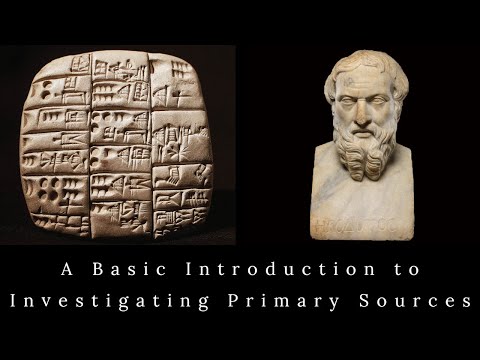
A Basic Introduction to Investigating Primary Sources ~ With Dr. Sobehrad ~ History Lecture
Introduction
In this presentation, Dr. Lane So Barksdale, a research associate at Texas Tech University, discusses the nature of history, its teaching methodologies, and the importance of understanding historical context. The talk aims to provide insights into how history is defined, studied, and taught, particularly at the undergraduate level.
Defining History
Dr. Barksdale begins by emphasizing that history is not merely a collection of past events but a complex discipline that requires inquiry and interpretation. He outlines two primary functions of introductory college history courses: to provide essential content and to equip students with skills to engage with historical narratives. He critiques common approaches that overload students with facts and dates, arguing instead for a deeper understanding of historical processes and context.
Challenges in Teaching History
One of the key challenges in teaching history is the overwhelming amount of information available. For instance, the Library of Congress holds over 140,000 documents related to George Washington alone, making it impractical for educators to cover extensive periods in a limited timeframe. This necessitates a selective approach to historical content, which is a fundamental aspect of historical research and teaching.
Understanding Historical Sources
Dr. Barksdale discusses the importance of primary sources in historical research, illustrating this with examples such as cuneiform tablets and the complexities involved in interpreting them. He explains that historians often work with incomplete information, which makes the process of drawing conclusions about the past inherently selective. The act of engaging with historical texts involves not only understanding the content but also grappling with the limitations of the sources themselves.
Etymology of History
The term "history" comes from the Latin "historia," which signifies a narrative account of past events. Dr. Barksdale highlights the Greek origins of the term, where "historia" means knowledge acquired through inquiry. This etymological background underscores the idea that history is about seeking knowledge and understanding the past through investigation.
Types of Historical Narratives
Dr. Barksdale categorizes historical narratives into various types, such as ephemeris (daily accounts), calendars (monthly records), and annals (yearly summaries). He notes that modern history is more comprehensive, focusing on broader narratives that encompass various years and ages, contrasting with medieval definitions that often emphasized specific events or deeds.
Historical Interpretation and Context
The presentation emphasizes the necessity of interpreting historical events within their specific contexts. Dr. Barksdale argues that understanding past beliefs and actions, such as the significance of miracles in medieval narratives, is crucial for grasping how people interacted with their world. He advocates for a non-judgmental approach to historical analysis, encouraging students to understand the past on its own terms rather than imposing modern values.
Modern Perspectives on History
Dr. Barksdale references RG Collingwood's definition of history as a form of inquiry aimed at understanding human actions from the past. He stresses the importance of interpreting evidence and communicating findings to a broader audience, whether through teaching, writing, or digital media. This highlights the evolving nature of historical scholarship and the need for historians to adapt their methodologies to contemporary contexts.
Conclusion
The presentation concludes with a reflection on the significance of history as a discipline that fosters understanding of human experiences across time. Dr. Barksdale emphasizes the need for historians to engage with diverse sources and perspectives, promoting a more nuanced understanding of the past. He invites further discussion and questions from the audience, reinforcing the collaborative nature of historical inquiry.
Final Thoughts
Ultimately, Dr. Barksdale's insights underscore the complexity of history as a field of study and the importance of critical engagement with historical narratives. His emphasis on context, interpretation, and the role of primary sources serves as a valuable guide for both students and educators in the pursuit of historical knowledge.
In the transcript, historiography is implicitly defined through the exploration of what history is and how it is constructed. The speaker, Dr. Lane So Barksdale, emphasizes that history is not merely a collection of past events but a narrative shaped by inquiry and interpretation. This suggests that historiography, the study of historical writing and methodologies, involves understanding how historians select, analyze, and present historical information rather than just recounting events.
Historiography is distinguished from 'history' as it delves into the processes and frameworks that historians use to interpret the past. While 'history' refers to the events that have occurred, historiography examines how those events are recorded, understood, and taught. This involves critical engagement with sources, the contexts of those sources, and the biases inherent in their creation and interpretation.
Furthermore, the speaker alludes to the idea that historians must navigate incomplete information and make selective decisions about which events and sources to include. This highlights the conceptual boundaries of historiography, as it requires a methodological approach to understanding what constitutes reliable evidence and how that evidence is framed within narratives. Historiography is thus concerned with the rules of engagement with the past and the philosophical underpinnings of historical interpretation.
-
- [07:01] 'Historia is more basically a learning or knowing by inquiry...'
- [06:21] 'The act of writing or pursuing history is in and of itself a selective process.'
- [04:40] 'What do I leave in, what do I leave out? That is the eternal struggle of the historian.'
The central thesis presented in the transcript revolves around the importance of understanding history as a complex interplay of inquiry, interpretation, and narrative construction. Dr. Lane So Barksdale argues that history should not merely be viewed as a series of events but as a discipline that requires critical engagement with sources and an appreciation for the processes of historical writing. He posits that the purpose of studying history is twofold: to acquire fundamental knowledge about the past and to develop skills for engaging with that knowledge meaningfully.
Dr. Barksdale emphasizes that an introductory history course aims to equip students with the tools necessary for interpreting historical events and understanding their significance. He critiques traditional teaching methods that focus excessively on memorization of dates and facts, suggesting that such approaches can lead to a superficial understanding of history. Instead, he advocates for a more nuanced approach that encourages students to think critically about the sources of historical narratives and the contexts in which they were created.
In essence, the speaker's main position is that history is not a static account of the past but a dynamic field that requires continuous inquiry and interpretation. This perspective encourages a deeper engagement with historical materials, fostering skills that are valuable not only in academic contexts but also in broader social interactions and professional endeavors.
-
- [02:01] 'My goal here is to introduce students to what I define history as.'
- [03:00] 'History's supposed to provide you an opportunity to apply that basic content.'
- [04:08] 'That is the cliche a mile wide and an inch deep is probably applicable here.'
The transcript provides insightful explanations concerning the distinction between primary and secondary sources, which are foundational concepts in historical research. Dr. Lane So Barksdale defines primary sources as direct evidence from the past, such as diaries, letters, and artifacts, which offer firsthand accounts of historical events. He emphasizes the value of these sources in providing immediate insight into the perspectives and experiences of individuals from the past.
On the other hand, secondary sources are characterized as interpretations or analyses based on primary data. These sources, such as textbooks or scholarly articles, synthesize information from primary sources and offer broader narratives about historical phenomena. Dr. Barksdale highlights that understanding the context and purpose of these classifications is essential for effective historical inquiry and research.
Moreover, he notes that the classification of sources can depend significantly on their research use or context. For instance, a document might be considered a primary source in one context and a secondary source in another, depending on how it is utilized within a specific research framework. This nuanced understanding encourages historians to critically evaluate the materials at their disposal and to consider the implications of their source choices for their interpretations of the past.
-
- [19:14] 'What is a primary source? The answer on most standardized tests...'
- [19:46] 'Is that a primary source? Again, pause for dramatic effect here.'
- [23:43] 'Does that translation count as a primary source? Arguably not.'
In the transcript, Dr. Lane So Barksdale outlines several criteria for evaluating the reliability, credibility, and usefulness of historical sources. One primary focus is the inherent selection process involved in writing history, where historians must be conscious of the incomplete nature of available evidence and the biases that may affect its interpretation.
Dr. Barksdale suggests that a critical question for historians is, 'What do I leave in, what do I leave out?' This reflects the ongoing struggle faced by historians in determining which sources best represent the complexities of historical narratives. He emphasizes the importance of source criticism, wherein historians must assess the context in which a source was created, the author's perspective, and the intended audience. This critical evaluation helps to ascertain the source's reliability and credibility.
Furthermore, the speaker implies that historians should consider the methodological questions that guide their analysis. This includes examining the source's origins, the motivations behind its creation, and how it has been preserved or transmitted over time. By applying such rigorous standards, historians can better navigate the challenges of reconstructing the past and articulate more informed interpretations that reflect a comprehensive understanding of historical events.
-
- [06:23] 'The act of writing or pursuing history is in and of itself a selective process.'
- [04:12] 'What do I leave in, what do I leave out? That is the eternal struggle of the historian.'
- [22:25] 'What matters more than anything else is the information that we're getting from whatever the thing is.'
Dr. Lane So Barksdale outlines a methodological approach to historical inquiry that emphasizes critical engagement with sources and the interpretive processes involved in reconstructing the past. While the transcript does not provide a detailed step-by-step workflow, it does highlight several key components that constitute an effective research strategy in the discipline of history.
First, the speaker underscores the importance of defining what history is and understanding the purpose of historical inquiry. This foundational step involves recognizing that history is a narrative shaped by human actions and interpretations rather than a mere collection of facts. Dr. Barksdale encourages students to develop a clear thesis or central argument as they begin their research.
Next, the process entails conducting thorough research by identifying and evaluating both primary and secondary sources. As Dr. Barksdale notes, historians must be mindful of the context in which sources were created and the potential biases present within them. This critical evaluation of sources contributes to a more nuanced understanding of historical narratives.
Finally, the speaker emphasizes the need for historians to synthesize their findings into coherent interpretations that convey their insights effectively to an audience. This involves not only presenting the information but also contextualizing it within broader historical frameworks. By following this structured approach, historians can produce informed and meaningful contributions to the field.
-
- [02:20] 'My goal here is to introduce students to what I define history as.'
- [18:22] 'If I'm writing a book, I cannot...'
- [21:30] 'We have to interpret that information we've got from the past.'
The transcript emphasizes the critical role of historical context in understanding history. Historical context encompasses various dimensions, including temporal, geographical, social, political, and intellectual factors that shape events and narratives. Without this context, historical accounts can be misinterpreted or oversimplified, leading to a skewed understanding of past events.
For instance, Dr. Lane So Barksdale discusses the importance of understanding the specific social and political climates under which historical documents were produced. He states that historians often find themselves grappling with the question, "What do I leave in and what do I leave out?" This reflects the inherent difficulties in conveying a comprehensive historical narrative when faced with the overwhelming volume of available documents.
Moreover, context allows historians to appreciate the nuances of human actions and decisions. For example, the significance of martyrdom in early Christianity is deeply rooted in the historical and cultural context of the time. Understanding the societal pressures and beliefs that influenced individuals to sacrifice their lives for their faith sheds light on the motivations behind such extreme actions.
In summary, historical context is essential for interpretation as it provides the necessary backdrop against which events are analyzed. It enriches our understanding, allowing for a more layered and nuanced interpretation of history.
-
- [02:29] "What we're going to be talking about today is an introduction to history as a concept, as a discipline, and as a thing you have to study..."
- [06:18] "The act of writing or pursuing history is in and of itself a selective process..."
- [12:09] "If we read these definitions of history, these do not look completely the same as how the Greeks or the Romans would have defined history..."
The transcript provides important insights into the bias, perspective, and agenda inherent in historical writing. Dr. Lane So Barksdale emphasizes that every historical account is shaped by the author's context, beliefs, and intentions. This perspective is vital in understanding how history is recorded and interpreted.
For instance, Barksdale notes that historians must contend with their own biases when selecting which events or documents to include in their narratives. He states, "What do I leave in and what do I leave out?" This question illustrates the inherent selectivity in historical writing, where personal or cultural biases can influence the interpretation of events.
Additionally, the transcript points to the rhetorical strategies employed by historians. For example, Barksdale highlights the significance of narrative voice in historical accounts, which can impact how events are perceived by readers. The choice of language, emphasis on certain details, and the framing of events all contribute to the overall interpretation of history.
Moreover, Barksdale discusses the role of authorial intention in shaping historical narratives. He underscores that understanding the context in which a historical text was written, including the author's motivations, is crucial for accurate interpretation. Without recognizing these factors, readers may misinterpret the significance of events or the intentions behind them.
-
- [04:40] "What do I leave in, what do I leave out? That is the eternal struggle of the historian..."
- [12:06] "A large part of what historians are working with are the work of other historians who wrote their own histories decades, centuries, or millennia ago."
- [14:27] "Histories for the instruction of the living...so that people in the present can learn from it."
The transcript highlights the inherent uncertainty and incomplete evidence associated with historical knowledge. Dr. Lane So Barksdale asserts that historians often work with limited and fragmented information, which complicates the task of constructing a coherent historical narrative.
For example, Barksdale states, "We're always working with incomplete information," underscoring the challenges historians face in piecing together the past. This acknowledgment of uncertainty is crucial, as it shapes the way historians approach their research and conclusions. They must navigate the epistemological limits of their sources, often relying on probability and plausibility to draw conclusions based on the available evidence.
Barksdale further illustrates this point by referencing the vast number of documents available, such as the 140,000 documents related to George Washington. He emphasizes that historians cannot possibly account for every single document, leading to decisions about what to include or exclude based on their relevance and reliability. This selection process is inherently subjective and reflects the historian’s judgment.
Additionally, the transcript indicates that competing interpretations often arise from the same set of historical events or sources. Barksdale notes that historians' conclusions may vary significantly based on the evidence they prioritize, demonstrating that history is not merely a collection of facts but a complex interpretative process shaped by the historian's lens.
-
- [07:59] "The best that we can do is make some sort of reasonable conclusion about what happened, why it happened, and who it happened to..."
- [04:23] "Historians often spend decades studying... and still don't get the complete picture."
- [11:00] "We are never getting first-hand information; period."
The transcript outlines several key principles of good historical practice as articulated by Dr. Lane So Barksdale. These practices underscore the importance of rigorous methodology and critical engagement with sources in the field of history.
First, Barksdale emphasizes the necessity of evidence-based research. He notes that historians must rely on a variety of sources, including primary and secondary documents, to construct a well-rounded narrative. The importance of using a diverse array of sources is highlighted when he states, "You shouldn't restrict yourself to just one kind of source unless you're doing some kind of case study or micro history." This principle encourages historians to approach their research with an open mind and consider multiple perspectives.
Furthermore, Barksdale discusses the importance of engaging with counterarguments. He asserts that a historian's narrative should not only present their viewpoint but also anticipate and address opposing perspectives. This practice enhances the credibility of the research and demonstrates a thorough understanding of the historical discourse surrounding a topic.
Another crucial aspect of good historiographical practice mentioned in the transcript is the acknowledgment of scope limitations. Barksdale states, "What do I leave in and what do I leave out?" This question is central to the historian's task and reflects the need to recognize the constraints of their research, including the temporal and geographical boundaries of their study.
In summary, the transcript provides a structured overview of quality indicators in historical research, including evidence utilization, engagement with counterarguments, and an awareness of scope limitations. These practices collectively contribute to a more robust and nuanced understanding of history.
-
- [03:14] "You're supposed to learn the skills in order to appropriately engage the discipline..."
- [12:06] "The act of writing or pursuing history is in and of itself a selective process..."
- [18:30] "You shouldn't restrict yourself to just one kind of source..."
The transcript underscores the significance of archaeology in historical research, though explicit references to archaeological methods are limited. Dr. Lane So Barksdale outlines the role of archaeology as a complementary field that enriches our understanding of history by providing tangible evidence of past human activities.
Barksdale points out that archaeology contributes to historiography by uncovering artifacts that can inform historians about the social, cultural, and economic contexts of various civilizations. For instance, he implies that the examination of physical sites and artifacts can reveal insights that written records alone may not capture. This interplay between archaeological findings and historical narratives allows for a more comprehensive understanding of past societies.
Moreover, the transcript suggests that archaeological methods, such as excavation and artifact analysis, play a crucial role in reconstructing historical events. Barksdale highlights the importance of primary sources, stating, "What is essential about this as a primary source is the physical object." This indicates that archaeology provides primary evidence that historians can analyze to draw conclusions about historical contexts.
In summary, while the transcript does not delve deeply into specific archaeological methods, it acknowledges archaeology's vital contribution to historical research. By providing physical evidence of past societies, archaeology enhances the historian's ability to interpret and understand the complexities of history.
-
- [11:00] "What use is this thing if we can't read it?"
- [11:14] "This thing by the way is what we call a hurry in him, one of the oldest forms of writing that we know about..."
- [14:27] "Many wise people haven't heard in the past..."
[00:00] [Music][00:38] hello everyone and thank you for[00:40] checking out my youtube channel the[00:41] study of antiquity and the Middle Ages[00:43] I'm your host Nick Barksdale and today I[00:45] actually have a very special guest with[00:47] us today who's going to discuss history[00:50] and actually give us the view and[00:52] insight into this subject and if you[00:54] find teaching history interesting if you[00:57] want to learn more about this subject in[00:59] general this is gonna be a great example[01:01] for you to actually take a look at I[01:04] joined today by dr. so Brad and he is[01:06] gonna tell us a little bit about himself[01:08] Before we jump into his presentation[01:10] doctor I'm gonna let you take it from[01:12] here[01:12] wonderful my name is Lane so Brad I'm a[01:15] research associate in the College of[01:16] Education at Texas Tech University where[01:19] I also serve as an affiliated faculty[01:21] member to the Medieval and Renaissance[01:23] Study Center and I'm an instructor in[01:26] the Department of History I also serve[01:28] as the director of outreach and digital[01:30] media for the Texas medieval Association[01:32] my primary fields of research interest[01:35] of late have been on teaching history[01:38] especially at the undergraduate level[01:39] and the methods and strategies involved[01:44] in that my primary focus on medieval[01:47] research is primarily on high medieval[01:50] chronicles in England and France[01:52] focusing specifically on the[01:54] construction and writing of those texts[01:58] so today Nick I'm going to talk about[02:01] what history is as I understand it this[02:05] lecture I typically give as an[02:08] introduction to my medieval survey[02:10] course and I my goal here is to[02:15] introduce students to what what I define[02:18] history is and interpret the field of[02:20] history as and why it's it's much more[02:25] than a collection of things that[02:27] happened a long time ago so what we're[02:29] going to be talking about today is an[02:31] introduction history as a concept as a[02:33] discipline as and as a thing you have to[02:36] study if you are anybody from the ages[02:39] of about five to maybe 22 if you've made[02:43] your way into college so there's two[02:45] basic functions that an introductory[02:47] college history course[02:49] as first it's supposed to provide you[02:52] the student even if you are a informal[02:56] student for the purposes of things like[02:58] YouTube channels with content that is[03:00] fundamental and essential to the[03:02] discipline second history's supposed to[03:05] provide you an opportunity to apply that[03:08] basic content whether that's through an[03:10] examination through writing an essay[03:12] reading a book however you're engaging[03:14] with the past you're supposed to learn[03:17] the skills in order to appropriately[03:18] engage the discipline and the hope here[03:21] is that those skills stick with you and[03:23] some of the fundamental information[03:25] sticks with you so that later on in your[03:28] life career job social interactions with[03:31] other people that information in those[03:33] skills you have to rely upon either to[03:37] advance your work to make yourself sound[03:38] smarter to get a promotion whatever the[03:41] case happens to be but what we find[03:43] often happens is that in introductory[03:45] history courses or with novice[03:48] historians and the audience for this[03:49] YouTube channel I'm probably assuming[03:52] are a bunch of novice historians is that[03:55] is that introductions to history try to[03:57] overload you with facts and dates and[04:00] brief surveys of historical events that[04:03] is the cliche a mile wide and an inch[04:06] deep is probably applicable here and[04:08] that's because in any history class most[04:12] of you have probably taken you have to[04:13] cover a thousand years of history or[04:15] five hundred years of history in the[04:17] case of classes that I've taught like[04:18] Western civilization's you have to cover[04:20] fifteen thousand years of history you[04:23] can't possibly do that in a semester you[04:26] can't do that in a year and in in[04:29] historians careers we often time to[04:31] spend decades studying you know 10 or 20[04:35] years of history and we still don't get[04:37] the complete picture so by way of[04:40] illustration let's take a guess as to[04:42] how many documents are in the Library of[04:45] Congress and let's be even more specific[04:48] how many documents do you think that the[04:50] Library of Congress has just from the[04:52] life of George Washington last time I[04:54] looked that number was over a hundred[04:57] and forty thousand distinct documents[04:59] that is a lot that is a lot for any one[05:02] person to[05:03] a handle on this makes it difficult to[05:06] structure a course for you for people[05:09] that I typically have as students if I'm[05:12] doing let's say a survey of the first[05:14] half of US history up to the Civil War[05:17] there's no reasonable way to include all[05:20] 140,000 of those things it's impossible[05:22] much less the stuff about Jefferson and[05:25] the colonies and Native Americans and[05:28] slavery and all the other things we have[05:29] to talk about in the context of the[05:31] first half of the US history so what do[05:35] I leave in what do I leave out that is[05:38] the eternal struggle of the historian[05:40] especially in the context of teaching or[05:43] explaining a particular historical[05:44] phenomenon to somebody in the general[05:48] public to any kind of audience in their[05:50] own research or indeed to what we often[05:52] consider our most important audience[05:54] which is our students and this is not[05:57] just a conscious action by history[05:59] professors who build a course it's also[06:02] an inevitable part of professional[06:04] historical research if I'm writing a[06:06] book I cannot as Marc Bloch said about[06:10] 70 or 80 years ago I cannot know[06:13] everything about everything I can't even[06:15] know everything about one thing and so[06:18] the act of writing or pursuing history[06:21] is in and of itself a selective process[06:23] and so today we're going to talk about[06:26] what history is what historians do and[06:29] indeed one important thing to establish[06:32] in any field is basic technical[06:34] vocabulary so the most basic technical[06:38] definition we need to talk about for[06:39] history is the word history where does[06:42] it come from well on creative ly it[06:45] comes from the latin word historia which[06:48] means in in this basic sense the same[06:50] thing that it does for us a narrative[06:52] account of something that happens in the[06:54] past but as many latin words are they[06:58] have an older root in ancient greek[07:01] where historia is more basically a[07:05] learning or knowing by inquiry and in[07:08] the context of the historical discipline[07:10] that is inquiring about something in the[07:13] past[07:14] and coming to some sort of conclusion[07:16] that we know something about the thing[07:18] we inquired about that comes from an[07:20] older verb that simply means to inquire[07:24] which comes from its base word is store[07:28] which is as far as I could tell a wise[07:31] man or judge so if we look at the[07:34] etymology of the word history what we're[07:36] trying to do is make some sort of[07:38] inquiry about the past learn something[07:42] acquire knowledge and then make some[07:44] sort of conclusion about that is judge[07:47] those things that happen in the past[07:49] based on that information and using our[07:51] logical and rational faculties to make[07:53] that determination that is implicit in[07:57] here is we're always working with[07:59] incomplete information and the best that[08:02] we can do is make some sort of[08:04] reasonable conclusion about what[08:06] happened why it happened and who had[08:08] happened to based on that incomplete set[08:11] of data and that will always be the case[08:13] about history unless somebody develops a[08:16] time machine and even then somebody[08:18] we're gonna be working with the person[08:22] who went back in times account of what[08:23] they observe in the past we are never[08:26] getting first-hand information period so[08:29] in that communication in the past we[08:31] have to talk about language and[08:33] communication those are the two[08:34] essential tools we have to talk about[08:37] the past to engage with the past and to[08:40] teach or or inform others about those[08:44] things we're investigating and so we[08:46] lead to a basic question what is this[08:48] thing that you see on the screen right[08:50] now well in basic terms what we see is a[08:53] picture of something and that drawing is[08:57] of what type of object and it's at this[09:01] point if I was teaching this in a[09:03] classroom I'm hoping for responses from[09:05] people if you are in the audience here[09:08] feel free to respond like you're[09:09] watching Barney or Blue's Clues I[09:14] encourage that type of participation and[09:16] so this looks like something that could[09:18] be really old this is obviously not a[09:20] photograph of something it is a[09:21] rendering of something and if you were[09:24] particularly astute you may recognize[09:25] that this is a rendering of a clay[09:27] tablet[09:28] you may also recognize that this is not[09:29] a complete clay tablet there's a partial[09:32] clay tablet those of you who are who are[09:35] maybe happen an ancient history class or[09:37] your Western Civ teacher or European[09:41] history teacher maybe started way back[09:44] the beginning of human civilization[09:45] may recognize this kind of writing as[09:47] cuneiform writing cuneiform if we go[09:51] back to some etymology again a cue næss[09:54] meaning wedge and form meaning shape it[09:58] is the wedge-shaped writing and if you[10:01] may imagine writing on a clay tablet[10:03] using anything other than a stick is[10:05] probably going to be pretty difficult[10:07] yeah and so the way you can a form[10:08] writing works is that we impress the the[10:12] stylus into the clay and then pull in[10:15] one direction or the other and we get[10:17] writing that looks like this so the[10:20] questions surrounding this cuneiform[10:21] writing is what's being communicated[10:23] what's on this clay tack but what is the[10:26] author or the creator of this click clay[10:28] tablet trying to say here's your time[10:31] for audience response now I'm assuming[10:33] none of you read any of the cuneiform[10:35] languages indeed there's only a few[10:37] dozen people who actually claimed to be[10:39] able to contribute these things I can't[10:42] read it I'm assuming nobody in the[10:43] audience can read it so what use is this[10:45] thing it's not a picture it's not a[10:47] photograph it's a diagram of rendering[10:49] of this thing and in some sense that's[10:51] one of those basic questions about[10:53] history - what good is this historical[10:55] source if we can't read it if we can't[10:59] access the information that is contained[11:00] within the source indeed that is the[11:03] role historic is like me sometimes play[11:05] is as translators interpreter for a[11:07] wider audience so this thing by the way[11:11] is is is what we call a hurry in him as[11:14] one of the oldest forms use achill[11:17] notation that we know about this[11:20] particular one was found in the ancient[11:22] city and it may be butchering the[11:24] pronunciation here at the ancient city[11:26] of uber it which is in modern-day Turkey[11:29] if you google hurry in him you'll find[11:32] all sorts of resources and I think Nick[11:35] is going to link link a particular[11:38] document from a recent exhibit from the[11:40] Guggenheim Museum[11:41] on hearing hims absolutely and so what[11:45] we're talking about here folks[11:46] is is trying to define history from them[11:50] for a modern audience the based on[11:53] definitions we've had for history in the[11:54] past because a large part what[11:56] historians are working with are the work[11:59] of other historians who wrote their own[12:01] histories decades centuries or millennia[12:03] ago so what you see on the screen here[12:06] are a few definitions of history from a[12:09] very popular medieval author one of my[12:10] favorite medieval authors Isidore of[12:12] Seville who's writing in the seventh[12:13] century his big work that these[12:15] definitions are contained in is called[12:17] etymologies or the enema Logie eye and[12:21] he defines history in three ways here[12:23] that you can see on the screen pause if[12:25] you want to read the full thing but[12:28] important here is that if we read these[12:31] definitions of history these do not look[12:33] completely the same as how the Greeks of[12:36] the Romans would have defined history[12:37] they're certainly not the same as modern[12:40] historians would define the field we'll[12:42] get to that later in the lecture but the[12:45] basic definition is hora provides is[12:47] that history that is historia because[12:49] early medical people are primarily[12:51] writing in Latin history is a narration[12:54] of Deeds[12:55] accomplished and through it what[12:58] occurred in the past is sorted out that[13:02] seems pretty bare-bones and I think even[13:04] modern historians would probably agree[13:06] with that even though sorting out the[13:08] past is something that would be[13:10] debatable right right especially with[13:13] there's a North's follow up statement[13:14] which is since what is seen that is what[13:16] is seen in history or historical[13:18] accounts is revealed without falsehood[13:21] that I do not think modern historians[13:24] would agree with this was absolutely[13:26] true for those people writing history in[13:28] the early especially in the Middle Ages[13:29] that is getting accounts from what they[13:32] considered reliable sources was[13:35] something they considered actually maroc[13:37] reliable that was empirical evidence[13:39] that was something justifiably used and[13:43] could be claimed as something without[13:44] falsehood the second thing is it or[13:47] talks about is what the purpose of[13:49] history is which is one of the things[13:50] we're also going to address and Isidor[13:53] says that many wise people haven't[13:55] hard in the past and especially past[13:57] deeds of humankind in histories for the[13:59] instruction of the living this is a[14:01] trope we see throughout medieval[14:04] historical narratives that is I'm[14:06] recording this stuff that happened in[14:07] the past so that people in the present[14:08] can learn from it so this idea that[14:11] history repeats itself for those who[14:14] don't learn from the past are doomed to[14:15] repeat it's all a cliche that cliche[14:18] doesn't stop with Isidore it goes back[14:20] all the way to Aristotle at a minimum[14:23] this is not something new[14:25] so is it orders purpose of history for[14:27] people to learn from it is consistent[14:30] also with modern historians well some[14:32] modern historians and with most people[14:35] in the general public and he continues[14:37] through history they handle a final[14:39] reckoning back through the seasons and[14:40] years and they investigate many[14:42] indispensable matters matters through[14:45] history's succession and now for early[14:49] medieval people generally what we're[14:50] talking about here is trying to divine[14:52] something about God's plan for the[14:53] universe or something but in more[14:56] secular terms he also means figuring out[14:58] what King lived with and what those[15:01] people did and why it was important for[15:02] people to know about third Isidore[15:05] defines different kinds of history and[15:08] this is probably where modern history[15:10] may diverge more most distinctly from[15:12] medieval definitions of history and so[15:14] in Sidora says there's three kinds of[15:16] history the events of a single day are[15:19] called an ephemeris we call this a diary[15:22] what the Romans called and he goes on[15:25] and continues that the Romans called[15:27] this type of daily account a direness[15:30] and the Greeks called it ephemeris right[15:32] so Isidore as as the title etymologies[15:35] implies does actually do some ology[15:39] where he's able to second we call[15:41] histories that are distributed into[15:42] individual months calendars that makes[15:45] particular sense for us the general[15:48] modern person we know what a calendar is[15:50] oftentimes we see these things backed by[15:52] months third he says annals are the[15:56] actions of individual years and[15:58] typically the way we see them is in[16:02] medieval chronicles is going to be[16:03] something like 959 Blanc happened[16:07] 960 this other thing happened 961 this[16:10] other thing happened there's very little[16:11] in the way[16:13] narrative or rhetoric or authorial voice[16:15] or the kinds of things we be typically[16:17] associating with historical narratives[16:19] and is or specifies that especially in[16:22] annals domestic and military matters are[16:25] those things that are focused on in[16:27] particular he in is this section in the[16:30] etymologies by saying but history that[16:33] is something distinct from ephemera from[16:36] Diaries from calendars from annals[16:38] history concerns itself with many years[16:41] or ages and through the diligence of[16:43] history annual records are reported in[16:46] books and so here we see something that[16:49] generally lines up with our kind of[16:52] conception for the most part what[16:54] history is is it's a narrative in a book[16:57] of some kind at the beginning of the[16:58] section right is the types of history[17:02] genera booths the genre that the generic[17:05] terms for history and it's not just[17:08] history historia its diary ephemeris and[17:11] direness it's calendars calendar um[17:15] annals on a lace and even think some[17:18] things we might call anniversaries right[17:19] and for targets and so even for the[17:22] Middle Ages where is it or clearly here[17:25] has a definition of what he calls[17:26] history it's not clearly decided what[17:29] history is because these other kinds of[17:30] historical accounts are also included in[17:32] the types of history and indeed this is[17:35] one thing historians have to struggle[17:37] with which of those types of sources are[17:40] we supposed to include which of them are[17:41] more reliable than others in a[17:43] historical narrative like a historian as[17:45] it were defines it because there's a[17:48] thaw real opinion in here are those less[17:50] reliable than animals that are just[17:52] recording barebone facts or should we[17:55] just be looking at a calendar of events[17:56] of things that are supposed to happen[17:57] well that hasn't been decided and indeed[18:01] if you look at any history book with[18:03] footnotes which is which is always a[18:05] good sign that the thing you're reading[18:06] is it's probably a pretty good book to[18:09] read depending on the publisher that[18:12] those footnotes often span the gamut of[18:15] those kinds of historical accounts and[18:18] indeed research[18:20] research methods if you go to graduate[18:22] school to study things like history or[18:23] English or anything that involves a[18:25] study of the past is going to suggest[18:27] that you shouldn't restrict yourself to[18:29] just one kind of source unless you're[18:30] doing some kind of case study or micro[18:32] history and so where do we go from here[18:34] we don't really know what a source is[18:36] because you know we're working with[18:38] Genki clay tablets and we're not really[18:42] sure oftentimes how to read them we[18:44] don't have a clear definition of what[18:45] history is but we're supposed to make[18:47] some kind of conclusion about what the[18:49] heck to do with these things well maybe[18:52] maybe we'd do something else maybe we[18:54] try and talk about what a primary source[18:56] is anybody who's gone through the public[18:58] education system in the United States[19:00] will have heard the term primary and[19:02] secondary source probably in your[19:05] you--it at the very least I would hope[19:07] if you didn't hear these terms you[19:08] probably didn't pass your state-mandated[19:10] test primary and secondary source what[19:14] is a primary source the answer on most[19:18] standardized tests because I've looked[19:20] at a lot of the state standardized tests[19:22] in the country is going to say something[19:25] like use an example of a primary source[19:27] like a diary that is usually everybody's[19:31] go-to example because we all read the[19:33] Diary of Anne Frank in eighth grade or[19:35] something so what is a primary source[19:38] now[19:40] let's refer back to the earlier slide[19:41] with our Furion him on it we see a[19:44] rendering of a clay tablet is that a[19:46] primary source again pause for dramatic[19:50] effect here well there's an argument to[19:53] be made in that it is a primary source[19:56] what is essential about this as a[19:58] primary source is it the physical object[20:02] do you need to go to a museum to fully[20:05] appreciate this URI and him on some[20:10] sense we've established it doesn't[20:11] really matter because we can't read what[20:13] the Tenaya form says so can we[20:16] appreciate it as a rendering because[20:17] this is cheaper for published publishers[20:19] to put into their books instead of a[20:20] full-color glossy photograph you'll[20:23] notice here on the current slide with my[20:25] question what is the primary source we[20:27] see a photograph of a statue of Clio[20:30] from one of the vatican museums made in[20:33] the first century[20:33] is this photograph a primary source what[20:39] you've probably encountered if your if[20:41] your again a product of the American[20:43] education system is that you probably[20:45] saw some nineteenth-century photographs[20:47] and your teacher pulled that out and[20:49] said this photograph is a primary source[20:51] well this photograph is probably from[20:53] like 10 years ago mm-hmm is this a[20:57] primary source well in some sense we can[20:59] appreciate many of the aspects that make[21:01] this a valuable historical source we[21:04] have a high quality image it's in color[21:06] we can make out many of the features[21:07] that are important for learning about[21:10] art history or sculpture but maybe we[21:14] can't make out if there's something[21:16] written on the scroll so this this leads[21:20] us to have some evidence about the[21:24] importance of the statue or who it might[21:26] be or this kind of thing but maybe not[21:28] the full picture and maybe we actually[21:30] need to be at the museum to appreciate[21:32] that at the same time museums libraries[21:36] and other research institutions are[21:37] developing things like if you go to the[21:40] Louvre website I think they have some of[21:42] this[21:43] they have 360 degree of virtual tours of[21:47] things in the museum and so you get a[21:50] 360-degree view of something like the[21:53] Cleo statue I think they may want to[21:56] have one of the Nike Statue not shoe[21:59] related and one of maybe one of the[22:03] famous David's and so if you can do that[22:06] in ultra-high 4k quality do you actually[22:10] need to go to the museum for that kind[22:13] of view count as a primary source now[22:15] this is a big way of talking around that[22:17] sometimes definitions also don't mean[22:19] anything and whether or not something is[22:20] a primary source or not it's kind of[22:22] irrelevant all right what matters more[22:25] than anything else is the information[22:26] that we're getting from whatever the[22:28] thing is in the case of our Curie and[22:30] him what's essential is not necessarily[22:32] the clay tablet itself but the words the[22:36] sentences the paragraphs the the ideas[22:38] that are on the tablet unless there's[22:40] words on the Cleo statue what matters[22:42] more is the aesthetics of it the actual[22:44] structure of the object because we don't[22:47] have words to access which of those[22:49] things is a more valuable source well[22:51] people are going to argue all sorts of[22:53] things and usually we leave that up to[22:56] academic arguments and things like[22:58] publication to determine whether this[22:59] source of that source is more valuable[23:01] especially if they're two sources about[23:03] the same event person idea of the of the[23:09] object of inquiry and we can take this[23:11] even further what about a translation of[23:14] something written in a foreign language[23:16] like our Curie and hymns most of the[23:20] things you read if you take a medieval[23:23] history class as an undergraduate or you[23:27] read something like the Iliad or the[23:29] Odyssey like many of us did in middle[23:31] school or high school you're not reading[23:33] at it Greek or ancient Greek you're[23:36] reading a translation by somebody a[23:38] Greek scholar does that translation[23:43] count as a primary source arguably not[23:48] but are you gonna be able to read the[23:49] Iliad[23:50] if you don't have it in modern English[23:52] or whatever a modern language you happen[23:55] to be fluent in probably not again my[23:58] argument my personal opinion is that[24:02] what's more important is that you get[24:04] access to the information contained[24:05] within the text or the source[24:07] particularly when I'm in the role as an[24:11] instructor or an educator now of course[24:13] there's always something that's lost a[24:14] little bit in translation idiomatic[24:16] expressions and true meaning or lost[24:19] that's going to be the case in any[24:21] translation there's still valuable[24:24] information we can pull from those[24:25] things and so I might guide people to[24:27] things they may not be unaware of so if[24:30] we're if we're going to talk about[24:31] Beowulf[24:32] I'll recommend that people go look at[24:34] the University of Kentucky project[24:36] called electronic Beowulf where you can[24:39] not only see the Beowulf manuscript you[24:42] can see it in parallel with the trends[24:45] with the transcription and a translation[24:47] of the tech[24:49] this is available for free anybody can[24:51] go look at it if you're particularly[24:53] interested you can teach yourself some[24:56] old English and I have at it in the[24:58] language it was written this is actually[25:00] really really cool I have not seen this[25:01] yet guys just so you all are aware[25:04] you'll see it on the screen too as an[25:06] example but I'm gonna include the link[25:08] to this in the video description that[25:10] way y'all can actually go there too the[25:12] link itself and see the entire thing[25:14] this is actually really awesome really[25:18] awesome and I might note too that you'll[25:21] see a little play button in the top left[25:22] corner there they also have a comedy[25:24] that is going to be speak in the the[25:27] text in Old English so you can hear what[25:29] that sounds like[25:30] that is very cool I'm glad you included[25:32] that that's awesome[25:33] and so the reason people like me do[25:36] things like do interviews for YouTube[25:39] channels um is hopefully to spread word[25:42] of things like the electronic Beowulf[25:44] source because this is freely available[25:47] to anybody who has access to the[25:50] Internet these these sources electronic[25:54] Beowulf was the work of a number of[25:58] academics and scholars it's produced[26:00] books conference presentations all sorts[26:03] of fancy academic things most of the[26:05] people who are gonna be able to engage[26:06] in this are gonna be able to engage in[26:08] it in Old English or have a good[26:12] critical Edition that they're gonna have[26:13] on the bookshelf somewhere in their[26:15] office anyways and they may not be using[26:17] this outside of a teaching setting in my[26:20] opinion things like this are essential[26:22] for members of the general public to to[26:24] know about and is something I'm working[26:26] on[26:26] in Medieval Studies is raising basic[26:29] awareness that things like this are out[26:31] there for people to use absolutely I'm[26:34] sure you're familiar with the MU the[26:37] medieval source book online oh yeah oh[26:39] yeah interesting for sure[26:42] oh yeah and I might note if we do have[26:47] any aspiring historians out there[26:49] especially if you are a graduate student[26:51] or an adjunct or an instructor at a[26:53] community college or something like this[26:56] Paul Housel who runs by the medieval[26:58] source book is looking for contributors[27:00] to assemble sources for[27:02] and if you connect to his Facebook group[27:05] and have good stuff he's willing to take[27:07] those contributions very awesome yeah[27:10] I'm in that group actually I just kind[27:12] of I don't I don't ever contribute[27:13] because I am NOT that I am not that I[27:15] would I would be put to shame but[27:17] everything that they provide is[27:18] absolutely awesome yeah so cool and and[27:21] not just me but I think basically every[27:25] colleague that I've ever encountered has[27:27] used the medieval medieval source book[27:29] for something oh yeah yeah absolutely[27:32] I'm pretty sure I even own a man I own a[27:34] few of his books actually[27:36] he sends really great word to I'll even[27:39] I may even include some of those in the[27:40] video description too sure so now the[27:43] reason to me kind of breaking down what[27:45] the heck a primary source is and why[27:47] that term may or may not be useful for[27:48] the purposes of investigating the past[27:50] or doing the work of a historian is that[27:54] there's a lot of primary sources that we[27:56] have that are important documents or[27:58] texts but we don't have the original[28:01] text we don't have the or what we[28:03] sometimes call the manuscript we don't[28:06] even sometimes have an authoritative[28:08] text or what the authoritative[28:09] authoritative text is it's not agreed[28:12] upon or has consensus in academia or[28:14] scholarship arguably the most prominent[28:17] example of this is the Bible and the[28:21] Bible for the purposes of the Middle[28:23] Ages is the most popular text for[28:26] medieval readers it is the most[28:28] prominent text it is that is the text[28:32] that we have the most examples of in[28:34] terms of historical artifacts we have[28:36] more versions of the Bible from the[28:38] Middle Ages than any other manuscript by[28:40] far although up there probably in the[28:43] top ten is Isidore of Seville[28:44] etymologies which is why I called that[28:47] text out in particular is a it is a[28:50] critical text for the Middle Ages now[28:54] what we have here and I think Nick is[28:56] going to throw this up on the screen[28:59] what we have here is an old text we can[29:03] call this a codex a book the book was an[29:08] invention medieval people claim for them[29:11] and so if you have anybody thanked for[29:15] Harry Potter it's medieval people this[29:18] particular text is called the Codex sign[29:20] Atticus it's held at the British Library[29:22] additional manuscript for 3 725 and I[29:26] would encourage you to go to the link[29:28] this is an interactive text that the[29:31] British Library has digitized and I[29:34] encourage you go to look through it I[29:36] you're not gonna be able to read it[29:37] unless you know the language that it's[29:39] written in just like our Furion hymns[29:42] but again as we've as I've kind of tried[29:44] to intimate here being able to read the[29:47] text is not necessary not being able to[29:49] read the text does not necessarily mean[29:51] the text is not valuable to you and so[29:55] if you open it the first thing I want[29:57] you to notice is the state of the Leafs[30:01] that you're looking at we see stains we[30:04] see rips we see smudged ink and this is[30:08] a good manuscript like they took the[30:11] effort to digitize this manuscript[30:13] painstakingly and create a software[30:15] platform for you to be able to navigate[30:17] it smudges and all and this is also part[30:22] of the problem that historians[30:23] oftentimes have we're not just talking[30:25] about broken tablets even things that[30:27] should theoretically be more well[30:29] preserved like a book that's been on a[30:30] bookshelf encountered problems along the[30:33] way the library flooded in the case of[30:35] the British Library a giant fire in the[30:37] 18th century that that destroyed a few[30:39] tens of thousands of manuscripts and so[30:42] again we're working with incomplete[30:44] information but we're supposed to make[30:45] some sort of intelligent decision about[30:47] those things if you zoom in on the text[30:50] those of you with some collegiate[30:51] experience might notice some familiar[30:54] letter shapes here if you were involved[30:57] in the Greek life these this this[30:59] particular text was indeed written in[31:01] Greek and even if you don't know Greek[31:05] you might know letters like Alpha and[31:08] Omega and new or something like this we[31:11] can identify them on these leaves and so[31:15] even though you can't read ancient Greek[31:16] you actually do know probably a little[31:18] bit about the Greek language even if[31:20] it's just calling out letter names that[31:22] is knowledge that and knowledge is[31:24] always[31:25] you know how to apply it now such it is[31:28] a funny word and so more commonly this[31:31] this kind of text not just the codex on[31:33] Atticus that's this particular text but[31:36] this version of a text is called a[31:38] Septuagint now if we do art etymology[31:40] again we know that the prefix Sept scpt[31:44] means seven and gent is a is it is an[31:49] odd suffix that means 20 but in this[31:54] case it means ten times that's that's an[31:56] alternative kind of meaning we have here[31:58] and so ten times seven here means this[32:01] is this is the seventy text where does[32:04] that come from well the Septuagint the[32:08] the the apocryphal story behind it and[32:10] historians get no end of frustration[32:13] from things like apocryphal stories is[32:16] that the the apocryphal story[32:19] surrounding the Septuagint is that the[32:22] old Hebrew Bible needed to be translated[32:25] from old Hebrew into Greek because at[32:30] that time the reading audience of these[32:33] texts was more familiar with Greek than[32:35] old Hebrew that is they were trying to[32:37] make translate the text to make it more[32:39] accessible to a wider audience we've[32:41] addressed this point a little bit[32:42] earlier and so the apocryphal stories[32:46] rounding this is that seventy of the[32:47] most prominent Hebrew scholars got[32:49] together they all work from the same[32:51] manuscripts and they translated the old[32:54] Hebrew Bible into Greek and they did[32:57] this in isolation from from each other[32:59] and so they they they finish their[33:02] translations they come compare notes and[33:04] miraculously so the story goes every[33:08] translation all seventy of them were[33:10] exactly the same and that's where we get[33:13] the Septuagint prom now hopefully if you[33:17] have a a good rationale skeptical mind[33:19] some alarm bells are going off here[33:21] right and we ask the question how[33:25] reliable is that story do you think and[33:29] if your guess is not very reliable that[33:33] is that is the answer I would be looking[33:34] for in my classroom[33:35] here but this story persists and the[33:40] question the real question to me that we[33:42] should be asking is why does that story[33:45] about the Septuagint persist now there's[33:48] all sorts of reasons we could[33:49] potentially talk about my usual go-to[33:51] because I am in many senses a cultural[33:54] historian is that that story was[33:57] important to a group of people what that[34:00] importance is I'm not the right kind of[34:02] scholar to answer that question but we[34:05] may be talking about things like because[34:10] this text happens relatively early on in[34:13] history of Christian in the history of[34:15] Christendom Christianity is not the[34:18] default religion at this point yet it's[34:21] it's coming pretty soon but not yet and[34:24] so if you're trying to get people to[34:25] convert to this new religion what do we[34:30] what do we do we make a story that[34:32] sounds good we make a story that sounds[34:35] miraculous and otherworldly and[34:37] supernatural and people go oh that's why[34:41] this is important because also remember[34:44] books are a new thing when the[34:47] Septuagint become when the Septuagint is[34:49] created and so it wouldn't be an[34:51] impossible scenario that you're a person[34:53] who never encounters a book at all in[34:55] the entire life and now suddenly you[34:57] have not just one religion but once we[35:01] get to the seventh century two religions[35:03] structured around an important book of[35:06] some kind why the heck would I place any[35:10] importance on this book[35:11] well if miraculous things are happening[35:14] surrounding this book maybe I give this[35:15] more credit yeah again this is this is[35:19] hypothesizing here and and and assuming[35:23] some things but these are the types of[35:25] questions and the kinds of conclusions[35:27] that historians are looking for when[35:29] we're doing inquiry why does that story[35:31] persist why is it still around why is it[35:34] something that people still know[35:39] and just so we're clear here the[35:41] septuagint contains the first five books[35:43] of the Hebrew Bible[35:45] translated from ancient Hebrew into[35:47] Greek good skeptical questions we should[35:49] be asking ourselves surrounding some to[35:51] Aegean our if we look at modern[35:56] translations of any text published or[36:00] otherwise how likely is it that those[36:03] translations are different almost[36:06] assuredly so seventy ancient Hebrew[36:10] scholars using ancient methods and tools[36:12] and methods of them bleeding empirical[36:16] evidence very unlikely that that happens[36:19] right right it does does seem fairly[36:22] miraculous now the Septuagint of course[36:25] is not the only Bible that existed at[36:29] that point in time was not the only one[36:30] that developed over the Middle Ages it[36:32] was well a popular version of the Bible[36:36] it was not the most popular version of[36:38] the Bible in my opinion after we get out[36:41] of the early Middle Ages that particular[36:44] distinction was held by a version of the[36:46] Bible we call the Vulgate Bible now[36:50] Vulgate that word comes from an[36:52] association of this version of the Bible[36:54] being called the vulgar Bible now that[36:57] doesn't mean explicit language here that[37:00] means translating the Bible from a[37:03] learning language which at the time was[37:05] Greek into a more common language which[37:09] was Latin so Latin meaning a more common[37:13] language or language for the common[37:15] people rather than anything with those[37:17] seven letter words in it this particular[37:20] Vulgate Bible is from the sixth century[37:22] because it's called the Harley Gospels[37:23] that's British Library Girton[37:25] manuscripts 1775 and I think Nick is[37:28] gonna show you an image of one of those[37:30] leaves here and so Nick what I'll ask[37:33] you to do here is let's do the same[37:35] thing we did with the Septuagint let's[37:37] look at the page what do we notice about[37:40] it it looks like a regular book can you[37:44] tell me a little bit about what you see[37:46] on this page can we read anything on it[37:49] do you notice anything about the the[37:51] aesthetics of full[37:53] the manuscript I definitely see that one[37:57] it's in better condition the one we[37:59] looked at earlier but I think the one[38:01] thing that stands out the most it looks[38:03] like it's been written over something is[38:05] that correct well this this one is is is[38:08] probably a result of really good acidic[38:10] medieval ink and so that's that's most[38:13] likely the opposite side of the page[38:17] okay although you do bring up an[38:19] interesting point here which is we do[38:21] have things where things were written[38:22] over those are called palimpsests that[38:25] is for example how we know most of our[38:28] stuff about Archimedes is through[38:30] palimpsests where I think we had some[38:33] some Salters written over some some old[38:36] Greek texts of Archimedes that nobody[38:39] could read because Greek was lost for a[38:41] while Middle Ages and so if nobody could[38:42] read it what uses it as we've previously[38:44] established and so some medieval monk[38:47] scraped off the Greek wrote his Psalms[38:50] on it and then using some imaging[38:52] technology somebody looks at this[38:55] manuscript noticing something very much[38:56] like you did it like what are those[38:58] words there right and discovering oh we[39:01] have a bunch of really cool texts about[39:03] Archimedes and so interesting[39:08] interesting thought not the case of this[39:10] particular in this particular manuscript[39:12] but something that does pop up in the[39:14] Middle Ages not uncommonly so so tell me[39:17] a little bit about the words on the page[39:19] how they're written can you interpret[39:22] any of them now Nick you're a little bit[39:26] more familiar with historical things[39:27] than maybe some of the people listening[39:29] but I'm expecting you're not completely[39:31] fluent in Latin oh so obviously it is[39:36] Latin that top word is that I want to[39:41] say baptism but I'm probably wrong is[39:43] that true okay that's for number one[39:46] mm-hmm[39:48] now the words I want you to focus on[39:50] more than than the paragraph at the top[39:53] there are the large letters at the[39:55] bottom which may be easier for people to[39:57] kind of see here and I want you to focus[40:01] on the word the only word on the sec[40:06] line in that bottom section so can you[40:09] can you can you tell me what you what[40:12] you think this word may be and it's the[40:15] second from the bottom correct yeah the[40:17] word that starts with capital S there oh[40:20] okay[40:23] second sack yeah exactly right okay now[40:28] an interesting thing to our audience may[40:29] be what the Latin word for for second in[40:34] this case is I mean we spell second se[40:36] Co nd right this particular this[40:40] particular version of second does not[40:41] contain any O's but you may be able to[40:45] do a little bit of basic paleography[40:46] here and we see an S II a C and what's[40:50] our fourth letter there the V it is a V[40:55] now this is an interesting thing right[40:57] that letter looks like a V to us and if[41:02] anybody wrote this outside of the[41:03] context of this text we would absolutely[41:05] call that a B and you would be right[41:06] yeah this particular context it is a u[41:09] that's for a word here is secundum okay[41:14] that is obviously still second now this[41:19] is odd right because we look a little[41:22] bit higher on the page we can clearly[41:24] probably make out some use that look a[41:27] lot like the use that we're used to yeah[41:30] so why in this particular case do we see[41:33] these instead of use[41:35] well we're returning to our clay tablets[41:38] here now Romans like ancient ancient[41:40] Mediterranean and Mesopotamian peoples I[41:43] started writing on clay tablets way back[41:47] that at the beginnings beginnings of[41:49] their civilization and as if we look at[41:52] that cuneiform and we're trying to write[41:53] on clay tablets there's a lot easier to[41:56] draw straight lines than it is squiggly[41:58] things like capital S Azure O's and so[42:02] in Roman script what we see in early[42:04] script especially those we find on[42:06] things like statuary and tablets are[42:10] that we don't see use at all we see[42:13] things that look like capital V's but[42:14] are pronounced like use this particular[42:17] manifestation in a mane[42:18] script is a holdover from those from[42:21] those clay tablet days and so this this[42:24] particular author had apparently some[42:27] training in in that kind of paleographic[42:31] history and so we see it manifest here[42:34] and not uncommon ly in my classroom[42:39] sometimes I see students struggle trying[42:41] to pronounce C and V right after right[42:44] after one another and so secundum is[42:47] here now important here is that you[42:51] immediately recognize the modern cognate[42:54] for this word which is second mmm-hmm[42:55] and I would imagine most most your[42:58] audience could probably pick that out[42:59] too yeah and probably it's probably true[43:02] for the same thing that happens in the[43:04] third line here we can probably all say[43:06] together the third line that word is[43:09] interpreted as the name Matthew yeah[43:12] there we go it's what I was thinking[43:14] Tejada and if we look at the very last[43:17] line there we see mark yeah and so if we[43:21] know that the Vulgate is a Bible we can[43:24] probably interpret that this particular[43:26] page has something to do with the[43:28] Gospels of Matthew and Mark Q a dr. Bart[43:33] Ehrman I'm scared and so so we can do[43:38] some interpretation of Latin because[43:40] English is in some sense a Latin at[43:42] language of Romance language and so even[43:45] if you don't have any experience at all[43:47] with Latin things you can open a[43:50] manuscript like this on the British[43:52] Library website and actually interpret[43:54] some of the things in the document that[43:56] is absolutely awesome so what we've[43:59] talked about so far is a Greek Bible[44:02] translated from Hebrew a Latin Bible[44:04] that was translated from Greek and so[44:07] again we can address the question of[44:10] what the heck's the primary source and[44:12] was it good for all of those things are[44:13] primary sources in their own right all[44:15] of them are significant documents and[44:19] texts in their own right does it[44:21] necessarily matter that they were[44:22] translated I think a lot of people would[44:24] argue yes it absolutely does matter that[44:26] they were translated and indeed if you[44:28] do some seminary training sometimes you[44:30] learn all three of those languages[44:31] pursuit of your theological studies for[44:35] most people the beginnings of their[44:37] search into the biblical path starts[44:40] with the with the book I think Nick is[44:42] gonna or the version of the Bible Nick[44:44] is gonna pull up now which is the King[44:48] James Version of the Bible[44:50] originally produced in 1611 this[44:53] particular manuscript is from the rare[44:55] books library at the University of[44:57] Pennsylvania I think you could probably[44:59] go to their website too if you're so[45:01] interested and so the first thing I'd[45:05] like you to notice or try and decipher[45:08] is how is this different from the[45:12] Vulgate that we looked at a little bit[45:13] earlier obviously besides the language[45:15] I'm assuming you could read more of the[45:17] words here than you could on the Vulgate[45:20] Bible so I feel like one of the main[45:23] differences if I can interject here the[45:25] paper for one right absolutely yeah that[45:29] is important thing to know is is that[45:30] we're now printing on a paper we're not[45:33] on parchment which is made instead of[45:34] animal skin so keep going what else what[45:37] else you got I'm starting to see notes[45:39] in the side margins or references sure[45:42] of course the font is completely[45:45] different primarily due to the language[45:47] I would assume so so tell me about the[45:50] difference between how you think the[45:52] words got on to the page between those[45:54] two manuscripts one of course being[45:57] probably written by hand and the other[45:59] one would have been a machine or a stamp[46:01] and that is an that is a very important[46:04] thing to be able to recognize it's one[46:06] of those common-sense things if you put[46:07] the two next to each other it's super[46:09] obvious which one was handwritten and[46:10] which one was printed but understanding[46:14] that printing of the Carine is an[46:17] important thing to recognize so if we[46:21] look at Michael Clancy's book so Michael[46:25] claims he wrote a book where he argues[46:26] that we have maybe one or two percent of[46:30] the total documents produced in the[46:32] Middle Ages maybe at being generous that[46:36] survived to the present and most of it[46:39] was probably lost to the past and that[46:43] the process of making a book[46:45] in the Middle Ages before printing was[46:48] an onerous time staking tasks and one of[46:51] the one of the statistics I think it's[46:53] Michael Clancy's book that that brings[46:54] us up is is how how long would it take[46:58] to produce a Vulgate Bible how many[47:02] pages because I'm could a monk write in[47:04] a day how many animals would it take why[47:10] depending on the quality of the[47:12] parchment[47:13] I think Clancy indicates that to create[47:16] a new Testament not just the New[47:18] Testament not including all the Old[47:20] Testament Bibles I think Michael Clancy[47:22] a stated would take somewhere around a[47:25] hundred and fifty calf skins to make a[47:28] new Testament again this is this depends[47:32] hugely on the size of the book but let's[47:34] say a relative I think he I think he[47:36] said something you know if you're gonna[47:38] produce a reasonably fancy looking[47:42] version of the New Testament something[47:43] like 150 calf skins now if you take if[47:47] you take stock of the wealth of the the[47:49] typical medieval family maybe they have[47:52] two cows and horse we're also talking[47:55] about a very valuable product here[47:57] mm-hmm and I think the end that the end[48:01] of that discussion claim she says[48:02] something like the average medieval monk[48:05] could probably scribe in the in his a[48:09] lot of time something maybe two to four[48:11] pages the day so the fact that we have[48:16] thousands of manuscripts of the Bible[48:18] that survived from the Middle Ages[48:22] understanding what that process is to[48:24] create a book right not even going in[48:26] the details of making the parchment and[48:28] making your ink and the quills and lists[48:30] and the other learning how to write and[48:32] read in the first place understanding[48:33] the time it took to create and the[48:35] expense that it took to create a[48:37] manuscript especially a nice manuscript[48:39] with things like gold leaf and expensive[48:41] ink colors on it and stuff makes the[48:45] fact that so many of these Bibles[48:46] medieval Bibles us survived and I need a[48:50] more important factor and so that's why[48:52] the historians sometimes say context[48:54] matters[48:54] yeah the context of the way that books[48:57] were created in the middle age[48:58] as matters to illustrate their[49:00] importance if those thousands of[49:02] manuscripts are indeed only one or two[49:04] percent of those things that survived[49:05] right right it makes it less so arguably[49:10] for the King James Bible hmm we can[49:13] mass-produce these things yeah you just[49:16] and every hotel room in the world now[49:19] yeah that's probably depending on your[49:21] geography in the Western world at least[49:25] many hotel rooms are you're gonna find[49:27] one of those in your bedside table not[49:32] so with the Middle Ages so those of you[49:35] who maybe especially from a Germanic[49:38] kind of family background may have an[49:40] old Dutch Bible or something that was[49:43] passed down through the generations and[49:45] that was a really important book because[49:47] even though it was printed and when the[49:50] major factors in printing was the much[49:53] more rapid dissemination of knowledge[49:55] including things like the Bible printed[49:57] books were not cheap in and of[49:58] themselves more people had the ability[50:00] to buy them but much like meeting[50:04] academic texts today a $250 barrier to[50:08] buy a really specific kind of monograph[50:11] on a particular subject is enough to[50:14] steer most people away from that[50:15] particular text the same was true for[50:17] many for many editions of things in the[50:21] early decades and centuries of printing[50:23] it was able to do it but at a at a not[50:28] insignificant kind of cost right right[50:30] and so for a general audience if you[50:33] wouldn't mind putting the King James[50:36] version of the Bible back up there[50:37] absolutely so what I want you listeners[50:41] and viewers to kind of look at here is[50:43] that you may notice we have things that[50:46] are spelled differently here if we[50:49] notice right under that big chapter one[50:52] abbreviation on the left-hand column you[50:55] see the creation of heaven and earth we[50:58] may note here that that B if you can see[51:01] it looks much like a U and now we've[51:04] come full circle with the Vulgate where[51:06] these were used and now user fees it's[51:09] all very confusing sometimes[51:12] we may also notice that things have[51:14] different spellings so if you look at a[51:17] little bit further down in that[51:18] introductory little chunk right there[51:20] before the big capital I we see the[51:24] creation of heaven and earth of light of[51:27] the firmament of the earth separated[51:31] from the waters and made fruitful of the[51:33] Sun su in in a very creative way of[51:37] spelling Sun Moon mo o and E and the[51:41] stars sta are re s end of fish and fowl[51:45] and so we may notice some spellings that[51:47] are slightly different but importantly[51:49] and I'm assuming for our fluently[51:51] English audience those things are all[51:55] able to be read and understood by you[51:57] despite their different spellings and we[51:59] may notice letters that look a little[52:01] bit different and so we see the word[52:03] beasts there with that nice that knifes[52:07] serif S right there where the S actually[52:10] bleeds into the T there and this is[52:13] something very common we see but again[52:14] most of us who are fluent in English[52:16] will be able to recognize what that word[52:17] actually is not if you can do that well[52:20] congratulations you're doing some basic[52:21] paleography can I point out one thing[52:24] real quick just in case it doesn't get[52:27] addressed cuz I'm really curious about[52:28] this number four and God saw the light[52:31] that it was good and of course if you[52:34] look it was is completely mm-hmm not[52:38] only a different font but it almost[52:39] looked like somebody inked it in much[52:41] later would you say that's true[52:43] yeah so this so this is a complete gasps[52:46] not remember we're still relatively[52:48] early on in printing in 1611 yeah[52:51] my best guess here and again this is a[52:54] complete guess if you go to the[52:56] University Pennsylvania website where[52:58] the manuscript is held they may have[53:00] some knowledge on this is that whoever[53:03] was supposed to be putting putting those[53:06] letters into the typeset there forgot to[53:10] put in it was and and it didn't get[53:15] included and they had to go back and fix[53:17] a bunch of these things interesting[53:19] fired[53:22] maybe maybe but that that's my best[53:25] guess for that[53:26] I mean people aren't perfect right all[53:28] right let's see her the the 70 Hebrew[53:30] scholars with the Septuagint that is[53:32] true how much you are yeah and so that's[53:35] my best guess there either was left out[53:37] of a few of a few texts like this and[53:42] somebody fixed it later on and maybe[53:44] there's another version where it was was[53:46] fixed and we can compare those two[53:47] sometimes that's interesting to find out[53:49] that provenance or it could be somebody[53:52] noticed the mistake and fixed it[53:55] themselves[53:55] yeah both of those things are possible I[53:57] don't know about this particular[53:59] manuscript yeah but those those are some[54:02] likely possibilities interest that's a[54:05] really interesting thing to point out I[54:06] hadn't noticed that before so thank you[54:07] for reporting that I know you're good I[54:09] saw that I think it's because I had read[54:11] a a while back I read misquoting Jesus[54:13] by dr. Ehrman and he talks about texts[54:16] quite a bit and how like you can see[54:17] minor changes throughout time as some[54:20] people add to it and some people down[54:21] and like when I saw that I think by[54:23] reading that book that's one of the[54:24] first things I for some reason I[54:26] automatically look for huh very cool and[54:29] that's that's basically what we're doing[54:30] here just across languages right oh yeah[54:33] so if we go look at the Septuagint Old[54:36] Testament compared to the Vulgate Old[54:38] Testament they're gonna look of course[54:40] they're gonna look completely different[54:41] there are different languages that's[54:42] true what if we look at the content of[54:45] them right um you're having to interpret[54:47] Greek into Latin by a non fluent Latin[54:52] audience right right because medieval[54:54] peoples even though most of them knew[54:55] Latin what we would call fluently it[54:59] wasn't their primary spoken language[55:00] anymore true something else and so it's[55:04] also going through that lens in the[55:05] translation process[55:06] oh yeah and I'll be sure to at some[55:09] point I'll actually show all the ones[55:11] we've looked at so far cited by side[55:12] that way people can really get a good[55:15] look at an owl at the same time yeah the[55:17] King James Bible is usually rolled out[55:20] as the premier early English not early[55:25] English meaning something like Old[55:26] English or MIDI Middle English an early[55:30] version of an English translation of a[55:33] Bible[55:34] and that's usually the go-to one[55:35] actually one of the earliest ones is the[55:38] version we call the Geneva Bible this is[55:40] the Bible for example that was onboard[55:42] the Mayflower when it made its way over[55:44] to the colonies and it was indeed the[55:45] bible of choice of many of the[55:47] Protestants and Puritans from[55:48] english-speaking countries who settled[55:50] in North America very early on during[55:53] the colonial period the New Testament of[55:56] it was finished in 1557 the whole Bible[55:59] was finally completed in 1560 for its[56:01] first version although I think the most[56:04] popular version of the text was the[56:06] $15.99 version and so here we see again[56:10] that we're working with a rendering of a[56:13] manuscript we're not working with an[56:15] image of it like we have been on the[56:16] previous manuscripts hopefully you've[56:19] taken my my clay tablets suggestion to[56:21] heart and we don't actually need to see[56:23] it because we can see the words on the[56:24] page here these words however we can[56:27] actually probably read you might notice[56:29] a difference between the spelling of[56:30] book and the Geneva Bible and book on[56:34] the King James Version of the Bible[56:35] where the King James had Bo Bo oke[56:39] we have B okay II here so we're missing[56:43] an O depending on who you ask we might[56:45] say Boca Boca here or some some[56:47] variation of this we also see our nice[56:50] tall s here for Moses and Genesis and if[56:53] you back up a couple of pages where we[56:56] see an introductory letter to Queen[56:57] Elizabeth we also see a holdover from[57:00] the Vulgate and those ancient Romans[57:02] with use as these again even though as[57:07] you can probably very easily tell this[57:09] was a printed one too and they were very[57:11] capable of doing use and all of its[57:13] curves and so again this is one of those[57:16] things where if we know a little bit of[57:17] background in context it helps us[57:19] understand some of these weird things we[57:21] sometimes see in printed books we saw[57:23] thee are used that looked like these in[57:26] the volga they're still doing use as v's[57:29] a thousand years later and to me that[57:32] sort of stuff is really cool one thing I[57:36] might point out in particular is you'll[57:42] notice in the first line there under the[57:44] most virtuous and noble Queen Elizabeth[57:47] and you might note here that Elizabeth[57:49] ends with the T and we don't have an H[57:51] there a Queen of England France a with a[57:56] squiggle over at D Ireland and then some[57:59] funky happenin yeah Nick you have any[58:02] idea what the a squiggle D and that[58:04] funky thing happened in on either end of[58:07] Ireland might be so I okay a pardon me[58:10] wants to say the the weird thing at the[58:12] end is ET see like etc etc it absolutely[58:16] is okay and the one before Ireland I'm[58:20] assuming is and you're absolutely right[58:23] in Sag radiation of and and again this[58:25] is one of those things as you indicated[58:27] with the King James Bible somebody could[58:29] have goofed in the printing and so we[58:32] had to use an abbreviation annotation to[58:34] make sure that people understood this[58:36] was and and not the the Latin[58:38] preposition odd which would mean going[58:40] towards something or they wanted to keep[58:43] this nice little pyramid kind of[58:45] structure that's going on consistent and[58:48] so they couldn't put the hand in because[58:49] it would mess that up so we have rebated[58:51] it instead Queen Elizabeth is like I'm[58:55] the queen of the British Isles and this[58:57] is what you send me you know maybe[59:00] that's why the King James version was[59:01] more popular later that's true that's[59:03] true but you're absolutely right about[59:06] the etc right there we're all familiar[59:08] with that abbreviation and you might[59:12] note that if we spell out etc its et[59:14] space and then the word cetera that is[59:18] and the things that come afterwards and[59:21] you might note here that it is[59:23] abbreviated by this little weird thing[59:26] and if you look real close you might be[59:29] able to pick out something that looks[59:30] like an e smushed together with[59:33] something that looks like a T mm-hmm and[59:36] your your your interesting little[59:38] historical factoid of the day is that[59:41] that is the precursor to our ampersand[59:43] that is shift to 7 on modern keyboards[59:45] whoa and if you if you look if you can[59:50] just google history of the ampersand and[59:53] you can you can kind of see a[59:55] progression of those things as they[59:56] happen and one of these other apocryphal[01:00:00] surrounding things like learning the[01:00:02] English alphabet is that when little[01:00:05] early medieval English boys and girls[01:00:07] were learning their alphabet so the[01:00:09] story goes again this is apocryphal is[01:00:11] that you learn all your all your letters[01:00:14] and then you'd go W X Y and per say Z Y[01:00:21] or Z depending on where you're from and[01:00:24] per se that is and by itself Z and this[01:00:31] so the story goes and that is that that[01:00:36] little funky et smushed together there[01:00:39] was used so commonly in that form of the[01:00:42] abbreviation that it was its own[01:00:44] distinct letter in the alphabet now you[01:00:48] can believe that or not you can you can[01:00:49] do some digging online but it's always a[01:00:51] fun story that kind of illustrates that[01:00:54] words and even symbols that we use[01:00:58] sometimes have their own interesting[01:01:01] history if you do a little bit of[01:01:03] Investigation here and I don't want to[01:01:07] get too far afield here because we need[01:01:08] we do need a we do want to talk about a[01:01:10] little bit about the Geneva Bible but[01:01:12] maybe Google what what the Bluetooth[01:01:16] symbol came from it too has a medieval[01:01:19] origin that is true[01:01:21] and so we've addressed most of what we[01:01:22] what we've talked about here you'll note[01:01:24] you'll know differences between the King[01:01:27] James Version of the Bible and the[01:01:28] Geneva Bible here where we see[01:01:32] significantly more notes in the margin[01:01:33] on this one notes aren't requisite here[01:01:36] but they happen very often sometimes[01:01:38] they're referring to other relevant[01:01:40] passages in the Bible sometimes it's[01:01:42] this particular versions version of the[01:01:44] Bible the author wanted to note[01:01:47] something they thought was important[01:01:49] maybe it's think that medieval[01:01:52] manuscripts sometimes they include[01:01:53] things other stories that were of[01:01:55] interest to the author especially for[01:02:00] looking at the New Testament sometimes[01:02:02] the author will refer to things salient[01:02:06] to that point or the thing that Jesus[01:02:07] said referenced back to the Old[01:02:10] Testament note in particular passages or[01:02:12] books[01:02:14] we may also note here too that we see[01:02:18] versions of things like our little[01:02:20] paragraph symbol so note they're right[01:02:22] next to the number 14 we see a little[01:02:24] early version of the paragraph symbol[01:02:27] sometimes those things were used because[01:02:31] indents and tabs and the kind of these[01:02:36] kinds of aesthetic structures we have in[01:02:37] modern books and essays and these sorts[01:02:40] of things we're not quite solidified and[01:02:42] so sometimes it was hard to determine[01:02:43] where a paragraph began or ended or when[01:02:48] somebody started talking especially if[01:02:51] it was somebody important so like in[01:02:55] Jesus or God says something those are[01:02:57] important to note yeah so we see here[01:03:00] let there be light has some stuff[01:03:02] surrounding it and so this particular[01:03:05] author wanted to have those asterisks[01:03:07] there to denote that hey God saying[01:03:11] something here you need to pay attention[01:03:15] and so again all of all of this stuff[01:03:17] that we're talking about here is without[01:03:19] reading any of the actual words or[01:03:21] understanding any of the passages that's[01:03:24] contained within the text and that's[01:03:26] really the ultimate point here right is[01:03:28] that historians will say that the most[01:03:32] important thing for them to be able to[01:03:33] have are the texts and the information[01:03:36] that contains we talked about this with[01:03:37] primary sources and I agree with that[01:03:40] absolutely I consider myself a[01:03:42] documentary or textual investigator but[01:03:47] at the same time there's a lot of[01:03:48] information and especially for a novice[01:03:51] historians who sometimes might be[01:03:52] intimidated about a particular text or[01:03:54] thing that they're looking at and if you[01:03:56] even if you don't read any of the word[01:03:58] so you can't read any of the words you[01:03:59] can still look at these things and get[01:04:01] some really interesting stuff out of it[01:04:03] and so we've got one more example to[01:04:06] look at today and this is another[01:04:08] English Bible but it may not be the kind[01:04:11] of English you may be familiar with and[01:04:14] so we are gonna be looking at a book[01:04:16] called the Old English hexxit ook yeah[01:04:19] that's what I figured I thought it would[01:04:21] be something like that and so Nick's[01:04:22] gonna pull up another version of this[01:04:25] from the British Library[01:04:26] and this is London British Library[01:04:30] cotton manuscript Claudius b4 and that[01:04:33] kind of citation methodology also sounds[01:04:35] complicated it's really not and again I[01:04:39] don't want to get up on a tangent these[01:04:41] are the things I think are interesting[01:04:42] so if it says cotton manuscript what[01:04:45] that means is originally that manuscript[01:04:48] was in the Robert cotton collection from[01:04:52] the 16th century 16th century I think[01:04:54] the cotton was 16th century in Cotton's[01:04:57] library he had all of his manuscripts on[01:05:00] different really giant bookshelves that[01:05:03] had a bust of a Roman Emperor at the top[01:05:05] and each of the shelves was labeled a B[01:05:09] C D as you go down the shelf and so all[01:05:13] that reference number means cotton[01:05:15] Claudius manuscript before is that this[01:05:18] manuscript was originally in Robert[01:05:20] Cotton's library on the Claudius[01:05:23] bookshelf with Claudius at the top on[01:05:26] the second shelf that is the B shelf[01:05:28] fourth manuscript over and so again that[01:05:33] kind of citation sounds like something[01:05:35] completely foreign to maybe the Dewey[01:05:37] Decimal System or the library of[01:05:38] congress catalog in system but is in[01:05:41] fact if you have the appropriate[01:05:43] information to approach it really super[01:05:45] easy to interpret so so Nick tell me[01:05:49] about what you see on this page[01:05:51] particularly the image who is this[01:05:53] person what are they doing well how do[01:05:56] we know that's who the person is all[01:05:58] right so I'm assuming this is Jesus[01:06:02] who's walking on the water you can see[01:06:05] his hand is pointing up you can also see[01:06:08] he's got his little almost like Christ[01:06:10] illogical halo there that's exactly what[01:06:13] that is and you're spot-on[01:06:15] right even if you couldn't identify[01:06:16] anything else if you're familiar with[01:06:18] the Christian tradition at all you see a[01:06:20] dude walking on water it's going to be[01:06:22] Jesus we may note here he's wearing a[01:06:26] particularly nice classical Greek or[01:06:28] Roman robes again one of those things[01:06:32] where Jesus was a brown guy from the[01:06:33] Middle East but we oftentimes see him[01:06:36] any type of significant biblical or[01:06:39] historical figure we often[01:06:40] see them in classical robes if you go if[01:06:47] you look at the apotheosis of Washington[01:06:49] for example in the Capitol building in[01:06:52] Washington DC you'll see George[01:06:53] Washington and some good nice classical[01:06:55] robes and so walking on water is the[01:06:58] obvious giveaway right but you noted a[01:07:02] finger and you also noted halo-halo is[01:07:04] perhaps another good dead giveaway and[01:07:08] you know he's covering up some of the[01:07:09] cross but there's a nice little cross[01:07:11] there behind it and you noticed he's[01:07:13] pointing his finger up what the heck's[01:07:15] going on there so now this is just me[01:07:20] guessing I'm assuming he's mmm he's[01:07:25] pointing up towards the sky because you[01:07:27] can also see the sky up above and I[01:07:29] don't know if that's meant to be a[01:07:30] symbol of like his divinity the finger[01:07:34] is meant to be a symbol with his[01:07:35] divinity okay quite in the way that[01:07:38] you're thinking though is a good guess[01:07:39] though we do see Renaissance art like[01:07:43] like Raphael's image of the Academy with[01:07:46] Plato pointing to the sky and Aristotle[01:07:50] pointing to the ground right because[01:07:52] Plato is concerned with the universal[01:07:54] things right and Aristotle is concerned[01:07:56] with those particular things so so not a[01:07:59] bad interpretation by any means here[01:08:03] however is a particular medieval[01:08:05] artistic expression which we call the[01:08:07] finger of God and so that finger is the[01:08:10] thing that does all the divine stuff[01:08:14] that's that's what's doing the miracles[01:08:17] those of you who get a little bit in the[01:08:19] medieval isms here that's what happens[01:08:22] when we see my Python the big finger[01:08:25] coming out of the sky he has a PhD in[01:08:28] medieval history he's he's been to some[01:08:32] of the conference's I've been at but[01:08:35] that's that's the finger of God there[01:08:38] and that's what does all the godly stuff[01:08:40] as a metaphor or an allegory or whatever[01:08:43] kind of[01:08:44] word association would want to use their[01:08:45] but that's another one of those dead[01:08:47] giveaway its halo walking on water[01:08:49] finger of God got to be Jesus right now[01:08:54] if you zoom into the top text there that[01:08:56] starts with that big capital blue letter[01:09:03] this is Old English you can get you can[01:09:07] do some comparisons with the Beowulf[01:09:08] manuscript if you want to but the[01:09:10] letters are gonna look a little[01:09:11] different but again it's hand it's[01:09:12] handwritten can we make out any of these[01:09:15] letters that's completely yeah so let's[01:09:18] let's start with the first two words I[01:09:21] see if we can make anything out so[01:09:24] obviously I would guess that God is the[01:09:27] first word perfect then we see a see we[01:09:31] see a couple other funky letters you see[01:09:34] some D's with crosses through them you[01:09:36] see what looks like a lowercase a man[01:09:38] this is yeah I can't believe I'm not[01:09:40] getting this at all so well we found[01:09:42] that with secundum that letters appear[01:09:45] not always like what they're actually[01:09:47] supposed to be interpreted as right[01:09:49] right and we know as fluent English[01:09:52] speakers that English words do not start[01:09:54] with CP so remember this is the[01:09:57] beginning of the Bible Old Testament oh[01:10:00] so this is the but this isn't Genesis[01:10:04] though right this is Genesis oh it is[01:10:06] Genesis okay so that's is that actually[01:10:10] gonna say and God created the heavens[01:10:11] and the earth or is it nailed it right[01:10:13] okay okay so as God created right but we[01:10:19] might depending on who you ask this[01:10:20] maybe God coiffeur or God crop that[01:10:22] right and so we see we see a diphthong[01:10:26] that has since made its way into EI[01:10:29] instead of AE in modern English we see[01:10:32] created which right now those weird DS[01:10:36] with slashes through them is a letter[01:10:37] called an F or a thorn just some that[01:10:40] makes the the th sound that's or the[01:10:42] depending on depending on context and[01:10:45] and so this is this is God created and[01:10:49] again if you if you're familiar with the[01:10:51] Christian tradition and more[01:10:52] specifically familiar with the Genesis[01:10:54] creation story you know those first two[01:10:56] words and any version of the Bible our[01:10:58] God created the heavens and the earth[01:11:00] right and so if you know we're starting[01:11:02] in Genesis you can make as you did an[01:11:04] educated guess that even if I don't know[01:11:07] what the heck that is that those are[01:11:08] probably some version of God created I[01:11:10] mean again this is one of those things[01:11:13] where even if you know nothing about the[01:11:14] text in question you can look at it and[01:11:17] you can get some information out of it[01:11:19] even if it's even if the information is[01:11:21] not completely accurate even if you[01:11:24] can't interpret any of these letters we[01:11:27] know this is something biblical because[01:11:28] we see Jesus walking on the water[01:11:30] right now I might ask you since we can[01:11:34] zoom way in here if we look at the at[01:11:36] the edge of the text on the left and[01:11:39] maybe in the top corner or the left hand[01:11:40] side what can you tell me that you[01:11:43] notice here that looks a little apart[01:11:46] from the letters on the page and stuff[01:11:48] alright so I can see that one it's[01:11:52] obviously worn it's got minor water[01:11:54] damage there are holes mm-hmm that[01:11:59] appears to be some kind of can you see[01:12:01] my cursor mm-hmm that appears to be some[01:12:04] kind of possibly like a scribble or a[01:12:06] mistake and of course I'm assuming this[01:12:10] is all hand written for honest reasons[01:12:13] now if you look on the right hand side[01:12:15] of the page do we see holes in a similar[01:12:17] kind of fashion somewhere that appears[01:12:24] to be holes but they don't look exactly[01:12:26] like the ones across mm-hmm so scroll[01:12:29] down the left-hand margin of the page do[01:12:34] we keep seeing holes probably not on the[01:12:37] image but yeah it's gonna say small[01:12:40] little small marks right yeah so what do[01:12:44] you imagine those are for for the[01:12:47] binding good guess but remember on the[01:12:50] edge of the page here yeah that's true[01:12:52] page although we do have manuscripts[01:12:56] times the binding was reversed or things[01:12:57] were scratched out okay all right hit me[01:13:04] with it I'm curious now so how do you[01:13:07] think medieval scribes got their lines[01:13:09] to be straight okay so these are what we[01:13:15] call prick marks or pricks they were not[01:13:19] being mean but what medieval people had[01:13:23] to do was make their own lines and so[01:13:26] usually this was done with something[01:13:29] like a something like a pen knife or a[01:13:33] needle or something like this you stick[01:13:35] it into the parchment and you either[01:13:39] trace a line and make your own lines you[01:13:41] can see exactly even as Google examples[01:13:43] of medieval lines and see examples of[01:13:45] this or they had a string with something[01:13:48] like chalk on it and you know do one of[01:13:51] those things where you can just snap it[01:13:53] and then zero minds in you can erase[01:13:54] them later sometimes they drew their own[01:13:56] lines and then scratch them out[01:13:58] afterwards sometimes they use the pen[01:14:00] knife to kind of make grooves for lines[01:14:03] instead but when we see manuscripts like[01:14:06] this we can identify those prick marks[01:14:07] and and see evidence of where those[01:14:10] lines match up and indeed if we look at[01:14:12] this in general they line up with where[01:14:14] we would expect the lines to be history[01:14:17] huh and so that was just a little thing[01:14:19] but an interesting thing we can see on[01:14:21] some not all but some manuscripts[01:14:23] oh yeah and so understanding things[01:14:25] about kind of the physical nature of a[01:14:27] text which is which is mostly what we've[01:14:29] been doing here sometimes help us get[01:14:31] interesting information and and[01:14:34] sometimes helps direct historians[01:14:36] investigation of things so for example[01:14:39] we've we've talked about books that were[01:14:40] printed on paper and manuscripts that[01:14:42] were created on parchment now because[01:14:47] parchment is a lot more durable than[01:14:49] paper we have a lot more parchment that[01:14:52] survives in the Middle Ages than paper[01:14:53] we see our first paper documents around[01:14:56] the beginning of the 14th century I[01:14:57] think like 1312 maybe I can't recall the[01:15:02] top of my head and I mean papers made[01:15:04] out of wood wood pulp things like[01:15:06] papyrus are made out re[01:15:07] and so a little bit more durable but[01:15:11] what can we do with that kind of[01:15:12] information well using nice fancy things[01:15:17] like DNA sequencing we can take[01:15:20] something like parchment I think a group[01:15:22] out of North Carolina State is pursuing[01:15:24] a project now or they may have completed[01:15:26] it by now[01:15:27] where they are sequencing some of the[01:15:29] DNA the animals in the parchment the DNA[01:15:32] fragments from the parchment and[01:15:33] medieval manuscripts to help determine[01:15:37] migration patterns of domesticated[01:15:39] animals in the Middle Ages Wow and I'm[01:15:43] not a for sure thing right yeah but it[01:15:46] is it is biological material sometimes[01:15:49] not always but sometimes we can get[01:15:51] little snippets like this right we're or[01:15:55] we can use an MRI machine to look for[01:15:58] for hidden texts that have been erased[01:16:00] like our Rd Archimedes texts that I[01:16:03] mentioned with Palin's tests earlier and[01:16:06] so they're sometimes a really[01:16:08] interesting conjunction of the hard[01:16:10] sciences and and and things like the[01:16:13] humanities for for really interesting[01:16:15] purposes and in my opinion that needs to[01:16:19] be more of those kinds of collaborations[01:16:21] oh yeah yes my overarching opinion is[01:16:25] increasing knowledge and people's access[01:16:28] to knowledge and whatever form it takes[01:16:30] everybody and the same thing is true of[01:16:33] some of the ink on the page ink for the[01:16:37] most part was made from plant material[01:16:38] or sometimes ink material are sometimes[01:16:43] animal material if we look at things[01:16:45] like dark purple ink if you look up the[01:16:47] book of kells that really dark purple[01:16:50] ink that is incredibly valuable one way[01:16:54] to get that kind of dark purple ink is a[01:16:56] snail that's only found off the coast of[01:16:58] some Mediterranean locations and it is[01:17:02] some extreme effort to get it you could[01:17:06] just use some flowers and some other[01:17:07] things to get purple that's almost as[01:17:09] rich right but doesn't have the status[01:17:11] and[01:17:13] and a prestige associated with it so[01:17:15] thus much less not used for things like[01:17:18] popes are in burst right but by being[01:17:22] able to determine what kind of animal[01:17:24] material that came from again it helps[01:17:26] us sometimes place manuscripts we don't[01:17:28] know where they came from and so if you[01:17:30] have a if you have a manuscript in[01:17:32] England with ink that you're able to[01:17:34] determine came from medieval Greece[01:17:39] medieval England and medieval Greece[01:17:41] especially for talking the early neural[01:17:42] ages they weren't supposed to have done[01:17:44] anything with each other yet and how did[01:17:47] that mange could make its way over so[01:17:49] the materials did the manuscript did or[01:17:51] the person did and so there's[01:17:53] interesting avenues of Investigation[01:17:55] here again not even looking at words on[01:17:57] pages here and so I might direct you now[01:18:00] to slide number 11 okay where after we[01:18:04] get from the King James Version of the[01:18:06] Bible the Bible takes all sorts of other[01:18:07] manifestations forms and languages last[01:18:10] time I did any sort of looking up on[01:18:12] this I I was able to find a thing that[01:18:14] said the Bible has been translated in[01:18:16] the 438 different languages secludes odd[01:18:21] things like Klingon if you've never[01:18:23] looked at the long path Bible I would[01:18:26] suggest looking it up that link is still[01:18:29] active that's funny[01:18:31] good old internet meme fashion[01:18:34] absolutely cheeseburgers are mentioned[01:18:36] and we have popular versions of the[01:18:41] Bible in in modern English like the New[01:18:43] International Version or the Revised[01:18:44] Standard Version of this sort of stuff[01:18:46] all of which are different from one[01:18:48] another[01:18:49] and so again we can to return to that[01:18:51] question is which one's most correct[01:18:53] which one's the best one those sorts of[01:18:56] debates I don't anticipate ever stopping[01:18:58] but they are interesting things to think[01:19:01] about to investigate and depending on[01:19:05] your particular religious viewpoint or[01:19:07] purpose and using the Bible different[01:19:09] versions of that are more appropriate[01:19:10] than others so for example if I want to[01:19:15] know what early Protestants used in[01:19:17] North America I'm not using the Vulgate[01:19:21] I'm not going to use the New[01:19:22] International Version of the Bible that[01:19:24] was printed in 2017[01:19:26] I'm probably going to use something like[01:19:28] the Geneva version if I'm doing academic[01:19:30] research if I'm doing anything in[01:19:33] medieval Europe especially Western[01:19:36] Europe I'm probably going to be using[01:19:38] the Vulgate yeah if I'm talking about[01:19:44] things like sermons more English[01:19:47] vernacular in the Middle Ages I might be[01:19:49] looking at something like the Old[01:19:50] English hexa toque and understanding[01:19:53] that even though these texts or[01:19:56] manuscripts like the Bible go through[01:19:58] all of these different versions that[01:20:00] each of those versions has its own role[01:20:02] in place in historical investigation and[01:20:04] oftentimes especially for novice[01:20:06] historians understanding the appropriate[01:20:08] way may be maybe a better phrase is the[01:20:11] most appropriate way to use these[01:20:13] different versions as oftentimes a very[01:20:15] difficult task and so this leads us into[01:20:18] a more modern definition of history than[01:20:20] is adores but has some components if you[01:20:22] if you'll move to slide 12 and that's[01:20:25] from RG Collingwood's the idea of[01:20:27] history his version this was written[01:20:30] posthumously in 1946 from a manuscript[01:20:32] of his from from the 20s and his[01:20:34] definition of history I in my personal[01:20:36] opinion I like his definition more than[01:20:38] most of the others interbred where he[01:20:40] says history is a kind of research or[01:20:42] inquiry that fastens upon something we[01:20:44] do not know and tries to discover it[01:20:47] it's object is to interpret the evidence[01:20:49] of human actions that have been done in[01:20:52] the past and he just kind of there's[01:20:54] other stuff surrounding that in that[01:20:56] particular chapter but that's a good[01:20:57] summary of my conception of why I think[01:21:00] history is is it some type of inquiry[01:21:04] that can take many manifestations and[01:21:07] we're simply trying to find the answer[01:21:09] to what the question is and not only[01:21:11] find the answer but we have to find an[01:21:13] answer and then we have to interpret[01:21:14] that answer to other people in some way[01:21:17] whether that's through me teaching a[01:21:18] class writing a paper or talking to you[01:21:20] making a PowerPoint creating a video[01:21:23] whatever happens to be we have to[01:21:25] interpret that information we've got[01:21:27] from the past and in some way verbalize[01:21:30] or read erisa the conclusion that we've[01:21:33] come up with in our head which is own[01:21:34] kind of method of interpretation and[01:21:36] translation and so I might note another[01:21:39] a few last things here I didn't think I[01:21:41] had palimpsests in this presentation but[01:21:45] I do actually have a link to one and so[01:21:47] I know this was a while ago but it's a[01:21:49] good little link and these were these[01:21:51] will be in the presentation two last[01:21:53] things to note are conventions that we[01:21:55] see often times in modern writing and[01:21:58] modern books and modern note-taking[01:22:00] especially and and so oftentimes those[01:22:03] things are obvious right right so you'll[01:22:05] note in the first image that I sent you[01:22:08] we see scribbles in the margin you see a[01:22:11] nice little figure of a dude sometimes[01:22:15] we see things like this in sermon[01:22:20] manuals or from up from a preacher's[01:22:21] archive or something where little[01:22:24] figures like this might mean something[01:22:25] like hey I need to write a sermon about[01:22:28] this right you're taking notes that's[01:22:30] all they're doing and you'll note in the[01:22:32] top right hand corner though you see a[01:22:33] little 88 some librarian at some point[01:22:36] in time numbered these pages maybe for[01:22:39] an addition or a translation and was[01:22:42] making sure the page numbers in their[01:22:43] Edition matched up with the page numbers[01:22:45] in manuscript may also be for stuff like[01:22:47] library indexing you'll also see some[01:22:49] notations in what we call interlinear[01:22:52] that is between the lines notations on[01:22:55] this manuscript - at least a little bit[01:22:58] and so medieval people were doing many[01:23:00] of the same things that we do with our[01:23:02] texts or text books when we look at them[01:23:04] which is mark it up so we can access the[01:23:07] information more easily next time in the[01:23:10] second image you'll see a more clear[01:23:13] example of a lined medieval manuscript[01:23:17] here right you can you can clearly see[01:23:18] the lines there but also we see things[01:23:20] we do which is we underline the[01:23:22] important stuff now there's there's[01:23:23] there's two general ways we see this[01:23:26] appear in medieval manuscripts though is[01:23:27] underlined the important stuff in red or[01:23:29] because of the work involved in creating[01:23:32] medieval manuscripts we underline the[01:23:34] stuff in red where we made an oopsie and[01:23:36] here's what you're telling the audience[01:23:37] to ignore that section interesting we[01:23:42] see this more explicitly or more clearly[01:23:44] to our understanding and the third image[01:23:46] I sent you which is where we see red and[01:23:49] blue things crossing out this section[01:23:51] saying[01:23:53] I sit sparked up don't include this but[01:23:56] you know we also included things like[01:23:57] gold leaf and so we look at the pretty[01:24:00] picture and so we might end this with a[01:24:04] question when do we say history begins[01:24:06] we've talked a lot about written records[01:24:09] today and artifacts in the past and[01:24:12] oftentimes I mean I identify myself as a[01:24:15] documentary or textual investigator and[01:24:18] many historians really agree with you[01:24:21] what do we do with archaeologists and[01:24:23] anthropologists stop oftentimes before[01:24:28] written texts were developed so do we[01:24:32] start with an anthropological data with[01:24:34] like early man hominids the evolution of[01:24:38] Homo sapiens something like this I don't[01:24:42] really have a good answer that that's[01:24:44] for people that continue to discuss and[01:24:46] debate there are there are fields that[01:24:48] are called like big history yeah[01:24:49] contributed to like it by guys like Carl[01:24:53] Sagan and these sorts of folks that say[01:24:57] well history really began with the Big[01:24:59] Bang right I don't know that I[01:25:02] necessarily agree with those sorts of[01:25:03] things I might call that you know maybe[01:25:08] time began with the Big Bang right my[01:25:11] interpreter predation of history is more[01:25:13] in line with calling woods is is that it[01:25:15] involves human action and our[01:25:17] interpretation of those human actions[01:25:19] and there are many versions of[01:25:21] investigating the path that are not that[01:25:24] investing in the past that are not[01:25:25] distinctly history no Isidore tried to[01:25:28] parse some of those out for us yeah my[01:25:31] interpretation of history is purely on[01:25:34] human action although obviously evidence[01:25:37] of all sorts of other stuff that happen[01:25:38] in the past leaves its own type of[01:25:41] evidence behind[01:25:42] that is its own distinct field of[01:25:44] investigation just as worthy of it I've[01:25:47] noticed because we've talked about the[01:25:49] Bible quite a bit in this and the[01:25:51] different versions of that and why you[01:25:53] would study this one in this era or if[01:25:55] you're studying this subject and why you[01:25:57] would study this one if you were[01:25:58] studying something else one thing I've[01:26:01] noticed a trend in YouTube comments[01:26:03] especially as people tend to disregard[01:26:06] the bio regardless of translation ones[01:26:09] lever they oh it's it's all fiction myth[01:26:12] and I've always taken a stance to her[01:26:13] even though I'm an atheist I disagree[01:26:15] with that I think there is a large[01:26:17] amount of history in the Bible and we[01:26:20] can argue about the mythos aspects of it[01:26:22] of course too but a book that I've[01:26:25] always said if you discard the Bible and[01:26:29] if you discard the subject of[01:26:30] Christianity you'll completely miss out[01:26:33] on one of the most fundamental aspects[01:26:35] of the Middle Ages and I was warned if[01:26:37] you would agree with that or not yeah[01:26:39] you can't have the Middle Ages without[01:26:41] Christianity absolutely in the same man[01:26:44] you can't have Middle Ages without Islam[01:26:46] either yeah no absolutely[01:26:47] that's exactly what I've said to write[01:26:49] on for Judaism because those religions[01:26:53] were so crucial to those to their[01:26:57] respective cultures community identity[01:27:00] and and to most people's personal[01:27:02] identity too and so for example if you[01:27:06] look at arguably the best historical[01:27:09] author of the Middle Ages William of[01:27:11] Malmesbury[01:27:13] he was a member of the clergy[01:27:15] there's biblical stuff throughout[01:27:17] history story narrative despite modern[01:27:20] historians looking at him and going[01:27:21] William of Malmesbury is anticipating[01:27:24] modern methods modern versions of what[01:27:27] means to be an evidential historian and[01:27:29] these kinds of things Jesus and God[01:27:32] stuff all the way throughout Saints are[01:27:33] doing things or supernatural events[01:27:35] right right and an important thing to[01:27:39] keep in mind here and one thing I really[01:27:41] try to emphasize to my students is that[01:27:45] our judgment of the past is to try and[01:27:49] interpret them on their own terms not[01:27:52] placing modern moral judgments yeah on[01:27:55] those things that people were doing so[01:27:58] for example it's real easy to go[01:28:01] slavery's bad right nobody in the 21st[01:28:05] century[01:28:05] hopefully nobody in the 21st century is[01:28:07] going to disagree with you yeah it's a[01:28:10] much different question to go why did[01:28:14] people who had slavery think it was okay[01:28:16] yeah and that is a very difficult thing[01:28:19] to try and wrap your mind around I[01:28:21] usually do that discussion in a US[01:28:23] history course specifically in the[01:28:25] context of transatlantic slavery right[01:28:27] cuz that's a chattel slavery is its own[01:28:29] unique terrible thing and so it's much[01:28:34] more difficult to get into the mindset[01:28:36] of somebody from the past especially[01:28:37] working with as we've established as[01:28:39] incomplete evidence and so if we[01:28:42] understand that people in the Middle[01:28:44] Ages absolutely thought things like[01:28:48] Saints did miracles supernatural events[01:28:52] happen seen omens in the sky were[01:28:56] important because we see those things in[01:28:59] historical accounts right those animals[01:29:02] that are supposed to be bare bones we[01:29:04] see things all the time that are I mean[01:29:07] you know there were there was a blue[01:29:09] moon or I saw a meteor go across the sky[01:29:11] that meant bad stuff was gonna happen[01:29:14] yeah and then later on the bad thing[01:29:18] happens yeah exactly[01:29:19] and maybe people people absolutely took[01:29:23] that as empirical evidence which is why[01:29:26] it was included in those texts it's a[01:29:30] different discussion entirely about[01:29:32] whether or not they thought those things[01:29:33] actually happened yeah and so some of[01:29:37] these things are rhetorical tropes so[01:29:40] things like we see the bodies of saints[01:29:42] never decomposed and they were the[01:29:47] bodies always smelled sweet is a very[01:29:49] common thing that we see you open up a[01:29:51] casket somebody that's been dead for 40[01:29:53] years ain't sweet yeah no not a hot look[01:29:56] too bright but when you record everybody[01:29:59] went to go see the same when they were[01:30:01] reinterred somewhere else every record[01:30:03] about that Saints gonna say the body[01:30:05] didn't decompose or the but when the[01:30:08] body was translated it was pristine and[01:30:11] it smelled it smelled sweet right right[01:30:13] because it indicated the importance of[01:30:15] that person and their their godliness[01:30:19] right because of all good things that[01:30:21] they did during their lifetime and so if[01:30:24] medieval people believe that if they[01:30:26] placed that amount of importance on[01:30:28] those sort of things[01:30:29] it's a in in my opinion it's a[01:30:31] disservice to those people in the past[01:30:33] to push those off as well that couldn't[01:30:36] have happened because that's not the way[01:30:37] the world works yeah exactly[01:30:39] because our our our my mission as a[01:30:43] historian is not to figure out how the[01:30:44] world worked yeah it's to figure out how[01:30:47] the people that lived in that world[01:30:49] interacted with it how they understood[01:30:51] it how they how they how they interacted[01:30:53] with each other how they interacted with[01:30:55] the systems the societies and the[01:30:58] cultures that were in place at the time[01:30:59] and so it's one of those things where[01:31:01] this is where fiction is helpful[01:31:03] sometimes yeah so we could go to one of[01:31:06] those classics Connecticut Art connect[01:31:09] the Inca in King Arthur's Court[01:31:10] I a big chunk of the book is is the[01:31:13] protagonist trying to figure out what[01:31:15] the heck is going on here I don't[01:31:17] understand any of this this is not the[01:31:19] way that I think the world works and the[01:31:22] same thing for medieval people they're[01:31:24] approaching it from two completely[01:31:25] different you know what what are these[01:31:27] what are these modern conventions I[01:31:28] don't understand or more recently in an[01:31:30] adaptation of the same story where that[01:31:33] kid goes back in time and you know shows[01:31:35] him a CD player right oh yeah I forget[01:31:39] the name of the movie today too but it's[01:31:42] one of those things where those are for[01:31:44] all intents and purposes different[01:31:46] worlds entirely and again my job is to[01:31:49] help people as best as I can understand[01:31:54] the way those people perceive the world[01:31:56] and interacted with it in a way that's[01:31:59] approachable for a modern audience and[01:32:02] that was a really really difficult thing[01:32:03] to do and so my basic interpretation of[01:32:06] history is that the more people[01:32:08] understand history and appreciate the[01:32:11] reasons people did things or didn't do[01:32:13] things and one of those things were what[01:32:16] we perceive as a positive or negative[01:32:19] according to modern social norms helps[01:32:21] us appreciate those values again we can[01:32:26] appreciate them as negative values or[01:32:27] appreciate them as positive values but[01:32:29] we can we can use that cliche walk a[01:32:31] mile on somebody else's shoe here right[01:32:33] and if we can go oh I understand how[01:32:37] they ought about that[01:32:39] I don't agree with that at all yeah and[01:32:42] again I want to avoid a soapbox too much[01:32:45] but if for example again I'll bring up[01:32:49] US history just because of what I[01:32:51] anticipated is probably your primary[01:32:53] audience and their and their familiarity[01:32:55] with history if we understand that the[01:32:59] context of somebody like Martin Luther[01:33:01] King jr. and concepts of non-violence[01:33:05] but the context of that was lynching and[01:33:09] masked race riots with dozens and[01:33:11] hundreds of people killed yeah it makes[01:33:14] non violence more remarkable to me right[01:33:17] and understanding that in his head[01:33:19] that's what he that's that's the culture[01:33:22] he grew up in and the risks that he knew[01:33:24] were there yeah and still pursued[01:33:28] non-violence yeah that's that's pretty[01:33:30] remarkable I mean the fact that and I've[01:33:33] always like admired that the fact that[01:33:35] some people even though they're living[01:33:37] an incredibly violent and unstable time[01:33:40] periods to where you just never know and[01:33:41] eventually violence did eventually sadly[01:33:45] and tragically end Martin Luther King[01:33:47] the fact that he clung to that belief[01:33:50] system in a violent world I've always[01:33:52] admired people like that they I feel[01:33:54] like they have a much stronger[01:33:55] Constitution and say certain people like[01:33:57] myself since we're on the subject of[01:33:59] American history I have two ancestors[01:34:02] specifically they fought in the Civil[01:34:03] War and controversially of course they[01:34:05] fought for the Confederacy one is[01:34:07] General William Barksdale who is gonna[01:34:09] die at Gettysburg the Brigadier General[01:34:11] of the Mississippi Army and the other[01:34:13] one was a no-name dirt poor guy who[01:34:16] fought for Tennessee and I've always[01:34:19] imagined trying to figure out like the[01:34:21] the ideological differences between[01:34:24] these two guys that I'm related to[01:34:26] different clothes you know classes one[01:34:29] of them is rich one of them is really[01:34:30] poor one of them is going to die at[01:34:32] Gettysburg the poor one will actually[01:34:35] have to get a pension from the US[01:34:38] government because of the shrapnel that[01:34:40] he got hit with during a battle he[01:34:41] couldn't work afterwards and so I've[01:34:43] always tried to imagine like what their[01:34:45] different lives would have been like[01:34:46] what their different perspectives were[01:34:48] one of them highly benefited off of[01:34:50] slavery and the other one[01:34:51] well yeah was not as I guess you could[01:34:54] say privileged and so it's interesting[01:34:57] to try to put yourself in those[01:34:58] perspectives 100% and we can take this[01:35:01] full circle back to two early Christian[01:35:04] martyrs right that's true and one of the[01:35:07] reasons why modders are so common[01:35:08] sometimes in English texts is because of[01:35:10] the importance of what they perceive[01:35:12] themselves is doing and so if you're an[01:35:16] early Christian martyr and you get the[01:35:20] Roman government that says convert or[01:35:22] we're going to chop your head off[01:35:24] right and you say no I'm not going to[01:35:29] denounce Christianity right that should[01:35:34] illustrate to an audience reading that[01:35:36] how deeply that person held that[01:35:38] particular set of beliefs rightly or[01:35:41] wrongly or whatever your opinion on that[01:35:42] legit happens to be that person[01:35:44] perceived it as incredibly important[01:35:46] because they got the check they got[01:35:47] their head chopped off for it yeah[01:35:50] and in order to emphasize how a[01:35:56] significant of a change Christianity can[01:35:58] bring to somebody's life Christian[01:36:01] leaders promoted things like Christian[01:36:03] martyrs as exemplars of the faith that[01:36:07] if you really understand Christianity in[01:36:09] the way that we interpret it you will[01:36:11] absolutely believe in the things that[01:36:14] they want that Christianity is supposed[01:36:16] to be about and you will do it unto[01:36:18] death yeah and nobody after you after[01:36:21] you understand these things nobody will[01:36:23] be able to sway your beliefs in those[01:36:25] things and again modern conceptions of[01:36:29] religion and faith and these sort of[01:36:30] things notwithstanding those people many[01:36:33] of them right deeply held those beliefs[01:36:35] and it's it's that kind of thing that[01:36:37] we're really trying to figure out you[01:36:39] know yes how did that you know in the[01:36:41] context of religious history right how[01:36:43] did that kind of deep belief manifest[01:36:45] how did people develop that kind of[01:36:49] deep-seated belief in religion or[01:36:52] theology or theological systems and we[01:36:56] go back to that other question too and[01:36:58] that's that's a that kind of context it[01:37:02] was it was the bet it was the Jesus[01:37:04] message[01:37:05] right that was more insignificant right[01:37:06] Jesus didn't need to pop up and go hey[01:37:08] guys make sure you believe yeah it was[01:37:11] the message that was there that was that[01:37:13] was the the calling or the the point of[01:37:17] contact there ladies and gentlemen thank[01:37:19] you so much for watching this is[01:37:20] concluding our presentation for today I[01:37:22] wanted to thank dr. so Brad for spending[01:37:24] his time with us and actually taking the[01:37:26] time to better educate us on some very[01:37:29] complex and complicated issues when it[01:37:32] comes to the study of history how we[01:37:35] look at it how we interpret it and[01:37:37] eventually how some of us teach it thank[01:37:40] you so much for coming on it means a lot[01:37:43] I'm looking forward to doing more of[01:37:44] this with you in the future and honestly[01:37:46] we can't thank you enough Nick thanks[01:37:48] thanks very much for inviting me to do[01:37:49] this it was good fun and hopefully if[01:37:54] there's something that's a that's of[01:37:55] particular interest to people that I can[01:37:57] do you'll have me back and if anybody[01:38:00] has any particular questions I'm happy[01:38:03] for Nick to facilitate some of those to[01:38:05] me if I can get those answers in a[01:38:07] reasonable kind of timeframe I will[01:38:09] absolutely absolutely ladies and[01:38:12] gentlemen thank you all so much and have[01:38:15] a wonderful night

The History of History | Rapid Historiography
Overview of Historiography
Historiography is a crucial aspect of historical study, alongside argumentation, methodology, essay structure, and source critique. It is defined as the history of history, particularly focusing on the evolution of historical thought and the major schools of thought within the discipline.
Historical Development
- Ancient Historians: The first historians emerged in Greece during the 5th century BCE, with Herodotus providing entertaining narratives and Thucydides offering rigorous analyses.
- Medieval Period: Following the fall of the Roman Empire, chroniclers documented timelines without analysis, laying the groundwork for future historians.
- Renaissance to Modern Era: The Renaissance sparked a shift towards varied objectives, leading to debates over the transition from medieval to modern history, with significant developments in literacy and the printing press.
Key Schools of Thought
- Whig History: Emphasizes progress towards liberal democracy and technological advancement, often critiqued for its assumptions about societal improvement.
- Marxism: Focuses on class struggle as the primary driver of historical change, positing that material conditions shape societal structures.
- Pragmatism: Advocates for the idea that the best arguments reveal truth, merging economic influences with historical analysis.
- Cultural History: Examines how cultural contexts shape historical narratives, moving beyond structuralism to focus on individual experiences.
Postmodern and Contemporary Perspectives
Postmodernism challenges grand narratives and emphasizes the constructed nature of categories such as race, class, and gender. Historians today often adopt a post-revisionist approach, blending various theories to explore history's complexities without adhering strictly to traditional or revisionist frameworks.
This summary provides a rapid overview of historiography, highlighting its evolution and the diverse methodologies that characterize the field.
Historiography refers to the history of history, encompassing the various interpretations, methodologies, and schools of thought within the field of historical study. It is a critical discipline that goes beyond merely recounting past events; it involves an analysis of how history has been recorded, interpreted, and understood over time. The speaker emphasizes that historiography is a fundamental skill for anyone engaged in historical writing and analysis.
One of the key distinctions between historiography and history itself lies in their respective focuses. While history is primarily concerned with the narrative of past events—the facts and occurrences that have taken place—historiography interrogates how those narratives have been constructed, who has constructed them, and the context in which they were created. This involves examining the biases and perspectives of historians, as well as the societal and political influences that shape historical interpretation.
Conceptually, historiography serves to illuminate the evolution of historical thought, revealing the ways in which historians' views have changed over time in response to new evidence, theoretical frameworks, and cultural contexts. The speaker notes that historiography is not merely about telling a story; it is about understanding the process and methodology behind the construction of historical narratives, which includes critiquing primary sources and recognizing the subjective nature of historical interpretation.
-
- [00:20] "Historiography is the history of history."
- [01:15] "Historians generally divide themselves between medievalists and modernists."
- [20:20] "Think of all this historiography as a toolbox from which a historian may write history."
The core argument presented in the transcript revolves around the methodology of historiography and how it informs the writing and interpretation of history. The speaker emphasizes that understanding historiography is essential for historians, as it involves not only the study of past events but also a critical examination of how those events have been recorded and interpreted over time. The speaker outlines that every historian must grapple with the context in which history is written, as well as the biases inherent in the sources they use.
A significant aspect of the speaker's position is that history is not a fixed narrative; instead, it is a dynamic and evolving field shaped by various schools of thought and methodologies. The speaker notes that historians must engage with different interpretations and critiques, which can alter the understanding of historical events.
Furthermore, the speaker highlights the importance of primary and secondary sources in historiography. Primary sources are the direct evidence from the time being studied, while secondary sources interpret those primary sources and provide context. The relationship between the two is crucial for constructing a well-rounded historical narrative. This duality emphasizes that historical research is not merely about gathering facts but also about interpreting those facts through various lenses.
-
- [01:12] "Let’s explain the major schools of thought in the history profession rapid fire style."
- [01:56] "This is just telling a true story."
- [20:33] "This was a very brief and rapid overview of a topic that is normally an entire graduate seminar over the course of a semester."
The transcript discusses the importance of primary and secondary sources in historical research, highlighting the distinctions between the two and their roles in historiography. Primary sources are defined as original materials from the time period being studied, such as documents, artifacts, and firsthand accounts. These sources provide direct evidence and insights into historical events and contexts. In contrast, secondary sources are interpretations or analyses created by historians and scholars based on those primary materials. They synthesize and contextualize the primary sources, offering critical perspectives on historical narratives.
The speaker emphasizes that the classification of sources as primary or secondary is not merely academic; it depends significantly on the context of research. For instance, a document might be considered a primary source for one historian examining a specific event while being a secondary source for another historian analyzing the same document as part of a broader narrative. This fluidity highlights the necessity for historians to critically assess the sources they use and understand their potential biases and limitations.
Ultimately, the effective use of both primary and secondary sources is crucial for constructing a robust historical narrative. Historians must evaluate the credibility and reliability of these sources, considering factors such as the author's perspective, the time of creation, and the intended audience.
-
- [00:09] "Critiquing primary sources and how to properly cite materials."
- [03:25] "There’s far more literacy in writing the printing press to spread ideas."
- [05:04] "Professional historians were still beholden to the whims of their day."
The transcript outlines several criteria for evaluating the reliability, credibility, and usefulness of historical sources. One key aspect emphasized is the necessity of source criticism, which involves a rigorous examination of sources to assess their authenticity and relevance to the historical narrative being constructed. The speaker emphasizes a few methodological considerations that historians should apply when evaluating sources:
- Authorship: Understanding who created the source and their possible biases or intentions.
- Context of Creation: Considering the temporal and social context in which the source was produced, which can greatly influence its perspective and reliability.
- Corroboration: Looking for additional evidence from other sources to support or challenge the claims made in a given source.
- Purpose: Analyzing the intended audience and purpose of the source to understand its potential biases.
Additionally, the speaker notes that historians should be aware of their own biases and the influence of contemporary societal values on their interpretations. This self-awareness is crucial for maintaining objectivity and rigor in historical analysis, as it allows historians to critically engage with their sources rather than accept them at face value.
-
- [04:02] "They applied ideas like rationalism and empiricism to the craft of history."
- [05:53] "The most fundamental figure of this transformation was Leopold von Ranke."
- [20:11] "Post-revisionists emphasize nuance and ambiguity, avoiding the triumphalism of nationalism or the judgment of the new left."
The transcript does not explicitly outline a methodological workflow or step-by-step approach to historical inquiry. However, it does imply several stages in the process of engaging with history through historiography. These stages include:
- Identifying Primary Sources: Historians begin by locating original materials that provide direct evidence of past events.
- Critical Analysis: Once sources are identified, historians must critically evaluate them for reliability, credibility, and bias, as discussed earlier.
- Contextual Understanding: Historians need to consider the social, political, and intellectual contexts in which the sources were created to provide a nuanced interpretation.
- Integration of Secondary Sources: Secondary sources are utilized to contextualize primary sources further and to engage with existing historiographical debates.
- Formulating Arguments: Historians then construct narratives or arguments based on their findings, which must be supported by evidence from their sources.
- Citing Sources: Proper citation practices are emphasized to maintain academic integrity and to allow others to trace the historical discourse.
While the transcript does not provide a detailed procedural framework, these implied steps highlight the necessity for historians to engage deeply with both primary and secondary sources to construct a well-founded historical narrative.
-
- [00:11] "How to properly cite materials."
- [01:14] "Every undergrad history major takes a course in this."
- [20:28] "This was a very brief and rapid overview of a topic that is normally an entire graduate seminar."
The transcript provides several references to the importance of historical context in interpreting history. Historical context encompasses various dimensions, including temporal, geographical, social, political, and intellectual factors that influence how historical events are understood.
For instance, the speaker notes the transition from the medieval to the modern era as a significant contextual shift that affects how historians interpret events. The Renaissance marks a period where scholars began to engage with a wider array of sources, thus altering the narrative of history itself. This context is crucial for understanding the evolution of historical thought and the factors that shaped it.
Furthermore, the speaker touches on the notion that historians generally divide themselves into medievalists and modernists, which implies a recognition that different historical contexts require different analytical approaches. Contextual understanding is essential because it allows historians to place events within a framework that clarifies their significance and relationships to other events.
Historically, the context can also illuminate the motivations behind certain events, such as political movements or social changes, and help historians avoid presentism—an anachronistic interpretation of past events through contemporary values.
-
- [01:17] "Let’s explain the major schools of thought in the history profession."
- [03:00] "Historians still argue over the divide between the medieval and modern eras."
- [06:35] "This dialectic was the zeitgeist and the nation state was its ultimate destination."
The transcript discusses several factors that influence historical interpretation, including bias, perspective, authorial intention, rhetoric, and agenda. The speaker emphasizes that historians must recognize these elements in their work to critically analyze historical narratives.
One important point made is that every historian has their own biases, which are shaped by their cultural and temporal contexts. This subjectivity can affect how they perceive and interpret sources, leading to potential distortions in historical narratives. The speaker highlights that understanding an author's perspective is essential for discerning the motivations behind their work, which often reflects broader societal ideologies.
Additionally, the speaker mentions the impact of nationalism on historiography, noting how historians have often crafted narratives that serve nationalistic purposes. This can lead to a glorification of certain events while marginalizing or omitting others. For instance, the dominance of white, cisgender, heterosexual males in historiography has historically skewed perspectives and narratives, highlighting the need for a more inclusive approach to history.
Ultimately, the speaker encourages historians to be aware of their own biases and the biases present in their sources, adopting a critical stance that acknowledges the complexities and nuances of historical interpretation.
-
- [01:40] "The first historians came in Greece during the 5th century before Christ."
- [14:23] "Historians showed how possibilities were stamped out by cultural hegemony and how that came to be."
- [20:07] "Post-revisionists emphasize nuance and ambiguity, avoiding the triumphalism of nationalism or the judgment of the new left."
The transcript addresses the themes of uncertainty, incomplete evidence, and limits of historical knowledge by emphasizing the complexity inherent in historical inquiry. The speaker points out that historians often face gaps in the record, which can lead to different interpretations based on the available evidence. Such gaps require historians to engage in a process of interpretative reasoning, where they must weigh the credibility of sources and consider alternative explanations.
The speaker mentions the concept of probability and plausibility as tools that historians use to navigate uncertainties. These epistemological standards allow historians to assess the likelihood of certain interpretations being accurate, even in the absence of complete evidence. This approach acknowledges that history is rarely a straightforward narrative; instead, it is often constructed from fragments of evidence that must be pieced together thoughtfully.
Moreover, the speaker highlights the importance of recognizing competing narratives and acknowledging the possibility of multiple interpretations. This multiplicity reflects the reality that historical knowledge is not static but rather a dynamic conversation among historians. By being open to different perspectives and interpretations, historians can better understand the complexities of the past.
-
- [14:04] "They showed the oppression of people that were not in the dominant race class or gender."
- [19:24] "History itself is a social construct created by historians."
- [20:23] "This stuff just keeps getting more and more complicated, huh?"
The transcript outlines the qualities that constitute good historical or historiographical practice. These practices are essential for ensuring the integrity and validity of historical narratives. The speaker emphasizes the following indicators of quality in historiography:
- Use of Evidence: Good historiography relies on robust evidence derived from both primary and secondary sources, ensuring that claims are substantiated by credible data.
- Engagement with Counterarguments: A strong historical argument anticipates and addresses counterarguments, demonstrating a depth of understanding and a willingness to engage with differing perspectives.
- Scope Limitations: Historians should clearly define the scope of their research and acknowledge its limitations, avoiding overgeneralizations that can misrepresent historical realities.
- Nuanced Analysis: Good historiography embraces complexity and nuance, avoiding simplistic narratives that fail to capture the multifaceted nature of historical events.
By adhering to these principles, historians can contribute to a more accurate and comprehensive understanding of the past. The speaker also emphasizes that historiography is like a toolbox from which historians can draw various methodologies and approaches, allowing for a rich and diverse exploration of history.
-
- [20:10] "Post-revisionists emphasize nuance and ambiguity, avoiding the triumphalism of nationalism or the judgment of the new left."
- [20:22] "Think of all this historiography as a toolbox from which a historian may write history."
- [20:31] "This was a very brief and rapid overview of a topic that is normally an entire graduate seminar."
The transcript does not mention archaeology or its importance for historical research. There are no specific references to archaeological methods or approaches discussed in the context of historiography. The focus is primarily on historiographical practices, the evaluation of sources, and the dynamics of historical interpretation.
[00:00] hey safer here historiography is a very[00:02] important part of doing history along[00:04] with argumentation methodology essay[00:07] structure critiquing primary sources and[00:09] how to properly cite materials[00:11] historiography is one of the fundamental[00:14] skills one must have to write papers on[00:16] history[00:18] as in being a historian so what is[00:20] historiography well it's the history of[00:22] history i've actually already done an[00:24] episode on what that is so you can click[00:26] here for that but today i want to talk[00:28] about western historiography as in the[00:30] major schools of thought in the history[00:32] field every undergrad history major[00:35] takes a course in this and grad students[00:38] have an even more intensive version[00:40] there you'll learn about most of these[00:42] schools of thought in much greater[00:44] detail today i'm taking a bit of a[00:46] challenge and maybe this will help you[00:48] if you don't get to take one of those[00:50] classes let's go over each school in[00:52] about a paragraph or two obviously[00:54] that's not enough to go into depth but[00:56] perhaps it'll help you understand the[00:58] evolution of the history field as a[01:00] whole as always there are some helpful[01:03] secondary sources in the description[01:05] below for those who'd like to dig deeper[01:07] also i'm going to timestamp each one of[01:09] these so you can jump through it okay[01:12] let's explain the major schools of[01:15] thought in the history profession[01:17] rapid fire style[01:19] [Music][01:38] the first historians came in greece[01:40] during the 5th century before christ[01:43] herodotus described the past in an[01:45] entertaining way if not so accurate a[01:47] narrative his successor thucydides used[01:50] more rigor and analysis to tell the[01:52] story of the peloponnesian war which he[01:54] had participated in these two lit the[01:56] way for future historians by showing[01:59] what history is and how to write it the[02:01] word story and history derive from the[02:04] same root so history is just telling a[02:06] true story whether in the herodotus[02:08] fashion of entertaining narrative or[02:09] thucydides's more analytical and[02:12] accurate fashion for the next couple[02:13] millennia this was the primary divide[02:16] between historians in the ancient world[02:18] they are pretty much our soul sources in[02:20] the medieval world after the fall of the[02:22] roman empire in the 5th century a.d[02:25] monkish devotion to writing gave more[02:27] sources and created chroniclers[02:29] chroniclers simply made timelines as in[02:32] a list of dates and events with no[02:34] attempt to connect these things[02:36] chroniclers are not historians for they[02:38] are not telling a story but they formed[02:40] the basis of many historians who studied[02:43] chronicles while in their monastic[02:45] orders throughout the middle ages such[02:46] as the venerable bead[02:49] [Music][02:51] something changed around the beginning[02:53] of the renaissance as scholars began to[02:55] devote their pursuits to a more varied[02:58] set of objectives a plethora of sources[03:00] came about historians still argue over[03:02] the divide between the medieval and[03:04] modern eras it depends on how one[03:06] defines the difference normally the[03:07] difference between the renaissance which[03:09] began in the 15th century and the age of[03:12] revolutions which began in the 18th[03:14] century is the demarcation of the early[03:16] modern era from there on to the world[03:19] wars is the high modern era and from[03:21] world war ii to present is called[03:23] contemporary history in modern times[03:25] there's far more literacy in writing the[03:27] printing press to spread ideas a push to[03:29] advance both socially and scientifically[03:31] while also more interconnectedness[03:33] around the world so defining when that[03:35] starts could be the fall of[03:36] constantinople the invention of the[03:38] printing press or when columbus reported[03:40] his landing in the new world because of[03:42] this brick and sourcing and general[03:43] public disposition historians generally[03:46] divide themselves between medievalists[03:48] and modernists as in those who study the[03:50] past before or after that hazily defined[03:52] periodization[03:58] during the enlightenment some people who[04:00] at leisure time chose to study the past[04:02] they applied ideas like rationalism and[04:04] empiricism to the craft of history these[04:07] antiquarians were not professional[04:08] historians more of hobbyists but they[04:10] began to develop a style of history more[04:12] recognizable to scholars today this[04:14] included citing one's sources for the[04:16] sake of veracity using a positive[04:17] perspectives to interrogate a subject[04:19] and finding new materials to shed light[04:22] on previously unknown topics this led to[04:24] a swath of lay historians most prominent[04:26] of which was edward gibbons who used[04:28] newly dug up sources and a bunch of[04:30] ancient historians to write his[04:32] magisterial the decline and fall of the[04:34] roman empire though antiquarians[04:36] sometimes rose to such venerable heights[04:38] they were just making it up as they went[04:39] along[04:43] as more antiquarians wrote history in[04:45] the 19th century universities began to[04:47] give history degrees alongside this[04:49] professionalization historians took on[04:51] standards for their scholarship the most[04:53] fundamental figure of this[04:54] transformation was leopold von ranka who[04:56] really pushed a reliance on primary[04:58] sources good argumentation and proper[04:59] citation some even pretended this was[05:02] scientific and objective but[05:04] professional historians were still[05:05] beholden to the whims of their day this[05:07] process played a key role in nationalism[05:09] by making histories about their[05:11] respective nations extending its[05:13] existence backwards well beyond the[05:15] limits of common ethnicity many[05:17] historical associations were founded as[05:19] nation-building projects and they all[05:21] relied on a german philosopher's view of[05:23] history[05:24] [Music][05:27] george wilhelm friedrich hegel has way[05:29] too many names was kind of the[05:31] figurehead of many romantic philosophers[05:33] who theorized a way of understanding[05:35] what the spirit of the times is or was[05:37] also known as zeitgeist a status quo[05:40] gave rise to its opposition eventually[05:42] resolving into a new norm that[05:44] incorporated both this is called the[05:46] hegelian dialectic where you have the[05:48] thesis antithesis and synthesis so the[05:51] french revolution was merely the rise of[05:52] opposition to aristocracy resolving with[05:55] napoleon taking on the role of both this[05:57] dialectic was the zeitgeist and the[05:59] nation state was its ultimate[06:01] destination historians who use this[06:03] theory believe that history is always[06:05] progressing that the zeitgeist is always[06:07] improving and the arrow of history[06:09] points toward liberal democracy more[06:11] civil rights scientific advancement[06:13] technological improvement and increasing[06:15] nation states around the world reinforce[06:17] this view of perpetual progress these[06:20] historians are called wigs though i[06:22] rather like the term chronological[06:23] snobbery for wigs are rather assumptive[06:25] of what is good for the general public a[06:28] funny term i made up is technotheism[06:30] because they are wigish about science[06:32] and technology to the point of blind[06:34] faith but wiggishness is not the only[06:35] way of interpreting the hegelian[06:37] dialectic[06:38] [Music][06:44] karl marx theorized that the driver of[06:46] history was not nations and instead was[06:49] class struggle the material[06:50] circumstances of people's economic[06:52] position determined their lives more[06:54] than anything else so in his view the[06:56] french revolution resulted in the rise[06:58] of the bourgeoisie as a middle class to[07:00] dominance beginning the era of[07:02] capitalism ancient history was defined[07:04] by rulers exploiting slaves medieval[07:06] times as aristocrats exploiting peasants[07:09] and modernity by the bourgeoisie[07:10] exploiting urban labor also known as[07:12] proletarians every time a lower class[07:14] would rise up in defiance of an upper[07:16] class it would result in a new upper and[07:18] lower class marx believed that the next[07:20] revolution would result in a proletarian[07:22] dictatorship and this would be the last[07:24] world revolution as they would first[07:26] implement a kind of temporary socialism[07:28] before the state as a whole would wither[07:30] away resulting in communism so[07:32] historians who utilize this theory of[07:34] history look at material circumstances[07:36] of class and whether they are aware of[07:38] their exploitation this is called[07:40] materialism and the recognition of[07:41] exploitation is called class[07:43] consciousness[07:47] building from marx's definition of[07:49] modernity an early sociologist named max[07:51] weber theorized that capitalism arose[07:53] from calvinist protestantism due to the[07:55] working spirit that that theology[07:58] instilled historians following weber[08:00] seek further explanation for modernity[08:02] such as science and legal rights by[08:04] defining modernity with these supposed[08:06] good values they can push for other[08:08] countries to adopt them and therefore[08:10] modernize today this is considered[08:11] highly imperialistic and antithetical to[08:14] the profession's ethics but you still[08:15] find historians like nile ferguson on[08:17] the fringes of academia this is driven[08:19] by german philosophy but the us was[08:21] coming to power in the 20th century and[08:23] scholars there had their own basis[08:29] pragmatism is not an adherence to[08:31] practicality it's a theory of truth[08:33] which says those with the best argument[08:35] know the current truth and given[08:36] infinite time to investigate and discuss[08:39] whatever rational inquirers would[08:40] conclude is the ultimate truth american[08:43] academics followed this epistemology and[08:45] really blossomed in the interwar years[08:47] these historians fused ideas of[08:49] modernity with whig history to study the[08:51] economic influence on ideology most[08:53] prominent was charles beard who suddenly[08:55] did not have a beard[08:58] you need to save this thing[09:02] he applied this to the american[09:03] revolution in civil war showing the[09:05] economic basis of opposition to taxation[09:08] and slavery carl becker advocated for[09:10] learning from the public as part of the[09:12] rational inquiry of pragmatism which he[09:14] called the everyman historian historians[09:16] could teach and learn kind of like what[09:18] i do on this channel but generally[09:19] academics remain split from public[09:21] history especially since they thought[09:22] individuals would atomize the[09:24] nation-building project of us history[09:26] this fusion of nationalism and[09:28] materialism meant they believed that the[09:30] us was on a trajectory for greater[09:33] hegemony in the world which came after[09:35] world war ii[09:41] directly after world war ii historians[09:43] on either side of the following cold war[09:44] generally agreed on the trajectory that[09:46] the nation was taking it conformed to[09:48] the wigish interpretation in the west as[09:50] in a unified nation headed towards[09:51] greater equality and freedom the marxist[09:53] interpretation dominated in the east as[09:55] in proletarian socialism headed towards[09:58] communism western historians formed a[09:59] consensus this was the orthodoxy of[10:01] contemporary history seeing their nation[10:03] state as the triumphant endpoint of[10:05] history which only needed moderate[10:07] improvements and massive defense from[10:09] foreign aggression[10:14] another thing that grew roots prior to[10:15] world war ii and blossomed afterward was[10:17] the analysis school mark bloch[10:18] formulated an interdisciplinary approach[10:20] by combining economics anthropology and[10:23] sociology to investigate what he called[10:26] the mentality or the overall mentality[10:28] of a given society fernand brodel[10:30] applied this to a massive time scale[10:32] this isn't 10 or 20 years but 10 or 20[10:35] centuries which they called the long[10:37] deere braudel typified the[10:39] macro-historical approach this school of[10:41] thought is known for[10:45] analysis and pragmatism were part of[10:47] many schools of thought that applied a[10:49] structural understanding of linguistics[10:51] to history called the new social history[10:53] social history looked at society as a[10:55] whole through rigorous structural theory[10:57] the language of primary sources was kind[10:58] of an ethnic glue that gave context to[11:01] all speech mostly they applied[11:03] structural functionalism from sociology[11:05] as in what is the function of any given[11:07] subject within the context of a social[11:09] structure this linguistic analysis[11:11] brought in what societal trends were[11:13] leading toward a better nation but[11:14] structuralism began to break down as[11:16] neoliberalism emphasized individuals[11:19] more than society as a whole replacing[11:21] it was culture cultural historians look[11:23] for the meaning of the subject instead[11:24] of its function language continues to[11:26] inform their study but the historic[11:28] context is how it affects an individual[11:30] instead of society as a whole these[11:32] theories of semiotics derive from[11:34] pragmatism to show how any given primary[11:36] source is embedded in its cultural[11:38] context revealing the meaning of that[11:40] topic culture rather than society was[11:43] the focus from the 1970s onward[11:48] anthropologist clifford geertz used[11:50] what's called thick description to[11:52] explain a culture where he not only[11:53] explained the function of some act[11:55] within the structure of a given society[11:57] but also the subjective explanations and[11:59] how it fits within the context of that[12:02] culture for a far more complete[12:04] ethnography historians took this[12:06] approach and applied it in the opposite[12:07] direction of the analysis school they[12:09] took small case studies such as[12:11] inquisition records of a single[12:12] individual to perform geertz's thick[12:14] description and draw out greater context[12:16] from that narrative rather than simply[12:18] smaller topics microhistory drew out[12:20] much larger history by connecting[12:22] aspects of a subject to a wide group of[12:25] topics culture was beginning to[12:27] challenge the consensus[12:31] some historians revived the theories of[12:33] antonio gramsci a marxist who'd been[12:36] jailed by mussolini until his death in[12:37] 1937. his convoluted prison letters[12:40] spoke of a cultural superstructure that[12:42] prevented class solidarity this cultural[12:44] hegemony as in how generally accepted[12:46] ideas tend to favor the elites of any[12:49] given culture those elites indirectly[12:51] control the very mentality of the lower[12:53] classes historians showed how[12:55] possibilities were stamped out by[12:56] cultural hegemony and how that came to[12:58] be[13:02] unlike gramsci most of the frankfurt[13:03] school managed to escape fascists[13:05] persecution by moving to the united[13:07] states these marxists also pointed to[13:09] how culture could snuff out resistance[13:11] but they were more about ideas they[13:13] theorized that the culture industry as[13:15] in movies books tv and whatnot helped[13:17] bolster capitalism by making the[13:19] population complacent and docile their[13:21] critical theory analyzed popular media[13:23] for how it reinforced societal[13:25] structures historians who use this[13:27] method to critique tend to be looking at[13:29] how a culture is affected by media[13:32] [Music][13:34] throughout the 1960s and 70s as the[13:36] linguistic turn went from societal to[13:38] cultural emphasis due to the[13:39] counterculture and civil rights[13:41] movements a different form of politics[13:42] advocated peace and equality as opposed[13:44] to marxism anarchism or socialism this[13:47] new left was fundamentally opposed to[13:49] violence they eventually made their way[13:51] into academia and began to revise the[13:53] historical orthodoxy of the consensus[13:55] they showed that the emphasis on a[13:56] national character was necessarily[13:58] marginalizing to anyone who did not[14:00] conform with it these revisionists used[14:02] history to show the oppression of people[14:04] that were not in the dominant race class[14:06] or gender eventually specializing in[14:07] those marginalized identities race class[14:09] and gender studies came to dominate the[14:11] field much of revisionism is about[14:14] raising the voices of historical[14:15] characters previously silenced by[14:17] nationalistic history nationalism[14:19] violently imposed racism exploitation[14:21] and misogyny historicizing the meaning[14:23] of those who were hegemonic within the[14:25] orthodoxy namely white cis heterosexual[14:27] males who were rich challenged that[14:29] violent nationalism but gender took on[14:31] an extra dimension[14:35] as the 1970s push for the equal rights[14:37] amendment swept the united states though[14:39] it would ultimately fail academic[14:41] feminism took on extra theoretical might[14:44] mary ritter beard who was married to[14:45] charles beard was a suffragette who made[14:47] biographies of prominent women but few[14:49] scholars followed her until the 1980s[14:51] first wave feminists sought voting[14:53] rights like mary beard so the second[14:54] wave sought civil rights like the era[14:57] historians like joan scott showed how[14:58] history itself had been heavily[15:00] misrepresentative of half the population[15:03] seeking to raise the voices of women[15:04] who'd been discounted by a patriarchal[15:06] historical profession judith butler[15:08] theorized that gender was performative[15:10] as in one performs their gender to[15:11] whatever the historical circumstance[15:13] requires feminist historians showed that[15:15] patriarchy imposed spheres of[15:17] domesticity where women were forced into[15:19] domestic roles thereby keeping them[15:21] subservient they also studied ideas of[15:23] how gender reinforces nationalism[15:25] historian george moss showed how[15:27] masculinity and femininity were forms of[15:29] what a nation saw in itself as well as[15:32] what it excluded[15:36] some forms of nationalism only arose to[15:38] fight imperialism as empires decolonized[15:41] historians sought to illustrate how[15:42] previous history had supported colonial[15:45] subjugation franz fanon theorized that[15:47] imperial powers imposed a cultural[15:48] hegemony on indigenous people that[15:50] ultimately alienated them much like[15:52] w.e.b du bois propose the idea of double[15:55] consciousness where a marginalized[15:56] person thinks in a way that subjugates[15:58] them by devaluing their self-worth[16:00] edward syed built from that showing that[16:02] westerners described easterners or the[16:05] orient as exotic and irrational thereby[16:07] needing subjugation to impose supposedly[16:09] superior western virtues various[16:11] theories attempted to raise the voices[16:13] of alienated subjects also known as[16:15] sub-alterns homibaba revived dubois[16:17] theory by saying there was hybridity of[16:19] the hegemonic affectation and a true[16:22] undercurrent depeche chakrabarti showed[16:24] that many aspects of indian culture were[16:26] eurocentric and needed to be divorced in[16:29] order to have a true indian nationalism[16:30] but gayatri spivak argued that there[16:32] were certain subalterns that couldn't[16:34] have their voices elevated because they[16:36] were essentially too alienated by[16:38] cultural hegemony they were so[16:40] subjugated that they had no voice of[16:42] their own so there is a tension in[16:43] historiography that some people may[16:45] truly be lost as legitimate sources to[16:48] counter colonial narratives these[16:49] post-colonial theories allow us to[16:51] question the archives but also show how[16:53] colonized people often cannot transcend[16:56] their subjugation[17:00] many people did transcend national[17:01] borders though especially through the[17:03] spread of ideas and movements[17:05] international history is about how[17:07] nations interact while comparative[17:08] history compares different nations but[17:10] transnationalism is about how things[17:13] transcend individual nations[17:14] interlinking them through cultural[17:16] diffusion borderlands history looks at[17:18] areas where there is competing or[17:20] layered sovereignty as in the[17:21] negotiation of disputed areas complex[17:24] cultural interactions and how nations[17:26] mix by crossing borders maritime history[17:28] does a similar thing with the inherently[17:30] borderless space of water intellectual[17:32] history especially has adopted[17:33] transnationalism in recent years such as[17:36] how the atlantic revolutions of the late[17:37] 18th and early 19th centuries built off[17:40] of one another there's also many[17:41] histories of how certain places like[17:43] port cities are inherently more similar[17:45] to each other than the nation that they[17:47] belong to and therefore more[17:48] cosmopolitan all of these histories[17:50] challenged nationalism at its very core[17:52] by questioning the nature of boundaries[17:54] and nations themselves allowing[17:56] historians like benedict anderson to[17:58] show that nations in the modern[18:00] conception of the term are only a 19th[18:02] century invention often created by the[18:04] history profession itself this[18:06] fundamentally undermines the very basis[18:08] of not only orthodoxy but revisionism[18:11] too for it opens up the possibility of[18:13] something beyond modernity[18:18] this stuff just keeps getting more and[18:19] more complicated huh historians now[18:22] question the grand narratives that[18:23] reinforce nationalism and thereby[18:25] modernism postmodernism in the history[18:27] profession is simply that showing that[18:29] abstract categories such as race class[18:31] gender and nation are social constructs[18:33] that feed into a grand narrative[18:35] humanity built them and they changed[18:37] over time to the point of making them[18:39] appear natural so postmodernists[18:41] deconstruct that grand narrative while[18:43] this shows how a given social construct[18:45] came into being and what it is used for[18:47] this ultimately undermines its power by[18:49] showing these are not fixed and natural[18:51] abstractions michel foco or as one[18:54] student mispronounced it mitchell [ __ ][18:56] was at the forefront of this trend he[18:59] applied friedrich nietzsche's ideas[19:00] about genealogical history and[19:02] humanity's fundamental drive to assert[19:04] power over various concepts such as[19:06] sexuality government knowledge and[19:08] punishment food co would show that there[19:10] are very different conceptions of such[19:12] abstract categories then show that it[19:14] fundamentally changed decades later if[19:16] not centuries each construct showed a[19:18] different form of power being exerted[19:20] upon those using the categorizations[19:22] history itself is a social construct[19:24] created by historians many laymen claim[19:26] that there's such a thing as objectivity[19:28] and being unbiased but these sentiments[19:30] do not truly grasp what the process of[19:32] making history is it is good to aspire[19:35] to what peter novick called that noble[19:37] dream but no historian worth their salt[19:39] would say that objectivity is even[19:41] possible and most recognize that such[19:43] claims is typically the province of[19:44] nationalists who inevitably marginalize[19:46] people race class and gender are now[19:48] being deconstructed for how these[19:50] categories exert power historians are[19:52] steadily moving away from modernism such[19:54] as wiggish history but no one knows[19:56] where that will lead[20:00] generally speaking most historians today[20:02] are post-revisionists they neither[20:04] adhere to revisionism nor orthodoxy[20:07] instead where the history field is going[20:09] tends to be a combination of all these[20:11] different theories post-revisionists[20:13] emphasize nuance and ambiguity avoiding[20:15] the triumphalism of nationalism or the[20:17] judgment of the new left think of all[20:19] this historiography as a toolbox from[20:22] which a historian may write history once[20:24] again there are some useful resources in[20:26] the bibliography below i especially[20:28] recommend these two books they'll give[20:31] you a good start on historiography this[20:33] was a very brief and rapid overview of a[20:35] topic that is normally an entire[20:37] graduate seminar over the course of a[20:39] semester and that's always woefully[20:41] incomplete in and of itself so find some[20:44] more historiography and see just how[20:45] much diverse thought there is in the[20:47] history profession[20:50] [Music][21:18] you
Historiography, the History of Writing History. Emily Blanck, Rowan University
Summary of Historiography Lecture
In this lecture, Professor Emily discusses the evolution of historiography, emphasizing two key concepts: epistemology and the impact of social and political contexts on historical writing. Epistemology, the theory of knowledge, shapes historians' understanding of truth and how historical facts are interpreted.
The lecture traces the development of historiography over the past 200 years. Initially, historical explanations were often rooted in divine interpretations, attributing events to God's will. However, the 19th century saw the rise of empiricism, where historians began to rely on tangible evidence and documents to substantiate their claims. Leopold von Ranke is highlighted as a pivotal figure in establishing a methodology that prioritizes documentary evidence and its contextual analysis.
As historiography progressed into the mid-20th century, the complexity of truth and the need for a nuanced understanding of context became apparent. Historians recognized that historical records are often incomplete, necessitating a broader examination of the socio-political environment surrounding historical events. This understanding led to the emergence of Marxist history, which posits that economic motivations are crucial to interpreting historical actions.
Postmodernism further challenged traditional notions of truth, arguing that historical narratives are often one-sided and shaped by the historian's social context. This movement encouraged a diversification of historical perspectives, particularly through the inclusion of marginalized voices, such as African American and women's histories, which gained prominence post-1960s due to social movements.
In conclusion, Professor Emily asserts that historians' approaches to studying history have evolved significantly, influenced by changing theories of knowledge and the socio-political milieu. She prompts the audience to reflect on the nature of truth in historical inquiry.
Historiography refers to the study of how history is written and interpreted, encompassing various methodologies, theories, and perspectives that historians use to analyze and narrate past events. Unlike 'history' itself, which is often perceived as a collection of past events or narratives, historiography is concerned with the processes, contexts, and frameworks that shape our understanding of those events. The distinction lies in the recognition that history is not merely a factual recounting but rather a complex interplay of perspectives, interpretations, and scholarly debates.
In the transcript, Professor Emily Blank emphasizes two pivotal concepts that drive the writing of history: epistemology and the social and political context. Epistemology, defined as the theory of knowledge, prompts historians to contemplate what constitutes truth and how it is accessible through various interpretations. This aspect highlights that historical narratives are influenced by the historian's understanding of knowledge and truth.
Furthermore, the social and political contexts in which historians operate significantly affect their interpretations. For instance, the emergence of empiricism in the 19th century marked a shift from divine interpretations of history to a reliance on tangible proof and documents. This transformation indicates how the methodology of historiography evolves in response to societal changes.
Ultimately, historiography is characterized by its reflective nature, as it not only seeks to understand the past but also critically examines the methodologies and interpretations that historians bring to their work, thereby differentiating it from mere historical accounts.
- [00:26] 'This is sort of a historiography in itself.'
- [01:40] 'We need to understand the context in a much more sophisticated way.'
- [12:20] 'Historiography writes about that change.'
The central thesis presented by Professor Emily Blank revolves around how the past should be researched, interpreted, and written. She asserts that historians must recognize the evolving nature of epistemology and how social and political contexts influence historical narratives. The speaker argues that history is not a static narrative but a dynamic field that requires constant re-evaluation and critical analysis.
One of the main points emphasized is the shift from divine interpretations of history to an empirical methodology, particularly during the 19th century. This transition marks a significant change in how historians approach their work. Professor Blank highlights that historians should base their interpretations on documents and tangible evidence rather than solely on divine or moral interpretations. This empirical approach allows historians to access and analyze the truth within historical contexts.
Moreover, the speaker introduces the concept of Marxist history, which suggests that understanding past events necessitates examining the economic motivations behind historical actions. This perspective underscores the importance of acknowledging the diverse influences that shape historical narratives, which are often intertwined with the social and political climates of the time.
In conclusion, the speaker posits that historians should strive for a nuanced understanding of the past by considering multiple perspectives and recognizing the limitations and biases inherent in historical sources. This approach not only enriches historical scholarship but also fosters a more inclusive understanding of history.
- [01:39] 'Think of two concepts that really drive the way that history is written.'
- [04:17] 'You can understand the truth, but you can only understand a little bit of the truth.'
- [12:07] 'Historians have changed how they study history as fundamental theories of knowledge have changed.'
The transcript discusses the classification of sources in historical research, primarily distinguishing between primary and secondary sources. While the specific definitions are not explicitly detailed, the context suggests that primary sources are original materials from the time period being studied, such as documents, artifacts, or firsthand accounts. Secondary sources, on the other hand, are interpretations or analyses derived from primary sources, created by historians or scholars after the events have occurred.
Professor Blank stresses the significance of understanding the context in which these sources were produced. She notes that historians must not only analyze what a source says but also consider who the author was, their intended audience, and the specific circumstances surrounding the creation of the source. This context is essential for evaluating the reliability and credibility of the information presented.
For example, the transcript references the WPA slave narratives, where elderly ex-slaves recounted their experiences in slavery. These narratives were produced in the 1930s, well after the events described, and in a specific social context (the Jim Crow South). This raises questions about the reliability of memory and the influence of societal expectations on the narratives shared. The interviewers, who were predominantly white, may have affected how the ex-slaves portrayed their experiences, possibly leading to a skewed representation.
This analysis indicates that the classification of sources is not merely a matter of content but also involves an understanding of contextual factors and the perspectives that shape historical narratives. Historians must be critical of the sources they use, recognizing that the classification can depend on how the sources are utilized in research and the questions being addressed.
- [05:11] 'When we look at a source, we need to not only understand what the source says but also know who the author is.'
- [05:27] 'A classic example of this is the WPA slave narratives.'
- [06:12] 'Those stories have a skew to them that sort of interpret slavery as being more positive.'
In the transcript, Professor Emily Blank outlines various criteria for evaluating the reliability, credibility, and usefulness of historical sources. While specific methodological questions are not exhaustively listed, several key points emerge that can guide historians in assessing sources.
One critical aspect is the contextual analysis of the source. Historians are encouraged to understand not only the content of the source but also the circumstances in which it was created, including the author's background, the intended audience, and the socio-political environment at the time. This approach recognizes that sources are influenced by the perspectives and biases of their creators.
For instance, Professor Blank discusses the WPA slave narratives, highlighting the need to consider the social context of the Great Depression and Jim Crow South. The narratives were shaped by the authors' memories and the pressures of their contemporary environment, which may have led to a skewed representation of their experiences. This example underscores the importance of questioning the authenticity of the narratives and the motivations behind them.
Additionally, the transcript implies the necessity of recognizing the limitations of historical records, as not all events are documented comprehensively. Historians must be aware that the historical record can be incomplete, which necessitates a broader understanding of the structures and contexts that influence historical events.
Ultimately, the evaluation of historical sources involves a critical engagement with the materials, questioning their origins, and understanding the diverse influences that shape their narratives. This reflective process is vital for historians seeking to construct accurate and meaningful interpretations of the past.
- [05:19] 'We need to understand who the author is and who their audiences are.'
- [05:44] 'The historical record is incomplete.'
- [08:03] 'We as individuals really can't break free from that social context.'
Professor Emily Blank does not provide a detailed methodological workflow or explicit step-by-step approach to historical inquiry in the transcript. However, she does imply several guiding principles and strategies that historians can adopt in their research processes.
One fundamental aspect of historical inquiry emphasized in the transcript is the need for contextual understanding. Historians are encouraged to delve into the social and political environments surrounding the sources they study. This involves examining the backgrounds of authors, their intended audiences, and the broader circumstances that may influence the narratives being produced.
Another key principle involves the critical analysis of both primary and secondary sources. Historians must recognize the differences between these types of sources and evaluate them based on their context, reliability, and the perspectives they offer. For example, when studying the WPA slave narratives, historians should consider the implications of producing such narratives in the 1930s, a time marked by racial and economic tension.
Furthermore, the transcript highlights the importance of recognizing the limitations of historical records. Historians should be aware that the documentation of past events may be incomplete and that understanding the past requires piecing together various narratives and perspectives. This approach aligns with the idea of diversifying history and acknowledging that different individuals may have vastly different interpretations of the same event.
In essence, while a specific methodological workflow is not outlined, the principles of contextual analysis, critical evaluation of sources, and acknowledgment of the multifaceted nature of history serve as foundational strategies for historians engaging in historical inquiry.
- [01:00] 'We need to understand the way that history is written.'
- [05:21] 'We also need to know who the author is and who their audiences are.'
- [12:14] 'Historians have changed how they study history based on the social and political world in which they live.'
Contextual understanding is a critical element in the study of history, as it enriches historians' interpretations and provides insight into the motivations and behaviors of individuals and societies in the past. In the transcript, Professor Emily Blank emphasizes that both social and political contexts significantly influence the writing of history. By examining these contexts, historians can better understand the circumstances surrounding historical events, which shapes their narrative and the conclusions drawn from it.
For instance, Blank discusses the WPA slave narratives, highlighting that elderly ex-slaves recounted their experiences of slavery in the 1930s, a time steeped in the Jim Crow South and the Great Depression. The context in which these narratives were collected—long after slavery had ended and amid systemic racism—affects how these former slaves portrayed their experiences. Their memories may have been influenced by the desire to appease a predominantly white audience who conducted the interviews, leading to potentially skewed representations of their past. This illustrates how the temporal and social context can shape historical narratives.
Furthermore, Blank notes, “we need to understand structures and larger contexts that will explain the past,” indicating that historians must consider the broader societal frameworks and intellectual movements that inform the historical record. This context is essential for interpreting events accurately and understanding the complexities of human actions and motivations.
-
- [05:25] "we need to understand structures and larger contexts that will explain the past".
- [06:06] "those stories have a skew to them that sort of interpret slavery as being more positive then they might have told 10 years after slavery to their family".
The transcript provided by Professor Emily Blank highlights the importance of recognizing bias, perspective, and authorial intention in historical writing. These factors play a crucial role in shaping how history is interpreted and understood. Blank explains that historians must not only analyze the content of historical sources but also consider who created those sources, their intended audience, and the context in which they were produced. This approach helps reveal the underlying agendas and rhetorical strategies that may influence the narratives.
For example, she discusses the WPA slave narratives, noting that the interviewers were primarily white, which likely affected how elderly ex-slaves portrayed their experiences. The ex-slaves may have tailored their stories to resonate with the expectations of their audience, thus introducing an element of bias. This illustrates how the authorial intention and audience dynamics can shape historical accounts.
Additionally, Blank points out that the historical record often comes from elite perspectives, which can lead to an incomplete or one-sided view of the past. By recognizing these biases, historians can strive for a more nuanced understanding of history that includes diverse perspectives. In essence, acknowledging the interplay of bias, perspective, and intention allows historians to critically evaluate sources and construct more balanced narratives.
-
- [05:20] "we need to know who the author is and who their audiences are".
- [06:04] "the black slave ex-slave is going to want to tell a story that is going to make that white audience happy".
In the transcript, Professor Emily Blank addresses the themes of uncertainty and the limits of historical knowledge. Throughout her lecture, she emphasizes that historians often grapple with incomplete evidence and the challenges posed by interpreting the past. She states, "the historical record is incomplete and therefore we need to understand more about the past in order to explain the past." This statement underscores the inherent challenges in historical research, where gaps in evidence can lead to varying interpretations and conclusions.
Moreover, Blank discusses the concept of epistemology, or the theory of knowledge, emphasizing that historians must consider the probability and plausibility of competing narratives. She illustrates this point by referring to the collection of WPA slave narratives as an example of how individuals' memories and interpretations can be influenced by their social and political contexts. The narratives, collected decades after slavery, reflect not only personal experiences but also the broader societal dynamics at play during the 1930s.
Blank’s discussion suggests that the pursuit of historical truth is complex and often fraught with uncertainty. As historians seek to construct narratives from incomplete evidence, they must engage in rigorous analysis, weighing different interpretations and acknowledging the limitations of their sources. This critical approach helps ensure that their conclusions remain grounded in a nuanced understanding of the past.
-
- [05:03] "the historical record is incomplete and therefore we need to understand more about the past in order to explain the past".
- [09:12] "we really can’t break free from that social context that we live in and our writing is always going to be shaped by the way we see the world".
Professor Emily Blank outlines several key principles that constitute good historical practice in her lecture. She emphasizes the importance of engaging with a variety of sources and understanding their contexts, which is fundamental for constructing well-rounded historical narratives. Blank states, "we don’t want to just look at the documents to find out what happened but also understand the context in which those documents live." This directive highlights that good historians must analyze both the content of historical documents and the socio-political environments that produced them.
Another quality indicator she discusses is the necessity of recognizing the limits of one’s knowledge. Blank notes that historians can only understand a small portion of history, akin to assembling bricks to create a fuller picture. She explains that while one may have comprehensive knowledge of a specific time period, there remains a vast expanse of historical detail that eludes individual understanding. This humility in scholarship is a hallmark of effective historiography.
Moreover, Blank mentions the significance of counterarguments, stating that historians should engage with differing interpretations and not shy away from complexities. This engagement with diverse perspectives allows historians to challenge prevailing narratives and enrich their analyses. In summary, good historical practice involves critical analysis of sources, acknowledgment of limitations, and active engagement with multiple viewpoints.
-
- [03:06] "we don’t want to just look at the documents to find out what happened but also understand the context in which those documents live".
- [04:45] "there was just too much history to understand it all".
The transcript does not explicitly mention archaeology as a method of historical research, nor does it delve into how archaeological practices contribute to historiography. Therefore, it is not possible to extract any statements or provide a detailed account of archaeological research methods or approaches from the given text.
[00:16] hi this is Professor Emily blank and[00:18] today we're going to continue our[00:19] discussion of historiography in this uh[00:22] video we're going to go over the history[00:24] of writing history so this is sort of a[00:26] historiography in itself[00:30] now this lecture we'll build on the[00:32] first lecture for by going over the[00:35] history of history and for this one I[00:37] want you to think of two concepts that[00:39] really drive the way that history is[00:40] written one is epistemology that's the[00:43] theory of knowledge I'll talk more about[00:45] that and the other idea that I want you[00:47] to um think about while you're going[00:50] over this is how social and political[00:53] contexts change the writing of History[00:55] so epistemology and social and uh[00:58] political context both change the way[01:00] that history is written let me talk a[01:02] little bit about epistemology in history[01:05] writing now epistemology as I said ago a[01:07] second ago is the theory of knowledge[01:10] and a theory of knowledge means that[01:12] historians think about ideas and truth[01:16] and how ideas are brought forward in[01:19] different ways in the past at different[01:22] times so you might think about this in[01:23] terms of what facts we have and how we[01:25] can interpret those facts now um a lot[01:29] of this debate is is going to revolve[01:30] around truth and whether truth is[01:32] accessible what truth is and and so[01:36] these are some some ideas that we'll be[01:37] talking about over the next few minutes[01:40] so in order to start we need to wind[01:42] back about 200 years before the 19th[01:46] century a lot of history writing in when[01:49] it tried to explain or interpret[01:50] anything it basically went for the[01:52] Divine interpretation God's hand came in[01:55] and scooped up the actors and made the[01:58] past be what it was going to be so any[02:00] explanation just went back to God once[02:03] we get to the 19th century um empiricism[02:06] emerges empiricism is the idea that we[02:09] need to have an empirical or a tangible[02:12] thing upon which to Bas base base our[02:15] ideas so it's not about God now we need[02:18] to have proof and documents to do that[02:21] and this really starts to emerge in the[02:22] early Enlightenment period in the 16th[02:24] and 17th uh uh 16th and 17th centuries[02:29] but really after that um in the 19th[02:32] century it really becomes its own[02:33] methodology so the key player in[02:36] understanding empiricism and its[02:37] development as a formal methodology is[02:40] uh this man Leopold V bran in the 19th[02:43] century he really developed a[02:45] methodology through which we use[02:46] documents and that documents can divulge[02:49] the truth so there's this idea that the[02:51] truth exists so remember we're going to[02:53] talk about this a few times he sees the[02:55] truth as existing and it exists in[02:58] understanding the documents and[02:59] understanding the context that that[03:01] those documents live in so we don't want[03:03] to just look at the documents to find[03:04] out what happened but also understand[03:06] the context in which those documents[03:08] live and if we do that we can find out[03:11] exactly what happened in the past and[03:13] understand it well a a more modern[03:16] empiricism emerged with the Scientific[03:18] Revolution there's a social and[03:20] political context right the Scientific[03:22] Revolution changes the way people think[03:24] both empirically and also uh[03:27] theoretically and um the the main actor[03:30] that I'm going to talk about is Lord uh[03:33] Godfrey Elton Lord Elton believed that[03:36] there were two there was just too much[03:38] history to understand it all that we[03:40] could understand a tiny bit of History[03:43] he basically described them as bricks[03:45] and each of us understands our own[03:47] little brick of history and then we get[03:48] the entire history by putting those[03:50] bricks together but I as an individual[03:53] can't understand all of history I can[03:55] really understand and research only one[03:58] time period in one small subject because[04:01] there's so many documents and so many[04:03] places to understand and so in as a as[04:06] his life's um work he studied just the[04:09] courts of a very specific uh Century uh[04:13] in in England and that's all he could[04:15] try to understand in the entire history[04:17] of the world and so he un he had read[04:19] all the documents and understood it[04:21] completely and so there's an[04:23] understanding that you can understand[04:24] the truth but you can only understand a[04:26] little bit of the truth because he wants[04:28] to be completely thorough in Reading[04:29] every single document that[04:32] exists now as the mid 20th century[04:35] emerges the we be we we we develop more[04:39] complex understandings of the truth and[04:42] it becomes clear that we need to[04:44] understand the context in a much more[04:46] sophisticated way because we start to[04:49] understand that the documents don't[04:50] exist in the past for all the histories[04:52] that we want to know and so we need to[04:55] understand structures and larger[04:57] contexts that will explain the past[05:00] so the historical record is incomplete[05:03] and therefore we need to understand more[05:05] about the past in order to understand[05:09] the um to in order to to explain the[05:11] past um and so this means that um when[05:15] we look at a source we need to not only[05:19] understand um what the source says but[05:21] we also need to know who the author is[05:23] and who their audiences and when and[05:25] where they're talking a classic example[05:27] of this is the WPA slave narratives in[05:29] the WPA slave narratives uh elderly EXs[05:33] slaves in the 1930s are telling stories[05:37] about their past in slavery so this is[05:40] 70 years after the fact these people are[05:43] are elderly so their memory is not as[05:45] strong and um this is in the context of[05:48] Jim Crow South and in the context of the[05:50] Great Depression so there's a lot of[05:52] things that are are are shaping the way[05:55] that individual is behaving in addition[05:58] for the most part the interviewers were[05:59] were white and so in the Jim Crow South[06:02] the the black slave EXs slave is going[06:04] to want to tell a story that is going to[06:06] make that white um audience happy and so[06:10] those those stories have a skew to them[06:12] that sort of interpret slavery as being[06:15] more positive then they might have told[06:17] 10 years after slavery to their family[06:20] 10 years after the slavery to the 10[06:22] years after slavery to their family they[06:23] might have had a more critical stance[06:26] likewise we have to really understand[06:28] the context in which the person in the[06:31] past lived not our context and not our[06:34] moral or social world that we live in[06:37] but understand their social world so a[06:39] slave owner for instance actually lived[06:41] in a context in which the bible really[06:44] supported the idea that slavery was a[06:46] moral institution today we think moral[06:48] slavery as an immoral institution but we[06:51] have to be careful not to impose our[06:53] morality on the past and so uh marwick[06:56] and and Skinner really tried to unpack[06:58] these problems[07:00] um and another and this this this new[07:03] understanding of History led to Marxist[07:06] history now Marxist history is this idea[07:09] that um we can understand people's[07:11] motivations in the past if we understand[07:14] their economic needs and their economic[07:16] behavior and um and a good example of[07:19] this is Charles beard Charles beard[07:21] interpreted the founding generation as[07:23] being men who wrote the Constitution and[07:25] fought the American Revolution in order[07:27] to um say uh to to to further their own[07:31] greed to improve their own economic[07:33] status um these Marxist historians[07:36] emerged during the Cold War so again[07:38] there's a social and political context[07:40] that really was shaping the way that[07:42] they were writing their history[07:43] eventually we start to really question[07:45] the idea of Truth altogether the[07:48] postmodernists think that you cannot[07:50] find out the truth that it just doesn't[07:52] exist um they argue that um documents[07:56] really only focus on Elites so they're[07:58] inadequate and history comes out[08:01] one-sided there the documents are too[08:03] much for one person to understand and um[08:07] they can't we we as individuals really[08:10] can't break free from that social[08:12] context that we live in and our our[08:15] writing is always going to be shaped by[08:16] the way we see the world in the 21st[08:19] century for instance and so this this[08:23] really started to be a major critique on[08:25] the way that empiricism works at all and[08:27] tries to totally uh destroy empirism[08:31] however um there were some people who[08:34] there's some ways that this really sheds[08:36] light on the way that we understand[08:38] things um Thomas wrote about the[08:41] history of Science and he found that[08:43] scientists these are people who really[08:45] value impartiality who seem not to be[08:48] focused on social or political events[08:51] were shaped by the world in which they[08:53] lived he found that um scientists tend[08:56] to reconfirm the same knowledge that[08:58] they already knew over and over and over[09:01] until a major shift occurs in the social[09:04] and political world or scientific world[09:06] so Albert Einstein totally changed the[09:09] way scientists operate but then[09:11] everybody operated under Einstein's sort[09:13] of Paradigm and so you can see here that[09:17] we can't get to the truth just like[09:20] scientists can't get to the truth[09:21] because we're shaped by our own[09:24] ideas but postmodernism also brought[09:27] three really important qualities to our[09:30] past um it really taught us how to study[09:33] sources as an important quality um as an[09:36] important subject so we might study not[09:39] study the actual Everyday Life of George[09:42] Washington's administration because we[09:44] don't really even understand what[09:46] happened we don't understand what's[09:47] happening in Barack Obama's[09:48] administration and it's happening right[09:50] now George Washington's is even further[09:52] away so what we can do is we can take[09:54] his farewell address and we can use[09:57] literary and artistic methodologies to[09:59] really examine it and uncover it and[10:02] find out what it's saying and what[10:04] message it's trying to bring forth for[10:05] the audience that it's trying to present[10:07] and how it gets reused in the future and[10:10] so you really focus it on it the[10:12] farewell address as a document rather[10:14] than George Washington and his[10:16] activities in the[10:18] past and as I sort of alluded to[10:20] literary and artistic methodologies also[10:23] become an important contribution from[10:25] the post postmodernist they they like[10:28] the fact that both of these um Fields[10:31] really focus on the author and the[10:32] author's intentionality and the craft[10:35] and so this becomes an important focus[10:38] of postmodernist scholarship lastly[10:41] postmodernist really highlighted to us[10:44] the fact that history come from multiple[10:46] perspectives that if you ask one person[10:49] what has happened in the past um another[10:52] person would have a completely different[10:53] story and this encouraged us to[10:55] diversify history both um and so a[10:59] classic example would be is asking a[11:01] slave and a slave owner what happened in[11:04] on a plantation they would have totally[11:06] different stories about that[11:08] experience um and so African-American[11:11] and women's history really blossomed[11:14] with the postmodernist movement now the[11:17] actual writing of African-American and[11:19] women's history really brought in[11:21] empiricist um theories and methodologies[11:24] but it was influenced by the[11:26] postmodernist so it was a good marriage[11:27] of both of those things um but it's also[11:30] a a field of study that is greatly[11:32] inspired by the historical context in[11:35] which it exists so most of women's[11:38] history and most of African-American[11:39] history has been written after the 1960s[11:42] after the Civil Rights Movement and the[11:44] women's Liberation movement made those[11:47] important part of our culture and made[11:49] those two people two peoples Central to[11:52] American society so you can see with[11:54] that example of African-American women's[11:56] history that the idea of Truth gets[11:58] complic at but we also begin to find it[12:02] in a broader[12:04] sense so in conclusion historians have[12:07] changed how they[12:08] study um history as fundamental theories[12:12] of knowledge have changed they also[12:14] change how they study history based on[12:16] the social and political world in which[12:17] they live historiography writes about[12:20] that change so ask yourself historians[12:23] are seeking the truth what do you think[12:26] can it be found thank you

On History: Blue Talks Historiography
This video discusses the concept of historiography, which is essentially the history of history. The speaker, a classicist, emphasizes the importance of how historical narratives are constructed and their impact on our understanding of the past. The discussion begins with the ancient Greek historians Herodotus and Thucydides, who set foundational principles for historical writing. Their works aimed to tell engaging stories while imparting moral lessons, illustrating how history can serve as a guide for contemporary life.
The speaker highlights that Herodotus sought to document events to prevent them from being forgotten, while Thucydides aimed to provide insights into human nature through the analysis of the Peloponnesian War. Both historians understood that history is not merely a collection of facts but a narrative that can reveal deeper truths about human behavior and societal dynamics.
Transitioning to the East, the speaker introduces Sima Qian from the Han dynasty, who expanded on historical writing by incorporating moral judgments, emphasizing the historian's role in promoting virtue and understanding good and evil. This reflects a common theme in ancient historiography: using history for moral instruction.
As history evolved through the Middle Ages and into the Enlightenment, the focus shifted towards analytical approaches, emphasizing corroboration and data-driven narratives. Figures like Edward Gibbon exemplified this shift, producing comprehensive works that prioritized factual accuracy over storytelling.
In conclusion, the speaker reflects on their own approach to history, aiming to blend engaging storytelling with meaningful analysis. They express a desire to teach lessons from history rather than merely recount events, recognizing the ongoing relevance of historical narratives in understanding contemporary issues.
Historiography is defined as the study of the methods of historians and the writing of history. It encompasses not only the events of the past but also how those events are interpreted, recorded, and presented through various lenses over time. The speaker introduces historiography as 'the history of history,' indicating a meta-analysis of how historical narratives have evolved.
In contrast, history refers to the actual events, facts, dates, and narratives that have occurred. While history can be viewed as a straightforward collection of past occurrences, historiography delves into the complexities behind those accounts, including biases, perspectives, and the storytelling techniques employed by historians. The speaker emphasizes that history is not merely a list of events but a narrative that is shaped by the historian's choices and the context in which they write.
To further distinguish historiography from history, the speaker mentions two ancient historians, Herodotus and Thucydides, who had specific goals in their writings. Herodotus aimed to create a narrative that would prevent events from being forgotten and offered explanations for why those events unfolded as they did. Thucydides sought to write a history that could teach lessons about human nature and the consequences of actions. This illustrates that historiography is concerned with the intentions, methods, and moral implications of historical writing, rather than simply chronicling past events.
- [00:20] "To that end, today I'm going to be talking about historiography, which is kind of the history of history."
- [02:56] "History is, at the end of the day, very much a story, not just a collection of facts, dates, and events."
- [05:39] "In both ancient traditions, we're able to see the desire to use history not only as a means of record keeping but as a way to better the world through the instruction of moral lessons."
The central thesis presented in the transcript revolves around the idea that history should be researched, interpreted, and written in a way that is engaging and instructive. The speaker advocates for a narrative approach to history, drawing on the traditions of ancient historians like Herodotus and Thucydides, who sought to create aesthetically pleasing stories while imparting moral lessons to their audience.
The speaker argues that history is more than a mere collection of facts; it is a story that has the power to teach valuable lessons. For instance, by understanding Athens' defeat by Sparta in the Peloponnesian War, one can draw contemporary lessons about the dangers of overreach and greed. The speaker posits that historiography should not just record events but also provide insights into human behavior and societal dynamics, enabling individuals to learn from the past.
The speaker also highlights a shift in historical methodology over time, noting that while ancient historians focused on narrative and moral instruction, modern historians often prioritize data and source corroboration. The speaker expresses a preference for the older methods, emphasizing the importance of storytelling in making history relatable and meaningful to contemporary audiences. The main position asserts that history should be seen as a tool for personal and societal reflection, rather than just a factual recounting of events.
- [01:50] "The idea that history provides us with an opportunity to learn from the past, so that we don’t repeat it, comes almost directly from the classical Greek mode of history."
- [10:02] "...history has been a lot of things over the long history of history, and I want to be transparent because if you're watching these videos, you should know what creative choices are governing my decisions here."
- [09:59] "It's my creative choice to use these videos not to just retell history, but to actually try and teach it."
The transcript provides limited explicit discussion regarding primary and secondary sources, but it does imply a distinction based on the context in which history is researched and presented. The speaker notes that the approach to historical writing has evolved over time, particularly from the ancient world to the modern era, emphasizing a shift from oral testimony to textual analysis.
Primary sources can be understood as original materials that provide direct evidence or firsthand accounts of historical events. In the context of ancient historiography, the works of Herodotus and Thucydides serve as primary sources, as they document events and perspectives from their respective times. On the other hand, secondary sources are interpretations or analyses based on primary sources, often created later by historians or scholars who seek to contextualize or critically engage with the original materials.
While the speaker does not explicitly categorize sources as primary or secondary, they do highlight the transition from narrative history, which relied heavily on oral traditions and individual accounts, to a more analytical approach that prioritizes textual evidence. This shift suggests that modern historiography increasingly values corroboration and the critical evaluation of sources, which would typically differentiate secondary works from primary ones. The reliance on textual sources in the medieval period is indicative of this broader evolution in historical methodology.
- [06:11] "So whereas Herodotus and Thucydides operate almost entirely on oral testimony, medieval history and onwards is a predominately textual affair."
- [01:20] "If, at the end of the day, you know a lot more about the Peloponnesian War, that’s great... But if you learn about Athens’ defeat against Sparta... suddenly you have a lesson that you can actually take with you."
- [07:31] "Again, if you don’t believe me, look at modern textbooks and academic papers; they’re mostly a mess to read."
The transcript does not explicitly outline specific criteria for evaluating the reliability, credibility, and usefulness of historical sources. However, it does imply several methodological considerations through the discussion of historiography and the evolution of historical writing. The speaker emphasizes the importance of acknowledging bias and the subjective nature of historical interpretation, suggesting that the historian's choices significantly impact the narrative presented.
One key point made is the distinction between storytelling and data-driven approaches. The speaker critiques modern history for sometimes becoming a 'giant fact dump,' indicating that a critical evaluation of sources should consider not only the facts presented but also how they are woven into a narrative. The transition from the narrative forms of ancient historians to the analytical methods of modern historians suggests that reliability may also depend on how well sources corroborate with one another.
Additionally, the speaker references the evolution of historiography from the classical tradition to the Enlightenment, where figures like Hume and Voltaire promoted a more objective, factually grounded approach to history. This implies that evaluating sources might involve assessing their alignment with established facts, as well as their methodological rigor in corroborating evidence. Ultimately, while specific standards are not detailed, the importance of narrative coherence, corroborative evidence, and awareness of bias emerges as underlying themes in evaluating historical sources.
- [08:17] "I've talked about historical bias before, and it's 100 percent unavoidable in history. It's always there in one form or another."
- [06:07] "...we started to get more into the analytical side of history and put more of a focus on corroborating sources rather than strictly telling stories."
- [07:31] "...history turned very much away from being a story and more towards a giant fact dump."
The transcript does not delineate a specific methodological workflow or step-by-step approach to historical inquiry in a formalized manner. However, it does imply a general research strategy based on the speaker's reflections on historiography and their own video creation process. The speaker emphasizes the importance of providing context, raising meaningful questions, and striving to teach lessons from history.
Initially, the speaker mentions opening with context to frame the historical inquiry. This involves starting with pertinent questions to guide the exploration of a historical topic. For example, questions such as, "Did Caesar kill the Roman Republic or was it already dead?" and "What element of the Persian identity most influenced their achievements?" indicate a method of inquiry that seeks to engage the audience and prompt critical thinking about historical events.
Moreover, the speaker acknowledges the influence of ancient historians like Herodotus and Thucydides in structuring their narratives. This suggests a workflow that includes analyzing historical events through a narrative lens while considering the moral lessons that can be drawn from them. The speaker strives to balance storytelling with analytical insights, thereby creating educational content that transcends mere retelling of events.
While no strict methodology is outlined, the speaker's approach can be summarized as follows:
- Contextualization: Begin with relevant historical questions to frame the narrative.
- Engagement: Use storytelling techniques to make the history relatable and interesting.
- Analysis: Incorporate moral lessons or broader themes from the historical events.
- Reflection: Encourage viewers to draw personal or societal lessons from the history discussed.
This structured approach highlights the speaker's intent to not only inform but also to educate and provoke thought about historical narratives.
- [09:10] "I usually try to open with some context in a way that frames the question or the problem that the given history will be addressing."
- [09:22] "Was there any other option if he didn’t?"
- [09:59] "...I want to be transparent because if you're watching these videos, you should know what creative choices are governing my decisions here."
The transcript delves into the significance of historical context, emphasizing its role in shaping interpretation and understanding of historical events. Context can be understood through various dimensions: temporal, geographical, social, political, and intellectual. Each of these aspects provides essential background that informs how we interpret historical narratives.
For instance, the speaker highlights the works of Herodotus and Thucydides as foundational texts in historiography, both of which are steeped in their own contexts. Herodotus aimed to document the Persian conquest to ensure the events would not be forgotten, while Thucydides sought to teach future generations about the Peloponnesian War, believing that understanding past human behavior could guide future actions. This illustrates how temporal context (the time period in which these historians wrote) greatly influences the lessons imparted through their works.
Moreover, the geographical context is critical when examining the differences between city-states like Athens and Sparta. The speaker notes that the distinct political and cultural characteristics of these states shaped their actions during the Peloponnesian War. Without understanding the unique attributes of these societies, interpretations of their conflicts would lack depth and clarity.
Ultimately, context is essential for interpretation because it allows historians and readers alike to grasp the nuances of events and their consequences. Without context, history risks becoming a series of disconnected facts rather than a coherent narrative that offers valuable lessons for contemporary society.
- [01:50] 'The idea that history provides us with an opportunity to learn from the past, so that we don’t repeat it comes almost directly from the classical Greek mode of history.'
- [02:56] 'History is, at the end of the day, very much a story, not just a collection of facts, dates, and events.'
- [04:04] 'You can observe that states do have at least semi-persistent character.'
The transcript provides a thorough examination of how bias, perspective, authorial intention, rhetoric, and agenda play pivotal roles in historical writing. The speaker discusses the foundational works of Herodotus and Thucydides, highlighting that both historians had specific goals that influenced their narratives. For example, Herodotus aimed to document events of the Persian conquest to prevent their forgetfulness, while Thucydides sought to impart lessons from the Peloponnesian War, underlining his belief that future events would mirror past occurrences.
This intention illustrates how authorial bias can shape the narrative; both historians interpreted events through their own lenses, which could lead to different emphases and conclusions. Furthermore, the speaker acknowledges that their storytelling methods were not merely about recounting events but were infused with moral lessons that reflected their perspectives on good and evil.
The discussion also touches on the evolving nature of historical writing over time, particularly during the Enlightenment, when historians like Edward Gibbon began to prioritize data and objective analysis. However, the speaker critiques this shift, suggesting that the focus on hard data sometimes led to a loss of narrative quality and engagement. This critique points to a broader concern about how the academic context can strip historical narratives of their inherent storytelling qualities, which can diminish their accessibility and impact.
Ultimately, the transcript underscores that bias and perspective are unavoidable in historical writing, as they shape how events are portrayed and interpreted. Recognizing these factors is crucial for readers to critically engage with historical texts and understand the various influences that inform their construction.
- [08:24] 'It’s 100 percent unavoidable in history. It’s always there in one form or another because we’re humans.'
- [08:29] 'The choices we make about how we tell our history impacts what history we tell and what our audience will learn from it.'
- [07:24] 'History turned very much away from being a story and more towards a giant fact dump.'
The transcript addresses the themes of uncertainty, incomplete evidence, and the limits of historical knowledge through a reflective analysis of historical writing practices. The speaker indicates that historical narratives often arise from a combination of available evidence and the historian's interpretation, which may lead to varying degrees of certainty regarding historical accounts. This uncertainty is inherent in history, as the past is not always clearly documented, and historians must navigate gaps in the record.
In discussing the evolution of historical writing, the speaker notes that earlier historians like Herodotus and Thucydides relied heavily on oral testimonies, which introduces an element of uncertainty regarding the accuracy of their accounts. As the field progressed, especially during the Middle Ages and the Enlightenment, historians began to emphasize corroborating sources and analysis, indicating a shift toward more rigorous standards of evidence.
Furthermore, the transcript mentions epistemological standards that historians use to address these uncertainties, such as probability and plausibility. The speaker suggests that historians must weigh competing interpretations and consider the context in which historical events occurred to develop a more nuanced understanding. This approach is crucial in ensuring that interpretations are not merely subjective but are instead grounded in a thoughtful analysis of available evidence.
Ultimately, the acknowledgment of uncertainty and the limits of historical knowledge reinforces the idea that history is an ongoing dialogue, where interpretations can evolve as new evidence emerges. Historians must remain open to revisiting past conclusions in light of new findings, making the study of history a dynamic and ever-evolving field.
- [02:22] 'Now we don’t just have a chronicle of events but we have specific causes and effects in play.'
- [08:20] 'It’s always there in one form or another because we’re humans.'
- [08:06] 'We nowadays have histories that largely reject the story and go all in on sources.'
The transcript outlines key characteristics of what constitutes 'good' historical or historiographical practice, emphasizing the importance of narrative, moral lessons, and aesthetic engagement. The speaker highlights the works of Herodotus and Thucydides as exemplary models in the field of history, noting that they aimed not only to record events but also to impart lessons that could resonate with audiences. This dual aim underscores the practice of integrating moral reflection into historical narratives, thereby enhancing their educational value.
Furthermore, the speaker critiques modern historiography, suggesting that contemporary historians often prioritize data and objective analysis over storytelling and engagement. This shift can lead to a disconnection between the historian and the audience, as modern texts may lack the aesthetic qualities that make history compelling. The emphasis on evidence and corroboration is crucial, but the speaker argues that it should not overshadow the importance of narrative.
In addition, the transcript hints at the necessity of engaging with counterarguments and recognizing scope limitations. The speaker acknowledges that every historical account is influenced by the historian's perspective, and thus, a comprehensive practice must consider alternative viewpoints and the temporal, social, and political contexts that shape historical narratives. This comprehensive approach is essential in developing a well-rounded understanding of history.
In summary, good historical practice involves a balance between storytelling and rigorous analysis, where the historian seeks to engage the audience while providing a thoughtful examination of the evidence and its implications.
- [02:18] 'If you learn about Athens’ defeat against Sparta and walk away knowing that Athens’ greed… ultimately led to its overextension and downfall, suddenly you have a lesson that you can actually take with you.'
- [08:04] 'We nowadays have histories that largely reject the story and go all in on sources.'
- [09:59] 'It’s my creative choice to use these videos not to just retell history but to actually try and teach it.'
The transcript does not specifically mention archaeology or its importance for historical research. Instead, the focus is primarily on the evolution of historiography and the methodologies employed by historians throughout various periods. The speaker discusses the contributions of key figures like Herodotus, Thucydides, and Edward Gibbon, emphasizing narrative structure and moral lessons in history, but does not address how archaeological findings or methods play a role in this context.
While archaeology is an essential aspect of historical research, providing tangible evidence that can corroborate or challenge historical narratives, the transcript remains silent on this topic. Therefore, any discussion on archaeological research methods or approaches distinguishing how archaeology contributes to historiography is not present.
In conclusion, the absence of references to archaeology within the transcript suggests a missed opportunity to explore how archaeological discoveries can enrich our understanding of historical events and contexts.
[00:00] Over here on my half of the channel, we do a lot of history[00:03] Which, broadly speaking, means that I talk about a bunch of stuff that happened in the past[00:07] Now.. Let's be honest[00:08] It's mostly Greece and Rome because i'm a classicist hack[00:11] but in any case I deal with old stuff, okay[00:14] But how we deal with that old stuff[00:16] can have a massive impact on what we learn[00:18] and what ideas we take away from it[00:20] To that end, today I'm going to be talking about historiography[00:23] which is kind of the history of history[00:26] So today we'll be going behind the scenes a bit to learn about how the writing of history works[00:30] and as a result, how I structure my videos[00:33] To start, let's jump back to Ancient Greece[00:35] because that's just what I do[00:37] and look at, arguably, the first two proper historians whose works we have[00:40] Herodotus and Thucydides[00:42] In classical Greek history, starting from these two, and continuing all the way through the Roman Empire[00:47] the goal was two-fold[00:49] First, you wanted to tell a story in an aesthetically pleasing manner[00:52] and make it a story you genuinely enjoyed listening to[00:55] Reading a textbook isn't aesthetically pleasing[00:58] it's boring as a white crayon in the snow[01:00] but go to the history section of your local bookstore[01:02] and you can see all manner of history books that are beautifully, and engagingly, written[01:06] That's the benefit of literary aesthetics[01:08] The second goal was to use history to impart a moral lesson onto the listener[01:13] If, at the end of the day, you know a lot more about the Peloponnesian War[01:16] that's great[01:17] but it doesn't really do anything for you besides passively entertain you[01:21] But if you learn about Athens' defeat against Sparta[01:24] and walk away knowing that Athens' greed and constant desire to acquire more and more territory[01:29] ultimately led to its overextension and downfall[01:31] suddenly you have a lesson that you can actually take with you[01:34] and use in your everyday life[01:36] "Don't be greedy, because it'll bite you in the butt"[01:38] History is great because we get to see other people's successes and mistakes[01:41] and, maybe, learn from them instead of making them ourselves[01:44] The idea that history provides us with an opportunity to learn from the past, so that we don't repeat it[01:50] comes almost directly from the classical Greek mode of history[01:53] Now all of that praise given[01:55] Herodotus and Thucydides can be an incredible slog to actually sit down and read[02:00] and we've definitely gotten better at storytelling in the 2500 years since[02:05] but, it's still nothing short of amazing that these two writers[02:08] from the very birth of their field[02:10] knew exactly what they wanted to accomplish with their works[02:13] Herodotus said that he wrote down the events of the Persian conquest[02:16] so that they would not be forgotten[02:17] and he took the additional step of attempting to explain[02:19] why the events unfolded the way they did[02:22] and that was huge[02:23] because now we don't just have a chronicle of events[02:25] but we have specific causes and effects in play[02:28] so that was a really big development[02:30] Thucydides is a little less overt with his goals[02:33] but he broadly wanted to write down the Peloponnesian War[02:35] in order to teach people about it[02:37] In the expectation that future events would be similar enough[02:40] that the ancient knowledge can help instruct people on how to proceed[02:43] One of his big things was trying to identify the intrinsic traits of human nature[02:47] And, for better and for worse[02:49] his observations haven't really been toppled since[02:52] So that's the classical mode of history[02:54] and it's really important to remember that history is[02:56] at the end of the day[02:57] very much a story[02:58] not just a collection of facts, dates, and events[03:01] And because it's a story, there are characters[03:04] Sometimes that's people[03:06] but sometimes, and especially in the case of Thucydides, that's the states themselves[03:10] In Thucydides, Athens acts distinctly different than Sparta does[03:15] Athens is inquisitive, progressive, very self-obsessed[03:19] wants to control everything and always wants to do, get, and be more[03:23] because it's so hyped up on the idea of how great it is[03:26] The parthenon was not built by humble hearts[03:29] that's for sure[03:30] Now contrast that to Sparta[03:32] who's small, very reserved, calculated and strategic[03:36] perfectly happy to keep to themselves, and not fond of saying too many words[03:40] but when they're provoked and they need to act, they come out absolutely swinging[03:44] They're different places, they behave very much differently[03:47] The character of the entire state is just different[03:50] Now obviously one place won't be the same forever[03:53] just look at Rome[03:54] but because of political, cultural, social, religious, and economic factors[03:58] you can observe that states do have at least semi-persistent character[04:03] Rome is 400 B.C. is a very different place from Rome in 400 A.D.[04:08] But, much like a person, if you look at the arc of the story[04:11] you can see why the character starts one way and ends a different way[04:15] The character can change, but they're still the same character who's undergoing that change[04:20] I know that a decent amount of people may well want to argue with me about this[04:23] which is why I'm making a point to account for changes over time[04:27] but broadly speaking, I think Thucydides knew what he was talking about on this one[04:31] So, that's the Greeks taken care of[04:33] Let's jump over eastward to China[04:35] Sima Qian, the grand historian from the Han dynasty in the 1st century B.C.[04:40] codified the method of writing history for centuries to come[04:43] He inherited the annals of Confucius[04:45] which presented history in a chronology[04:47] offering the occasional snide comment or two when he wanted to make a point[04:50] but, was otherwise pretty straightforward[04:53] If you've read Confucius, this makes sense[04:55] because he's a straightforward guy who likes to keep everything neat and organized[04:58] But in his history, Sima Qian changed it up a bit[05:01] deciding to use his platform to issue moral proclamations[05:04] He did this on the pretense that since bad people sometimes had great fortune[05:08] while good people suffered[05:10] it was the job of the historian to commit the events of the past to memory[05:13] and to issue moral judgements on those events[05:16] to ensure the ultimate, lasting triumph of good over evil[05:19] Even if a certain king did his best to act virtuously but still lived a life of misfortune[05:24] the historian had the power to solidify their image as a virtuous person for all of time to see[05:29] So in both ancient traditions[05:31] we're able to see the desire to use history[05:33] not only as a means of record keeping[05:35] but as a way to better the world through the instruction of moral lessons[05:39] and the injection of an understanding of good and evil[05:42] That goes way beyond simple chronologies[05:44] It can get more than a little touchy at times[05:46] but, it has the power to accomplish and teach much more than a list of facts and dates ever could[05:52] That's more or less where the two big historical traditions come from[05:55] and there are definitely others[05:57] but Greece and China are the biggies[05:58] but what happens between then and now[06:01] Well, in the middle ages, in the Christian and Islamic worlds[06:04] we started to get more into the analytical side of history[06:07] and put more of a focus on corroborating sources[06:09] rather than strictly telling stories[06:11] So where as Herodotus and Thucydides operate almost entirely on oral testimony[06:16] Medieval history and onwards is a predominately textual affair[06:19] In the enlightenment, the scientific method was the coolest kid on the block[06:22] and everybody wanted to steal their look[06:24] so as a result[06:25] history turns much more into a data driven study[06:27] Hume and Voltaire were big voices in this movement towards more objective, factually grounded history[06:33] but perhaps the greatest example of enlightenment scholarship is Edward Gibbon[06:36] Besides having a hilarious name[06:38] heh[06:39] Gibbon[06:39] his massive six volume Decline and Fall of The Roman Empire is a landmark work in regards to[06:45] how beautifully it organizes, and presents, a wealth of information[06:49] not only that, but it's written fantastically[06:51] I have heard multiple claims that it's the best prose ever written in the English languege[06:56] And one of my professors has repeatedly said[06:58] that everybody needs to lock themselves in a room[07:01] with nothing but Gibbon's Decline and Fall[07:03] and that if they don't enjoy it[07:05] there is a problem, and it's not with Gibbon[07:07] Anyway, Edward Sillyname (:3) wrote a killer book[07:10] but after that, people glombed on to the part about hard data and cadcadeing bibliographies[07:15] and forgot about the part where you're supposed to actually write well[07:18] In the 19th century and onwards[07:20] history moved away from the domain of writers[07:22] and in to the domain of acedemics[07:24] First in 1800s Germany[07:26] and later in British and American universities[07:28] As such, history turned very much away from being a story[07:31] and more towards a giant fact dump[07:34] Again, if you don't belive me[07:35] look at modern textbooks and acedemic papers[07:37] they're mostly a mess to read[07:39] I will admit that I'm being very harsh about this right now[07:42] but I'm making the point that the aims of history changed with time[07:46] I personally like the old ways better[07:48] and I hope I can convince you of why[07:50] but there's nothing inherently wrong with the way that modern historians do their jobs[07:54] It's just meeting different goals[07:56] So[07:57] all in all[07:58] Back in the day we had histories that treated the past as a story[08:01] and use that story to teach the reader a moral lesson[08:04] Through various means we nowadays have histories[08:06] that largely reject the story and go all in on sources[08:10] On the premise that any attempts to impart a moral lesson[08:13] falls under the realm of icky personal bias[08:15] Now I've talked about historical bias before[08:17] and it's 100 percent unavoidable in history[08:20] It's always there in one form or another[08:23] because we're humans[08:24] We're imperfect[08:25] And even in the best of circumstances[08:27] the choices we make about how we tell our history[08:29] impacts what history we tell and what our audience will learn from it[08:33] Now what does this all have to do with me?[08:36] Well, on this channel[08:37] I follow the example of Herodetus and Thucydides in particular, as well as I can[08:42] I turn these histories into videos to make them more aesthetically pleasing[08:46] Comedy helps[08:47] and I inject my analysis into these videos as well[08:50] to make them more than just retellings of events[08:52] It's stories with a purpose[08:54] Sometimes I do a good job of giving the story a broader meaning[08:57] and attaching a lasting lesson that viewers can take away[09:00] Sometimes I don't strike the balance right[09:02] and it comes off as me puntificating about what I think is right and wrong[09:05] It's a process[09:07] and I'm learning[09:08] As for the actual history[09:10] I usually try to open with some context[09:12] in a way that frames the question or the problem that the given history will be addressing[09:16] For instance, Did Caeser kill the Roman Republic or was it already dead?[09:20] Was there any other option if he didn't?[09:22] How did the development of the samurai class, throughout its long history, influence its ultimate legacy?[09:27] Why is Africa the way it is?[09:29] What element of the Persian identity most influenced their achievments?[09:32] These are all questions I looked to answer[09:34] so I could give you more than just facts and dates[09:37] They're lessons about how to do good things through unplesent means[09:40] struggling with a changing identity in a changing world[09:43] enduring lots of unfair hardship[09:45] and being good for the sake of being good[09:47] History provides us with an expansive bank of lives to learn from[09:52] It's just up to us to start reading[09:54] It's my creative choice to use these videos[09:56] not to just retell history[09:57] but to actually try and teach it[09:59] If I mess up, I mess up[10:01] but that's what I'm aiming for[10:02] So, all in all[10:04] history has been a lot of things over the long history of...[10:08] history[10:09] and I want to be transparent[10:10] because if you're watching these videos[10:12] you should know what creative choices are governing my decisions here[10:15] So, I have been Blue[10:17] This has been history[10:18] and I will see you in the next video

An Introduction to Archaeology: What is Archaeology and Why is it Important?
Summary of Archaeology Video
In the video presented by Kelly from World History Encyclopedia, the significance and evolution of archaeology are explored, tracing its roots back to ancient civilizations like Egypt and Mesopotamia. Archaeology is defined as the study of human history through material culture, emphasizing the importance of understanding our past to comprehend the present.
The video highlights early figures in archaeology, such as Khaemwaset, the first Egyptologist, and Nabonidus, the first archaeologist, who conducted excavations in search of ancient ruins. It explains how archaeology intersects with history and anthropology, focusing on physical evidence like artifacts, structures, and human remains.
Modern archaeology has evolved significantly, employing advanced technologies to minimize the destructiveness of traditional excavation methods. Notable tools include:
- Lidar (Light Detection and Ranging): This technology uses airborne laser scanning to create detailed maps of archaeological sites, identifying features invisible to the naked eye.
- Ground Penetrating Radar (GPR): GPR sends radio waves into the ground to reveal subsurface structures and layers without excavation.
The video also discusses historical excavations, crediting Thomas Jefferson with the first scientific excavation in the U.S. and mentioning influential archaeologists like Howard Carter, Flinders Petrie, and Heinrich Schliemann, who made groundbreaking discoveries in various regions.
Ultimately, the video asserts that archaeology is vital for understanding human society and its evolution, revealing insights into daily life, social structures, and historical events. It encourages viewers to consider the importance of archaeology in uncovering the complexities of our shared past.
While the transcript does not directly define or characterize historiography, it does provide insights that can help differentiate historiography from history. Historiography refers to the study of how history is written and understood, encompassing the methodologies, perspectives, and interpretations historians apply to past events. In contrast, history itself is the narrative of past events, often told through the lens of those who documented them. Historiography examines the process of historical inquiry, including the choices made regarding which events to highlight and how they are interpreted based on available evidence.
The conceptual boundaries between historiography and history can be framed around the notion that historiography is reflexive; it questions not just the content of historical narratives but also the methods and perspectives employed in their creation. For example, the transcript mentions that archaeology, as a field, is closely intertwined with history and anthropology, with archaeologists focusing on physical evidence left behind by human societies. This indicates that historiography involves a critical examination of sources and the narratives constructed from them, whereas history is the end product of that examination.
Furthermore, historiography is shaped by the varying contexts in which historians operate, including cultural, political, and social influences that affect their interpretations. The transcript emphasizes the importance of understanding the social, political, and economic structures of past civilizations through the artefacts they left behind, which is a key aspect of historiographical analysis.
-
- [01:08] "In the broadest definition possible, archaeology is the study of human history through the material culture left behind."
- [11:49] "...to understand the social, the political, and the economic structures of people and civilizations long since lost..."
The central thesis presented in the transcript revolves around the significance of archaeology in understanding human history. The speaker argues that archaeology is not merely about digging up artefacts but is a critical field that provides insights into the lives, societies, and cultures of people who lived in the past. The speaker emphasizes that the past should be researched and interpreted through the material culture left behind, which can tell us much about the ordinary lives of individuals and the broader context of civilizations.
The speaker outlines several key points that support this thesis:
- Understanding Human History: The desire to know what came before is a fundamental aspect of humanity. Ancient cultures engaged in archaeological studies, which shows a long-standing interest in history.
- Interdisciplinary Connections: Archaeology is intertwined with history and anthropology, highlighting a multi-faceted approach to understanding human existence.
- Evidence through Artefacts: The transcript lists various artefacts, such as pottery, tools, and larger structures like pyramids, as vital sources of evidence for interpreting past societies.
- Methodological Advances: Modern technologies such as Lidar and Ground Penetrating Radar (GPR) have transformed archaeological practice, allowing for less destructive excavation and better site analysis.
Overall, the speaker's argument underscores that to understand the present, we must delve into the past, using archaeology as a crucial tool for uncovering the layers of human existence.
-
- [01:01] "Archaeology is the study of human history through the material culture left behind."
- [11:49] "...to understand the social, the political, and the economic structures of people and civilizations long since lost..."
The transcript does not explicitly mention the terms primary sources and secondary sources, but it provides a context through which these classifications can be understood. Primary sources refer to original materials created at the time of study or event, such as artefacts, documents, or oral histories that provide direct evidence of the past. In contrast, secondary sources are interpretations or analyses created after the fact, which compile, interpret, and synthesize information from primary sources.
Within the context of archaeology, the speaker emphasizes the importance of material culture as primary evidence for understanding human history. Artefacts like pottery, tools, and larger structures are classified as primary sources because they originate from the periods being studied and offer direct insights into the lives of past societies. The speaker notes that these artefacts can shed light on how ordinary people lived, which is crucial for interpreting history, especially when written records may be scarce or biased.
On the other hand, the interpretations and conclusions drawn from these artefacts can be seen as secondary sources. The speaker illustrates that archaeologists utilize scientific methods and technologies, such as Lidar and GPR, to interpret the physical evidence they uncover. These interpretations add layers of understanding and context to the primary sources, highlighting the dynamic relationship between the two classifications and how they influence research outcomes.
-
- [02:23] "Archaeologists focus on human history as told through the physical evidence left behind..."
- [11:41] "...to understand the social, the political, and the economic structures of people and civilizations long since lost..."
The transcript does not provide explicit criteria for evaluating the reliability, credibility, and usefulness of historical sources. However, it implies several methodological considerations that are essential for source criticism in archaeology and historical research.
Firstly, the speaker emphasizes the significance of material culture in understanding human history, suggesting that the artefacts left behind should be critically analyzed for their context, origin, and condition. The act of excavation itself is portrayed as potentially destructive, hinting at the necessity of careful planning and methodology to avoid losing valuable information.
Moreover, the speaker discusses the use of modern technologies like Lidar and Ground Penetrating Radar (GPR), which aid archaeologists in deciding where to excavate. This showcases a methodological approach that prioritizes non-invasive techniques to gather data about sites before any physical digging occurs. Such tools allow researchers to assess the potential significance of sites without disturbing them, thus increasing the reliability of the findings.
Another implicit criterion lies in the interdisciplinary nature of archaeology, which connects with history and anthropology. This interconnectivity suggests that evaluating sources may also involve understanding the broader social, political, and economic contexts that influenced the creation of those sources. This perspective can help assess biases or limitations in the evidence.
In summary, while the transcript does not provide a detailed checklist for evaluating sources, it does advocate for a careful, context-aware approach that considers the implications of excavation methods, technological advancements, and interdisciplinary insights.
-
- [03:36] "...the act of digging into the ground in order to uncover something is not only time consuming and at high risk of missing something, it is in and of itself destructive..."
- [11:49] "...to understand the social, the political, and the economic structures of people and civilizations long since lost..."
The transcript does not outline a specific methodological workflow or step-by-step approach to historical inquiry; however, it discusses several important aspects of archaeological research that can be conceptualized as a structured process. The speaker emphasizes the evolving nature of archaeological practice and the importance of asking the right questions to guide research effectively.
The following steps can be inferred as part of the archaeological research strategy based on the transcript:
- Define Research Questions: Archaeologists must determine what questions they seek to answer through their excavation and analysis, including understanding cultural practices, societal structures, and historical events.
- Choose Appropriate Methods: The transcript highlights the importance of selecting methodologies that align with the research questions, such as using Lidar and GPR to map sites and assess their significance before excavation.
- Conduct Excavation: While the traditional view of excavation involves digging, the speaker notes the need for less destructive methods. This involves careful planning and consideration of the potential impact on the site.
- Analyze Findings: After excavation, archaeologists analyze the artefacts and material culture collected, interpreting them in the context of the research questions and broader historical narratives.
- Interdisciplinary Analysis: The transcript emphasizes the interconnectedness of archaeology with history and anthropology, suggesting that findings should be contextualized within these disciplines to enrich understanding.
In conclusion, while a strict step-by-step workflow is not explicitly provided, the transcript implies a thoughtful and systematic approach to archaeological inquiry that prioritizes careful planning, method selection, and interdisciplinary collaboration.
-
- [02:51] "...this development is seen through knowing what questions to ask, what methods are needed to answer those questions..."
- [03:02] "An archaeological site is any place where human beings have left evidence of their presence or activities..."
Understanding the historical context in which archaeological practices and findings occur is crucial for accurate interpretation. The transcript provides various references to historical figures and events that exemplify this importance. For instance, it mentions Khaemwaset, who lived circa 1281 to circa 1225 BCE, regarded as the first Egyptologist. His efforts to preserve the past highlight the ancient Egyptians' understanding of history and identity. Similarly, Nabonidus, a Neo-Babylonian king, is noted for his archaeological activities in the context of searching for the Akkadian Empire's ruins, illustrating how rulers of the past used archaeology for political ends.
Geographically and temporally, the transcript references significant archaeological sites such as Pompeii, Teotihuacan, and the ancient city of Ur. Each of these locations offers insights into the civilizations that inhabited them, their social structures, and their cultural practices. For example, the excavations at Pompeii reveal details about daily life in a Roman city before its destruction, while the discoveries at Ur provide evidence of early Sumerian urbanization.
Context is essential because it shapes our understanding of artifacts and structures. Without knowledge of the temporal and geographical backgrounds, interpretations can become skewed or overly simplistic. For example, archaeological findings from different periods may show varying social hierarchies, which can only be understood when situated within their specific historical contexts. Thus, to draw meaningful conclusions from archaeological evidence, one must consider the broader narrative of human history.
- [01:08] "In the broadest definition possible, archaeology is the study of human history through the material culture left behind."
- [11:02] "Archaeology in particular can highlight how little we have changed, especially when there are no written records or written records only from the perspective of the elite."
The transcript addresses various aspects of bias, perspective, and authorial intention in the realm of historical writing, particularly in archaeology. It highlights that archaeological interpretation is not merely a straightforward process of uncovering artifacts but is deeply influenced by the subjective perspectives of those conducting the research. For instance, the mention of Thomas Jefferson as the first scientific archaeologist underscores a specific cultural and national bias in the interpretation of archaeological practices. Jefferson's work is framed within the context of 18th-century America, where personal and national identity played a significant role in how history was constructed.
Additionally, the transcript discusses the contrasting approaches of different archaeologists, such as Heinrich Schliemann and Arthur Evans. Schliemann's aggressive excavation methods, which often led to the destruction of significant artifacts, reflect a bias towards rapid discovery over preservation. In contrast, Evans’ restoration of Knossos, although groundbreaking, involved questionable decisions that showcased his personal vision of Minoan culture rather than a purely objective reconstruction.
This illustrates how the archaeologist's perspective can shape the narrative surrounding their findings. The rhetoric used in the interpretations and the agenda behind excavations—whether to glorify a civilization or to assert national pride—can significantly influence historical narratives. Understanding these biases allows for a more nuanced interpretation of archaeological findings, emphasizing the need for critical engagement with sources and an awareness of the underlying agendas at play.
- [06:09] "The first scientific excavation in archaeological history is credited to Thomas Jefferson, who approached his excavation carefully and in such a way that he could identify different layers in his trench."
- [08:33] "Evans' excavations shed light on the civilization that he coined as the Minoans, he also made some questionable decisions in the restoration of the site using concrete."
The transcript addresses the challenges of uncertainty and incomplete evidence in archaeology, emphasizing the epistemological standards necessary for interpreting historical knowledge. It recognizes that much of what we understand about ancient civilizations comes from incomplete records and material remains. For instance, the discussion of how ancient people discarded their refuse illustrates the notion that even 'garbage' can provide significant insights into past lives. This highlights an important strategy in archaeological reasoning: the acceptance of probability and plausibility as tools for making sense of the past.
Furthermore, the mention of archaeological methods, such as Lidar and Ground Penetrating Radar (GPR), serves to illustrate modern strategies for dealing with these uncertainties. These technologies enable archaeologists to gather data without extensive excavation, thus refining the understanding of site layouts and potential finds. For instance, GPR allows archaeologists to visualize subsurface features and identify where to dig, thus mitigating the risks associated with traditional excavation methods.
Moreover, the transcript acknowledges that the interpretation of archaeological sites often involves competing narratives and the need for careful analysis. This reflects the importance of engaging with counterarguments and recognizing the limitations of one's evidence. In this way, archaeologists must continuously question their findings and remain open to alternative interpretations, fostering a more comprehensive understanding of historical knowledge.
- [10:49] "One of the biggest reasons is that it's pretty difficult to understand the present, to understand our society, and the human race as we are today without understanding where we've come from and who came before us."
- [05:06] "GPR technology has meant that entire cities hidden beneath the earth have been entirely mapped out and architectural features like theatres, temples, domestic spaces, and even plumbing can be identified using the technology."
The transcript outlines several characteristics that constitute 'good' historical or historiographical practice, particularly in archaeology. Firstly, it emphasizes the importance of systematic excavation and the meticulous documentation of finds. For example, Flinders Petrie is highlighted for his commitment to documenting every artifact, which established a precedent for modern archaeological methods. This practice ensures that findings are not only recorded but can also be analyzed in context, providing a richer historical narrative.
Moreover, the transcript stresses the value of engaging with counterarguments and acknowledging scope limitations. The reference to differing perspectives among archaeologists, such as Schliemann's and Evans’ contrasting methods, illustrates the necessity for archaeologists to critically assess their approaches and be open to critique. This fosters a more robust historiographical discourse.
Additionally, the transcript implies that a good historical practice involves a comprehensive understanding of the social, political, and economic structures that influenced the artifacts left behind. Archaeologists must strive to contextualize their findings within the broader narrative of human history, which requires a deep engagement with the evidence at hand. Ultimately, these practices enhance the credibility of archaeological interpretations and contribute to the overall understanding of past civilizations.
- [08:03] "Petrie was an archaeologist who focused on meticulous excavations and was intent on documenting and collecting every single little thing he found."
- [07:29] "The act of digging into the ground in order to uncover something is not only time-consuming and at high risk of missing something, it is in and of itself destructive..."
The transcript underscores the significance of archaeology for historical research, particularly in understanding human history through material culture. It defines archaeology as the study of human history via the physical evidence left behind, such as artifacts, structures, and even refuse. This focus on material remains allows archaeologists to reconstruct the daily lives of ordinary people, offering insights that written records may overlook. The transcript states that archaeology can highlight how little humans have changed over millennia, especially when facing societal challenges.
Specific archaeological research methods like Lidar and Ground Penetrating Radar (GPR) are mentioned as vital tools that enhance the efficiency and effectiveness of archaeological investigations. By using these technologies, archaeologists can identify sites and features without extensive excavation, thereby minimizing the destructive impact of traditional digging methods. This advancement allows for a more sustainable approach to archaeology, preserving sites while still uncovering their secrets.
Additionally, the transcript points out that archaeological findings can influence our understanding of larger historical narratives, such as how wars were fought or how civilizations adapted to environmental challenges over time. This demonstrates that archaeology is not merely about digging; it is a discipline that contributes significantly to historiography by providing a different lens through which to view human history, ultimately enriching our understanding of the past.
- [01:08] "In the broadest definition possible, archaeology is the study of human history through the material culture left behind."
- [10:49] "One of the biggest reasons is that it's pretty difficult to understand the present... without understanding where we've come from and who came before us."
[00:00] Did you know that archaeology dates back to ancient Egypt and Mesopotamia?[00:13] Hello and welcome to World History Encyclopedia! My name is Kelly and today's video is all about[00:18] archaeology; what it is, why it's important and some of the technologies used in modern-day[00:24] archaeological excavation. Don't forget, the easiest way to support us is by giving this video[00:30] a thumbs up, subscribing to our channel and hitting that bell icon for notifications,[00:35] so you don't miss out on any new uploads. World History Encyclopedia is a non-profit organisation[00:41] and we're now on Patreon - a brilliant site where you can support our work and receive[00:46] exclusive benefits in return. Your support helps us create videos twice a week, so make sure to[00:53] check it out via the pop-up in the top corner of the screen or via the Patreon link down below.[01:03] Let's start off with answering the question "what is archaeology?" In the broadest definition[01:08] possible, archaeology is the study of human history through the material culture left behind.[01:15] The desire among human beings, the knowledge of what came before, has always been there; just look[01:21] at ancient cultures who often have myths relating the beginning of the universe and the human race.[01:28] Ancient people also engaged in archaeological studies, as in the case of Khaemwaset,[01:33] who lived circa 1281 to circa 1225 BCE, the fourth son of Ramesses the Great who[01:40] is known as the first Egyptologist for his efforts in preserving the past of his people.[01:45] The Neo-Babylonian King Nabonidus who ruled between 556 and 539 BCE is considered the first[01:52] archaeologist for organising and directing excavations in Mesopotamia in circa 550 BCE,[01:59] in his search for the ruins of the Akkadian Empire that ruled some 1,500 years before his time.[02:05] This interest in human history is not new and the practice of archaeology is closely[02:10] intertwined with numerous other disciplines such as history and anthropology. Where historians[02:17] focus on written evidence from history and anthropologists undertake the study of humanity,[02:23] archaeologists focus on human history as told through the physical evidence left behind[02:29] including artefacts like pottery, tools, human remains, cave art, coins, figurines and jewellery,[02:36] and larger things like the pyramids, tombs, temples and domestic architecture.[02:47] Archaeology is an ever-developing field and this development is seen through knowing[02:51] what questions to ask, what methods are needed to answer those questions,[02:56] and the technology and methods employed for the physical excavation of sites. An archaeological[03:02] site is any place where human beings have left evidence of their presence or activities. This[03:08] could be as small as a broken piece of pottery or as large as the site of Pompeii in Italy.[03:14] The way archaeologists have excavated sites has changed so much over the last hundred years and[03:20] will no doubt continue to develop and improve. When you think of archaeology, you probably think[03:26] of a dusty dig site where people look in the ground using shovels and trowels and brushes,[03:31] right? Well, the act of digging into the ground in order to uncover something is not[03:36] only time consuming and at high risk of missing something, it is in and of itself destructive,[03:42] but some of the forward-thinking developments in modern archaeology have been made to avoid[03:48] the destructive nature of excavation as much as possible. This includes Lidar which stands for[03:53] Light Detection and Ranging and is basically the use of airborne laser scanner technology;[03:59] these laser sensors emit pulses of light and how long these pulses take to reflect back to the[04:04] instrument is measured. Those measurements are plotted with the use of GPS and then that data[04:10] can be used to create a map of the scanned area. Lidar is used to map topography and find sites;[04:16] it can pick up surface anomalies that wouldn't be visible to the naked eye and has successfully[04:22] located ancient sites and thousands of archaeological features in a fraction of the time[04:27] it would have taken otherwise while being far less destructive. Another incredibly handy tool that[04:34] makes up for what Lidar can't do is GPR or Ground Penetrating Radar. GPR can help you decide where[04:40] to dig, where to avoid, and basically gives you a detailed picture of what's going on underneath the[04:46] surface. It sends radio waves into the ground and the reflected signals, their strength, and[04:52] speed are recorded on a computer and this is used to build a picture of what's going on underneath[04:58] the surface, including different depths. This geophysical technology can reveal details hidden[05:06] deep underground, and with the ability to show different depths, you can see different occupation[05:11] levels of a single site without having to dig. GPR technology has meant that entire cities hidden[05:18] beneath the earth have been entirely mapped out and architectural features like theatres, temples,[05:24] domestic spaces, and even plumbing can be identified using the technology.[05:35] In 1675, a tunnel was dug by Carlos de Siguenza y Gongora into the Pyramid of the Moon, a temple at[05:42] Teotihuacan, and this is considered the first archaeological excavation of the New World,[05:47] even though we don't actually know what was found. Following this, in the 18th-century,[05:52] researchers headed to sites like Pompeii in Italy and initiated excavations there,[05:57] although they weren't considered proper excavations until the 19th century. However,[06:03] the first scientific excavation in archaeological history is credited to Thomas Jefferson, the third[06:09] President of the United States, who lived between 1743 and 1826. Jefferson dug into a burial mound[06:17] on his property in Virginia in 1784 and approached his excavation carefully and in such a way that he[06:24] could identify different layers in his trench, but just because he is considered the first doesn't[06:31] make him the most famous, since there are other things Jefferson is remembered as - like being a[06:37] president. So who are some of the most famous archaeologists and what did they discover?[06:44] Well, first in England we have William Cunnington, who lived between 1754 and 1810,[06:51] who developed many of the archaeological methods used later and even up to the present day. Many[06:58] archaeologists all over the world, have benefited from Cunnington's pioneering work and the[07:04] following are only a few of the best known. In the region of Egypt, we have Howard Carter who[07:10] lived between 1874 and 1939 who was an English Egyptologist and is best known for his discovery[07:18] of the tomb of Tutankhamun in 1922. Tutankhamun was a pharaoh of the 18th Dynasty of Egypt,[07:26] who died when he was only 19 years old. The reason this particular discovery was so groundbreaking[07:33] was the fact that the burial was completely intact, which means that no grave robbers ever[07:38] raided it for the wealth that was left inside for the young pharaoh to take to the afterlife.[07:44] Another famous British Egyptologist is Flinders Petrie, often called the father of archaeology,[07:49] he lived between 1853 and 1942. Petrie was an archaeologist who focused on meticulous[07:56] excavations and was intent on documenting and collecting every single little thing he found,[08:03] which modern-day archaeologists thank him heartily for. Petrie excavated both in[08:08] Egypt and in Palestine and really pioneered the systematic excavation and documentation of finds.[08:16] Working on the Aegean Bronze Age in Crete was the British archaeologist Arthur Evans[08:21] who discovered the labyrinthine remains of the Palace of Knossos. Within the remarkable ancient[08:26] site was large pithoi for storage, detailed and colourful frescoes and thousands of clay tablets,[08:33] although Evans' excavations shed light on the civilization that he coined as the Minoans,[08:39] he also made some questionable decisions in the restoration of the site using concrete and[08:44] had artists recreate some of the frescoes with a bit more creative license than he ought to have.[08:50] Another big name in Bronze Age archaeology is Heinrich Schliemann who coined the term[08:55] 'Mycenaean' in 1876. Schliemann was a German businessman and amateur archaeologist who[09:02] excavated the site of Hisarlik in Turkey, which is now believed to have been the ancient city[09:08] of Troy, as well as the Mycenaean sites of Mycenae and Tiryns on mainland Greece.[09:14] Schliemann pretty much attacked the sites he worked on and destroyed much in his quest to find[09:19] the ancient cities Homer described in his epic poems. Before Evans discovered the Minoan site of[09:25] Knossos though, the American archaeologist Harriet Boyd Hawes, who lived between 1871 and 1945,[09:34] discovered the Bronze Age site of Gournia, which was the first Bronze Age site to be unearthed.[09:40] She spent three years excavating the site and published her finds in an illustrated report[09:45] with remarkable classification of artefacts that is still consulted to this day. Looking to[09:52] Mesopotamia, there was Leonard Woolley, a British archaeologist who lived between 1853 and 1942 and[10:00] is best known for his excavation of the ancient Sumerian city of Ur in Mesopotamia. Woolley is[10:06] one of the first modern archaeologists, along with Flinders Petrie, to approach his excavations in a[10:12] methodical way, all while taking careful notes as he made discoveries. The British archaeologist,[10:18] Kathleen Kenyon, who lived between 1906 and 1978, was an incredibly influential archaeologist of[10:26] the 20th century who excavated two important sites in the Near East: Jerusalem and Jericho.[10:37] Why do we do this? Why have people for thousands of years already been interested in digging up[10:43] what has been left by those that came before? One of the biggest reasons is that it's pretty[10:49] difficult to understand the present, to understand our society, and the human race as we are today[10:55] without understanding where we've come from and who came before us. Archaeology in particular[11:02] can highlight how little we have changed, especially when there are no written records[11:07] or written records only from the perspective of the elite. Material remains of homes and shops[11:13] and workshops from ancient cities can show how the ordinary people lived and hardships that[11:18] they may have faced, and that we may still face today. This can also be seen on a larger scale[11:24] in how wars were fought or how droughts affected a civilization four thousand years ago, and how[11:30] they dealt with that and adapted to it. As Paul Bahn, a British archaeologist has noted: "little[11:36] did ancient people suspect that the garbage they discarded would one day be resurrected[11:41] by these scientific rag and bone merchants." And that's exactly what archaeologists strive to do;[11:47] to understand the social, the political, and the economic structures of people and civilizations[11:53] long since lost, based on the artefacts, even simple garbage, that they left behind. What[11:59] do you think is the greatest archaeological discovery of all time? Let us know what you[12:04] think in the comments down below! If you enjoyed this video, make sure to give it a thumbs up[12:09] and subscribe to our channel, so you don't miss out on our new videos every Tuesday and Friday.[12:17] This video was brought to you by World History Encyclopedia. For more great articles and[12:22] interactive content, head to our website via the link below. If you like my shirt,[12:26] you can find this design and a bunch more in our shop at worldhistory.store,[12:31] or you can find a link for it under the 'merch tab' down below.[12:35] Thank you so much for watching and we'll see you soon with another video!

History as a Discipline and its Scope!
The discussion centers on the discipline of history, its scope, and its applications. The speaker outlines the origins of history, tracing it back approximately 2,500 years to the Classical period of Greek civilization, with Herodotus recognized as the first historian. Herodotus, who chronicled the conflict between Greek city-states and the Persian Empire, distinguished himself by seeking rational explanations for historical events, moving beyond mere chronicles of the past.
History, derived from the Greek word for "inquiry," involves investigating causes and effects of events. The speaker emphasizes that historians, much like detectives, analyze various sources, including documents and testimonies, to construct narratives. Herodotus' methodology, which included evaluating conflicting accounts and drawing logical conclusions, remains foundational in historical analysis today.
The speaker highlights the importance of understanding long-term patterns in human behavior and decision-making, illustrating how leaders often repeat mistakes due to hubris—excessive pride that clouds judgment. This theme of human irrationality versus rationality is central to historical inquiry, as historians strive to provide reasoned accounts of events that often defy logic.
Additionally, the speaker notes that history is not a definitive science but rather a discipline that encourages continuous re-examination of evidence and perspectives. Different interpretations of historical events can coexist, leading to rich debates among historians. The collective noun for historians, "an argumentation," underscores this dynamic.
Ultimately, history serves as a rational inquiry into the past, urging us to consider the complexities of human experience while acknowledging our biases. It fosters a long-term perspective, reminding us of our small place in an extensive narrative that predates and will outlast us.
Historiography refers to the study of how history is written and the methods used to interpret historical events. In the transcript, historiography is characterized by its emphasis on rational inquiry into the past, aiming to explain why events occurred rather than merely recounting them. The speaker emphasizes that historiography is not just a collection of narratives about past events; rather, it is a rigorous discipline that seeks to analyze and interpret those events through various lenses and methodologies.
One key distinction made in the transcript is between history as the mere recounting of past events and historiography as the critical examination of how those events are represented and understood. While history might focus on establishing a timeline or chronicling events, historiography involves a deeper engagement with the sources, contexts, and interpretations that shape our understanding of those events.
Furthermore, the speaker highlights that history is inherently complex and multifaceted, often requiring historians to navigate conflicting accounts and different interpretations. This complexity is a hallmark of historiography, which acknowledges that there may be multiple valid perspectives on any given historical event, reflecting the subjective nature of human experience and the limitations of available evidence.
-
- [09:00] "In that sense, history is not about certainty... it encourages you to try and think in relation to cause and effect."
The central thesis of the transcript revolves around the idea that historical inquiry should not only aim to present facts but also to explain the underlying reasons and contexts that shaped past events. The speaker argues that history is fundamentally about understanding causality, emphasizing the need for historians to investigate the causes and effects of events rather than simply documenting them.
To support this core argument, the speaker provides a structured explanation of how historians, like Herodotus, approached their work. Herodotus is noted for his methods of gathering information: traveling to significant sites, consulting with individuals who had firsthand knowledge, and examining documents. This investigative approach highlights the importance of primary sources as essential tools for historians to construct narratives that are not only factual but also insightful.
Moreover, the speaker underscores that history is not a definitive account but rather a dynamic field where interpretations can evolve with new findings. Historians are encouraged to remain open-minded, recognizing that their interpretations may change as new evidence comes to light. This adaptability is crucial in understanding the complexities of human behavior and the multifaceted nature of historical events.
-
- [24:14] "History is about the past but it is a rational inquiry into the past in order to try and explain why things have happened."
In the transcript, primary sources and secondary sources are discussed in the context of their importance to historical research. Primary sources are original documents or firsthand accounts that provide direct evidence of historical events, while secondary sources are analyses or interpretations of those primary sources, created by historians or scholars after the fact.
The speaker emphasizes the significance of primary sources as the foundation of historical inquiry. For instance, they mention how Herodotus sought original documents and firsthand accounts to construct his narratives. This method reflects a rigorous approach to ensuring that historical accounts are grounded in evidence rather than speculation.
On the other hand, secondary sources are viewed as valuable for context and interpretation, allowing historians to understand how different narratives have been constructed over time. The classification between primary and secondary sources is context-dependent, as the utility of a source can vary based on the specific research questions being posed. For example, a document may serve as a primary source for one historical inquiry while being treated as a secondary source in another context.
-
- [10:27] "Herodotus personally was a pretty good detective in how he... tried to find things out about what had happened."
The transcript discusses several criteria for evaluating the reliability, credibility, and usefulness of historical sources. The speaker emphasizes the necessity of critical examination in historical research, where historians must assess the context and origin of their sources to determine their validity.
One of the key criteria mentioned is the authenticity of the source. Historians must ask whether the source is genuine and whether it has been altered or manipulated over time. Additionally, the speaker points out the importance of considering the author's perspective and potential biases, as the intentions behind a source can significantly influence its content and reliability.
Furthermore, the speaker suggests that historians should approach sources with a skeptical mindset, recognizing that multiple interpretations can exist. This is encapsulated in the idea of an argumentation of historians, where differing views can coexist. Methodological questions proposed for source criticism include inquiries into the circumstances surrounding the creation of the source, the motivations of the author, and how the source fits into the larger historical narrative.
-
- [25:15] "...it encourages us to acknowledge our biases such as inevitably exist and it encourages us to try and derive lessons from what has gone before."
The methodological workflow for historical inquiry outlined in the transcript emphasizes a structured approach to researching and interpreting the past. The speaker suggests that historians should begin their investigations by going back to the beginning of historical narratives, tracing events as far back as possible.
The process can be structured as follows:
- Identify the Research Topic: Historians should clearly define the period or event they wish to study.
- Gather Primary Sources: Collect original documents and firsthand accounts that provide direct evidence related to the topic.
- Consult Secondary Sources: Analyze existing interpretations and analyses that can provide context and different viewpoints.
- Critical Evaluation: Assess the reliability and credibility of the sources, considering authorship, bias, and authenticity.
- Construct a Narrative: Weave together the evidence to create a coherent account that explains the causes and effects of the events studied.
- Reflect on Multiple Perspectives: Be open to various interpretations, recognizing that history is complex and multifaceted.
- Reexamining Historical Accounts: Understand that historical interpretations can evolve over time with new evidence or insights.
This structured approach encourages historians to embrace the complexities of human experience while maintaining a rigorous standard of inquiry that is essential for credible historical scholarship.
-
- [12:53] "What history always encourages us to do is to go to the beginning... and from there they attempt to come down to the period that they are interested in discussing."
Context in historical interpretation is fundamental as it shapes our understanding of events, figures, and processes that define the human experience. Historical context can be temporal, geographical, social, political, or intellectual, each providing a lens through which we can examine the past. In the transcript, the speaker emphasizes the importance of going back to the beginning to appreciate how long-standing influences have shaped contemporary realities. For instance, when studying the history of South Asia, the speaker notes that one should not limit their focus to the recent past (post-1947) but should instead consider a broader timeframe that includes thousands of years of recorded history, as well as archaeological evidence of earlier epochs.
The speaker draws an analogy to an individual's memory, suggesting that if one could only remember the last 30 days of their life, their understanding of self would be significantly impaired. This serves to illustrate that understanding the context of historical events allows historians to make sense of complex social behaviors and political dynamics. For example, the insights gained from examining the origins of social structures and conflicts can lead to a more nuanced understanding of current issues, such as the lingering effects of colonialism or economic disparities.
Moreover, the speaker implies that historical analysis requires a holistic approach that embraces the complexity of human experiences across time. Each context enriches our interpretation and provides a framework for understanding the causal relationships that have shaped societies over the centuries.
- [12:58] "...what history always encourages us to do is to go to the beginning..."
- [12:20] "...if you are thinking you’re going to try to go back as far as you can and then from there come to the Contemporary or the present period..."
- [11:55] "...the frame of reference can be centuries, it can even be thousands of years..."
The transcript addresses several critical factors influencing historical interpretation, including bias, perspective, authorial intention, rhetoric, and agenda. The speaker underscores that history is not a static discipline; instead, it reflects a multitude of interpretations shaped by the historian's context. The collective noun for historians, referred to as an argumentation, highlights the inherent disagreements among historians regarding the interpretation of past events. This term suggests that multiple rational perspectives can coexist, each providing valid yet distinct interpretations.
For example, the speaker uses the case of the French Revolution to illustrate how various historians can emphasize different aspects—such as economic crises, social movements, or political blunders—as causes for the revolution. Each of these interpretations is influenced by the historian's biases and the context in which they write. Thus, the assessment of any historical event can be colored by subjective lenses that reflect the historian's values, beliefs, and the socio-political context of their time.
This understanding of bias is crucial, as it informs readers of the potential limitations and slants present in historical narratives. The speaker encourages a multi-faceted approach to historical analysis, suggesting that engaging with various interpretive frameworks allows for a more comprehensive understanding of the past. This approach is not merely academic; it serves as a reminder that our interpretations of history can be as much about the present as they are about the past.
- [15:30] "...the collective noun for a group of historians is what is called an argumentation..."
- [17:11] "...historians might emphasize one type of explanation over other types of explanations..."
- [24:54] "...history encourages us to be skeptical..."
The transcript highlights the inherent uncertainty and limitations that characterize historical knowledge. The speaker acknowledges that historians often operate with incomplete evidence, reminding us that understanding the past is not about achieving definitive conclusions but rather about exploring probability and plausibility. For instance, the speaker notes that the field of history is less about certainty and more about deducing reasonable accounts based on existing evidence and logical reasoning. This implies a need for historians to be comfortable with ambiguity and to recognize that multiple interpretations can coexist.
The speaker cites the example of the French Revolution to illustrate how different historians can construct varying explanations based on the same events. This multiplicity reflects the complexity of historical inquiry, where competing narratives may emerge due to the limitations of available evidence or the historian's biases. This approach encourages critical thinking and an understanding that historical accounts can be fluid and subject to reinterpretation.
Furthermore, the speaker emphasizes that each generation of historians revisits the past, adding to the existing body of knowledge and potentially uncovering new evidence or perspectives. This iterative process suggests that history is not static but dynamic, evolving with ongoing scholarly discourse and discovery. Ultimately, this understanding fosters an appreciation for the complexities involved in historical interpretation and the need for a cautious approach when drawing conclusions about the past.
- [09:19] "...history is not about certainty..."
- [15:06] "...at any given point in time there could be more than one reasonable explanation for why something has happened..."
- [12:31] "...the rest of your life is a complete blank..."
The transcript outlines several principles that constitute good historical practice or historiography. These practices emphasize the importance of using evidence, engaging with counterarguments, and acknowledging the limitations of one's analysis. The speaker describes the historical method as akin to that of a detective, where historians must gather evidence, interpret various sources, and piece together narratives that reflect a reasonable account of the past.
One key indicator of quality in historical writing is the use of evidence. The speaker notes how Herodotus, regarded as the first historian, traveled to significant sites and consulted original documents, showcasing a commitment to empirical investigation. This practice is essential in establishing the credibility of historical narratives.
Moreover, the speaker stresses that historians should engage with counterarguments and differing perspectives to enrich their analysis. By examining competing explanations, historians can provide a more comprehensive view of events, illustrating how different factors might have influenced outcomes. This approach fosters critical thinking and a deeper understanding of the complexities of the human experience.
Finally, the transcript mentions the importance of recognizing the scope limitations inherent in historical analysis. Historians must be aware that their interpretations are not definitive and that new evidence or methods may emerge, necessitating revisions to existing narratives. In essence, good historiographical practice involves a rigorous approach to evidence, a willingness to consider multiple viewpoints, and an acknowledgment of the dynamic nature of historical inquiry.
- [10:25] "...the historian is a little bit of a detective..."
- [10:21] "...the methods he used to piece together his narrative are methods that historians...still use..."
- [09:19] "...no accounting of the past is definitive..."
The transcript emphasizes the critical role of archaeology in historical research, particularly in illuminating aspects of the past that written records cannot fully capture. The speaker implies that archaeology provides a foundational context that enhances our understanding of historical narratives. For instance, when discussing the history of South Asia, the speaker notes that one should consider archaeological evidence that predates written history by several thousand years, indicating that significant cultural and social developments occurred long before documented accounts.
Archaeology contributes to historiography by uncovering material evidence that can validate or challenge existing historical narratives. This evidence often provides insights into daily life, social structures, and economic practices that may not be present in textual sources. The speaker underscores that a comprehensive historical analysis should integrate archaeological findings, as they can offer alternative perspectives on well-known events, enriching our understanding of human behavior over time.
Furthermore, the speaker points out that good historical practice involves recognizing the limits of written records and the necessity of complementing them with archaeological data. This approach helps historians construct a more nuanced narrative that accounts for the complexities of human experience, bridging gaps left by incomplete documentation. Thus, archaeology emerges as an indispensable tool in the historian's toolkit, allowing for a more holistic exploration of the past.
- [12:14] "...4 to 5,000 years of archaeological evidence of history before that..."
- [14:20] "...for which we have good prehistorical archaeological evidence..."
- [11:56] "...the historian is a little bit of a detective..."
[00:03] all right so uh What uh I've been asked[00:06] to do is just to uh talk to you a bit[00:10] about uh history as a discipline uh what[00:14] it is what's its scope applications[00:18] other such things associated with that[00:21] uh and uh I'll take about uh 20 to 30[00:25] minutes to talk to you and then we can[00:27] take the next 20 30 minutes to field any[00:31] questions that you might have now I just[00:35] shared with you uh the first page of a[00:39] very famous work of historical thought[00:43] called the M[00:45] by and it contains a very uh brief but[00:50] very effective description of what we[00:54] mean by history and what the purpose of[00:58] historical thought basically is uh right[01:03] now I understand it most of you are in[01:04] the first[01:06] semester all right and other semesters[01:09] as well so you can just hang on to this[01:12] it's a good definition just to keep uh[01:15] with you as we go[01:18] forward now history as a discipline is[01:23] pretty old as you might expect from a[01:26] discipline called history uh it's about[01:29] 25 500 years old and it's one of the[01:32] disciplines that emerge during The[01:35] Classical period of the Greek[01:39] civilization the first historian whom we[01:42] are aware of was a gentleman by the name[01:46] of[01:48] Herodotus and Herodotus came from a city[01:52] known as hararis which is today in[01:55] Western turkey it is called[01:58] B uh Herodotus wrote about a great war[02:03] that had taken place about a generation[02:06] before his own time this war had been[02:09] fought between the Greek city states led[02:12] by Athens and Sparta on one side and the[02:16] Persian Empire on the other side and in[02:21] that context Herodotus wanted to tell us[02:25] the story of that[02:27] conflict now in wanting to tell us the[02:30] story of that conflict Herodotus was not[02:33] the first person to attempt to give us[02:36] an account of the past Chronicles had[02:39] existed for hundreds arguably even[02:42] thousands of years before Herodotus came[02:45] around but what distinguished Herodotus[02:49] was that he wanted to try and[02:52] explain why that conflict had taken[02:56] place and he tried to identify[03:00] rational or logical causes of that[03:05] conflict so when you think about the[03:08] word history itself it literally means[03:11] an[03:12] inquiry and Herodotus inquiries sought[03:17] to answer the question of why a conflict[03:21] had taken place between the Greeks and[03:24] the[03:25] Persians it drew a distinction between[03:29] very ious mythical or religious reasons[03:33] that the Persians or Greeks may have[03:35] believed in for their Mutual[03:39] antagonism and rational causes or[03:42] historical causes causes that one could[03:45] find some evidence of by talking to[03:48] people by finding some evidence by[03:51] looking at documents that sort of stuff[03:54] so Herodotus was not just the first[03:58] historian in a sense but the methods he[04:01] used to piece together his narrative are[04:04] methods that historians and social[04:07] scientists more generally still use he[04:11] tried to find original documents he[04:13] traveled to the places where important[04:15] battles and events had taken place he[04:18] tried to talk to as many people as[04:21] possible who might have had first or[04:23] secondhand knowledge of that conflict[04:27] and he used logical deduction in order[04:30] to try and fill any gaps very often what[04:34] Herodotus does is that he gives us[04:36] competing explanations so he tells us[04:39] that well you know this thing happened[04:41] according to this group of people this[04:43] is what happened and this other group of[04:47] people has this opinion about why this[04:49] same event took place and what I think[04:53] is looking at it let's say reasonably or[04:56] logically is that probably what happened[04:58] was somewhere[05:00] along this line so in Herodotus you have[05:04] this interrogation of[05:07] sources you have an attempt by him to[05:10] try and explain uh different conflicting[05:13] accounts of the same event and of course[05:16] he tries to interpret the evidence at[05:20] his[05:22] disposal now Herodotus was also[05:25] interested in trying to find some sort[05:29] of a pattern in the events that he was[05:34] describing so[05:37] Herodotus applied a particular frame or[05:43] lens which was based upon his[05:46] understanding of the effects of power[05:49] and wealth on human[05:51] nature so the question that kept[05:54] antagonizing him that kep bothering him[05:57] was that why was was it that again and[06:01] again we see leaders committing the same[06:04] types of[06:05] mistakes doesn't matter who the leaders[06:08] are getting into this war is a horrible[06:11] mistake with fults on both sides the way[06:14] the war is fought is also characterized[06:17] by terrible human suffering terrible[06:19] miscalculations on all sides and the[06:22] outcome of the war somewhat surprising[06:25] in that it's a bloody stalemate which[06:28] the Greeks claim to be a victory in[06:30] their own way because they prevent the[06:32] Persians from overrunning them uh is[06:35] also something which reflects the[06:38] Frailty of our ability to think[06:42] rationally when we are actually making[06:45] decisions so what Herod da wanted to try[06:49] and teach us was about human nature was[06:53] about how we behave how historical[06:57] actors behave and and why is it that[07:01] they very often end up making very[07:04] unwise[07:06] decisions the tragedy for Herodotus Inu[07:09] way was that his job was to provide us[07:12] with a rational account of human[07:18] irrationality that he was trying to give[07:20] us a reasonable account of why our[07:24] leaders and our states and our Empires[07:26] behaved in such an unreasonable Manner[07:30] and he kept on illustrating this through[07:32] various stories So within the uh[07:37] histories you will encounter lots of[07:39] interesting Empires lots of interesting[07:42] states lots of interesting leaders and[07:45] with a few honorable exceptions they[07:48] tend to All Fall tray to something which[07:52] the Greeks called hubus which is an[07:56] excessive tribe an excessive confidence[08:00] that blinds one to what is reasonable[08:04] and that hus drives everyone to make[08:07] essentially similar mistakes which then[08:11] produces terrible miscalculations and[08:14] wars and chaos and all sorts of other[08:17] such[08:19] dislocations so if we were[08:22] to focus on that what Herodotus wants us[08:28] to understand understand is is that[08:31] well we don't know everything that's[08:33] happened in the[08:35] past but based upon what we can know and[08:39] based upon what we can logically[08:43] deduce we have to give as reasonable an[08:47] explanation as possible for why things[08:50] have happened the way that they[08:52] have of course no accounting of the past[08:56] is definitive so every gener generation[09:00] of historians every generation of[09:02] thinkers will reexamine the record will[09:05] add to the record may even find uh new[09:09] sources or new approaches that help[09:13] illuminate what has happened in the[09:15] past so in that sense history is not[09:19] about certainty so if you're going into[09:23] history in order to make a final[09:26] determination of why everything has[09:28] happened[09:29] you're probably going to be disappointed[09:33] that is more the realm of moral[09:35] philosophy and ideology than history as[09:39] such what instead history encourages you[09:42] to do is to try and think in relation to[09:46] cause and[09:48] effect so history is a study of[09:52] causes in a[09:54] way many Sciences are of a historical[09:58] nature because they are also interested[10:00] in studying cause and effect the[10:03] difference is that the phenomena that[10:05] they study can be put in a laboratory or[10:09] observed under empirical[10:12] conditions when it comes to human[10:14] behavior across long spans of time we[10:18] normally don't have that[10:21] luxury so the historian is a little bit[10:25] of a detective as well and her daughter[10:27] personally was a pretty good detective[10:29] in how he you know ran around trying to[10:32] find things out about what had happened[10:35] so in this respect you have a uh very[10:40] strong tendency in history to try and go[10:46] back to the beginning or as far back as[10:49] we can of what has happened and this is[10:53] something that very often distinguishes[10:56] historical analysis and historical[10:59] thinking from other types of social[11:02] sciences[11:04] analysis so to give you just one example[11:07] of this uh if you are let's say studying[11:13] the history of South[11:17] Asia you can of course focus on the[11:20] period 1947 to present or any period[11:24] that you feel[11:26] like but a lot of the social[11:32] psychological and political[11:35] behaviors that you[11:37] see are not actually determined or fixed[11:42] in their origin in any one particular[11:47] period so if you have only studied let[11:52] us say contemporary South Asian history[11:55] or you're only aware of let's say south[11:57] Asia since 1947[12:00] you in a way missing out on at least 2[12:05] to 3,000 years of recorded history and[12:08] another 4 to 5,000 years of[12:11] archaeological evidence of the history[12:14] before[12:16] that think of it another way imagine[12:20] that let us say you are 20 years old or[12:23] 30 years[12:24] old and you can only remember what has[12:28] happened to you over the last 30[12:31] days the rest of your life is a complete[12:34] blank you can't[12:37] remember[12:39] now your sense of self your ability to[12:43] function your ability to understand the[12:46] world around you will all be[12:50] impeded so what history always encourag[12:53] us us to do is to go to the beginning so[12:58] especially you have a chance to study uh[13:01] historical books[13:03] including[13:05] M they typically begin with an account[13:09] of geography and environment which sorts[13:12] of builds into the prehistory of Any[13:14] Given[13:15] place then they try to pick up the[13:18] thread from as far back as they[13:21] can and from there they attempts to come[13:26] down to the period that they are[13:29] interested in[13:31] discussing so whenever you are uh[13:34] looking at any type of historical[13:39] analysis you should be aware of that[13:43] particular sort of frame that uh that[13:46] analysis will hopefully take you back a[13:49] long[13:52] way now this is of course different from[13:55] a lot of the analysis you might see in[13:58] terms of[13:59] international relations or economics[14:02] where the frame of reference is at best[14:06] a few[14:08] decades in history the frame of[14:10] reference can be centuries it can even[14:12] be thousands of years it can even be[14:15] longer than that if you go into periods[14:18] before we have historical records but[14:20] for which we have good prehistorical[14:23] archaeological[14:24] evidence so if you are thinking[14:29] you're going to try to go back as far as[14:32] you can and then from there come to the[14:37] Contemporary or the present[14:42] period now in historical[14:45] analysis there is something which is[14:48] very important that we must always[14:51] acknowledge we don't always know why[14:56] things that happened in the past[14:59] and at any given point in time there[15:02] could be more than one reasonable[15:06] explanation for why something has[15:10] happened it is for this reason that the[15:14] collective noun for a group of[15:17] historians is what is called an[15:21] argumentation so if you think of a bunch[15:24] of historians the collective noun for[15:26] historians is an argumentation[15:30] and the reason why a group of historians[15:32] is called an argumentation is that you[15:35] can have a rational perspective about[15:40] why things have happened in the past[15:43] that does not necessarily agree with[15:46] other rational[15:48] perspectives so let's take the example[15:51] of the French Revolution which is perhap[15:54] one of the most famous examples in[15:57] history[15:59] you can come up with a pretty compelling[16:03] argument that the economic crisis of the[16:07] French[16:09] monarchy was very decisive in bringing[16:12] about the French[16:16] Revolution you can also come up with a[16:19] pretty compelling argument that it was[16:22] the social and intellectual movement of[16:24] the[16:25] Enlightenment that actually prepared the[16:29] change in opinion that allowed for the[16:32] political and social changes of the[16:34] Revolution to take[16:36] place and you can also argue that it was[16:40] various political blunders by the[16:43] leadership of the French[16:46] monarchy that aggravated what should[16:49] have been a manageable crisis into a[16:51] full-blown[16:54] Revolution now all of these perspectives[16:57] are in their own way[17:01] correct and very often what you will[17:04] find is that historians might[17:07] emphasize one type of explanation over[17:11] other types of[17:14] explanations that does not mean that one[17:18] type of explanation is exclusively right[17:21] and other types of explanations are[17:25] therefore[17:27] wrong when you you're approaching a[17:29] problem it's always a good idea to try[17:32] to approach that problem from multiple[17:35] historical[17:37] angles so if you want to let us say[17:41] understand the mobal Empire you should[17:45] definitely read Marxist historians like[17:48] Habib and learn more about The Agrarian[17:52] structure of the mobal state you should[17:56] also read more classical itical and[17:59] administrative historians like I Hassan[18:02] and study how the governing structure[18:05] operated and you can also read[18:07] biographies and other accounts of that[18:10] period so all of them will enrich your[18:16] perceptive the objective of course is to[18:19] keep on expanding your understanding of[18:24] whatever aspect of History you are[18:26] particularly interested in[18:29] there is also no[18:33] legitimate type of history that is[18:36] essentially more important than any[18:39] other type of[18:40] History so you might well consider[18:45] political or military history to be more[18:48] important and I think generally speaking[18:51] most professional historians are[18:54] political or military[18:56] historians but at the same time time you[18:59] might be interested not in great[19:01] questions of politics or military[19:04] Affairs you might be interested in a[19:06] very simple sort of question that how[19:09] did an ordinary person living in mul[19:12] India live their[19:15] life what did they eat what did they[19:18] wear how did they entertain themselves[19:21] what type of social structures did they[19:24] operate[19:26] in that is also a perfectly[19:30] legitimate area which you can[19:33] investigate so there's no right or wrong[19:37] type of history in that sense that uh[19:41] you have to you know limit yourself to[19:43] that this is correct or that is[19:49] incorrect then of course there is[19:52] another[19:53] very important problem that history[19:57] often[20:00] faces and that is that history is[20:04] typically not a[20:07] discipline that people in power are very[20:10] fond[20:13] of[20:15] so the reason for that is that when you[20:18] are giving a rational accounting of why[20:21] things have[20:22] happened you can't really be wedded to[20:27] just Ying the behavior of one group or[20:32] one entity in that[20:36] struggle and what that naturally means[20:38] is that if one of those groups happens[20:40] to be a dominant group in the society in[20:43] which you labor in the World At Large[20:46] they are perhaps not likely to enjoy[20:50] what you have to say[20:53] about so in this context you may then[20:57] see a sit situation where uh[21:02] historians face a situation where[21:05] whatever it is that they are[21:07] writing uh is not necessarily very very[21:11] well[21:12] received but that in itself is perfectly[21:15] all right because good historical Works[21:18] typically stand for decades if not[21:22] generations and very often when people[21:25] go back to them at a later time when[21:28] temporary controversies have died down[21:32] uh they may come to appreciate them in a[21:34] much more effective[21:38] way the other of course problem is[21:43] that those who actually need to learn[21:47] from[21:48] history the most people in Authority[21:51] people who are in a position to make[21:54] decisions are[21:57] also typically the least willing to heed[22:01] its[22:04] lessons that of course is the problem[22:08] which Herodotus identifies right at the[22:10] beginning of history as a[22:13] discipline that there is a basic issue[22:16] over here and that problem is that well[22:19] the people who[22:21] are in the driving seat are simply not[22:25] willing to stop and ask for directions[22:28] they simply want to keep on traveling by[22:31] Intuition or by impulse or maybe they[22:34] actually think they know where they are[22:35] going but they don't actually have that[22:38] figured[22:40] out so when we talk about historical[22:45] analysis it is something which is of[22:47] course very useful in any kind of crisis[22:50] situation to you know know about what[22:53] has happened[22:54] before but it is also something which[22:57] typically[22:58] leaders and decision makers are likely[23:01] to[23:02] discount or they are likely to[23:06] ignore and there is of course a very[23:10] important reason for[23:14] this when you think[23:16] about political leaders or decision[23:21] makers[23:22] they believe that they can shape reality[23:28] by their[23:30] decisions what history basically teaches[23:32] them is[23:35] that however powerful they might be[23:38] there are very real limits to their[23:42] ability to shape the reality they are[23:46] operating and that is not necessarily a[23:50] lesson which they are particularly happy[23:53] to learn or to he at least when they are[23:57] in that[23:59] situation so when we think about[24:04] history just to sum this[24:07] up it's of course about the past but it[24:11] is a rational inquiry into the p in[24:14] order to try and explain why things have[24:18] happen and in doing so it encourages us[24:22] to think in the long term to look at the[24:28] as holistically as the record will allow[24:31] us[24:32] to it also encourages us to embrace the[24:39] complexity of The Human[24:42] Experience so history is not so much a[24:47] single discipline as it is a set of[24:51] arguments that share a common approach[24:54] in terms of trying to understand[24:58] how and why the past has[25:01] unfolded and in that history encourages[25:04] us to be skeptical it encourages us to[25:09] try and be as reasonable as possible it[25:12] also encourages us to acknowledge our[25:15] biases such as inevitably[25:18] exist and it encourages us to try[25:22] and derive lessons from what has gone[25:26] before[25:28] but above all else it encourages us to[25:31] see[25:33] ourselves as a very small point in a[25:38] very long[25:40] story a story that began long before we[25:44] arrived and one that will hopefully[25:47] continue long after we have left thank[25:53] [Applause][25:56] you
The Invention of History: Herodotus and Thucydides
Invention of History: An Analytical Overview
The discussion on the invention of history raises provocative questions about the nature of history itself. Is history something that needs to be invented, or has it always existed as a reflection of the past? To navigate this topic, it is essential to differentiate between history and the past. While the past encompasses everything from the Big Bang to the present, history specifically refers to the recorded events of humanity, which only began with the invention of writing. Thus, the prehistoric era, which constitutes the majority of human existence, is primarily understood through artifacts and archaeological evidence rather than written records.
Archaeology, paleontology, and genetics serve as tools to study periods before the advent of writing. The study of prehistoric times often involves artifacts such as cave paintings, which provide insight into early human life. However, the discipline of history, as we understand it today, relies on written documents, which mark the transition from prehistoric to historic periods. The etymology of the word "history" traces back to the Greek term "historia," meaning inquiry or knowledge gained through investigation, highlighting the importance of questioning and critical analysis in the formation of historical narratives.
The evolution of the term "history" also reflects societal changes. Historically, much of what was recorded focused on the achievements and perspectives of powerful men, often leading to the phrase "his story." This gendered narrative omitted the contributions of women and marginalized groups. In response, the term "her story" has emerged, emphasizing the recovery of women's narratives throughout history. Despite the playful etymology, it is crucial to recognize that the Greek origins of the word do not support this interpretation, underscoring the importance of understanding historical terminology accurately.
As history progressed into modern times, a distinction arose between "story" and "history." While stories can be fictional or personal narratives, history is now regarded as an academic discipline grounded in evidence and documentation. This distinction is vital, as it shapes how societies construct their identities and understand their pasts. Ancient societies relied on oral traditions to convey narratives, often using storytelling as a means to explain communal identities and transmit knowledge. These narratives, while valuable, did not adhere to the chronological and factual standards we associate with modern history.
In ancient Greece, epic poets like Homer and Hesiod recited stories that blended historical events with mythological elements. These narratives were not intended to reconstruct historical accuracy but to convey cultural values and societal norms. The transition to written history, particularly with figures like Herodotus and Thucydides, marked a significant shift in how history was recorded and understood. Herodotus, often called the "father of history," sought to document the Greco-Persian Wars and compare cultures, while Thucydides aimed for a more scientific approach, emphasizing empirical evidence and critical analysis.
Herodotus's work, while innovative, faced criticism for its reliance on anecdotal evidence and fables. He sought to historicize myths, presenting them as potential reflections of real events. However, critics argue that his narratives often lacked the rigor expected in modern historiography. In contrast, Thucydides's writings are characterized by a focus on political realism and a skepticism towards divine intervention, aiming for an objective presentation of events. His eyewitness accounts and critical analysis set a precedent for future historians, emphasizing the importance of evidence and methodology in historical inquiry.
The legacies of both historians continue to shape our understanding of history. Herodotus's comparative approach laid the groundwork for cultural history, while Thucydides's emphasis on political realism influenced military strategy and political thought. Their differing methodologies highlight the evolution of historical writing and the ongoing debates about the nature of historical truth. As historians grapple with the complexities of the past, they must navigate the biases inherent in their sources and the narratives constructed around them.
The invention of history is not merely about recording events; it involves the interpretation and representation of those events through the lens of power dynamics and societal values. The phrase "history is written by the victors" encapsulates the reality that dominant narratives often overshadow marginalized voices. In contemporary contexts, this dynamic remains relevant as societies confront their histories, questioning the biases and omissions that shape collective memory.
In conclusion, the invention of history is a complex interplay of inquiry, narrative construction, and the power of storytelling. As we reflect on the past, it is essential to recognize the fluidity of historical narratives and the ongoing need to interrogate the sources and perspectives that inform our understanding of history. By embracing a multifaceted approach to history, we can appreciate the richness of human experience while acknowledging the limitations and biases inherent in historical inquiry.
Historiography refers to the study of how history is written and the methodologies employed in the process of historical inquiry. It encompasses the various interpretations, biases, and narratives that shape our understanding of the past. In contrast, history itself is often viewed simply as a collection of past events or narratives recounting what has occurred. The distinction between historiography and history lies in their focus: historiography analyzes the methods and perspectives used to create historical narratives, while history is concerned with the events themselves.
The transcript emphasizes that the study of history is not merely about recounting facts but involves a deeper inquiry into the motivations and contexts behind those facts. The speaker notes that ancient historians, such as Herodotus and Thucydides, engaged in their inquiries based on the political landscapes and societal structures of their time, which influenced their narratives. For example, the Greeks were fixated on city-state competition, and their historical writings reflect that context.
Moreover, historiography includes the understanding that history is shaped by those in power, often leading to a portrayal that favors the victors. As the speaker articulates, history can be subject to distortions based on the prevailing ideologies and the interests of those who have the ability to record it. This recognition of power dynamics is critical in historiography, as it calls attention to the biases inherent in historical narratives.
- [00:14] "History is something that has always been and so I want to talk a little bit about what we mean by history as we’re reviewing this idea."
- [02:25] "The discipline of history proper focuses on written documents and thus begins with the invention of writing."
- [05:40] "History is largely about men and specifically powerful men... the vast component of all of human population does not get described in history."
The central thesis presented in the transcript revolves around the notion of historical inquiry—the process through which the past is researched, interpreted, and articulated. The speaker argues that history is not a static account of events but rather a dynamic field that requires critical examination and contextual understanding. This perspective implies that historical writing should seek to uncover not just what happened, but why it happened and how it was perceived by those involved.
One of the key arguments is that historians must approach their work with an understanding of the political and social contexts in which events occurred. For instance, the speaker cites the Greeks and their competition among city-states as a backdrop for their historical narratives. This context is essential because it frames how events are recorded and interpreted. The speaker emphasizes that historical narratives are influenced by the perspectives and biases of their authors, particularly regarding the power structures at play.
Moreover, the speaker addresses the evolution of historiography, noting that while traditional history often focused on elite narratives, modern historiography seeks to include diverse voices and experiences. This shift is significant as it expands the understanding of history beyond merely the actions of powerful men to encompass the experiences of ordinary individuals, including women and marginalized groups.
Ultimately, the speaker advocates for a historiographical approach that values critical examination of sources, context, and perspective, suggesting that this methodology is vital for producing a more nuanced and comprehensive understanding of the past.
- [03:06] "The word historia, which means inquiry, or perhaps it means also the knowledge that you get from doing that inquiry."
- [04:18] "For a lot of history, it is his story...history is largely about men and specifically powerful men."
- [30:19] "You start to observe the reality of change over time and then perceive the need to study it."
In the transcript, the speaker discusses the concepts of primary and secondary sources in the context of historical research. A primary source is defined as an original document or artifact created during the time under study, such as letters, official documents, or eyewitness accounts. These sources are invaluable as they provide direct evidence about the subject matter and reflect the perspectives and experiences of those who lived through the events.
Conversely, a secondary source is one that interprets, analyzes, or summarizes primary sources. Examples include history books, articles, and analyses that discuss past events based on the interpretation of primary materials. The speaker emphasizes that the classification of sources as primary or secondary depends significantly on the context of research use. For instance, a newspaper article published at the time of an event is a primary source for that event, while a modern historian's analysis of that article would be considered a secondary source.
The speaker also notes that the reliability and usefulness of these sources are contingent upon their context and the biases of their creators. This understanding is crucial for historians as they navigate through historical narratives, ensuring they critically assess the origins and motivations behind the sources they utilize. The classification thus serves as a foundational aspect of historiographical methodology, informing how historians construct their narratives and understandings of the past.
- [02:28] "The discipline of history proper focuses on written documents and thus begins with the invention of writing."
- [05:01] "We want to be able to show the roles of men and women throughout history... the vast component of all of human population does not get described in history."
- [24:01] "You’re not doing it all from scratch but you’re reading a big general historian’s work and then your work is secondary in that case."
The transcript outlines several criteria for evaluating the reliability, credibility, and usefulness of historical sources. The speaker emphasizes the importance of critical examination of sources, which involves assessing their origins, context, and potential biases. This methodological approach allows historians to determine how much weight to give a source in their narratives.
One of the primary criteria mentioned is the criterion of embarrassment. This principle suggests that if a source includes information that is damaging or detrimental to the author’s reputation, it is likely to be more credible. For example, if a historian records a failure or a controversial decision, it indicates honesty and can enhance the source's reliability. This contrasts with sources that portray events in an overly favorable light, which may be suspect.
Another aspect of evaluating sources involves understanding the context in which they were created. Historians must consider the political, social, and cultural environments that influenced the writing of a document. This includes recognizing the potential agendas of the authors, especially when the sources stem from powerful individuals or institutions that may have sought to shape public perception.
Furthermore, the speaker highlights the necessity of cross-referencing multiple sources to achieve a more comprehensive understanding of historical events. This practice helps historians to identify discrepancies and biases, ultimately leading to a more nuanced interpretation of the past.
- [25:23] "Every piece of writing actually reflects the context in which it’s written... especially in ancient times they’re going to introduce crazy amounts of anachronisms."
- [41:54] "The strong do what they can and the weak suffer what they must."
- [03:41] "Herodotus, right... is that he is citing his sources and he’s attempting to use them critically."
The transcript provides insight into a methodological workflow for historical inquiry, emphasizing a structured approach to researching the past. The speaker outlines that the process begins with the identification of a research question, which serves as the foundation for the inquiry. This question guides the historian in determining what specific aspects of the past they aim to investigate and understand.
Once a question has been established, historians proceed by gathering primary sources, which are essential for providing direct evidence of past events. The speaker indicates that these sources can include documents, artifacts, and other materials created during the time in question. In parallel, secondary sources are also consulted to gain insights into existing interpretations and analyses of the events.
After compiling relevant sources, the next step involves critical evaluation of the materials. This includes assessing the reliability and credibility of each source, considering their context, and identifying any potential biases. The speaker emphasizes the importance of the criterion of embarrassment in determining the credibility of sources, as those that reveal uncomfortable truths about their authors are often deemed more trustworthy.
Finally, historians synthesize the information gathered to construct a narrative that responds to their research question. This narrative is not merely a recounting of events but is shaped by the historian’s interpretation of the evidence, contextual understanding, and awareness of biases. The speaker notes that this process involves a constant interplay between the sources and the historian’s perspective, ultimately leading to a nuanced understanding of the past.
- [05:20] "We do want to be able to show the roles of men and women throughout history, but throughout a lot of history has been his story."
- [02:30] "The discipline of history proper focuses on written documents and thus begins with the invention of writing."
- [46:10] "So you always... historians need patrons and so the bard class here needs to be able to..."
The transcript discusses the significance of historical context in understanding history, emphasizing how temporal, geographical, social, political, and intellectual contexts shape our interpretation of historical events. Context is essential because it provides the framework through which we can analyze and understand the actions, motivations, and consequences of historical figures and events.
For instance, the speaker highlights the Greek city-state system during the time of Thucydides and Herodotus, which was characterized by competition among independent city-states with varying forms of government, such as democracy and oligarchy. This competitive environment influenced the way history was recorded and understood. Thucydides, who lived through the Peloponnesian War, framed his historical narrative within this context, offering insights into the political dynamics of his time.
Moreover, the speaker notes that the Greeks were concerned with the implications of their government types on societal stability and conflict. The fact that Thucydides wrote during a period of intense political competition among city-states indicates that his perspectives were colored by the political environment he inhabited.
In summary, historical context is vital for interpretation as it informs the narrative and provides depth to our understanding of historical events. Without context, our interpretations may lack nuance and relevance, leading to oversimplified or erroneous conclusions.
- [01:47] "Thucydides is one of them and he’s a contemporary of Socrates and they are busily thinking about... the idea that politics and government and forms of government are based on essentially independent city-states that are always in competition with each other."
- [01:36] "So one of the things that happens then is that every piece of writing actually reflects the context in which it’s written."
The transcript delves into the concept of bias in historical writing, highlighting how factors such as perspective, authorial intention, and rhetoric influence the interpretation of history. The speaker emphasizes that historians, like Thucydides and Herodotus, possess inherent biases shaped by their backgrounds, political affiliations, and social contexts.
For instance, Thucydides, coming from a wealthy Athenian family, exhibited a bias towards the oligarchic perspective, presenting an objective stance that nonetheless favored an elite viewpoint on democracy and governance. He critiqued the democratic practices of his time, suggesting that democracy could lead to poor decision-making when influenced by demagogues. This bias is critical when evaluating his historical accounts, as it may color his interpretations of events and motivations.
Similarly, Herodotus faced criticism for potentially indulging in fables and myths, which some argued detracted from the factual basis of history. His tendency to include entertaining stories could imply a less rigorous approach to evidence-based historical writing. These factors of bias and perspective are pivotal, as they reveal the complexities of historical narratives and the need for critical analysis of sources.
In conclusion, understanding authorial bias and intention is essential for historians to navigate the nuances of historical interpretation, as it informs how events are recorded and understood within their specific contexts.
- [01:22] "He’s obviously from his city’s oligarchic faction; he’s opposed to the populist faction and... thinks that it can work when there’s a great leader who’s kind of running the show."
- [04:18] "Thucydides is really focused on what we might think of as like war politics, political history."
The transcript addresses the uncertainty and incomplete evidence inherent in historical knowledge. The speaker articulates that historians often grapple with the limitations of surviving evidence, which is typically biased towards elite perspectives and narratives. This limitation leads to challenges in reconstructing an accurate and comprehensive view of the past.
For example, the speaker discusses how ancient historians like Herodotus and Thucydides relied on available evidence, which often included a significant amount of incomplete information. This necessitates a careful approach to assessing the probability and plausibility of historical events, as historians must determine the most likely scenarios based on what remains. The dialogue around the Persian Wars illustrates this point well; while Herodotus offers detailed accounts, modern historians question the accuracy of his numbers and narratives due to the inflated reports typical of ancient writings.
The epistemological standards referenced in the transcript involve weighing competing narratives and recognizing that history is not merely a collection of verified facts but rather a synthesis of available evidence and informed speculation. Historians must navigate these uncertainties by using critical reasoning strategies to evaluate sources, assess biases, and contextualize events. This process of evaluation is essential for arriving at a reasoned understanding of past occurrences, even amidst the inherent uncertainties.
- [18:25] "When we first write it down, we’re still just recording it; we’re not writing it... it starts out biased because we are already seeing it from our perspective."
- [30:17] "The time that in the West we identify this invention occurring is in the fifth century before the common era by the ancient Greeks..."
The transcript outlines several key indicators of good historical practice that emphasize the importance of rigorous methodology and critical engagement with sources. The speaker highlights the necessity for historians to utilize a variety of evidence and to be aware of their own biases and the limitations of their sources.
Firstly, the use of evidence is paramount; historians are encouraged to support their narratives with robust primary and secondary sources. This involves not only citing sources but also critically assessing their reliability and potential biases. For instance, Thucydides is praised for his critical approach to sources, as he often reflects on the motivations behind the events he describes.
Secondly, the engagement with counterarguments is vital in historical writing. Historians should consider alternative interpretations of events and present them to provide a balanced perspective. This is particularly important in light of the biases present in historical accounts, as demonstrated by the contrasting styles of Herodotus and Thucydides.
Lastly, historians must recognize the scope limitations of their inquiries. The speaker notes that while striving for objectivity, historians should remain aware of the complexities and nuances of historical narratives. Being transparent about the limitations of evidence and acknowledging the context in which history is written fosters a more comprehensive understanding of the past.
- [36:36] "One of the things that happens then is that every piece of writing actually reflects the context in which it’s written."
- [37:02] "He’s trying to historicize these legends or myths but... gives both Persian and Greek versions of the stories."
The transcript emphasizes the crucial role of archaeology in historical research, highlighting how it contributes to our understanding of the past by providing tangible evidence of human activity. Archaeological findings allow historians to reconstruct events, cultures, and societies that may not be adequately covered in written records.
For instance, the speaker draws attention to how archaeological artifacts, such as tools, structures, and art, offer insights into prehistoric times, which lack written documentation. The ability to analyze artifacts enables historians to form hypotheses about social structures, economic practices, and cultural beliefs of ancient civilizations.
Moreover, the transcript mentions that archaeology intersects with other disciplines like paleoanthropology and genetics, enhancing our understanding of human evolution and migration patterns. This multidisciplinarity is vital, as it allows historians to fill gaps left by incomplete records, enabling a more nuanced interpretation of historical events.
In summary, archaeology serves as a foundational tool in historiography, offering concrete evidence that complements written accounts. By employing various archaeological methods—such as excavations, surveys, and the analysis of material culture—historians can construct a more comprehensive view of the past that accounts for both documented and undocumented aspects of human history.
- [02:00] "We can use things like archaeology, paleo anthropology, paleontology, genetics... to study that period of past even things like linguistics."
- [01:20] "The discipline of history proper focuses on written documents and thus begins with the invention of writing..."
[00:01] today we're talking about[00:03] the invention of history[00:05] um and in some cases this is going to[00:07] provocative topic maybe we think well is[00:10] history something that[00:12] is ever needs to be invented or isn't it[00:14] something that has always been and so i[00:16] want to talk a little bit about what we[00:18] mean[00:18] by history as we're reviewing this idea[00:23] so in terms of you know history versus[00:25] the past when we get in our various time[00:27] machines whether we built them into a[00:29] delorean or a tardis or however a lot of[00:32] times we use the word history go back in[00:36] time back go back in history to be[00:38] synonymous with the past[00:40] but as we understand the um the[00:44] terminology a little bit more[00:45] technically[00:46] that in fact the historic period[00:49] uh is only the most recent portion of[00:52] the vast past right so the past goes[00:54] back[00:55] to the big bang and whatever precedes it[00:58] but the historic period is very brief[01:00] indeed[01:02] so we know that maybe when we think of[01:04] the word prehistoric[01:06] and so when we think of cave people[01:08] as in this particular prehistoric[01:10] playset the idea of it is that[01:12] prehistoric times is that portion of the[01:15] past which is by far and away the vast[01:18] portion of the past that exists before[01:20] the invention of writing[01:23] when the historical record begins and[01:26] that therefore the discipline of history[01:28] can start to take off[01:32] so[01:33] you know coming back to prehistoric[01:35] times[01:37] we have artifacts[01:39] including in some cases pictorial[01:40] artifacts so this is[01:43] a mammoth and ibex that are painted on a[01:46] cave wall that's in france now what's[01:48] now france[01:49] you know some maybe 9 000 anyway some[01:52] large number of thousand years ago[01:55] and so when we are studying that[01:57] component of the past uh the human past[02:00] prior to the development of writing we[02:02] can use things like archaeology[02:05] paleo anthropology paleontology genetics[02:08] there's all sorts of different ways that[02:10] we have now to study[02:12] um that period of past even things like[02:15] linguistics because language is evolving[02:18] and splitting off from each other prior[02:19] to the invention of writing[02:22] but the discipline of history proper[02:25] focuses on written documents and thus[02:28] begins with the invention of writing[02:30] although just because you[02:32] have writing doesn't mean you would[02:34] necessarily um have history yet[02:37] that it comes afterwards we of course[02:39] have it now but[02:40] um people didn't immediately come up[02:42] with the idea[02:44] so if we look um at kind of the the[02:47] etymology[02:48] the immunological history of the word[02:50] history[02:51] and the word story[02:54] starts like so many of our[02:57] kind of scientific related words with[02:59] the ancient greeks and ancient greeks so[03:01] the word astoria[03:03] which means originally in its original[03:06] ancient greek form it means inquiry or[03:09] possibly it means also the knowledge[03:11] that you get from doing that such[03:14] inquiry so when you've had an[03:15] investigation and you gain knowledge[03:17] this inquiry is the and or astoria is[03:20] the uh the results do you have a comment[03:22] sheet or you know you're just okay[03:25] um okay[03:27] where we get down to the last one okay[03:29] so um you know that like so many uh[03:32] things the roman culture is is bilingual[03:35] and so so many greek words are brought[03:36] into latin and so historia comes into[03:38] latin uh and that then becomes through[03:41] the middle ages old french estoir[03:44] uh and then into english as the normans[03:47] go across[03:48] as two different uh words both of them[03:51] you know you can even see like estoir[03:53] you know how's the french are lazily[03:55] eliminating the beginning letters you[03:57] know the h and everything like that uh[03:59] and then as and also the more technical[04:01] so we have the word story in english[04:03] coming from the same root but then also[04:05] the word history um as english speakers[04:09] also go back and they know latin and[04:11] they're trying to say talk about[04:12] something a little more technical[04:14] so my my comment is is that for a lot of[04:18] history it is his story[04:21] right and so that is a very popular folk[04:24] etymology[04:25] that now exists and it is appropriate in[04:28] a bunch of different ways in the sense[04:29] that for almost all of human history[04:32] history is largely uh about men and[04:35] specifically powerful men and so the[04:38] vast m you know component of all of uh[04:41] human population[04:43] does not get described in history so as[04:45] we go back in time especially fewer and[04:48] fewer is just the elite the most rich[04:49] people and specifically men are mostly[04:52] in power and so it's harder for us to[04:55] identify[04:57] women so sometimes we when we do this[04:59] when we try to[05:00] focus lectures on for example[05:04] the first medieval playwright who as[05:06] also a woman female author the um last[05:09] week we talked about uh[05:11] maybe it wasn't last week but anyway[05:13] recently we talked in when we were[05:14] talking about the the cynic philosophers[05:16] we had a female philosopher and so we[05:19] don't always have[05:20] you know ancient women who were[05:22] philosophers likewise next week we're[05:25] talking about the last pharaoh who is a[05:27] woman right so we do want to be able to[05:29] where we can[05:30] show[05:31] you know the roles of men and women[05:32] throughout[05:33] history but throughout a lot of history[05:38] has been his story[05:40] and so then modernly we've people have[05:43] coined the term her story for recovering[05:45] women's stories or women's history[05:47] throughout um[05:49] throughout history[05:51] but we should point out anyway just[05:52] because of going back to the greek the[05:53] word his doesn't exist here in the[05:55] actual greek etymology right so just[05:57] because it's a fun folk etymology and we[06:00] can make a play on words in english it[06:02] doesn't we shouldn't be confused and[06:03] think that that it really means that[06:06] and so that's that's an important point[06:08] so story and history and so until then[06:11] modern times[06:12] in english especially there isn't that[06:13] much of a difference um but[06:16] now in the modern times there is a[06:18] difference between story which can be a[06:21] narrative sequence of something that[06:23] actually happened[06:24] my story of you know how i came to[06:27] finish this lecture today and come here[06:28] in front of all of you[06:30] whether or not that's a real history or[06:32] whether i'm just remembering it that way[06:35] or[06:36] as something that's fictional so i could[06:38] write a story[06:40] set in some fictional location narnia or[06:43] something like that and that can also be[06:45] a story whereas history[06:48] specifically is[06:50] now thought of you know in terms of the[06:53] academic discipline so the study[06:56] of the past[06:58] as described in written documents or the[07:00] written documents themselves[07:03] so[07:04] just to go back to be after we have[07:07] writing or maybe not as we're just[07:09] getting writing before we have history[07:10] so even before writing[07:13] people use narrative people are using[07:16] stories to explain the world around them[07:19] to do things like form community[07:21] identity to transmit inherited knowledge[07:24] so you may well have[07:27] stories that explain why we as a people[07:31] do all the things that we do[07:34] we[07:35] if you were the romans the story that[07:36] they like to tell is that they are they[07:38] have filial piety that they believe in[07:42] uh[07:43] for example law and rules and that they[07:45] are very valiant[07:46] uh and and[07:48] usually in some male perspective they're[07:50] very patriarchal so they'll tell all[07:52] those kind of stories and they'll have[07:53] stories that not only um[07:56] that not only uh you know say those[07:58] things explicitly but rather show it by[08:01] showing what their perceived answers to[08:04] or remembered ancestor what aeneas is[08:05] like for example uh nia ania says in in[08:10] the aeneid which is a written story but[08:12] anyway in it what he says is superios[08:14] and yes i am pious aeneas my whole my[08:16] whole um identity is filial piety and[08:19] that's showing kind of this roman's[08:22] understanding of themselves[08:24] um you could also use it though for uh[08:26] any kind of a story that's for example[08:28] explaining the calendar when it's time[08:29] to plant all those kind of things and[08:31] those things can be worked into myth[08:33] myth and story right[08:35] so when the how that is being[08:36] transmitted before writing is orally[08:40] and then that's aided generally[08:43] by[08:45] reciting those stories or telling them[08:47] through poetic means and so we know very[08:49] well[08:51] you know if you uh i i have the for[08:53] example the the preamble to the u.s[08:56] constitution memorized because when i[08:58] was a little kid there was a cartoon[09:00] called schoolhouse rock which set the[09:02] whole thing to music you know and so[09:04] uh so it goes we the people in order to[09:07] form a more perfect union establish us[09:10] to ensure domestic tranquility[09:13] you know anyway it goes on from there[09:14] but anyway so i know that i have that[09:16] whole thing memorize you probably you[09:18] may not ever say the alphabet without[09:20] doing the alphabet song you know and so[09:22] because you know we have a lot of those[09:24] things it's easier for us to remember uh[09:26] poetry or songs right[09:28] so[09:29] in the context of ancient greeks which[09:31] we're talking about[09:32] there was a tradition of bards[09:35] who recited poems[09:37] these poems according to their own[09:39] internal uh story or legend[09:43] or myth are attributed to[09:45] important early epic poets homer and[09:47] hesiod although[09:48] we don't know because they're[09:50] prehistoric[09:52] we don't know for sure if those are[09:53] historic figures or if[09:55] they're simply the um[09:58] person to which the authority to which[09:59] they're all attributed[10:01] and the question goes uh is debated[10:05] but anyway these poems are originally[10:08] composed in that pre-literate um what we[10:11] call anyway the greek dark ages this[10:13] time period after the fall of the[10:16] minoans and the mycenaeans when the[10:17] greeks[10:18] stopped having a written language[10:21] and before they then adopted what's now[10:24] we think of as the greek alphabet after[10:26] it had been developed by the by the[10:28] phoenicians right[10:29] and so anyway that time period 1100 to[10:32] 800 before the common era[10:36] so the epics um like[10:40] the iliad and the odyssey they're about[10:42] characters and events the people[10:44] if they were hearing the story they[10:46] generally assumed[10:48] that those guys had existed in the past[10:49] so they're not sitting around in ancient[10:52] greece listening to the bard and saying[10:55] oh i don't think achilles was a real[10:56] person that achilles this must be a[10:58] fictional character or anything like[10:59] that they generally have the assumption[11:01] that all of these stories about their[11:03] past as they're being told happened[11:06] but they were not[11:08] the poet that's telling them the goal in[11:10] telling those stories is not to[11:12] reconstruct what was the most likely[11:15] events of the past so the bard isn't[11:17] that sitting around trying to let's say[11:20] what we would now think of as do history[11:23] rather the bard is telling a story that[11:25] has been inherited[11:27] and that they are perfectly free frankly[11:30] to[11:31] to ad-lib to or add to or change[11:34] depending as the telling allows as their[11:37] own[11:38] muse their which is to say as they're[11:40] inspired by when you say the muse we're[11:43] inspired by a muse but the muses are[11:45] literally gods right and so they're uh[11:47] the idea is that the poets are are[11:49] divinely inspired to tell these and so[11:51] therefore um and therefore they're[11:53] representing some kind of truth or[11:55] reality[11:57] without using some kind what we now[11:59] think of as historical methodology to[12:00] get at the past right[12:03] so the stories are set in the past but[12:05] they're not set um chronologically in a[12:07] particular time we're not gonna they're[12:09] not dating it in terms of a calendrical[12:11] scheme like we have right now with bc[12:14] the people who are living in bc times[12:16] aren't counting down backwards[12:18] until such a time as they get to the[12:19] year one you know that's not what[12:21] they're doing rather[12:23] they largely don't have calendars like[12:26] that where they're not counting in long[12:28] numbers but instead of saying them[12:30] counting in the terms of a regular year[12:32] so this happened in the third year of[12:35] the reign of king xerxes over the[12:36] persians or in the case of a[12:40] a civic[12:41] city-state that is having[12:45] at magistrates that doesn't have a king[12:47] this happened in the year when[12:49] you know odysseus and[12:51] and dionysius were eparcs over the city[12:54] and so they just remember that as the[12:55] dcsf you know dionysius year as opposed[12:58] and that's just how it's remembered as[12:59] opposed to saying it's 53 bc they of[13:02] course weren't using bc at all but they[13:04] also aren't likely using most of the[13:06] other systems either[13:07] it's mostly regnal years[13:10] so[13:11] anyway they're set in a general heroic[13:13] age and it may well be actually that[13:17] these stories may have have a kernel of[13:19] historical truth and so we know in the[13:21] case of the iliad although in modern[13:24] early modern times people doubted[13:27] that anything in homer was anything but[13:29] myth[13:31] but later upon further investigation[13:34] it turns out that there is a quite a[13:37] kernel of truth or kernel of historical[13:39] truth uh in terms of the trojan war[13:41] story there was a troy there was[13:43] uh probably a war prior to the greek[13:46] dark ages that took place[13:50] but it is didn't take place as[13:52] remembered by[13:54] homer so much of homer is simply all[13:56] mythic elaboration[13:58] almost all of it[14:00] and and indeed uh homer and the ancient[14:03] greeks had entirely forgot that this war[14:05] was probably fought not between greeks[14:07] and trojans but between greeks and[14:09] trojans as allies against the hittites[14:12] who had been who had collapsed as a[14:14] civilization didn't exist anymore and[14:16] they totally forgot about[14:18] so shaheen um[14:20] i have a hypothesis that the story of[14:23] the[14:24] iliad may date back to a much older[14:27] indo-european story because there is a[14:30] parallel epic[14:32] in the[14:33] indian literature which is called the[14:35] ramayana[14:37] which has a similar story of a[14:40] queen being abducted[14:42] and then her husband going with his[14:44] brother in an army and fighting for[14:47] about 10 years to get her back okay you[14:50] know so there's and there's a lot of[14:52] indo-european you know customs so for[14:54] example like in the odyssey when um odcs[14:57] goes back and he has to undergo the[14:59] challenge of shooting an arrow through[15:00] those 20 lined axes[15:03] in the ramayana[15:06] ram who is the king the main character[15:09] in this in order to win the hand of his[15:11] wife has to do the same thing[15:13] so i i sometimes wonder if maybe these[15:16] stories are older but then you have[15:18] historical wars and then these stories[15:21] are then put on conglomerated on to that[15:23] yeah so then there's other possibilities[15:25] like you're saying that there are[15:26] archetypical[15:28] stories or stories that are so ancient[15:30] that are told but then they get retold[15:32] and get by the time they're written down[15:35] so by the time[15:37] we can't we can't say what all the[15:39] versions of homer were going back 300[15:41] years prior to when they started writing[15:43] it down because again it's a living[15:44] tradition[15:46] that the bards are constantly creating[15:48] anew and it could go back even way[15:50] before as shaheen is even saying[15:52] but we only can tell once it does get[15:54] written down and freezed and get put[15:56] into what we're going to call the[15:58] historical record which is to say the[15:59] written record and that's when we can[16:01] start looking at it um bunches of other[16:04] myths though we shouldn't also just[16:06] because we find you know[16:07] where early modern people were proved[16:09] wrong[16:10] um and there oh there really was a troy[16:12] that doesn't mean that every single um[16:15] myth or early story let's say for[16:17] example like atlantis[16:19] needs to have a kernel of historical[16:22] truth[16:23] people go nuts trying to decide about[16:25] what atlantis was and there's no reason[16:27] to believe that there's any historical[16:29] particle[16:30] behind atlantis since its first the[16:32] story is first attested in plato[16:35] doesn't go back before that and[16:36] aristotle who's played a student said[16:39] plato made it up[16:40] and so so therefore we shouldn't[16:41] necessarily have to go looking for if a[16:44] volcano blew up in ancient greece and[16:45] that kind of thing to find atlantis[16:48] okay[16:49] so[16:50] um although nowadays[16:53] so now we uh have computers[16:56] and so we can't help but think of um our[16:59] brains by analogy of the the computers[17:02] that we have that we understand kind of[17:04] how they work and so we think of[17:06] parts of our memory as being rom and ram[17:09] and we think of ourselves as having hard[17:11] drives and glitches and any other kinds[17:14] of problems that we think of i mean this[17:15] is a brand new analogy that nobody[17:17] before you know 40 years ago 50 years[17:19] ago whenever you know was ever um[17:22] thinking of because they didn't have[17:24] access to computers or they didn't[17:25] understand them anyway at least the way[17:26] that computers exist now i mean 100[17:29] years ago or or[17:31] um when people were thinking about their[17:34] minds and how people working they were[17:35] thinking of mechanical[17:37] things because there was the age of[17:38] mechanism so clocks and watches and and[17:41] gizmos and so you know the in the the[17:44] wizard of oz which is now from an[17:46] ancient era[17:47] the mechanical man is a tin man that is[17:50] mechanical as opposed to a computer[17:51] which is what he would be now right and[17:53] so although we make these analogies[17:56] memory[17:57] doesn't work in the same kind of fixed[18:00] way[18:01] that computers do we're not writing and[18:04] down on a hard drive and then that's[18:05] fixing it and it's a perfectly restored[18:08] data bit that we can then pull back[18:11] rather[18:12] memory when we first write it down[18:15] are we still just recording it we're not[18:17] writing[18:18] it starts out biased because we are[18:19] already seeing it from our perspective[18:22] when we're putting it in our heads[18:25] and it's also initially recorded with[18:27] all kinds of different associations so[18:30] you may be feeling some kind of emotion[18:32] at the time that you're[18:34] remembering this thing and a lot of[18:35] times you know if you're going to really[18:37] remember something over the long haul[18:39] it's like shame you know or pain or any[18:42] of those kind of associations[18:44] that you're having with something you[18:45] might have associated with great joy but[18:47] you're more likely to remember something[18:49] that you really were upset about or[18:51] shamed with and though then[18:54] when you go back and access it the first[18:56] time you do you're also um reviewing[18:59] that within your new context so your[19:02] whole life has changed you're in a[19:03] different place than you were 20 years[19:04] ago you go back and look at that you see[19:07] it within your worldview and your[19:08] framework and every single thing that's[19:09] happened to you since then[19:11] and there's all kinds of things going on[19:12] around right now that is causing you[19:14] either shame again or or happiness or[19:16] whatever it is and that gets layered[19:19] onto the memory as you re[19:21] access it and re-write it and it gets[19:24] rewritten in this new way[19:27] you know in your brain and that's the[19:29] memory you'll remember and in a point of[19:31] fact actually we have studies that even[19:33] with things that[19:34] you think are so very important so[19:36] everybody thinks oh well what you knew[19:38] where you were when jfk was was shot or[19:41] more recently when when you heard about[19:43] 9 11 when you heard that the[19:45] uh world trade center been hit with a[19:46] plane and yet in studies is somewhere in[19:49] the range of 35 or something like that[19:52] of people are absolutely wrong[19:55] so their memory is just simply false[19:57] it can be demonstrably false they are[19:59] not where they think they were whatever[20:01] but they've they've remembered it at a[20:03] given time and now that they remembered[20:04] it they remember it and they remember it[20:06] that way and so it's been written that[20:08] way and so memory isn't um anyway like a[20:11] computer[20:15] in some sense[20:16] memory is closer though to that living[20:19] oral tradition of those stories or myths[20:23] that were in the timeless heroic it[20:25] doesn't have to be so because oral[20:27] tradition doesn't have to be fluid it[20:28] can get quite fixed and so if it's[20:30] especially[20:31] about for example sacred stuff then what[20:34] can happen like with for example the[20:36] investor the vedas[20:38] people[20:40] memorized it exactly as is and so in[20:42] fact the language[20:44] gets fixed and the point is that[20:46] actually around it becomes a sacred[20:48] language that only the priests know or[20:50] can repeat because it doesn't you know[20:52] doesn't change under those circumstances[20:54] but in a living epic[20:57] where the bard is reciting anew where[20:58] they're rearranging all the stories[21:00] where a new story might lend itself[21:02] because of the let's say the local[21:04] patron who is here so you want um a[21:08] particular character in the iliad uh is[21:10] somehow uh associated with for example[21:13] the local lord of the town that you're[21:15] paying you know being paid to sing for[21:17] it[21:18] and so as you've compared him to the[21:20] hero then that hero might get a whole[21:22] bunch of more story[21:23] and that story might be more related to[21:25] what this particular um local lord is[21:28] doing right and so that kind of thing[21:30] can immediately happen as it's um a[21:33] living thing that is getting rewritten[21:35] in the telling right[21:37] i'm just a little unclear so are you[21:38] saying that[21:41] oh yeah i'm sorry yeah[21:44] are you saying that um[21:48] what sort of originally begins begins as[21:51] a broadly shared story or narrative[21:55] becomes shaped to meet the needs of[21:57] local patrons[21:59] yes and and to[22:01] somehow to elevate those patrons is that[22:03] the idea yeah that would be one way that[22:05] it would change it doesn't necessarily[22:06] have to be the patrons i just suggesting[22:08] that's an easy explanation for why[22:11] so you always[22:14] artists need patrons and so[22:16] the bard class here needs to be able to[22:19] um you know essentially be attached[22:21] let's say to a court or[22:23] or the public or wherever whoever is[22:25] doing it so if it's if it's a city then[22:27] maybe you're speaking about the heroes[22:29] of that city and but if it's a court[22:31] you're maybe speaking about a particular[22:33] lord and so in doing that you have your[22:36] entire um tradition of you've memorized[22:39] as much of[22:40] uh homer as the next bard[22:42] but then there is a there are techniques[22:45] where um[22:47] like ornamental epithets there are ways[22:49] that you start into a part of a story[22:51] and it can be filled out and expanded or[22:53] contracted as the poem is getting[22:54] composed you don't have the whole thing[22:56] memorized word for word unlike in the[22:59] case of let's say the vedas or quran or[23:01] something like that you have um[23:03] uh you have a system where that you can[23:06] improvise it's like[23:08] jazz right[23:10] yeah i i was just thinking uh[23:13] wondering about whether or not in in in[23:17] in broad and broader terms in terms of[23:19] sort of modern histories that we have as[23:22] to whether or not we not we do the same[23:24] thing for communities for whole[23:26] communities[23:27] we shape and sometimes reshape[23:30] uh[23:33] past events that we're all quite[23:34] familiar with[23:35] to meet[23:36] the specific needs or growing or[23:38] changing[23:40] prejudice as we will of[23:42] oh yeah of whole communities so you can[23:44] do this with written history too[23:46] so it involves rewriting it right so and[23:49] so one of the things that written[23:50] history does is written history fixes[23:53] the old text[23:54] but you can always write it again and so[23:56] if you were wanting to[23:58] um[23:59] you know anybody who's a historian you[24:01] know of[24:03] the you know whatever the state of[24:04] delaware is also gonna[24:07] they're gonna write the history of[24:08] delaware there's a history that they[24:09] write at the general you know the united[24:11] states and thirteen colonies and then[24:12] they put the delaware story in and give[24:14] its prominence and that kind of a thing[24:16] and so you probably aren't doing it all[24:17] from scratch but you're reading um you[24:19] know a big general historian's uh work[24:22] and then your work is secondary in that[24:24] case uh and so that kind of thing we do[24:26] when we're writing a biography we look[24:28] at the historical context and so you[24:30] don't have to do it all from scratch so[24:31] even with written text you're like you[24:33] say it's still still doing that but the[24:35] difference with oral text is[24:37] uh it that it isn't being preserved[24:40] anywhere the original right[24:42] so all of these different trails of the[24:44] different bards they're all filling it[24:46] out and changing it and so it's only the[24:48] happenstance of whoever then is writing[24:50] it down[24:51] you're getting that one[24:53] version of it and or maybe they look[24:56] they go through a couple different[24:57] versions and they pick the one that they[24:58] like the most but but there are variants[25:00] that we have as people are[25:03] first writing down homer[25:05] but then we end up with a particular[25:07] text that is the one they kind of fix on[25:09] when it's written[25:12] okay[25:13] so the iliad then homer had continued to[25:16] evolve as it's retold by bards until the[25:18] text is finally written down and fixed[25:20] as such it preserves the tradition[25:23] uh that was archaic in classical greece[25:26] so so in other words once that gets[25:28] written down this text is now or the[25:30] story is now hundreds of years older[25:32] than um than when it's actually written[25:34] down and so some of the things um that[25:37] occur in the story so mycenae you know[25:40] being the[25:41] leading greek city-state that's totally[25:44] archaic that's something they're[25:45] preserving back to[25:47] the pre-dark ages before the fall of the[25:49] bronze age collapse and that's been[25:51] remembered and that's not true anymore[25:53] but other things there's all kinds of[25:55] mechanistic and things that would be[25:57] quite anachronistic for the time period[25:59] of the trojan war so for example i[26:01] mentioned the the lack of not even[26:03] knowing about the hittites or forgetting[26:04] that the hittites probably were[26:07] even the bad guys in the story[26:08] originally you know so they've they've[26:10] ceased to exist as a as an empire and[26:13] they're not in the memory anymore not[26:15] the story anymore[26:17] okay[26:18] um however okay so we have that anyway[26:20] brains memory and oral tradition[26:23] in some sense written records are going[26:26] to be more like computers computers[26:27] being[26:28] writing things down and not using paper[26:30] but anyway obviously[26:32] doing somewhat a similar thing[26:34] and so written text is[26:37] when it's written fixed although it can[26:38] be rewritten and it changes through[26:41] textual transmission and of course[26:43] interpretation changes so even if it[26:46] gets written down one particular way you[26:48] you will understand it differently as we[26:50] invent new ideas and then have new[26:52] contexts from which to read the older[26:55] texts[26:56] so[26:57] one of the things that happens then[27:00] is that every piece of writing[27:02] actually reflects the context in which[27:05] it it's written so if[27:09] time is evolving and initially things[27:10] are in this kind of yellow green and[27:12] then they become kind of green and then[27:13] they become blue and then they become[27:14] purple[27:15] then when somebody is in the green[27:18] period and writing all their text is[27:21] going to reflect that time period even[27:23] if they're trying to write about this[27:24] yellow time and likewise in the pink[27:26] time they're going to even if they're[27:27] trying to write about the past they're[27:29] still writing from their own time and[27:31] place in context and so almost certainly[27:34] especially in ancient times they're[27:36] going to introduce crazy amounts of[27:37] anachronisms because they just don't[27:39] have the capacity to write about the[27:41] past that way they don't have the[27:43] people make it if people right now it's[27:45] very hard to forge stuff because it's[27:46] you introduce anachronisms almost[27:48] inevitably when you try to[27:51] people do[27:52] anyway it's easier if it's shorter keep[27:54] it short[27:55] so anyway writing is[27:57] is this fixed artifact right it leaves a[27:59] fixed artifact from its time[28:01] so[28:03] within then the living tradition of oral[28:05] epic[28:08] updated tradition of epic you're less[28:09] likely to observe[28:11] the evolution of human society right so[28:14] human society is always doing this thing[28:16] where it's changing changing changing if[28:18] you are just living though with that[28:19] live oral epic that's[28:21] tracking along with you and it's[28:22] changing along with you you don't have[28:24] the comparison you're not seeing what[28:26] the or epic used to be like so you're[28:28] less likely to observe change through[28:31] time right so this idea that there is[28:34] history or historical change is less[28:36] likely to show up in your be on your[28:38] radar right[28:40] you may have the sense that okay back in[28:42] the heroic times the gods were closer to[28:44] us that people were more heroic that[28:46] everything was more great that was the[28:48] way ancient people generally speaking[28:50] all thought of the past but it's not um[28:52] it's not a very specific time it's just[28:54] the past was golden age now we're living[28:57] in you know this decayed time[28:59] comparatively[29:01] it by contrast once there start to be a[29:03] bunch of old scrolls lying around[29:05] so once you start writing things down[29:07] and you go back and you consult them and[29:09] you start to see these things are really[29:12] weird you know there's things that[29:13] they're saying here that is unlike our[29:16] present day reality and this is true[29:19] anytime you want to read[29:21] if you go back to an ancient text[29:23] they'll say anytime you read it in the[29:25] original you start to or translation[29:26] into english you start to say what is[29:29] what are they even talking about all of[29:30] these strange things that um[29:33] you know again it would be hard for us[29:35] to forge because we're not aware of all[29:37] of their context and so we'd have to[29:39] come up with these things[29:41] for us many of these things[29:43] in the ancient texts often don't have[29:45] any other place where they exist so[29:46] they'll talk about something or some[29:48] place or something and it exists only in[29:51] that one text and so it's called[29:53] apex lagaminon which is to say a thing[29:56] that only exists in that one place and[29:58] so we can't and that's one of the things[29:59] that happens with old texts lots of[30:01] people knew about that thing[30:02] but now they're all dead and there[30:04] aren't any other texts that talk about[30:06] it right and so anyway we have all of[30:09] these um[30:10] artifacts and when you have that you[30:12] start to observe the reality[30:15] of change over time and then perceive[30:17] the need to study it and so i think you[30:19] can see here where we're starting to get[30:21] to the point where they're why people[30:23] wouldn't have invented history prior to[30:25] a particular time and then why after for[30:28] example writing occurs you start to[30:30] think of it as a thing almost naturally[30:34] and so[30:35] um the time that uh in the west we[30:38] identify uh this invention occurring[30:41] is in the fifth century before the[30:44] common era by the ancient greeks in this[30:46] kind of very core classic time when[30:49] we also see the beginnings of philosophy[30:51] and[30:53] so many things in western thought we saw[30:55] it before when we did the um[30:57] uh[30:58] origin of comedy and drama even so lots[31:01] of things are happening and they're[31:02] specifically with two um near[31:04] contemporaries kind of an older and[31:06] junior[31:07] uh contemporary herodotus[31:10] and thucydides[31:13] so herodotus right this is sometimes[31:15] called the father of history he himself[31:18] chose to write about what were[31:20] relatively recent political events[31:23] he's specifically writing about the[31:24] greco-persian war[31:27] but he's also focused on a broader[31:30] narrative where he's comparing[31:33] the cultures that he's aware of so he's[31:35] interested in in how persian customs[31:38] are very different from greek customs[31:40] and other people the egyptians and the[31:41] scythians and so forth so on all the[31:43] different peoples that he's[31:45] aware of in this kind of cosmopolitan[31:47] society[31:50] one of the things that he does that's[31:52] pretty innovative[31:54] some of his contemporaries maybe are[31:55] doing this although all their work is[31:57] largely lost[31:58] is that he is citing his sources and[32:01] he's attempting to use them critically[32:03] so he isn't just writing stuff down or[32:06] just actually the normal ancient thing[32:07] which is simply taking out of the text[32:09] and writing it as if you had just[32:11] written it[32:12] and so it's very common as you're[32:14] compiling a new text in the ancient[32:15] world because every single text you have[32:18] um[32:19] you have to make a copy anyway you know[32:20] you don't have any kind of printing[32:22] press or or uh[32:24] xerox machine or any of these kind of[32:26] things and so if you're going to just[32:28] make a copy of any book it has to be[32:29] copied out by hand and likewise a lot of[32:32] times what what what authors are doing[32:34] when they're when they're doing that is[32:35] they're taking let's say i'm writing on[32:37] this particular topic so i'll take all[32:39] the texts that everybody had written in[32:41] the other scrolls and i'll just put it[32:43] in[32:44] mine and you combine them all together[32:46] and you make these kind of texts that[32:47] grow as a result of that and so[32:50] rather than simply doing that silently[32:53] which is quite the norm um herodotus[32:56] says where he got this information from[32:59] a lot of times he himself is a witness[33:01] or he's heard it directly from somebody[33:05] he's been interviewing in on his travels[33:08] or he'll say where the legend comes from[33:10] that he's he's repeating[33:12] and he uses them a little critically by[33:13] saying whether or not he he'll tell you[33:16] it anyway but sometimes he'll say but i[33:17] don't believe that[33:18] uh that kind of a thing and so what he's[33:21] looking for um is also motivation says[33:25] he's trying to uh explain though the[33:27] causes or events and for him he sees on[33:30] the one hand[33:31] that things he does believe are faded by[33:33] the gods but almost always in those[33:36] cases herodotus believes[33:39] there's still some human agency that's[33:41] going on and so even though there is[33:43] what um[33:44] philosophers or whatever we'll call like[33:45] the the first cause which is to say the[33:48] divine cause he nevertheless doesn't[33:50] just leave it at that and say well that[33:51] was just what zeus's will was he rather[33:54] says[33:55] this would this was motivated by this or[33:57] that scheming that occurs on the on the[34:00] human level[34:03] so by contrast uh thucydides this[34:06] younger contemporary of herodotus is[34:09] sometimes called the father of[34:10] scientific history which is[34:13] being mean to herodotus[34:15] kind of on purpose so anyway people[34:18] though there's a big difference that[34:20] already exists just within half a[34:22] generation here between herodotus is[34:24] work and thucydides work so thucydides[34:26] writes about even more contemporary[34:28] events so he's writing about the[34:30] peloponnesian war which is[34:32] a war that um he actually was a[34:35] participant in so it's immediately[34:37] contemporary events as opposed to even[34:39] something that's a generation in the[34:40] past[34:43] he is very skeptical of fables[34:46] and[34:47] myths[34:48] and he is also skeptical of recourse to[34:51] divine intervention at all to explain[34:53] events and he prefers instead to present[34:56] his history as objective as being[34:59] impartial as you know being essentially[35:01] this just the facts ma'am kind of uh[35:03] presentation is[35:05] his overall goal[35:07] and one of his things is he's looking[35:10] for motivation he develops a ideas of a[35:14] kind of political realism and still is[35:18] influential[35:19] today modern readers there are people[35:21] who[35:22] are in the pentagon who are studying[35:24] thucydides because of this idea of him[35:26] as a military strategist and also[35:29] a political realist[35:31] he also limits his um whereas uh[35:35] herodotus is interested in in let's say[35:37] ethnology and anthropology and[35:40] comparative customs and that kind of[35:42] thing[35:43] thucydides is really focused on[35:46] what we might think of as as like war[35:48] politics political history so political[35:51] science and does a a fairly good job of[35:54] narrowing the[35:56] the[35:57] focus or the discipline of history for[35:59] the next[36:00] um couple thousand years to that uh to[36:03] that kind of political focus a war in[36:06] politics and that kind of thing um[36:08] that's changed in[36:09] the la in the most very recent[36:11] generations as as social history and[36:13] other kinds of histories have emerged[36:15] but for a whole long time um[36:18] vicidity and history was kind of the[36:20] norm and especially even in modern[36:22] revival[36:24] so[36:25] let's just look about[36:27] their stated purposes of these two[36:29] different writers[36:30] so um we talked about history as[36:34] the definition the word as as[36:36] herodotus first uses it it means on the[36:38] one hand inquiry or rather the knowledge[36:40] that you gain from doing an inquiry or[36:42] investigation he says that right in the[36:43] beginning of his prologue as he writing[36:45] he says here are presented the results[36:48] of the inquiry[36:50] carried out by herodotus of[36:52] helicarnassus the purpose is to prevent[36:55] the traces of human events from being[36:57] erased by time and to preserve the fame[37:01] of the important and remarkable[37:02] achievements produced by both greeks and[37:05] non-greeks[37:06] among the matters covered is in[37:08] particular the cause of the hostilities[37:11] between the greeks and the non-greeks so[37:14] um you can see that he's right there as[37:17] he's laying out[37:19] his[37:20] overall objective it's about it's a[37:22] response to inquiry he's done the study[37:24] his goal is obviously preservation of of[37:26] the story here the preservation of the[37:29] events and achievements but[37:31] um specifically he's looking at[37:33] causation right so there's a bunch of[37:35] stuff that's already[37:36] um what we think of as history right at[37:38] the beginning[37:41] so[37:42] how does he do it[37:44] so[37:44] here this is going to be both a positive[37:47] and a negative as people both applaud[37:50] herodotus here and also critical of him[37:53] so[37:53] one of the things that he does is he[37:55] takes those kind of epic myths that we[37:58] were talking about[38:00] those long held traditions[38:02] and he tries to historicize them so he[38:05] wants to look at is there in in the[38:07] midst of this divine story is there a[38:09] historical kernel that we can look at so[38:12] when he wants to look back at the[38:14] beginnings of the conflict he says right[38:16] at the beginning between greeks and[38:17] non-greeks um greeks had a had a[38:20] particular view of the world where it's[38:22] really either you're greek or you're not[38:23] greek right so the barbarians and the[38:25] greeks is what the greeks would say so[38:26] between specifically um[38:29] this heartland of the big power of the[38:31] non-greeks that are involved here persia[38:33] so the conflict as he seizes between[38:35] asia[38:36] and europe[38:37] uh greece herodotus recounts a bunch of[38:40] these stories of kidnappings where women[38:44] have were kidnapped by various people so[38:47] io europa media and helen helen of troy[38:51] right so we talked about um that as the[38:54] kind of the[38:55] foundation of the trojan wars is[38:59] mythically the idea that um[39:01] paris who is one of a trojan prince uh[39:04] is[39:04] uh a guest of a greek king he takes the[39:08] greek king's wife helen and elopes back[39:11] with her to[39:12] troy and that's the cause of the war and[39:14] so similarly these other kidnappings um[39:17] are also mythological stories although[39:19] when you go further back to io and[39:21] europa we're actually talking about um[39:24] zeus right who's the who's the character[39:27] in the myth but not so for herodotus[39:29] he's essentially historizing these by[39:31] saying that yes ayah was a real person[39:35] but she's[39:36] kidnapped by other real people not by[39:38] god right[39:40] so[39:41] in doing this then on the one hand he's[39:43] historicizing these legends or myths but[39:46] he also though gives both uh persian and[39:49] greek versions of the stories so he's[39:52] done his inquiries he's asked what the[39:54] persians say about this he has asked[39:56] what the greeks say and so he says for[39:58] example where they disagree says the[39:59] persians report[40:01] that io came to egypt not agreeing[40:04] therefore therein with the greeks and[40:06] this they say was the first beginning of[40:08] the wrong so he's trying to get to the[40:10] very first[40:12] tit for tat in terms of this age-old[40:14] blood food between asia and europe and[40:16] it goes all the way back to[40:18] uh to iowa although there's different[40:20] versions of the story so he wants to uh[40:23] recount both of that right[40:26] um[40:27] so not everybody uh anciently or[40:29] modernly has thought very much of this[40:32] so his contemporary we talked about the[40:33] beginnings of of comedy and so uh the[40:36] great comic playwright who's a[40:38] contemporary aristophanes um lampoons[40:41] herodotus transformation of divine myth[40:43] into natural stories so he has a play[40:46] called the icarnians and he uh in the[40:48] play he blames the peloponnesian war on[40:50] quote the buck the abduction of some[40:52] prostitutes[40:53] so we've taken this thing of of uh you[40:56] know[40:57] this story that has been in part of[41:00] their religion of zeus you know uh[41:03] going off with europa[41:04] uh and this kind of a thing and now it's[41:06] simply just you know women getting[41:08] prostitutes or whatever getting getting[41:10] abducted and so uh that's criticism from[41:12] the one side you know of of[41:15] humanizing or historicizing a divine[41:18] story but on the other side[41:20] more frequently now uh held critics[41:22] blame herodotus for two readily[41:24] believing fables right so there probably[41:27] was no[41:28] woman that got turned into a cow[41:30] and this kind of a thing we don't have[41:32] to try to look for a kernel of[41:33] historical truth in that[41:35] so we'll just say though that in the[41:37] course of that that at least this[41:39] critical use of[41:40] sources is a pretty important innovation[41:42] so asking what different people have to[41:44] say on on different[41:47] different versions of the story and then[41:49] deciding between them[41:51] is one of the aspects of[41:54] the discipline of history[41:56] so let's go to thucydides and look at[41:58] how he looks at this so thucydides[42:01] has at his heart first-hand observation[42:04] and goal he thinks that if you go back[42:06] anytime through[42:07] transmission through oral transmission[42:09] that you're going to get to fable very[42:10] fast and so he doesn't think you should[42:12] do that[42:14] he writes to begin his story thucydides[42:16] in athenian[42:17] wrote the history of the war between the[42:19] peloponnesians and the athenians[42:22] beginning at the moment that it broke[42:24] out and believing that it would be a[42:26] great war and more worthy of relation[42:28] than any other that had preceded it so[42:30] he he thinks that this is worthy of[42:32] writing about it and he's writing about[42:33] it because he uh was there when it was[42:35] happening i lived through the whole of[42:37] it being of an age to comprehend events[42:40] and giving my attention to them in order[42:43] to know the exact truth about them so he[42:46] is using his placement as an eyewitness[42:49] to give you truth in just the facts[42:52] right[42:54] to hear um[42:56] this history rehearsed when he's talking[42:58] about his history now um[43:00] for their be inserted in it no fables[43:04] shall perhaps not uh be shall be perhaps[43:06] not delightful so[43:08] he isn't doing this um[43:10] possibly he's talking here about his[43:12] predecessor about herodotus right so[43:14] herodotus has put in all of these fables[43:16] and no one can doubt that they're very[43:18] entertaining her out of this book holds[43:20] up as great entertainment to this day[43:23] the city says this is probably you're[43:24] not going to get that out of my book[43:26] because i'm not doing that[43:28] but he that desires to look into the[43:30] truth of things done[43:32] and which according to the condition of[43:34] humanity may be done again[43:36] or at least they're like[43:38] shall find enough herein to make him[43:40] think it profitable[43:42] and it is compiled rather for an[43:44] everlasting possession than to be[43:47] rehearsed for a prize[43:49] and so he again he's probably[43:50] criticizing herodotus who is said[43:53] after he'd written his work went to the[43:56] olympics and[43:58] read it out as part of a contest and was[44:00] given prizes and and ovations as the[44:03] people were very um[44:05] very excited to hear this this story[44:08] this history recounted so instead this[44:11] entities wants here to[44:13] um[44:14] it's a great war he wants to uh maybe[44:16] the greatest word he thinks and he wants[44:17] here to[44:20] preserve lessons from it right so that[44:22] it'll be profitable if something similar[44:25] happens again this is an everlasting[44:26] possession not just something that[44:28] you're gonna binge watch[44:31] so essentially then we'll look here at[44:33] the context of these two as they've[44:36] emerged i've already suggested that one[44:37] of the things that the reason why[44:40] the idea or the necessity for history[44:42] emerges is because once you start having[44:44] writing you start to be aware that[44:47] there's change happening and so then you[44:49] look at this and have a study for it[44:51] they also are emerging in very[44:53] particular contexts of these two major[44:55] wars[44:56] and so i want to look at kind of what[44:58] their works are and also[45:00] anyway try to tell the history of both[45:02] of those wars and the little time we[45:04] have so we'll see if we can do all of[45:05] those things[45:06] so we have the greco-persian war the[45:08] peloponnesian war[45:10] these are two[45:12] interestingly asymmetric wars so on the[45:15] one hand the first of these is fought[45:17] between the world's greatest empire just[45:20] spans the the known world and then just[45:22] an alliance of petty city-states which[45:25] seems like there's no way that that's[45:27] much of a contest[45:28] um and then uh interestingly afterwards[45:31] the successor wore the peloponnesian war[45:33] this is fought between a land power[45:35] sparta and all of sparta's allies and a[45:38] naval power athens and her empire and in[45:41] some sense there's no capacity for[45:43] either one of them to get the better of[45:45] each other because you can't fight each[45:46] other if we want them always in the[45:47] water and the other is always on land[45:50] um so we have we made a little bit of a[45:53] of a chronology so that we could kind of[45:55] talk about it so from[45:57] 550 to 350[46:00] um[46:01] the beginning of this kind of time frame[46:04] and so that when the persian empire is[46:05] expanding out and it conquers the[46:07] component of[46:09] the greek homeland that is in asia asia[46:12] minor so ionia[46:15] and so that's what the beginning of this[46:17] then proceed precipitating all of the[46:19] the two wars the ionians revolt against[46:23] their persian overlords[46:26] the athenians help out and then the[46:29] persians to punish the athenians they[46:31] first they retake ionia recapture it no[46:34] no no trouble there but then they invade[46:37] greece and their their pursues and this[46:39] long uh war between the greeks and the[46:42] persian empire until finally in 449 the[46:46] athenians and the persians make peace[46:49] that's then you can see herodotus the[46:51] immediate time period when herodotus[46:53] then is going to compose his histories[46:54] with that just in the nearby rearview[46:57] mirror[46:58] likewise then[47:00] there's the war between[47:03] the former allies here that are fighting[47:05] the persians athens and sparta the[47:07] peloponnesian[47:09] and thucydides here is uh writing at the[47:13] very end of that having been a[47:14] contemporary through all of it[47:17] and just to just put on here just to[47:19] show the kind of same time frame this is[47:20] also the same time frame when socrates[47:22] is active[47:24] and is executed right at the end of it[47:26] right[47:28] a little clear[47:30] okay so[47:32] the beginning of the persian[47:35] greco-persian war 500 bc um[47:38] the persian empire is amazingly huge[47:40] right so it's from its homeland here[47:43] uh in persia versus[47:46] you know india and afghanistan all the[47:48] way across to egypt arabia and into[47:51] europe with[47:53] major capitals the biggest capital being[47:56] babylon and mesopotamia[48:00] the greeks are not nothing[48:03] they have from their original heartland[48:05] here[48:07] on both sides of the aegean and inside[48:09] on the islands[48:10] they have for the past 300 years been[48:12] colonizing all around the mediterranean[48:14] and[48:15] as have for example the phoenicians who[48:18] colonized carthage in this whole kind of[48:20] an area[48:21] nevertheless[48:23] this is mercantile and[48:25] is perhaps making them rich and populous[48:27] and all this kind of thing but[48:29] if you get invaded here it's not like[48:31] the messily oats are have a huge fleet[48:33] and they're going to come and save you[48:34] it's pretty much everybody's on their[48:36] own and this is why for example when the[48:38] ionians here get conquered by the[48:40] persian empire in general there was[48:42] nothing that anybody could do about it[48:43] these are all just city-states they're[48:45] in competition with each other generally[48:46] not allied except for[48:48] um in times of sort of their when[48:51] they're when they all either have to[48:52] hang together or they'll surely hang[48:54] separately kind of thing[48:56] um so um on the city level athens had[49:00] grown uh to being pretty substantial so[49:02] it's by far the most substantial the[49:04] city states and it had become culturally[49:06] very very significant already as we saw[49:09] with uh some of the intellectual[49:11] achievements was achieving nevertheless[49:13] the different imperial capitals would[49:15] have been much bigger babylon would have[49:17] been[49:18] had been[49:19] anyway for a thousand years had been the[49:22] world's largest city and was again[49:24] probably the world's largest city at[49:25] this time[49:27] anyway one of the four imperial capitals[49:29] so um when we zoom in[49:32] even because the greeks are all divided[49:34] into these city-states[49:36] there's only so many of them during the[49:39] persian war that are all allies together[49:41] so the biggest ones being most important[49:43] ones being athens[49:45] and sparta[49:48] but then a huge proportion of them are[49:50] neutral[49:52] so they're just not not taking part in[49:54] it either way and then others are either[49:56] conquered by or already incorporated in[49:58] the persian empire or actually allies[50:01] right[50:02] so it isn't looking like if you're[50:04] setting up all the game paces here[50:05] you're not thinking that that's gonna[50:07] the greeks have much of a chance on that[50:09] so herodotus[50:10] hailed from helicarnassus so[50:14] this over here right[50:16] right here right so he's actually a[50:18] person persian subject[50:20] so um he's thus a greek who lives in the[50:22] persian empire[50:24] and so he has a different perspective[50:26] than if he was an athenian that was[50:28] fighting uh from the outside so plutarch[50:31] um who's writing just centuries later[50:33] who's a greek speaking roman accuses uh[50:37] herodotus of bei[50:41] which is to say he likes those[50:43] barbarians you know he's a pro foreigner[50:46] and so um that may well be a nice[50:48] actually uh in terms of saying that he's[50:51] taught you know has able to present both[50:53] sides and herodotus is certainly trying[50:55] to do that although he definitely has a[50:58] greek bias but he is writing within a[51:01] different universe being part of the[51:02] persian empire[51:05] so in his gold and of trying to talk[51:07] about both sides[51:09] he ends up exploring a wide scope of[51:11] customs as he attempts to put the greek[51:13] ideas into the context of all these[51:15] other ideas that people all around[51:17] the world have and he's interested in[51:19] all of that in his inquiry[51:21] and so for example[51:24] so for example[51:27] herodotus[51:29] when he's talking about customs[51:32] he talks about how[51:34] there's a bunch of examples in his[51:36] inquiry that prove that all customs are[51:38] actually relative that the things that[51:39] we hold dear in greece[51:42] um are not held dear elsewhere and so he[51:44] says if anyone no matter who we're given[51:47] the opportunity[51:49] of choosing from amongst all the nations[51:51] in the world the set of beliefs which he[51:54] thought best he would inevitably after[51:56] careful consideration of the relative[51:58] merits choose that of his own country so[52:01] you um you just think of all your[52:03] customs and that they're the best and so[52:04] if you went around and and sailed and[52:06] found anybody else's you would say[52:08] what's wrong with those people no this[52:09] is the way it should be[52:11] everyone without exception believes his[52:13] own native customs[52:15] uh and relig and the religion he was[52:17] brought up in to be the best and that[52:19] being so it is unlikely that anybody but[52:22] a madman would mock at such things and[52:24] so he's speaking about a particular[52:26] persian emperor cambises that had um[52:30] had mocked the egyptians because of[52:31] their beliefs and they have you know[52:33] having divine animals and things like[52:35] that that um he just thinks that[52:36] cambises was mad to do that he says[52:39] there is an abundant evidence that this[52:41] is the universal feeling about the[52:44] ancient customs of one's country one[52:46] might recall so now he's takes that as a[52:48] principle and now he's going to give an[52:49] example one might recall for example an[52:51] anecdote of darius so emperor darius[52:54] who's the king of kings of persia when[52:57] he was king of persian persia he[52:59] summoned the greeks who happened to be[53:01] present at his court and he asked them[53:05] what they would take[53:07] to eat the dead bodies of their fathers[53:09] so[53:10] i'll give you anything here guys how[53:12] much gold is it going to take for you to[53:14] eat your father's dead bodies they[53:16] replied that they would not do it for[53:18] any money in the world[53:20] later in the presence of the greeks and[53:22] through an interpreter so that they[53:24] could understand what was said he asked[53:26] some of the indians of the tribe called[53:28] khalitiyai[53:30] who do in fact eat their parents dead[53:31] bodies what they would take to burn them[53:34] the way the greeks do[53:36] they uttered a cry of horror and forbade[53:38] him to mention such a dreadful thing[53:41] so one can see he says by this what[53:43] custom can do[53:45] uh and so[53:48] we don't have um necessarily uh[53:51] you know[53:52] different confirmation of this[53:53] particular tribe or customs i'm not[53:55] presenting it here to say that there is[53:58] for sure there was an ancient tribe in[53:59] india that had this separate um uh[54:03] and after you know after death custom[54:06] there's a couple[54:08] interesting parallels in some in some of[54:10] the different tribes that have been in[54:12] india but anyway the point of it here is[54:14] not what the[54:16] precise anecdote that herodotus is[54:18] giving uh because often his anecdotes[54:21] um[54:22] you know sometimes they pan out[54:24] sometimes they don't you know in terms[54:25] of whether these things actually exist[54:27] rather what it's showing is his view on[54:30] customs right and how he's saying more[54:32] or less that uh customs are relative uh[54:35] and that everybody thinks theirs are the[54:36] best but when you look around at a[54:38] broader perspective you start to see[54:39] that that's not that's not the case[54:43] so[54:44] like i say when if you lined up all the[54:45] pieces on the board um victory against[54:48] the persian empire then would have[54:49] seemed very unlikely[54:52] obviously much of the greek heartland[54:53] were already subjects of persia and when[54:55] the ionians revolted[54:57] in 499 the athenians and their allies[55:00] sent troops to help[55:02] so ionia is here it had been a persian[55:04] and so the athenians and the people in[55:07] ubia sent troops to help[55:09] and[55:11] while that was happening while the[55:12] revolt was happening greeks went to[55:14] sardis which is the imperial local[55:16] imperial capital and they sacked it so[55:18] they made the persons really quite angry[55:21] and then when the persians came back and[55:23] put down all the revolts and reconquered[55:25] all the greeks that are living in the[55:26] area attached to persia by land[55:30] they then turned their attention to[55:32] athens and they said wait a second where[55:34] did those guys what's going on over[55:35] there and so they decided uh to move[55:38] against them[55:39] um the persian empire initially sends a[55:41] substantial local force so it's gathered[55:43] from the local anatolian state trapeze[55:46] it's not the whole empire that's doing[55:48] it herodotus says it includes 60 fully[55:51] loaded triremes so the big warships[55:55] every single one of herodotus is numbers[55:57] uh ancient historians start right out of[56:00] the gate exaggerating numbers and so[56:02] that's a custom[56:04] but herodotus starts and everybody does[56:06] it from the next forever[56:07] through the middle ages[56:09] um the athenian there he says that[56:11] there's nine thousand athenians and one[56:13] thousand plutians[56:15] who gathered together[56:17] to meet the persian forces at a place[56:19] called marathon which is[56:21] famously 25 miles north from athens[56:25] when the persians lost[56:27] that engagement when their when their[56:29] army starts to collapse and they go to[56:31] flee[56:32] herodotus says[56:34] uh six thousand four hundred of them[56:35] were killed before the rest could get[56:37] away onto boats and stuff compared to[56:39] only 192 athenians and plutians and so[56:43] it's not like a a giant massacre either[56:46] way but what it does is it proves that[56:50] little city-states with the particular[56:52] type of fighting that the greeks have[56:54] developed in terms of the[56:56] hoplites[56:57] are able to[56:59] defeat what had otherwise been seen as[57:01] in totally invincible[57:03] persian forces and so that actually[57:06] puts a lot of confidence in the[57:07] athenians going forward in the next[57:09] stages of the battle[57:11] it also makes the persians think we're[57:14] going to do it right this time yes[57:20] i just wanted to ask if there's like an[57:22] estimate of what the numbers could have[57:24] been[57:25] as opposed to this number[57:27] um[57:28] so[57:30] so it's they always range so modern[57:33] historians have trouble deciding i think[57:35] what uh[57:36] what the numbers ever could have been[57:38] because the ancient people tend to[57:40] inflate them so much and we're going to[57:42] see with the next round here[57:44] oh anyway the next time herodotus adds[57:46] it all up and decides in the real big[57:48] invasion he says 2.5 million troops[57:52] invade[57:53] and it's[57:54] historic modern historians you know as[57:56] they go back and look at it this is[57:57] simply physically impossible for ancient[58:00] um[58:01] societies even the persian empire to[58:03] muster that many people it's impossible[58:06] for[58:06] um an army of that many people to be[58:10] able to get food to it you know because[58:12] they would just immediately[58:14] ravenously destroy all of the local[58:16] supplies anywhere could be you know you[58:18] have to get[58:19] to to get to the point where let's say a[58:21] city and this antiquity could achieve[58:24] close to a million people it was[58:26] requiring food stocks from being brought[58:28] from everywhere you know all around and[58:30] it's only the rarest of these to do it[58:32] so in that case[58:34] historians say maybe even it could be[58:37] 200 000 maybe like this mega army[58:39] something bigger than it ever happened[58:41] before but i mean i think that that is[58:42] even um[58:44] people are still not sure that they can[58:45] believe it right[58:47] um so so we don't know but it's uh the[58:50] way that people try to do the[58:51] calculations i think is based on[58:54] what they estimate the total[58:56] adult population could possibly be how[58:58] many of those could possibly be[59:00] conscripted into service[59:02] what you would ever be able to do in[59:04] terms of bringing food to them and that[59:05] kind of a thing[59:07] so um[59:09] after that first defeat that obviously[59:12] made um the athenians very happy and you[59:15] know the[59:16] the institution of the marathon has been[59:19] you know a celebration of that victory[59:21] ever since and so the fact that the guy[59:23] ran to to tell the news to the athenians[59:26] and then died[59:27] um and now lots of people run marathons[59:29] in in in essentially remembrance of that[59:32] particular battle the battle of marathon[59:34] so likewise though you could imagine it[59:37] made the persians say well that wasn't[59:39] that wasn't our full forces that was[59:40] just some local state traps and so now[59:43] we're going to really show these guys we[59:45] mean business and so[59:47] whether he um however many people they[59:49] actually uh decided to marshal[59:52] xerxes now the new emperor[59:54] of the persians um[59:57] decides he's gonna this is gonna be an[59:58] all-out fight and so according to[01:00:01] herodotus he conscripts troops from 40[01:00:04] different nations uh to be part of this[01:00:07] invasion force and one of the things[01:00:09] they begin by doing is actually making a[01:00:11] bridge across the helispont so this[01:00:15] waterway that is separating europe from[01:00:17] asia so that it's not a bridge that they[01:00:20] couldn't they didn't have the[01:00:21] engineering fee capacity to possibly[01:00:23] make a bridge across across this thing[01:00:25] it's only[01:00:26] recently been able to be bridged right[01:00:28] but they make these on this pontoon[01:00:30] boats and so they put all the boats[01:00:32] together and they build it across so[01:00:33] that they can just[01:00:34] send as many tens of thousands of troops[01:00:37] across as they want and so it's a very[01:00:39] amazing feat[01:00:41] they also conclude that they're going to[01:00:44] dig a canal across[01:00:46] a peninsula mount athos where a previous[01:00:48] persian fleet had been lost essentially[01:00:50] showing that[01:00:52] the power of this empire is beyond what[01:00:55] the gods can do to to stop it by[01:00:58] separating them from water or[01:01:01] or land so they can do[01:01:04] beyond that[01:01:06] so we have actually[01:01:08] um from xerxes tomb[01:01:11] um just a list of you know kind of like[01:01:13] not a list but anyway uh[01:01:16] ethnically[01:01:17] diverse[01:01:19] relief sculptures of all these different[01:01:22] troops that he has so each one of these[01:01:24] little guys you know has their little[01:01:26] characteristics of what you know whether[01:01:28] they're wearing wherever the phrygian is[01:01:30] where he's wearing a phrygian cap or[01:01:32] whatever all of his accoutrements that[01:01:34] symbolically make him all of these[01:01:36] different things so there's a persian a[01:01:38] median an elamite a parthian an arie and[01:01:41] a bacteria and a saudian so in other[01:01:42] words these are all from the persian[01:01:44] heartland arikosi and etc all the way[01:01:46] through[01:01:47] hindus so indians over here[01:01:50] babylonian assyrian arab egyptian[01:01:53] armenian cappadocian lydian so now we're[01:01:55] getting into the[01:01:56] the anatolians here[01:01:58] uh ionians so greeks in other words[01:02:01] libyans ethiopians so they brought[01:02:02] everybody you know so[01:02:07] so what ends up happening in the whole[01:02:08] course of this is um[01:02:11] uh again like i say herodotus gives an[01:02:13] impossible number of 2.5 million[01:02:17] they're famously delayed at thermopylae[01:02:20] by those 300 spartans which there's[01:02:23] plenty of movies about now[01:02:25] but ultimately um you know those guys[01:02:27] all died and ultimately the army[01:02:30] advances to athens but the athenians[01:02:34] kind of famously abandoned their city so[01:02:36] they're ready to this is an all-out war[01:02:38] as far as they're concerned as well so[01:02:40] they are no longer in the same way that[01:02:42] the persians have marshaled the entire[01:02:44] world to come after them they are also[01:02:46] prepared to um you know they've thrown[01:02:48] all the dice too they give up their city[01:02:50] and now their city is going to be the[01:02:52] ships and so their navy and so they all[01:02:54] get on the navy uh and the navy then[01:02:57] ultimately[01:02:58] defeats the persian fleet at salamis[01:03:02] which at that point xerxes panics and[01:03:05] decides that even though he has all[01:03:07] these hundreds of thousands of troops[01:03:08] around him[01:03:09] and there's the bridge that's connecting[01:03:11] um[01:03:12] europe and asia the king of kings[01:03:14] doesn't want to get stuck over here in[01:03:15] the middle of nowhere[01:03:17] with troops that could at any moment[01:03:20] die of plague or whatever happens to[01:03:21] troops sometimes and so he takes most of[01:03:23] the troops back[01:03:25] across and ultimately they're unable[01:03:28] then to conquer the greek heartland as a[01:03:31] result of that[01:03:33] so[01:03:34] um herodotus and telling this story as i[01:03:37] mentioned in terms of causation one of[01:03:39] the things that is a huge greek theme[01:03:41] always is hubris[01:03:43] and so the idea that uh the king of[01:03:45] kings um is is essentially saying that[01:03:48] he's[01:03:49] beyond what gods can do so that he can[01:03:52] actually do what um[01:03:54] he's joins together what the gods have[01:03:56] put us under so the gods have on purpose[01:03:59] kept europe apart from asia and uh and[01:04:02] xerxes um has connected them and[01:04:05] likewise he obviously he caught that[01:04:07] canal and that kind of a thing so in[01:04:09] doing that thing um he is ex you know[01:04:12] essentially exhibited hubris and that's[01:04:14] going to be his downfall both as a human[01:04:17] quality but also uh because the gods[01:04:19] punish that kind of thing and so for hot[01:04:21] it just both are important[01:04:23] so then from we'll just get from the[01:04:25] persian war so we had that[01:04:28] to moving over here to the next the[01:04:30] successor[01:04:32] so the athenians having[01:04:34] been the kind of superstars in that last[01:04:37] war although the spartans got a lot of[01:04:39] credit for that whole 300 thing[01:04:42] they follow up their seemingly[01:04:43] impossible asymmetric victory by taking[01:04:46] initiative as a naval power and they[01:04:47] create an alliance that's called the[01:04:50] delian league and it's so-called because[01:04:52] its headquarters is on the sacred isle[01:04:55] of delos and so it's initially meant to[01:04:58] be a defensive league and the athenians[01:05:00] aren't saying that they're in charge of[01:05:02] it it's like nato it's maybe[01:05:04] headquartered in belgium but somehow[01:05:06] over time 90 of all the troops or[01:05:07] whatever coming from the u.s right and[01:05:09] so the league[01:05:11] consisted mostly of the consisted of[01:05:13] most of the greek islands and that[01:05:15] league then takes the initiative and[01:05:17] successfully liberates from persia and[01:05:19] incorporates into the league much of the[01:05:22] greece creek coastline of asia so um[01:05:25] just to kind of see it so athens and its[01:05:28] posse is here on the on the greek[01:05:30] mainland then the league consists of[01:05:32] like all of these islands[01:05:34] including delos which is right here[01:05:38] and that's theoretically the center and[01:05:40] then[01:05:41] all of the coast essentially all the[01:05:43] cities that had been in persian hands[01:05:45] and are now[01:05:46] liberated and they all become[01:05:48] part of the athenian league here[01:05:51] but over time participation in the[01:05:53] league ceases to be voluntary at first[01:05:56] all the greeks are excited to get on[01:05:57] board this thing they persians they are[01:05:59] now[01:06:00] seen as quite beatable and they are[01:06:02] being beaten[01:06:03] there's a lot of glory[01:06:05] once this starts to happen[01:06:07] the treasury is moved from delos back to[01:06:10] athens so now the headquarters is shown[01:06:12] it's really is athens[01:06:14] and it's ceasing to be a a free league[01:06:18] and instead is becoming an athenian[01:06:20] empire in athenian hegemony[01:06:23] so sparta's ally[01:06:25] um corinth[01:06:27] so sparta's down here and it has many[01:06:29] land allies one of them is corinth so[01:06:32] corinth um[01:06:34] when samos one of the islands over here[01:06:37] where's sabos here it is when samos[01:06:40] rebels and the athenians go to put the[01:06:42] rebellion down the corinthians help the[01:06:44] same oseans and so when that happens[01:06:48] sparta ultimately is dragged into the[01:06:50] war as an ally of corinth and so it[01:06:52] becomes then a more all-out war as a[01:06:54] result of that[01:06:56] so when that happens though because[01:06:58] athens as you just saw with its empire[01:07:00] it's an entirely a sea power and the[01:07:03] spartans don't have a navy and they're a[01:07:05] land power[01:07:07] essentially as long as the athenians[01:07:09] hole up behind their walls and just sit[01:07:11] there the spartan land forces will come[01:07:14] every year and they'll ravage all around[01:07:16] this area of attica the little bit of[01:07:18] land that they can reach by land uh and[01:07:21] and the athenians just sit inside their[01:07:23] walls and they're able to be completely[01:07:25] resupplied by[01:07:26] um you know they're already importing[01:07:28] most of their grain anyway so all of the[01:07:30] all their food and everything like that[01:07:31] is not coming from from locally[01:07:33] so the strategy is completely sound[01:07:37] however it's not the kind of thing[01:07:39] that's really popular[01:07:41] so you can imagine looking at your[01:07:43] enemies that as they're constantly[01:07:44] rampaging around outside your walls as[01:07:47] they are taunting you as they are[01:07:49] let's say defiling all of your land and[01:07:52] destroying it all it's hard especially[01:07:54] in the case of a democracy for the[01:07:56] leader just be able to to be able to[01:07:58] explain this and say oh this is very[01:07:59] honorable of us right and this kind of a[01:08:01] thing and so it's able to work according[01:08:04] to the cities as long as the athenian's[01:08:07] greatest general pericles is maintaining[01:08:09] it he's this great statesman and he's[01:08:11] able to explain the strategy to people[01:08:13] and get people to do it[01:08:15] so let's look at how thucydides is[01:08:17] his first hand observations are working[01:08:20] so he himself hails from[01:08:23] a wealthy athenian family and he serves[01:08:26] as a general during the war[01:08:28] he doesn't hide[01:08:29] uh that as a general his expertise of[01:08:32] the expedition didn't do well so his um[01:08:38] charge failed and he writes um it was[01:08:41] also my fate to be in exile from my[01:08:44] country for 20 years after my command at[01:08:46] amphipolis so he's part of this failed[01:08:48] amphipolis expedition he gets[01:08:52] he gets censured for it and exiled for[01:08:54] it[01:08:55] but the one nice thing for him was that[01:08:57] that exile allows him to go around and[01:09:01] do research for his book right so this[01:09:03] cities though[01:09:05] one of the things that we see when we[01:09:07] read about him when we read his text[01:09:10] is that he's very skilled in this new[01:09:13] greek art of rhetoric[01:09:15] so in that same time with socrates and[01:09:17] the other pre-socratics the sophists uh[01:09:20] one of the things that they're doing is[01:09:21] developing ways of of of having specific[01:09:24] kinds of rhetoric so that you can[01:09:26] persuade people by argument[01:09:29] and[01:09:30] this skill that thucydides has he may[01:09:33] well have been trained as a sophist he[01:09:35] has some of their[01:09:36] philosophical[01:09:38] uh leanings it seems like[01:09:40] allows him to[01:09:41] when sometimes it's called reconstruct[01:09:43] or rather maybe construct[01:09:45] speeches whole cloth and those occur[01:09:47] throughout his text and they're kind of[01:09:49] one of the main things so on the one[01:09:50] hand he is doing this just the facts[01:09:52] he's telling narration and things like[01:09:53] that but then at pivotal moments[01:09:55] pericles will come forward and he'll[01:09:57] give this entire oration one of the most[01:09:59] famous relations the pericles funeral[01:10:02] oration[01:10:03] but it doesn't mean that[01:10:05] thucydides was there as a stenographer[01:10:07] and he was taking notes and this is[01:10:09] recording uh the speech as it was given[01:10:11] in many cases he wasn't where the[01:10:13] different speeches were taking place and[01:10:15] so under those circumstances he admits[01:10:17] that he is[01:10:19] saying what ought to have been said[01:10:21] and so this already now is a little[01:10:23] different from how we understand um how[01:10:25] history should be written today although[01:10:28] historians were still doing this up[01:10:29] until the uh 18th century kind of in in[01:10:33] uh[01:10:34] in imitation of thucydides[01:10:36] um it seems to cast some doubt on on[01:10:38] pericles[01:10:40] reputation as an orator was was pericles[01:10:43] was he an orator was there yeah[01:10:47] well i mean the problem with this is one[01:10:48] of those one of those issues when um[01:10:52] he didn't give the oration the way we[01:10:53] have it right so that oration[01:10:55] has influenced everything from uh you[01:10:58] know to the gettysburg address right so[01:11:00] there's all kinds of different uh ways[01:11:02] that that particular speech has been[01:11:04] influential um he definitely was an[01:11:06] orator[01:11:07] but we simply don't neces have you know[01:11:10] his actual orations what we have is how[01:11:12] thucydides[01:11:14] using his best skill is essentially[01:11:16] trying to show that but because the[01:11:18] acidities is also[01:11:22] he's very pro[01:11:23] pericles[01:11:25] and so he's also we we have to then we[01:11:27] can't be sure of what what's going on[01:11:29] even though um even though the cities is[01:11:33] is telling us he's giving us just the[01:11:34] facts he nevertheless is himself a[01:11:37] partisan he is may not be telling us why[01:11:40] um why he thinks these particular[01:11:42] judgments the way herodotus does[01:11:44] admitting the different biases that[01:11:45] herodotus has[01:11:46] instead he's[01:11:48] he's he's giving him saying he's[01:11:50] objective but we have to decide whether[01:11:52] you know we have to kind of read into[01:11:54] his text[01:11:55] to determine what his biases maybe are[01:11:57] and so i'll mention that one of his[01:11:59] biases that we can see as it comes[01:12:01] through the text is he's he's from a[01:12:04] noble family and so he's from probably[01:12:06] the oligarchic faction as opposed to the[01:12:09] democratic faction in athens and he's[01:12:13] therefore throughout his texts critical[01:12:15] of the democracy he thinks that it can[01:12:16] work when there's a great leader who's[01:12:18] kind of running the show but he also is[01:12:21] going to show in his text um[01:12:23] why it can go really bad when it's not[01:12:25] and so he he also highlights where he's[01:12:28] opposed to his own city's[01:12:31] policies and even constitution[01:12:35] question[01:12:36] okay[01:12:38] okay[01:12:39] so[01:12:42] i'm going long i'm sorry but we're[01:12:43] getting close to the end so[01:12:46] um[01:12:46] so the uh another[01:12:49] example besides the[01:12:51] pericles funeral oration and this is[01:12:53] just going to give us a kind of a sample[01:12:55] of how[01:12:56] thucydides let's say[01:12:58] writing and thinking and philosophy[01:13:00] kind of play out is in a constructed[01:13:04] dialogue that he has uh between the[01:13:07] millions people from the island of melos[01:13:10] and the athenians so the millions and uh[01:13:14] the athenians that the spartans are are[01:13:16] now having a truce with the athenians[01:13:18] and this is after pericles death the[01:13:20] athenians now have decided that during[01:13:23] the truce they're going to go around and[01:13:24] expand their empire where they can so[01:13:27] although milos is a traditional ally of[01:13:29] the spartans they've actually been[01:13:30] neutral in the war and so therefore[01:13:32] they're not necessarily[01:13:34] going to get any protection out of[01:13:35] sparta and it's not breaking the truth[01:13:38] to go after and attack them[01:13:39] so[01:13:40] um as presented by thucydides the[01:13:43] athenians offer the millions essentially[01:13:46] this ultimatum[01:13:47] surrender and pay tribute or you know be[01:13:50] destroyed that's your those are your[01:13:51] options[01:13:53] so the athenians um[01:13:55] and they're having this dialogue[01:13:56] essentially we're not wasting time with[01:13:58] you millions you are you know we don't[01:14:00] have time to argue with this because[01:14:02] um you know morality aside the reality[01:14:05] is might makes right or in the words[01:14:08] that thucydides puts into the mouths of[01:14:10] the athenians here the strong do what[01:14:13] they can and the weak suffer what they[01:14:16] must[01:14:17] so essentially the athenians here are[01:14:19] presenting we're talking about this real[01:14:21] politic they're presenting this real[01:14:22] politic um ultimatum to the millions the[01:14:25] millions say hey look we're a neutral[01:14:27] city and not an enemy so athens doesn't[01:14:29] have to conquer them there's no reason[01:14:31] for them they can just sail back home[01:14:32] the athenians say though if they accept[01:14:34] that milos is neutral and independent[01:14:37] that'll make the athenians look pretty[01:14:38] weak all these other islands are part of[01:14:40] their empire[01:14:42] their own subjects all the people that[01:14:44] are on the other islands that are paying[01:14:46] tribute[01:14:47] will think that milas was left alone[01:14:49] because the athenians aren't strong[01:14:50] enough to conquer it the millions[01:14:52] counter that by saying look if you if[01:14:55] you invade us that's going to alarm all[01:14:57] the other greek neutral states and[01:14:59] they'll probably go over uh against you[01:15:02] onto the onto the spartan side um the[01:15:05] athenians essentially say look all the[01:15:06] states on the mainland aren't are not[01:15:08] going to care because you're on the[01:15:10] islands[01:15:11] and all of the ones on the islands are[01:15:13] already you know conquered yes[01:15:18] isn't this essentially how diplomacy[01:15:20] works[01:15:21] well but[01:15:23] i don't know if it always was how[01:15:24] diplomacy works it's how it's starting[01:15:26] to work at this point[01:15:28] and certainly um and certainly because[01:15:30] this dialogue is so famous um it's it's[01:15:33] been studied and this is kind of how[01:15:35] it's been working in modern times again[01:15:36] since uh since thucydides has been uh in[01:15:40] in part[01:15:41] um[01:15:42] like the father of real politic[01:15:45] so yeah[01:15:46] so and one of the ways diplomacy might[01:15:48] work other than a real political way[01:15:49] like this is they might they might have[01:15:51] done a trumped-up[01:15:52] um[01:15:54] cause right they might say to the[01:15:55] millions you know you desecrated this or[01:15:57] that or we have this reason to you know[01:15:59] as a defensive war to to attack you the[01:16:02] romans usually for example almost always[01:16:04] had to kind of an excuse about why[01:16:06] why it was important or why somebody had[01:16:08] attacked them first in some way in order[01:16:10] for them to then conquer everybody right[01:16:12] and so in this particular case the[01:16:14] athenians are just bare bare bones might[01:16:17] makes right[01:16:19] the millions say look it it's going to[01:16:21] be shameful and cowardly[01:16:23] of us millions if we just simply submit[01:16:26] without a fight and the athenians say no[01:16:28] no no that's not true because it would[01:16:30] it'd only be shameful to submit to us if[01:16:32] we weren't so[01:16:33] badass you know you guys you guys have[01:16:35] no chance so there's no you see so[01:16:37] there's no there's no shame in that but[01:16:39] the athenians say well you know even[01:16:41] though you're stronger we could still[01:16:42] win you know so we're not gonna there's[01:16:44] always a chance you know that we could[01:16:46] win and so[01:16:48] we would regret not trying and the[01:16:50] athenians say well that's pretty wishful[01:16:51] thinking and you're probably going to[01:16:52] regret that you did try because you're[01:16:54] going to get destroyed right so the[01:16:56] millions argue that they have the[01:16:57] assistance of the gods[01:16:59] because their position is morally just[01:17:02] but the athenians counter probably with[01:17:04] thucydides kind of thinking on this that[01:17:07] the gods will not intervene because it[01:17:09] is the natural order of things for the[01:17:11] strong to dominate the weak and so[01:17:13] that's what's going to happen millions[01:17:16] say well our spartan kin are going to[01:17:17] come to our defense the fenians point[01:17:19] out the spartans are very pragmatic and[01:17:21] they never put themselves at risk when[01:17:23] their own personal interests are not at[01:17:25] stake and that ends up being true in[01:17:27] this case and finally the athenians[01:17:30] just expressed their shock that the[01:17:32] millions just aren't realistics like[01:17:34] they are we're so realistic in athens[01:17:36] you should be too[01:17:37] um if there's no shame in submitting to[01:17:39] a stronger enemy which by the way the[01:17:41] athenians didn't do in the face of[01:17:43] persia[01:17:44] as we just saw[01:17:46] especially one who is offering such[01:17:47] reasonable terms so the millions do not[01:17:49] change their minds they display politely[01:17:52] dismiss the envoys battle ensues the[01:17:55] athenians ultimately crush the millions[01:17:57] they conquer the island they execute all[01:17:59] the adult men they sell all the women[01:18:02] and children into slavery and then[01:18:04] taking the depopulated island they take[01:18:06] 500 of their own people and plant it[01:18:07] there as a colony and so now there's now[01:18:10] athenian mealiots and all the amelians[01:18:12] are gone[01:18:14] so[01:18:15] not a um athens doesn't come off great[01:18:18] in in that[01:18:19] in that particular part of the history[01:18:20] despite the fact that an athenian is[01:18:22] writing it right[01:18:23] so[01:18:24] based on kind of that kind of trajectory[01:18:27] post-periclean as athens is kind of[01:18:30] hubris is running out of control and[01:18:31] thucydides narrative we now get[01:18:34] additional athenian overreach that leads[01:18:36] to their destruction so after conquering[01:18:38] milos[01:18:39] we have the famous villain of the end of[01:18:42] um[01:18:43] thucydides story alcibiades the[01:18:45] demagogue so he convinces[01:18:48] the athenians to invade[01:18:50] syracuse[01:18:52] and to conquer the island of sicily so[01:18:55] um the athenians this is out in the[01:18:57] mediterranean the athenians hardly know[01:18:59] what's going on out in syracuse uh what[01:19:02] it turns out is syracuse has grown huge[01:19:04] and rich and is in fact quite a big[01:19:06] thing the athenians are not realizing[01:19:08] what a big deal it is[01:19:10] they send a huge expedition and then[01:19:13] once that goes out and they're fully[01:19:15] committed they send an entire relief[01:19:16] expedition so essentially they put all[01:19:18] in every last chip is more or less into[01:19:21] this invasion[01:19:22] and ultimately the whole force is lost[01:19:25] and so everybody's either killed the[01:19:26] fleet is either sunk and all the[01:19:28] reigning athenians that are on sicily[01:19:30] are all enslaved themselves and so it's[01:19:32] more or less a catastrophe[01:19:34] uh for athens[01:19:36] and from vicinity's um portrayal of it[01:19:40] and the reality of it this has been a[01:19:43] core argument throughout all of history[01:19:46] subsequently[01:19:47] about against the danger of demagogues[01:19:49] so populists who just tell people and[01:19:52] democracies what they want to hear[01:19:54] and then also it's also been an argument[01:19:57] against democracies in general because[01:19:58] democracies[01:20:00] from thucydides argument here are[01:20:01] susceptible to demagoguery[01:20:04] case in point boris johnson in the[01:20:06] leadership of the[01:20:08] you know uk[01:20:10] yeah well we're about to[01:20:11] we're living in fun times right there's[01:20:13] some reasons why we're talking about[01:20:15] this stuff[01:20:16] ancient times so the cities gave this to[01:20:19] us as a eternal gift uh because it might[01:20:22] prove profitable as he said sometime[01:20:24] again in history if we see events that[01:20:26] are similar in the future right[01:20:28] so after that total fiasco it's kind of[01:20:31] athens makes kind of a remarkable[01:20:33] discovery i'm sorry recovery and so[01:20:35] sparta as always is really slow and[01:20:38] doesn't follow up it's it's on its[01:20:39] victories and things like that they're[01:20:41] too conservative and so athens takes a[01:20:43] rebuilds a fleet actually and retakes[01:20:45] the initiative however the spartans[01:20:47] finally kind of get their act together[01:20:49] and decide that they got to do this and[01:20:50] under the leadership of lysander they[01:20:53] finally invest in and build their own[01:20:54] fleet and uh then at a particular battle[01:20:58] here at uh agosphotomy uh the[01:21:02] athenian fleet is totally defeated by[01:21:04] lysander and athens is left without army[01:21:06] or fleet and uh is facing starvation and[01:21:09] plague and so it ultimately surrenders[01:21:12] and so athens completely from total[01:21:14] victory completely loses the whole war[01:21:16] spartan sparta uh eliminates the[01:21:19] democracy and sets up a rule of of 30[01:21:21] tyrants to be locally[01:21:24] so[01:21:25] uh the fruits of athens the athenian[01:21:28] hubris[01:21:29] so although thucydides unlike herodotus[01:21:31] does not presume to cite divine[01:21:33] intervention as a punishment for hubris[01:21:36] um the athenians we see are quite[01:21:38] naturally[01:21:39] punished for the hubris that he cites[01:21:42] anyway in the text[01:21:44] while he presents his work as just the[01:21:46] facts he nevertheless has a partisan[01:21:48] perspective as we've kind of mentioned[01:21:50] so he's obviously[01:21:52] from his city's oligarchic faction he's[01:21:54] opposed to the populist faction and[01:21:56] which he thinks is uh susceptible to[01:21:59] demagoguery and bad decision-making and[01:22:02] he's also quite against um athens[01:22:05] imperialist policy so he would have[01:22:07] preferred a more defensive policy than[01:22:09] aggressively going around and trying to[01:22:10] conquer everything[01:22:13] his rhetorical skill[01:22:15] for example in that million dialogue as[01:22:17] we kind of looked at that kind of[01:22:18] logical argument that he constructed[01:22:20] whether or not any[01:22:22] any any such diplomacy actually took[01:22:24] place we can't say[01:22:26] um what it does though is it shows i[01:22:28] think even though he isn't[01:22:30] he's showing us objective history he's[01:22:32] more or less portraying not it being not[01:22:35] being his arguments his arguments come[01:22:37] through when you hear what the different[01:22:39] people say in their speeches right[01:22:42] and so[01:22:43] it also foreshadows then athens future[01:22:46] on the receiving end of their might[01:22:47] makes right philosophy[01:22:49] when athens no longer has the might to[01:22:51] make right right[01:22:53] so that's kind of then essentially tried[01:22:56] to put any way into context you know the[01:22:58] background of the two different first[01:23:00] histories that the two different first[01:23:03] historians kind of wrote[01:23:06] and to conclude i just want to look at a[01:23:09] little bit of the reputation and legacy[01:23:12] of both of these two founders of the[01:23:14] discipline of history[01:23:16] so as we kind of saw herodotus was and[01:23:19] for a whole long time for thousands of[01:23:20] years has been and continues to be[01:23:22] assailed by contemporaries and also um[01:23:26] everybody since so we saw on the one[01:23:28] hand aristophanes ridiculed him for[01:23:30] reducing myths about the gods to[01:23:32] naturalistic human history but he's come[01:23:35] in for a lot more um[01:23:37] uh[01:23:38] criticism from thucydides onward in[01:23:40] being maybe too credulous maybe[01:23:42] believing too many fables or or putting[01:23:44] in too many fables that are fun to read[01:23:46] but are not not really shouldn't be part[01:23:48] of real history nevertheless the fact[01:23:50] that he uses[01:23:52] sources critically and tells about his[01:23:54] sources was very important to the[01:23:56] development of the discipline of history[01:23:59] thucydides[01:24:00] does not mention any sources ever and he[01:24:02] doesn't say where he's getting his his[01:24:05] um information from other than[01:24:07] eyewitness and that kind of thing[01:24:08] himself[01:24:09] in a lot of cases he can't witness the[01:24:11] things that he's talking about[01:24:13] um he also gives us something quite[01:24:16] interesting and important in terms of[01:24:18] this um pulling back and looking at a[01:24:21] bigger picture and scope of history and[01:24:23] civilizations[01:24:25] um you know which is to say by which[01:24:27] initiating other things like comparative[01:24:29] anthropology customs and that kind of a[01:24:31] thing more so than simply just war[01:24:33] history just political history[01:24:36] that history often is quite focused on[01:24:38] and in so doing though he also has[01:24:40] created a very enduring narrative of[01:24:42] east versus west of asia versus europe[01:24:45] which[01:24:46] it's almost impossible to get outside of[01:24:48] that box him having made it to begin[01:24:51] with even though in a lot of cases it's[01:24:54] artificial and unhelpful even to this[01:24:56] day uh thucydides[01:25:00] his technique of seeming to present the[01:25:02] facts as observed makes his work seem[01:25:05] very very modern even today you read it[01:25:06] and you think right this could have been[01:25:08] written[01:25:09] very recently it's unlike herodotus[01:25:12] who's telling very fabulous things this[01:25:14] seems to be[01:25:16] um[01:25:16] anyway[01:25:17] something that you know it is very[01:25:19] modern[01:25:21] and indeed one of the reasons for that[01:25:23] is he becomes uh and his history becomes[01:25:26] a model for how history is written in[01:25:28] the 19th and and early 20th centuries[01:25:30] the positivists who are attempting to do[01:25:32] that same thing right the ultimate[01:25:34] objective history uh that is including[01:25:37] the kind of this um[01:25:38] just the facts perspective[01:25:41] um limiting his inquiry to politics[01:25:43] government war he kind of set that focus[01:25:45] for centuries millennia in terms of[01:25:47] later historians and it's only been much[01:25:48] more recently that[01:25:50] we have expanded that to economic and[01:25:52] social and all kinds of other histories[01:25:53] that occur cultural art history[01:25:56] he also[01:25:58] continued to be read as the father of[01:26:00] political realism among military[01:26:02] strategists including[01:26:04] all the neocons in the united states[01:26:06] during the iraq war and everything like[01:26:07] that they all have copy of thucydides[01:26:10] um in the post-modern era however where[01:26:13] we have been philosophically for the[01:26:15] last couple generation or so[01:26:17] as we[01:26:18] kind of see all narrative as suspect and[01:26:21] all authors as having bias[01:26:24] we have started to and i've sort of[01:26:27] highlighted a little bit as we look[01:26:28] under the covers a little bit[01:26:30] to see well even though he's not[01:26:33] claiming any bias and he is claiming[01:26:35] objectivity there is nevertheless um[01:26:38] he's picking what events he's talking[01:26:39] about he's um framing the speeches as he[01:26:42] would like he's making juxtapositions he[01:26:44] does pericles funeral oration and it's[01:26:47] talking about the glories of athens and[01:26:48] everything about the democracy and then[01:26:50] the very next scene that he includes is[01:26:52] the plague where everybody's killed in[01:26:53] athens and the suffering and even[01:26:55] pericles dies and so he juxtaposes[01:26:57] things and you're making those kind of[01:26:59] choices even if you aren't um[01:27:02] picking fables and saying well i happen[01:27:04] to believe the persian's here but the[01:27:05] phoenicians tell it a little differently[01:27:07] the way herodotus does[01:27:10] so[01:27:11] um i wanted to do more of this kind of a[01:27:14] thing that we kind of started with but[01:27:15] it's already gone long anyway but i just[01:27:18] wanted to say um[01:27:20] there are also interesting consequences[01:27:24] for this invention of history so in some[01:27:27] ways when we are living when we were[01:27:30] living[01:27:31] in this time[01:27:33] when we told stories when we told miss[01:27:36] that we're more in keeping with how[01:27:38] let's say our mind and memory works[01:27:41] when we invented history we started to[01:27:44] think that our brains worked like[01:27:47] history does and we started to think[01:27:48] that our memories are are more like uh[01:27:51] just the facts and this kind of a thing[01:27:53] and this has had a lot of consequences[01:27:55] for us uh in the modern era as[01:27:58] historians have been engaged in this[01:28:00] wonderful game of debunking everything[01:28:02] when we say uh you know i'm busily[01:28:04] telling you guys that atlantis isn't[01:28:06] real or that king arthur is not a[01:28:09] historical figure all of these kinds of[01:28:11] um[01:28:12] things that um you know where because we[01:28:15] get such a emphasis of history and we[01:28:17] have such a value of historicity[01:28:20] but then we end up finding out that um[01:28:22] all of these valued and treasured[01:28:24] stories that are part of our identity[01:28:27] are something else than history and so[01:28:29] hopefully[01:28:31] as we start to become awareness of his[01:28:33] of history as an invention and as a[01:28:35] discipline[01:28:37] we can also see beyond it we can use it[01:28:39] as a useful tool but see beyond it in[01:28:41] terms of[01:28:42] how we can also understand narrative in[01:28:44] a different way and identity and and[01:28:46] value other things like myth in addition[01:28:48] to valuing history[01:28:50] and so[01:28:51] that's my little talk on the invention[01:28:53] of history[01:28:59] [Applause][01:29:04] um how did they used to like write about[01:29:07] time so i'm sure they didn't write like[01:29:10] 400 bce right so how did they denote[01:29:13] that[01:29:14] so[01:29:15] it's um it's complicated until in[01:29:18] especially in this kind of antiquity[01:29:20] but what they would have been doing is[01:29:22] they will say uh they're giving relative[01:29:25] chronologies so they'll be saying in the[01:29:27] same year that um[01:29:30] you know that the greeks defeated uh you[01:29:32] know the persians at salamis or[01:29:34] something like that um that that will be[01:29:36] like the name that'll be a given year[01:29:37] and then we'll say 10 years after that[01:29:40] or this kind of a thing or they will use[01:29:42] in the third year of the reign of of[01:29:45] king xerxes and things like that so they[01:29:46] use regnal years[01:29:48] they are largely not using[01:29:50] long[01:29:52] long calendrical systems although for[01:29:54] the ancient greeks one of the ways that[01:29:56] they um they had to do that if they if[01:29:59] they wanted to is they would count[01:30:01] olympiads and so the olympics in the[01:30:03] ancient times[01:30:05] were being held every every four years[01:30:07] just like now and they could say well in[01:30:09] the in this is the 36th olympiad uh or[01:30:13] something like that and so they were[01:30:15] they could use things like that and that[01:30:16] would give us kind of a relative system[01:30:18] but they didn't see enough need for it[01:30:20] that they were using it a lot[01:30:22] likewise for example[01:30:24] when rome takes over[01:30:27] even though there is a system called[01:30:30] abu bay condita since the founding of[01:30:32] the city so they'll say it's been[01:30:34] 578 years since the founding of the city[01:30:37] of rome which is actually not[01:30:39] rome was actually older than they[01:30:40] thought it was but anyway that's the[01:30:41] traditional date of the founding and[01:30:43] they were kind of counting it they very[01:30:45] rarely used the system so it's we get a[01:30:49] little lucky when they do you know and[01:30:50] that kind of a thing but generally[01:30:51] speaking it's part of the drawb of uh[01:30:54] modern historians to add things up to[01:30:57] look at relative chronologies to decide[01:31:00] what year anything happens and so[01:31:02] sometimes you'll see in chronologies[01:31:05] that it could be[01:31:06] you know quite off depending on when[01:31:08] something you know might have happened[01:31:10] it could be like a 10-year range because[01:31:12] they haven't necessarily fixed exactly[01:31:14] when that is but it's more or less[01:31:16] working out relative chronology now how[01:31:19] we put it together to get to that um[01:31:22] that[01:31:22] year so we're very[01:31:24] we're very cognizant of a.d or common[01:31:27] era and bce but anyway that's fairly new[01:31:31] um it's it's i'm just sitting here[01:31:33] trying to formulate my question almost[01:31:35] as much as anything else but it it's um[01:31:39] going back and this is sort of connects[01:31:40] with what you're talking about was what[01:31:42] you're the the the the root material of[01:31:45] history is time[01:31:46] and that time being what it is it's not[01:31:49] only fluid but it's disappearing yeah[01:31:52] all the time[01:31:53] so that we're we're left with with a[01:31:55] broad spectrum of how do we uh[01:31:58] how do we[01:32:00] think about what has happened in the[01:32:02] past on the on the one hand you can[01:32:04] think of it as being on one end of the[01:32:06] spectrum[01:32:07] and we see this happening today in terms[01:32:09] of my understanding of history i'm not a[01:32:11] historian but that's my understanding is[01:32:13] that you will have[01:32:15] those who will talk about the invention[01:32:17] of history the science of history if you[01:32:19] will yeah and then as i was coming over[01:32:22] here i was thinking well the the flip[01:32:24] side of this i would have a different[01:32:26] lecture which would be called the[01:32:27] fiction of history[01:32:29] which is to say it is a and you know[01:32:31] that fiction has[01:32:33] double meanings more than single meaning[01:32:34] here doesn't mean that it's not real but[01:32:37] it does definitely doesn't mean that it[01:32:38] is a creation yes and and so the[01:32:41] question to me comes to what degree[01:32:44] is it[01:32:46] um[01:32:49] is it an accurate reflections of things[01:32:51] that happen to the past and to what[01:32:53] degree[01:32:54] uh is it a simple creation of a whole[01:32:57] cloth in some circumstances[01:33:00] yeah uh greatest example and you you[01:33:02] this is often reflected in conflicts so[01:33:05] when you have the um the great the the[01:33:08] battle between the turks and um[01:33:11] and the armenians over there that[01:33:12] particular history you know did this[01:33:15] holocaust occur or did it not[01:33:17] uh[01:33:18] one will argue this is an actual[01:33:20] reflection of our history the other will[01:33:22] say[01:33:23] no this is a fiction yeah right so right[01:33:25] but but in a sort of a broad[01:33:27] philosophical term there[01:33:29] there there is this question about[01:33:32] um[01:33:33] how much[01:33:35] how is it possible actually even[01:33:37] possible to recreate the past based upon[01:33:40] simple factual things[01:33:42] okay and and then um[01:33:45] and and then how much in fact is us[01:33:49] creating uh creating history or[01:33:52] inventing or fictionalizing history to[01:33:54] meet our own self-interests for example[01:33:56] because we talked about it at the[01:33:58] beginning and that's a huge huge topic[01:34:01] and i don't know how history historians[01:34:03] modern historians are addressing that[01:34:05] can you can you talk a little bit about[01:34:06] that is is that in fact a is that a[01:34:08] controversy today uh[01:34:10] is it is it an issue oh yeah i i should[01:34:14] have very much so so um we kind of[01:34:16] talked about a little bit of at the[01:34:17] beginning here which is that we've said[01:34:19] that[01:34:19] um[01:34:21] one of the things especially that we're[01:34:22] dealing with when we're going back in[01:34:23] antiquity it's not that um[01:34:26] that all the people in ancient times are[01:34:28] all[01:34:29] extremely rich[01:34:30] older men[01:34:32] the vast majority of them aren't you[01:34:34] know and most everybody the huge[01:34:35] proportion of the society here are[01:34:36] slaves we we can't say almost anything[01:34:39] about them because nothing nothing[01:34:40] survives other than what you can get in[01:34:42] aggregate in[01:34:44] in archaeology or any other kind of[01:34:45] thing like that and so history[01:34:48] by its very nature is uh very distorted[01:34:52] um because it has based on surviving[01:34:54] evidence and so this and the surviving[01:34:57] evidence is is almost always of elite[01:34:59] culture[01:35:00] and so for us to get to the broader you[01:35:03] know and that's all history was even[01:35:04] caring about before but to get to the[01:35:06] newer kinds of history where we are[01:35:08] looking at economic and social uh this[01:35:10] broader[01:35:12] cultural and you know popular history[01:35:14] um it it requires a lot of filling in[01:35:17] the gap and so as a result of that[01:35:19] that's why we were kind of talking about[01:35:20] when we're trying to do the population[01:35:22] numbers of the of the troops they're[01:35:24] they're vastly different same thing the[01:35:26] estimates the same thing even though the[01:35:28] size of a city it's you know huge range[01:35:30] of what it what it's possible it could[01:35:32] have been and so one of the things that[01:35:34] we should have to be aware of to you to[01:35:36] your point is uh we have had this uh in[01:35:39] the modern time period we've had this[01:35:42] valuing overvaluing of history and[01:35:44] historicity[01:35:47] and so for example[01:35:49] in christianity in the west people have[01:35:52] when they got access to the bible and[01:35:54] their vernacular and they started[01:35:55] reading it themselves they read it as if[01:35:57] it were history they became newly[01:35:59] newly interested in historicity and[01:36:02] people to this day i talk to[01:36:04] all the time who have grown up christian[01:36:06] and who when they find out that a[01:36:08] particular story in the bible isn't[01:36:11] historical that there is no evidence[01:36:13] that such and such that abraham or[01:36:14] whatever is a historical figure[01:36:17] then they'll say well i you know then[01:36:19] it's you know then it's not true[01:36:22] but uh what i would argue on the on the[01:36:25] other side of it is that history[01:36:26] actually is not achieving truth[01:36:29] what we have with history is not finding[01:36:31] things that are true but rather we have[01:36:34] at best uh what historians can tell us[01:36:36] is the most likely scenario based on the[01:36:40] evidence that have survived about what[01:36:41] happened in the past[01:36:44] and[01:36:44] the level of our assurance of it[01:36:47] is quite variable too we can say this is[01:36:50] extremely unlikely to have happened to[01:36:53] there's a good chance that this happened[01:36:54] and this is why um[01:36:56] most historians are going to always be[01:36:58] giving these those kind of weasel words[01:37:00] right right where you're saying you have[01:37:02] to always say the mo the likely scenario[01:37:04] is this the most likely scenario is that[01:37:06] as opposed to being you know saying for[01:37:08] sure this is proved or this isn't proof[01:37:10] that's not really what the discipline[01:37:11] allows us[01:37:13] um you asked like a three-part question[01:37:15] so i don't know if i got all the parts[01:37:18] it is this question about how the other[01:37:20] part the other end of the spectrum being[01:37:22] this question[01:37:24] uh[01:37:25] um[01:37:28] how much is is actually[01:37:31] it is made up i think how much is made[01:37:34] up so[01:37:35] to the extent that you know uh if you[01:37:38] read a read a book like the alexandria[01:37:40] quartet this whole notion of a fact[01:37:43] well a fact[01:37:44] is is really only as good as the number[01:37:46] of perspectives a different company[01:37:48] bring to bear[01:37:49] in fact to establish it as a fact and[01:37:52] then the circumstances if you're you[01:37:53] have to talk in the microphone you're[01:37:54] going to talk this long so because[01:37:55] because i can't recount the whole thing[01:37:58] okay yeah yeah so so[01:38:00] so yeah that's getting into again this[01:38:02] kind of overall philosophy of um of[01:38:05] narrative which is all be coming into[01:38:07] question in our modern post-modern[01:38:09] deconstructed uh[01:38:11] you know uh philosophies that are there[01:38:13] and so that has definitely um[01:38:17] intersected history big time at the[01:38:19] academic discipline of history since[01:38:22] since history is a narrative discipline[01:38:24] right[01:38:25] and so the so that is what has all been[01:38:28] brought into question i think and so[01:38:29] that's why we are in a place where um[01:38:32] i'm kind of wanting to bring that more[01:38:34] awareness to the general public because[01:38:37] i think a lot of times people look at[01:38:38] history as something that is simply true[01:38:40] or not and i think that we need to open[01:38:43] the lid on that and examine it[01:38:49] thanks[01:38:50] we live in a[01:38:51] an era of a lot of fake news yes whether[01:38:55] it's true or whether it happened whether[01:38:57] it didn't whether i had sex with that[01:38:59] woman or i didn't yes[01:39:03] and there are also[01:39:04] shades of meaning[01:39:07] i wonder how historians down down the[01:39:10] down the road will look back[01:39:13] at various sources will they read the[01:39:16] new york times will they look at the[01:39:18] facebook will that computer chip[01:39:21] the extent or can they play it play it[01:39:24] back or not yes so so contemporary[01:39:27] historians have um the absolute opposite[01:39:31] issue that[01:39:32] and ancient historical is just to say[01:39:34] historians of antiquity[01:39:36] compared to historians of today you know[01:39:38] tomorrow's historians of today so and[01:39:41] the historians of antiquity we have just[01:39:43] this[01:39:44] dearth there's no evidence there's a[01:39:46] desert and we wander around we find one[01:39:47] little piece of evidence and you know[01:39:49] you have to polish it and shine it and[01:39:50] you you love it because it's the only[01:39:52] thing that has survived and it's[01:39:53] wonderful[01:39:54] um[01:39:55] in the future[01:39:56] the[01:39:58] glut mess you know of data that will be[01:40:00] available to historians[01:40:03] the only the only[01:40:05] potential that they have to[01:40:07] be able to wade through it all is that[01:40:09] hopefully things like google are also[01:40:11] improving and so they're going to be[01:40:13] doing search engines or whatever so they[01:40:15] can search through and find the[01:40:16] different data and i know that that[01:40:18] that's already[01:40:20] happened you know a lot more where where[01:40:22] data is organized in and[01:40:25] much easier to locate and find and sift[01:40:28] uh things but like you say what is the[01:40:31] what what is gonna what's the[01:40:32] overarching narrative you still have to[01:40:34] in order to know what to search you[01:40:36] almost still have to have a narrative to[01:40:38] start out with in order to know what[01:40:41] you're going to look for right[01:40:43] i think[01:40:44] even now there are some facts which are[01:40:47] unknowable for example the cause of[01:40:49] death of marilyn monroe will never be[01:40:52] known there's been there's been so much[01:40:54] yeah written by it yes well and so[01:40:56] that's always going to be the case with[01:40:57] history there's lots of things that are[01:40:59] that are unknowable um and the best we[01:41:01] can say for much i mean there are whole[01:41:03] bunches of it there's some stuff that is[01:41:05] we can say is impossible you know but[01:41:07] you know there's a bunch of it that you[01:41:09] know we can only say this is the most[01:41:11] likely scenario or the three most likely[01:41:13] scenarios[01:41:14] john maybe you can comment on the theory[01:41:17] that history and its invention and how[01:41:19] it is written[01:41:21] is really determined by the strong the[01:41:23] powerful[01:41:25] the political uh the political[01:41:28] power mongers as it were[01:41:30] who control what is written and control[01:41:33] what is heard and and and presented over[01:41:36] the media i'm thinking for example the[01:41:38] chinese have expunged all record of[01:41:40] tiananmen square yeah the soviets for[01:41:43] example[01:41:44] uh the russians parade their[01:41:48] their uh liberation of poland but don't[01:41:51] mention the fact of their of their[01:41:53] non-aggression pact with hitler and the[01:41:55] fact that they eviscerated poland for[01:41:57] two years from 39 to 41. so what do you[01:42:01] think of this this this theory that[01:42:03] really the invention of history and how[01:42:05] it is written[01:42:06] depends upon the victor the strong the[01:42:09] powerful[01:42:10] well so that's that's certainly an[01:42:12] aphorism you know history is written by[01:42:14] the victors[01:42:15] um and it's and it's inarguable that um[01:42:19] that the more powerful you know the[01:42:21] victors and people who are exercising[01:42:22] their power are[01:42:24] you know you know attempting to rewrite[01:42:26] you know always attempting to rewrite[01:42:28] history as you know in all those ways[01:42:30] those[01:42:31] excellent examples that you just cite[01:42:33] um[01:42:35] the one thing that has been true and we[01:42:36] don't know what the future holds in[01:42:38] terms of who's in power and who's going[01:42:39] to be the victors you know[01:42:41] going forward in particular those[01:42:43] particular events[01:42:44] um one thing that's true is that uh[01:42:46] historians tend to be a um[01:42:49] cantankerous lot which do like to find[01:42:53] for example[01:42:55] uh in antiquity for example one of the[01:42:57] main criteria on which to judge where[01:43:00] there's something let's say is a[01:43:02] legitimate fact that is where we can[01:43:04] believe the source is something called[01:43:06] like the criterion of embarrassment[01:43:08] and so if you[01:43:10] have um recorded something like[01:43:13] thucydides did where he records that[01:43:15] even though he's a general he he failed[01:43:18] as a general and amphipolis[01:43:20] we believe him[01:43:22] because he's written something that's[01:43:23] embarrassing about himself right and so[01:43:26] if you are constantly writing a um[01:43:29] you know a censored[01:43:31] uh[01:43:32] uh[01:43:33] account where you and the red army just[01:43:36] marched in as liberators and didn't do[01:43:38] any atrocities in poland and hadn't been[01:43:40] allied with hitler before that and all[01:43:42] this kind of thing[01:43:43] you know it may well if no other if no[01:43:46] other sources ever survive um the[01:43:49] historians then will only have the[01:43:51] capacity of they have that particular[01:43:53] source and they'll just be source[01:43:55] critical of it and decide that it has[01:43:57] these inherent biases and can't be[01:43:59] believed in this in that way but it[01:44:00] wouldn't be able[01:44:02] any any other telling of this story is[01:44:04] going to remain hypothetical[01:44:06] if that's the only thing that survived[01:44:08] however if anything else survives you[01:44:09] know in terms of a counter narrative[01:44:11] then when you have a narrative that[01:44:13] lacks[01:44:14] those sorts of criteria believability[01:44:18] we[01:44:19] treat those just like herodotus did[01:44:21] right at the beginning uh with much[01:44:23] skepticism you know and so the part of[01:44:25] the whole discipline is reading the[01:44:27] sources for their biases and tending[01:44:29] attempting to correct them but but yes[01:44:31] um i mean[01:44:33] my time machine i tell any um[01:44:36] any any ancient or medieval monarch if[01:44:38] they want to have good press[01:44:39] they just needed to commission a[01:44:41] historian to write their bio because[01:44:42] there's so many um who did and then we[01:44:45] have you know saint louis um you know[01:44:48] life by juan v you know but then we have[01:44:50] other kings who we don't have a thing[01:44:52] and so there's no there's they're[01:44:54] they're existing in a um[01:44:56] they're existing in a chronicle on their[01:44:58] uh desert and they and so they're not[01:45:00] gonna get[01:45:01] they're not remembered that way[01:45:02] or maybe they attacked monks and the[01:45:04] monks wrote that they're terrible[01:45:06] you know they would have been a great[01:45:07] king but the monks didn't like him and[01:45:09] that's the only people that that's the[01:45:10] only writing that survived you know[01:45:12] uh we covered the role of uh[01:45:17] the facts uh the role of the ideology[01:45:20] and uh my question is what is the role[01:45:22] of the question itself[01:45:25] in[01:45:26] the inquiry uh of his[01:45:29] this history is because[01:45:31] uh[01:45:33] well we talked we also[01:45:35] mentioned about the biases and so so on[01:45:39] uh without the question i think the this[01:45:42] inquiry is a little bit uh[01:45:46] could be superficial[01:45:48] and[01:45:49] maybe uh[01:45:51] we study first[01:45:52] the world wars in order to understand[01:45:55] where we're going heading uh in this[01:45:57] kind of world maybe this is this[01:46:00] and[01:46:01] uh from their perspective the ancient[01:46:04] greeks perspective[01:46:06] uh[01:46:07] i guess there might be this question[01:46:10] especially in uh[01:46:12] this[01:46:13] uh what's his name again[01:46:18] uh[01:46:19] the question of the[01:46:22] regime uh either democracy or oligarchy[01:46:26] yeah and how the events unfold[01:46:30] and then um[01:46:32] maybe[01:46:34] this kind of[01:46:36] the the procession of the events might[01:46:38] have might have been better[01:46:40] with the other uh kind of uh[01:46:43] political regime maybe yeah is this was[01:46:46] this a motivation for him uh to start[01:46:49] his[01:46:52] inquiry[01:46:53] what do you think about that no i think[01:46:55] you were right actually this is one of[01:46:57] the reasons why when i was trying to[01:46:59] um tell this story i was trying to do it[01:47:01] kind of from the perspective of the[01:47:03] invention of history but then i kind of[01:47:04] felt like[01:47:05] i have to have all this context to[01:47:07] explain these two guys and so one of[01:47:10] those part of that context is like we[01:47:12] said that that whole city-state[01:47:14] perspective and so the greeks are[01:47:16] sitting around and thucydides is one of[01:47:18] them and he's he's a contemporary of[01:47:20] socrates and they and are busily[01:47:23] thinking about um[01:47:26] you know they're coining this word[01:47:27] politics but they're coining it um to[01:47:30] mean about the things that happen in[01:47:31] their city-states right and so they are[01:47:34] really fixated on the idea that politics[01:47:37] and government and forms of government[01:47:39] and the way they're orchestrating it is[01:47:40] based on[01:47:42] essentially independent city-states that[01:47:45] are always in competition with each[01:47:46] other[01:47:47] that include various kinds of rival[01:47:49] forms of government whether it's an[01:47:51] oligarchy whether it's a participatory[01:47:53] democracy of some kind or whether it's a[01:47:54] tyranny[01:47:56] and so then they are also busily making[01:47:58] their inquiries based on those that[01:48:01] contemporary competition but this um[01:48:04] will cease to be[01:48:05] uh anything that[01:48:08] anybody cares about when in just a[01:48:10] couple centuries when the age of the[01:48:13] independent city-states ends and they're[01:48:15] all subsumed into one empire and then[01:48:18] they have a very different um[01:48:20] questions that emerge so they're not[01:48:22] thinking in terms of these[01:48:24] this kind of city-state political[01:48:26] government types because the question of[01:48:28] what government you should have you know[01:48:30] 200 years into the roman empire is[01:48:32] not a question that's open to anybody[01:48:34] anymore we're going to have an empire[01:48:35] that exists forever where there's one[01:48:37] you know one emperor right[01:48:39] so i i think that you're quite right[01:48:41] that the reason why they're asking um a[01:48:43] question like that is because that's the[01:48:45] middle of what they're living in so[01:48:46] they're always as always every writer is[01:48:49] a product of their own historical[01:48:51] context[01:48:54] [Music][01:49:21] you
Archaeological Dating Methods Explained - Relative and Absolute
In this video, the focus is on archaeological dating techniques, crucial for establishing the age of artifacts and understanding historical contexts. As most artifacts lack precise dating, archaeologists utilize various methods to infer their ages. These methods are categorized into two main groups: relative dating and absolute dating.
Relative Dating Techniques: This approach helps archaeologists determine the chronological order of artifacts without assigning specific dates. Key methods include:
- Stratigraphy: This technique examines soil layers, or strata, where artifacts are found. According to the rule of superposition, the topmost layer is the youngest, allowing archaeologists to infer the relative ages of artifacts based on their depth.
- Typology: This method involves comparing artifacts of the same type over time. Changes in design, decoration, or style allow archaeologists to arrange items from youngest to oldest.
Absolute Dating Techniques: This modern approach aims to provide a precise age for artifacts through scientific methods. Notable techniques include:
- Radiocarbon Dating: This method measures the decay of carbon-14 in organic materials, providing an estimate of the time since the organism's death.
- Dendrochronology: This technique analyzes tree rings to determine the age of wooden objects, as each ring represents a year of growth.
- Thermo-luminescence Dating: This method assesses the radiation accumulated in minerals from pottery, enabling archaeologists to estimate when the pottery was last heated.
These dating techniques are essential for reconstructing historical timelines and understanding human activity through the ages.
The transcript predominantly focuses on archaeological dating techniques rather than historiography, which is the study of how history is written and interpreted. It discusses methods archaeologists use to determine the age of artifacts, categorizing these methods into relative and absolute dating techniques. However, it does not explicitly define or characterize historiography or distinguish it from the narrative of past events.
In general, historiography involves evaluating the methods and interpretations of historians, considering factors such as the context in which history is recorded, the biases of historians, and the sources they use. This differs from 'history' itself, which refers to the actual events and narratives of the past. Historiography is concerned with how history is constructed and the ways in which it is understood, while history refers to the what of past events.
While the transcript does not delve into these distinctions, it highlights the importance of techniques in dating artifacts, which can inform historical narratives. Understanding these techniques can provide context for how historians may interpret artifacts and, consequently, the narratives they construct about the past. Thus, while the transcript lacks a discussion on historiography, one can infer that the reliability of dating artifacts contributes to the broader understanding of historical interpretation.
-
- [00:36] 'there are two groups of dating techniques the archaeologists can use to date an object.'
-
- [03:11] 'the second kind of dating technique is called absolute dating this is the more recent version of dating objects.'
-
- [05:55] 'the final absolute dating technique measures radiation from minerals found in pottery.'
The transcript presents a clear thesis regarding how the past should be researched and interpreted through the lens of archaeological dating techniques. The speaker emphasizes the necessity for archaeologists and scientists to determine the age of artifacts to enhance the understanding of historical contexts. This need arises from the fact that very few artifacts come with precise dates, which complicates the comprehension of their historical significance.
The speaker divides the dating methods into two main categories: relative dating and absolute dating. Relative dating techniques help establish a chronological order among artifacts based on their relationships with one another rather than providing exact dates. For instance, through methods such as stratigraphy and typology, archaeologists can determine which artifacts are older or younger based on their context and physical characteristics.
On the other hand, absolute dating techniques offer a more precise dating mechanism by utilizing scientific methods such as radiocarbon dating and dendrochronology. These techniques measure specific elements within artifacts or organic remains to ascertain their age. The speaker argues that a combination of these dating techniques is essential for a comprehensive understanding of the past, as it allows for a more nuanced interpretation of historical events and cultural development.
-
- [00:40] 'one group of techniques is called relative dating techniques.'
-
- [03:14] 'absolute dating seeks to find a more precise or an absolute age for an object.'
-
- [06:57] 'therefore archaeologists can then count backwards to estimate when the pottery was originally fired in a kiln.'
The transcript does not provide explicit definitions or discussions concerning primary and secondary sources. It primarily focuses on the methods of dating artifacts rather than the classification of sources used in historical research. However, we can infer some implications based on the techniques discussed, particularly in the context of archaeological findings.
In general, primary sources are original materials from the time period being studied, such as artifacts, documents, or any other evidence directly linked to historical events. On the other hand, secondary sources interpret or analyze primary sources, often providing context or commentary on the findings.
For example, in the context of absolute dating, the use of radiocarbon dating can be considered a methodology that relies on a primary source (the organic material itself) to derive conclusions about historical timelines. Conversely, a historian's analysis of the implications of that dating in the broader narrative of human history would be a secondary source.
While the transcript does not delve into this distinction, it highlights the critical role that dating techniques play in establishing the authenticity and context of artifacts, which would ultimately inform both primary and secondary interpretations of historical significance.
-
- [00:29] 'these ways are referred to as techniques which allow people to measure different things in or around an individual artifact.'
-
- [03:11] 'absolute dating seeks to find a more precise or an absolute age for an object.'
-
- [06:57] 'archaeologists can then count backwards to estimate when the pottery was originally fired in a kiln.'
The transcript does not specifically outline criteria for evaluating the reliability, credibility, and usefulness of historical sources. Instead, it focuses on the archaeological dating techniques that help in determining the age of artifacts. However, we can extrapolate some implicit standards based on the techniques discussed.
For instance, in relative dating, methods such as stratigraphy rely on the rule of superposition, which dictates that the oldest layers of soil are found deeper than younger layers. This method requires careful analysis of soil layers to ensure that the context is preserved and that the relationships between artifacts are correctly interpreted.
Moreover, in absolute dating, techniques like radiocarbon dating depend on the reliability of the decay rates of carbon-14. The transcript mentions that the half-life of carbon-14 is a constant, allowing for consistent measurements over time. This points to the importance of utilizing scientifically validated methods to ensure that the dating results are credible and can be trusted in the construction of historical narratives.
Although specific methodological questions or standards for source criticism are not detailed, the emphasis on scientific accuracy in dating methods suggests an implicit standard that values empirical data and reproducibility in historical research.
-
- [02:01] 'the rule of superposition states that the soil layer closest to the top of the ground is the youngest.'
-
- [03:38] 'the most famous and the most widely used absolute dating technique is called radiocarbon dating.'
-
- [04:10] 'this is called the half-life of carbon 14.'
The transcript outlines a clear methodological workflow regarding how archaeological dating techniques are applied to historical inquiry. It discusses two primary categories of dating: relative dating and absolute dating, each with its own specific methods.
1. **Relative Dating Techniques**: This involves comparing artifacts to establish chronological relationships. The workflow includes:
- Stratigraphy: Analyzing soil layers to determine the relative age of artifacts based on their depth.
- Typology: Examining the changes in styles or forms of artifacts over time to arrange them from youngest to oldest.
2. **Absolute Dating Techniques**: This approach aims to provide a precise age for artifacts and includes:
- Radiocarbon Dating: Measuring the decay of carbon-14 in organic materials to establish age.
- Dendrochronology: Counting tree rings to determine the age of wooden artifacts accurately.
- Thermo-luminescence Dating: Measuring radiation from minerals in pottery to estimate when they were originally fired.
This structured approach to historical inquiry emphasizes the significance of combining both relative and absolute dating methods to achieve a comprehensive understanding of the past. By following these methodologies, archaeologists can construct a more nuanced narrative of historical events and cultural developments.
-
- [00:43] 'the other group is known as absolute dating techniques.'
-
- [01:22] 'this technique relied upon knowing the relationship between artifacts.'
-
- [03:11] 'this is the more recent version of dating objects.'
Understanding the historical context in which archaeological artifacts are found is crucial for interpreting their significance. Historical context encompasses temporal, geographical, social, political, and intellectual dimensions that collectively shape our understanding of the past. Each artifact is not merely a remnant of a bygone era but a piece of a larger puzzle that reflects the conditions and experiences of the people who created and used it.
For example, the use of stratigraphy as a relative dating technique highlights the importance of temporal context. Stratigraphy involves analyzing soil layers (strata) where artifacts are found, adhering to the rule of superposition which posits that deeper layers are older. This method allows archaeologists to construct a chronological sequence of human activity, thereby placing artifacts within a broader temporal narrative. Without this context, an artifact could easily be misinterpreted or misdated, leading to flawed conclusions about historical events.
Geographical context also plays a vital role, as certain artifacts may reveal information about trade routes, migration patterns, and environmental conditions of a specific region. Understanding the social context involves examining the relationships and power dynamics that influenced the creation and use of artifacts. For instance, the evolution of pottery styles can reflect changes in social structure or cultural exchange between communities.
In summary, historical context enriches our understanding of artifacts by situating them within the multifaceted tapestry of human history, enabling a more nuanced interpretation of the past.
-
- [02:01] 'the soil layer closest to the top of the ground is the youngest and the most recent.'
-
- [01:22] 'this technique relied upon knowing the relationship between artifacts.'
-
- [01:29] 'archaeologists know which objects are older or younger than other objects.'
The transcript does not explicitly address issues of bias, perspective, authorial intention, rhetoric, or agenda in historical writing. However, it implicitly highlights the need for critical examination of the techniques used in archaeology, suggesting that these factors can influence how artifacts are interpreted and understood.
Understanding bias in archaeological interpretation is essential. For instance, the choice of which artifacts to excavate and analyze can reflect the archaeologist's own perspectives, whether shaped by cultural biases or institutional frameworks. If only certain types of artifacts are prioritized, it may yield a skewed understanding of the historical narrative. Furthermore, the language used to describe archaeological methods can carry connotations that influence public perception and scholarly discourse.
Additionally, the transcript emphasizes the importance of using multiple techniques for dating artifacts, hinting at the potential for competing narratives. For example, the use of both relative and absolute dating methods reveals the complexities of determining an artifact's age and, by extension, its historical context. This multiplicity of methods illustrates the necessity of considering different perspectives and acknowledging the limitations of each technique.
In summary, while the transcript does not delve deeply into the biases inherent in historical writing, it does underscore the importance of a multifaceted approach to archaeological interpretation, which can help mitigate the influence of subjective perspectives on historical analysis.
-
- [01:14] 'in the system knowing the exact year of creation was not possible.'
-
- [03:11] 'the second kind of dating technique is called absolute dating.'
-
- [03:23] 'absolute dating seeks to find a more precise or an absolute age for an object.'
The transcript acknowledges the inherent uncertainty and incomplete evidence in the field of archaeology. It notes that most historical items lack precise dating, which complicates the task of understanding their temporal context. The speaker explains that archaeologists must rely on various dating techniques, both relative and absolute, to construct a narrative around these artifacts.
For instance, the use of relative dating techniques, such as stratigraphy and typology, helps archaeologists establish chronological relationships between artifacts, even when exact dates are unavailable. The transcript mentions that 'knowing the exact year of creation was not possible,' emphasizing the uncertainty that pervades archaeological research. This uncertainty necessitates a careful approach to interpretation, where archaeologists must weigh evidence carefully and consider competing timelines.
Moreover, the discussion of absolute dating techniques like radiocarbon dating also highlights limits of historical knowledge. While this method provides more precise dating based on the decay of carbon-14, it is limited to organic materials and cannot be applied universally to all artifacts. The speaker states, 'due to its reliable nature scientists can take a sample from an artifact and measure how much carbon remains,' which underscores the reliance on specific scientific methodologies and their limitations.
In summary, the transcript illustrates how archaeologists navigate the uncertainties and incomplete evidence inherent in their field through a combination of techniques, underscoring the importance of critical thinking and adaptability in historical research.
-
- [01:19] 'therefore archaeologists and scientists have to rely upon clever ways of finding out how old things are.'
-
- [01:12] 'in the system knowing the exact year of creation was not possible.'
-
- [04:24] 'this system only works on objects that were once alive.'
The transcript provides insights into what constitutes 'good' historical or historiographical practice, particularly in the context of archaeological research. It highlights the importance of employing a combination of dating techniques, indicating that a robust approach to archaeology involves using both relative and absolute dating methods to achieve a comprehensive understanding of artifacts.
Some indicators of quality historical practice mentioned include:
- Use of Evidence: The transcript emphasizes the need for artifacts to be analyzed through various techniques, such as stratigraphy and radiocarbon dating, to ensure a well-rounded interpretation.
- Engagement with Counterarguments: By discussing both relative and absolute dating methods, the speaker illustrates how differing approaches can lead to competing interpretations, encouraging archaeologists to consider alternate perspectives.
- Scope Limitations: The speaker notes the limitations of certain techniques, such as radiocarbon dating being applicable only to organic materials, thereby acknowledging the constraints within which historians and archaeologists operate.
This multi-faceted approach to archaeological dating demonstrates an understanding that historical interpretation must be layered and complex, requiring an engagement with various methods and an awareness of their respective strengths and limitations. In doing so, the transcript implicitly advocates for a historiographical practice that values rigor, critical thinking, and an openness to multiple viewpoints.
-
- [01:41] 'one group of techniques is called relative dating techniques.'
-
- [03:14] 'absolute dating seeks to find a more precise or an absolute age for an object.'
-
- [03:35] 'the most famous and the most widely used absolute dating technique is called radiocarbon dating.'
The importance of archaeology for historical research is underscored throughout the transcript, as it serves as a vital discipline for understanding past human societies. Archaeology contributes to historiography by providing tangible evidence of human activity through artifacts, which can offer insights into the cultural, social, and technological aspects of various civilizations.
Key contributions of archaeology highlighted in the transcript include:
- Dating Techniques: The transcript discusses both relative and absolute dating methods, such as stratigraphy and radiocarbon dating, which are crucial for establishing the timeline of artifacts and understanding their historical context.
- Methodological Rigor: The mention of different dating approaches illustrates how archaeology employs scientific techniques to yield more accurate historical interpretations, thereby bridging gaps in the historical record.
- Cultural Insights: Artifacts provide direct evidence of past human behavior, cultural practices, and technological advancements. For instance, pottery typology is highlighted as a method that reveals changes in style and production techniques over time.
Furthermore, the transcript emphasizes that without archaeological methods, much of human history would remain obscure. The ability to date artifacts accurately and understand their significance allows historians to construct a more informed narrative of the past. In essence, archaeology enriches historiography by integrating empirical evidence with historical analysis, ensuring a more nuanced understanding of human history.
-
- [00:10] 'so they can understand the past better.'
-
- [07:02] 'there are the different kinds of archaeological dating.'
-
- [06:38] 'archaeologists can then count backwards to estimate when the pottery was originally fired in a kiln.'
[00:01] welcome back to another history skills[00:02] video today we're looking at[00:04] archaeological dating techniques[00:07] when archaeologists find ancient[00:08] artifacts they want to know how old they[00:10] are so they can understand the past[00:12] better[00:13] however very few items from history have[00:15] exact dates on them which makes it very[00:17] difficult to know for certain when[00:19] things were originally made[00:21] therefore archaeologists and scientists[00:24] have to rely upon clever ways of finding[00:25] out how old things are[00:27] these ways are referred to as techniques[00:29] which allow people to measure different[00:31] things in or around an individual[00:33] artifact they can provide clues about[00:35] its age[00:36] there are two groups of dating[00:38] techniques the archaeologists can use to[00:40] date an object[00:41] one group of techniques is called[00:43] relative dating techniques[00:45] the other group is known as absolute[00:47] dating techniques[00:49] let's look at each category in turn and[00:51] examine specific examples of each kind[00:54] before the development of modern science[00:56] archaeologists had to find general ways[00:58] of dating objects[01:00] the easiest way to do this was to[01:01] compare individual artifacts with each[01:03] other[01:04] if archaeologists knew which ones were[01:06] older or younger than others they could[01:08] easily organize the artifacts into[01:09] chronological order[01:12] in the system knowing the exact year of[01:14] creation was not possible[01:16] but at least it helped to know which[01:17] items were older in relation to other[01:19] objects[01:21] since this technique relied upon knowing[01:22] the relationship between artifacts it is[01:25] known as relative dating[01:27] here are some specific ways[01:29] archaeologists know which objects are[01:30] older or younger than other objects[01:33] so firstly there is a technique known as[01:35] stratigraphy[01:37] stratigraphy is a study of soil layers[01:40] in which individual artifacts are found[01:42] geologists have noticed for centuries[01:44] that layers of soil have different[01:45] colours which indicates different[01:47] periods of time when the soil was[01:48] created[01:50] a layer of soil is called a stratum and[01:52] multiple layers of soil are called[01:54] strata[01:56] therefore this system of relative dating[01:57] is called stratigraphy[02:00] this technique works because of a rule[02:01] that archaeologists made called the rule[02:04] of superposition[02:06] the rule of superposition states that[02:08] the soil layer closest to the top of the[02:09] ground is the youngest and the most[02:11] recent[02:12] and as the layers get deeper the older[02:14] they are[02:16] therefore artifacts that are found below[02:17] other artifacts are considered to be[02:19] older[02:21] another method of determining the[02:22] relative date of artifacts is to compare[02:24] the same type of objects over time[02:27] for example if i want to know which[02:29] model of iphone was older or younger we[02:31] need to compare different models of[02:32] iphone over time[02:35] archaeologists have noticed that types[02:37] of objects change gradually over time[02:39] as a result we can arrange objects in[02:41] order from the youngest to the oldest[02:43] based on changes to the shape[02:45] decorations or style[02:47] since this technique focuses mainly on[02:49] the type of the objects is called[02:50] typology[02:52] typology is most often used for pottery[02:54] also known as ceramic since pots and[02:56] vases survive a very long time in the[02:58] ground and can be a reliable way of[03:00] dating objects[03:02] ceramic typology is used all over the[03:03] world since most human cultures have[03:05] used specific styles and decorations in[03:07] their pottery[03:09] the second kind of dating technique is[03:11] called absolute dating this is the more[03:14] recent version of dating objects since[03:16] it relies on modern scientific[03:17] techniques[03:19] absolute dating seeks to find a more[03:20] precise or an absolute age for an object[03:23] to do this scientists try to measure a[03:25] chemical or physical substance within[03:27] the object itself[03:29] the exact chemical or physical element[03:31] can change depending upon the type of[03:33] object[03:35] the most famous and the most widely used[03:36] absolute dating technique is called[03:38] radiocarbon dating[03:40] this system tries to measure a specific[03:42] natural element called carbon 14.[03:46] is found in all living objects on earth[03:48] and is an element that is absorbed[03:49] throughout the life of an organism[03:52] however once they die carbon-14 slowly[03:55] starts to disappear[03:57] thankfully the speed at which it[03:58] disappears is very steady[04:00] in fact it is so steady and reliable[04:02] exactly half of the carbon 14 is still[04:04] in the creatures remains after[04:07] 5730 years[04:09] this is called the half-life of carbon[04:10] 14.[04:13] due to its reliable nature scientists[04:14] can take a sample from an artifact and[04:16] measure how much carbon remains and then[04:19] count backwards to determine how long[04:21] ago the organism died[04:23] since this system only works on objects[04:24] that were once alive it can be used to[04:26] date bones shell wood and other organic[04:29] matter[04:30] another absolute dating technique is[04:32] known as dendrochronology[04:35] this method seeks to find a precise[04:36] state of an object based upon the age of[04:38] trees[04:40] the ancient greek word for trees is[04:41] dendros so this system is called[04:43] dendrochronology[04:46] scientists have noticed that when you[04:47] cut down a tree you can see rings inside[04:50] the trunk of the tree[04:51] each of the rings is actually one year[04:53] of growth during the tree's life[04:55] however careful inspection shows you you[04:58] can see that each of the rings are[04:59] slightly different some are thick some[05:02] are thin and some have slightly[05:03] different colours[05:05] growth rings can be unique based upon[05:06] the environmental conditions during the[05:08] year of growth changes in rainfall[05:11] sunlight temperature and soil nutrients[05:13] create a special kind of ring however[05:16] all trees in the same location will have[05:18] exactly the same growth[05:19] and since each location produces a[05:21] unique ring type the sequence of years[05:24] in that location will produce a unique[05:25] pattern of growth ring in all of the[05:27] trees in the area[05:29] therefore whenever a tree is cut down to[05:31] make buildings weapons or other wooden[05:33] objects the wood stores the unique[05:35] pattern within it[05:37] scientists can therefore compare[05:38] different sections of wood and create a[05:40] chronological sequence of the years in a[05:42] specific location[05:44] since each ring is one year in time[05:46] dating wooden objects using[05:47] dendrochronology can often provide a[05:49] specific year of when the wooden[05:51] structure was made[05:54] the final absolute dating technique[05:55] measures radiation from minerals found[05:57] in pottery[05:59] when clay is heated during the creation[06:00] of ceramic objects like pots or vases[06:03] the process of heating changes the[06:05] minerals in the clay[06:07] in nature some minerals like quartz or[06:09] feldspar gradually collect radiation[06:11] from the atmosphere and this increases[06:13] over time[06:14] however when these elements are in clay[06:16] that is superheated in a kiln to make[06:18] pottery these minerals release this[06:21] radiation in the form of heat and light[06:24] by the end of the heating process these[06:25] minerals are emptied of their radiation[06:27] and have to start collecting it again[06:30] the collection of radiation is quite[06:31] steady and scientists can work out how[06:33] long it has been since the pottery was[06:35] made by measuring how much radiation has[06:37] been collected[06:38] to do this they take part of the ceramic[06:40] object and superheat it again and[06:42] measure the amount of heat and light[06:44] that is released[06:45] since it measures heat thermo and light[06:48] luminos is called thermo-luminescence[06:51] dating[06:52] once the radiation is measured[06:54] archaeologists can then count backwards[06:55] entire to estimate when the pottery was[06:57] originally fired in a kiln[07:00] so there we go there are the different[07:02] kinds of archaeological dating i hope[07:04] this video has proved useful to you[07:06] if you need more examples explanations[07:08] and advice jump over to the history[07:10] skills website and i'll see you next[07:11] time